Part of my cookware reviews hub — all reviews, comparisons, and buying advice in one place.
Ceramic coatings win if you want zero PTFE or PFAS in your cookware, even knowing you’ll likely replace the pans sooner. Traditional nonstick (PTFE) coatings win if you want the surface to still work well after three or four years of regular cooking.This post contains affiliate links.
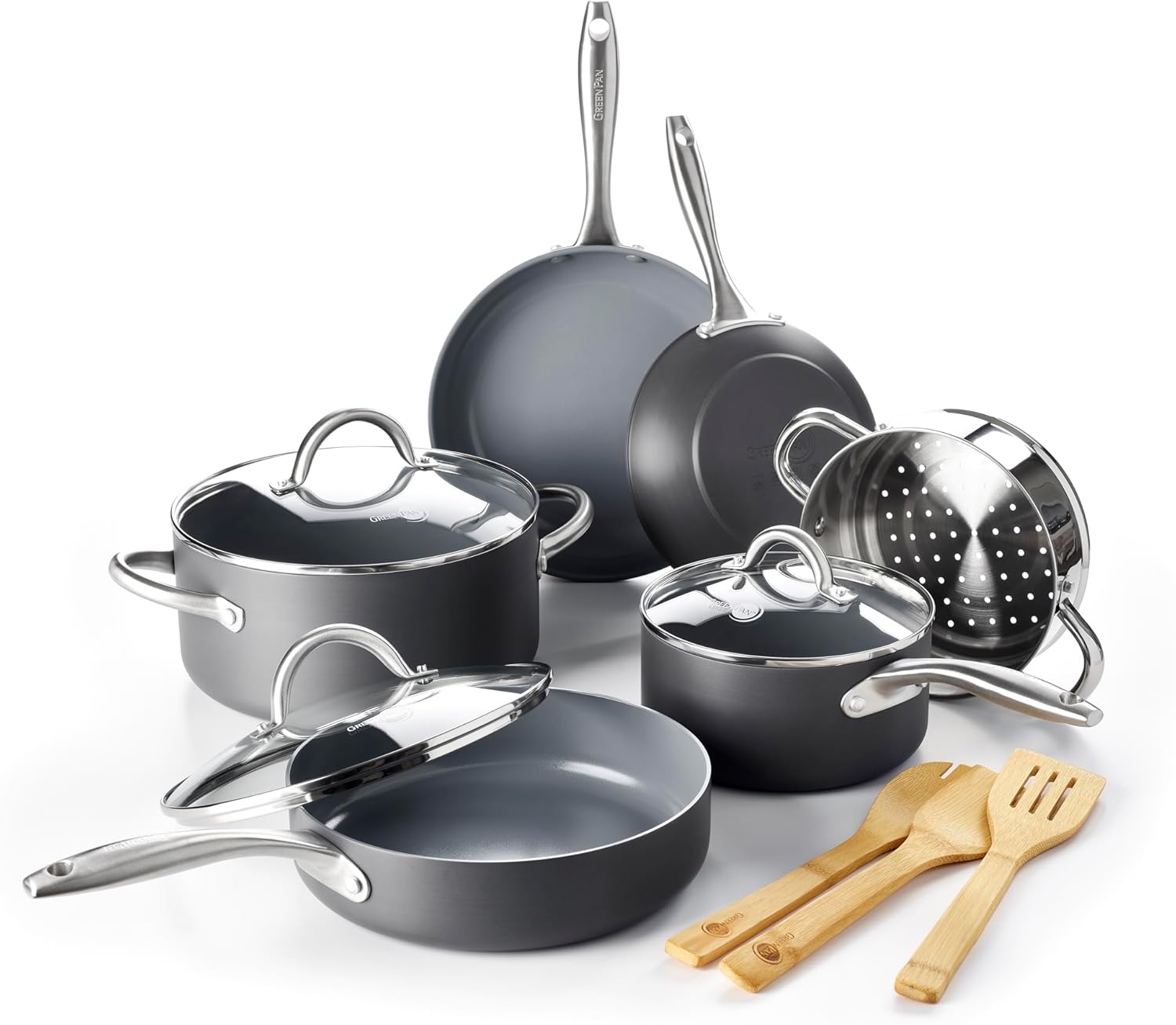
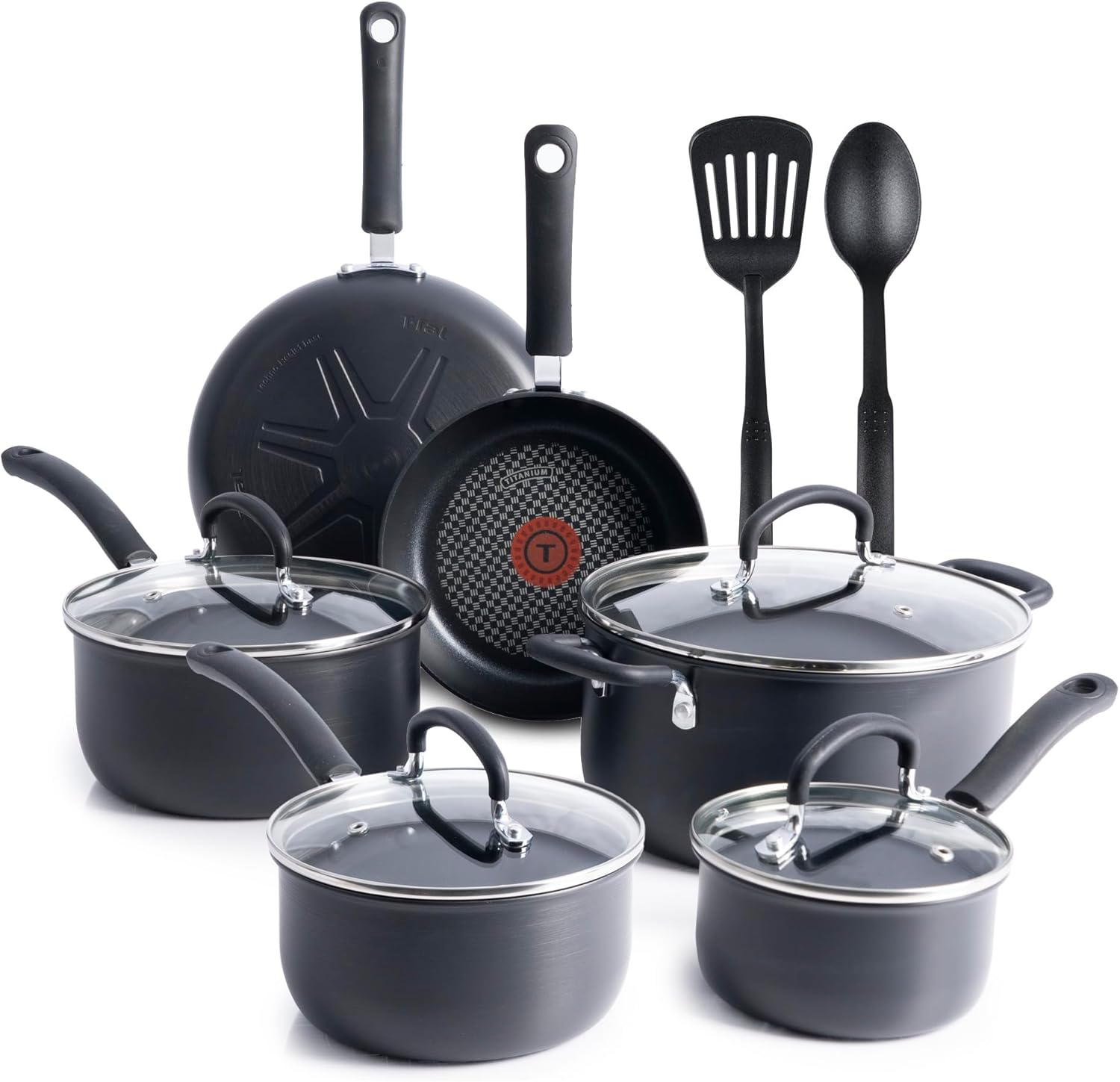
If you buy through my links, I may earn a commission at no extra cost to you. My pick for most people is traditional nonstick — it holds up more consistently over years of normal home use than ceramic does. Throughout this comparison I’m using the GreenPan Lima and T-fal Ultimate Hard Anodized as real, currently-available examples of each coating type, not as the only two sets worth considering.
Both are 12-piece hard-anodized aluminum sets in a similar price range ($150–$160), which makes this a genuinely useful comparison — the difference that matters here is the coating, not the price tier. The trade-off between the two coatings is simple: ceramic starts out with a slicker, “cleaner” feel and no chemical-coating concerns, but it degrades faster with everyday use. Traditional nonstick lasts longer if you treat it right, but it’s still PTFE.
| Product | Best For | Price | Rating | Buy |
|---|---|---|---|---|
| GreenPan Lima 12-Piece Ceramic | PTFE/PFAS-free cooking | $149.99 | 4.4★ (1,614) | Check Price |
| T-fal Ultimate Hard Anodized 12-Piece | Long-term nonstick performance | $159.99 | 4.7★ (8,678) | Check Price |
Spec Comparison
| Spec | GreenPan Lima (Ceramic) | T-fal Ultimate (Traditional Nonstick) |
|---|---|---|
| Coating | Ceramic (PTFE/PFAS-free) | Traditional PTFE nonstick |
| Body material | Hard-anodized aluminum | Hard-anodized aluminum |
| Pieces | 12 | 12 |
| Oven safe | Yes (check listing for max temp) | 400°F (lids to 350°F) |
| Dishwasher safe | Hand wash recommended | Yes |
| Rating | 4.4★ (1,609 reviews) | 4.7★ (8,678 reviews) |
| Price | $149.99 | $159.99 |
Nonstick Performance
Ceramic coatings, like the one on the GreenPan Lima, are excellent for the first several months — eggs and fish slide off with barely any oil, and there’s no PTFE smell if you accidentally overheat an empty pan. The problem is longevity. Ceramic coatings lose their slick surface faster than PTFE does, especially if you cook with any regularity at medium-high heat. Owners of ceramic pans commonly report needing extra oil for eggs within a year of near-daily use.
Traditional PTFE coatings, illustrated here by the T-fal Ultimate, start almost as slick and stays that way much longer. Two to three years of regular use is a realistic expectation before you notice real degradation, provided you’re not scraping it with metal utensils. For anyone who cooks eggs, fish, or pancakes several times a week, this is the practical difference that matters most.
Heat Distribution and Searing
Both sets use hard-anodized aluminum bodies, so heat distribution is essentially identical — no noticeable hot spots in either, and both preheat at the same rate on a gas or induction burner. Neither set is designed for aggressive searing; the nonstick coating on both limits how much of a crust you’ll get on a steak compared to stainless steel or cast iron. If searing is a priority, neither of these sets is the right tool regardless of coating type.
Response Time and Everyday Handling
Handle comfort and weight are nearly the same across both sets — both use stay-cool stainless handles and comparable pan weights for their sizes. The GreenPan lids run slightly lighter, which some people prefer when lifting a pot one-handed to check on food.
Design and Usability
Both sets come as full 12-piece kits with lids, so the count and coverage are identical — you’re choosing between coatings on otherwise comparable cookware. The GreenPan’s lighter overall build makes it marginally easier to handle for anyone with wrist or grip issues; the T-fal feels slightly more substantial but not in a way that changes daily use.
Cleaning and Maintenance
T-fal’s set is dishwasher-safe according to the listing, though hand-washing extends nonstick life on any coating. GreenPan recommends hand washing — ceramic coatings are more sensitive to the heat and detergent cycles of a dishwasher, and skipping the dishwasher is one of the few things that meaningfully slows ceramic’s faster wear curve. Neither coating tolerates metal utensils or cooking spray with propellants (both build up a sticky residue over time) — use wood, silicone, or nylon tools on either set.
Value for Money
At $149.99 vs $159.99, the price difference is small enough that it shouldn’t be the deciding factor. The real cost question is replacement frequency: if ceramic needs replacing in 12–18 months of regular use and PTFE lasts 2–3 years, traditional nonstick works out cheaper over time despite the higher upfront price — the T-fal Ultimate is a good example of that — assuming you’re replacing the whole set rather than a single worn pan.
Who Should Buy Each
Buy ceramic (like the GreenPan Lima) if:
- You specifically want to avoid PTFE and PFAS in cookware, even knowing the coating won’t last as long
- You cook lighter-duty meals (a few times a week, not daily high-heat searing)
- You’re comfortable hand-washing your cookware rather than using a dishwasher
Buy traditional nonstick (like the T-fal Ultimate Hard Anodized) if:
- You cook daily or near-daily and want the nonstick surface to still work in three years
- You want to use the dishwasher without worrying about coating wear
- PTFE itself isn’t a concern for you (it’s not linked to health issues in cookware use — that concern is mainly about PFOA, which was phased out of nonstick manufacturing in the US years ago)
Long-Term Ownership
Neither set includes a meaningful long-term warranty against nonstick wear — that’s normal for cookware in this price range, and it’s true of nearly every set on the market. Realistically, plan to replace the frying pans in either set (not necessarily the pots) every 1–3 years depending on use, and expect ceramic to be on the shorter end of that range.
Verdict
For most people, traditional PTFE nonstick is the better choice of coating. It holds up longer under normal home cooking and tends to be dishwasher-safe. The T-fal Ultimate Hard Anodized used in this comparison is a good example of that category done well — its 4.7 rating across 8,678 reviews, well ahead of the GreenPan’s 4.4 across 1,609, is consistent with what you’d expect from the coating difference, though individual products vary within each category.
That said, if avoiding PTFE entirely is a genuine priority for you — not just a vague preference — go with ceramic. The GreenPan Lima is a legitimately good example, not a compromise pick. Just go in knowing you’ll likely be replacing the frying pans sooner regardless of which ceramic set you choose. For the full lineup of sets, see my Best Nonstick Cookware Sets guide, and if the health angle is what’s driving your decision, my piece on cast iron vs ceramic cookware covers that in more depth.
If you specifically want to avoid PTFE and PFAS entirely rather than choosing between coating types, see my guide to the best non-stick pans without Teflon.
How This Comparison Was Put Together
Plainly: this is a research-based comparison, not a hands-on test. I have not run these two side by side.
What it rests on: what the two coatings actually are – a sol-gel silica layer versus PTFE – and how that difference shows up in maximum safe temperature, behaviour with metal utensils, and the mechanism by which each eventually stops releasing food; plus the pattern across verified-purchase reviews for pans of both types, where the ceramic complaint is a fast, early decline and the PTFE complaint is scratching.
What I could not establish: how long either lasts in a specific kitchen. There is no standardised abrasion test published across both coating types for consumer pans, and owner reports conflate careless heat and metal utensils with genuine coating failure. The direction of the difference is well documented; the timeline is not.
FAQs
Is ceramic cookware actually PFAS-free?
Reputable ceramic-coated cookware, including the GreenPan Lima, is genuinely PTFE- and PFAS-free — the coating is a mineral-based sol-gel finish, not a fluoropolymer. That’s different from “ceramic-look” coatings some budget brands use, which can still contain PTFE underneath a ceramic-style top layer.
Which lasts longer, ceramic or traditional nonstick?
Traditional PTFE nonstick, in almost every real-world case. Ceramic coatings typically show reduced slickness within 12–18 months of regular cooking; PTFE coatings commonly last 2–3 years or more with reasonable care.
Can I use metal utensils on either of these sets?
No. Metal utensils will scratch both coatings and accelerate wear. Use wood, silicone, or nylon utensils on either set.
Is ceramic cookware oven safe?
Yes, most ceramic cookware including the GreenPan Lima is oven safe, though always check the specific temperature limit on the listing — it’s usually lower than hard-anodized PTFE sets rated to 400°F+.
Which is easier to clean day to day?
They’re similar when the coating is new. T-fal’s set is dishwasher-safe, which makes it more convenient for daily cleanup; GreenPan recommends hand washing, which is one more step but extends the ceramic coating’s usable life.
Do either of these need to be seasoned like cast iron?
No. Both ceramic and PTFE nonstick coatings work straight out of the box — seasoning is a cast iron and carbon steel concept, not something either of these coatings needs or benefits from.
Looking for other options? My Best Non-Stick Copper Cookware guide covers copper-core sets, a third coating/construction approach not covered here.

I'm Glenn, and I started Kitchenware Compare to cut through conflicting product reviews and help readers pick kitchen gear with confidence. I don't own or test the products I write about — these guides are built from verified-purchase reviews, manufacturer specifications, and independent testing where it exists, with the reasoning shown, not just a rating.
Leave a Reply