Part of my cookware reviews hub — all reviews, comparisons, and buying advice in one place.
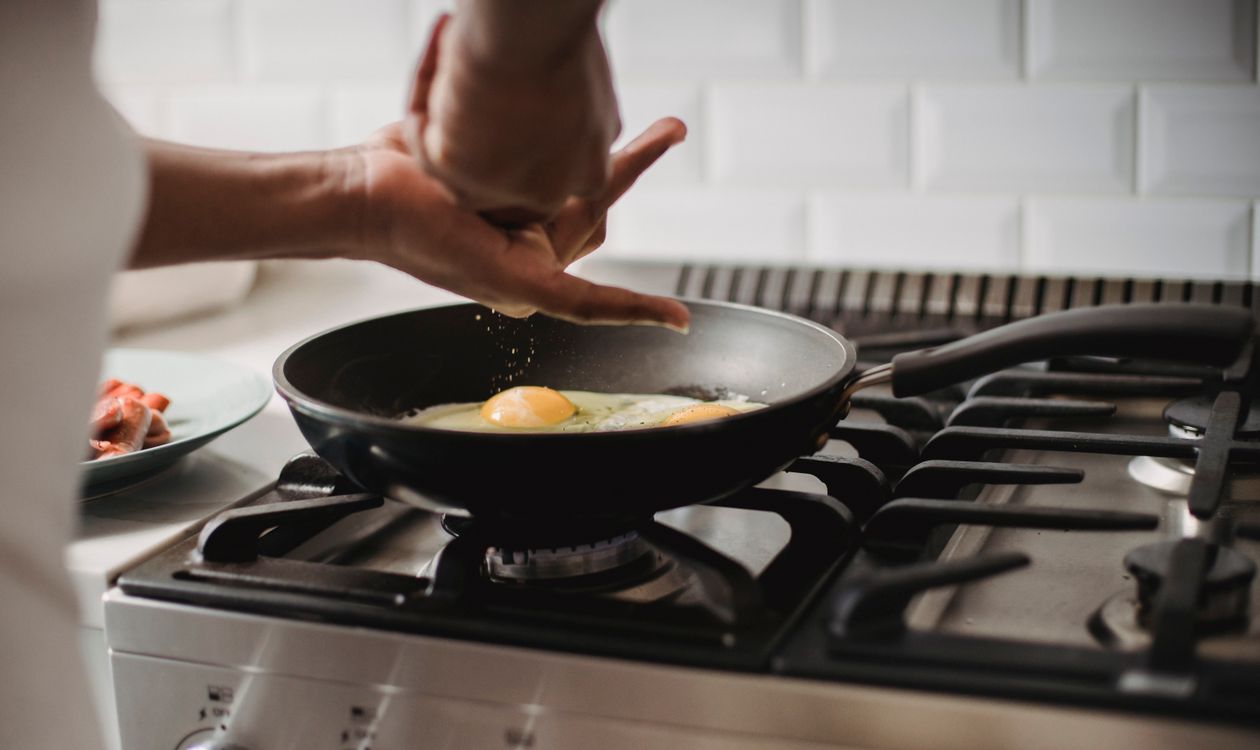
Stainless steel and cast iron handle gas heat best. Gas burners produce an open flame that touches the pan directly, rather than the even, diffused heat you get from an electric or induction element. That direct flame contact rewards thick, heavy-gauge materials that spread heat evenly and punishes thin, lightweight pans that develop hot spots or warp.
Why material matters more on gas than other stovetops
On an electric coil or induction burner, the heating element itself is flat and spreads heat fairly evenly across the base of the pan. A gas flame does the opposite — it’s a ring of concentrated heat that licks up the sides of the pan as well as the bottom. Thin cookware (especially cheap aluminum) develops a visible hot ring right where the flame touches, which means food at the center of the pan cooks slower than food near the edges.
This is why the material and construction of a pan matters more on gas than on any other stovetop. A well-made pan spreads that flame-shaped heat pattern out before it reaches the food.
Best materials for gas stoves, ranked
Stainless steel (clad, not single-layer)
Fully-clad stainless steel — where a layer of aluminum or copper is sandwiched between layers of steel — is the most reliable all-around choice for gas. The conductive core spreads the flame’s heat across the full base before it reaches the cooking surface. Cheap single-layer stainless steel doesn’t have this core and will develop hot spots just like thin aluminum does, so the construction matters as much as the material name on the box.
Cast iron
Cast iron’s thickness and mass make it almost immune to hot spots — it takes longer to heat up, but once it’s hot, the heat stays even and holds through temperature changes (like adding cold food to the pan). It’s the best choice for high-heat searing and for anyone who leaves a pan on the stove for long, slow cooking. The tradeoff is weight and the extra care cast iron needs to avoid rust.
Carbon steel
Carbon steel behaves like a lighter-weight cousin of cast iron: less mass so it heats up faster, but still thick enough to handle gas flame without warping. It’s a common choice for woks specifically because gas is the traditional heat source for wok cooking — the shape and the flame are designed around each other.
Hard-anodized aluminum
Hard-anodized aluminum conducts heat quickly and evenly, and the anodizing process makes the surface hard enough to resist warping under gas flame in a way that untreated aluminum can’t. It’s lighter than stainless or cast iron, which is worth considering if weight matters to you.
Copper
Copper is the fastest, most even heat conductor of any common cookware material, which makes it excellent on gas — but it’s expensive, needs regular polishing, and most copper cookware is lined with a thinner metal (tin or stainless) that limits how hot you can safely run it.
Ceramic-coated nonstick — fine, with a caveat
Ceramic and traditional nonstick coatings work on gas stoves the same way they work on any stovetop — the coating itself isn’t affected by flame type. The caution is heat tolerance: nonstick coatings (ceramic or PTFE) degrade faster at the high, sometimes uneven heat gas can produce if you’re not careful with flame size. Keep the flame at or below the pan’s base diameter and you’ll avoid most of the problem. See my ceramic vs traditional nonstick comparison if you’re deciding between coating types.
What to avoid: glass and thin stamped aluminum
Glass cookware isn’t rated for stovetop use at all in most cases — it’s for oven and microwave use, and direct flame contact can cause it to crack. Thin stamped aluminum (the kind that flexes slightly when you pick it up) is the most likely material to warp on a gas burner, especially if it’s ever heated empty or moved from a hot burner to a cold surface.
The practical recommendation
For most home cooks, a fully-clad stainless steel or hard-anodized aluminum set covers the most ground on a gas stove — even heating, reasonable weight, and no special care requirements. Add a cast iron skillet if you sear regularly, and a wok in carbon steel if you cook a lot of stir-fry. My Best Cookware for Gas Stove guide has specific picks in these categories, and my Best Fry Pans for Gas Stove guide narrows it down further if you just need one pan.
Frequently Asked Questions
Can you use any cookware on a gas stove?
Almost any cookware works on gas in the sense that it won’t damage the stove, but thin or lightweight pans will develop hot spots and cook unevenly. Glass cookware is the main exception — most glass cookware isn’t rated for direct flame at all.
Does induction-compatible cookware work fine on gas?
Yes. Induction compatibility is about the base containing enough magnetic material (usually steel) to work with an induction coil — it doesn’t affect how a pan performs on gas. Most induction-compatible stainless and cast iron cookware works well on gas too.
Is nonstick cookware safe on high gas heat?
Most nonstick coatings, ceramic or PTFE, are rated for medium-high heat but not the highest settings on a gas burner, especially with a flame that extends past the base of the pan. Keeping the flame sized to the pan avoids most overheating issues.
Why does my pan have a discolored ring where the flame touches it?
That’s heat scorching from uneven heat distribution — a sign the pan’s material or construction isn’t spreading the flame’s heat evenly across the base. It’s common on thin stainless steel and cheap aluminum, and much less common on fully-clad stainless, cast iron, or hard-anodized aluminum.
Is cast iron overkill for a gas stove?
Not overkill, but not necessary for everything either. Cast iron is the best choice for searing and long, slow cooking where its heat retention matters. For quick weeknight cooking like eggs or reheating, a lighter stainless or nonstick pan heats up faster and is easier to handle.
The bottom line
On a gas stove, material and construction quality matter more than on any other stovetop because the open flame creates an uneven heat pattern that only thick, well-made cookware can spread out. Fully-clad stainless steel and cast iron are the two safest choices for most cooking; thin aluminum and glass are the two to avoid. If you want specific picks, my Best Cookware for Gas Stove guide covers full sets, and my Best Fry Pans for Gas Stoves guide covers nonstick options specifically.

I'm Glenn, and I started Kitchenware Compare to cut through conflicting product reviews and help readers pick kitchen gear with confidence. I don't own or test the products I write about — these guides are built from verified-purchase reviews, manufacturer specifications, and independent testing where it exists, with the reasoning shown, not just a rating.
Leave a Reply