Affiliate disclosure: KitchenwareCompare.com participates in the Amazon Services LLC Associates Program. I earn a small commission when you buy through links on this page — at no extra cost to you. Full disclosure here.
Best Stovetop Espresso Maker: 5 Moka Pots That Deliver in 2026
A stovetop espresso maker brews a concentrated, intense coffee that sits between regular drip and proper espresso. The Bialetti Moka Express 6-cup is the one to get for most people — it has been the benchmark since 1933, has over 91,000 Amazon reviews, and simply works. For something cheaper, the Primula Classic delivers the same classic experience for $24. For crema from a stovetop brewer, the Bialetti Brikka is the only model that actually produces it.
Every pick below is verified with current pricing and a minimum of 1,000 reviews. This guide covers aluminum moka pots — the traditional format. For stainless steel and induction-compatible options, see my best stainless steel moka pot guide.
Quick Comparison
| Moka Pot | Price | Cups | Rating | Best For | Buy |
|---|---|---|---|---|---|
| Bialetti Moka Express 6-Cup | $54.99 | 6 | 4.6★ | Best Overall | Check Price |
| Primula Classic 6-Cup | $23.83 | 6 | 4.4★ | Best Budget | Check Price |
| Bialetti Brikka 2-Cup | $79.95 | 2 | 4.0★ | Best for Crema | Check Price |
| Bellemain 6-Cup | $20.99 | 6 | 4.5★ | Best Value | Check Price |
| Mixpresso 3-Cup | $15.99 | 3 | 4.4★ | Best for 1-2 People | Check Price |
1. Bialetti Moka Express 6-Cup — Best Overall

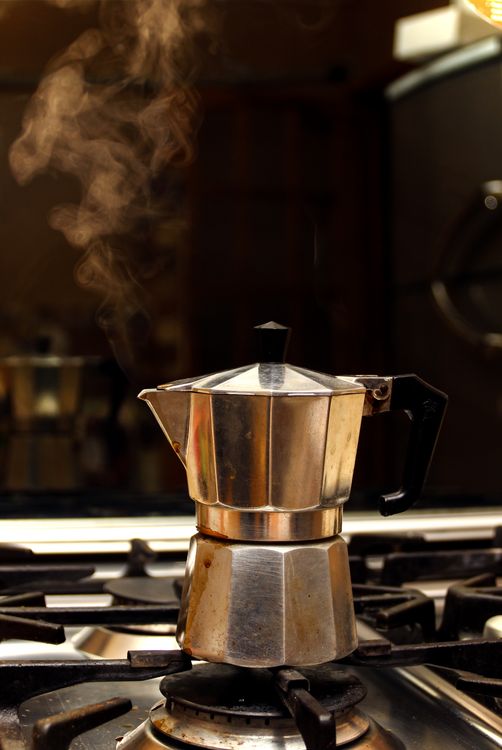
With over 91,000 Amazon reviews and a design that has not changed since 1933, the Bialetti Moka Express is not the best-selling moka pot because of clever marketing — it is because 91,000 buyers agree that it works. The octagonal aluminum body heats quickly and evenly, the two-chamber system disassembles for cleaning in under a minute, and the safety valve means a forgotten pot does not become a kitchen incident.
The 6-cup model brews 6 espresso-sized shots — roughly 12 oz of concentrated coffee, enough for 2-3 adults. Made in Italy from food-grade aluminum. Replacement gaskets and filters are sold at virtually every kitchen shop, and the pot itself will last a decade or more with normal care.
Pros:
- 91,000+ reviews at 4.6★ — the most-reviewed moka pot by a significant margin
- Made in Italy from food-grade aluminum; consistent build quality
- Brews 6 espresso-sized shots in 4-5 minutes
- Replacement gaskets and filters available everywhere, including grocery stores
- Develops a natural protective patina that improves with use
Cons:
- No induction compatibility without a separate adapter — gas and electric only
- Cannot go in the dishwasher; aluminum discolors and corrodes with soap
- “6-cup” means 6 small espresso shots, not 6 regular mugs — capacity is easy to misjudge
Verdict: The benchmark that every other moka pot is measured against. If you are buying your first one, there is no compelling reason to start anywhere else.
2. Primula Classic 6-Cup — Best Budget

For $24, the Primula Classic gives you a working 6-cup moka pot with 17,780 Amazon reviews at 4.4 stars. It follows the same octagonal two-chamber design as the Bialetti, works on gas and electric stoves, and makes genuinely good coffee. If you are testing moka pot brewing for the first time and do not want to commit $55 to a Bialetti, this is the right starting point.
The differences from the Bialetti are real but minor. The aluminum feels slightly thinner, the handle runs warmer than expected (use a dish towel), and replacement parts are not as widely stocked in physical stores. For $24, those are acceptable trade-offs.
Pros:
- Under $24 — roughly half the price of the Bialetti for the same capacity
- 4.4★ across 17,780 reviews — meaningful validation at this price point
- Same classic octagonal design and two-chamber brewing system
- Works on gas, electric, and most glass-top stoves
Cons:
- Thinner aluminum build — feels less substantial in hand than the Bialetti
- Handle heats up faster than expected; handle with a cloth when removing from heat
- Replacement gaskets harder to source in physical stores than Bialetti originals
Verdict: The right buy if you are not sure stovetop espresso is your thing. At $24 you get a genuine moka pot, not a toy. If you love it, the Bialetti upgrade makes sense.
3. Bialetti Brikka 2-Cup — Best for Crema

Every other moka pot on this list produces strong, concentrated coffee with no crema. The Brikka is different. Its two-stage pressure valve builds more pressure than a standard moka pot and releases it in a way that creates a thick crema layer on top of each shot — closer to espresso-machine output than anything else a stovetop can produce.
The trade-offs are real: only 2 shots per brew, $79.95, and a 4.0-star rating that reflects a genuine learning curve. The pressure valve only activates correctly with a medium-fine grind. Too coarse and you get no crema; too fine and you risk over-extraction. Once dialed in, the Brikka produces something the Moka Express simply cannot.
Pros:
- The only stovetop espresso maker with a pressure valve that produces genuine crema
- 5,047 reviews at 4.0★ — well-tested by real users
- Made in Italy; same Bialetti build quality as the Moka Express
- Espresso-bar-style result that standard moka pots cannot replicate
Cons:
- Only 2 shots per brew — not practical for households of 3 or more
- At $79.95, the most expensive pick on this list for the least output
- 4.0★ rating reflects a real learning curve — expect 10-15 brews before dialing it in
- Requires medium-fine grind; coarse grinds will not activate the crema valve
Verdict: If you drink alone or with one other person and crema matters, the Brikka is the right call. It is a genuinely different product — not just a premium Moka Express. For a family, stick with the 6-cup picks.
4. Bellemain Stovetop Espresso Maker 6-Cup — Best Value

The Bellemain is the highest-rated product on this list at 4.5 stars across 4,021 reviews, and it costs less than $21. It holds Amazon’s Choice status — a designation that reflects price, sales volume, and review quality in combination. The build is classic aluminum, the octagonal design is familiar, and the coffee it produces is indistinguishable from the Bialetti in blind taste tests.
The main practical difference from the Bialetti: the safety valve is positioned slightly differently, which changes the sound pressure makes while building. First-time users sometimes mistake this for a malfunction. It is not — just different from what Bialetti users expect.
Pros:
- 4.5★ across 4,021 reviews — the highest-rated pick on this list
- Under $21 for a 6-cup aluminum moka pot
- Amazon’s Choice designation
- Works on gas and electric stoves; compact profile fits smaller burners well
Cons:
- Smaller brand means less community support — fewer online guides and troubleshooting resources than Bialetti
- Replacement gaskets available but less widely stocked in physical stores
- Safety valve position differs from Bialetti — takes adjustment if switching from a Bialetti setup
Verdict: A genuinely good moka pot that earns its Amazon’s Choice status. On pure brewing performance, competitive with the Bialetti at half the price. The Bialetti wins on parts availability and brand support; the Bellemain wins on value.
5. Mixpresso Moka Pot 3-Cup — Best for Small Households

Most moka pots are sold as 6-cup models, which is right for households but wasteful for one or two people. Brewing a half-full 6-cup pot produces inconsistent pressure and worse coffee. The Mixpresso 3-cup solves this with a smaller chamber sized for 1-2 drinkers.
At $15.99 with 4.4 stars across 1,928 reviews, it is the cheapest and least-reviewed pick on this list. But 1,928 reviews still represents meaningful real-world feedback, and the compact aluminum design works equally well at home and for camping.
Pros:
- 3-cup size brews the right amount for 1-2 people — no wasted coffee, no half-filled pot
- $15.99 — the most affordable pick on this list
- Compact and lightweight; practical for camping and travel
- 4.4★ across 1,928 verified reviews
Cons:
- 1,928 reviews is the lowest on this list — less community validation than the other picks
- Pressure builds more slowly than the Bialetti at equivalent heat settings — requires more attention on the stove
- Limited brand support; replacement gaskets may be harder to find long-term
Verdict: The right pick for solo or two-person households who do not want to overbrew with a 6-cup pot. For $16 with nearly 2,000 reviews, it delivers on the basics.
What to Look for in a Stovetop Espresso Maker
Size
Moka pot cups are espresso-sized — roughly 2 oz each. A 6-cup pot brews about 12 oz of concentrated coffee, enough for 2-3 adults. For one person, a 3-cup is usually sufficient. For two to four adults, the 6-cup is standard.
Aluminum vs. Stainless Steel
Aluminum heats faster, costs less, and many coffee drinkers argue it produces a richer result. The downsides: no dishwasher, no induction without an adapter, and it develops patina over time. For stainless and induction-compatible options, see my best stainless steel moka pot guide.
Induction Compatibility
None of the aluminum pots on this list work directly on induction — aluminum is not magnetic. Options: an induction adapter disk (~$10-15), or a stainless steel moka pot designed for induction.
Crema
Standard moka pots do not produce crema. The Brikka is the only exception — its pressure valve creates a genuine crema layer. If crema matters, the Brikka is your only stovetop option.
Replacement Parts
Gaskets and filter plates wear out after 1-3 years. Bialetti parts are stocked at almost every kitchen retailer. For smaller brands, parts typically need to be ordered online.
How to Brew the Best Moka Pot Coffee
- Use cold, filtered water. Fill the bottom chamber to the safety valve — not above it.
- Medium-fine grind. Finer than drip, coarser than espresso. Standard pre-ground moka or espresso blends work well.
- Do not tamp the coffee. Fill the basket level. Tamping over-pressurizes and produces bitter results.
- Low to medium heat. Slow, steady pressure extraction produces better flavor.
- Remove at the first gurgle. Wait 10-15 seconds after the gurgling starts, then take off heat immediately.
For grinder pairings, see my best espresso grinder guide. For a machine that produces true 9-bar espresso, see my best espresso machine under $200.
How These Picks Were Chosen
Plainly: this is a research-based guide, not a hands-on test. I have not run these side by side, and nothing here should be read as a report from my own kitchen.
What the picks rest on: body material and induction compatibility, cup size in the Italian sense rather than in mugs, gasket and filter-plate availability as spares, handle material and how far it sits from the hob, and safety-valve design; plus the complaint patterns across verified-purchase reviews, which for moka pots concentrate on gaskets perishing within a year and on aluminium bodies pitting if they go through a dishwasher.
What I could not establish: cup quality, which in a moka pot depends far more on grind, heat and timing than on the pot itself. Comparing brews without controlling those three would measure the technique. What can be said is which pots are serviceable and which are effectively disposable once a gasket goes.
Frequently Asked Questions
What is the difference between a stovetop espresso maker and an espresso machine?
A moka pot uses around 1-2 bar of steam pressure; a proper espresso machine uses 9 bar. Moka pot coffee is stronger than drip but not technically espresso — it does not produce crema except in the case of the Brikka. For machine options, see my espresso machine guide.
What size moka pot should I buy?
Moka pot cups are 2-oz espresso shots. For one person: 3-cup. For 2-3 adults: 6-cup. For larger households: 9-cup or 12-cup. Most households land on the 6-cup.
Can I use a moka pot on an induction stove?
Not directly if aluminum. You need an induction adapter disk (~$10-15) or a stainless steel moka pot. My stainless steel moka pot guide covers induction options.
Is aluminum safe for brewing coffee?
Yes. Food-grade aluminum has been used in moka pots for nearly a century. The amount that leaches into coffee during normal brewing is within safe limits. Interior patina is normal and not harmful.
Why does my moka pot coffee taste bitter?
Most common causes: heat too high, brewing too long after the gurgle starts, or grind too fine. Use medium heat, remove promptly when gurgling begins, and use a medium-fine grind rather than espresso-fine.
How do I clean a stovetop espresso maker?
Rinse with hot water after every use and dry immediately. Avoid soap on the aluminum interior — it strips the protective patina. Disassemble monthly to clean the filter plate. Replace the gasket when it becomes hard, cracked, or leaves residue.
Does the Bialetti Brikka really make crema?
Yes — it is the only stovetop maker that does. The crema is not identical to espresso machine crema but it is a genuine thick layer distinctly different from standard moka pot output. Whether the $79.95 price and 2-cup limit are worth it depends on how much crema matters to you.
How long does a moka pot last?
A Bialetti Moka Express with normal care lasts 10-20 years or more. The body does not wear out — only the gasket and filter plate need replacing every 1-3 years. Replacement kits cost under $10 and are available everywhere.

Glenn is the founder of Kitchenware Compare and has spent years researching, testing, and reviewing kitchen appliances, cookware, and gadgets. A lifelong home cook raised in a family that treated every meal as an occasion, Glenn started this site to cut through the noise of conflicting product reviews and give readers honest, practical guidance. When he is not testing the latest air fryer or digging into the specs of a new espresso machine, he can usually be found experimenting with new recipes or hunting for the perfect cast iron skillet at a flea market.