The quick answer
For a family of four doing regular outdoor cooking, buy the 28-inch. Owner reports are full of people who bought the 36-inch first and wished they had started smaller. The 36-inch is the right choice if you cook for large groups regularly or want to batch cook seriously — but for everyday family cooking, it’s more work than the extra cooking surface is worth.
I earn a commission if you buy through the Amazon links below, at no extra cost to you.


I’m going to tell you something that Blackstone’s marketing won’t: bigger is not always better with flat top griddles. The 36-inch is an excellent piece of equipment, but it’s the right choice for a narrower range of people than most comparison articles would have you believe.
The two sizes get bought for different jobs — weekend breakfasts for a family, weeknight dinners, summer cookouts for twenty people — and owner reports separate fairly cleanly along those lines. What follows is an honest answer rather than a hedge.
| Product | Best For | Price | Rating | Buy |
|---|---|---|---|---|
| Blackstone 28″ Omnivore | Everyday family cooking | $249.99 | 4.7★ (12,146) | Check Price |
| Blackstone 36″ (4 burners) | Large groups & batch cooking | $399.00 | 4.7★ (10,726) | Check Price |
Prices and ratings checked 21 September 2026. Both links go to Blackstone’s standard Amazon listings (4.7★ with 10,000+ ratings each). In July these were out of stock and this page linked bundled versions instead, a 28″ with a hard cover and a 36″ with a hood; both standard listings are available again.
| Feature | Blackstone 28-Inch | Blackstone 36-Inch |
|---|---|---|
| Cooking surface | 470 sq inches | 720 sq inches |
| Burners | 2 | 4 |
| BTU output | 34,000 total | 60,000 total |
| Weight | ~68 lbs | ~120 lbs |
| Dimensions (approx.) | 52 x 22 x 36″ | 62 x 22 x 36″ |
| Typical price | $250 | $399 |
| With hood option | Yes (some models) | Yes (some models) |
The cooking surface: what those numbers mean in practice
470 square inches sounds abstract. Here’s what it means: on the 28-inch, you can simultaneously cook a dozen eggs, a pound of bacon, and a stack of pancakes. That’s a full breakfast for four people, all at once. The 28-inch is a large cooking surface. It just doesn’t feel like it in photos.
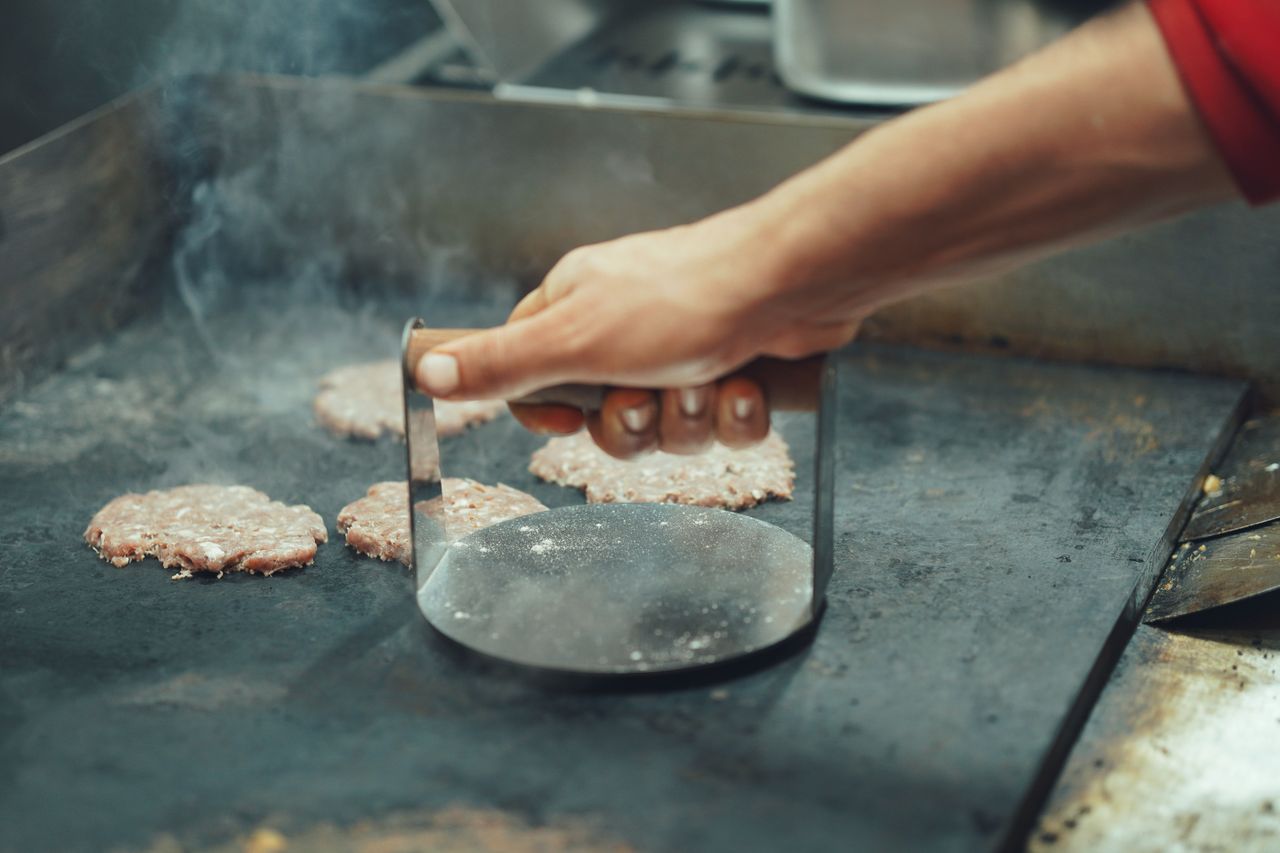
720 square inches is the surface area that lets you cook for eight to ten people simultaneously without any batching. It’s the surface that lets you smash a dozen burgers at once, or cook a week’s worth of meal prep in a single session. It’s a lot of griddle.
The case for the 28-inch (which is stronger than you think)
Here’s what I’ve noticed cooking on the 36-inch for a family of four: I rarely use more than half of it. Which means I’m heating, maintaining temperature on, and cleaning a cooking surface I’m only partially using. The 28-inch would have done the same job with less fuel, faster heat-up time, and significantly less cleanup.
The weight difference is real and it matters more than people anticipate. At 68 lbs, the 28-inch is manageable — one person can move it, store it for winter, take it tailgating. At 120 lbs, the 36-inch is functionally permanent. Once it’s in your backyard, it stays there. Make sure you want it there before you buy it.
The 28-inch also heats more evenly, because two burners across a 28-inch surface delivers more consistent coverage than four burners across 36 inches where the outer edges can lag slightly.
The case for the 36-inch (and who actually needs it)
The 36-inch is unambiguously better when you’re cooking for a crowd. Six or more people for dinner, a cookout for twenty, meal prep for the week — these are the use cases where the extra surface earns its place.
The four-burner setup gives you meaningful heat zone control. Left side screaming hot for searing, right side medium for keeping things warm, middle for active cooking. This is genuinely useful when you’re managing a complex meal with multiple proteins and vegetables at different stages. The 28-inch’s two burners create a more limited temperature gradient. Either way, a wireless probe thermometer makes it easier to track multiple proteins across those zones without cutting into anything to check.
If you run a weekend pop-up, cater parties, feed an extended family regularly, or just genuinely love the ritual of a big cook, the 36-inch will make you happy every time you use it. But be honest with yourself about how often that actually describes you.
Cleanup: the thing nobody mentions in comparisons
Cleaning a flat top after cooking takes a few minutes regardless of size. But cleaning 720 square inches versus 470 square inches adds up. Every session on the 36-inch involves scraping, wiping, and re-seasoning a significantly larger area. Over a summer of regular use, that difference is noticeable. This sounds minor and it is — but if you’re already someone who finds post-cook cleanup tedious, don’t make it 50% bigger.
Buy the 28-Inch if…
- You cook for two to four people most of the time
- You want the option to move it or take it with you
- You want faster heat-up and more even coverage
- You don’t want to dedicate permanent outdoor space to it
- You’re buying your first flat top and want to start right
Buy the 36-Inch if…
- You regularly cook for six or more people
- You want serious heat zone control with four independent burners
- You batch cook or meal prep in large quantities
- You have a dedicated outdoor cooking area and it can live there permanently
- You run events or cook for extended family gatherings
The verdict
Start with the 28-inch. If you find yourself consistently running out of cooking surface — actually running out, not just theoretically wanting more — then you’ll know exactly why to upgrade. Most people who buy the 36-inch first find they’re using 60% of it most of the time. The 28-inch is an excellent flat top griddle for the way most people actually cook outdoors.
How This Comparison Was Put Together
Plainly: this is a research-based comparison, not a hands-on test. I have not run these two side by side.
What it rests on: the published specification for both – cooking area in square inches, burner count and total BTU, and how BTU per square inch compares between them, which is the number that actually decides whether the extra size costs you heat; plus cart and shelf configuration, and the pattern across verified-purchase reviews, where the recurring themes are rust after seasoning lapses and uneven heat between burner zones.
What I could not establish: heat evenness across either plate, which is the practical difference between the two sizes. Measuring it needs a grid of infrared readings across a fully preheated surface, and no independent test does that for these griddles. Burner layout and BTU per square inch are the indicators used here.
Frequently Asked Questions
Is the Blackstone 28-inch big enough for a family?
Yes. Its 470 square inches of cooking surface handles a dozen burgers or a full pancake breakfast for four at once. Most people who buy the 36-inch report using around 60% of the surface for everyday cooking, which is roughly what the 28-inch gives you.
What is the main difference between the Blackstone 28-inch and 36-inch?
Size and heat output. The 28-inch has 470 square inches of cooking surface with two independently controlled burners producing 34,000 BTU total. The 36-inch has 720 square inches with four burners producing 60,000 BTU. Cooking capability is otherwise identical — the 36-inch just does more at once.
Which Blackstone griddle should I buy first?
Start with the 28-inch unless you regularly cook for large groups or batch cook seriously. It costs less, heats up faster, and has less surface to clean and season. If you consistently run out of cooking surface, that is your signal to upgrade.
Where do the Amazon links go?
Both links go to the standard Blackstone 28-inch and 36-inch listings. In July those were out of stock, so this page linked bundled versions with a hard cover or a hood; both standard listings are available again, so the links now go to them.
Whichever size you pick, seasoning it correctly matters more for day-to-day performance than the size difference does.
For the full breakdown of the 36″ model specifically, see my Blackstone 36″ review.

I'm Glenn, and I started Kitchenware Compare to cut through conflicting product reviews and help readers pick kitchen gear with confidence. I don't own or test the products I write about — these guides are built from verified-purchase reviews, manufacturer specifications, and independent testing where it exists, with the reasoning shown, not just a rating.
Leave a Reply