Use a Dutch oven for braises, oven-baked bread, and anything that benefits from steady, retained heat. Use a stockpot for large-volume boiling, stocks, and pasta water. They overlap more than most buying guides admit, but each carries predictable tradeoffs in evaporation, weight, and oven safety that decide which one wins for a given recipe.
TL;DR:
- A stockpot is best for large-volume boiling and stocks due to its tall, narrow shape that limits evaporation and allows fast heating, especially with clad or copper-bottom construction.
- A Dutch oven excels at slow cooking, braising, baking, and searing because of its heavy, heat-retentive cast iron material and oven-safe design, though it is heavier to handle.
- The reactivity of raw cast iron can affect acidic dishes, so stainless steel stockpots are better for tomato sauces, while enameled cast iron avoids this issue entirely.
- A stockpot typically costs less and heats water faster but has less heat retention than a Dutch oven, which maintains steady heat over long periods but is heavier and more expensive.
- When choosing, consider your primary cooking style, oven use, weight handling capacity, and storage space to match the most suitable pot to your regular recipes.
1. What a Dutch oven actually is
A Dutch oven is a heavy, thick-walled pot, usually cast iron, either left raw or coated in enamel. It’s built to move seamlessly between stovetop and oven, which is the entire point of the design. According to LEAFtv’s comparison, Dutch ovens retain heat exceptionally well and are engineered for slow cooking, searing, braising, and baking rather than fast boiling.
That heat retention comes from mass. A five-quart cast iron Dutch oven can weigh close to 15 pounds empty, and that density is exactly what keeps a braise at a stable simmer for hours without babysitting. Raw cast iron needs seasoning (a thin layer of baked-on oil) to build a nonstick surface and resist rust, while enameled versions skip that step entirely and clean up closer to how a saucepan would.
For most households, a 5 to 7 quart Dutch oven covers everything from a weeknight stew to a holiday roast. Anything smaller struggles with a whole chicken, anything larger gets awkward to lift once it’s full.
- Raw cast iron: needs seasoning, tolerates high heat, best for searing and frying.
- Enameled cast iron: no seasoning required, more forgiving with acidic ingredients, easier to keep looking new.
- Weight: heavier than a stockpot of the same capacity, which matters if you’re lifting it full of liquid.
- Oven use: this is the pot’s signature move. Bread baking, braising, and slow roasting all lean on that oven transition.
2. What a stockpot actually is
A stockpot is tall, straight-sided, and built for volume rather than heat retention. Hestan Culinary describes it as deep with tall sides, designed specifically for simmering and boiling large quantities, which makes it the natural choice for stocks, broths, pasta, and seafood boils.
Materials vary more here than with Dutch ovens. Straightforward stainless steel is common and durable, but Bon Appétit’s stockpot guide notes that fully clad or copper-bottom construction distributes heat more evenly and helps prevent scorching during long simmers, which matters if you’re reducing a stock for hours.
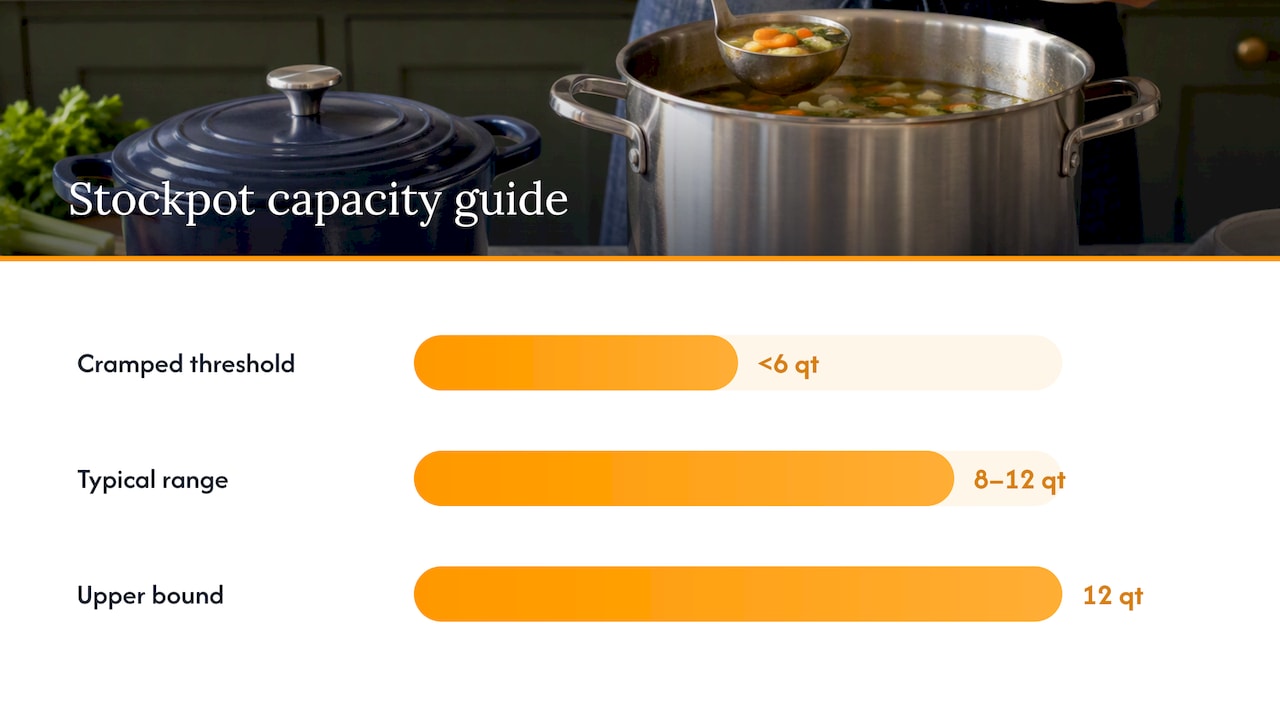
The tall, narrow shape isn’t an aesthetic choice. It limits surface area relative to volume, which slows evaporation and keeps a rolling boil contained rather than splashing over the sides. An 8 to 12 quart stockpot handles most home batches of stock or a full pound of pasta with room to spare; anything under 6 quarts starts to feel cramped for a proper boil.
- Stainless steel: non-reactive, dishwasher-friendly in most cases, the standard choice for acidic broths.
- Fully clad or copper-core: better heat distribution, fewer hot spots, worth the extra cost for frequent stock-makers.
- Shape: tall and narrow, which reduces evaporation compared to a wide, shallow pot.
- Reactivity: stainless won’t pick up metallic flavors from tomatoes or wine the way raw cast iron can.
3. Materials, heat, and handling: the real tradeoffs
The differences that matter for cooking outcomes come down to five things: material reactivity, how each pot handles heat, evaporation, oven limits, and how much you’re willing to lift.
Reactivity is the clearest split. CupIndy’s material guide points out that raw, unseasoned cast iron can react with acidic ingredients and impart a metallic taste, which is why non-reactive stainless steel is the practical choice for tomato sauces and long-simmered acidic stocks. If you’re working in enameled cast iron, that concern mostly disappears since the enamel coating covers the reactive metal.
Heat behavior is where the two pots genuinely diverge. Stockpots tend to have thinner walls and lighter construction, so they heat water faster, while Dutch ovens heat more slowly but hold that heat far longer once they get there. That difference is why a stockpot gets your pasta water boiling sooner, but a Dutch oven keeps a braise at a steady simmer for three hours without you touching the dial.
Shape drives evaporation. A tall stockpot limits surface area relative to volume, so less liquid evaporates during a long simmer. A wide, shallow Dutch oven exposes more surface area, which speeds evaporation and concentrates flavor faster in a braise, but means a stock will reduce faster than you might want unless you cover it or top up with liquid.
Oven safety and lid limits deserve a close look before you put either pot under a broiler. Lodge’s care guidance states that enameled cast iron is generally dishwasher safe, though hand-washing is often recommended for longevity, and many enameled Dutch ovens are rated oven-safe up to a high temperature, often around 500°F (260°C), though the exact limit depends on the model and especially on the handle or knob material. That figure matters because a phenolic or plastic knob can fail well before the pot itself would. Stockpots are a mixed bag on oven use: Bon Appétit notes that a good stockpot should be oven-safe where possible, but nonstick-coated versions are a poor fit for oven work.
Weight rounds out the list, and it’s the one buyers underestimate most. A full Dutch oven can be genuinely hard to lift with one hand, which matters if you’re draining pasta or moving a hot pot across the kitchen. A stockpot of equivalent capacity is noticeably lighter empty, though a full 12-quart pot of stock is still a two-handed job for most people.
- Check the material first based on cooking needs, such as non-reactive metals for acidic dishes and heat-retentive materials for searing.
- Match heat behavior to the recipe: fast boil favors a stockpot, sustained low heat favors a Dutch oven.
- Confirm oven ratings before broiling or baking, including the handle and knob material.
- Weigh the pot (literally) against your own strength and counter height before committing to a size.
4. Matching the pot to the recipe
The fastest way to decide is to start with what you’re actually cooking.
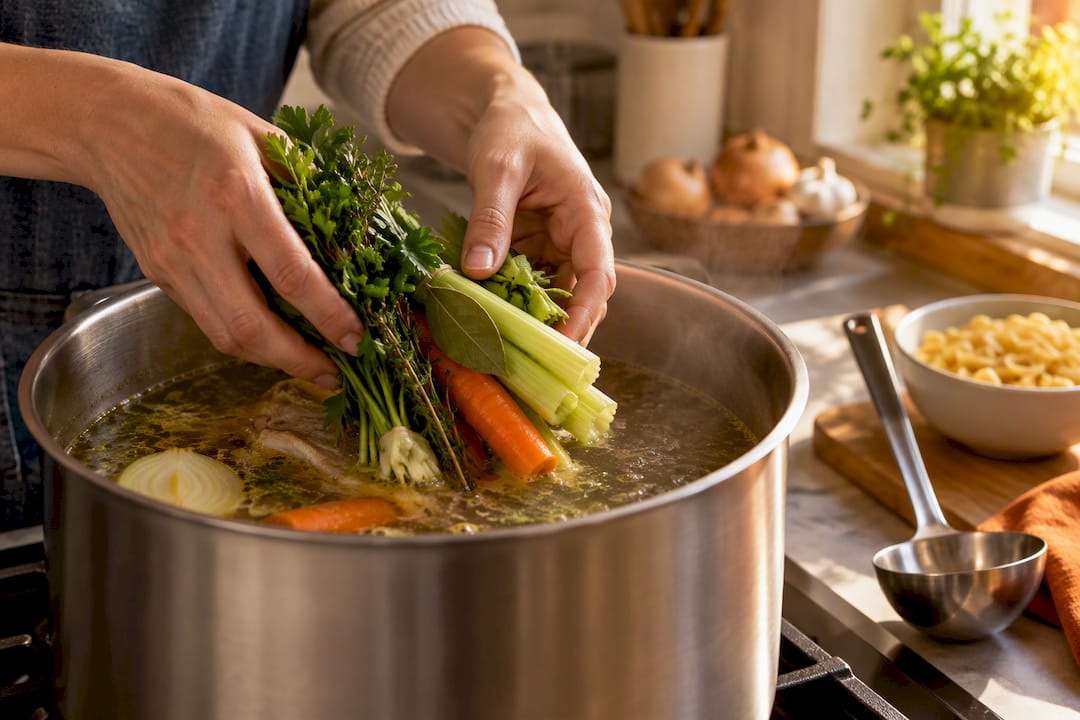
Reach for a stockpot when you’re making stock, broth, or a seafood boil, or when you’re cooking a large batch of pasta. The tall sides keep the boil contained and limit evaporation over a long simmer, which is exactly what a stock needs to develop flavor without turning into syrup. Canning also calls for a stockpot’s depth and volume.
Reach for a Dutch oven when you’re braising, stewing, baking bread, deep-frying, or searing meat before it goes into a slow cook. The mass and heat retention hold a steady simmer for hours, and the same pot moves straight into the oven for the second half of a braise or for a no-knead loaf.
You can often adapt a recipe to whichever pot you own. LEAFtv notes that a single high-quality Dutch oven can sometimes replace a stockpot for small-batch stocks, though you should expect faster evaporation and plan to top up liquid or keep the lid on more often. Going the other direction, a stockpot can handle a braise in a pinch, but without the same heat retention you’ll need to watch the burner more closely to avoid scorching.
- Making stock in a Dutch oven: cover it and check liquid levels every 30 to 45 minutes.
- Braising in a stockpot: use a lower burner setting and stir more often since it won’t hold heat as evenly.
- Uneven gas burners: a heat diffuser helps either pot simmer more consistently.
- Reducing evaporation in general: a tight-fitting lid does more work than adjusting the flame.
Pro Tip: If a recipe calls for “a large pot” without specifying, check whether it needs vertical depth (stock, pasta) or wide surface contact (searing, braising). That single detail tells you which pot to grab.
5. Keeping either pot in good shape
Care routines differ enough between these two that treating them the same is the fastest way to shorten either one’s life.
Enameled cast iron holds up best with hand-washing, even though Lodge’s guidance says it’s generally dishwasher safe. Repeated dishwasher cycles dull the enamel’s finish over time. Raw cast iron needs a different routine entirely: dry it immediately after washing, skip the soap when possible, and re-season with a thin layer of oil if food starts sticking.
Stainless and clad stockpots are more forgiving. Most tolerate the dishwasher without issue, though hand-washing avoids the mineral spotting that hard water can leave on a polished finish. Avoid dropping a hot clad pot into cold water, since the temperature shock can warp the base over years of repeated abuse.
- Enameled cast iron: hand-wash for longevity, avoid metal scouring pads on the interior.
- Raw cast iron: dry immediately, re-season occasionally, never soak overnight.
- Stainless stockpots: dishwasher-safe in most cases, but hand-wash to prevent water spotting.
- Handles and knobs: check the manufacturer’s oven rating separately, since a phenolic knob often has a lower limit than the pot body.
6. A short checklist before you buy
Buying either pot without a plan is how kitchens end up with two pots that both handle everything at 70%. Work through this instead.
- Identify your primary recipes. If stock, pasta, and boiling dominate your cooking, prioritize a stockpot. If braises, stews, and bread come up more often, prioritize a Dutch oven.
- Check your stove type. Induction cooktops need a magnetic base, so confirm compatibility before buying either pot; the induction cookware guide covers which materials work.
- Decide if you need oven capability. If bread baking or oven-finished braises matter to you, a Dutch oven with a confirmed oven rating is the only real option.
- Consider weight and handling. If lifting a full 15-pound pot with one hand sounds unrealistic, lean toward a stockpot or a smaller Dutch oven.
- Measure your storage space. Dutch ovens are bulky and don’t stack well; stockpots often nest inside each other if you own more than one.
- Set a budget and check the base construction. A fully clad or copper-core stockpot base costs more but distributes heat better; on the Dutch oven side, confirm the lid fits tightly and the knob has a stated temperature rating.
If you can only own one pot and you cook more soups, sauces, and weeknight meals than stocks, an enameled Dutch oven is the more flexible default since it handles both stovetop and oven work. If your cooking leans heavily toward large-batch stocks, pasta nights, or canning, a stockpot earns its cabinet space instead.
7. Why this comparison holds up
Kitchenware Compare builds its cookware guidance from side-by-side product comparisons, spec analysis, and owner-reported feedback rather than marketing copy, which is the same approach applied here. The oven-safety figures in this guide come directly from Lodge’s own care instructions for enameled cast iron, cross-checked against recipe-fit guidance from established cookware writers. Where a claim needed a real source, it was linked rather than guessed at.
What this comparison gets wrong most often
Most buying guides treat this as a binary choice, as if picking the “winning” pot settles the matter. It doesn’t. The real skill is recognizing that a Dutch oven and a stockpot solve different physics problems: one is about holding heat steady over time, the other is about moving a lot of liquid to a boil and keeping it there without losing half of it to steam.
The advice I’d push back on is the common suggestion that a good Dutch oven can just replace a stockpot if you buy the largest size available. It can, in a pinch, but you’ll fight faster evaporation the entire time and end up covering it constantly. If stock-making is a regular habit rather than an occasional project, buying a dedicated stockpot saves more frustration than upsizing a Dutch oven ever will.
Prioritize matching the pot to your actual weekly cooking, not to the pot that photographs better on a stovetop.
— Glenn
Sources
- Lodge Cast Iron — Cleaning & care for enameled cast iron
- Hestan Culinary — Stock pots: why every experienced home cook needs one
- LEAFtv — Difference between stock pot & Dutch oven
- Bon Appétit — Best stockpots for soups and simmers
FAQ
Can I use a stockpot instead of a Dutch oven?
You can use a stockpot for a stovetop braise, but you’ll lose the heat retention that keeps the temperature steady over long cooking times, so you’ll need to watch the burner and stir more often. Stockpots also generally aren’t built for the oven transition that many braise and bread recipes require.
What are the disadvantages of a Dutch oven?
Dutch ovens are heavy, often close to 15 pounds when empty, which makes lifting a full pot with one hand difficult for many cooks. Raw cast iron versions also need regular seasoning and careful drying to prevent rust, and their wide shape speeds up evaporation during long stock simmers.
What shouldn’t I cook in a Dutch oven?
Avoid long-simmered acidic dishes in raw, unseasoned cast iron, since material reactivity guidance notes it can react with acid and add a metallic taste to the food. Enameled cast iron avoids this issue entirely, so that’s the safer choice for tomato-based sauces.
What are the key differences between a stockpot and a Dutch oven?
The core differences are shape, material, and heat behavior: a stockpot is tall and narrow with thinner walls for fast boiling and low evaporation, while a Dutch oven is thick, heavy, and built to retain heat for braising and oven work. Material matters too, since stockpots are typically non-reactive stainless steel while Dutch ovens are cast iron, raw or enameled.
Recommended
- Cookware Types for Induction Cooktops: Complete Guide
- Cast Iron vs Ceramic Cookware: Which Is Healthier?
- Most Durable Types of Cookware: Cast Iron, Steel & More
- Best Cookware Material for a Gas Stove (2026)

I'm Glenn, and I started Kitchenware Compare to cut through conflicting product reviews and help readers pick kitchen gear with confidence. I don't own or test the products I write about — these guides are built from verified-purchase reviews, manufacturer specifications, and independent testing where it exists, with the reasoning shown, not just a rating.
Leave a Reply