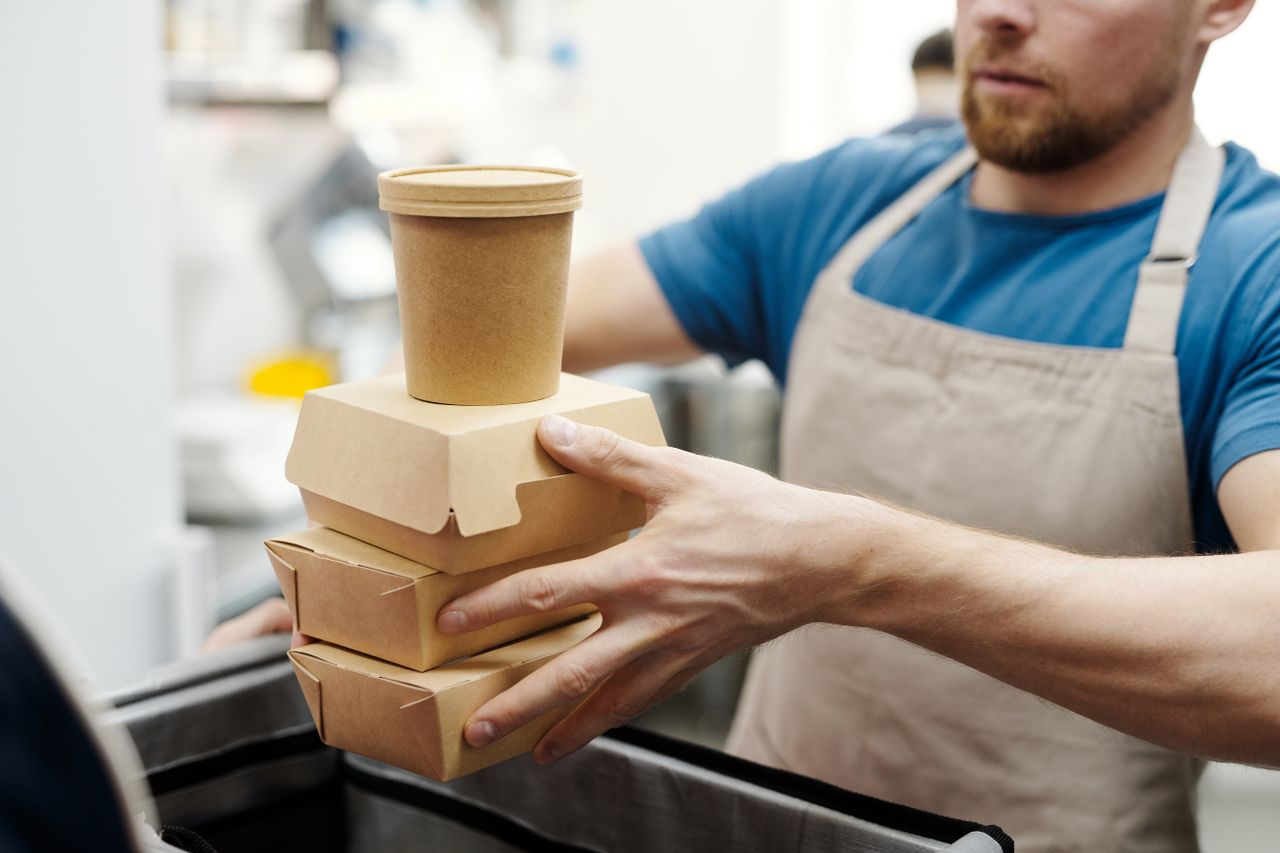
Plain, uncoated cardboard will usually survive a short spell in a microwave without catching fire. That is not the useful answer, because almost nothing you would actually want to reheat comes in plain, uncoated cardboard. The trouble comes from what has been added to the board — coatings, glue, ink, and metal you cannot see — and from what happens when board goes into a microwave with nothing to absorb the energy.
The short answer
Only microwave cardboard that is labelled for microwave use. If it is not labelled, take the food out and put it in glass or ceramic. The three things that make a cardboard container genuinely unsafe are metal (staples, wire handles, foil lining), grease-resistant coatings, and running it dry, which is what scorches board and warps the plastic lining inside it.
What the USDA actually allows in a microwave
The USDA’s Food Safety and Inspection Service publishes a list of what is and is not safe to put in a microwave oven. It is worth reading closely, because it is more specific than most advice on this subject and it does not quite say what people assume it says.
| FSIS says safe to use | FSIS says not safe to use |
|---|---|
| Any utensil labelled for microwave use | Brown paper bags and newspapers |
| Heatproof glass and glass-ceramic | Chinese takeaway containers with metal handles |
| Most paper plates, towels, napkins and bags — white and unprinted for preference | Foam-insulated cups, bowls, plates and trays |
| Wax paper, parchment paper, heavy plastic wrap (vented, not touching food) | Cold-storage tubs — margarine, yoghurt, cottage cheese |
| Heat-susceptor packaging (popcorn bags, crisping sleeves) | Metal pans, metal twist ties, china with metallic trim |
| Oven cooking bags | Anything that has warped or melted during heating |
Notice what is missing. FSIS clears “most paper plates, towels, napkins and bags” and it explicitly rules out brown paper bags, but it never names paperboard cartons, pizza boxes or coated soup cups in either column. There is no federal ruling that a takeaway box is fine, and anyone telling you there is has filled in a gap that the source leaves open. What FSIS does give you is a rule that covers the gap: use what is labelled for microwave use, and stop if the container warps or melts.
What actually goes wrong when you microwave cardboard
Metal you cannot see
Staples in the seam of a takeaway box, the wire handle on a carton, and the foil lining inside some drinks cups and ready-meal sleeves all behave the same way: microwaves cannot pass through metal, so the energy concentrates at edges and points. FSIS calls the resulting sparks arcing, and notes that prolonged arcing can damage the oven as well as the container. Caught immediately, it usually does not. The fix is to turn the oven off the moment you see a spark rather than waiting to see whether it settles.
Grease-resistant coatings
Board that has to hold hot, oily food gets treated so the grease does not soak through. For years that treatment often meant PFAS. The FDA is unusually direct about this: of the four categories of PFAS it had authorised for food contact, it found that only paper and paperboard agents would result in dietary exposure that may result in a potential safety concern. The reason is specific — grease-proofing agents are applied at low temperatures, which are not hot enough to drive off the smaller, migratable molecules, so those can detach and move into food.
This has changed recently, and in your favour. The FDA announced in February 2024 that grease-proofing substances containing PFAS were no longer being sold into the United States market for food-contact use, and in January 2025 it determined that the 35 related authorisations were no longer effective. Packaging bought new today should not carry them. A box that has been sitting in a cupboard since 2022 is a different matter, and heat is exactly the condition that encourages migration.
Glue, ink and recycled fibre
FSIS’s preference for “white, unprinted materials” is not fussiness. Printed board carries inks and adhesives that were formulated to survive storage and handling, not to be heated in contact with hot food. Recycled board adds a second unknown, because the fibre came from somewhere and nobody is certifying what was in it.
Neither is a dramatic hazard. Both are reasons to prefer a plain plate you know the composition of.
Running it dry
A microwave heats water, fat and sugar. Cardboard contains very little of any of them, so an empty or nearly empty box does not warm up gently — it sits there while the energy that would have gone into food concentrates in small dry spots in the board. That is how scorching starts, and it is why the same box that is unremarkable under a full container of soup for ninety seconds can smoke when reheated near-empty for four minutes. It is also why FSIS puts anything that has warped or melted during heating on the not-safe list: that container has already told you it was not built for this.
How long is too long? The figure repeated across most advice on this subject — sixty to ninety seconds, checking every thirty — has no authoritative source behind it, and FSIS publishes no time limit at all.
Time is not really the variable; the ratio of food to board is. A full container of wet food holds the board near the boiling point of water for as long as there is water in it, while a near-empty one has nothing holding it there. If you are counting seconds to decide whether a container is safe, the container has already answered the question.
The packaging people ask about most
Pizza boxes
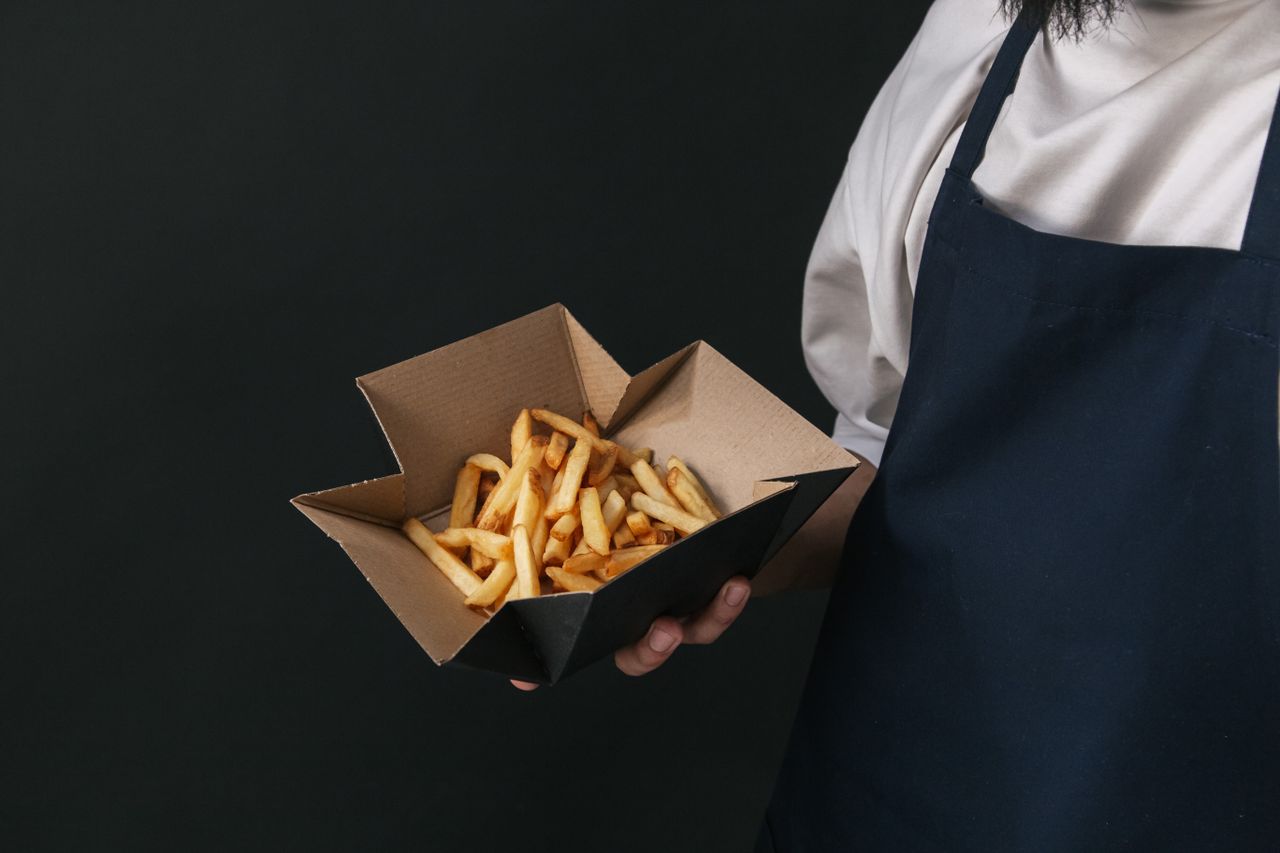
No. A pizza box is corrugated board, frequently made from recycled fibre, printed on the outside and soaked with grease on the inside — four of the reasons above in one object. It is also far larger than the food, so most of what you are heating is dry board. Lift the slices out onto a plate, or reheat them properly: a hot, dry skillet gives a crisp base in about three minutes, which a microwave cannot do at all.
Coated cardboard cups and bowls
This is the most common version of the question, and the board is not the issue — the lining is. Soup cups, noodle pots and salad bowls are paperboard with a thin polymer film bonded to the inside, and that film is what holds the liquid.
Some are designed to be heated and say so on the base. Many are designed only to hold hot food that was already hot, which is a different specification. If there is no microwave symbol, treat it as a cold-storage container, which is the category FSIS specifically warns against heating.
Takeaway cartons with wire handles
FSIS names these directly, and they are on the not-safe list. Removing the handle deals with the arcing, but leaves you with a coated, printed, folded carton of unknown specification — so you have solved the spectacular problem and kept the quiet one. Tip the food out.
Popcorn bags and crisping sleeves
These are the exception, and it is worth knowing why. Heat-susceptor packaging has a metallised film laminated into the board that is designed to absorb microwave energy and turn it into surface heat, which is how popcorn pops and how a pie sleeve browns pastry.
FSIS lists it as safe to use. That clearance applies to the packaging used as the manufacturer intended, once. It is not permission to reuse the sleeve for something else.
How to test a container that is not labelled
FSIS publishes a test for exactly this situation, and it takes a minute.
Put one cup of tap water in a glass measuring jug. Place the jug in the microwave alongside the container you want to test, not touching it. Run the oven on high for one minute. If the container is warm or hot at the end, it contains metal in the material or the glaze and should not be used — a microwave-safe item stays cool because the water absorbs the energy, not the container.
The test catches metal. It does not tell you anything about coatings or adhesives, so a cool result is a reason to proceed carefully rather than a clean bill of health.
Common mistakes
The mistake underneath most of the others is treating “it is only two minutes” as a safety argument. Time is the variable that matters most here, because scorching and warping are cumulative and the box gives no warning until it does.
Assuming that compostable or plant-based packaging is microwave-safe is the next most common. Those words describe how the container is disposed of, not what it does at 100 °C. PLA-lined board in particular softens at a lower temperature than the polymer films it replaced.
Closing the lid is a smaller error with a predictable result: steam has nowhere to go, the lining softens against the food, and the box deforms. And reusing a takeaway container repeatedly for reheating compounds every risk on this page, since each cycle degrades the lining a little further. If you want to keep the box, keep it for cold storage.
What to do instead
Decanting takes ten seconds and removes the entire question. Heatproof glass and glass-ceramic are both on the FSIS safe list, and anything sold as microwave-safe will say so on the base.
For food that was crisp when it arrived, a microwave is the wrong tool regardless of the container, because it drives moisture into the surface you want dry. A toaster oven handles reheated pizza, fries and pastry far better; this comparison of convection toaster ovens covers the models worth considering. A skillet does the same job on the hob — the cast iron skillet guide is the place to start if you do not already have a pan that holds heat well. If you are weighing up a combination appliance, how a microwave toaster oven combo works explains what the two functions do and do not share.
One more thing worth doing: if a container has scorched or a lining has melted, clean the cavity before the next use, since residue heats unevenly and smells. This guide to cleaning a microwave oven covers the method. The same “is this metal?” caution applies in other appliances too — whether you can put aluminium foil in an air fryer is the same question with a different answer.
How This Guide Was Put Together
This is a research article, not a test report. The safe and unsafe container lists, the arcing explanation and the one-minute water test all come from the USDA Food Safety and Inspection Service’s guidance on cooking with microwave ovens. The account of grease-proofing chemistry and its withdrawal from the United States market comes from the FDA’s page on authorised uses of PFAS in food-contact applications, including the February 2024 announcement and the January 2025 Federal Register determination. Nothing here was measured in a kitchen.
Three things could not be established, and it is worth being straight about them. FSIS does not name paperboard cartons, pizza boxes or coated bowls in either column of its list, so the guidance above applies its general rules rather than reporting a ruling on takeaway packaging. No authoritative body publishes a safe duration for heating cardboard, which is why the widely repeated sixty-to-ninety-second figure has no citation attached to it anywhere it appears. And the polymer used to line any given container is not determinable from the container itself, since PLA and polyethylene look identical on a bowl and behave differently under heat.
Frequently asked questions
Can you microwave a pizza box?
No. Pizza boxes are corrugated, usually printed, often recycled, and much larger than the food inside, so most of what heats is dry board. Move the slices to a plate. A skillet or toaster oven will also give you a crisp base, which a microwave cannot.
Are coated cardboard bowls microwave-safe?
Only if the base says so. The paperboard is not the problem — the polymer lining is, and linings differ. A bowl designed to hold hot food is not automatically designed to be heated in a microwave, and FSIS warns specifically against heating cold-storage containers.
Can you microwave a cereal box?
No, and there is rarely a reason to. Cereal cartons are printed paperboard with glued seams, sometimes with a foil-lined liner bag inside, and they contain almost no moisture. That combination scorches quickly and can arc if the liner is metallised.
What happens if you microwave cardboard for too long?
The board dries further, hot spots form where there is nothing to absorb the energy, and it begins to scorch and smoke before it will visibly flame. Any lining softens or melts first. FSIS treats a container that has warped or melted as no longer safe to heat food in.
Is a takeaway carton with a wire handle safe to microwave?
No. FSIS lists takeaway containers with metal handles as not safe, because metal concentrates microwave energy and causes arcing. Removing the handle stops the sparks but leaves a coated, printed carton of unknown specification, so it is still better to tip the food out.
Cardboard is not the villain here — unlabelled packaging is. If the container tells you it is microwave-safe, believe it; if it says nothing, spend ten seconds moving the food to a plate.