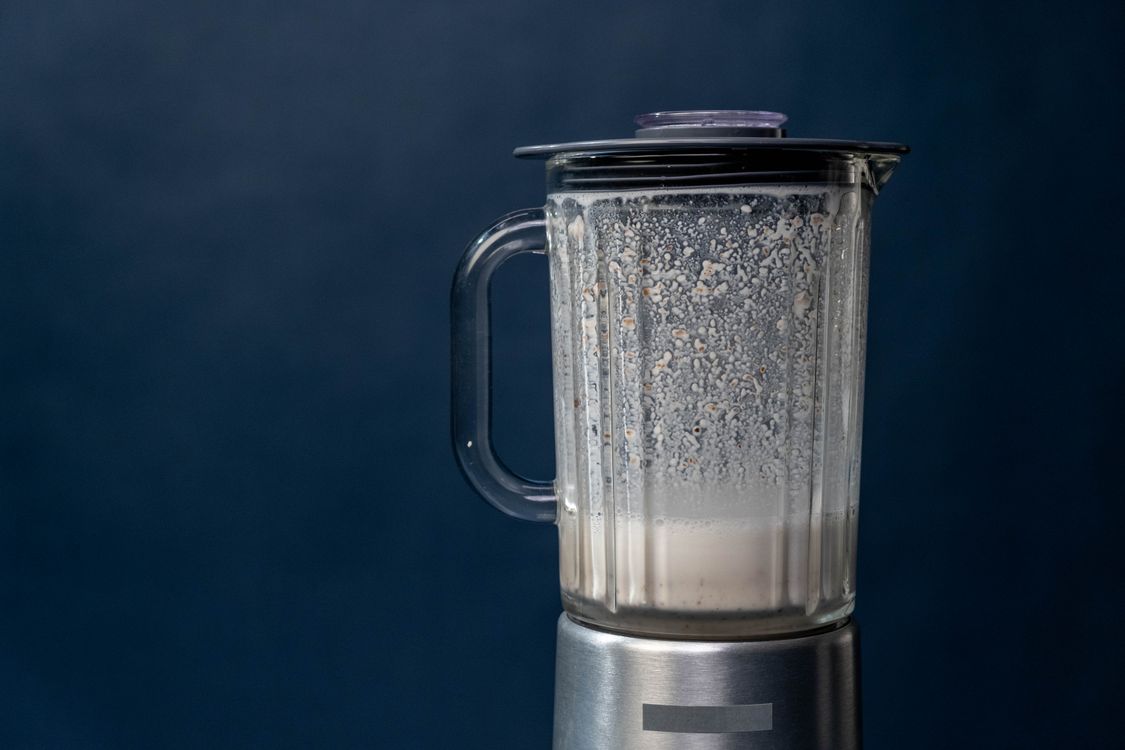
Photo by cottonbro studio from Pexels
Short answer: leaking from the top is usually one of two separate rubber seals, a fill-level problem, or a lid that isn’t actually locked — not the same gasket that causes leaks from the bottom. My guide to blender leaks from the bottom covers the blade-assembly gasket; this is a different part of the machine entirely, and the fix depends on figuring out which one you’re actually dealing with.
The Two Seals People Confuse
Most blender lids actually have two separate rubber seals, not one, and a leak from either one gets blamed on “the lid” generically. The main lid gasket runs around the full perimeter where the lid meets the jar. The center cap — the small removable piece in the middle of the lid used for adding ingredients while blending — has its own separate seal.
To tell them apart, run a short test blend with the center cap fully seated and locked, using a small amount of water. If it leaks around the outer edge of the lid, it’s the perimeter gasket. If it leaks or sprays specifically from the center, the cap seal is the problem, and replacing the wrong part won’t fix it.
Check the Fill Level and Lid Lock First
Before assuming either seal is worn, rule out the two most common non-seal causes. Overfilling pushes contents up against and past a perfectly good seal, especially with ice, frozen fruit, or anything that expands and foams as it blends — leave more headspace than feels necessary, particularly for smoothies with ice.
A lid that isn’t fully locked will leak even with a brand-new gasket. Most blenders have a distinct click or resistance point when the lid seats correctly; if yours goes on smoothly with no real resistance, it likely isn’t locking. Press down firmly on the lid while blending briefly at low speed to check whether that alone stops the leak.
Is Pressure the Actual Problem?
If the leak only happens with hot liquid, or with contents that foam and expand, the issue may not be the seal at all. Steam and expanding contents build real pressure against a sealed lid, and that pressure finds any weak point — often the center cap, since it’s the smallest and least reinforced seal on the lid. My guide to blending hot liquids safely covers this exact mechanism in more depth, including why most standard blenders aren’t rated for it at all.
Could the Lid Itself Be Warped?
Less common, but worth ruling out if both seals look fine and the lid still leaks: repeated exposure to high heat, particularly a dishwasher’s heated dry cycle, can warp plastic lids just enough that they no longer sit flush, even with good gaskets underneath. This is the same kind of thermal stress covered in my guide to food processor bowl cracking — a slower, structural problem rather than a worn part. If the lid looks slightly domed, uneven, or doesn’t sit level on a flat counter, that’s your answer, and no amount of new gaskets will fix it.
Fixing It
Once you’ve identified which seal is actually leaking, clean it thoroughly first — dried residue under either gasket is a common reason a “new part” install still leaks. If cleaning doesn’t solve it, replace that specific seal with a model-specific part rather than a generic size; lid and cap dimensions vary enough between brands that a close-enough fit often still leaks under pressure. Both seals are inexpensive, usually under $15, and don’t require replacing the whole lid.
Preventing This Going Forward
Hand-wash both seals rather than running them through the dishwasher’s heated dry cycle regularly — the same heat that warps lids over time also degrades rubber seals faster than normal use does. Dry the center cap and lid gasket fully before storing them; trapped moisture breaks down rubber and can encourage mold in the grooves where the seal sits.
Get in the habit of actually checking that the lid clicks into its locked position every time, not just resting it on top, especially if you’re in a hurry. It takes one extra second and prevents the single most common non-seal cause of a top leak.
What this guide is based on
Plainly: this is research-based, not a hands-on test. I have not run blenders to failure to compare seals, and nothing here is a report from my own kitchen.
What it rests on: how these lids are built — a removable centre cap sealing against a smaller gasket than the perimeter seal, handled far more often because it comes out every time something is added mid-blend, and therefore wearing sooner; and the pattern of what owners report, where the centre cap and overfilling account for most top leaks well ahead of a failed main gasket.
What I could not establish: a service life for either seal. Manufacturers do not publish one and it depends heavily on how often the cap is removed.
If you are replacing the machine rather than the seal, the blender food processor combo guide covers units that handle both jobs.
Frequently Asked Questions
Why is my blender leaking from the top but not the bottom?
Top leaks come from the lid’s perimeter gasket or the center cap seal, or from overfilling and pressure — entirely different parts and causes than a bottom leak, which is almost always the blade-assembly gasket.
How do I know if it’s the lid seal or the center cap causing the leak?
Run a short test blend with the center cap fully seated. A leak around the outer edge points to the perimeter gasket; a leak from the middle points to the center cap seal.
Can overfilling cause a blender to leak even with a good seal?
Yes. Contents that expand or foam, especially ice or hot liquid, can push past a perfectly functional seal if there isn’t enough headspace. Leave more room than feels necessary.
Can a warped lid cause leaking even with new gaskets?
Yes, though it’s less common. Heat exposure, particularly a dishwasher’s heated dry cycle, can warp plastic lids enough that they no longer sit flush. Check whether the lid sits level on a flat counter before assuming the seals are the problem.

Glenn is the founder of Kitchenware Compare and has spent years researching, testing, and reviewing kitchen appliances, cookware, and gadgets. A lifelong home cook raised in a family that treated every meal as an occasion, Glenn started this site to cut through the noise of conflicting product reviews and give readers honest, practical guidance. When he is not testing the latest air fryer or digging into the specs of a new espresso machine, he can usually be found experimenting with new recipes or hunting for the perfect cast iron skillet at a flea market.
Leave a Reply