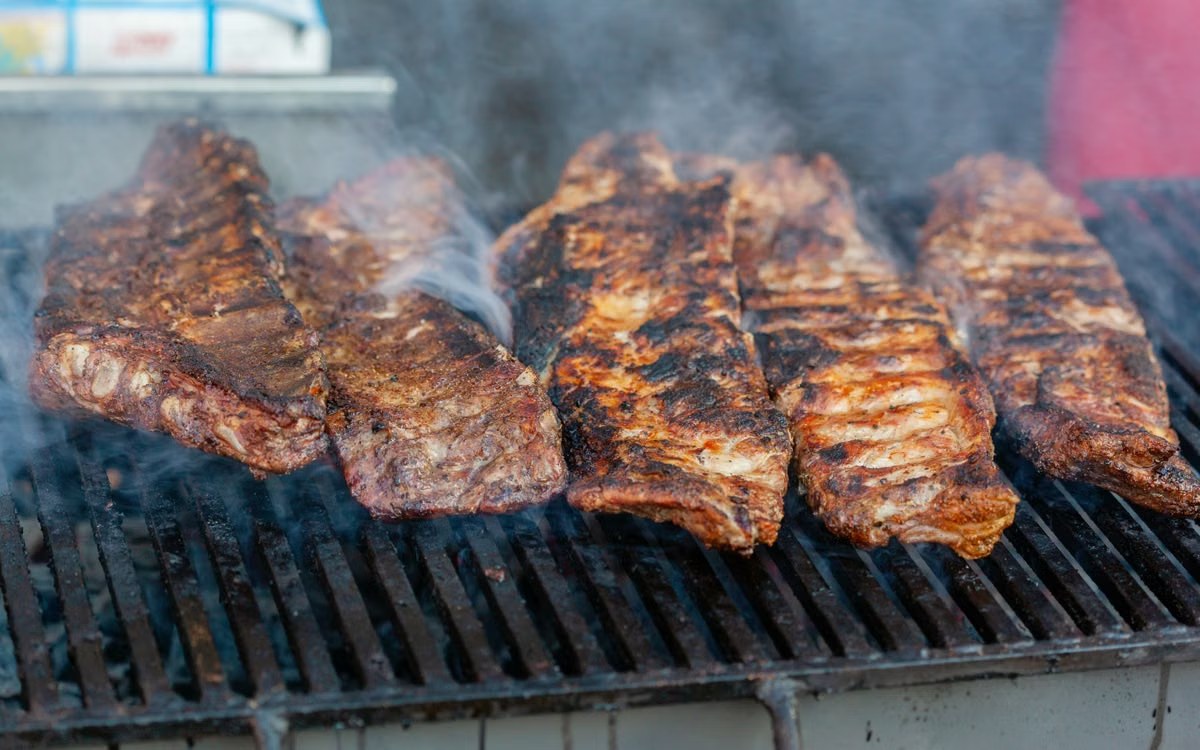
Most electric smokers that are “not producing smoke” are producing exactly the right kind, and their owners cannot see it. The smoke that makes good barbecue is thin and faintly blue and almost invisible against a bright sky. The thick white cloud people are looking for is the sort that makes food taste bitter. So the first question is not what has broken, but what you are expecting to see.
What the smoke is supposed to look like
Traeger, describing the moisture content of its own pellets, puts the goal plainly: the aim is thin, blue smoke rather than bitter white smoke. That is written about pellets in a pellet grill rather than chips in an electric cabinet, but the point is about combustion rather than about the machine. Wood burning cleanly gives off a wisp; wood smouldering badly, or steaming, gives off a billow.
Weber makes the same argument from the other end, advising that you start with a small amount of wood and add more only if you want a stronger flavour, because too much wood smoke over long periods can make food taste bitter. Two makers, from opposite directions, arriving at the same place: more visible smoke is not the target.
The practical test is the food, not the chimney. If the meat comes out with a smoke ring, a darkened bark and a clear smoky flavour, the smoker worked, whatever you saw coming out of the vent. If it comes out tasting of nothing, there is a real problem, and the rest of this guide is about finding it.
Why it smokes for twenty minutes and then stops
This is the single most common version of the complaint, and on most cabinets it is not a fault at all.
An electric smoker holds temperature by switching its element on and off. The chip tray sits on or immediately beside that element, so the chips only get hot enough to smoulder while the element is actually drawing power. Once the cabinet has reached the set temperature, the element spends most of each cycle off, and the chips sit there doing very little until it comes back on.
That produces exactly the pattern owners describe. Heavy smoke during the preheat, when the element runs continuously to bring the cabinet up. Then, as soon as it settles at 225°F, the smoke drops to almost nothing and comes in short bursts.
Two things follow from this. The first is that a lower set temperature means less smoke, not more, because the element runs less. The second is that chips need topping up on a schedule rather than being judged by eye — if you wait until you can see that the smoke has stopped, you have been running without smoke for a while already.
The chip tray, where most of the real problems live
How much wood, and how it sits
An overfilled tray smoulders worse than a half-full one, because the chips at the bottom are smothered and the ones on top never reach the metal. A tray packed solid is one of the commonest reasons a smoker produces a puff and then nothing.
The tray also has to make proper contact with whatever is heating it. On cabinets where the tray slides in on rails, it is easy to leave it a centimetre short of home, which looks fine through the door and puts the chips out of contact with the element.
Chips, chunks or pellets
Chips are what almost every electric cabinet is designed around, and they are the right default. They are small enough to reach smouldering temperature from the modest heat an electric element gives off.
Chunks are a poor fit for the same reason. They are sized for a charcoal fire, they need far more heat to get going, and in an electric smoker they frequently just sit there and char at one corner. Pellets work in some trays and not others, and they burn through much faster than chips, so they need topping up more often.
Soaking, and why the advice conflicts
Guidance genuinely disagrees here, and it is worth knowing that rather than being told a single confident answer.
Weber recommends soaking — chunks for at least an hour and chips for about thirty minutes — and adds that you should shake the excess water off before the wood goes anywhere near the fire. Traeger, arguing for pellets over chips, characterises soaking as a chore that chips require in order to burn slowly, and is explicit that pellets should be kept dry.
The mechanism is what reconciles them. Water has to boil off before wood can smoulder, so a soaked chip spends its first minutes producing steam rather than smoke. In a charcoal grill, where the wood sits over a fire hot enough to drive that off quickly, the delay buys a longer burn. In an electric cabinet, where the heat is modest and intermittent, that same delay can eat most of the useful window — which is why the shake-off-the-excess instruction matters more here than it does on a grill.
If your smoke is weak, dry chips are the easier experiment to run first, and they cost nothing to try.
Residue, and a tray that has given up
Chip trays carbonise. A layer of old ash and hardened resin insulates the fresh chips from the heat underneath them, and the tray stops working long before it looks broken. Emptying it between cooks is unglamorous and it is the fix that gets skipped.
Trays also warp. Once the base no longer sits flat against its heat source, contact becomes patchy and so does the smoke. On most cabinets the tray is a cheap replaceable part, and replacing a warped one is a better use of an afternoon than diagnosing anything else.
Too cold to smoulder
Wood needs a certain amount of heat before it will produce smoke at all, and a cabinet set low enough for cold-smoking cheese is not going to make chips smoulder the way a cabinet set for pork shoulder does.
This is where a smoke complaint and a heat complaint turn out to be the same complaint. If the cabinet is not reaching the temperature it claims — and on these machines the number in the door is often not the number at the grate — then the element is running less than you think and the chips are getting less heat than you think. That question is worked through separately in the guide to an electric smoker not getting hot enough, and it is worth settling before blaming the wood.
The quick version: put an independent probe on the grate rather than trusting the built-in gauge. If the real temperature is well under the setting, fix that first and the smoke will usually come back with it.
The vent, and the instinct to close it
Closing the vent to keep the smoke in is the most understandable mistake in the whole category, and it makes things worse in two directions.
Smouldering wood needs air. Choke the airflow and the chips produce less smoke, not more — and what they do produce sits in the cabinet, cools, and settles on the food as a stale, sooty deposit rather than passing over it. That is the flavour people describe as acrid or ashy, and it is a symptom of a closed vent far more often than of the wrong wood.
A vent open at least halfway is the usual starting point, and fully open is rarely wrong on a long cook. Weber’s warning that too much smoke over a long period turns food bitter is the same idea seen from the other side: the goal is smoke moving through the cabinet, not smoke trapped in it.
When it is genuinely a fault
Once the tray is loaded properly, the chips are dry and small, the cabinet is holding its real temperature and the vent is open, a short list remains.
- The element. If the cabinet is also struggling to heat, the element is the common cause of both symptoms, and the heat problem is the easier one to test for.
- The loading tube or chute. On cabinets with a side-loading tube, chips jam partway down and never reach the tray at all. It looks like an empty tray and it is a blocked chute.
- A separate smoke generator. Some designs burn wood in a unit of their own rather than on the main element, with their own feed and their own igniter. On those, a smoke failure and a heat failure are unrelated, and the generator is what needs looking at.
None of these is dangerous in the way an electrical fault is. If there is scorching at the plug, a hot cord, or a smell of burning rather than of wood smoke, stop — that is covered in an electric smoker that keeps tripping the breaker, and it is not a smoke problem.
If everything works and you still want more
Five of them are compared, with the reasons to buy one format over another, in the guide to the best pellet tube smoker.
A pellet tube or a maze smoker is the honest answer here. It is a perforated metal tube or tray filled with pellets or dust, lit at one end, that smoulders on its own for several hours regardless of what the element is doing. It sidesteps the whole cycling problem, because it is not connected to the thermostat.
Two cautions. Weber’s advice to start with a small amount of wood applies with force to a device that runs continuously, and a tube plus a full chip tray on a twelve-hour cook is how food ends up bitter. And a tube needs air like anything else, which is another reason not to close the vent.
The order worth working through
- Decide what you are actually judging. Taste the food from the last cook rather than watching the vent.
- Check the chip tray is seated properly and only loosely filled.
- Empty out old ash and resin, and look at whether the tray has warped away from its heat source.
- Switch to dry chips rather than soaked ones, and to chips rather than chunks.
- Open the vent at least halfway.
- Put a probe on the grate and confirm the cabinet is at the temperature it claims.
- Top chips up on a timer rather than when the smoke visibly stops.
- If it still produces nothing, look at the loading chute, then the element or smoke generator.
That order runs from free to expensive, not from most likely to least likely. No maker publishes figures on which of these causes turns up most often, and a percentage invented here would be worth nothing.
Watching the cook rather than the chimney
Every judgement above gets easier when the cabinet temperature is a reading rather than a guess, because the element cycle drives the smoke and the temperature drives the element cycle. A leave-in probe with an ambient sensor shows both at once — the picks are in the guide to meat thermometers for smoking, and the ambient-probe models are compared in BBQ thermometers.
The rest of the outdoor cooking guides on this site are collected on the outdoor cooking hub.
How This Guide Was Put Together
Plainly: this is a research-based guide, not a hands-on test. I do not own an electric smoker, nothing here is a report from my own garden, and no cook was run to produce these observations.
What it rests on is published manufacturer guidance, used carefully. Traeger supplies the thin-blue-smoke standard, written about pellets in a pellet grill rather than chips in an electric cabinet and used here because it describes what good combustion looks like, not what any particular machine does. Weber supplies the soaking times and the warning about over-smoking, written for charcoal and gas grills for the same reason. Where the two disagree — and on soaking they do — the disagreement is set out rather than resolved by picking a side.
Also not established: how much smoke a working electric cabinet should produce, in any measurable sense. Nobody publishes a figure, the honest answer is that it varies with wood, temperature and airflow, and any number offered here would be invented. That is precisely why this guide points at the taste of the food rather than at the appearance of the vent.
Frequently Asked Questions
Why does my electric smoker stop smoking after twenty minutes?
Because the element has reached the set temperature and switched off. The chip tray sits on or beside that element, so chips only smoulder while it is drawing power. Heavy smoke during preheat followed by very little afterwards is normal behaviour, not a fault. Top chips up on a schedule rather than waiting for the smoke to visibly stop.
Should thick white smoke be coming out of my smoker?
No. Traeger describes the target as thin, blue smoke rather than bitter white smoke, and Weber warns that too much smoke over long periods makes food taste bitter. A faint wisp you can barely see is what you want. Judge the result by the taste and the smoke ring on the food, not by the plume.
Should I soak wood chips for an electric smoker?
Guidance conflicts. Weber advises soaking chips for around thirty minutes and shaking off the excess; Traeger treats soaking as a drawback of chips. The mechanism is that water must boil off before wood smoulders, so soaked chips give steam first and smoke later. In an electric cabinet, where heat is modest and intermittent, dry chips are the easier experiment.
Can I use wood chunks instead of chips?
Chips are the better fit. Chunks are sized for a charcoal fire and need far more heat to start smouldering than an electric element provides, so they often char at one corner and do little else. Pellets work in some trays but burn through faster than chips and need topping up more often.
Should the vent be open or closed?
Open, at least halfway, and fully open is rarely wrong on a long cook. Smouldering wood needs air, so closing the vent reduces smoke rather than trapping it, and the stale smoke that does collect settles on the food as a sooty, acrid deposit. Trapping smoke is what makes food taste ashy.
How do I get more smoke without buying a new smoker?
A pellet tube or maze smoker is the usual answer. It smoulders independently of the element, so it is not affected by the thermostat cycling on and off. Use it instead of a heavily loaded chip tray rather than alongside one, since running both for many hours is a reliable way to make food bitter.

I'm Glenn, and I started Kitchenware Compare to cut through conflicting product reviews and help readers pick kitchen gear with confidence. I don't own or test the products I write about — these guides are built from verified-purchase reviews, manufacturer specifications, and independent testing where it exists, with the reasoning shown, not just a rating.
Leave a Reply