This guide has no affiliate links, but some pages it links to do. If you buy through those, I may earn a commission at no extra cost to you.
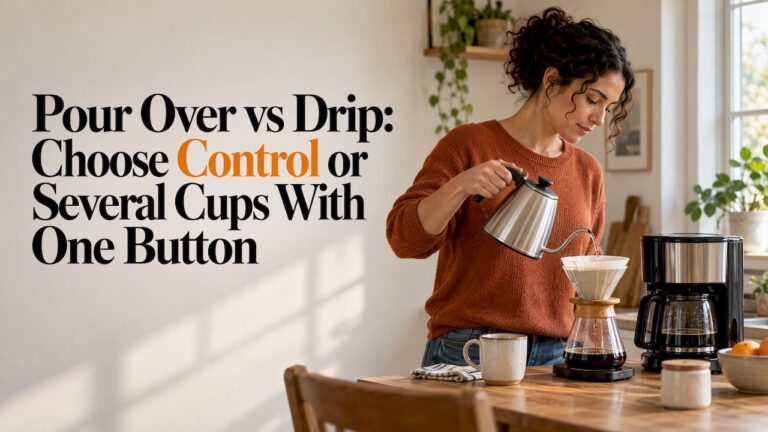
Pour-over wins on flavor clarity and control, drip wins on convenience and consistent batches, and the real decision comes down to what you value in the morning. If you want to taste every nuance in a bean and don’t mind the ritual, pour-over is worth it. If you want several cups ready with one button press, drip earns its keep. SCA research on drip brewing suggests water temperature matters less to flavor than most people assume, once strength and extraction are matched.
TL;DR:
- Researchers found little sensory difference across brew temperatures from about 87°C to 93°C when strength and extraction matched, so focus on consistent grind and dose.
- Paper filters in both methods remove most cafestol and kahweol; boiled coffee and coffee prepared in Turkish style contain higher levels of both compounds.
- Burr grinders affect flavor more than upgrading a dripper or machine, because uneven grounds cause uneven extraction; weigh coffee and water for consistent doses.
- Drip machines repeat poor results when grounds are stale, incorrectly sized, or poorly dosed, so automation cannot replace fresh coffee and accurate measurements.
- Choose a thermal carafe drip machine for group servings, or start with a plastic pour over cone if you brew alone and prioritize low cost.
Pour Over vs Drip Coffee: A Quick Side-by-Side Look
Before getting into the mechanics, here’s how the two methods stack up on the factors that actually change your morning.
- Taste: Pour-over tends to produce a cleaner, brighter cup with more separation between flavor notes; drip tends toward a rounder, more consistent body.
- Control: Pour-over hands you every variable, grind, water temperature, pour speed; drip locks most of that down inside the machine.
- Consistency: Drip removes human variability once the settings are dialed in; pour-over results shift with your technique from day to day.
- Time and volume: Pour-over suits a small batch brewed with attention; drip suits multiple cups brewed while you do something else.
- Equipment and cost: A basic pour-over setup costs less upfront than a quality drip machine, though both scale up with better gear.
- Caffeine and filtration: Paper filters used in both methods strip out most of the oily compounds called diterpenes, and caffeine content depends more on dose and brew ratio than on which method you pick.
Neither approach is objectively better coffee. They’re built for different mornings, and knowing which morning you actually have is the whole decision.
What Pour-Over Brewing Involves and What You Control
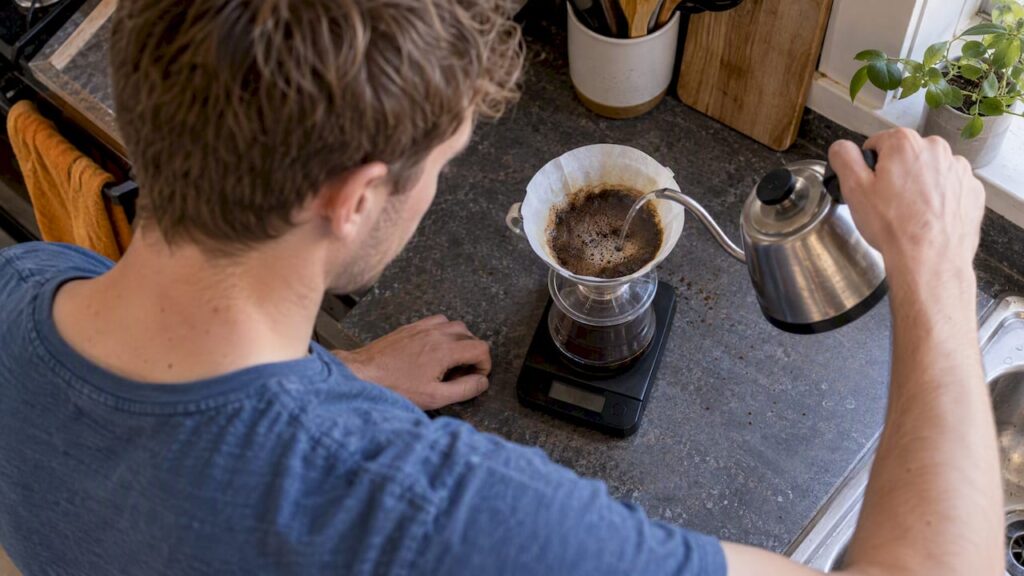
Pour-over is a manual process built around a few repeatable steps, each one a lever you can pull to change the cup.
- Rinse the filter with hot water to remove paper taste and preheat the dripper.
- Bloom the grounds with a small amount of water and let carbon dioxide escape before continuing.
- Pour in stages rather than all at once, keeping the water level steady and the grounds evenly saturated.
- Let it draw down fully before removing the dripper.
Grind size, dose, water temperature, pour rate, and pour height all interact. A finer grind or slower pour increases contact time and extraction; a coarser grind or faster pour does the opposite. Getting this timing right is where a resource like Tri Crow Coffee’s grind size guide becomes genuinely useful, since drawdown speed is one of the clearest signals that something in your recipe needs adjusting.
The essential kit is short: a dripper (cone-shaped like a V60 or flat-bottomed like a Kalita Wave), paper filters, a gooseneck kettle for pour control, a burr grinder, and a scale with a timer. Pour-over rewards small batches made with attention, not a full carafe made in a hurry.
Pro Tip: Weigh your water and coffee instead of eyeballing it, since dose consistency can help address flavor problems.
How Automatic Drip Brewing Works
Drip machines automate the same basic process pour-over does by hand: heating water, distributing it over grounds, and letting gravity pull it through a filter into a carafe.
- The machine heats water to a set range and releases it through a showerhead designed to saturate the grounds evenly.
- You still control grind size, coffee dose, and often a brew-strength setting, but the machine controls flow rate and timing.
- Basic machines offer a single brew strength and a glass carafe, while programmable models add thermal carafes, adjustable bloom cycles, and integrated grinders.
- Once the settings match your taste, a drip machine repeats that result with little variation from one morning to the next.
The appeal is straightforward: batch brewing for a household or office, hands-off mornings, and a consistent cup as long as the basics (grind, dose, water) stay correct. If you’re weighing a drip machine against a single-serve pod system, the trade-offs in cost and waste are worth a closer look in a single-serve versus drip comparison.
Taste and Extraction: What the Science Actually Says
Two numbers explain most of what you taste in a cup: total dissolved solids (TDS), which measures brew strength, and percent extraction (PE), which measures how much of the coffee’s soluble material ended up in the water. Both matter more to flavor than water temperature alone.
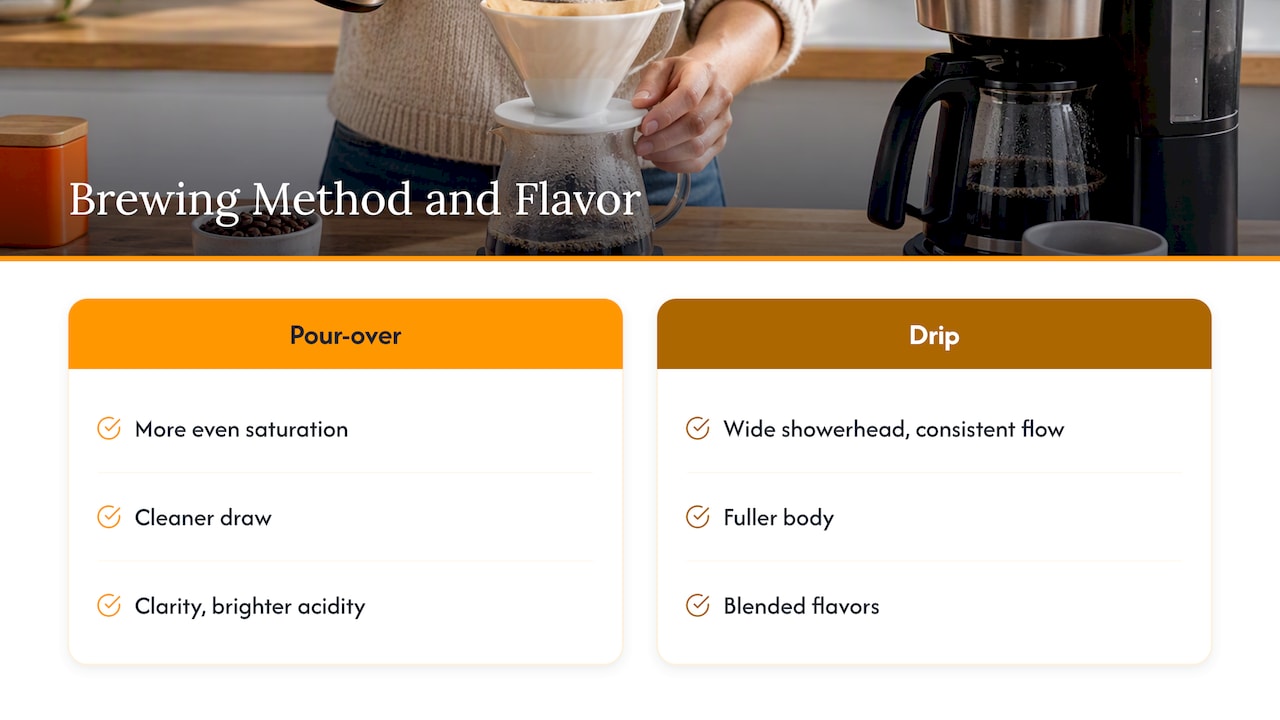
Pour-over’s manual pours often create more even saturation and a cleaner draw, which tends to show up as clarity and brighter acidity in the cup. Drip brewing, especially with a wide showerhead and consistent flow, often produces a fuller body with flavors blended together rather than separated.
When researchers held TDS and PE constant across a range of brew temperatures between about 87°C and 93°C, the sensory profile of the resulting coffee showed little significant difference.
SCA/UC Davis research
Peer-reviewed HPLC analysis found that boiled and Turkish-style coffees carried the highest levels of the diterpenes cafestol and kahweol, while drip-filtered brews contained negligible amounts. That matters less for flavor and more for the health side of the comparison, which is worth understanding before you assume one method is automatically the “healthier” choice.
Consistency and Convenience: Which One Repeats Well
Pour-over’s main source of variability is you. Grind consistency, pour technique, and channeling (where water finds a path of least resistance through the grounds instead of saturating evenly) all shift the result, though practice narrows that range quickly.
Drip machines remove most of that human error, but only if the basics are right: fresh grounds at the correct size, an accurate dose, and clean water. A machine brewing stale, poorly dosed coffee still produces a mediocre cup, just a mediocre cup you can count on every time.
- Pour-over needs a rinse and a quick filter toss after each brew; drip needs an occasional carafe wash and periodic descaling.
- If you’re brewing for a group or need coffee ready before you’re fully awake, drip is the easier daily habit.
- If your mornings allow extra time and you enjoy adjusting the recipe, pour-over rewards that time.
Pro Tip: Run a descaling cycle on a drip machine as needed based on your water hardness, since mineral buildup can slow water flow and affect extraction.
Equipment and Cost: Where to Spend Your Money
A pour-over setup is cheaper to start but asks you to buy a few specific pieces: a dripper, paper filters, a gooseneck kettle, a burr grinder, and a scale. Budget tiers stretch from basic plastic drippers and entry grinders to precision kettles and higher-end conical burr grinders.
Drip machines range from simple carafe models to programmable units with thermal carafes and built-in grinders, and the price jump between those tiers usually buys better temperature stability and water distribution, not just extra features.
- A quality burr grinder affects flavor more than an expensive dripper or machine, since uneven grind particles cause uneven extraction no matter how good the rest of the setup is.
- Paper filters are a small recurring cost for both methods; permanent metal filters cut that cost but let more oils and fine particles through into the cup.
- Drip machines carry additional upkeep in descaling solution and occasional carafe or gasket replacement.
For a side-by-side look at specific grinders, kettles, and machines, the coffee equipment reviews hub breaks down pricing and performance across both brewing styles.
How to Choose Between Pour-Over and Drip
A short checklist settles most of the indecision: What’s your real priority, flavor or convenience? How many cups do you make daily? How many minutes can you give each one? What’s your budget? Do you enjoy tinkering with a recipe, or do you want to set it and forget it?
- Solo coffee drinker who wants to taste the bean: a pour-over dripper, filters, and a basic gooseneck kettle.
- Family or office needing several cups fast: a programmable drip machine with a thermal carafe.
- Budget-first buyer: a simple plastic pour-over cone, which costs less than almost any drip machine on the market.
- Someone who wants both: a basic drip machine for weekday mornings and a pour-over setup for weekend experimentation.
| Priority | Best fit | Why |
|---|---|---|
| Flavor clarity | Pour-over | Manual control over grind, pour, and timing |
| Convenience | Drip | One-button repeatability for multiple cups |
| Budget | Pour-over | Lower upfront cost for a full kit |
| Volume | Drip | Built for batch brewing without supervision |
Start by brewing one pour-over cup side by side with your usual drip coffee using the same beans, then decide which trade-off actually bothers you less.
What the Research Says About Temperature and Filtration
The SCA’s write-up of the UC Davis work is blunt about it: once TDS and PE were matched, the flavor changes from brew temperature alone were so small they were mostly not statistically significant, and the consumer panel showed no preference driven by temperature.
That finding, paired with peer-reviewed diterpene research showing that paper-filtered pour-over and standard drip both strip out most cafestol and kahweol, points to a practical conclusion: grind consistency, dose accuracy, and filter choice do more work than chasing a precise temperature number ever will.
My Take on Matching a Method to a Routine
I don’t think there’s a universally “correct” answer here, only a correct answer for how a given morning actually goes. The flavor difference between a well-made pour-over and a well-made drip cup is real, but it’s smaller than the difference between a rushed cup and a careful one, regardless of method. I’d rather see someone brew a mediocre pour-over they enjoy making than a technically superior cup they resent the extra five minutes for. If a routine calls for speed most days, I’d lean toward drip and save pour-over for the mornings that call for something slower.
How This Comparison Was Put Together
This comparison is built from published research and expert sources rather than side-by-side brewing of my own: the SCA and UC Davis brew-temperature study, two peer-reviewed papers on coffee diterpenes, Real Simple’s expert interviews and Tri Crow Coffee’s grind guide. What could not be established: I found no controlled, published taste test pitting pour-over against drip with the same beans, grind and ratio, so the flavor differences described here reflect brewers’ general consensus rather than measured results.
Find the Right Coffee Gear for Your Method
Once the method is settled, the gear decision comes next, and the grinder deserves the first look for either one.

The coffee equipment reviews and guides page breaks down grinders, kettles, and machines by price and performance, and the Kitchenware Compare homepage is a solid starting point for browsing current reviews across both brewing styles.
- Compare grinders, kettles, and drip machines by spec and price before buying.
- Put the grinder first, since uneven grounds hurt either method more than a basic dripper or machine does.
- Use the homepage to browse reviews and comparisons for both brewing styles.
FAQ
Which is better, pour over or drip coffee?
Neither is better for every kitchen: pour-over offers more flavor control and clarity for single cups, while drip offers consistency and convenience for batch brewing. The three experts Real Simple interviewed lean toward pour-over for flavor when there is time to make it. The right pick depends on how much time you want to spend and how many cups you’re making.
What is the disadvantage of pour-over coffee?
Pour-over takes more active time and attention than drip, and results vary more from cup to cup based on technique, grind consistency, and pour speed. It also typically brews a small batch at a time, which makes it a poor fit for serving a group quickly.
Is pour-over coffee the healthiest?
Pour-over isn’t meaningfully healthier than standard drip, since both use paper filters that remove most cafestol and kahweol, the diterpenes linked to raised cholesterol in peer-reviewed analysis. Unfiltered methods like French press or boiled coffee carry higher levels of those compounds than either pour-over or drip.
Why do people prefer pour-over coffee?
Many coffee drinkers prefer pour-over for the flavor clarity and control it offers over variables like grind size, pour rate, and water temperature. The hands-on process also appeals to people who enjoy the ritual of brewing as much as the cup itself.
Sources
- Sprudge
- How Hot is Hot Enough? Brew Temperature, Sensory Profile, and Consumer Acceptance of Brewed Coffee | 25, Issue 15 — Specialty Coffee Association
- Analysis of the content of the diterpenes cafestol and kahweol in coffee brews
- Pubmed
- Pour-Over or Drip Coffee? 3 Experts Agree This Brewing Method Makes the Best Cup
Recommended
- Single-Serve vs Drip Coffee Makers: Taste, Cost and Waste
- Moka Pot vs Espresso: Pressure, Strength, Cost and Upkeep
- Espresso Machine vs Coffee Maker: Which One Fits Your Routine?
- Best Stovetop Espresso Maker: 5 Moka Pots Compared

I'm Glenn, and I started Kitchenware Compare to cut through conflicting product reviews and help readers pick kitchen gear with confidence. I don't own or test the products I write about — these guides are built from verified-purchase reviews, manufacturer specifications, and independent testing where it exists, with the reasoning shown, not just a rating.
Leave a Reply