This guide has no affiliate links, but some pages it links to do. If you buy through those, I may earn a commission at no extra cost to you.

Pick single-serve if you want speed, single-cup convenience, and variety with almost no prep; pick drip if you want to brew for more than one person, keep cost per cup lower, and control strength and extraction. Single-serve trades flexibility for convenience, since pods lock in dose and brew time, while drip asks for a little more effort but rewards it with a cup you can tune to taste.
TL;DR:
- SCA research found dissolved solids and extraction affect sourness and strength more than temperature from 87 to 93°C; drip lets you adjust both.
- For one cup every other day, a cheaper single serve machine may cost less in total because it avoids unused bulk coffee, despite higher pod prices.
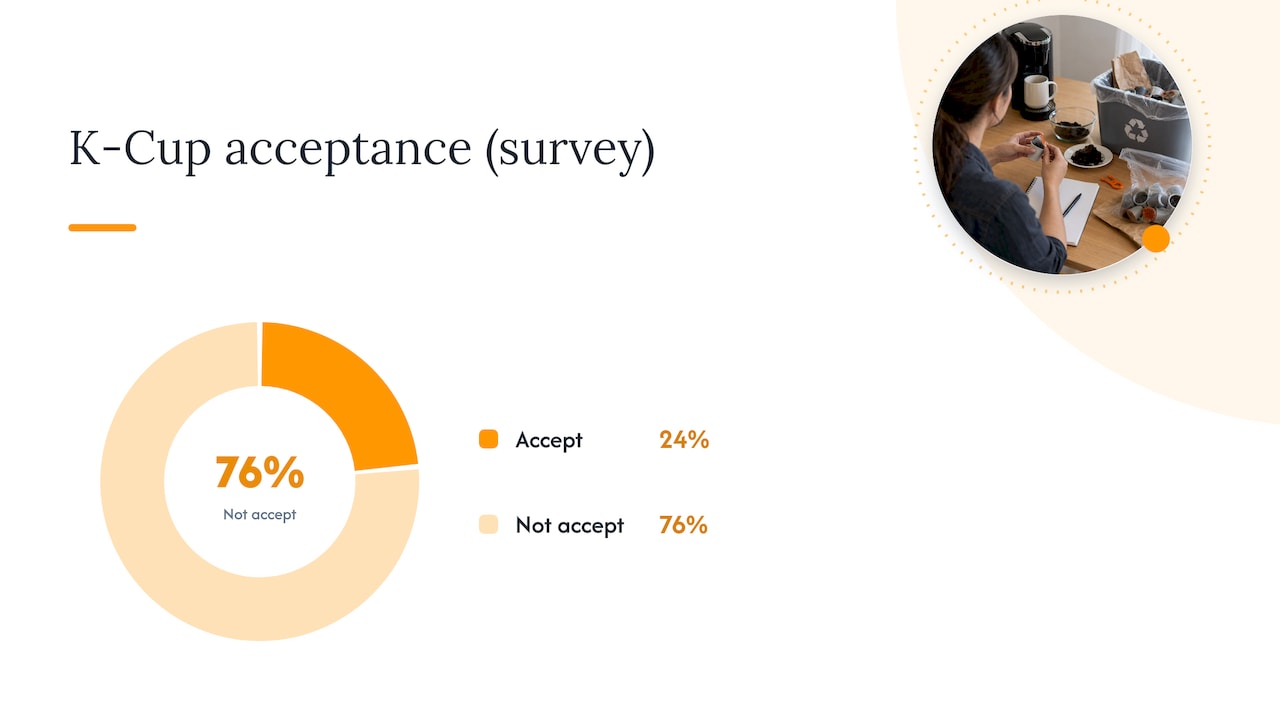
- Only 4 of 17 surveyed collectors and processors said they would accept K-Cups, and only if cleaned and separated, so verify local rules before relying on pod recycling or composting.
- Families brewing three or more cups should check drip carafe capacity and cycle time; one or two cups usually suit a single serve machine.
Pros and Cons of Single-Serve and Drip Coffee Makers
Both systems solve the same problem (coffee, on demand) in opposite ways. One leans on convenience, the other on control, and the right choice usually comes down to how much time, counter space, and fuss a household can tolerate on a weekday morning.
Single-serve machines work well for:
- Brewing one cup in under a minute with no measuring or grinding.
- Offering variety, since a drawer of pods can hold five different roasts or flavors.
- Keeping cleanup simple: no filter basket, no grounds to scoop out.
- Fitting small kitchens or dorm counters where a bulky drip machine feels wasteful.
- Suiting commuters and single-person households who rarely need more than one cup at a time.
Single-serve machines have these drawbacks:
- Creating more packaging waste per cup, since every brew uses a sealed pod.
- Locking in dose and extraction, so flavor adjustment is limited to pod choice.
- Carrying a higher per-cup cost than bulk-ground coffee.
Drip machines work well for:
- Brewing a full carafe, which suits families, offices, or anyone hosting guests.
- Keeping ingredient cost low, since bulk coffee beats individually packaged pods on price per cup.
- Giving control over grind size, dose, and water ratio, so the cup can be tuned toward a preferred strength.
- Using reusable filters or baskets, which cuts single-use waste.
- Fitting coffee enthusiasts who want to experiment with ratios and roasts.
Drip machines have these drawbacks:
- Taking a few minutes longer per batch, since even fast drip machines need a brew cycle.
- Requiring more cleanup, since a carafe and filter basket both need regular washing.
- Needing occasional descaling to keep flow rate and flavor consistent.
How Brewing Science Explains the Taste Difference
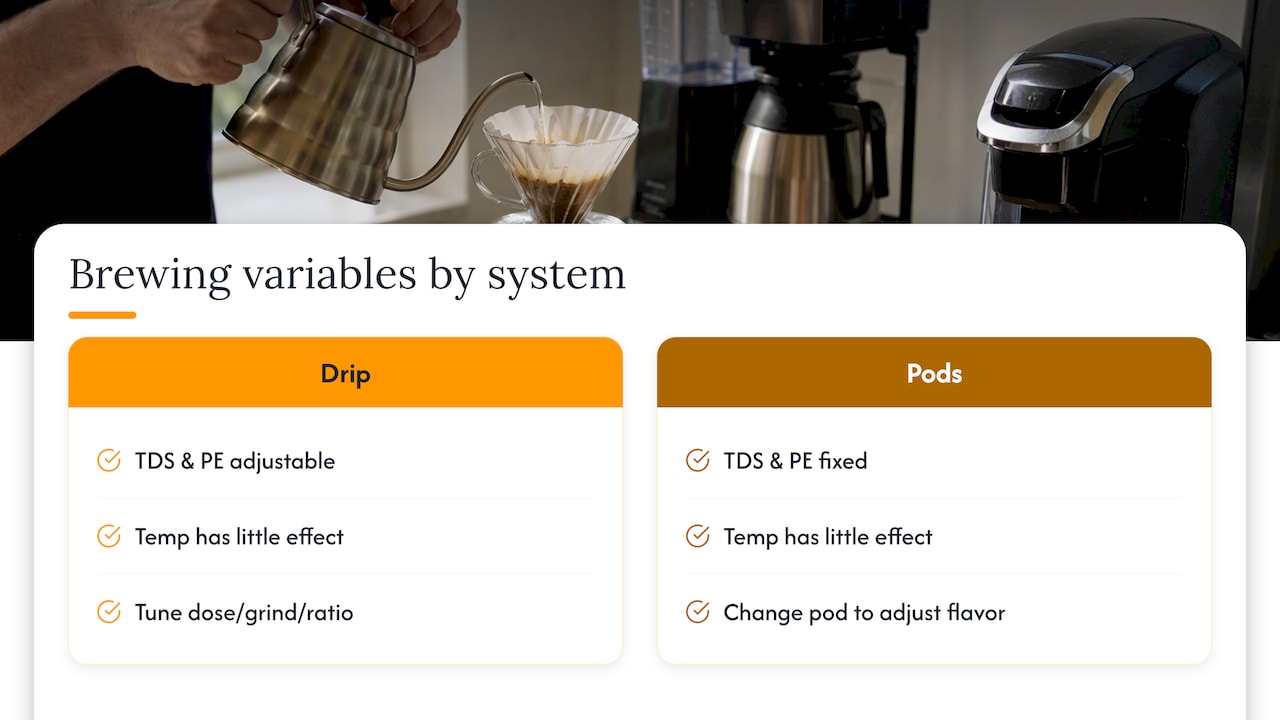
The flavor gap between single-serve and drip isn’t mostly about temperature. According to the Specialty Coffee Association’s brew temperature research, changing total dissolved solids (TDS) and percent extraction (PE) produced major shifts in perceived sourness and strength, while brewing within the 87 to 93 degree Celsius range made little difference once TDS and PE were held steady. Consumers in that study didn’t reliably prefer one brew temperature over another when those two variables stayed constant.
The same SCA article found that the intensity of sour taste was highest in coffees with low percent extraction (around 16%) and high TDS (around 1.5%), and that consumers formed two groups: some preferred TDS around 1%, others stronger coffee above 1.25%. The study brewed a single medium-roast coffee and did not compare machine types. With two groups like that, a single fixed recipe cannot suit everyone.
Drip machines give you the knobs that move TDS and PE: dose, grind size, water-to-coffee ratio, and brew duty cycle. A pod fixes most of those variables at the factory, so adjusting flavor usually means switching pods rather than tuning a recipe. Neither system is incapable of a good cup. Drip simply gives more room to dial in a specific sensory target, which matters most to people who already know they like their coffee stronger, softer, or more acidic than the default.
Time, Maintenance, and the Real Cost Per Cup
Per-cup cost varies more than most buyers expect. Premeasured pods carry a packaging and convenience premium, while bulk-ground coffee brewed through a drip machine typically costs less per cup, though the exact gap depends on the roast and brand chosen.
- Single-serve machines heat water on demand rather than keeping a carafe hot.
- Many drip machines keep the carafe hot, and the life-cycle study’s background section says up to three-fourths of such a machine’s electricity can go on standby when it lacks auto power-down.
- Pods are discarded after one use unless a reusable pod basket is part of the setup.
- Drip filters are reusable (mesh) or cheap and compostable (paper), and the carafe just needs regular washing.
- Descaling frequency is similar for both systems and depends more on local water hardness than machine type.
For a household that brews a few cups a day, drip tends to win on cost and matches well with a reusable filter. For someone who brews one cup every other day, the lower upfront cost of a single-serve machine and the lack of wasted bulk coffee can offset the higher per-cup price.
The Environmental Trade-offs Nobody Puts on the Box
A life-cycle assessment in the Italian Journal of Food Science compared eight coffee formats and the machines that brew them, per cup. Ground coffee from a multilayer bag, brewed in a moka pot or espresso machine, scored about 613 points per cup on the EU product environmental footprint, against about 2,777 for polypropylene capsules and 2,895 for pads. The carbon footprint was about 8.2 g of CO2e per cup for the bag and 41 g for the polypropylene capsule. The study did not test drip machines, so it measures the cost of pods, not the cost of drip.
Its background section adds drip’s weak point: many electric drip machines have no auto power-down, and up to three-fourths of their electricity can go on keeping the carafe hot.
An expert report by SCS Engineers, prepared for the consumer group Truth in Advertising, surveyed collectors and processors in the 10 most populous states and received 17 responses. Four of the 17 said they would accept K-Cups, and only if the pods were cleaned and separated into plastic, foil and grounds, a step almost no one takes at the sink. The report names the pods’ small size, contamination from leftover grounds, limited market value and sorting-equipment barriers as the reasons.
If waste is a real concern, a reusable pod basket filled with your own grounds sidesteps the packaging problem entirely. Certified compostable pods only help where a local industrial composting program actually accepts them, so it’s worth checking municipal guidance before assuming a “compostable” label solves anything. Drip brewed with bulk beans and a reusable filter remains the lower-waste default for most households.
A Quick Checklist for Choosing Between the Two
Match the machine to how coffee actually fits into daily life rather than how it looks on a countertop.
- Count how many cups a typical morning actually requires: one or two favors single-serve, three or more favors drip.
- Decide how much you care about tuning strength and acidity versus grabbing a cup and getting on with the day.
- Set a budget for both the machine and the ongoing cost of pods versus bulk coffee.
- Check counter space: single-serve units are usually more compact than a full drip carafe setup.
- Weigh how much packaging waste matters to your routine and whether local recycling or composting is realistic.
Scenario: A commuter household of one, short on time, usually wants a single-serve machine; check the reservoir size so you’re not refilling daily. A family of four brewing every morning usually does better with drip; check the carafe capacity and brew time together. An entertainer who hosts guests on weekends benefits from drip’s batch size; check whether the warming plate holds temperature well over an hour. Someone who wants precise control without a big machine might look at manual brew methods instead, which a guide to home coffee brewing covers in practical detail.
Pro Tip: For drip, check the brew cycle time printed in the spec sheet, since faster isn’t always better: a cycle that moves water through the grounds too quickly often under-extracts and tastes thin.
Where This Comparison Comes From
This comparison is built from three sources, all linked below: the Specialty Coffee Association’s brew-temperature study, an expert report on K-Cup recyclability, and a life-cycle assessment of coffee packaging. It is not based on hands-on use or owner reviews, and it does not rank specific machines. What could not be established is how a given pod machine compares with a given drip machine on taste, since the SCA study varied brew settings rather than machine types and the life-cycle study did not include drip machines. For picks across both categories, the coffee equipment hub is the place to start.
— Glenn
Ready to Pick a Machine? Here’s the Next Step
Comparing specs side by side is the fastest way to land on a machine that fits a routine. This site has no pod-machine reviews yet; its coffee guides and reviews cover espresso machines, moka pots and French presses.
If you are leaning toward an espresso machine instead, espresso machine vs coffee maker compares the two routines, Keurig not working has the steps from Keurig’s own guides if you already own a pod brewer that has stopped, and the best espresso machine under $200 guide covers the entry price tier.
FAQ
Why do Americans prefer drip coffee?
Drip brewing has a long history as the default home method in the US, and it remains popular because it brews multiple cups at once and lets a household control strength and cost. Convenience habits and existing equipment also play a role, since switching systems means buying new hardware.
What makes better coffee, Keurig or drip?
Neither wins outright on taste. The SCA study found that total dissolved solids and percent extraction drive perceived sourness and strength more than brew temperature. It did not compare machine types, but drip gives more room to adjust those variables toward a preferred cup.
What are the disadvantages of drip coffee?
Drip machines take longer per brew cycle than single-serve units and require more cleanup, since the carafe and filter basket need regular washing. Many also sit on a warming plate that draws a small amount of standby power between brews.
What is the 15-15-15 coffee rule?
No 15-15-15 rule is defined by the Specialty Coffee Association or in the sources used for this guide, so treat the phrase as informal shorthand and check what the person using it means. The SCA’s published brewing research deals with TDS, percent extraction and temperature rather than a numbered rule.
Sources
- How hot is hot enough? Brew temperature, sensory profile, and consumer acceptance of brewed coffee — Specialty Coffee Association
- K-Cup recyclability claims: expert report by SCS Engineers for Truth in Advertising
- Streamlined life cycle assessment of packaging waste in coffee preparation and consumption
Recommended
- Best Semi-Automatic Espresso Machine: 5 Picks Compared
- Coffee Equipment Reviews & Guides
- Gaggia Classic Pro vs De’Longhi Stilosa: Which to Buy?
- Best Stovetop Espresso Maker: 5 Moka Pots Compared

I'm Glenn, and I started Kitchenware Compare to cut through conflicting product reviews and help readers pick kitchen gear with confidence. I don't own or test the products I write about — these guides are built from verified-purchase reviews, manufacturer specifications, and independent testing where it exists, with the reasoning shown, not just a rating.
Leave a Reply