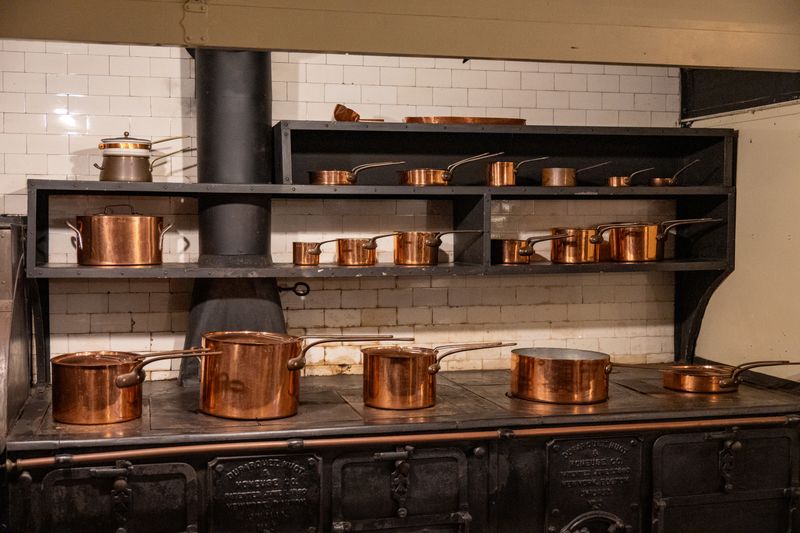
Photo by Beth Fitzpatrick from Pexels
This guide has no affiliate links, but some pages it links to do. If you buy through those, I may earn a commission at no extra cost to you.
Only some copper pans work on an induction cooktop. Pure copper is not magnetic, so a traditional copper pan will not heat on its own. Copper pans built with a magnetic stainless steel layer work directly, and traditional copper works with a magnetic interface disk.
Which one you own decides the answer, and the sections below sort the three cases.
Why a copper pan will not heat on induction
Whirlpool’s help page says aluminum and copper typically do not work on induction unless they have a magnetic base. Mauviel, a French copper cookware maker, gives the mechanism on its induction cookware guide: the cooktop induces current in the base of the pan, but only if the base contains a ferromagnetic metal such as magnetic stainless steel or iron. Copper conducts heat extremely well and is not ferromagnetic, so the field passes through a traditional copper pan without heating it.
That is why a good conductor can still fail on this type of cooktop. The same applies to aluminum, which is what most copper-colored nonstick pans are made of.
It also explains why makers bother. Mauviel calls copper one of the best thermal conductors of any cookware metal, and All-Clad describes its five-layer bonding as a balance between fast heating and heat retention. The clad lines below exist to keep that conduction while adding the one layer induction needs.
The three kinds of copper pan
| Kind of pan | Examples | On induction by itself? |
|---|---|---|
| Traditional copper, tin-lined, stainless-lined or unlined | Mauviel M’Heritage, M’Tradition, M’Passion | No; works with a magnetic interface disk |
| Clad copper with a magnetic stainless layer | Mauviel M’6 S, All-Clad Copper Core, Hestan CopperBond | Yes, according to each maker |
| Copper-colored nonstick, usually aluminum | Gotham Steel and Moss & Stone pans | Depends on the base; check the listing |
The third group is where most disappointment comes from. This site’s best non-stick copper cookware guide describes these pans as aluminum with a copper-colored finish, and found that induction depends on the set: some list it and some do not.
Which copper pans are made for induction
Three makers say outright that a copper line works on induction.
- Mauviel M’6 S. Mauviel describes six layers: a polished copper exterior, three layers of aluminum, a ferromagnetic stainless steel layer, and an 18/10 stainless interior. The magnetic layer is the part the cooktop heats, and the copper and aluminum spread that heat.
- All-Clad Copper Core. All-Clad’s collection page says the copper core is surrounded by aluminum and finished with a stainless interior, with a stainless steel exterior that is induction compatible, and that the line works on all stovetops including induction and to 600°F in the oven.
- Hestan CopperBond. Hestan’s collection page describes a 100% pure copper core in five-layer construction, and lists the CopperBond Induction range among the first induction-hob-suitable copper pan sets.
Mauviel’s guide is the most detailed of the three, because it sorts every line it sells:
| Mauviel collection | Construction | Induction |
|---|---|---|
| M’6 S | Six-ply induction copper with a magnetic stainless layer | Yes |
| M’COOK, M’Elite and their B versions | Five-ply stainless steel | Yes |
| M’URBAN 4 | Three-ply stainless steel | Yes |
| M’STEEL | Carbon steel | Yes |
| M’Heritage (M’150, M’200, M’250) | Bilaminated copper, stainless steel interior | With interface disk |
| M’3 S | Three-ply, copper exterior, stainless steel interior | With interface disk |
| M’Tradition | Tin-lined copper, to be kept below 460°F (235°C) | With interface disk |
| M’Passion | Unlined copper, specialty pieces | With interface disk |
Only one of Mauviel’s seven induction-ready collections is copper. The other six are stainless steel or carbon steel, so a pan can carry the Mauviel name and still not be a copper pan.
Using a copper pan you already own
If you own traditional copper, Mauviel says you do not need to replace it. Its magnetic interface disk sits between the burner and the pan: the induction field heats the disk, and the disk passes that heat to the copper above it. The disk Mauviel names is the 8.6-inch M’PLUS.
- Place the disk flat on the induction zone.
- Set the copper pan on top, centered.
- Start at moderate power. Mauviel says about 60% of maximum is usually plenty for copper.
- Adjust gradually, because the disk adds a heat-transfer step and the pan responds a little more slowly than native induction cookware.
A similar adapter exists for aluminum moka pots. This site’s guide to using a moka pot on an induction stove covers Bialetti’s plate.
Mauviel is also a seller, so its disk guidance is the maker’s own advice rather than an independent test, and it gives no rule for how large a zone the disk needs. Your hob’s manual sets its own minimum size, which Jenn-Air’s help page says to match to the pan’s base.
Native induction copper or a disk on copper you own?
The choice comes down to whether you already own copper. Mauviel’s own advice is that you do not need to replace traditional copper, and that an interface disk is the way to keep using it.
| Route | How it works | What it costs you |
|---|---|---|
| Traditional copper plus an interface disk | Keep your pans; the disk sits between the zone and the pan | A heat-transfer step and a slower response, per Mauviel; a second item to store; start near 60% power |
| Clad copper made for induction | Cook directly; the magnetic stainless layer is what the zone heats | A new purchase; All-Clad says to hand-wash its Copper Core line |
| Induction-ready steel from a copper maker | Cook directly on stainless or carbon steel | No copper at all; Mauviel’s other six induction-ready collections are of this kind |
If the reason for wanting copper is even heat and quick response rather than the look, the third row is worth knowing about. The makers’ own induction pages treat it as a normal part of the range.
How to tell which kind you have
Start with the maker’s wording. A line described as induction-ready or induction-compatible is the clad kind, and a line sold as traditional, tin-lined or unlined copper is not. Mauviel’s guide and All-Clad’s page both state it by name.
The magnet test is the quick check for anything else. Whirlpool says to hold a magnet against the base: if it sticks firmly the pan is induction compatible, and if it slides off it is not. A copper-exterior pan is the awkward case. Mauviel’s M’6 S has copper outside and the magnetic layer deeper in, and Mauviel does not say how a magnet behaves on it, so for that construction the maker’s statement is the better guide than a magnet.
A stainless pan with a copper-clad base is the same test, because the base is what the cooktop reads. Whirlpool’s magnet check settles it, and no maker statement was checked for older copper-bottom lines.
What to check in a listing
- The maker’s induction statement. Mauviel and All-Clad state induction compatibility on their own pages. A reseller’s tick box is weaker evidence, as the copper nonstick examples above show.
- Where the magnetic layer sits. All-Clad’s is the stainless exterior. Mauviel’s M’6 S has it inside, under a copper exterior.
- The lining. Mauviel’s M’Heritage and M’6 S have stainless interiors, M’Tradition is tin-lined and to be kept below 460°F (235°C), and M’Passion is unlined.
- The oven limit. All-Clad gives 600°F for Copper Core, and the tin lining sets Mauviel’s lower limit for M’Tradition.
- Whether a disk is needed. A line that says “with interface disk” will not heat alone, so add the disk to the cost.
- Care instructions. All-Clad recommends hand-washing Copper Core, with warm water and mild soap, and moderate cooking temperatures.
What usually goes wrong
- Buying copper color rather than copper. A copper-colored finish on aluminum has the cooking behavior of aluminum, and the induction question then depends entirely on the base.
- Trusting the word “induction” in a listing. On this site’s copper nonstick guide, one reviewer of the Moss & Stone pan said theirs did not work on induction despite the listing, and Consumer Reports found a related Gotham Steel set could not be used on induction.
- Letting a copper pan boil dry or overheat on the glass. GE’s page on cookware for glass cooktops says copper-bottom pans can leave a residue that looks like scratches, which cleans off if you act quickly, and that an overheated copper pot will leave a residue that permanently stains the cooktop. It is written for radiant glass rather than induction, but an induction cooktop has a glass surface too, so the caution is a reasonable one even though GE does not state it for induction.
- Running copper too hot. Copper conducts so efficiently that Mauviel puts about 60% of maximum power as plenty, so the top settings are rarely needed.
- Overheating a tin lining. Mauviel says to keep tin-lined M’Tradition below 460°F (235°C).
- Expecting the disk to behave like a native pan. It adds a step, so the response is slower, as Mauviel itself notes.
How this guide was put together
The facts come from the makers’ own pages (Mauviel, All-Clad and Hestan), from Whirlpool’s and Jenn-Air’s help pages on induction cookware, from GE’s page on cookware for glass cooktops, and from this site’s own reviews of copper-colored nonstick pans. It does not come from cooking on an induction hob.
Several things could not be established. No source used here measured how a magnet behaves on a copper-exterior pan such as the M’6 S. No independent test comparing an interface disk with a native induction copper pan turned up. Brands other than Mauviel, All-Clad and Hestan, including Ruffoni and Falk Culinair, were not checked for this guide.
Frequently Asked Questions
Can you use copper pans on an induction cooktop?
Only some. Pure copper is not magnetic, so traditional copper pans will not heat alone. Clad copper with a magnetic stainless layer, such as All-Clad Copper Core or Mauviel M’6 S, works directly, and traditional copper works with a magnetic interface disk, according to the makers.
Do you need an interface disk for copper cookware?
Only for traditional copper. Mauviel says its M’Heritage, M’Tradition, M’3 S and M’Passion lines work on induction with its magnetic interface disk, while its M’6 S copper line and its stainless steel lines work without one. Clad lines from All-Clad and Hestan also do not need a disk.
How can you tell if a copper pan works on induction?
Check the maker’s induction statement first, then hold a magnet to the base. Whirlpool says a magnet that sticks firmly means the pan is induction compatible. Copper-exterior pans with the magnetic layer inside are the exception, so rely on the maker’s wording for them.
Does Copper Chef cookware work on induction?
This site’s review of the Copper Chef Titan Pan says its stainless exterior is magnetic, so it works on induction. It is a ceramic-coated pan over stainless steel and aluminum, not a copper pan, so the copper name does not tell you anything about induction.
What power setting should copper use on induction?
Mauviel says about 60% of maximum power is usually plenty for copper, and to adjust gradually, particularly with an interface disk. Hobs label power differently, so treat that as a starting point and raise it only if the pan is slow to heat.
Is clad copper still real copper?
Yes, but the copper is arranged differently. All-Clad’s copper sits inside a core under a stainless exterior, Hestan describes a pure copper core, and Mauviel’s M’6 S keeps a copper exterior. In each, the magnetic stainless layer is what the cooktop heats.
Will a copper pan stain or scratch an induction cooktop?
GE says copper-bottom pans can leave a residue on glass that looks like scratches and cleans off if acted on quickly, and an overheated copper pot can leave a permanent stain. Its page covers radiant glass, so treat it as caution for induction, not a rule.
The short version
Check what kind of copper you have before you buy or cook. Clad lines from Mauviel, All-Clad and Hestan work on induction directly, traditional copper needs a magnetic interface disk, and copper-colored nonstick depends on its base. For the wider picture see this site’s guide to cookware that works on induction, and for pans with a copper finish read the best non-stick copper cookware guide and the Copper Chef Titan Pan review.

I'm Glenn, and I started Kitchenware Compare to cut through conflicting product reviews and help readers pick kitchen gear with confidence. I don't own or test the products I write about — these guides are built from verified-purchase reviews, manufacturer specifications, and independent testing where it exists, with the reasoning shown, not just a rating.
Leave a Reply