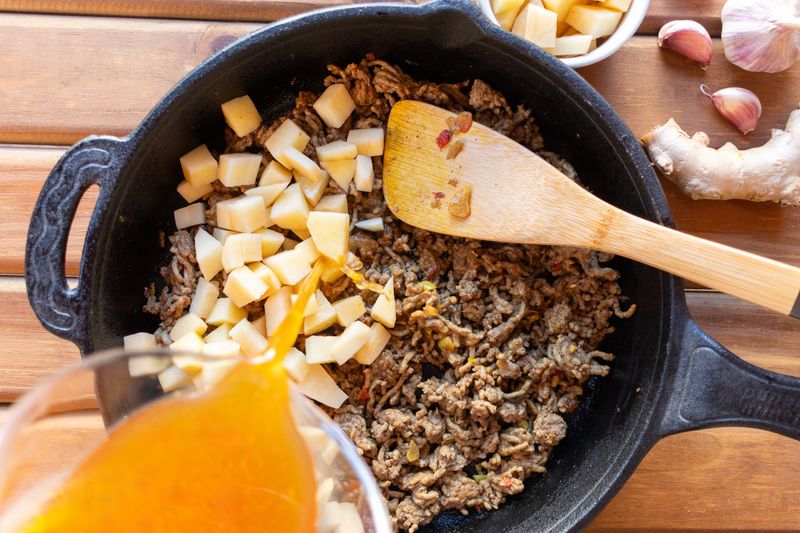
A cast iron skillet is a buy-once pan. For most cooks the right one is a pre-seasoned 10-inch, which is large enough for a family meal and light enough to lift, and the care routine is short: wash by hand, dry at once, rub on a little oil and cook in it often. This guide covers size, seasoning, the three brands worth comparing, and care, with the maker sources behind each point.
If the seasoning has started shedding black flakes, see why cast iron seasoning flakes off and how to rebuild it. If a pan came out of the oven tacky, see cast iron that is sticky after seasoning. For rust, see fixing rusty cast iron.
I earn a commission if you buy through the Amazon links below, at no extra cost to you.
What Size Cast Iron Skillet Do You Need?
Sizes are quoted as the rim diameter, and the flat cooking surface is smaller. Stargazer lists its 10.5-inch skillet at a 10.5-inch rim and an 8.1-inch cooking surface (Stargazer product page), so measure the surface if you need to fit a specific cut of meat.
8-inch: one or two people
Comfortable for a couple of eggs, a small steak or a fish fillet or two. The Lodge 8-inch weighs 3.2 lb on its listing, which is why it is easy to use daily; my Lodge 8-inch review covers it.
10-inch: the one most people should buy
It handles a full breakfast for two, two steaks side by side, sautéed vegetables or a shakshuka for four. Victoria lists its 10-inch skillet at 4.8 lb (Victoria product page) and Stargazer lists its 10.5-inch at 5.2 lb. If you are buying one skillet, buy a 10-inch.
12-inch: families and batch cooking
It fits a whole spatchcocked chicken or a large shakshuka. The trade-off is weight: the Lodge 12-inch is about 7.9 lb (3.58 kg) on its listing, which is hard to move one-handed from oven to counter. See the Lodge 12-inch review and the Victoria 12-inch review.
Seasoning: What It Is and What Each Maker Uses
Lodge defines seasoning as oil baked onto the pan through polymerization, a process that hardens the oil into a layer that bonds to the iron. Each time you cook with oil or fat you add another layer, and Lodge says those layers build into a strong, nonstick surface (Lodge: All About Seasoning).
Almost every skillet sold today comes pre-seasoned, and the oils differ. Lodge seasons with a soy-based oil sprayed on and baked in its South Pittsburg foundry. Victoria says its skillet is preseasoned with three layers of non-GMO flaxseed oil, and Stargazer finishes its seasoned pan with a blend of canola, grapeseed and sunflower oils. Stargazer also sells a bare version, which arrives coated in mineral oil for shipping and needs washing and seasoning.
Surface: Cast Finish vs Machined Smooth
Lodge and Victoria sell skillets with a cast finish, and the Lodge and Victoria reviews on this site describe the cooking surface as rougher out of the box. Stargazer machines its cooking surface smooth and says so on its product page; see my Stargazer 10.5-inch review.
Smoother surfaces are meant to release food earlier, but I could not find an independent measurement of how much sooner. The price gap is not small: at the listing prices below the Stargazer costs about six times as much as a Lodge.
Cast Iron vs Other Cookware
Cast iron is the right tool for searing, stovetop-to-oven cooking and long braises. It is a poor choice for long, large acidic dishes, because Lodge says large amounts of very acidic or alkaline food cooked for extended periods can break down the seasoning (Lodge myths page). High-heat searing also makes smoke, so good kitchen ventilation matters.
If you are deciding between a skillet and a Dutch oven, see my best cast iron Dutch oven guide and the Lodge vs Le Creuset comparison. Weighing cast iron against other materials? Try carbon steel vs cast iron, cast iron vs stainless steel or cast iron vs ceramic.
Which Brands Are Worth Comparing?
Lodge
Lodge casts and seasons in South Pittsburg, Tennessee, and its 10.25-inch skillet is the usual first purchase. It ships with the cast finish rather than a machined one. Lodge says its seasoning can withstand a little mild soap, water and a good scrub, so the break-in is mostly a matter of cooking with it.

Victoria
Made in Colombia, at a similar price to Lodge. Victoria lists its 10-inch at 4.8 lb with a long handle and pour spouts on both sides, and says it works on gas, electric, ceramic and induction stovetops.

Stargazer
Made in the USA, machined smooth and priced as a premium pan. Stargazer lists 5.2 lb for the 10.5-inch and says its cast iron works on any cooking surface, including induction.

| Product | Best For | Price | Rating | Buy |
|---|---|---|---|---|
| Lodge 10.25″ | First cast iron skillet | $24.90 | 4.6★ (87,514) | Check Price |
| Victoria 10″ | Lighter weight at a similar price | $24.98 | 4.6★ (12,056) | Check Price |
| Stargazer 10.5″ | Premium, machined-smooth surface | $155.00 | 4.6★ (517) | Check Price |
Prices and ratings read from the Amazon listings on 14 October 2026.
For the full comparison with five verified picks, see my best cast iron skillet guide.
Caring for Your Cast Iron Skillet
After each use
Lodge’s routine is wash, dry, oil (Lodge: How to Clean). Wash with warm, soapy water and a stiff brush or scrubbing pad, then dry completely with a paper towel or lint-free cloth and rub on a thin layer of oil. For stuck-on food it suggests a nylon brush or a pan scraper rather than soaking.
Two things to avoid: Lodge says soaking is a recipe for rust and that its cast iron should be washed by hand, not in a dishwasher. Soap itself is fine; Lodge says mild dish soap will not harm its seasoning (Lodge myths page), and Stargazer’s FAQ and Victoria’s care guide also allow it.
Heating and handling
Heat it gradually. Lodge says to preheat on a similar-sized burner and that you rarely need a setting above medium (Lodge: Cooking with Cast Iron). Stargazer asks you to preheat on low for 5 to 10 minutes before turning up the heat, and to lift rather than slide the pan on a glass top (Stargazer FAQ).
If it rusts
Rust is fixable. Lodge says to scrub the area with steel wool, wash, dry promptly and re-season; steel wool is for rust removal, not for daily cleaning. To re-season in the oven, rub a very thin layer of oil on the pan, bake it upside down at 450 to 500°F for an hour with foil on the rack below, and let it cool in the oven (Lodge re-seasoning steps).
The full steps, including where makers differ on steel wool, are in fixing rusty cast iron. The same care applies to a Dutch oven; see cleaning a cast iron Dutch oven.
Cooking Techniques
Searing meat
Get the pan properly hot before the meat goes in, pat the meat dry, season it and leave it alone for a couple of minutes so a crust forms; it releases from the iron when it is ready. Finish thick cuts in a hot oven. Check the result with a thermometer: FSIS gives 145°F with a 3-minute rest for steaks, chops and roasts of beef, pork, veal and lamb, and 165°F for chicken (FSIS safe temperature chart).
Oven use
A cast iron skillet has no plastic or silicone parts, so it goes from the stovetop to the oven for frittatas, shakshuka and cornbread. Remember the handle stays hot long after the pan comes out; Lodge reminds you to use a hot handle mitt.
Shallow frying
Cast iron holds heat well, so oil temperature drops less when food goes in. Keep the oil well below the rim, check its temperature before adding food and don’t crowd the pan. For deeper frying a Dutch oven is the safer shape; see the best cast iron Dutch oven guide.
Baking
Skillet cornbread is the easy start: pour the batter into a preheated, lightly oiled skillet and bake at 425°F for 20 to 25 minutes. The sides and bottom crisp from direct contact with the hot iron. The same approach works for skillet cookies and single-serve cakes.
Cooking eggs
Eggs stick when the pan is under-heated or under-oiled. Preheat the pan, add a generous amount of butter, let it foam and subside, then add the eggs over slightly lower heat. A well-built seasoning makes this easier; a newer pan may need more fat.
How This Guide Was Put Together
This is a research-based guide, not a hands-on test. It rests on the care and product pages from Lodge, Victoria and Stargazer linked above, the FSIS temperature chart, the three Amazon listings read on 14 October 2026 and the weights recorded in the site’s own skillet reviews. Nothing here is a report from my own kitchen.
One thing I could not establish is whether a machined-smooth surface makes a pan non-stick measurably sooner than a cast finish. That is a maker claim, and I found no independent test of it.
Frequently Asked Questions
Can I use cast iron on an induction cooktop?
Yes. Lodge, Victoria and Stargazer all say their cast iron works on induction. Lift the pan rather than sliding it on glass, and preheat gradually, since it heats more slowly than on gas but holds heat well. See the induction guide.
Can I cook acidic foods in cast iron?
Briefly, yes. Lodge says small amounts of acidic food are fine, but large amounts of very acidic food cooked for extended periods can break down the seasoning. A quick tomato sauce is fine; a long tomato braise is better in enameled cast iron or stainless steel.
Can I use soap on cast iron?
Yes. Lodge says soap is not necessary but mild dish soap is fine, because its seasoning can withstand a little soap, water and a good scrub. What to avoid is soaking the pan, which invites rust, and the dishwasher, which Lodge says should not be used.
How do I know when my cast iron is well seasoned?
Look for a dark, slightly glossy surface that feels smooth rather than rough, and food that releases without much force. Lodge says each time you cook with oil you add a layer, so regular cooking is the main way a pan improves. It will not match a PTFE-coated pan.
How often should I re-season the whole pan in the oven?
Only when the seasoning is damaged, by rust, flaking or harsh cleaning. Lodge says each time you cook with oil you add a layer, and daily care is washing, drying and oiling. To re-season, bake the oiled pan upside down at 450 to 500°F for an hour.
What size cast iron skillet should I buy?
Buy a 10-inch if you are buying one. It handles breakfast for two or a dinner for four and weighs about 4.8 to 5.2 lb in the Victoria and Stargazer listings. Choose 12 inches only if you cook for larger groups and can lift about 8 lb.
Ready to buy? My best cast iron skillet guide compares five verified picks with prices, ratings and buy links.

I'm Glenn, and I started Kitchenware Compare to cut through conflicting product reviews and help readers pick kitchen gear with confidence. I don't own or test the products I write about — these guides are built from verified-purchase reviews, manufacturer specifications, and independent testing where it exists, with the reasoning shown, not just a rating.
Leave a Reply