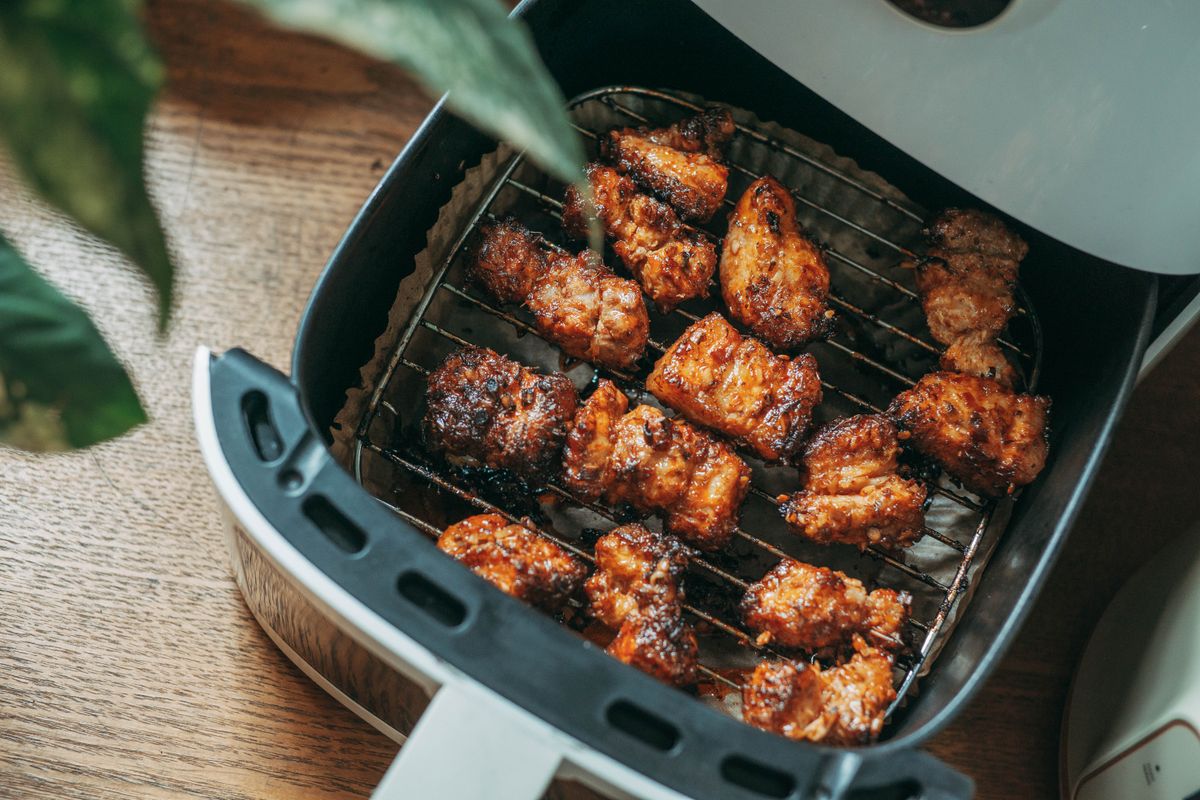
Air fryer smoke almost always comes from grease, not a fault in the machine. Fatty foods release oil as they cook, that oil drips onto the hot heating element or the bottom of the basket, and it burns off as smoke — the same thing that happens when fat hits a barbecue grill. A dirty machine makes it worse, since built-up grease from past cooks ignites faster than a clean one. Both are fixable in the next few minutes, no repair needed.
Why Is My Air Fryer Smoking? The Two Real Causes
Fatty food at high heat
Bacon, chicken thighs with skin, sausages, and anything marinated in oil all render fat quickly at typical air fryer temperatures (360°F/180°C and above). That fat drips down, contacts the heating element, and smokes. This is normal behavior for the food, not a machine problem — a real grill or oven does the same thing with the same ingredients.
A dirty heating element or basket
Grease residue from previous cooks builds up on the heating coil and basket over time. A heavily coated element also radiates less heat into the food, which is one reason an air fryer can seem not to be heating up. Even a small amount of old, baked-on grease will start smoking well before new food does, since it’s already been through multiple heat cycles. This is the more common cause on a machine that’s been in regular use for a few months without a deep clean.
What the Smoke Color Tells You
Color is the fastest way to tell whether you’re looking at a normal grease event or something to actually worry about.
- White or light grey smoke: Normal. This is fat and moisture burning off, the same thing you’d see from a grill. Reduce fat and clean the element using the steps below.
- Black smoke: Usually sugar or heavily marinated/sauced food burning rather than plain fat — barbecue sauce, teriyaki, and other sugary glazes scorch and char faster than oil alone, and char produces darker smoke. Cut sugary sauces earlier in the cook or brush them on for only the last few minutes.
- Blue or bluish-grey smoke: Stop and unplug the unit. This usually points to an electrical issue, not food or grease, and is the one smoke color that isn’t a normal cooking byproduct.
Two More Real Causes
Sugary sauces and glazes
Sauces with real sugar content — barbecue sauce, honey glazes, teriyaki — caramelize and then burn well before the surrounding food finishes cooking, and that burnt sugar is what produces the darker, sharper-smelling smoke described above. Add sugary sauces for only the final few minutes of cooking instead of the whole time.
Loose breading and batter fragments
Breaded or battered foods shed small fragments during cooking, and those fragments fall through the basket onto the element or drawer bottom, where they burn well before the actual food is done. Shake the basket partway through breaded cooks to redistribute rather than let loose crumbs settle in one spot, and brush off excess loose breading before it goes in.
A design quirk on open-top basket models
Air fryers with an open-top basket design (rather than a fully enclosed drawer) expose the heating element more directly to whatever drips or falls from the food above it, so they tend to smoke somewhat more readily than fully enclosed drawer-style units when cooking the same fatty food. This is a design tradeoff, not a defect — the fix is the same water-and-cleaning routine, just applied a little more proactively.
How to Stop It
- Add a splash of water to the bottom of the drawer. Two tablespoons of water under the basket (not touching the food) keeps dripping grease from hitting the element directly hot enough to smoke. This works both as a preventive step and mid-cook if smoke starts.
- Don’t overfill the basket. A packed basket blocks airflow, food cooks unevenly, and the parts that burn instead of crisping are what smoke. The same crowding is the leading reason air fryer food comes out soggy rather than crisp, and note that water under the basket trades crispness for less smoke. Cook in batches instead of forcing everything in at once.
- Pat fatty foods dry and trim excess fat before they go in. Less rendered fat means less dripping onto the element in the first place.
- Deep clean the basket, drawer, and heating element after every few uses, not just a rinse of the basket. Remove the basket and grates, wash with soap and water, then flip the unit and wipe the heating coil with a damp cloth once it’s cool.
When Smoke Actually Means Something Is Wrong
Grease smoke smells like burning fat and clears once you address the cause above. A few signs point to an actual problem instead: an electrical or plastic smell rather than a food smell, smoke on an empty preheat with nothing inside, or smoke that doesn’t stop even after cleaning and reducing fat. Any of those means stop using it and check the manufacturer’s warranty support rather than continuing to run it.
Food-Specific Technique
Bacon
The highest-fat food most people cook in an air fryer, and the most common smoke complaint. Cook it on a lower rack position if your model has one, at a slightly lower temperature (325–350°F) for a longer time rather than blasting it at 400°F, and add the water-under-the-basket step every time, not just when it’s already smoking.
Chicken thighs and other skin-on cuts
Skin-on chicken renders a large amount of fat over a longer cook time than most air fryer foods. Pat the skin dry before cooking (wet skin renders faster and messier), and check the drawer for pooled fat halfway through a longer cook rather than waiting until the end.
Mid-cook cleanup, if it starts smoking
Pause the unit, pull the drawer, and pour off any visible pooled grease into a heatproof container before continuing — don’t just add more water and keep going if there’s a visible pool. This takes under a minute and prevents the same grease from continuing to smoke for the rest of the cook.
FAQ
Why is my air fryer smoking with nothing in it?
This points to leftover grease residue on the heating element from previous cooks, not the current food. Clean the basket, drawer, and element thoroughly, including flipping the unit to wipe the coil once it’s cool.
Is it safe to keep using an air fryer that smokes?
Light smoke from fatty food or grease buildup is normal and safe to cook through once you address the cause. An electrical smell, smoke with nothing inside, or smoke that persists after cleaning are signs to stop and investigate further.
Does parchment paper help with air fryer smoke?
Yes — it catches dripping grease before it reaches the element or basket bottom, which is one of the simplest preventive fixes for smoke from fatty foods like bacon or wings.
Which foods cause the most air fryer smoke?
Bacon, chicken thighs with skin, sausages, and anything heavily marinated in oil. These render the most fat during cooking, which is what actually smokes.
Does the color of the smoke matter?
Yes. White or light grey smoke is normal grease burning off. Black smoke usually means sugar in a sauce or glaze is scorching. Blue or bluish-grey smoke is not a normal cooking byproduct and points to an electrical issue — stop using the unit if you see it.
Next Steps
Add water under the basket, don’t overcrowd it, and clean the element regularly — that resolves the vast majority of air fryer smoke without any repair. If you’re shopping for a new machine, my best air fryers guide has current, researched picks, and are air fryers healthy covers the fat-rendering question from a nutrition angle instead of a maintenance one. For the full category, start at the air fryers hub.
Based on manufacturer cleaning guidance and the pattern in owner-reported smoking complaints — not laboratory testing.

I'm Glenn, and I started Kitchenware Compare to cut through conflicting product reviews and help readers pick kitchen gear with confidence. I don't own or test the products I write about — these guides are built from verified-purchase reviews, manufacturer specifications, and independent testing where it exists, with the reasoning shown, not just a rating.
Leave a Reply