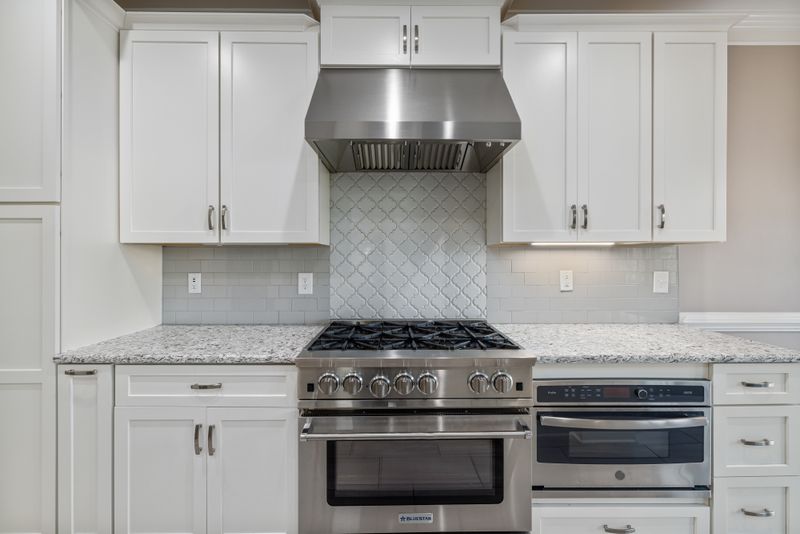
Photo by Created Stories from Pexels
Short answer: every 3 to 6 months for average use, but that range hides a lot. A household that fries and woks four nights a week can burn through a charcoal filter in six weeks. A household that mostly boils pasta and reheats leftovers can stretch one past nine months. Below is the actual breakdown, plus how to tell without guessing.
Charcoal filters get replaced far more often than they need to be, and far less often than they should be, because almost nobody pays attention to the actual signs instead of just marking a date on the calendar. The calendar method works fine as a backstop, but it’s not what tells you when a filter is actually done.
This is an educational guide with no product picks of its own — if you follow a link to one of my buying guides below and buy something on Amazon, I earn a small commission at no extra cost to you. Every range hood page on the site is collected on the range hoods hub.
How Often to Replace a Range Hood Charcoal Filter: The Real Range
Charcoal (sometimes called carbon) filters only exist on ductless range hoods — the ones that recirculate air back into the kitchen instead of venting it outside. If your hood vents through ductwork to the outdoors, you almost certainly have a washable metal grease filter instead, and this article doesn’t apply to you the same way (grease filters get cleaned, not replaced, roughly monthly).
For ductless hoods, here’s the frequency broken down by how hard you actually cook:
| Cooking Style | Replace Every | Why |
|---|---|---|
| Heavy — frying, wok cooking, searing, daily meat | 6–10 weeks (or ~120 cooking hours) | Grease and smoke saturate the carbon fastest at high heat |
| Average — regular stovetop cooking most nights | 3–6 months | Manufacturer default for most residential ductless hoods |
| Light — occasional cooking, mostly boiling/reheating | 6–9 months | Low grease and odor load extends the carbon’s working life |
These ranges come from manufacturer guidance across Broan-NuTone, Proline, and other range hood makers — they broadly agree, which is unusual for appliance maintenance advice.
Why Charcoal Filters Can’t Just Be Cleaned
This trips people up because the metal grease filter right next to it can be washed indefinitely. Charcoal filters can’t.
Once the activated carbon has absorbed enough grease particles and odor compounds, it’s chemically saturated — there’s no washing, soaking, or baking that restores its ability to adsorb anything else. Running water through it or scrubbing it doesn’t “clean” it; it just wets carbon that’s already full. The only fix is a new filter.
If your hood has both a metal mesh/baffle filter and a charcoal filter (a common two-stage setup), you’re doing two different maintenance jobs on two different schedules: wash the metal one every 2–4 weeks, replace the charcoal one every 3–6 months.
Signs Your Filter Is Overdue — Don’t Just Trust the Calendar
Cooking frequency varies enough between similar households that a fixed date is only a backstop.
These signs are more reliable:
- Cooking odors linger — smells that used to clear in 10–15 minutes now hang around for an hour or more.
- Reduced airflow or suction — the hood sounds like it’s working just as hard, but you can feel or see less air actually moving (steam sits over the pan longer instead of pulling up and away).
- Visible grease discoloration on the filter surface, especially a yellow-brown sheen you can see without removing it.
- New or louder motor noise — a clogged filter makes the fan work harder to pull the same volume of air, which shows up as noise before it shows up as anything else.
- The indicator light, if your model has one — most mid-range and higher ductless hoods have a filter-change reminder on a timer, though it’s usually set to the manufacturer’s average-use default and won’t account for heavy cooking.
Any one of these on its own isn’t conclusive.
Two or more together, and it’s time.
What Actually Shortens a Filter’s Life
The manufacturer’s “3–6 months” is an average, not a guarantee, because these variables push it in either direction:
- Cooking method — frying and searing release far more airborne grease than boiling, steaming, or baking.
A household that fries regularly can cut the filter’s life in half or more compared to one that mostly simmers. - Fan speed used — running the hood on its lowest setting because it’s quieter means less air (and less grease) actually passes through the filter, which sounds like it would help, but usually just means smoke and odor escape into the room instead of being captured — false economy.
- Kitchen size and ventilation — a small, closed kitchen concentrates cooking byproducts onto the filter faster than an open-plan space where some of it disperses before reaching the hood.
- Whether you use the hood at all — the single biggest factor isn’t the filter, it’s whether the fan gets turned on every time something’s on the stove.
A filter in a hood that runs consistently lasts longer per month of cooking than one that only gets used for smoky pan-searing nights.
\n\n
How to Check a Filter’s Condition in Under a Minute
- Remove the filter per your model’s release mechanism (usually a tab or slide-out tray behind the grease filter).
- Hold it up to a light source. A fresh charcoal filter lets some light through the mesh; a saturated one looks noticeably darker and denser.
- Smell it.
This sounds unscientific, but it’s the fastest real test — a saturated filter smells like old cooking grease even when it looks visually okay. - Check the edges and mounting frame for grease buildup, which usually shows up there before the center of the filter looks obviously dirty.
How to Replace It
Charcoal filter replacement is one of the simpler appliance maintenance jobs in the kitchen — most models take under five minutes with no tools:
- Turn off the hood and let it cool if it’s been running.
- Remove the metal grease filter first (it usually sits in front of or below the charcoal filter).
- Release the old charcoal filter — check your model’s manual for the exact latch, but most use spring clips or a simple slide-and-lift mechanism.
- Confirm the replacement filter matches your model number exactly; charcoal filters are not universal even across the same brand’s product lines.
- Slide the new filter into place until it clicks or seats fully, then reinstall the grease filter on top.
- Reset the filter-change indicator light if your model has one (usually a button held for a few seconds, per your manual).
Where to Buy a Replacement — and What to Check First
Charcoal filters are sold both by the original manufacturer and by third-party brands making compatible replacements.
A few things matter more than the price:
- Match the exact model number, not just the brand. “Fits most Broan hoods” on a listing is a red flag — dimensions and mounting tabs vary across a single manufacturer’s own lineup, sometimes between very similar-looking model years.
- Check whether your hood uses a standalone charcoal filter or a combination filter (grease and charcoal in one unit).
Combination filters cost more per unit but mean one part to track instead of two separate replacement schedules. - Buy in twos if your model changes on a predictable schedule. If you know you’re a 3-month household, ordering two at once means you’re never caught without one on hand when the old one is visibly done.
- Third-party filters are usually fine as long as the dimensions and mounting method match exactly — the activated carbon itself isn’t proprietary technology, it’s the physical fit that causes problems.
When It’s Not Just the Filter
Occasionally what looks like an overdue filter is actually a different problem, and a new filter won’t fix it:
- Motor noise that doesn’t change with a fresh filter — likely a fan motor or bearing issue, not filtration.
- Persistent smoke haze even on high fan speed with a new filter installed — often means the hood’s CFM (airflow rating) is undersized for your kitchen or stove output, not a filter problem at all.
- Any burning smell, unusual heat, or visible damage to the housing — stop using the hood and have it inspected.
This is an electrical or motor issue, not routine maintenance.
If a fresh filter doesn’t resolve the symptom you were chasing, the filter probably wasn’t the actual problem.
If your current hood is on its way out, my Broan-NuTone 413004 review covers a budget-friendly replacement and a genuine installation quirk worth knowing before you buy.
If you could run ducting instead, my 413004 vs BCDF130SS comparison explains why only one of the two can actually vent outside.
Frequently Asked Questions
Can I use my range hood without a charcoal filter?
Not on a ductless hood — the charcoal filter is what removes odor before the air recirculates into your kitchen.
Running it without one means smoke and cooking smells go right back into the room unfiltered. (Ducted hoods don’t need one at all, since they vent outside.)
Do all charcoal filters fit all range hoods?
No. Even within the same brand, filter dimensions and mounting mechanisms vary by model.
Always check your exact model number rather than assuming a filter that “looks about right” will fit.
Is a more expensive charcoal filter worth it?
Mostly no — the core material (activated carbon) does the same job across price points, and saturation depends far more on your cooking habits than on filter grade.
The one exception is filters with a slightly higher carbon density, which can last marginally longer under heavy use, but the difference is incremental, not dramatic.
Why does my kitchen still smell after I replaced the filter?
Check that the new filter is seated correctly first — a gap around the edges lets unfiltered air bypass it entirely. If it’s seated properly and odor is still an issue, the fan speed or the hood’s overall airflow capacity for your kitchen size may be the real problem, not the filter.
Can I wash and reuse a charcoal filter to save money?
No — this is the single most common mistake. Washing doesn’t restore activated carbon’s ability to adsorb odor and grease compounds once it’s saturated; it just wets a filter that’s already done its job. Reusing a washed charcoal filter means running your hood with essentially no odor filtration while assuming it’s still working.
For the fuller comparison of ducted vs. ductless systems — including installation, noise, and which one actually suits your kitchen — see my complete ductless range hood guide. And if you’re shopping for a new unit rather than maintaining an existing one, my picks for best ductless range hoods covers five models I’d actually recommend. Heavy frying and searing is also the exact scenario where cast iron cooking puts the most smoke and grease into the air — worth keeping in mind if you’re deciding how aggressive your ventilation setup needs to be.

I'm Glenn, and I started Kitchenware Compare to cut through conflicting product reviews and help readers pick kitchen gear with confidence. I don't own or test the products I write about — these guides are built from verified-purchase reviews, manufacturer specifications, and independent testing where it exists, with the reasoning shown, not just a rating.
Leave a Reply