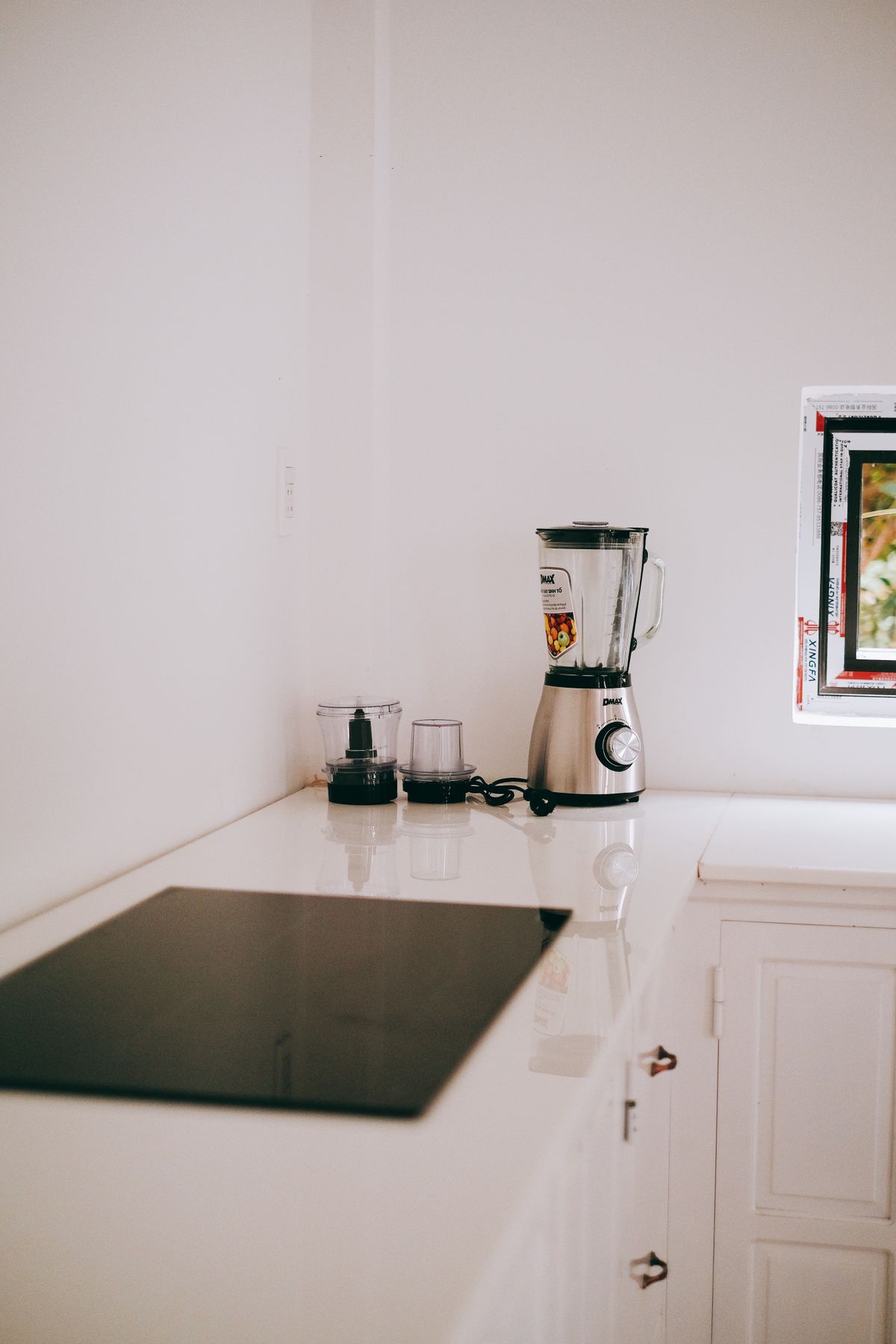
A blender leaking from the bottom is almost always the rubber gasket around the blade assembly, not a sign the appliance is dying. That gasket seals the gap between the spinning blade and the jar, and it stiffens, warps, or loses its seal over time — a $5–15 part, not a reason to replace a $150 machine. Food residue packed under the blade assembly is the second most common cause, and it’s a five-minute fix with no parts required.
Check These Two Things First
- The gasket. Unscrew the blade assembly from the bottom of the jar (most twist off; some have a removable base) and pull out the rubber gasket ring. Stretched, cracked, or flattened out of its original round shape means it’s done its job and needs replacing.
- Buildup under the blade. Thick smoothie ingredients, seeds, and fibrous produce pack in around the blade base and stop the gasket from sitting flush. Even a perfectly good gasket leaks if there’s dried residue keeping it from sealing.
Fixing It
1. Disassemble and clean everything
Take the blade assembly all the way apart — jar, blade, gasket, base — and clean each piece individually rather than just rinsing the jar. Dried gunk under the blade is invisible until you separate the parts, and it’s the most common reason a “new gasket” install still leaks.
2. Inspect the gasket under good light
Look for flattening, cracks, or a warped shape that no longer sits round in its groove. A gasket that looks fine at a glance often shows damage once you flex it gently between your fingers.
3. Replace the gasket if it’s worn
Order the exact part number for your model rather than a generic size — blade assemblies vary enough between brands that a close-enough gasket often still leaks. Manufacturer parts pages list the correct part number by model.
4. Reassemble by hand-tight only
Overtightening the blade assembly can warp the gasket’s seal just as easily as under-tightening. Snug it by hand until it stops turning easily — don’t force it further with a tool.
5. Check the jar itself for cracks
If the leak continues after a fresh gasket and thorough cleaning, look at the jar base and threads for hairline cracks, especially on a blender that’s been dropped or run empty at high speed. A cracked jar needs replacing; the rest of the machine is usually fine.
What This Isn’t
A leaking blender is a seal problem, not a motor problem — the base unit and motor are essentially never the cause of a leak, since they don’t touch liquid. Don’t assume the whole appliance is failing because of a $10 gasket. It’s also not usually the bearing: bearing failure shows up as grinding noise or a wobbling blade, not water at the base.
FAQ
Why is my blender leaking from the bottom?
Almost always a worn or dirty gasket around the blade assembly. Disassemble it, clean every part including under the blade, and replace the gasket if it’s stretched, cracked, or flattened.
Can I use a generic replacement gasket?
You can, but a model-specific gasket from the manufacturer fits more reliably. Blade assembly dimensions vary enough between models that a generic size sometimes still leaks even when new.
Is a leaking blender dangerous to keep using?
Not dangerous, but liquid pooling under a blade assembly can eventually reach the base and motor if ignored for a long time. Fix the gasket rather than let it run.
How often does a blender gasket need replacing?
There’s no fixed schedule — it depends on use frequency and how hot or acidic what you blend is. A blender used daily for smoothies might need a new gasket every 1–2 years; occasional use can go much longer.
Next Steps
Clean it apart, check the gasket, replace if needed, and reassemble hand-tight — that resolves the vast majority of blender leaks without a service call. If the leak is coming from the top instead — around the lid or center cap — that’s a different set of parts entirely; see why your blender might be leaking from the top. If you’re shopping for a new machine instead of fixing an old one, the best blender food processor combo guide has current picks, and if a food processor might suit your kitchen better than a blender, best food processor covers that side of things.
Pushing a blender into jobs it wasn’t built for strains the same seals prematurely — see can you grind coffee beans in a Nutribullet for a common example of that.
Based on manufacturer parts and repair documentation, cross-checked against the pattern in owner-reported failures — not laboratory testing.
For the wider picture on choosing and living with a blender, my blenders hub collects the reviews, comparisons and the other fault guides.

Glenn is the founder of Kitchenware Compare and has spent years researching, testing, and reviewing kitchen appliances, cookware, and gadgets. A lifelong home cook raised in a family that treated every meal as an occasion, Glenn started this site to cut through the noise of conflicting product reviews and give readers honest, practical guidance. When he is not testing the latest air fryer or digging into the specs of a new espresso machine, he can usually be found experimenting with new recipes or hunting for the perfect cast iron skillet at a flea market.
Leave a Reply