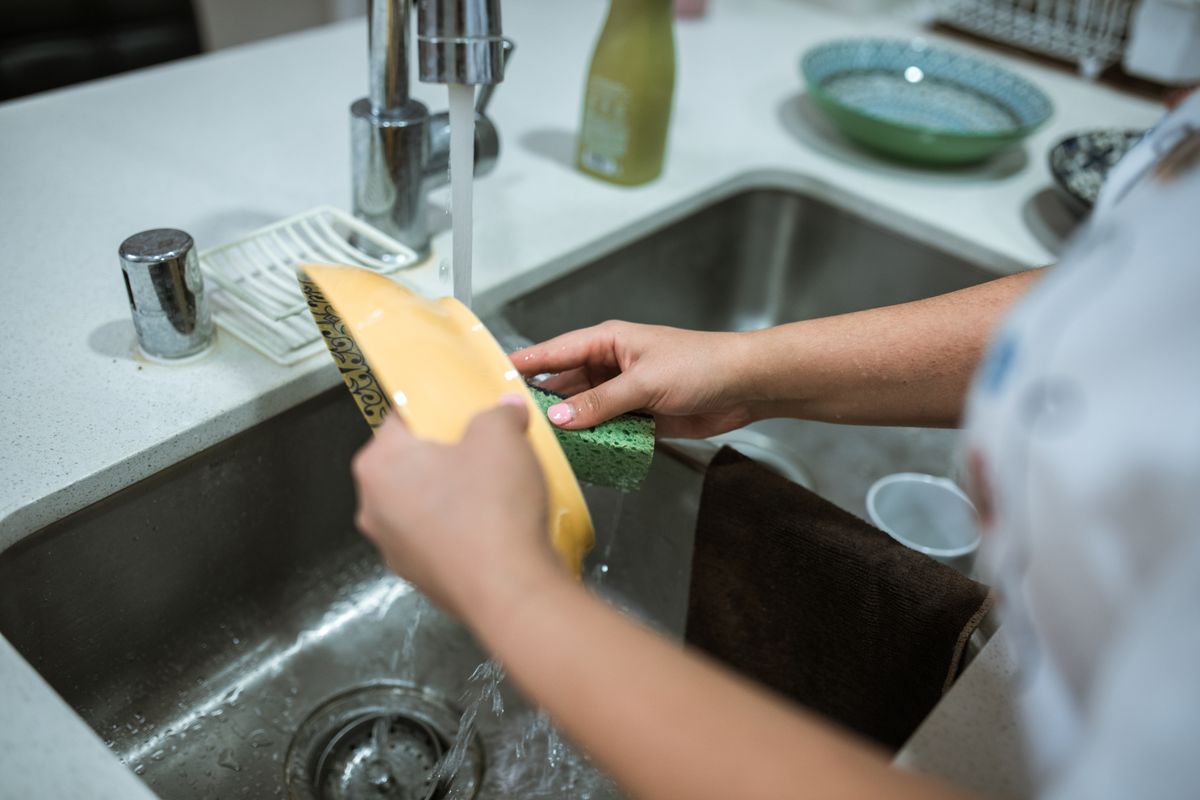
Photo by RDNE Stock project from Pexels
Short answer: to clean a food processor properly, hand-wash the bowl, lid, and blade in warm soapy water rather than relying on the dishwasher, dry everything immediately, and use a thin brush (not a chopstick or toothpick) to get food out of the blade’s underside and the handle cavity — that’s where smells and mildew actually come from. The rest of this guide covers the parts most cleaning tips skip: stains, odors, cloudy bowls, and when the dishwasher is genuinely fine to use.
The Basic Clean
Unplug the base, then take the processor apart completely: bowl, lid, pusher, and blade all separate from the motor base and from each other. Rinse off loose food first under running water, then wash each piece in warm water with a small amount of dish soap and a non-abrasive sponge or soft brush. Never submerge the motor base — it’s the one part that isn’t meant to touch water at all, and a quick wipe with a damp cloth is all it needs.
The Part Everyone Gets Wrong: The Blade and Handle
Most of the smell and grime that lingers in a “clean” food processor is hiding in two spots: the underside of the S-blade, where it locks onto the drive shaft, and the hollow handle on the lid, which traps liquid every time you pulse something wet. A sponge can’t reach either one. Use a bottle brush, a pipe cleaner, or a dedicated small cleaning brush to get inside both — run it under the blade where it meets the shaft, and up through the handle from both ends if it’s hollow. Do this every time you process something wet or oily, not just when you notice a smell — it applies regardless of which model you own, including the Cuisinart DFP-14BCNY I recommend as the top pick in my food processor buying guide.
Is a Food Processor Dishwasher Safe?
It depends on the part, and manufacturers are inconsistent about saying so clearly. The bowl and lid are dishwasher-safe on nearly every model — check for a dishwasher-safe symbol stamped into the plastic to confirm. The blade is technically dishwasher-safe on most machines too, but hand-washing is worth the extra minute: the high-heat dry cycle dulls a sharp edge faster than hand-washing does, and loading a food processor blade loose in a dishwasher rack is a genuine way to cut yourself reaching in blind for cutlery. The one part that should never go in the dishwasher, full stop, is the motor base.
Getting Rid of Stains
Turmeric, carrots, and tomato-based sauces all stain clear or light-colored plastic, and the stain sets faster the longer it sits. For a fresh stain, a wash with dish soap immediately after use usually lifts it before it sets. For a stain that’s already there, make a paste of baking soda and a little water, work it into the stained area with a soft cloth, let it sit for 10–15 minutes, then rinse.
Sunlight helps too — a stained bowl left to air-dry in direct sun for an afternoon will noticeably lighten over a few sessions. Bleach will remove a stain faster, but repeated bleach use is what eventually makes clear plastic go cloudy and brittle, so save it for the worst cases rather than making it routine.
Getting Rid of Odors
Garlic, onion, and fish are the three ingredients most likely to leave a smell behind, and it’s usually trapped in the same blade and handle crevices covered above, not the smooth bowl walls. Washing immediately, before the odor has time to set into the plastic, is the single biggest factor. If a smell persists after washing, fill the bowl with warm water and a tablespoon of baking soda, let it sit for 15 minutes, then wash normally. A capful of white vinegar in the rinse water does the same job and is worth using if you process fish regularly.
Why Does the Bowl Go Cloudy?
A clear polycarbonate bowl that starts foggy or scratched-looking isn’t dirty — it’s been etched. This happens from two things, both avoidable: abrasive scrubbers (steel wool, the rough side of a sponge, or anything gritty) leaving microscopic scratches that scatter light instead of letting it pass through clearly, and repeated high-heat dishwasher cycles gradually breaking down the plastic’s surface the same way they eventually cloud drinking glasses. Once it’s etched, it’s permanent — there’s no product that restores true clarity, though a light buff with a baking soda paste can improve the worst of it cosmetically. Prevention is the only real fix: soft sponges only, and hand-wash the bowl if you notice it starting to fog.
Cleaning After Raw Meat
If you’ve used the processor on raw chicken, fish, or ground meat, cleaning and sanitizing are two different steps, not one. Washing with soap removes visible food and most bacteria; sanitizing reduces what’s left further, which matters more with raw protein than with vegetables or dough. North Dakota State University Extension’s guidance on kitchen sanitizing recommends a chlorine-based sanitizing solution (or your dishwasher’s hot-water cycle, for parts rated for it) as the actual sanitizing step after washing — a rinse under the tap alone doesn’t do it. Wash the bowl and blade first, then run them through a sanitizing step before you use the processor again for something that won’t be cooked.
A hot food smell after normal use is a cleaning issue covered above. A burnt or electrical smell is a different problem — my guide to a food processor burning smell covers what’s actually causing it and when to stop using the machine.
How Often Should You Deep-Clean It?
Every use needs the basic wash above. Once every month or two, pull the blade all the way off the drive shaft (most twist or lift free) and check underneath it and around the shaft seal for buildup a regular wash misses — this is the spot that causes a musty smell nobody can locate. If you use the processor for doughs or nut butters regularly, check it more often; oily, sticky ingredients build up in the shaft area faster than wet ones.
What Not to Do
A few habits cause more damage than the mess they’re meant to fix:
- Don’t let the bowl or blade soak in the sink overnight. Prolonged water contact around the blade’s metal hub can rust the shaft coupling, and standing water is exactly what breeds the musty smell this guide is trying to prevent.
- Don’t use steel wool, the abrasive side of a sponge, or bleach as a routine cleaner on the bowl — all three are the direct cause of the cloudy-bowl problem above.
- Don’t store the bowl and lid assembled with the gasket compressed. Left sealed for weeks, the rubber seal can develop a smell that transfers to whatever you process next.
- Don’t reach into a dishwasher rack for the blade without looking first. It’s still sharp, whether or not it’s clean.
Frequently Asked Questions
Can you put a food processor blade in the dishwasher?
Most are rated dishwasher-safe, but the high-heat dry cycle dulls the edge faster than hand-washing, and it’s easy to cut yourself reaching for it blind in a loaded rack. Hand-washing is the safer habit either way.
Why does my food processor smell even after washing?
The smell is almost always trapped in the blade’s underside or the hollow lid handle, not the bowl. A sponge can’t reach either spot — use a bottle brush or pipe cleaner to get inside both, and check the area around the drive shaft for buildup a regular wash misses.
How do you get stains out of a food processor bowl?
A baking soda paste worked into the stain for 10–15 minutes before rinsing removes most turmeric, carrot, and tomato staining. Washing immediately after use, before the stain sets, is more effective than any after-the-fact fix.
Why is my food processor bowl cloudy?
Cloudiness is permanent etching from abrasive scrubbers or repeated high-heat dishwasher cycles, not dirt. It can’t be fully reversed — hand-washing with a soft sponge going forward prevents it from getting worse.
Is it safe to wash a food processor bowl in the dishwasher every time?
The bowl and lid are usually fine occasionally, but repeated high-heat cycles are the main cause of permanent cloudiness over time. Hand-washing most of the time and saving the dishwasher for an occasional deep clean keeps a clear bowl clear longer.
Bottom Line
The bowl and lid are the easy part — soap, water, done. The blade’s underside and the lid’s hollow handle are where actual problems start, and they’re the two spots a sponge physically can’t reach. Get a thin brush into both every time, hand-wash instead of relying on the dishwasher if you want the bowl to stay clear, and sanitize after raw meat rather than just rinsing.
If you’re also deciding when to replace the blade rather than just clean it, my guide to sharpening food processor blades covers that next step, and if you’re still deciding whether a food processor is even the right appliance for what you cook, my food processor vs. blender guide covers that first.

Glenn is the founder of Kitchenware Compare and has spent years researching, testing, and reviewing kitchen appliances, cookware, and gadgets. A lifelong home cook raised in a family that treated every meal as an occasion, Glenn started this site to cut through the noise of conflicting product reviews and give readers honest, practical guidance. When he is not testing the latest air fryer or digging into the specs of a new espresso machine, he can usually be found experimenting with new recipes or hunting for the perfect cast iron skillet at a flea market.
Leave a Reply