This post contains affiliate links. If you buy through my links, I may earn a commission at no extra cost to you.
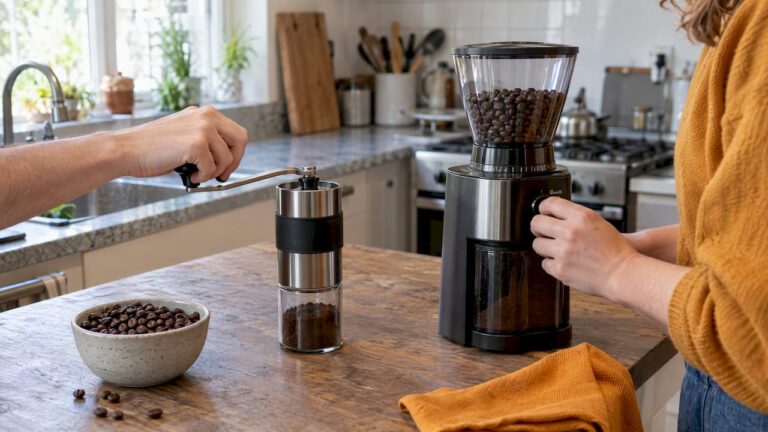
I’d choose a manual grinder if portability, quiet mornings, and value per dollar matter most, and an electric grinder if speed, repeatable dosing, or brewing for more than one method or person is the priority. The two exceptions: a manual grinder with a large hopper can keep pace for a single daily cup, and a budget electric can still beat a manual on sheer grind-after-grind consistency. The sections below walk through why, and how to pick between them.
TL;DR:
- Manual grinders are best for solo use, travel, and quiet mornings, but they become too slow for brewing more than two cups at once.
- Electric grinders provide faster, more consistent results suited for multiple daily brews or switching between brew methods, but they produce noise and risk heat buildup.
- Burr material and retention levels should be checked when choosing a grinder, with low-grade burrs and high retention being red flags regardless of type.
- For brewing multiple cups daily or needing high consistency, electric models with programmable settings are more convenient and efficient.
- Maintenance involves regular cleaning and discarding stale grounds, with manual grinders generally requiring less upkeep than electric ones.
Manual grinders: how they work and what you gain
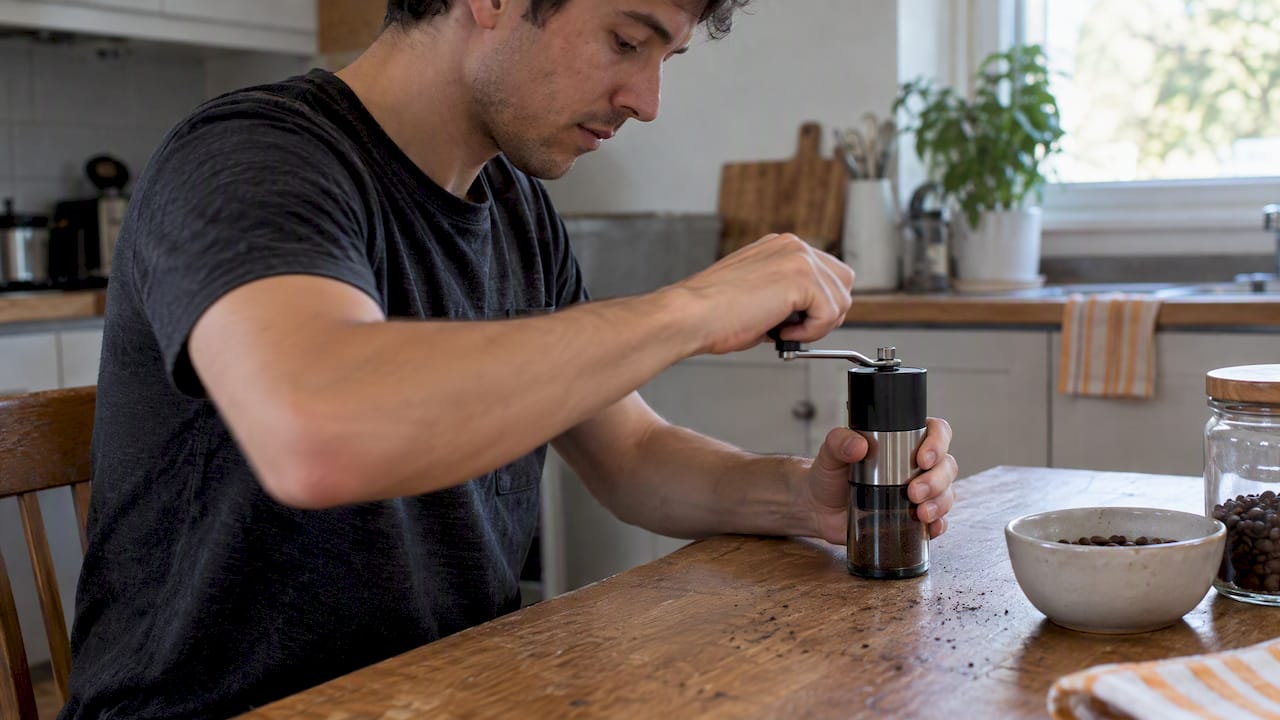
A manual grinder turns a hand crank that spins a set of conical or flat burrs, crushing beans between two surfaces instead of smashing them like a blade. Most use steel or ceramic burrs in a compact housing, which keeps the whole unit light enough to fit in a travel bag. Because there is no motor, heat buildup is close to zero, and the slower grind speed tends to protect delicate aromatics in lighter roasts.
According to Coffee Roast Co., manual grinders are small, light, and inexpensive while still delivering strong burr quality for the price, which is why they remain popular with travelers and single-cup drinkers.
- Portability: fits in a backpack or carry-on, no outlet needed.
- Quiet operation: no motor hum, useful in shared apartments or early mornings.
- Value for burr quality: often matches or beats similarly priced electrics on burr material.
- Low heat: hand-cranked speed rarely warms the grounds enough to affect flavor.
The trade-off is throughput. Grinding enough coffee for more than two cups becomes a forearm workout, and most hoppers cap out around 30 to 40 grams, which limits batch brewing. Manual grinders suit single-cup ritualists, campers, and budget-conscious hobbyists who care more about burr quality than speed.
Pro Tip: Grind in short, steady strokes rather than fast bursts. It keeps the burrs engaged evenly and produces a tighter particle spread.
Electric grinders: how they work and where they fall short
An electric grinder uses a motor to spin burrs at a fixed or adjustable speed, usually anywhere from a few hundred to several thousand RPM depending on whether it is a direct-drive or geared design. Many models add programmable dosing, multiple grind settings for drip, pour-over, and espresso, and in some cases timers tied to weight.
- Speed: grinds a full dose in seconds rather than minutes.
- Dosing and repeatability: programmable settings make it easier to hit the same grind twice in a row.
- Multi-method flexibility: one grinder can serve a French press one morning and an espresso machine the next.
- Trade-offs: motor noise, heat buildup during long bursts, and grounds retention inside the chute or burr chamber.
Heat and retention are not just inconveniences. According to the Specialty Coffee Association, burr stability and thermal control materially affect extraction repeatability, which is why high-end commercial grinders now build in temperature management and sweep-out systems to fight retention. For a home setup, that means a budget electric grinder run in long bursts can warm the grounds enough to dull aromatics, and leftover grounds in the chute can go stale and mix into the next dose. Electric grinders fit best in households that brew multiple cups a day, switch between brew methods, or need an espresso-ready grind on demand.
Side-by-side comparison across the dimensions that matter
Grind consistency depends more on burr geometry and motor stability than on whether the grinder is manual or electric, but electrics generally hold a tighter particle distribution at higher speeds because the motor maintains constant torque. Manual grinders can match that consistency at low volume, provided the crank speed stays even.
Speed only matters once daily volume climbs. A single cup takes roughly the same total time either way once you count setup, but brewing for three or four people makes the manual grinder’s extra two or three minutes per round add up fast.
- Noise: manual grinders are near-silent; electric motors range from a soft whir to a noticeable whine depending on build quality.
- Heat and thermal stability: manual grinding generates almost no heat; electric grinders risk warming grounds during long or repeated bursts, which the SCA ties to flavor clarity loss, especially in light roasts.
- Retention: electric grinders, particularly those with longer chutes, hold onto more leftover grounds between doses than most manual models.
- Portability: manual wins outright; most electrics need a stable surface and an outlet.
- Price and value: entry-level manuals can match or beat entry-level electrics on burr quality per dollar, while premium electrics add speed and consistency at a steeper price.
- Maintenance: manual grinders have fewer parts to clean; electrics need occasional chute and chamber cleaning to manage retention.
The practical threshold is daily dose count. Brewing one or two cups a day, traveling often, or caring most about quiet mornings points toward manual. Brewing three or more cups a day, switching between espresso and drip, or needing a consistent grind on a deadline points toward electric.
How to choose: checklist, key questions, and red flags
Start with your brew method and daily volume, since those two factors narrow the field faster than price. A pour-over-only household with one drinker leans manual; a mixed espresso-and-drip household leans electric.
- Confirm brew method compatibility. Espresso needs a grinder with fine, stepless adjustment; drip and French press tolerate wider ranges.
- Match dose size to hopper and output capacity. A hopper under 40 grams will frustrate anyone brewing for a group.
- Set a noise tolerance. If mornings start before anyone else is awake, weigh that against an electric’s motor hum.
- Decide how much mobility matters. Frequent travelers or campers should default toward manual.
- Set a budget ceiling and compare burr material, not just price.
When reading listings, ask directly: What burr material and type (conical or flat)? What is the motor’s RPM or drive type? Does the manufacturer disclose retention amounts? What does the warranty cover?
Pro Tip: A vague spec sheet that skips burr material entirely is usually a sign the burrs are low-grade stamped steel rather than hardened or ceramic.
Red flags include listings with no stated burr type, no retention figures, or a pattern of owner complaints about inconsistent grind size across settings.
Maintenance and common issues
Both grinder types need regular attention to keep grind quality consistent. Brush out burrs weekly with a dry burr brush, and wipe down the hopper and chute monthly with a dry cloth, never water, since moisture can rust steel burrs or damage electronics.
- Purge retention by running a small “flush” dose of beans after cleaning, discarding the first few grams.
- Check for clogs if grind output slows suddenly. Oily beans are a common culprit in both manual and electric models.
- Listen for motor strain in electrics. A labored or stalling sound usually means the burrs need cleaning or the beans are too oily for the setting.
- Inspect for uneven grind by checking for both overly fine dust and large chunks in the same dose, a sign the burrs may be misaligned.
For deeper troubleshooting, the coffee grinder troubleshooting guide covers three common faults step by step.
Where this guidance comes from and where to read more
I’m Glenn, and this comparison draws on manufacturer specifications, Specialty Coffee Association research, and owner-reported experiences rather than any hands-on testing of specific units. For model-level detail, the Best Espresso Grinder for Home Use roundup and the Breville Smart Grinder Pro review go deeper on specific electric options, while the troubleshooting guide above covers common faults across both grinder types.
What grinder choice says about how you actually brew
I think the honest answer is that grinder choice tracks lifestyle more than coffee snobbery. A traveler chasing ritual and a parent grinding for four people before school are solving different problems, and both are valid. Run through the checklist above before assuming one type is objectively “better.”
— Glenn
Ready to compare specific grinders?
Once you know whether manual or electric fits your routine, the next step is comparing actual models against your budget and brew method. At Kitchenware Compare, side-by-side specs, pricing, and owner-reported performance sit next to each other so you can skip the guesswork between listings.

For readers leaning electric, the Breville Smart Grinder Pro review breaks down whether a popular midrange option is worth its price tag, and the Best Espresso Grinder for Home Use roundup covers several other models across price points. For brewing fundamentals once your grinder is sorted, Kitchen Devotion’s home brewing guide walks through how grind size connects to extraction. Browse the current lineup at Kitchenware Compare to find the model that matches your checklist.
FAQ
What is an electric grinder?
An electric grinder uses a motor to spin burrs and crush coffee beans into consistent particles, typically offering adjustable grind settings for different brew methods. Many models add programmable dosing and timers, which manual grinders cannot match.
Is a burr grinder better than a blade grinder?
Yes, burr grinders produce far more consistent particle sizes than blade grinders, which chop beans unevenly and generate excess heat. According to the Specialty Coffee Association, consistent particle distribution from stable burrs is central to repeatable extraction and flavor clarity.
What is the healthiest coffee grinder?
There is no single “healthiest” grinder category, but burr grinders are generally preferred over blade models because even grind particles extract more predictably and avoid the scorched, uneven flavors blade grinders can produce. Choosing steel or ceramic burrs over low-grade stamped metal also reduces the risk of metal flakes contaminating grounds over time.
Why did Costco get rid of their coffee grinders?
This is not something covered by the sourcing used for this article, and claims about a specific retailer’s inventory decisions vary by store and season. It’s best to check directly with the retailer for current availability.
Sources
- Designing Flavor: Why the Grinder Is Becoming Coffee’s Most Critical Brewing Tool — Specialty Coffee Association
- Manual vs Electric Coffee Grinder — Coffee Roast Co. blog
Recommended
- Best Espresso Grinder for Home Use (2026)
- Breville Smart Grinder Pro Review: Worth $200?
- Capresso Infinity Plus Review: Range, With Static
- Timemore C2S Review: The Same Burr for $20 Less

I'm Glenn, and I started Kitchenware Compare to cut through conflicting product reviews and help readers pick kitchen gear with confidence. I don't own or test the products I write about — these guides are built from verified-purchase reviews, manufacturer specifications, and independent testing where it exists, with the reasoning shown, not just a rating.
Leave a Reply