I earn a commission if you buy through the Amazon links in this review, at no extra cost to you.
The INKBIRD Hybrid is built for anyone juggling separate thermometers for a grill, a smoker and a quick spot check: one unit that works as an instant-read thermometer and also runs two external probes with an app for longer cooks.
Introducing the INKBIRD Hybrid Thermometer. This device combines the functionality of an instant-read thermometer and a Bluetooth BBQ meat thermometer with 2 probes, giving you the freedom to monitor your food’s temperature without constantly checking on it.
Here is what the INKBIRD Hybrid Thermometer actually does. The 328ft Bluetooth range is the headline specification, and the point of it is being able to leave the grill rather than stand over it. The two external probes plus the additional probe allow several items to be tracked at once, which is what suits it to cooking for a group.
The fast readout is rated at two seconds, with a stated accuracy of ±1.0℉. The app adds high and low temperature alarms and temperature graphs, and INKBIRD lists a rechargeable battery, a backlight and a magnet for mounting.

Features and Benefits
The INKBIRD Hybrid Thermometer is an innovative kitchen tool that combines the functionalities of a remote Bluetooth BBQ meat thermometer and an instant-read thermometer. With its 2 probes and impressive features, this thermometer is designed to take your cooking and grilling experience to the next level.
Hands-Free Cooking with Bluetooth Technology
One of the standout features of this thermometer is its Bluetooth capability, allowing you to monitor your cooking temperature remotely from up to 328ft away. Simply download the free INKBIRD app on your IOS or Android smartphone, and you can easily control and monitor the thermometer without being tied to the grill or smoker. This hands-free functionality makes grilling or smoking meat a breeze, giving you the freedom to socialize or attend to other tasks while ensuring your food is cooked to perfection.
Instant Read and External Probe Support
In addition to its remote capabilities, the INKBIRD Hybrid Thermometer also functions as an instant-read thermometer. With 2-second readout and high measurement accuracy of ±1.0℉, you can quickly and accurately check the temperature of your food. The thermometer comes with 2 external probes that can be used simultaneously to measure different areas of your meat or grill. This feature is especially useful for cooking larger cuts of meat or achieving different levels of doneness for multiple pieces of meat.
High and Low Temperature Alarm and Temperature Graph
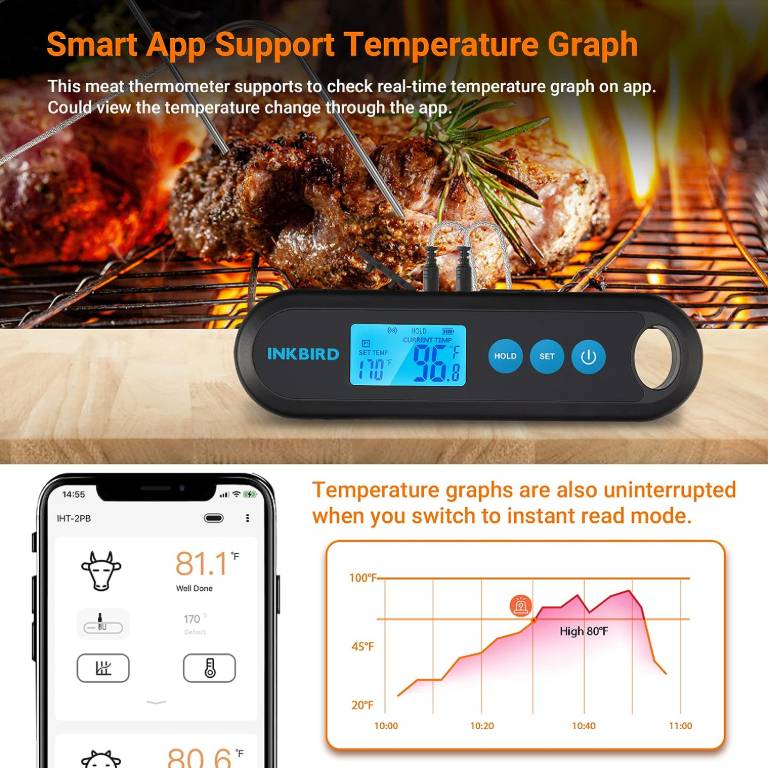
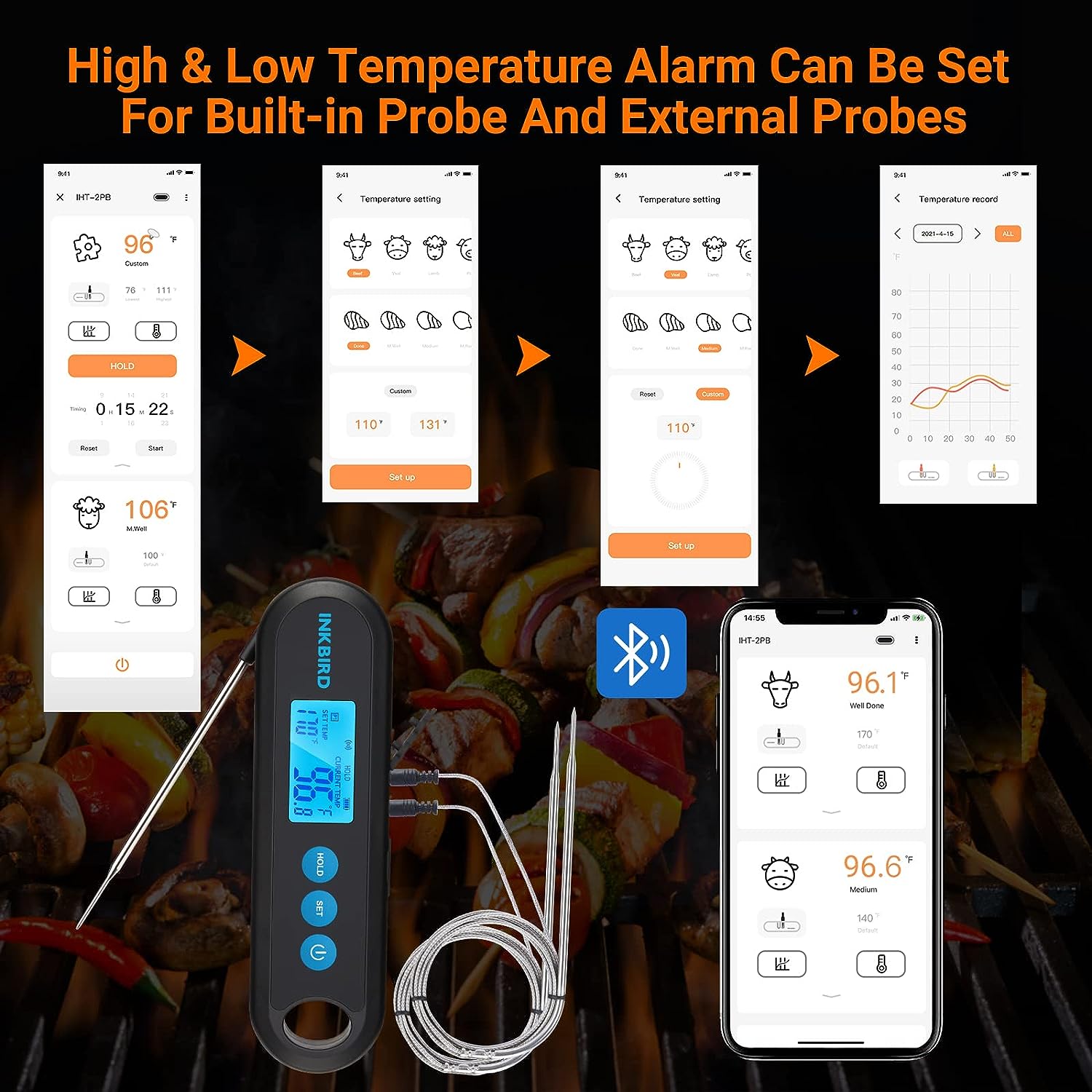
This thermometer is equipped with programmable temperature alerts, ensuring that you never overcook or undercook your food again. Simply set your desired temperature range, and the thermometer will alert you when the temperature reaches your desired level. Additionally, the thermometer supports real-time temperature graphing through the INKBIRD app. You can monitor the temperature changes of your food over time, allowing you to make precise adjustments and achieve consistent and delicious results.
Ways to Use It
The INKBIRD Hybrid Thermometer offers a wide range of uses for both grilling and cooking in the kitchen. Here are a few examples:
Perfect Steaks Every Time
With the INKBIRD Hybrid Thermometer, you can easily achieve the perfect steak. Simply insert the probes into your steak, set the desired temperature range on the app, and let the thermometer do the work. The high and low temperature alarms will notify you when your steak reaches your desired level of doneness, ensuring that you always cook your steak to perfection.
Smoked Brisket Made Simple
Smoking a brisket can be a long and challenging process, but the INKBIRD Hybrid Thermometer makes it easier than ever. Insert the probes into the thickest part of the brisket, set the desired temperature range, and let the smoker do its magic. The remote Bluetooth capabilities allow you to monitor the temperature of the brisket from the comfort of your home, ensuring that you maintain consistent heat throughout the smoking process.
Oven Roasting with Precision
Whether you’re roasting a whole chicken or a rack of lamb, the INKBIRD Hybrid Thermometer is your perfect kitchen companion. Use the external probes to monitor the temperature of your meat, set the desired temperature range, and wait for the alarms to alert you when your meat is perfectly cooked. With the temperature graph feature, you can track the changes in temperature and adjust your cooking accordingly for optimal results.

Product Specifications
| Feature | Specification |
|---|---|
| Probes | 2 external probes and 1 normal probe |
| Bluetooth Range | Up to 328ft |
| Measurement Range | -58℉ to 572℉ (-50℃ to 300℃) |
| Measurement Accuracy | ±1.0℉ (0.5℃) |
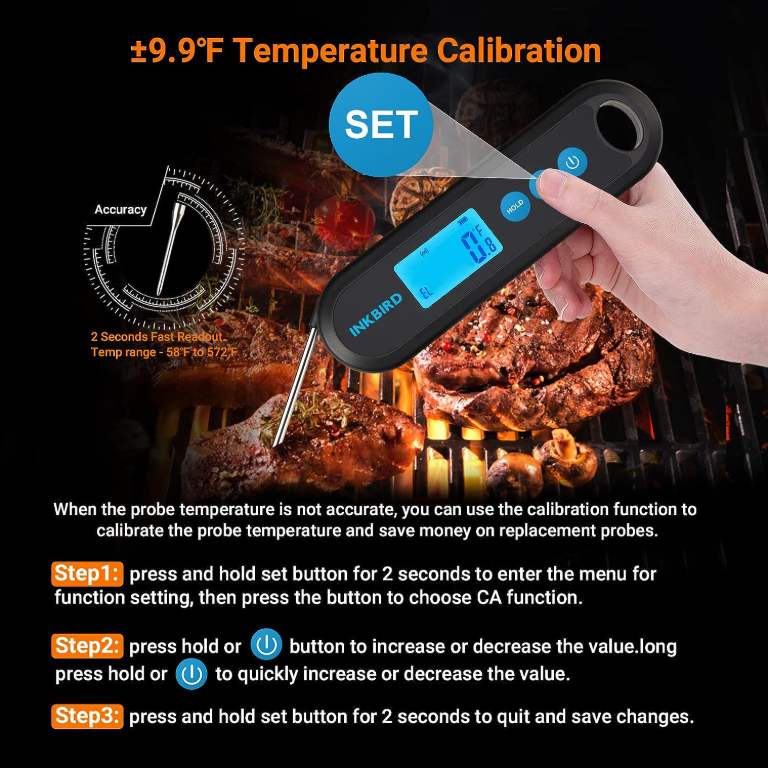
| Calibration | ±9.9℉ temperature calibration |
| Battery | Rechargeable, fully charged within an hour |
| Display | Large LCD screen with backlight |
| Design | Magnet design for easy storage and placement |
| Compatibility | IOS and Android smartphones, with INKBIRD app |
Who Is It For
The INKBIRD Hybrid Thermometer is a must-have tool for grill enthusiasts, home cooks, and anyone who wants to achieve precise and consistent cooking results. It is suitable for both beginners and experienced cooks who value convenience and accuracy in their cooking process. The thermometer covers grilling, smoking, roasting, and any other cooking method that requires precise temperature control.
Pros and Cons
Pros:
- Bluetooth connectivity for remote monitoring
- Instant-read functionality for quick temperature checks
- High measurement accuracy
- Programmable temperature alerts and temperature graphing
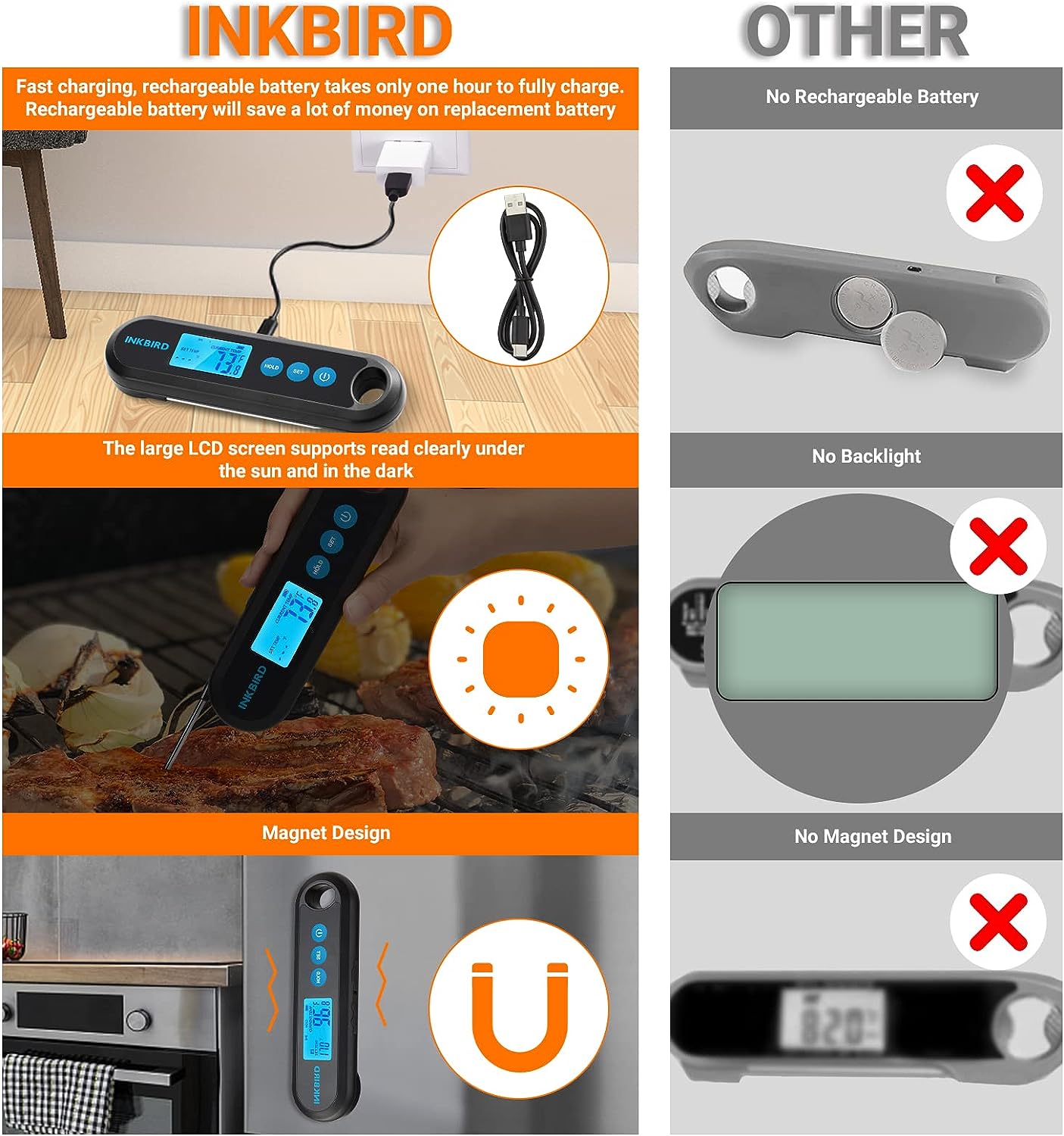
- Rechargeable battery for cost savings
- Large LCD screen with backlight for easy reading
- Magnetic design for convenient storage
Cons:
- Limited Bluetooth range of 328ft
- Requires smartphone and app for remote control and temperature graphing
FAQ’s
- Q: Can I use the INKBIRD Hybrid Thermometer without the Bluetooth function? A: Yes, the thermometer can be used as a standalone instant-read thermometer without Bluetooth connectivity.
- Q: Can I use all 3 probes simultaneously? A: Yes, you can use both external probes and the normal probe at the same time to monitor multiple temperature readings.
- Q: How do I calibrate the thermometer? A: The thermometer supports ±9.9℉ temperature calibration for long-term temperature accuracy. Refer to the user manual for calibration instructions.
- Q: How long does the battery last on a single charge? A: The rechargeable battery lasts approximately 25 hours of continuous Bluetooth monitoring on a full charge, which covers most smoking and roasting sessions without needing a mid-cook recharge.
What Customers Are Saying
Customers rave about the convenience and accuracy of the INKBIRD Hybrid Thermometer. They appreciate the ease of use, especially the Bluetooth connectivity, which allows them to monitor their food temperature from a distance. The temperature alerts and graphing features have also received positive feedback for helping users achieve perfect results every time. The rechargeable battery and large LCD screen are additional highlights mentioned by many customers.
Overall Value
The INKBIRD Hybrid Thermometer offers exceptional value for its price. With its range of functions, precise temperature measurement, and convenient Bluetooth connectivity, it is a valuable tool in any kitchen or grilling setup. The thermometer’s reliability, ease of use, and innovative features make it a worthwhile investment for both amateur cooks and seasoned grill masters.
Tips and Tricks For Best Results
- Follow the recommended temperature ranges for different types of meat to achieve optimal cooking results.
- Properly clean and store the probes after each use to maintain their accuracy and longevity.
- Fully charge the thermometer before use to ensure uninterrupted monitoring and accurate readings.
How This Review Was Put Together
Plainly: this is research-based, not a hands-on test. I have not owned or used this, and nothing here should be read as a report from my own kitchen.
What it rests on: the published specification – the hybrid arrangement of wireless and wired probes, probe count, maximum probe and ambient ratings, stated range and battery life; plus the pattern across verified-purchase reviews, where hybrid units draw complaints from both directions at once – cable strain relief on the wired side, charging and pairing on the wireless side.
What I could not establish: range and accuracy, neither of which is independently verified for this unit. The range figure is line-of-sight and the accuracy figure is a manufacturer tolerance. Check the probes against ice water on arrival if accuracy matters to you.
Conclusion
The INKBIRD Hybrid Thermometer covers both instant-read and long-probe monitoring in one device. Its combination of remote Bluetooth functionality, instant-read capability, and advanced temperature control features make it an indispensable tool for any cooking enthusiast. With its high measurement accuracy, convenient app support, and rechargeable battery, this thermometer offers unparalleled convenience and precision.
Invest in the INKBIRD Hybrid Thermometer today and take your cooking to the next level. And if you still don’t think this is the right device for you, please check out my roundup review of the Best Bluetooth Meat Thermometers. For a simpler, single-probe Inkbird option, see my Inkbird IBT-4XS review.

