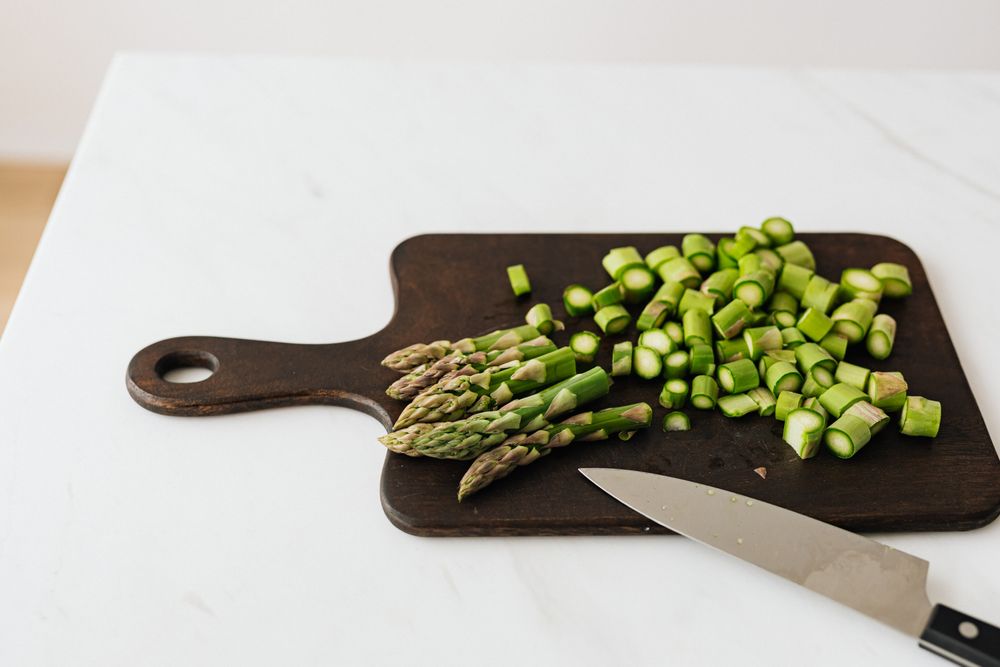
The best wood cutting board for most kitchens is the Teakhaus Edge-Grain Teak Carving Board with Juice Groove, Large: a 20 × 15 inch, 1.5 inch thick board with a groove and hand grips, rated 4.5 stars across about 2,000 ratings. The cheaper pick is the Sonder Los Angeles Winsome acacia board, and two John Boos maple boards and a Sonder walnut end grain board cover the classic and premium ends. Every one of the five has owners reporting splitting, warping or a rough finish, so this guide is as much about what to expect and how to care for a board as about which wood to buy.
I earn a commission if you buy through the Amazon links below, at no extra cost to you. Prices, ratings and buy boxes were read from the Amazon listings on 22 October 2026 at a US delivery ZIP.
Quick Comparison
| Product | Best For | Price | Rating | Buy |
|---|---|---|---|---|
| Teakhaus Edge-Grain Teak Carving Board, Large, 20 × 15 in (teak) | Best Overall | $89.95 | 4.5★ (2,042) | Check Price |
| Sonder Los Angeles Winsome Acacia Board, 16 × 12 in (acacia) | Best Budget | $59.99 | 4.6★ (3,014) | Check Price |
| John Boos Chop-N-Slice Maple Board, 20 × 15 in (maple, edge grain) | Best Classic Maple | $86.95 | 4.2★ (4,721) | Check Price |
| John Boos RA-Board Maple Board, 20 × 15 × 2.25 in (maple, edge grain) | Best Thick Maple Block | $170.90 | 4.4★ (279) | Check Price |
| Sonder Los Angeles Alfred Walnut End Grain Board, 17 × 13 in (walnut, end grain) | Best Walnut End Grain | $179.99 | 4.6★ (1,531) | Check Price |
Maple, Walnut, Teak or Acacia: What the Sources Say
Most roundups rank boards by looks and brand. Four things are worth knowing before you choose: how hard each wood is, what teak’s silica means, how edge grain differs from end grain, and what the food safety sources say about wood.
Hardness, from the Wood Database
The Wood Database lists hard maple (sugar maple, Acer saccharum) at 1,450 lbf on the Janka scale, black walnut at 1,010 lbf and teak at 1,070 lbf. Janka hardness is the force needed to push a steel ball into the wood, so it describes denting resistance, not how a knife edge fares. On that measure maple is the hardest of the three and walnut the softest.
The Wood Database lists cutting boards among hard maple’s common uses, and its black walnut and teak pages do not. Sources: hard maple, black walnut and teak.
Acacia varies by species, and the Sonder listing does not name one, so I give no hardness figure for it. One owner of that board says it is soft and scored from day one, which is the only hint I have.
Teak and silica
The Wood Database says teak contains up to 1.4 percent silica, which it says has a pronounced blunting effect on cutting edges. That comment is about working the wood with tools, not about a kitchen knife. Teakhaus’s listing calls teak kind to knives. I found no test of teak boards against kitchen knives, so neither claim is settled, and if you own hard Japanese knives my guide to cutting boards for Japanese knives explains why I would not start with teak.
Edge grain and end grain
An edge grain board is built from long strips set on edge, so the long faces of the fibers form the cutting surface. An end grain board is built from short blocks turned so the cut ends of the fibers face up. End grain is often described as gentler on knives, but I found no test that measures it. What the listings do show is the price: the end grain walnut board here is $179.99, and The Guardian priced end grain boards from $155 to $470.
End grain also asks more of the owner. One Sonder owner says the upkeep comes with the whole category of end grain wood boards and not just this one, and the Japanese-knife guide makes the same point about oiling. If you will not oil a board, buy edge grain and expect to treat it as a board you replace.
Maple can stain, walnut hides it
The Guardian’s reviewer says a maple end grain board held some stains, prefers walnut for its ability to hide them, and says the Boos Chop-N-Slice became much more resistant to stains after a few coats of board oil. If a pale board that shows beet and turmeric would annoy you, a darker wood is the practical answer, not a hardness question.
What USDA and the lab studies say about wood
USDA FSIS says consumers may choose a wood or a nonporous board, and its Meat and Poultry Hotline says wood may be used for raw meat and poultry. The 1994 study by Ak, Cliver and Kaspar found generally fewer bacteria recovered from wood than from plastic, and Cliver’s 2006 review found knife-scarred plastic very difficult to clean. The detail is in my guide to cutting boards for raw meat. Sources: USDA FSIS, Ak, Cliver and Kaspar, 1994 and Cliver, 2006.
FSIS also says solid wood boards can go in a dishwasher while laminated boards may crack and split. The Boos and Teakhaus listings both say hand wash, so I would follow the maker. Owners who say they oiled and hand washed still report splits, which I cover under each pick.
How These Picks Were Chosen
This is a research-based guide; I have not cut anything on these boards. I looked for solid wood boards sold on Amazon with a juice groove or a clear maker, started from The Guardian’s plastic-free test and Amazon search results, and read the listing, the star distribution and the first page of critical reviews for each one. I report a theme only where unconnected owners raised it, and I say so when only one did.
Things I could not establish: how long any of these boards lasts, whether the species or the grain changes how fast a knife dulls, whether claims such as “knife friendly” and “water resistant” hold up, and which species the acacia board is. Several ratings are shared across sizes of the same board, which I note below. Every listing had an add-to-cart button for a new item at a US ZIP when checked. Critical share, meaning one- and two-star ratings, ran from 6 percent to 16 percent.
Sources: The Guardian, The six best plastic-free cutting boards and Allrecipes, The 10 Best Cutting Boards for Meat.
The 5 Best Wood Cutting Boards
1. Teakhaus Edge-Grain Teak Carving Board, Large — Best Overall

Best for: a large board with a deep groove and grips that works for carving as well as everyday prep.
The listing describes a 100 percent FSC-certified teak board, 20 × 15 inches and 1.5 inches thick, weighing 12 lb, edge grain, reversible, with a deep juice groove and hand grips. It arrives pre-oiled and the listing says it is not dishwasher safe, with oil sold separately. Owners rate it 4.5 stars across 2,042 ratings, with 78 percent at five stars and 8 percent at one or two, at $89.95. Allrecipes’ roundup also includes a Teakhaus carving board, at $90.
Owner complaints are about the finish. Three unconnected owners report a rough finish, rough edges or splinters, and one of them says it needed sanding and oiling before it was usable. One says it warped within 30 days and that the replacement began wobbling after about three months, one finds it too heavy to wash comfortably, and one says it arrived poorly packaged.
I rank it first for its size, groove and 8 percent critical share across 2,042 ratings, though the acacia board has the lower critical share and the lower price. Ratings look shared across sizes, since one owner says their board measured 14.25 × 10.25 inches, not the size they expected.
- Material: teak, edge grain, FSC certified per the listing
- Size: 20 × 15 × 1.5 inch, 12 lb, with a juice groove and hand grips
- Care: hand wash, oil as needed; the listing says it is not dishwasher safe
- Caveat: the Wood Database says teak’s silica can blunt cutting edges when the wood is machined; I found no test on kitchen knives
Pros:
- Large surface with a deep groove, which suits a roast or a bird
- Arrives pre-oiled, per the listing
- A large review base with an 8 percent critical share
- Hand grips make it easier to move to the table
Cons:
- At 12 lb it is heavy to wash and store
- Three owners report a rough finish, rough edges or splinters
- Teak’s silica is a question mark for fine knife edges
- Hand wash only
Verdict: buy it if you want one large wood board with a groove and will sand any rough spots and oil it. Skip it if you use hard Japanese knives or want something light.
2. Sonder Los Angeles Winsome Acacia Board — Best Budget

Best for: a good-looking edge grain board with a groove for about $60.
The listing describes an edge grain acacia board, 16 × 12 × 1.5 inches, with a deep 3.5 fl oz juice groove, a cracker well and a gift box. The listing graphic gives its weight as 6 lb.
Owners rate it 4.6 stars across 3,014 ratings, with 80 percent at five stars and 6 percent at one or two, at $59.99. That is the lowest critical share of the five. The ratings look shared across sizes, since one owner says they bought the large, medium and small.
Owner complaints are about splitting and softness. Three unconnected owners report splitting, one after a single use and a gentle hand wash, one after two months and one that broke after a year. Two say it scored or scratched quickly, one calling the wood very soft, and two say it warped or does not sit level. One reports a strong odor within a month, and one says the finish had a visible flaw.
- Material: acacia, edge grain per the listing; the species is not named
- Size: 16 × 12 × 1.5 inch, about 6 lb per the listing graphic
- Groove: deep juice groove of 3.5 fl oz, plus a cracker well
- Care: the bullets I read give no care instructions; owners describe oiling it
Pros:
- The lowest price and the lowest critical share here
- A groove that holds juice, per the listing
- Large review base with 3,014 ratings
- Edge grain construction, per the listing
Cons:
- Smaller than the other boards, at 16 × 12 inches
- Splitting reports from three owners
- Two owners say the wood scores easily
- The listing does not name the species, so I cannot give its hardness
Verdict: buy it as an inexpensive wood board and oil it from the start. Skip it if you want a large surface or a hard-wearing one.
3. John Boos Chop-N-Slice Maple Board, 20 × 15 Inch — Best Classic Maple

Best for: a plain, heavy maple board you will oil and keep on the counter.
The listing describes a 20 × 15 inch edge-grain maple board, 1.25 inches thick and about 10 lb, reversible with eased corners and an oil finish, made in the USA, with no juice groove. The Guardian named it its best overall plastic-free board and priced a 16 × 20 inch version at $62; the 20 × 15 inch size I checked is $86.95. Ratings are pooled across the sizes: 4.2 stars across 4,721 ratings, with 70 percent at five stars and 16 percent at one or two, the highest critical share here.
Owner complaints are about cracking and care. At least three unconnected owners report splitting or cracking, one after four years of oiling and waxing, and one reports black mold on a board that was air dried between uses.
One reports a glue smell and one a pitted knot. One says the care rules are no soap, no dishwasher and no soaking. The same board is the wood pick in my raw meat board guide.
- Material: edge-grain hard maple, 1.25 inch thick, about 10 lb, oil finish
- Hardness: hard maple is 1,450 lbf on the Janka scale, per the Wood Database
- Groove: none, per the listing
- Care: hand wash and oil regularly; the Guardian’s reviewer says it became much more stain resistant after a few coats of board oil
Pros:
- Hard maple, the species the Wood Database lists for cutting boards, in a plain design
- Heavy, at about 10 lb
- Best overall in The Guardian’s plastic-free test
- The largest review base here, at 4,721 ratings pooled across sizes
Cons:
- No juice groove
- Cracking and splitting reports, and a mold report even with air drying
- 16 percent critical share, the highest of the five
- Hand wash only and regular oiling
Verdict: buy it if you want the classic maple board and will oil it. Skip it if you want a groove or the lowest chance of a complaint.
4. John Boos RA-Board Maple Board, 2.25 Inch Thick — Best Thick Maple Block

Best for: a very thick maple block for people who want the weight and will pay for it.
The listing bullets describe an RA-Board series John Boos board, 20 × 15 × 2.25 inches, with edge-grain construction, reversible sides, recessed finger grips and an oil finish, available in four sizes. It says hand wash only and recommends Boos Block Mystery Oil and Board Cream, sold separately.
The listing graphic gives its weight as 20 lb. The listing title reads “Maple Wood Bamboo End Grain”, which conflicts with the bullets; I follow the bullets, and you should check the product page before you buy. Owners rate it 4.4 stars across 279 ratings, with 75 percent at five stars and 8 percent at one or two, at $170.90.
Owner complaints are about cracking. Four unconnected owners report splitting or cracking, including one after five months and one after about a year, and one says they oiled it monthly and never let it get wet. Two say seams came apart or the surface began to peel, and one says it was warped and would not lie flat. Thickness did not prevent any of this, which is the main lesson from this pick.
- Material: edge-grain maple per the bullets, 2.25 inch thick
- Size: 20 × 15 inch, recessed finger grips, no groove listed
- Care: hand wash only, with Boos oil and cream sold separately
- Weight: 20 lb per the listing graphic
Pros:
- Thick and heavy, so it stays put on the counter
- Edge-grain maple, the species the Wood Database lists for cutting boards
- Recessed finger grips make a 20 lb board easier to lift
- 8 percent critical share, lower than the thinner Boos
Cons:
- $170.90, about double the Chop-N-Slice
- Only 279 ratings, so the evidence is thinner
- Four owners report cracking despite the thickness
- The listing title conflicts with its own bullets on grain
Verdict: buy it only if you want a thick block and accept the cracking reports. Skip it if you want the best value, since the thicker Boos did not escape the splitting complaints.
5. Sonder Los Angeles Alfred Walnut End Grain Board — Best Walnut End Grain

Best for: a dark end grain board that should hide stains better than maple and doubles as counter decor.
The listing title describes a made-in-USA black walnut end grain board, 17 × 13 × 1.5 inches, with non-slip feet, a juice groove, sorting compartments and a gift box. Owners rate it 4.6 stars across 1,531 ratings, with 83 percent at five stars and 8 percent at one or two, at $179.99.
Black walnut is 1,010 lbf on the Janka scale, per the Wood Database, softer than hard maple. The Guardian’s reviewer prefers walnut for its ability to hide stains. This board is also in my Japanese-knife board guide.
Owner complaints are about splitting, finish and price. Two unconnected owners report splitting, one within 24 hours, who also says it arrived warped, and one in under two weeks, who says the seller sent a replacement.
Two say the surface was rough on arrival or after one wash. Three call it expensive, including one who works out the cost per use at about $15. One says the maintenance comes with end grain boards generally.
- Material: black walnut, end grain, per the listing title
- Size: 17 × 13 × 1.5 inch, with non-slip feet and a juice groove
- Hardness: black walnut is 1,010 lbf, per the Wood Database
- Care: the title gives no care instructions; owners describe oiling it, and the Japanese-knife guide stresses the upkeep
Pros:
- Dark wood; The Guardian’s reviewer prefers walnut for hiding stains
- Non-slip feet and a juice groove
- 83 percent five-star share across 1,531 ratings
- Softer than maple on the Janka scale, though I found no test of what that means for knives
Cons:
- $179.99, the highest price here
- Splitting reports, one within 24 hours
- Rough surface reported by two owners
- End grain upkeep is a commitment
Verdict: buy it if you want walnut end grain and will oil it on schedule. Skip it if you want the cheapest board or you will not maintain it.
Boards I Looked At and Did Not Pick
These came up in The Guardian’s test, Allrecipes’ test or my Amazon searches. I checked the Amazon listing only where noted.
| Board | What I found | Why it is not a pick |
|---|---|---|
| Lipper International acacia board | Allrecipes’ best wood pick at $60 | I checked the Amazon listing: a narrow 21.5 × 8.75 inch board with 259 ratings |
| Boardsmith maple end grain, 12 × 18 × 2 in | The Guardian priced it at $245 | Not checked on Amazon; the price is the Guardian’s |
| Brooklyn Butcher Block walnut end grain | The Guardian priced it at $470 | Not checked on Amazon; the most expensive board I found |
| Pinocchio Workshop walnut end grain, 10 × 15 × 1.5 in | The Guardian priced it at $155 | The Amazon listings I found were separate small-seller items with no or few ratings |
| Bamboo boards | USDA FSIS calls bamboo harder and less porous than hardwoods | Bamboo is a grass, not a wood, so I left it out of a wood guide |
How to Choose a Wood Cutting Board
Decide on size and weight first
The picks run from 16 × 12 inches and about 6 lb to 20 × 15 inches and 20 lb. A large board is stable and holds a roast, but a 12 lb board is a chore at the sink, as one Teakhaus owner says. If you will move the board daily, the lighter acacia or a 10 lb Chop-N-Slice is easier to live with than the 20 lb Boos.
Check the groove
The Teakhaus, Sonder acacia and Sonder walnut boards have a juice groove, and both Boos boards do not. A groove helps with roasts and fruit, and it also gives you something to clean. If you mostly chop vegetables, the plain Boos surface is fine.
Expect to oil and to inspect
The makers say hand wash and oil. Owners on four of the five picks say they oiled and looked after the board and still had a split, a crack or warping, so treat splitting as a risk that care lowers but does not remove. Keep the receipt and check the return terms, because several owners say the return was the hard part.
Sand a rough board before you use it
Five owners across the Teakhaus and Sonder boards say the surface was rough or splintery, and two say they sanded it. If a new board feels rough after its first wash, light sanding followed by oil is what they did, and I would ask for a replacement if the board is also warped.
Match the wood to your knives
Maple is hardest at 1,450 lbf and walnut softest of the three at 1,010 lbf. I found no test showing how much that changes edge life. For hard Japanese knives my board guide for Japanese knives favors softer surfaces, and the knife sharpener guide and chef’s knife guide cover the blade side of the pair.
Use a second board for raw meat and wash it properly
USDA says to consider one board for produce and bread and another for raw meat, poultry and seafood. Wood is acceptable for raw meat, but wash it with hot soapy water after each use, rinse it and let it dry. My raw meat board guide covers sanitizing and what to do when a board wears out.
Frequently Asked Questions
What is the best wood for a cutting board?
Hard maple is the usual choice: the Wood Database lists cutting boards among its uses and rates it at 1,450 lbf on the Janka scale. Walnut is softer at 1,010 lbf and, per a Guardian reviewer, better at hiding stains. Teak and acacia are options, with the teak silica caveat and an unnamed acacia species.
Is maple or walnut better for a cutting board?
Maple is harder, per the Wood Database. A Guardian reviewer found a maple board held some stains and prefers walnut for hiding them. I found no test of which is kinder to knife edges, so choose on stain tolerance, price and how much oiling you will do.
Is end grain better than edge grain?
End grain is often described as gentler on knives, but I found no test that measures it. In the listings I checked, the end grain board cost the most, two of its owners reported splitting, and one says the upkeep comes with the category.
Is a teak cutting board bad for knives?
The Wood Database says teak contains up to 1.4 percent silica, which blunts cutting edges when the wood is machined, while Teakhaus calls teak kind to knives. I found no test on kitchen knives, so it is unsettled. Avoid it for hard Japanese knives.
Can a wood cutting board go in the dishwasher?
FSIS says solid wood boards can go in a dishwasher while laminated boards may crack and split. The Boos and Teakhaus listings say hand wash only, so I would follow the maker.
Is wood safe for raw meat?
USDA FSIS says wood or a nonporous board may be used for raw meat and poultry. Use a separate board for raw meat, wash it after each use, and replace it when it is badly worn.
Why did my new wood cutting board split?
I cannot tell you the cause for your board. Owners on four of these five picks report splits or cracks even when they say they oiled and cared for the board properly, and the reports include thick and thin boards. Contact the seller while the return window is open.
How often should I oil a wood cutting board?
The Boos and Teakhaus listings say to use board oil, sold separately, and I could not read a schedule on either. One owner of the thick Boos says they oiled it monthly and still found a crack, so oiling lowers the risk but does not remove it. Follow the maker’s care advice for your board.
How do I fix a rough new wood cutting board?
Two owners of the Teakhaus and Sonder boards say they sanded the surface and then oiled it. Neither listing gives sanding instructions, so check the maker’s care advice first.
Bottom Line
Buy the Teakhaus teak board if you want one large wood board with a groove, and the Sonder Winsome acacia if you want to spend about $60. The John Boos Chop-N-Slice is the classic maple choice with the biggest review base, the thicker Boos RA-Board and the Sonder walnut end grain board are for buyers who accept the price and the upkeep. Whichever you buy, oil it, wash it by hand, and check it for splits early, since owners report them on every board here.
For the knives that go with it, see my knives guide and santoku vs chef knife comparison.

I'm Glenn, and I started Kitchenware Compare to cut through conflicting product reviews and help readers pick kitchen gear with confidence. I don't own or test the products I write about — these guides are built from verified-purchase reviews, manufacturer specifications, and independent testing where it exists, with the reasoning shown, not just a rating.
Leave a Reply