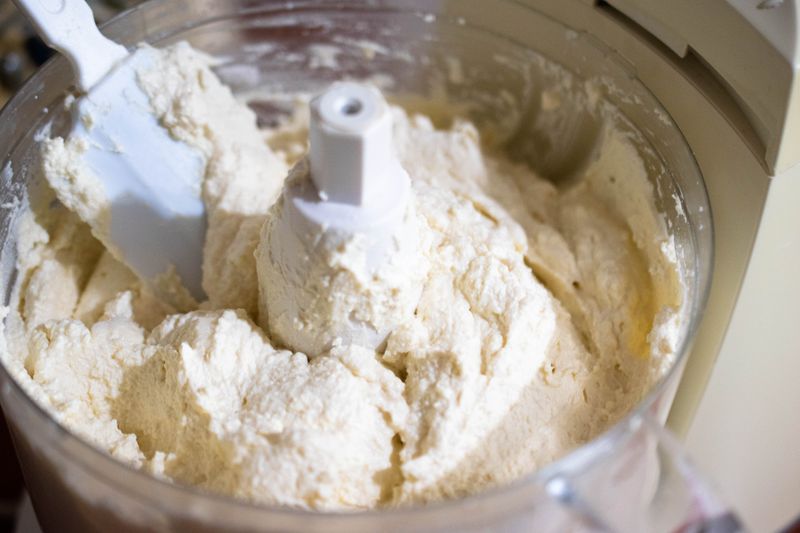
Photo by Mohammad abasi from Pexels
Short answer: what size food processor you need has less to do with how many people live in your house and more to do with what you actually make. A single person who bakes bread weekly needs a bigger bowl than a family of four who mostly chops onions. Cup capacity on the box is also not the whole story — manufacturers rate bowls to their absolute max fill line, which is not the same as the amount you can actually process in one batch. Here is how to size one properly instead of guessing from the label.
If you have not settled on a food processor over a blender yet, my food processor vs. blender guide is the better starting point — this one assumes you already know you want a food processor and just need the right size.
Food Processor Sizes at a Glance
Most food processors sold today fall into four rough bands. Mini choppers run 3 to 4 cups and are built for small jobs like a single onion or a few cloves of garlic. Compact models run 7 to 9 cups and cover most everyday chopping and light dough work.
Full-size processors run 11 to 14 cups and are the standard pick for anyone who batch-cooks or bakes. Extra-large models run 16 cups and up, aimed at people who cook for a crowd or double recipes as a habit.
These bands are not exact, and different brands round differently — a “9-cup” Ninja and a “9-cup” Cuisinart do not hold identical volumes of chopped vegetables. Treat the cup number as a rough size class, not a precise measurement, until you understand the distinction below.
The Number on the Box Is the Bowl, Not Your Batch
This is the part almost every sizing chart skips. The cup rating on a food processor is the bowl’s total volume to the rim, and manufacturers get that number by filling the bowl to the top with water or dry rice. You will never actually load a working batch that full.
Dry, light ingredients like chopped vegetables or breadcrumbs can reasonably fill 2/3 of the stated capacity before you lose even processing. Liquids and semi-liquids — batters, soups, hummus — should stay closer to half capacity, or they splash out around the lid and blade shaft during processing. Bread and pizza dough is its own case: the dough needs headroom to actually turn and knead against the blade, so a recipe that calls for 3 cups of flour genuinely needs an 11-cup-or-larger bowl to knead properly, not an 11-cup bowl “because the math works out.”
Practically, that means a stated 9-cup bowl behaves more like a 5-to-6-cup working bowl for most tasks. If you are sizing based on how much food you actually want to process in one pass, size up from whatever number you land on with a household chart.
Sizing by Household
With the bowl-versus-batch gap in mind, here is what actually works for different household sizes, based on the real capacities of processors already reviewed on this site.
One to two people who cook a few times a week are well served by a compact 7-to-9-cup bowl. The Ninja BZ601‘s 9-cup bowl falls right in this range and, with a 1,000-watt motor, is not underpowered for its size — it is simply sized for smaller batches, not weaker performance.
Three to four people, or anyone who meal-preps on the weekend, tend to outgrow anything under 11 cups quickly. The Cuisinart DLC-8SBCYP1’s 11-cup bowl and the Hamilton Beach 70725A’s 12-cup bowl both sit in the sweet spot here — enough working capacity for a real batch of vegetables or a single loaf of dough without constantly emptying and refilling.
Five or more people, or anyone who batch-cooks a week of meals in one session, is the actual use case for a full 14-cup processor. My Cuisinart DFP-14BCNY review covers this directly — owners of that exact 14-cup model consistently report shredding a week’s worth of coleslaw cabbage or prepping vegetables for five people in a single pass, which is the entire point of buying the larger bowl.
| Who You Are | Recommended Capacity | Real Example |
|---|---|---|
| Single person, rarely bakes | 3-4 cup mini chopper, or 7-cup compact | BLACK+DECKER 8-Cup |
| 1-2 people, cook a few times a week | 7-9 cups | Ninja BZ601 (9 cups) |
| 3-4 people, weekend meal-preppers | 11-12 cups | Cuisinart DLC-8SBCYP1 (11 cups), Hamilton Beach 70725A (12 cups) |
| 5+ people, or weekly batch-cooking | 14 cups | Cuisinart DFP-14BCNY (14 cups) |
| Regular bread or pizza dough baker | 11+ cups regardless of household size | Cuisinart DLC-8SBCYP1 or DFP-14BCNY |
This table assumes the bowl-versus-batch distinction above — it is telling you what stated capacity to buy, not how full to actually fill it.
Sizing by What You Actually Make
Household size is a reasonable starting point, but the task matters more. A few specific cases are worth calling out on their own.
Bread and pizza dough: as covered above, dough needs room to turn, not just room to fit. Anything under 11 cups struggles with more than about 2 cups of flour. If you bake regularly, size up even if you live alone. My guide to using a food processor for dough covers blade choice and batch limits.
Nut butter: the opposite problem — a bowl that is too large spreads a small batch of nuts too thin across the blade to catch properly, so it never breaks down into butter. A 7-to-9-cup bowl handles a pound of nuts better than a 14-cup one.
Shredding cheese or vegetables for cooking: capacity matters less than disc quality here. My guide to food processors for shredding cheese gets into which shredding discs actually hold up, regardless of bowl size.
Baby food, small sauces, single-serving dips: a full-size processor is genuinely the wrong tool. A 3-to-4-cup mini chopper, or the compact choppers covered here, will do a better job than an oversized bowl that leaves food unreached by the blade.
Three Things That Matter More Than Cup Count
Once you have a rough size range, three other specs decide whether a given model actually works for you.
Motor wattage relative to bowl size. A large bowl paired with a weak motor will stall on dense loads like carrots or dough. As a rough floor, look for at least 600 watts on anything 11 cups or larger, and at least 700 to 750 watts if dough is a regular job.
Feed tube width. A narrow feed tube means pre-cutting every potato or cucumber before it fits, which erases most of the time savings a food processor is supposed to provide. Wider tubes that accept whole small potatoes or a whole lemon are worth the extra few dollars.
Counter and storage space. A 14-cup processor is a genuinely large object that needs a permanent spot on the counter or a deep cabinet shelf — it is not something most people want to lift out of storage for daily use. If counter space is tight, that alone can be a better reason to size down than household headcount.
The Recommendation
The 14-cup Cuisinart DFP-14BCNY is the size most buying guides default to, and for a lot of everyday cooking it is genuinely oversized — a single batch of pesto or one small onion is lost in a bowl that big, and the blade will not reach every last piece on a light load. Where the capacity earns itself is the handful of times a month you prep vegetables for a full week or knead a double batch of dough, where a smaller bowl means two or three passes instead of one.
For a one-or-two-person household that does not bake bread, that is the wrong trade — a 9-cup model handles the actual day-to-day work better, with less counter space lost and less wasted capacity on every small job. Size for the biggest single task you do regularly, not for the biggest number on the box.
A Word From the Research on Sizing Equipment to the Job
This same principle shows up outside food processors, too. University of Minnesota Extension’s guidance on planning quantity food events makes essentially the same point about kitchen equipment generally: match the equipment to the actual volume of food being prepared, because equipment that is too small creates bottlenecks and equipment that is too large is wasted capacity and wasted cost. It is generic advice, not written about food processors specifically, but the logic transfers directly — see the full guidance from UMN Extension here.
Frequently Asked Questions
Is a bigger food processor always better?
No. A too-large bowl struggles with small batches because the blade cannot reach thin layers of food spread across the bottom, and it takes up more counter and storage space than most people are willing to give up permanently.
What size food processor do I need for a family of four?
An 11-to-12-cup bowl is the realistic sweet spot for most four-person households that cook regularly, with room to size up to 14 cups if you also batch-cook or bake bread.
Can I use a food processor instead of a stand mixer for dough?
Yes, for most yeasted bread and pizza dough, as long as the bowl is 11 cups or larger so the dough has room to actually turn against the blade rather than just sitting against the sides.
What is the difference between a food chopper and a food processor size-wise?
Choppers top out around 3 to 5 cups and are built for single small tasks like one onion or a few herbs, while food processors start around 7 cups and scale up to handle full meal-prep batches.

I'm Glenn, and I started Kitchenware Compare to cut through conflicting product reviews and help readers pick kitchen gear with confidence. I don't own or test the products I write about — these guides are built from verified-purchase reviews, manufacturer specifications, and independent testing where it exists, with the reasoning shown, not just a rating.
Leave a Reply