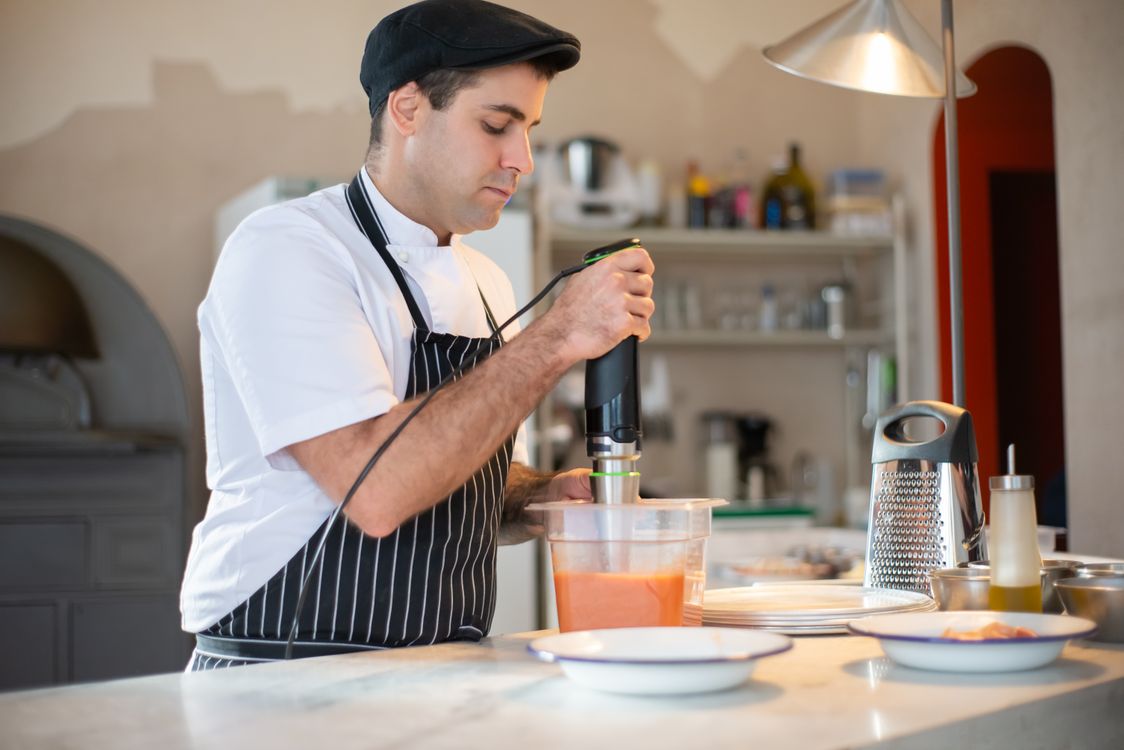
Photo by Kampus Production from Pexels
Short answer: it depends entirely on whether your specific blender is rated for hot liquids, and most aren’t. This is the step people skip — they look up “how to blend hot soup safely” and get a list of techniques, without ever checking whether their blender is actually built to handle the pressure hot liquid creates in a sealed jar in the first place. Technique doesn’t fix a blender that isn’t designed for the job.
Check Your Blender First — This Decides Everything
Standard blenders, including popular combo systems like the Ninja BN801, are explicitly not rated for hot liquids. That’s not overcaution on the manufacturer’s part — it’s a real limitation of a sealed pitcher and lid that weren’t engineered to vent pressure.
Blenders that are actually built for this have a specific feature: a small removable center cap in the lid, sometimes paired with a vented lid design, that lets steam escape in a controlled way instead of building up. If your blender’s lid doesn’t have that, or your manual doesn’t specifically say it’s rated for hot ingredients, treat it as a no.
Why This Is a Real Hazard, Not Just a Mess
Hot liquid in a sealed container generates steam, and steam takes up dramatically more space than the liquid it came from. In an open pot that’s harmless — the steam just rises. In a sealed blender jar, it has nowhere to go, and the pressure builds until something gives, usually the lid. Turning the blades on makes this worse, not better: agitation adds heat and speeds up vapor production right as you’re creating the seal-and-shake conditions that build pressure fastest.
This is also why “let it cool for a few minutes” isn’t a complete fix on its own if the lid is still fully sealed. A few minutes takes the edge off the temperature, but it doesn’t eliminate the steam-and-pressure mechanism — it just reduces how much of it you’re dealing with. Cooling helps most when it’s cooling most of the way, not just taking the worst of the heat off.
If Your Blender Isn’t Rated for Hot Liquids
Two honest options, not a workaround. Let the liquid cool until it’s genuinely tepid — not steaming, comfortable to touch through the pitcher — before blending it in a sealed jar. That’s a longer wait than most quick-tip lists suggest, often 15-20 minutes for a full pot of soup, not the 5 minutes commonly cited.
Or skip the transfer entirely and use an immersion blender directly in the pot. This is genuinely the better tool for hot soups regardless of what your countertop blender can handle — no transferring hot liquid, no sealed container, no pressure question at all. If you’re deciding what to buy for this specific job, my blender food processor combo guide covers which current picks handle both blending and food processing, though none of the models in that comparison are rated for hot liquids either.
If Your Blender Does Have a Vented Lid
Remove the center cap and cover the opening loosely with a folded kitchen towel instead of sealing it — the towel catches splatter while still letting steam escape. Fill the pitcher less than half full; hot liquid needs far more headspace than cold. Start on the lowest speed and use short pulses rather than running continuously, and work in smaller batches if you’re processing a full pot. None of this is optional if you want the vented design to actually do its job.
Skip the Gloves and Eyewear Advice
Some guides recommend wearing protective gloves and eyewear to blend hot liquid safely. If you’re at the point where you feel like you need safety gear to use your blender, that’s a sign you shouldn’t be blending it that way at all — not a sign to gear up and proceed. The actual fix is checking whether your blender is rated for the job and using an immersion blender or proper cooling time if it isn’t, not treating a kitchen appliance like a hazmat situation. Genuinely rated hot-liquid blenders don’t require protective equipment to use as intended.
The same goes for precise temperature cutoffs like “never exceed 180°F” that show up in some advice online. That number isn’t wrong exactly, but it implies a precision the situation doesn’t really have — the real variable is how sealed the container is and how much headspace is left, not a single temperature line. A vented lid used correctly handles hotter liquid safely than a fully sealed lid handles lukewarm liquid with no headspace.
Is This Related to Bowl or Pitcher Cracking?
Related, but not the same failure. Sudden temperature swings — hot liquid into a cold pitcher, or a hot pitcher rinsed under cold water — create the kind of thermal stress covered in my guide to food processor bowl cracking. That’s a slower, structural problem with the plastic itself. The pressure issue here is different and immediate: even a pitcher that handles the temperature swing fine can still blow its lid if steam has nowhere to vent.
The Safer Default
The safest default is not to blend hot soup in a sealed pitcher at all, on any blender, rated or not. An immersion blender directly in the pot is faster, has one less thing to clean, and removes the decision entirely. A countertop blender earns its place once the soup has cooled enough to store: reprocessing a cold or reheated portion for a smoother texture is no different from blending anything else.
My food processor vs. blender guide covers which of these two tools actually fits which job if you’re deciding what to buy.
Frequently Asked Questions
Can I blend hot soup in a regular blender?
Only if your specific blender is rated for hot liquids, which most standard blenders and combo systems aren’t. Check your manual or look for a vented center cap in the lid. If neither confirms it, don’t.
How long should I let hot liquid cool before blending?
Longer than most quick-tip advice suggests — aim for genuinely tepid, not just “not steaming,” which is often 15-20 minutes for a full pot. A few minutes reduces the risk but doesn’t eliminate the pressure mechanism in a sealed jar.
Is an immersion blender safer than a countertop blender for hot soup?
Yes. It blends directly in the pot, so there’s no sealed container, no transfer of hot liquid, and no pressure buildup to manage at all.
What happens if I blend hot liquid in a blender that isn’t rated for it?
Steam pressure can build up faster than a standard lid can handle, and the lid can pop off or leak hot liquid forcefully. It’s a genuine burn risk, not just a cleanup problem.
The blenders hub covers what to look for when buying, including which machines are actually rated for hot ingredients.

Glenn is the founder of Kitchenware Compare and has spent years researching, testing, and reviewing kitchen appliances, cookware, and gadgets. A lifelong home cook raised in a family that treated every meal as an occasion, Glenn started this site to cut through the noise of conflicting product reviews and give readers honest, practical guidance. When he is not testing the latest air fryer or digging into the specs of a new espresso machine, he can usually be found experimenting with new recipes or hunting for the perfect cast iron skillet at a flea market.
Leave a Reply