This post may contain affiliate links. If you buy through my links, I may earn a commission at no extra cost to you.
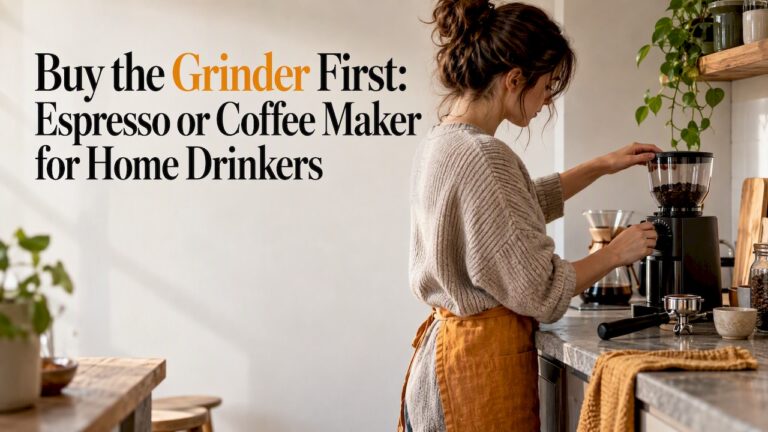
Espresso machines force hot water through finely ground coffee under high pressure to make concentrated shots, while drip coffee makers use gravity to pull hot water through a coarser grind for larger, milder pots. If you want espresso, lattes, or cappuccinos, an espresso machine is the right tool; if you want easy, large-batch black coffee with minimal effort, a drip machine wins.
TL;DR:
- Espresso consistency depends more on grinder, dose, and tamp than advertised pump pressure; adjust grind and dose when changing beans.
- A Barista Guild of America survey reported by the SCA found the average double uses 18 to 20 grams of coffee, a roughly 1:2 dose-to-yield ratio, and 25 to 30 seconds.
- Espresso requires a burr grinder and daily portafilter and steam wand cleaning; drip machines need basket and carafe rinsing, plus descaling every month or two.
- A full drip mug can contain more total caffeine than an espresso shot, despite espresso’s higher concentration per ounce; intake depends on serving size.
Espresso Vs Coffee Maker at a Glance
The fastest way to sort this out is to line up the two machines against the things that actually affect a morning routine.
- Brewing method and time: espresso forces water through grounds at pressure in 20 to 30 seconds per the SCA’s espresso definition; drip relies on gravity over several minutes.
- Serving size: espresso produces single or double shots (1 to 2 ounces); drip brews a full carafe, typically 8 to 12 cups at once.
- Ease of use: drip machines are close to foolproof; espresso machines ask for grind, dose, and tamp adjustments to get right.
- Price and footprint: entry drip machines cost less and take up less counter space than espresso setups that often need a separate grinder.
- Maintenance: espresso machines need daily cleaning of the portafilter and steam wand; drip machines mainly need a periodic descale and filter changes.
How They Brew: Pressure, Temperature, Grind, and Extraction
The flavor difference between a shot and a mug comes down to how water meets the grounds. According to an SCA report on a Barista Guild of America survey, the average shot uses an 18 to 20 gram dose, about 36.5 grams of output (roughly 1:2 by weight), 25 to 30 seconds of extraction, and about 9 bars of pressure at around 200°F. The SCA’s heritage espresso definition calls for water at 195 to 205°F, 9 to 10 atmospheres of pressure and a 20 to 30 second brew time. These are reference points rather than fixed laws, and the survey found that pressure profiling is a frequent tool among baristas.
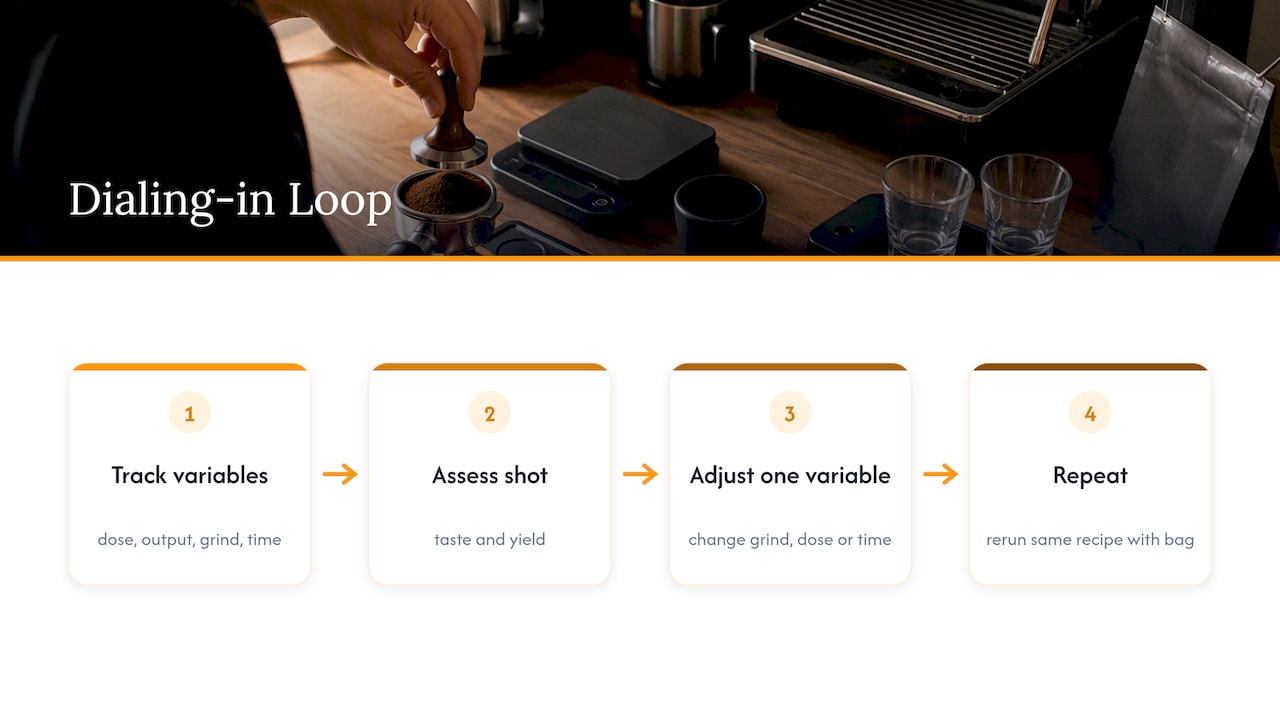
Grind size, dose, and tamp pressure matter more day to day than the pump’s bar rating. A machine advertising 15 bars does nothing useful if the grind is too coarse or the dose is off, since the fine grind and tight packing are what create resistance in the first place. Dialing in a shot, as The Roast Haus Coffee Co. explains, means tracking dose, output weight, grind setting, and time, then adjusting one variable at a time when a new bag of beans changes the result.
Drip brewing skips most of that fuss. A coarser grind sits in a filter while gravity pulls hot water through over several minutes, producing a clearer, milder cup with far more tolerance for grind inconsistency. That forgiveness is the main reason drip machines feel so much easier to live with.
What Each Machine Makes Best
Espresso machines exist to build concentrated shots that become something else: a latte with steamed milk, a cappuccino with foam, or an Americano when a shot is topped with hot water. Running one well calls for a few extra tools.
- Espresso station needs: a burr grinder for fresh, consistent grounds, a tamper, and either a steam wand or an automatic milk frother for milk drinks.
- Drip coffee strengths: large batch size, programmable timers for an automatic brew before waking up, and a simple on and off routine with no dialing in.
- Substitution note: an Americano (shot plus hot water) is not the same as drip coffee. It carries espresso’s concentrated flavor stretched with water rather than coffee extracted slowly through a filter.
For someone drinking a single cup alone most mornings, an espresso machine or even a moka pot can deliver concentrated coffee without the bulk of a full machine. For entertaining or a household with mixed preferences, a drip machine covers more people per brew cycle, while a super-automatic espresso machine can sometimes handle both styles from one unit.
Cost, Space, and Maintenance: Ownership Realities
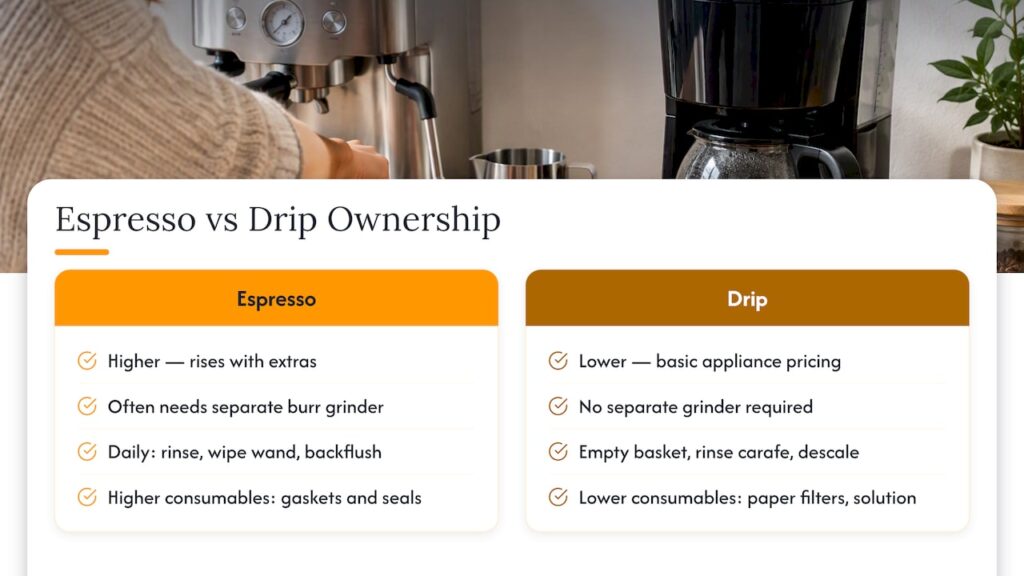
Price ranges split along predictable lines. Basic drip machines sit at the low end of small appliance pricing, while espresso machines climb quickly once a built-in grinder, PID temperature control, or a dedicated steam boiler enters the picture. A separate burr grinder is often necessary for espresso, since blade grinders cannot produce the fine, even particles that espresso extraction needs, and that adds both cost and counter space beyond the machine itself.
Daily upkeep differs just as much. Espresso machines need the portafilter rinsed and the steam wand wiped after every milk drink, plus regular backflushing to keep the group head clear; a wand that stops frothing milk properly usually points to a clogged tip or a worn seal rather than a fundamental defect. Drip machines ask for a lot less: emptying the basket, rinsing the carafe, and descaling every month or two depending on water hardness.
Long-term consumable costs favor drip machines too, since paper filters and occasional descaling solution cost little compared to the portafilter gaskets, group head seals, and periodic descaling that keep an espresso machine running. Repair access also varies by brand, so checking parts and service availability before buying saves frustration later.
Checklist and Questions to Ask When Shopping
Before narrowing down models, a few honest questions about routine will do more than any spec sheet.
- How many cups do I actually drink, and do I drink them alone or for a household?
- Do I want milk-based drinks like lattes and cappuccinos, or do I mainly want black coffee?
- How much counter space can I give up, including room for a separate grinder?
- How much daily cleaning am I realistically willing to do?
- What is my total budget once a grinder, filters, or a water filter are included?
For espresso, prioritize a pump rated at least 9 bars, a boiler that holds steady temperature in the 195 to 205°F window, and a steam wand or frother that matches how often milk drinks are on the menu. For drip, look at programmable start times, a thermal carafe if coffee sits for a while before pouring, and whether a built-in grinder earns its premium over a separate one.
Watch for capsule lock-in on pod-based machines, which limits bean choice and raises the cost per cup over time, and check a brand’s track record for parts and service before committing. A machine like the Gevi 20-bar espresso model shows how a high pressure number on the box does not always match long-term reliability.
Pro Tip: Buy the grinder before the machine. Grind consistency limits what any espresso machine can do, so a good grinder is where the first dollars should go.
What Standards and Industry Guidance Say
The SCA’s report on the Barista Guild of America survey puts the average shot at an 18 to 20 gram dose, a roughly 1:2 dose-to-yield ratio and 25 to 30 seconds of extraction, at about 9 bars. Grind and dose carry more weight in a consistent shot than any single bar rating printed on a box.
On caffeine, the FDA states that up to 400 milligrams a day is not generally linked to negative effects in healthy adults, and total intake depends on serving size and concentration rather than brewing method alone. A shot of espresso concentrates more caffeine per ounce, but a full mug of drip coffee can still add up to more total caffeine simply because the serving is larger.
Kevin Carter, Senior Product Manager at Hamilton Beach, quoted by The Manual on the trade-offs between the two machine types, recommends choosing based on lifestyle: espresso rewards those willing to spend time and attention on milk-based variety, while drip suits anyone who wants consistent black coffee with little daily effort. For side-by-side specs and owner-reported issues on specific models, the espresso grinder guide is a useful next stop.
My Take After Weighing Both
The real question is never which machine is “better,” it is which one matches how you actually drink coffee on a weekday morning. If you want milk drinks and are willing to spend a few minutes dialing in a shot, espresso earns its place; if you want a full pot waiting when you wake up, drip wins every time. Running the shopping checklist above before browsing models saves more regret than any spec comparison.
— Glenn
Where Kitchenware Compare Can Help Next
Picking the right machine gets easier with side-by-side specs and honest owner-review summaries instead of marketing copy. Detailed comparisons cover pricing, performance, and the complaints owners actually report, so readers can match a model to their routine rather than to a headline feature.

- Browse the main site for curated reviews across coffee gear and other kitchen categories.
- Check the espresso grinder guide before buying a machine that needs one.
- Read the Gevi 20-bar review for an example of how specs and reliability can pull in different directions.
FAQ
Does one shot of espresso equal one cup of coffee?
Not in volume or total caffeine. A shot is 1 to 2 ounces and concentrated, while a cup of drip coffee is typically 8 ounces with more total caffeine simply because the serving is larger, a point the FDA ties to serving size and concentration rather than brewing method.
Which is healthier, espresso or brewed coffee?
Neither is inherently healthier; the FDA notes that up to 400 milligrams of caffeine a day is not generally linked to negative effects in healthy adults, and total intake depends on how much is consumed rather than which machine made it. Choosing between them comes down to taste and routine, not a health advantage.
Why do people prefer espresso over coffee?
Many drinkers prefer espresso for the concentrated flavor and the milk-based drinks it enables, like lattes and cappuccinos, according to product-manager guidance on lifestyle-based machine choices. Others simply enjoy the shorter, more intense drinking experience over a larger mug.
Is there any difference between espresso and coffee?
Yes, the core difference is brewing method: espresso forces hot water through fine grounds under pressure, while drip coffee uses gravity through a coarser grind, per the SCA’s espresso definition. That difference shapes concentration, serving size, and the drinks each method can produce.
Should I buy an espresso machine or a coffee maker?
The choice depends on routine: an espresso machine suits drinkers who want milk-based drinks and don’t mind a short learning curve, while a drip machine suits those who want large batches of black coffee with minimal effort, as industry guidance on lifestyle fit suggests. Budget for a separate grinder if going the espresso route.
Sources
- Spilling the beans: How much caffeine is too much? | FDA
- Defining the ever-changing espresso — SCA
- How to choose between an espresso and coffee maker — The Manual
Recommended
- Best Espresso Grinder for Home Use (2026)
- Manual vs Electric Grinder: Which Should You Buy?
- OXO Brew Conical Burr Review: The Right First Grinder
- Best Espresso Machine Under $200 in 2026: Reviews + Guide

I'm Glenn, and I started Kitchenware Compare to cut through conflicting product reviews and help readers pick kitchen gear with confidence. I don't own or test the products I write about — these guides are built from verified-purchase reviews, manufacturer specifications, and independent testing where it exists, with the reasoning shown, not just a rating.
Leave a Reply