This guide has no affiliate links, but some pages it links to do. If you buy through those, I may earn a commission at no extra cost to you.
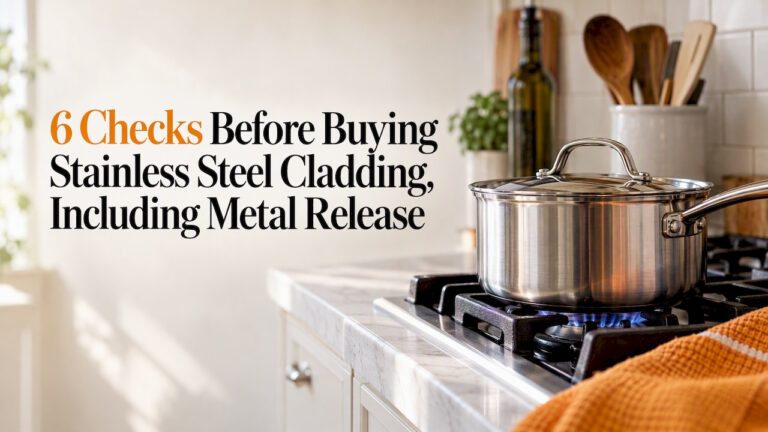
Stainless steel cladding refers to bonding one or more layers of stainless steel to a conductive metal core, usually aluminum, so a pan gets an even-heating interior and a durable, food-safe cooking surface. The main payoff is heat that spreads across the pan instead of pooling under the burner, paired with a surface that resists pitting and reacts poorly with almost nothing you cook. If you’re shopping for a pot or skillet built this way, the construction details below, plus the buying checklist and care steps further down, will tell you exactly what to look for.
TL;DR:
- Choose fully clad construction when you need heat to reach the sidewalls; disc bottom models concentrate conductive layers beneath the cooking surface.
- Aluminum cores heat quickly and spread warmth evenly, while copper responds faster to temperature changes; prioritize core material and base thickness over ply count.
- Induction cooktops require a magnetic stainless steel base, so check the product label or test the pan bottom with a refrigerator magnet before buying.
- New pans leach most during acidic, extended use; in one study leaching fell with repeated use and levelled off after the sixth of ten cooking cycles, so begin with ordinary dishes before long acidic simmers.
What Stainless Steel Cladding Is and How It’s Made
A clad pan is built in layers, typically stainless steel on the outside and inside with a core of aluminum or sometimes copper sandwiched in between. That core is the part doing the real thermal work, since plain stainless steel alone conducts heat poorly compared to aluminum or copper.
Two construction styles dominate the market:
- Fully clad cookware extends the layered construction up the entire side wall, so heat moves evenly from the base to the rim.
- Disc bottom (or spot-clad) cookware bonds the conductive layer only to the base, leaving the sidewalls as single-layer stainless.
Manufacturers join these layers mainly through roll bonding, where sheets are pressed together under heavy force, or diffusion and pressure bonding, where heat and pressure fuse the metals at the molecular level without melting them. According to a review of clad metal fabrication methods, this layering exists specifically to combine stainless steel’s corrosion resistance with a metal that moves heat faster, since neither material alone gives cooks both properties at once.
How Cladding Changes Cooking Performance: Heat, Responsiveness, and Cooktop Fit
The core metal determines how a clad pan behaves on the stove. Aluminum cores heat up quickly and spread that heat sideways, which matters most when you’re searing a steak and want the whole surface hot, not just the center. Copper cores respond even faster to temperature changes, which helps with delicate sauce work where a few seconds of overheating can break an emulsion.
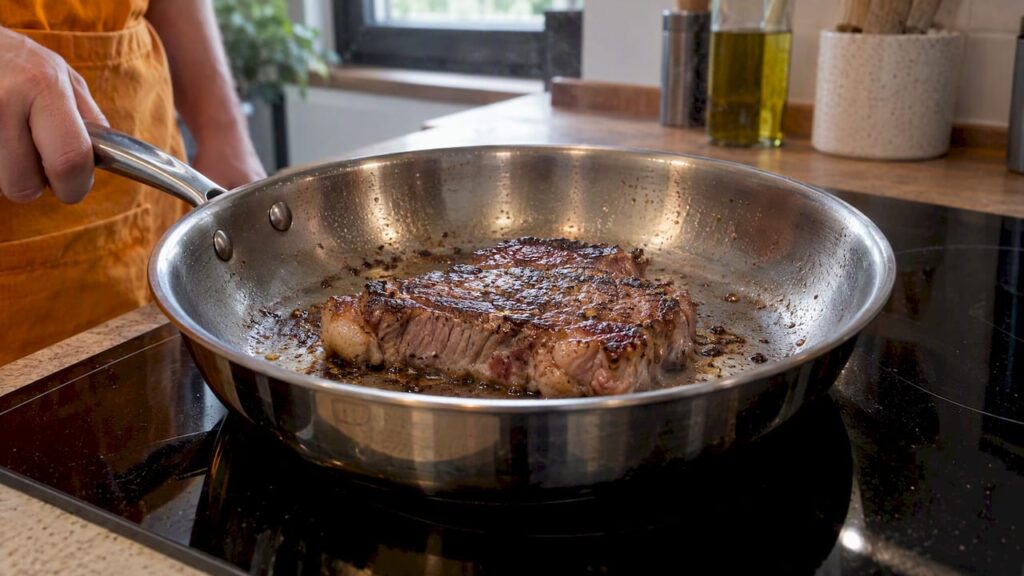
Induction cooktops add a wrinkle: they need a magnetic stainless exterior to work at all. A pan with a nonmagnetic aluminum or copper base exposed on the bottom will not heat on an induction burner, no matter how good its core metal is. The quickest check in a store or on a spec sheet is whether the base is labeled induction-ready, or you can hold a refrigerator magnet to the bottom; a strong pull means it will work.
Fully clad stainless cookware with an aluminum core typically weighs more than a single-layer stainless pan of the same size, a tradeoff for its faster, more even heating. Expect a longer heat-up time than a thin aluminum pan but better heat retention once you’re cooking, which is why clad cookware tends to favor:
- Searing and browning, where even heat prevents cold spots
- Sauces and reductions that need responsive temperature control
- Long simmers, where retained heat keeps a steady temperature with less burner adjustment
Grades and Construction Details That Matter for Safety and Durability
Grade labels on stainless cookware look cryptic but translate simply. “18/8” and “18/10” describe the percentage of chromium and nickel in the alloy, with the higher nickel number in 18/10 giving slightly better shine and corrosion resistance. AISI 304 is the general-purpose grade used for most cookware exteriors, while 316 adds molybdenum for even better resistance to pitting, which is why some premium cookware lines use it for the cooking surface.
A few spec details worth checking before you buy:
- Surface finish: a polished finish resists fingerprints and cleans easily, while a brushed finish hides scratches better over years of use.
- Gauge and thickness: thicker stainless layers resist warping and dents, especially on the base where most impact happens.
- Ply count: more layers generally mean better heat distribution, though the core metal matters as much as the number of plies.
New stainless pans tend to release more metal into food early on. A study on stainless steel leaching nickel and chromium during cooking found that release increased with cooking time and was highest in new pans, with nickel rising substantially after extended cooking times, and that leaching dropped with each repeat use and levelled off after the sixth of ten cooking cycles. It never stopped, though: the tenth batch of tomato sauce still picked up measurable nickel and chromium. That drop with repeated use is what shapes the care steps below.
Practical Buying Checklist for Stainless-Steel-Clad Pots and Pans
Before buying, run through this short list in order of what affects cooking results most:
- Confirm fully clad vs. disc bottom depending on whether you want even heat up the sidewalls or just at the base.
- Check the core material, since aluminum gives fast, even heat while copper adds responsiveness at a higher price.
- Look at ply count and thickness, prioritizing a solid base over a high layer count alone.
- Inspect handle attachment, favoring riveted or welded joints over thin screwed-on handles that loosen with heat cycling.
- Test lid fit in person when possible, since a loose lid lets moisture escape during simmers.
- Verify induction-ready marking if your cooktop is induction, since a missing ferromagnetic base makes the pan useless there.
When reading online spec sheets, prioritize core material and base thickness over marketing language like “premium” or “professional grade,” which carries no standard meaning.
Labels blur the line too: Cook’s Illustrated notes that disc-bottom pans are sold as having an “aluminum-encapsulated base,” a “tri-ply bottom” or even “a fully clad base.” The quick physical check is a seam running around the outside of the pan just above the base; a fully clad pan has no such ridge, because the bonded layers run all the way to the rim.
Pro Tip: Entry-level clad cookware usually skips full cladding on the sidewalls to cut cost, mid-range sets add full cladding and thicker bases, and premium lines add copper cores or extra plies for faster heat response.
For shoppers deciding between materials entirely, cast iron vs. stainless steel breaks down which jobs suit each, and anyone cooking on an induction range should check cookware types for induction cooktops before buying.
Care and Use: First Uses, Routine Cleaning, and Reducing Metal Leaching Risk
A short break-in period makes a real difference. Research on 18/10 grade 316 stainless pots found metal release was highest with unused pots and acidic foods, but stayed below known allergy-triggering thresholds in every test; the authors still note that very nickel-sensitive people could react. Since both studies found used pans released less than new ones, running a few ordinary cooking cycles before tackling a long tomato sauce or wine reduction is a sensible first step.
A few habits lower exposure further:
- Keep acidic, long-simmered dishes like tomato sauce at a gentle simmer rather than a hard boil in a brand-new pan.
- Avoid leaving acidic food sitting unattended on high heat for hours, especially in the first few uses.
- Hand wash with a non-abrasive sponge when possible, though most clad stainless is dishwasher-safe per the manufacturer’s instructions.
Pro Tip: White or cloudy spots on stainless are almost always mineral deposits from hard water or detergent, not pitting, and a quick soak in diluted vinegar usually clears them.
Metal utensils are generally fine on stainless surfaces, though a guide on using metal utensils on stainless steel covers when to switch to wood or silicone. If spots persist after cleaning, the guide on white spots on stainless pans walks through deposits versus actual pitting and when it signals the pan is wearing out.
Why I Trust Spec Sheets Over Marketing Copy
I approach cookware the way I’d want a friend to explain it to me: by the numbers on the spec sheet, not the adjectives on the box. A ply count, a core metal, a gauge measurement tells me more about how a pan will cook than any claim about being “professional grade.” That’s the lens I bring to comparing stainless-clad cookware against other materials, and it’s why I lean on cited research and manufacturer specs rather than impressions.
What could not be established: how much any particular brand’s pan leaches. The Oregon State study used three grades of stainless test pieces and one saucepan, and the Messina study found release sometimes differed markedly between manufacturers without naming them, so the figures above describe stainless cookware in general rather than any set you might buy.
For related reading, the breakdown of cast iron versus stainless steel and the induction cookware guide cover adjacent decisions worth understanding before you buy.
Find the Right Clad Cookware Set Without the Guesswork
Comparing ply counts, core metals, and induction ratings across dozens of listings takes real time, and most product pages don’t make the comparison easy. Kitchenware Compare lays out side-by-side specs, pricing, and recommended sets so the differences between fully clad and disc-bottom cookware are clear before you add anything to a cart.
The cookware reviews and buying guides section is a good next stop for curated comparisons across brands and price points, whether you’re outfitting a first kitchen or replacing a single workhorse pan.
This article is general information, not a substitute for advice from a qualified doctor. Consult a qualified healthcare professional about your own circumstances before acting on anything here.
FAQ
What does “fully clad” mean on a stainless steel pan?
Fully clad means the layered construction, usually stainless steel bonded to an aluminum or copper core, extends up the entire sidewall rather than stopping at the base. This gives even heat distribution across the whole pan, not just the bottom.
Is stainless steel cladding safe for cooking acidic foods?
Research on 18/10 grade 316 pots found metal release was highest with unused pots and acidic foods, but stayed below known allergy-triggering thresholds in every test. In a 2013 Oregon State study, leaching fell with repeated cooking and levelled off after the sixth cycle, though it never stopped entirely, so a few ordinary cooking cycles before long acidic simmers is a sensible start.
Does cladding affect whether a pan works on induction?
Yes, induction cooktops require a magnetic stainless steel base, so the cladding type matters only if the exterior layer is ferromagnetic. A guide on induction-compatible cookware explains how to check a pan’s base before buying.
How much metal actually leaches from stainless cookware?
According to the World Stainless safety guidance covers how stainless steel is used safely in food preparation. The Nickel Institute’s fact sheet, citing EFSA, puts nickel released from stainless food-contact materials in the same order of magnitude as the nickel already present in food, and notes that the two cooking studies cited here (Oregon State and Messina) were the exceptions that exceeded the EU release limit for nickel.
What’s the difference between 18/8 and 18/10 stainless steel?
Both describe the chromium and nickel content of the alloy, with 18/10 containing more nickel for slightly better shine and corrosion resistance. Either grade is common and durable for cookware exteriors, with grade 316 used in some premium lines for extra pitting resistance.
Sources
- Stainless Steel Leaches Nickel and Chromium into Foods during Cooking
- Release of nickel and chromium in common foods during cooking in 18/10 (grade 316) stainless steel pots
- Safe Food Preparation Using Stainless Steel (World Stainless)
- Human Health Fact Sheet 4: Nickel and Metallic Food Contact Material
Recommended
- Cast Iron vs Stainless Steel: Which Pan for Which Job?
- Can You Use Metal Utensils on Stainless Steel Pans?
- Cuisinart MultiClad Pro Review: No Coating to Wear Out

I'm Glenn, and I started Kitchenware Compare to cut through conflicting product reviews and help readers pick kitchen gear with confidence. I don't own or test the products I write about — these guides are built from verified-purchase reviews, manufacturer specifications, and independent testing where it exists, with the reasoning shown, not just a rating.
Leave a Reply