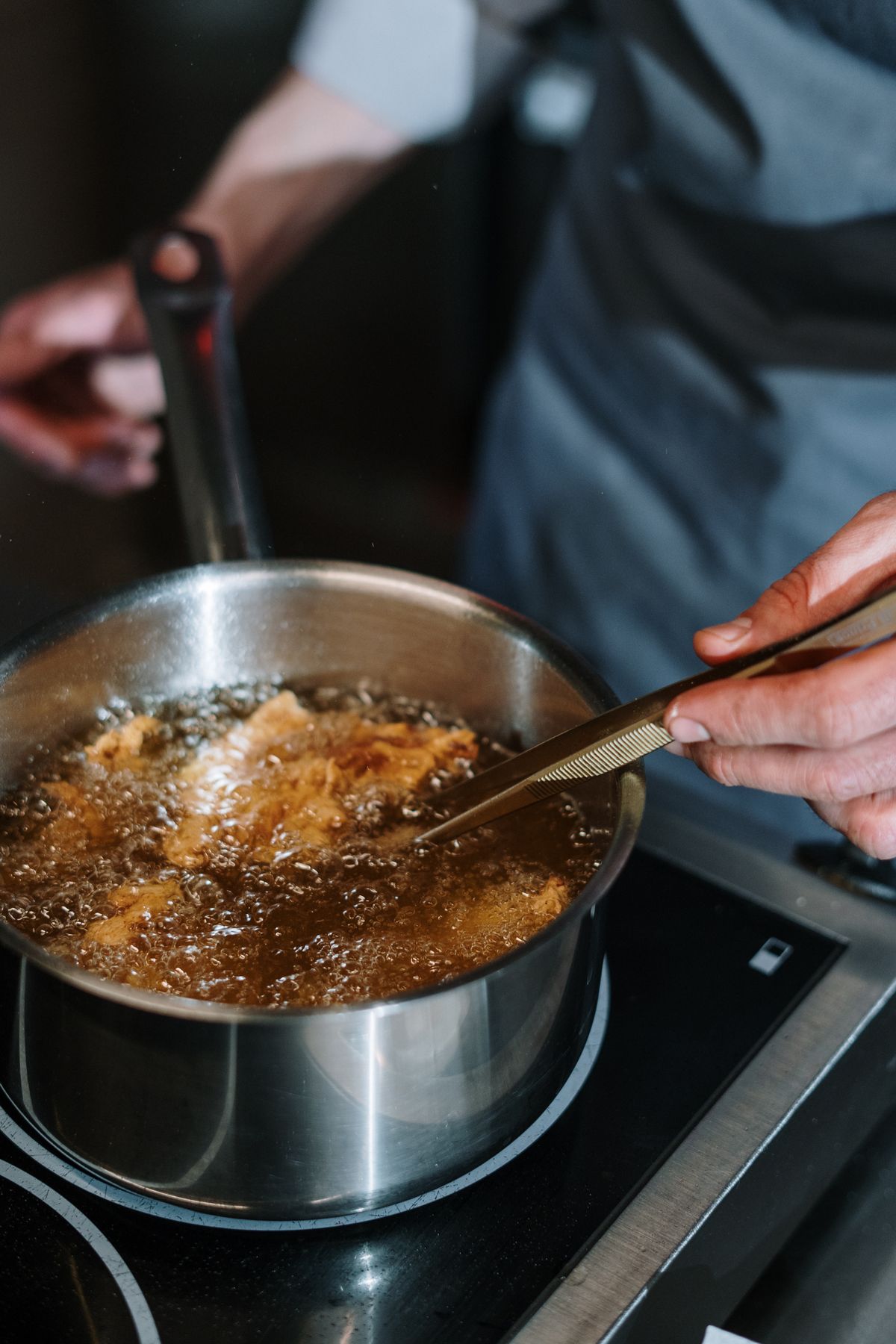
Yes — stainless steel is one of the few cooking surfaces built to take metal utensils. The surface is harder than the metal in most spatulas and spoons, so a metal utensil won’t gouge or damage it the way it would ruin a non-stick coating. The worst that happens is light cosmetic scratching, which doesn’t affect how the pan cooks.
Why Stainless Steel Can Take It
Stainless steel cookware sits at roughly 5.5 to 7 on the Mohs hardness scale. Most kitchen utensils — stainless spoons, spatulas, whisks — fall around 4 to 5.5. The pan is simply harder than the tool. On top of that, the chromium in stainless steel forms a thin, self-healing oxide layer on the surface.
That layer is also what chloride attacks, which is why white spots on a stainless steel pan are sometimes permanent pits rather than removable deposits. If a utensil does leave a fine scratch, that layer re-forms over it within hours, which is why old stainless pans that have taken metal for years still cook exactly the same as new ones, even once they look worn.
When It’s Actually a Problem
- Cosmetic scratching over time. Years of metal-on-metal contact will leave fine scratch marks, especially with rougher tools like whisks or aggressive scraping. It’s a look issue, not a performance one — the pan still heats and cooks the same.
- Sharp knife edges. Don’t cut food directly in a stainless pan with a knife. That’s a different kind of contact than a spatula pushing food around, and it can leave deeper gouges.
- Non-stick and hard-anodized cookware. This is where metal utensils genuinely cause damage — those coatings are soft and scratch easily, unlike bare stainless steel. That scratching is one of the two reasons a non-stick pan starts sticking, and it is the reason that cannot be undone. Keep metal tools for stainless and cast iron, and use silicone or wood on anything coated.
Stainless Steel Grades: Does It Matter Which One?
Cookware is almost always 18/10 or 18/8 stainless (18% chromium, 10% or 8% nickel) — the numbers describe corrosion resistance and shine, not hardness against utensils. There’s no “premium grade” that’s more scratch-resistant than a budget one; the metal-utensil safety comes from the base alloy every food-grade cookware maker uses, not a tier you pay extra for. The one grade to actually watch for is 18/0 (no nickel) on very cheap pans, which is more prone to rust spotting — a separate issue from utensil scratching.
Metal Utensils Across Different Cookware Materials
| Material | Metal Utensils Safe? | Why |
|---|---|---|
| Stainless steel | Yes | Harder than most utensils, self-healing oxide layer |
| Cast iron | Yes | Extremely hard surface; metal utensils won’t damage seasoning if it’s properly cured |
| Non-stick (PTFE/ceramic) | No | Coating is soft and scratches or flakes under metal contact |
| Hard-anodized aluminum | No | Anodized layer is a coating, not solid metal — behaves like non-stick for this purpose |
Myths Worth Correcting
- “Scratches ruin the pan.” Cosmetic scratches don’t affect heat conduction, food safety, or cooking performance on stainless steel. They only matter if you care how the pan looks.
- “Professional kitchens use special utensils on stainless.” The opposite is usually true — commercial kitchens run stainless steel pans hard with metal tongs, spatulas, and whisks daily for years, precisely because it holds up to that treatment better than coated alternatives.
- “Metal utensils mean the pan needs replacing sooner.” Stainless steel cookware routinely outlasts non-stick pans by a decade or more, and normal utensil use isn’t a factor in that lifespan.
Which Utensils Actually Work Best
Any metal utensil is fine, but some suit stainless steel better for practical reasons unrelated to scratching: metal tongs give better control for searing and flipping, a fish spatula’s thin edge slides cleanly under food on a flat stainless surface, and a metal whisk clears a fond (the browned bits) for sauce-making in a way silicone can’t. Save silicone-tipped tools for delicate tasks like folding eggs, not because stainless requires it.
What Actually Causes Food to Stick (It’s Not the Utensil)
If you’re asking this question because food is sticking and you suspect your metal spatula is the cause, it almost certainly isn’t. Stainless steel sticks when the pan isn’t hot enough before food goes in, or when there isn’t enough oil to form a barrier between the food and the microscopic pores in the surface. Preheat the empty pan for a couple of minutes, add oil once it’s hot, and most sticking problems disappear regardless of what utensil you’re using.
FAQ
Will metal utensils scratch stainless steel pans?
They can leave fine cosmetic scratches over time, but stainless steel’s hardness and self-healing oxide layer mean this doesn’t affect cooking performance. The pan works the same whether it looks brand new or well-used.
Can you use metal utensils on stainless steel cookware in the dishwasher too?
Yes, that’s unrelated to the utensil question — most stainless steel cookware is dishwasher-safe. Just avoid the dishwasher for pieces with wooden or riveted handles that can loosen over time.
Is it safe to use metal utensils on all stainless steel, or only some grades?
All food-grade stainless steel cookware (typically 18/10 or 18/8) handles metal utensils fine. The hardness that resists scratching comes from the chromium and nickel content standard across cookware-grade stainless, not a premium tier.
Should I still avoid metal utensils on stainless steel?
Only if you care about keeping the surface looking pristine and scratch-free for appearance’s sake. There’s no functional or safety reason to avoid them — unlike non-stick pans, where metal utensils are a genuine mistake.
The Short Answer
Use whatever utensil is convenient. Stainless steel is one of the few surfaces in the kitchen where that’s true without a caveat. Save the wood and silicone for your non-stick and hard-anodized pans, where metal actually does damage. If you’re shopping for a set rather than maintaining one you own, the best cookware sets guide has current picks, and best non-stick pan covers the coated side of the kitchen where utensil choice actually matters.
For material-by-material tradeoffs beyond stainless, see the most durable types of cookware, or browse the full cookware hub for reviews across every material.
Based on cookware-grade stainless steel’s standard hardness properties relative to common utensil metals — not laboratory material testing.

Glenn is the founder of Kitchenware Compare and has spent years researching, testing, and reviewing kitchen appliances, cookware, and gadgets. A lifelong home cook raised in a family that treated every meal as an occasion, Glenn started this site to cut through the noise of conflicting product reviews and give readers honest, practical guidance. When he is not testing the latest air fryer or digging into the specs of a new espresso machine, he can usually be found experimenting with new recipes or hunting for the perfect cast iron skillet at a flea market.
Leave a Reply