This guide has no affiliate links, but some pages it links to do. If you buy through those, I may earn a commission at no extra cost to you.

Coffee maker descaling removes limescale, which can build up inside a machine. If your coffee maker is overdue, check its manual for the recommended descaler and rinse procedure. How often to descale depends on your water hardness and how much you brew.
TL;DR:
- Nespresso recommends descaling every 3 months or 300 capsules, whichever comes first; some models calculate timing from water hardness and use.
- Use only a cleaner your machine’s manual permits: some brands require a branded product, while vinegar can leave an odor and taste.
- After descaling, run 2–3 full cycles using only fresh water, rinse the tank between them, and brew a test cup before serving coffee.
- If deposits remain after one round, repeat the descaling cycle before using a harsher cleaner; do not scrub inside the heating path.
How often should you descale, and how can you tell it’s due?
Start with the manual. Nespresso’s guide says to descale every 3 months or 300 capsules, whichever comes first. Some machines track the schedule themselves: the same guide says the app-connected Prodigio sends descaling alerts based on a water hardness test, and that the test should be repeated if you change the water you use.
Harder water means faster buildup. Color test strips or your local water utility report will tell you where you stand. Watch for these signs between scheduled cleanings:
- Coffee flows slowly or the brew cycle takes noticeably longer.
- The taste turns flat, bitter, or oddly metallic.
- A maintenance or descaling light comes on.
- You see white, chalky flakes in the tank or carafe.
For interval guidance specific to espresso, see the descaling frequency breakdown.
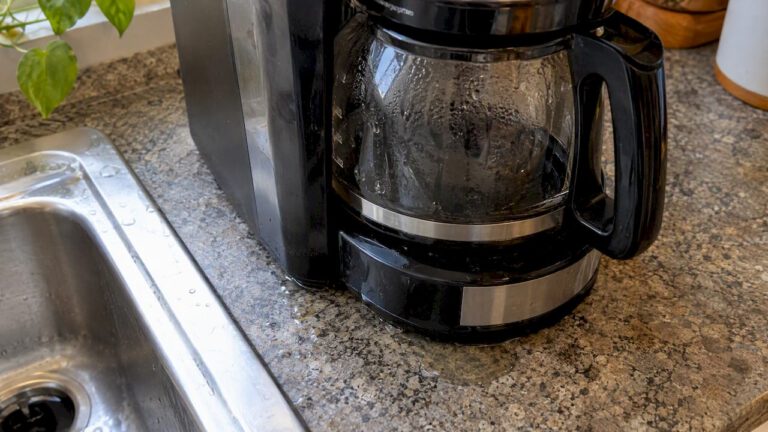
How do you descale a drip coffee maker?
Drip machines can be straightforward to descale. Check your manual first: De’Longhi warns that DIY descalers such as vinegar and citric acid can cause corrosion and leave an aftertaste, and Nespresso says vinegar or store-bought descalers may damage its machines.
- Unplug the machine, then empty the carafe and brew basket and remove any inline water filter.
- Mix your descaler. For a commercial product, follow the label. For a DIY option, dissolve citric acid in water, or dilute white vinegar with water, only if your manual allows it.
- Pour the solution into the water tank and place the empty carafe on the plate.
- Run a full brew cycle. Some owners pause halfway and let the solution sit before finishing, but check your manual for the recommended procedure.
- Discard the solution and run 2–3 cycles of clear water, replacing the water each time.
- Soak the carafe and basket in warm solution if stains remain, then scrub gently.
Pro Tip: If deposits persist after one round, repeat the descale before you try anything harsher. Scrubbing inside the heating path isn’t possible, so a second cycle is the safer fix.
A leaky machine after descaling may have a clogged path or a loose seat. See the guide to common causes of a leaking coffee maker for possible fixes.
How do you descale a home espresso machine?
Semi-automatic and super-automatic machines both run on a descale mode, and the flow is similar across brands. Bosch documents named programs such as Descaling and Calc’n Clean, and its owner guide, How to Descale Your Countertop Coffee Machine, says to remove the water filter, dissolve the tablet in water, run the program, and repeat rinse cycles.
- Remove the water filter and empty the drip tray and grounds container. Keep a large container under the spout.
- Prepare the recommended descaler (tablet, sachet, or liquid) and dissolve it fully. Breville’s manual specifically calls for fully dissolving descaling powder before you start.
- Start descale mode and follow the on-screen prompts.
- Run the coffee and steam or milk programs if your machine has both.
- Refill with fresh water and run the rinse cycles the machine asks for.
- Reinstall the filter if you use one and reset the descaling indicator.
Rinse checklist:
- Rinse the tank before refilling.
- Empty the collection container between stages.
- Confirm the indicator cleared before brewing.
See what manuals say about cleaning an espresso machine for routine care between descales.
How do you descale a single-serve pod machine?
Pod machines hide their plumbing, so the descaling mode matters most here. Nespresso’s guide tells users to enter descaling mode, run the cycle, then refill and run rinse cycles until the machine is clean, and it says its machines should be descaled with a Nespresso descaling kit, warning that vinegar or store-bought descalers may damage them.
- Empty the used-pod container and the drip tray, and remove the water filter if there is one.
- Pour in the descaling solution from the maker’s kit, or as your manual directs.
- Enter descaling mode using the button sequence or app steps for your model.
- Let the cycle finish without interrupting it.
- Refill the tank with fresh water and run the required rinses.
Stick with the manufacturer kit when the manual says so. If the machine still acts up afterward, the Keurig troubleshooting guide points to official fixes.
Which descaling solutions are safe to use?
Manufacturer preference is simple: use the formulated descaler for your brand. Miele says descaling is mandatory and cannot be cancelled once started; it recommends its own tablets and warns that other descalers may contain acids or chlorides that can damage the machine. Check your manual for the descaler recommended for your machine, since manufacturer guidance varies.
- Branded descalers: a suitable choice when your manual recommends or requires them.
- Citric acid: a common DIY option when your manual allows it, though De’Longhi says citric acid’s lower chelating power means limescale may not fully detach.
- White vinegar: works on scale but can leave a strong smell and taste, so it needs extra rinsing, and some manufacturers warn against it.
According to De’Longhi, DIY descalers such as lemon juice (citric acid) or vinegar can cause corrosion and leave an aftertaste and residue of their own, so check your model’s manual before choosing a descaler.
If your manual permits a DIY mix, prepare it and rinse the machine as instructed.
What safety steps matter when descaling?
Descaling solutions are cleaning chemicals, and hot water is involved. According to Breville’s manual, descaling may release hot steam, so handle spouts and wands with care.
- Never drink descaling solution, and keep it away from children and eyes.
- Remove the water filter and empty collection containers as instructed.
- Don’t interrupt a descaling cycle once it starts.
- Keep hands clear of steam wands and hot spouts.
How do you confirm the descaling worked?
Finish with a clean-water routine. Run at least 2–3 full water-only cycles and rinse the tank thoroughly between them. Then brew a test cup and check three things:
- Flow speed matches how it ran when the machine was newer.
- The coffee tastes clean, with no sour or chemical edge.
- No maintenance light or scale symptoms return.
Pro Tip: Smell the first rinse water. If you catch vinegar or a chemical note, run another rinse before making coffee.
If scale remains, repeat with a commercial descaler or check the manual and the manufacturer’s service guidance.
How do you prevent scale from coming back?
Prevention starts with following your machine’s guidance on water hardness, filters, and descaling.
- Install or replace inline water filters on the schedule your manufacturer gives.
- Test your water hardness with strips or a local water report, and set the hardness setting on machines that offer one.
- For Nespresso machines covered by its guide, descale every 3 months or 300 capsules, whichever comes first. Follow your own machine’s manual for its schedule.
- Watch for maintenance lights and act when they come on.
If your whole home runs hard water, a water filtration installer can add a softening or filtration system at the source. For another brew variable, see this guide to dialing in grind size.
A note from Glenn on making descaling routine
Descaling can help address scale buildup. I refer to manufacturer manuals for model-specific instructions. Browse the coffee equipment guides for machine-specific information.
Where can you find help choosing coffee gear?

If descaling can’t revive your machine, or you want a different one, browse coffee equipment reviews, buying guides, and side-by-side comparisons. The guides compare specifications, pricing, and owner-reported strengths and complaints.
- Start with the coffee equipment reviews and guides for machine comparisons.
- Check the product pages for compatible filters and descalers before you reorder.
- Browse Kitchenware Compare for replacement machine information if yours needs service.
FAQ
Can I use vinegar to descale my coffee maker?
Often yes, if your manual allows it. Diluted white vinegar dissolves scale but can leave a smell and taste, so rinse well. Some brands warn against it: De’Longhi says vinegar can cause corrosion and leave an aftertaste, and Nespresso says it may damage its machines.
How do I descale and clean a coffee machine?
Remove the filter, empty the trays, dissolve the descaler, and run the descaling program or brew cycle. Then run clear-water rinse cycles until the machine is clean. Follow your model’s manual for the exact steps.
How do I clean a Breville without descaling tablets?
Check your manual first. Breville’s manual describes using a descaling powder dissolved in water, so a fully dissolved descaler and thorough rinses are the pattern to follow. If you use a DIY solution, confirm your model allows it.
How often should I descale my coffee maker?
It depends on water hardness and use. Nespresso’s guide says every 3 months or 300 capsules, whichever comes first. Descale sooner if flow slows or a maintenance light appears.
Sources
- Maintaining Your Coffee Machine for the Best Brew | De’Longhi
- DESCALING GUIDE
- Miele Coffee | Starting and carrying out descaling (coffee machines) | Miele USA
- How to Clean and Descale Your Countertop Espresso Machine | Bosch Home Appliances
- the Barista Express™ Impress
Recommended
- Single-Serve vs Drip Coffee Makers: Taste, Cost and Waste
- Espresso Machine vs Coffee Maker: Which One Fits Your Routine?
- How Often to Descale Espresso Machine?
- How to Clean an Espresso Machine: What the Manuals Say

I'm Glenn, and I started Kitchenware Compare to cut through conflicting product reviews and help readers pick kitchen gear with confidence. I don't own or test the products I write about — these guides are built from verified-purchase reviews, manufacturer specifications, and independent testing where it exists, with the reasoning shown, not just a rating.
Leave a Reply