This post contains affiliate links. If you buy through my links, I may earn a commission at no extra cost to you.
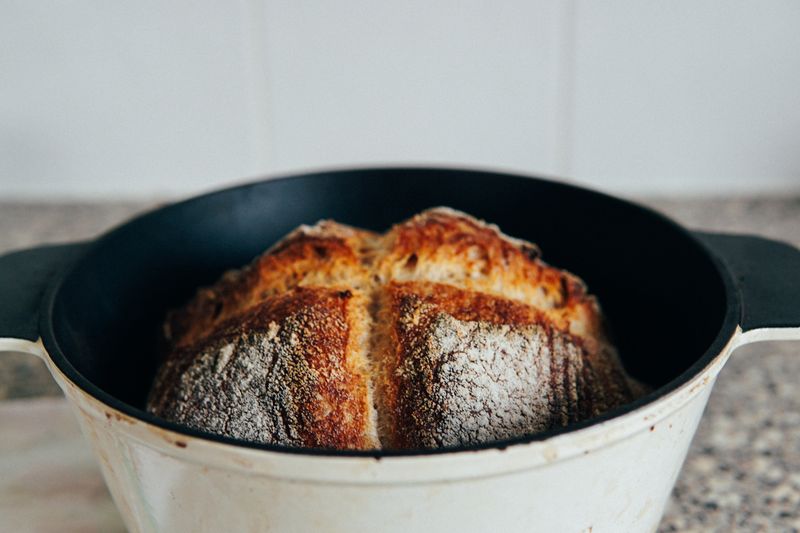
Short answer: enameled, for most kitchens. It costs more, but it handles tomato sauce, wine reductions, and dishwasher-adjacent laziness without a second thought, and it never needs seasoning.
Bare cast iron keeps one real crown: it’s the only Dutch oven you can throw straight onto campfire coals or crank past 500°F without worrying about a finish. If that’s genuinely how you cook, bare wins outright. Here’s the honest breakdown, including what actually happened in three Dutch ovens reviewed on this site — one bare, two enameled — rather than just the general theory.
Bare vs Enameled Cast Iron — Head to Head
| Factor | Bare Cast Iron | Enameled Cast Iron | Winner |
|---|---|---|---|
| Acidic foods (tomato, wine, vinegar) | Strips seasoning, can taste metallic | Completely non-reactive | Enameled |
| Seasoning required | Yes, ongoing | Never | Enameled |
| Campfire / open flame | Built for it | Manufacturers advise against it | Bare |
| Rust risk | Real if not dried/oiled | None on the enameled surface | Enameled |
| Chip risk | Can’t chip (no coating) | Real, but varies a lot by product | Bare, narrowly |
| Typical price | $50–$70 | $60–$450+ | Bare |
| Ease of cleaning | Hand wash, dry immediately, no soap | Ordinary dish soap; dishwasher-tolerant | Enameled |
| Max oven heat | Effectively unlimited | Usually capped at 450–500°F | Bare |
| Color / kitchen aesthetics | Black, always | Wide range of colors and finishes | Enameled |
The Actual Difference: What Enamel Actually Is
Enamel isn’t paint. It’s porcelain glass, fused onto the cast iron at extremely high kiln temperatures, forming a hard, glossy, non-porous surface bonded permanently to the metal underneath. That’s why it’s non-reactive — the food never touches iron at all, only glass. Bare cast iron has no such barrier: its “seasoning” is a thin, semi-stick layer of polymerized oil sitting directly on the metal, which is why it needs re-oiling and why acid can strip it away.
This single manufacturing difference explains almost every entry in the table above. Non-porous glass can’t rust and can’t absorb acid or flavors, but it can crack or chip under a sharp impact the way a ceramic mug can. Bare iron can take a hard knock all day without visible damage, but the exposed metal beneath a thin oil layer is what makes rust and acid reactivity real concerns.
Durability Isn’t as Simple as “Enamel Chips, Bare Doesn’t”
The theory says bare cast iron is more durable because there’s no coating to fail. In practice, reviewing three Dutch ovens on this site — one bare, two enameled — turned up a more complicated picture worth knowing before assuming either material guarantees an outcome.
- The Lodge Bare Cast Iron 5 Qt can’t chip, but Amazon’s own owner-review data tags rust resistance as a clearly negative attribute (353 mentions) — the one real durability risk bare cast iron carries, and it’s about care habits, not manufacturing quality.
- The Staub 5.5-Qt Cocotte, despite being enameled, scored the most positive durability profile of any product reviewed this session — 6 of 8 attributes positive and zero negative, with chipping essentially a non-issue in the review data.
- The Cuisinart Chef’s Classic Oval Casserole, also enameled, told a different story: reading its critical reviews individually surfaced real, recurring enamel-chipping complaints spanning multiple years, alongside an otherwise strong 4.5-star average.
The honest conclusion: enamel quality varies significantly by manufacturer and price tier, so “enameled” isn’t a guarantee against chipping, and “bare” isn’t a guarantee against damage — it’s a guarantee against a specific kind of damage (chipping) in exchange for a different one (rust, if neglected). Read the specific product’s own review history, not just its material, before assuming durability.
Cost: The Gap Is Bigger Than It Looks
Bare cast iron Dutch ovens cluster tightly around $50–$70 regardless of brand, because there’s no enamel process to pay for. Enameled options span a much wider range: budget enameled pots start around $60–$130, while heritage French brands like Le Creuset and Staub run $230–$450+ for the same capacity. If budget is the deciding factor, bare cast iron is the more predictable choice — there’s no premium tier to accidentally overpay for.
Which One Should You Buy?
Buy enameled if: you cook tomato-based sauces, wine reductions, or anything acidic regularly; you want zero seasoning maintenance; or you want a pot that looks good enough to serve straight from the oven to the table. Start with the Dutch oven buying guide for the full lineup, and see the Lodge vs Le Creuset comparison if you’re deciding between a budget and heritage enameled pot specifically.
Buy bare cast iron if: price is the deciding factor, you already own and are comfortable maintaining bare cast iron cookware, or you genuinely cook over a campfire or push oven temperatures past what enameled cookware is rated for. The Lodge Bare Cast Iron 5 Qt is the site’s reviewed pick in this category, and its lid doubling as a skillet adds real versatility a single-purpose pot doesn’t have.
The honest middle ground: most home cooks who “need both” already own a bare cast iron skillet for searing and would get more daily use from an enameled Dutch oven for the braises, soups, and sauces a Dutch oven is actually for. Reserve bare cast iron Dutch ovens for buyers with a specific reason — camping, budget, or an existing bare-iron habit — rather than as the default choice.
Cooking Task by Cooking Task: Which Wins What
| Task | Bare Cast Iron | Enameled Cast Iron | Verdict |
|---|---|---|---|
| Tomato-based braises & sauces | Strips seasoning over time | No effect on the pot | Enameled, clearly |
| No-knead bread baking | Excellent, handles max oven heat | Good, but check the enamel’s max rated temperature first | Bare, narrowly |
| Campfire / coals cooking | Designed for it | Not recommended by most manufacturers | Bare, no contest |
| Searing meat | Excellent once fully heated | Excellent, slightly more forgiving of sticking | Tie |
| Long-simmered stews and soups | Fine for short cooks; acid still a factor | Ideal — no reactivity over hours | Enameled |
| Serving straight from oven to table | Plain black finish | Presentable color options | Enameled |
Weight and Long-Term Value
Both materials are heavy for the same reason: cast iron is cast iron, and the enamel coating adds only a small fraction of a pot’s total weight. A 5-quart Dutch oven in either material typically runs 11–17 pounds empty, so weight isn’t a meaningful factor in choosing between them — it’s a factor in choosing cast iron at all, versus a lighter material like ceramic or aluminum.
Long-term value looks different depending on care. A well-maintained bare cast iron pot can genuinely outlast its owner — there’s no coating to eventually fail, only metal that can always be re-seasoned back to usable condition even after years of neglect or rust. A well-made enameled pot from a quality manufacturer can also last decades, becoming the kind of piece that gets passed down, but a lower-quality enamel job can start chipping within the first few years of normal use, at which point it’s cosmetically damaged for good — enamel doesn’t repair itself the way bare iron’s seasoning does. That’s the real asymmetry: bare cast iron’s worst-case outcome (rust) is always reversible with effort; enameled cast iron’s worst-case outcome (chipping) is permanent, though it happens far less often with better brands.
Frequently Asked Questions
Can enameled cast iron go in the dishwasher?
Most manufacturers rate it dishwasher safe, but hand-washing is the more cautious choice for preserving the enamel’s gloss and color over years of use. Bare cast iron should never go in a dishwasher — the detergent and prolonged water exposure strip seasoning and invite rust.
Does bare cast iron really need seasoning after every use?
Not every use, but it needs drying immediately and a thin oil wipe regularly, especially after acidic or long-simmered dishes. Seasoning itself builds up over months of normal cooking rather than needing to be reapplied constantly.
Is enameled cast iron actually more durable long-term?
Not automatically. Enamel quality varies significantly between manufacturers and price tiers — some enameled pots chip readily, others resist it almost entirely, based on the review evidence above. Bare cast iron’s durability risk (rust) is more predictable and entirely preventable with basic care.
Which is better for a beginner?
Enameled, in most cases — there’s no seasoning routine to learn or forget, and mistakes like cooking a tomato sauce won’t damage the pot. Bare cast iron rewards cooks who already have (or want to build) the habit of drying and oiling cookware after every use.
Can you use metal utensils on either type?
Metal utensils are safe on bare cast iron and will not damage the seasoning meaningfully with normal use. On enameled cast iron, metal utensils risk scratching or chipping the glass coating over time — wood, silicone, or nylon utensils are the safer choice.
Bottom Line
Enameled cast iron wins on versatility, maintenance, and predictability — it’s the safer default for most kitchens and the only sensible choice if acidic cooking is a regular habit. Bare cast iron wins on price and genuine outdoor/high-heat use, and its durability story is better than its reputation suggests as long as it’s dried and oiled consistently. The Dutch oven buying guide covers both types across every price tier if the decision still isn’t obvious.

I'm Glenn, and I started Kitchenware Compare to cut through conflicting product reviews and help readers pick kitchen gear with confidence. I don't own or test the products I write about — these guides are built from verified-purchase reviews, manufacturer specifications, and independent testing where it exists, with the reasoning shown, not just a rating.
Leave a Reply