Disclosure: I earn a small commission if you buy through links on this page, at no extra cost to you.
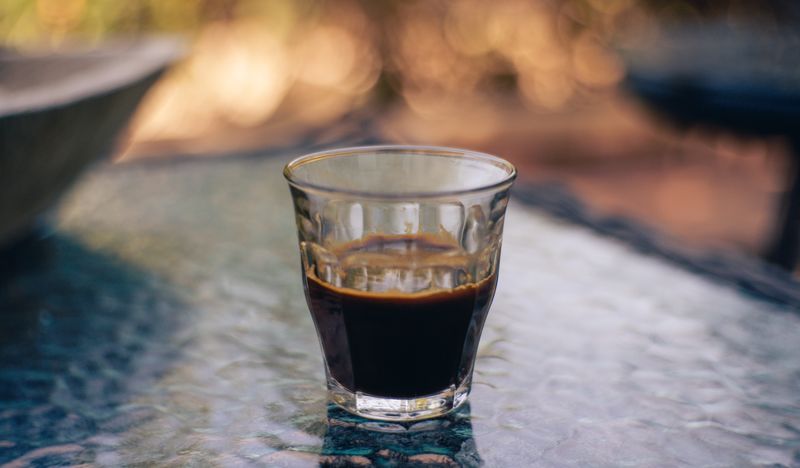
Photo by Asaad Alabri from Pexels
For most people the Wacaco Nanopresso is the portable espresso maker to buy: CNN Underscored named it best overall, it has 4,661 ratings at 4.4 stars, and it costs $55.17. If you grind fresh and want a standard espresso basket, the Wacaco Picopresso is the upgrade. If you would rather not carry boiling water, the OutIn Nano is the battery pick.
Two independent tests disagree about the Nanopresso and the OutIn Nano, and this guide sets out why. Every price and rating below was read from Amazon.com on 12 October 2026.
Quick Comparison
| Product | Best For | Price | Rating | Buy |
|---|---|---|---|---|
| Wacaco Nanopresso | Best overall; light, hand pump, pressurized basket | $55.17 | 4.4★ (4,661) | Check Price |
| Wacaco Picopresso | Best espresso quality; standard basket, needs a fine grinder | $129.90 | 4.4★ (1,427) | Check Price |
| OutIn Nano | Best battery model; built-in pump and heater | $149.99 | 4.2★ (5,791) | Check Price |
| Staresso Classic | Best crema in CNN’s test; ground coffee or capsules | $69.99 | 4.1★ (2,254) | Check Price |
Three Kinds of Portable Espresso Maker
The category is three different machines under one name. What you supply and what you give up differs more than the price does.
| Type | How it works | You supply | Example here |
|---|---|---|---|
| Hand pump, small basket | You pump by hand. The Nanopresso uses what Wacaco calls an easy crema pressurized portafilter, which is built to make crema from pre-ground coffee. | Boiling water and extra-fine coffee | Nanopresso, Staresso Classic |
| Hand pump, standard basket | You pump by hand into a naked portafilter with a full 18 g dose. It needs a fine grind and a tamp. | Boiling water, a grinder and technique | Picopresso |
| Battery pump with heater | Push-button. A built-in pump and heater do the work, so no kettle is needed. | A charged battery and water | OutIn Nano |
What “18 Bar” Means on the Box
Portable makers print a pressure on the box, and the numbers are maximums rather than measured extraction pressures. Wacaco lists a maximum of 18 bar for the Nanopresso and Picopresso and 8 bar for the Minipresso GR. The Staresso listing says an adjustable 15 to 18 bars, OutIn’s page says 20 bars at up to 92°C, and the Flair 2GO title says 9 bar.
For scale, Wikipedia’s espresso article describes the Faema E61 as pressurizing water to 9 bars. A hand pump’s peak is a different thing from the steady pressure during a shot, and Wacaco’s own FAQ says a pressurized valve keeps the pressure stable once it is built. I could not verify any of these figures, so compare the baskets and the tests, not the bar numbers.
CNN’s expert, Devorah Freudiger of Equator Coffees, calls 9 bars the industry standard for pulling a shot and says seeing crema means you are reaching proper pressure.
Two Independent Tests, Two Verdicts
CNN Underscored tested seven portable machines, all under $150, in a home kitchen, an office, the Hollywood Bowl and a backyard, using ground coffee and the tools in each box without a scale. It named the Nanopresso best overall for portability and crema, and the Staresso Classic best for crema, while finding the Staresso heavier, in need of a flat surface and harder to press.
The Coffee Chronicler’s guide, written by a licensed Q Arabica Grader who says he tests with refractometers, ranks them differently. He calls the Nanopresso “not quite in the same league” as his top picks, a decent option if you have no real espresso grinder because its pressurized portafilter can use pre-ground coffee. He rates the Picopresso, the OutIn Nano and the HUGH Leverpresso V4 well above it, and says most portable makers develop problems over time, particularly plastic ones.
They are answering different questions. CNN asked which is easiest to carry and pours crema for someone without a grinder, and the Coffee Chronicler asked which makes the best espresso. If you own a grinder that can go fine, the second test is the better guide; if you do not, the first is.
| Machine | CNN Underscored | The Coffee Chronicler (out of 25) |
|---|---|---|
| Wacaco Nanopresso | Best overall; very portable; good crema | 14 (shot quality 2, portability 5, sturdiness 2) |
| Wacaco Picopresso | Not tested | 20 (shot quality 4, portability 5, sturdiness 3) |
| OutIn Nano | Easy to use; light espresso, some pours watery; heavier; battery halved after one cold-water shot | 22 (shot quality 4, portability 4, ease of use 5) |
| Staresso Classic | Best crema; heavier; needs a flat surface | Not scored |
| Hugh Leverpresso V4 | Delicious shots, less crema, pricey, some plastic parts | 20 (4 in every column) |
The OutIn Nano shows the split most clearly. CNN found its shots light and sometimes watery, while the Coffee Chronicler scores it 22 out of 25 and names its slightly low brewing temperature as its weak spot with lighter roasts.
1. Wacaco Nanopresso: Best Overall

4.4 stars | 4,661 ratings | $55.17 | sold by Wacaco
This is the pick for most people because it is light, cheap and works with pre-ground coffee. Wacaco’s page gives 336 g, an 80 ml water tank, a 39 mm pressurized basket for 8 g of coffee (16 g with an add-on), a built-in cup and a one-year warranty. It does not heat water, so you fill the tank with boiling water. The Coffee Chronicler scores it 14 out of 25, with 2 for shot quality and 5 for portability.
Pros:
- CNN Underscored’s best overall pick in a test of seven machines
- An 8% one or two star share across 4,661 ratings
- The lowest price of the four, at $55.17
Cons:
- The Coffee Chronicler scores it 14 out of 25, the lowest of the eight machines it scored
- A pressurized basket limits how much the grind and tamp matter
- Wacaco gives a one-year warranty, half the Picopresso’s
2. Wacaco Picopresso: Best Espresso Quality

4.4 stars | 1,427 ratings | $129.90 | sold by Wacaco
This is the pick if you grind your own and want a standard basket. Wacaco’s page gives a naked portafilter with a 52 mm basket for an 18 g dose, 350 g, an 80 ml tank, an ultra-fine grind and a two-year warranty. The Coffee Chronicler scores it 20 out of 25, describes a standard 51 mm basket and says he adores it, with some concerns about longevity.
Pros:
- A standard-size basket and a full 18 g dose
- A 9% one or two star share across 1,427 ratings
- A two-year warranty
Cons:
- The listing says commercial pre-ground coffee will not work well, so it needs a grinder that goes fine
- It costs $129.90, more than twice the Nanopresso
- The Coffee Chronicler has concerns about how long it lasts
3. OutIn Nano: Best Battery Model

4.2 stars | 5,791 ratings | $149.99 | sold by OutIn-US
This is the pick if you do not want to carry boiling water or pump by hand, with caveats. OutIn’s page gives 670 g, about 200 seconds to heat, a 2,500 mAh battery for up to 5 brews from 50 ml of room-temperature water, ground coffee or capsules, and a stated 20 bars at up to 92°C from its own lab testing. The Coffee Chronicler scores it 22 out of 25. CNN found its espresso light, some pours watery, and its battery down from 100% to 50% after heating cold water for one shot.
Pros:
- No kettle needed, with a built-in pump and heater
- Scored 22 out of 25 by the Coffee Chronicler, who says it does not rely on a pressurized basket
- A large ratings base, at 5,791
Cons:
- CNN found light espresso, some of it watery, with less rich crema than the others
- 15% of its ratings are one or two stars, nearly double the Wacaco pair
- At 670 g it is roughly twice the weight of the Wacaco machines, and CNN’s battery fell to 50% after one cold-water shot
4. Staresso Classic: Best Crema in CNN’s Test

4.1 stars | 2,254 ratings | $69.99 | sold by Staresso
This is the pick if crema matters most and you will use it on a table. The listing gives a manual pump, 10 to 12 g of ground coffee or 5 to 6 g from a capsule, and an adjustable 15 to 18 bars. CNN found it produced the best crema of the seven it tested.
Pros:
- The best crema of the seven machines CNN tested
- Takes ground coffee or Nespresso-style capsules
- A clear glass cup shows the shot
Cons:
- CNN found it heavier and in need of a flat surface to pump
- 15% of its 2,254 ratings are one or two stars
- The listing does not say whether the basket is pressurized
Which One for You
- No grinder and a light bag: the Nanopresso, because its pressurized basket works with pre-ground coffee.
- A fine grinder and patience: the Picopresso, with a standard basket and a full 18 g dose.
- No kettle at the campsite or desk: the OutIn Nano, which OutIn says charges from a USB charger of 10 W or more or a 12V or 24V car charger.
- Crema first and a flat table: the Staresso Classic, the best crema in CNN’s test.
How Hard Is the Pumping?
Hand pumping is real effort, and the makers say so. Wacaco’s Picopresso FAQ says that at the 18 bar maximum you press the knob with a force equal to 13 kg, and recommends holding it with two hands. Its Nanopresso page says that machine needs 15% less force than the first-generation Minipresso.
CNN called pumping the Nanopresso a bit of a workout, and found the Staresso Classic harder to press and in need of both hands on a flat surface. One detail to check on Wacaco’s own page: the Nanopresso text says it works best with coffee that is slightly tamped in one place and tamped hard in another, so treat tamp pressure as something to adjust by taste.
Planning a Shot Away From Home
CNN’s advice, from its own testing and from Devorah Freudiger of Equator Coffees, comes down to three things.
- Hot water: manual makers do not heat water, so bring it in an insulated travel mug.
- A fresh grind: Freudiger says to grind as fresh as you can, whatever the machine.
- A forgiving roast: when you cannot control every variable, she reaches for a slightly darker roast.
CNN also found the battery machines it tried far heavier and larger than the manual ones, and said they need charging in advance. It tested Wacaco’s self-heating Pixapresso and preferred to pack the lighter manual Nanopresso and plan for boiling water.
Cleaning
Wacaco says the Picopresso is not dishwasher safe and should be cleaned by rinsing the basket and shower head in warm water and letting the parts dry separately. It says the Nanopresso’s portafilter components separate for deeper cleaning. CNN found the Staresso easy to take apart and clean.
What You Also Need
The hand-pump machines need hot water, and Wacaco’s FAQ says the Nanopresso does not heat it. For the Picopresso you also need a grinder that goes fine, and my best espresso grinder guide and manual vs electric grinder comparison cover the choice between them. If hand pumping sounds like a chore, my best stovetop espresso maker guide and moka pot vs espresso comparison explain the stovetop alternative.
Machines I Did Not Pick
Between them the two tests covered more machines than the four above. This is what each said, and why none is a pick here.
| Machine | What the test said | Why it is not a pick |
|---|---|---|
| Wacaco Minipresso GR2 | CNN: the lightest it tested, but shots less consistent than the Nanopresso and fiddly to reassemble. | CNN says the Nanopresso costs about $10 more and is the better machine. |
| Wacaco Pixapresso | CNN: a self-heating electric model, heavier and bulkier; the promise was greater than the practice. | CNN preferred to pack the lighter Nanopresso. |
| Corkcicle Palmpress | CNN: closer to an AeroPress; a strong shot with hardly any crema. | Not espresso-specific, by CNN’s account. |
| GSI Outdoors Mini Espresso Set | CNN: a stovetop moka-style set; little to no crema, 2.5 to 3.5 minutes to pour. | A moka-style pot, covered in my stovetop espresso guide. |
| Hugh Leverpresso V4 | CNN: delicious shots, less crema, pricey, some plastic parts. Coffee Chronicler: 20 of 25. | It did not appear in my Amazon search, so I could not read ratings. |
| MHW-3Bomber X-Press 58 | Coffee Chronicler: 23 of 25, a true 58 mm basket, and 96°C measured in the reservoir. | Listed at $350.00 with no ratings on Amazon yet. |
| Leverpresso Pro | Coffee Chronicler: 23 of 25, the only one with a pressure gauge, and manual preheating. | I did not check it on Amazon. |
| Cafflano Kompresso | Coffee Chronicler: 16 of 25, under 200 g, naked portafilter, needs a fine grinder, reliability doubts. | I did not check it on Amazon. |
| Flair Neo Flex | Coffee Chronicler: 16 of 25, the least portable of his list, solid shots, pressurized and standard baskets. | I did not check it on Amazon. |
| Flair 2GO | Neither test covered it. A collapsible lever machine with a 40 mm bottomless portafilter. | Only 73 ratings on Amazon, too few to read. |
| Wacaco Minipresso GR | Not in either test. Wacaco lists an 8 bar maximum and a 36 mm basket. | $46.90 against $55.17 for the Nanopresso. |
Frequently Asked Questions
Is a portable espresso maker real espresso?
It can be, depending on the basket. Standard-basket machines like the Picopresso and OutIn Nano are described by the Coffee Chronicler as legitimate espresso makers. Pressurized-basket machines like the Nanopresso make crema from pre-ground coffee but are treated as a step down.
Do portable espresso makers need hot water?
The hand-pump models do. Wacaco’s FAQ says the Nanopresso does not heat water, so you fill the tank with boiling water. The OutIn Nano has a built-in heater and, per OutIn, takes about 200 seconds to heat from room-temperature water.
Can you use pre-ground coffee in a portable espresso maker?
In a pressurized basket, yes: the Coffee Chronicler says the Nanopresso’s pressurized portafilter can use supermarket pre-ground coffee. In a standard basket, no. The Picopresso listing says commercial pre-ground coffee will not work well, and Wacaco recommends fresh, ultra-fine grounds.
Should I buy the Nanopresso or the Picopresso?
Buy the Nanopresso if you have no fine grinder and want the lightest, cheapest option. Buy the Picopresso if you grind fresh, want an 18 g standard basket and will tamp. The Picopresso is $129.90 against $55.17, and the Coffee Chronicler rates it higher.
How long do portable espresso makers last?
I could not establish that. The Coffee Chronicler says most portable makers develop problems over time, especially plastic-built ones. Wacaco gives a one-year warranty on the Nanopresso and two years on the Picopresso. Neither of the two tests measured lifespan.
Can portable espresso makers use Nespresso capsules?
Some can. The Staresso Classic listing says it takes Nespresso-style capsules or ground coffee, and OutIn’s page says the Nano takes ground coffee or capsules. Wacaco makes separate capsule models, and the Nanopresso listed here is its ground-coffee version, so check the listing title before buying.
How These Picks Were Chosen
This is a research-based guide, not a hands-on test: I have not made espresso with these machines. Each pick rests on its Amazon listing, read on 12 October 2026, its star breakdown, the maker’s own page for specifications, and the two independent tests above, which tested the same Nanopresso, Picopresso, OutIn Nano and Staresso Classic names I matched them to.
Several things could not be established. Neither test measured extraction pressure or lifespan, and the bar figures are the makers’ own. The two tests used different methods, so their rankings are not directly comparable.
Wacaco lists a 52 mm Picopresso basket and the Coffee Chronicler a 51 mm one. Amazon’s star breakdown covers each listing, not a single model year, and I did not weigh the newer OutIn Nano 2. The Coffee Chronicler’s two top scorers are not picks: the X-Press 58 has no ratings on Amazon yet, and I did not check the Leverpresso Pro there.
The Verdict
For most people the Wacaco Nanopresso is the pick: tested best overall by CNN, light, and $55.17. If you grind your own coffee, the Picopresso gives you a standard basket and a better espresso, and the OutIn Nano is the one to buy if you do not want to carry boiling water, with the caveat that CNN found its shots light. The Staresso Classic is the pick if crema matters most.
For more, see the coffee hub, my best espresso machine under $200 guide and my espresso vs coffee maker comparison.

I'm Glenn, and I started Kitchenware Compare to cut through conflicting product reviews and help readers pick kitchen gear with confidence. I don't own or test the products I write about — these guides are built from verified-purchase reviews, manufacturer specifications, and independent testing where it exists, with the reasoning shown, not just a rating.
Leave a Reply