This post contains affiliate links. If you buy through my links, I may earn a commission at no extra cost to you.
Cast iron wins when I need heat retention and oven work, carbon steel wins when I want fast stovetop response and lighter handling. Both hold up for decades with basic care. According to Tom’s Guide, experts treat the choice as task-based rather than a question of one material beating the other, and that framing holds up once I look at the details.
TL;DR:
- Cast iron’s high thermal mass makes it ideal for searing steaks and baking, but its weight can be a drawback for frequent handling.
- Carbon steel responds quickly to heat changes, making it better suited for delicate foods, stir-fries, and quick stovetop tasks.
- Both pans require minimal daily care, with seasoning layers built from thin coats of oil that tolerate mild dish soap once established.
- Long acidic cooking, like tomato sauces, can degrade seasoning on bare pans, so enameled cookware is better for extended acidic recipes.
- Choosing between them depends on your cooking style: go with cast iron for oven and heavy-duty use, or carbon steel for lighter, responsive stovetop work.
At a glance: the quick differences you need to know
The two materials share a cooking style: bare iron and high heat tolerance, but they behave differently enough on the stove that the choice affects daily cooking more than it might seem.
- Heat retention: Cast iron holds heat far longer, which matters for searing and long braises.
- Responsiveness: Carbon steel heats and cools quickly, useful for eggs, fish, and stir-fries.
- Weight: Cast iron is noticeably heavier for the same diameter; carbon steel is easier to lift and toss food in.
- Oven and grill use: Both go in the oven and on a grill; cast iron is the more common choice for baked dishes like cornbread.
- Price range: Both span budget to premium, with carbon steel skillets often starting a bit lower.
- Rust risk: Both rust if left wet; carbon steel’s thinner profile can show surface rust faster if neglected.
- Maintenance time: Both take under a minute of daily care once seasoned.
Cast iron suits cooks who want a workhorse for the oven and stovetop searing. Carbon steel suits cooks who want quick reflexes on the burner without the extra weight.
Why heat behavior and pan geometry drive the differences
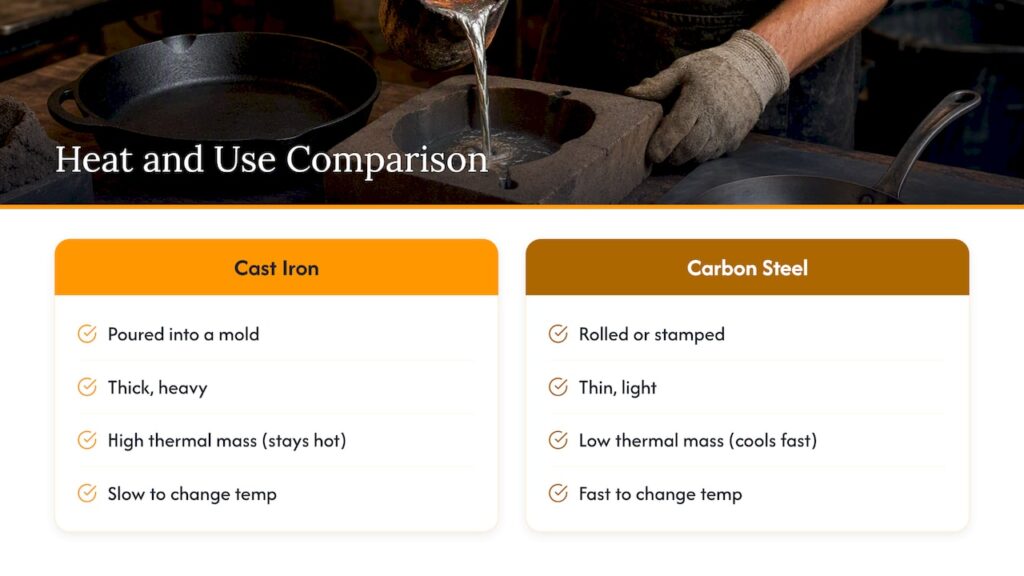
The gap between these two pans comes down to thickness and mass, not some mysterious property of the metal itself. Cast iron is poured into a mold, which is why it comes out thick and heavy. That thickness gives it high thermal mass: once hot, it stays hot, which is exactly why a cast iron skillet is the classic choice for searing a steak. The pan holds its temperature even when a cold cut of meat hits the surface, so the crust forms instead of the pan cooling and the meat steaming.
Carbon steel is rolled or stamped into shape, which produces a thinner, lighter pan. According to Tom’s Guide, that manufacturing difference explains why carbon steel responds faster to heat changes and handles lighter in the hand. A thin pan loses and gains heat quickly, which is a disadvantage for searing but an advantage for anything that needs close control. Eggs, delicate fish fillets, and stir-fries all benefit from a pan that cools the moment you pull it off the burner instead of carrying residual heat that keeps cooking the food.
Chefs quoted by Tom’s Guide describe the two as complementary rather than competing, with many kitchens keeping cast iron for heat-heavy tasks and carbon steel for quicker, more agile stovetop work. For steak specifically, How to Cook the Perfect Steak walks through the searing technique that a heavy, heat-retentive pan makes possible. Baking cornbread or finishing a thick pork chop in the oven leans toward cast iron for the same thermal-mass reason, while a quick weeknight stir-fry or an omelet favors carbon steel’s faster recovery.
How to choose: a simple checklist for home cooks
Matching the pan to how you actually cook matters more than picking the “better” material.
- List your regular dishes. Steaks, braises, and cornbread point to cast iron; eggs, stir-fries, and fish point to carbon steel.
- Check your oven habits. Both go in the oven, but if you finish dishes there often, cast iron’s mass keeps the pan steady at temperature.
- Weigh your tolerance for weight. A 12-inch cast iron skillet is noticeably harder to lift one-handed than a similar carbon steel pan.
- Confirm your cooktop. Both work on gas, electric, and induction; a cookware guide for induction cooktops covers compatibility details worth checking before buying.
- Think about storage. Carbon steel’s lighter build makes it easier to hang or stack in a small kitchen.
- Set a budget. Both materials span a wide price range, so decide by feature first, price second.
A cook who braises short ribs monthly and bakes cornbread should start with cast iron. A cook who makes eggs most mornings and stir-fries on weeknights will get more daily use from carbon steel. For a starter size, a 10 or 12-inch pan covers most single-pan meals. Pre-seasoned versions save the first seasoning session, though a raw pan lets you control the seasoning process from the start. Plenty of kitchens end up with both once budget allows.
Care, seasoning, and troubleshooting made simple
Daily upkeep on either pan takes about a minute once the seasoning is established. According to Virginia Tech, a food scientist there confirms that a properly seasoned surface is durable and performs like a nonstick coating, so the routine stays light.
- Rinse with hot water right after cooking, while the pan is still warm.
- Scrub with a brush or non-metal pad to lift stuck food.
- Dry the pan on the stove over low heat to drive off moisture completely.
- Rub a light coat of oil over the surface before storing.
Seasoning itself is built from several ultra-thin layers of oil, buffed out almost completely before each round of heating, which avoids the sticky, gummy buildup that comes from applying too much oil at once. If seasoning turns patchy or flakes, a seasoning-flaking troubleshooting guide covers common fixes. On the soap question, Virginia Tech’s research indicates that a well-established seasoning layer tolerates mild dish soap better than the old myth suggests, since it is a polymerized surface and not just a smear of grease.
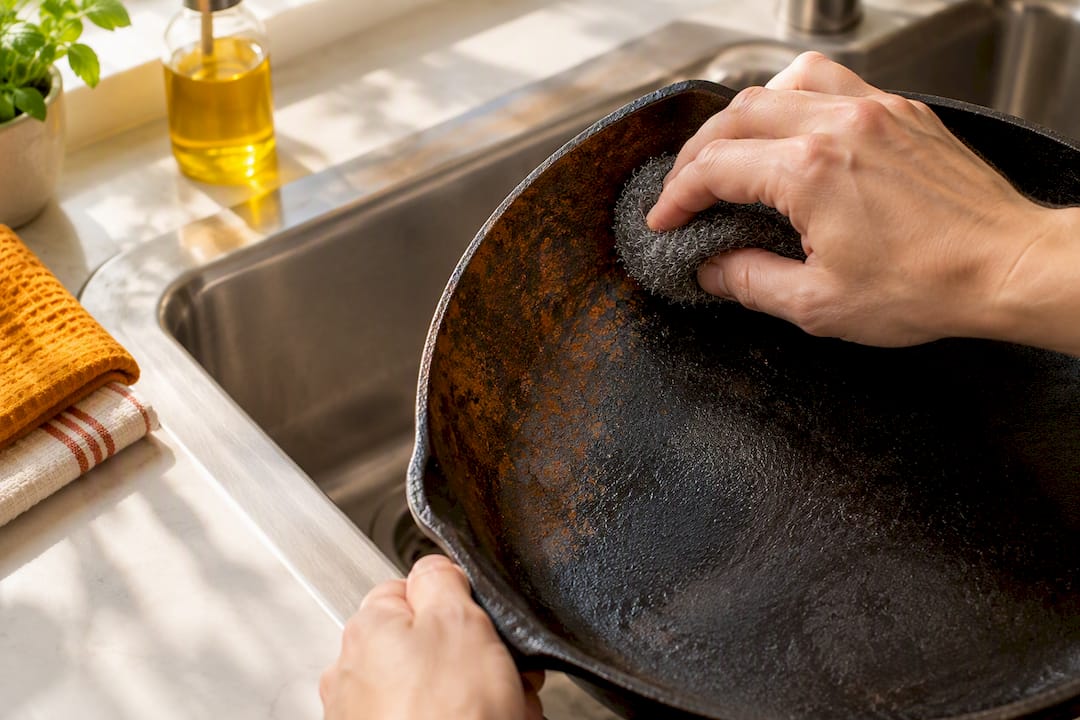
Pro Tip: If rust does appear, scrub it off with steel wool, wash, dry completely, and re-season with two or three thin coats before the pan goes back into rotation.
Iron transfer, acidic foods, and heat safety
According to Illinois Extension, iron cookware can leach small amounts of iron into food, which may offer a trace nutritional benefit for people with low iron levels, though it is a secondary factor next to how the pan actually cooks. Long simmers of acidic foods like tomato sauce can wear at seasoning over time, so an enameled pot is the safer choice for extended acidic cooking. Bare cast iron and carbon steel are both oven and grill safe at high heat, and neither involves the coated nonstick chemicals that raise separate safety questions.
A practical takeaway is to match the material to the cooking task rather than chase a single “best” pan. Beginners who want one dependable pan for searing, braising, and oven use often start with cast iron. Those who prioritize speed, lighter handling, and quick temperature control may prefer carbon steel instead. Either way, a minute of care after each use is what actually protects the investment.
What most buying advice gets wrong
Most articles present this as a rivalry with a winner, and that framing misses the point. The real story is manufacturing geometry: cast iron is thick because it is poured, carbon steel is thin because it is rolled, and that single difference explains almost everything else, from weight to heat behavior to which dish each pan handles best. The seasoning myth deserves more skepticism too. What matters more than brand or price is whether you actually use the pan often enough to keep the seasoning alive, since an occasional-use pan loses its edge faster than a daily one regardless of material.
— Glenn
Sources
For a broader look at how these materials stack up against nonstick and stainless options, the durable cookware comparison is a useful next stop, and the Kitchenware Compare hub keeps buying guides and reviews updated as new pans come to market.
- Virginia Tech News — Cast iron myths dispelled
- Tom’s Guide — Cast iron vs. carbon steel: What’s the difference?
- Illinois Extension — A guide to cast-iron cookware
FAQ
Is carbon steel better than cast iron for searing steak?
Cast iron generally holds an edge for searing because its higher thermal mass keeps the surface hot when cold meat hits the pan. Carbon steel can still sear well, but its thinner build cools faster, so it demands closer attention to heat control.
Do I need to season carbon steel the same way as cast iron?
Yes, both use the same basic method: thin coats of oil heated until they polymerize into a durable, slightly dark surface. Carbon steel often seasons a bit faster because its surface is smoother and thinner to start.
Will dish soap ruin my cast iron seasoning?
No, according to Virginia Tech, a properly established seasoning layer is polymerized and holds up fine against mild dish soap. The old advice to avoid soap entirely overstates the risk once seasoning is well built up.
Does cooking in cast iron actually add iron to food?
According to Illinois Extension, cooking in iron cookware can transfer small amounts of iron into food, which may help people with low iron levels. It is a minor nutritional bonus rather than a reason to buy the pan on its own.
Can I cook tomato sauce or other acidic foods in these pans?
Short cooking of acidic foods is fine in either pan once seasoning is established, but long simmers can wear down the seasoning layer over time. For extended acidic cooking, an enameled pot avoids that wear entirely.
Recommended
- Best Cookware Material for a Gas Stove (2026)
- Stargazer 10.5-Inch Cast Iron Skillet Review: Worth It?

I'm Glenn, and I started Kitchenware Compare to cut through conflicting product reviews and help readers pick kitchen gear with confidence. I don't own or test the products I write about — these guides are built from verified-purchase reviews, manufacturer specifications, and independent testing where it exists, with the reasoning shown, not just a rating.
Leave a Reply