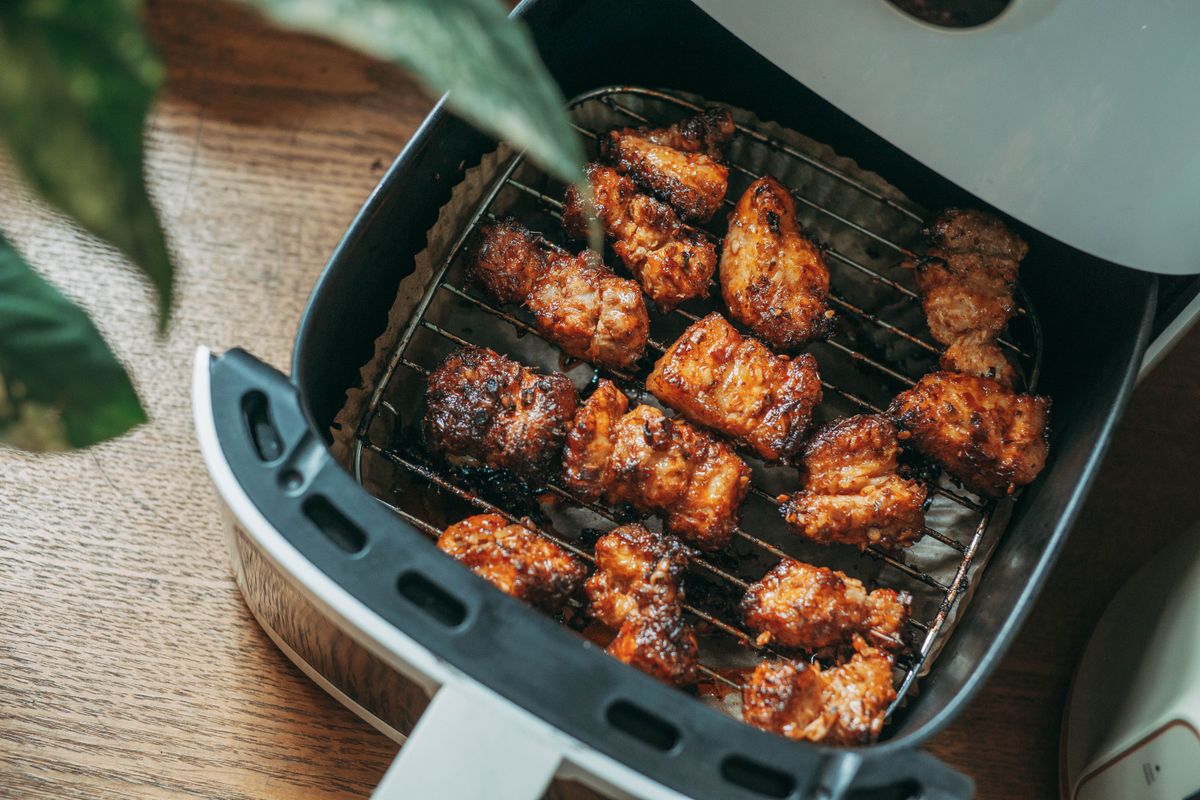
Almost everything written about this is a list of seven or eight mistakes, which leaves you guessing which one is yours. There is a faster way in, and it starts with looking at what came out of the basket.
Soggy, or just pale?
These are two different faults with two different fixes, and treating them as one problem is why generic advice so often fails.
Soggy, limp or visibly wet. The food is damp, the coating has gone soft, chips bend instead of snapping. This is a moisture problem — water is coming off the food faster than the machine can carry it away, so the food is effectively being steamed.
Dry, but pale and unbrowned. The food is not wet. It is cooked through, the texture is fine, but it has no colour and no crunch. This is a heat and surface problem — the outside never got hot enough or dry enough for browning to happen.
Some food manages both, but one usually dominates. Work out which and the relevant half of what follows applies.
If it comes out soggy or wet
The basket is overcrowded — and the reason matters
This is the single most common cause, and the usual explanation for it is vague. “Air needs to circulate” is true but not the mechanism.
The real problem is moisture load. Every piece of food releases steam as it heats. The air fryer removes that steam by moving hot, relatively dry air past the food and venting it. There is a fixed amount of airflow. Double the food and you double the steam without changing the extraction, so humidity inside the drawer climbs until the food is sitting in its own vapour. At that point you are steaming, not air frying, and no amount of extra time fixes it — more time just means more steam.
A single layer with visible gaps between pieces is the standard, and for wet foods it needs to be a generous single layer. Two smaller batches genuinely finish faster than one crowded batch, because the crowded one never gets there at all.
The surface of the food is wet
Every drop of surface water has to be boiled off before the surface can rise above 100 °C and start browning. Wet food spends the first several minutes drying rather than cooking, and if it is crowded as well, it never finishes.
Pat food dry with paper towel before it goes anywhere near oil. This matters most for marinated meat, anything rinsed, and vegetables like courgette or mushrooms that hold a lot of water.
There is water in the drawer
This one catches people out because it comes from good advice applied in the wrong place.
Adding a little water to the bottom of the drawer is a real technique for stopping fatty food from smoking — it stops rendered fat hitting the hot base and burning. But water in the drawer is also a steam source sitting directly under your food, and it will keep the coating soft.
If you have been doing this, it is a trade rather than a mistake, and you cannot have both at once. For fatty food that smokes, better options are to raise the food onto a rack and clean the basket between batches — the separate guide to why an air fryer smokes covers those in detail.
Frozen food that was iced up
Frozen chips and nuggets are designed for this appliance and generally work well, because they are par-fried before freezing and arrive with a coating already set. What does not work is frozen food carrying a layer of frost or ice crystals, which is a direct water load. Knock the ice off before cooking, and do not thaw them first — thawed par-fried chips go limp and never recover.
The wrong food, honestly
Some things will not crisp in an air fryer regardless of technique. Wet batters slide off before they set, because there is no hot oil to seize them instantly. Very watery vegetables release more moisture than a small drawer can clear. Cheese-heavy items melt before they dry. These are limits of the method, not faults to troubleshoot.
If it comes out dry but pale
There is not enough oil
Oil in an air fryer is not there for flavour or for frying. It works as a thermal bridge: it fills the microscopic irregularities on the food’s surface and conducts heat into it far better than air alone. Without it, the surface heats unevenly and browning reactions are slow and patchy.
A light, even coat is enough — toss the food in a bowl with a small amount of oil rather than spraying it in the basket. Too much oil causes the opposite failure: it pools in the base, the food sits in it, and the bottom goes greasy and soft.
Use a pump mister with plain oil rather than an aerosol spray. Aerosol sprays contain lecithin that carbonises onto the coating, which is a leading cause of a basket coating that flakes off.
It was not preheated
Putting food into a cold air fryer means the first few minutes are spent bringing the machine up to temperature with the food already inside, releasing moisture into an environment not yet hot enough to drive it off. That is the exact condition that produces pale, slightly damp results.
Three to five minutes of preheating is enough on most models, and it matters most for thin, quick-cooking items where the total cook time is short.
The temperature is too low
Browning needs surface temperatures that low settings never reach. Recipes written for ovens frequently need adjusting, and the common advice to drop oven temperature by around 20 °C for an air fryer is aimed at preventing the outside burning before the inside cooks — useful for a thick chicken breast, actively counterproductive for chips, where you want the surface hot.
If the food is cooked through but pale, the answer is usually a higher temperature for a shorter time, not longer at the same setting.
Airflow is restricted by something you added
Parchment and foil are useful, but both fail the same way: they block the perforations in the basket base that the airflow depends on. Perforated parchment made for air fryers is the safer option, and nothing should go in during preheating, when it can lift into the element. There is a separate guide to using foil in an air fryer covering when it works and when it does not.
The basket or element is dirty
Baked-on residue on the basket and crisper plate blocks perforations, and a greasy heating element radiates less effectively. If the machine produces no heat at all rather than too little, that is a separate fault — see why an air fryer will not heat up. A machine that used to crisp and no longer does, with no change in technique, is usually just dirty. This is the one cause where the fault genuinely is the appliance rather than the method.
The machine may be too small for what you are asking
Capacity claims are measured by volume, not by usable single-layer area, and those are very different things. A 4-quart basket holds four quarts of space but might only have room for two portions of chips in a proper single layer.
If you are consistently forced to choose between crowding the basket and cooking three batches, the machine is undersized for the household rather than faulty. That is worth knowing before you spend another hour troubleshooting technique. The larger family-size models are sized around exactly this problem, and the main air fryer guide notes usable basket area rather than just quoted capacity. Two-drawer models are the other answer, since two separate airflows beat one large shared one for this specific failure.
Food-specific notes
Home-made chips from fresh potatoes
These are the hardest case and the most common disappointment, because frozen chips are par-fried at the factory and fresh ones are not. Soak the cut potatoes in cold water to draw out surface starch, then dry them thoroughly — genuinely dry, not damp — before oiling. Skipping the drying step after soaking guarantees the soggy result you were trying to avoid.
Breaded and crumbed food
Dry breadcrumb coatings crisp well; wet batters do not. Spray or brush the coating lightly with oil, because dry crumb left unoiled stays pale and powdery rather than golden.
Vegetables
High-water vegetables need space above all else. Cut them larger than feels right, so there is less surface area releasing water at once, and accept smaller batches.
Reheating
Air fryers are extremely good at reviving leftovers that have gone soft — pizza, chips, fried chicken — because the problem there is purely surface moisture. Short, hot and uncrowded is the rule.
The order worth working through
- Look at the food. Wet and limp, or dry and pale? That decides everything else.
- Wet: halve the batch size, then pat the food dry before oiling.
- Still wet: check for water in the drawer and for ice on frozen food.
- Pale: add a light even coat of oil, preheat, and raise the temperature rather than extending the time.
- Still pale: remove liner or foil covering the perforations, and clean the basket and crisper plate properly.
- Neither works: the machine is probably too small for the batch you are cooking.
How This Guide Was Put Together
Plainly: this is a research-based guide, not a hands-on test. I have not run batches of chips through a row of machines to compare results, and nothing here is a report from my own kitchen.
What it rests on: the physics of the process, which is what most of the advice on this subject omits — air frying is convection drying plus surface browning, and browning cannot begin until surface water has boiled off, which is why moisture load and airflow explain the majority of failures; manufacturer guidance on preheating, batch sizes and liner use; and the pattern of what owners report, where crowding is by a wide margin the most common cause.
What I could not establish: I could not measure a single competing page for this keyword. Every one of the seven ranking results blocked automated access, so no word count or content comparison is claimed for any of them, and no field average is quoted here or in the internal notes. What can be said from the search results alone is structural: every ranking page is framed as a list of mistakes, and none of them separates the wet failure from the pale one, which is the distinction this guide is built on.
Also not established: exact temperature and time conversions from oven recipes. These vary enough between models — basket geometry, fan speed and wattage all differ — that any single number would be misleading. The guidance above is directional for that reason.
Frequently Asked Questions
Why is my food soggy in my air fryer?
Almost always too much food in the basket. Each piece releases steam, the airflow that removes it is fixed, so a crowded basket becomes humid and the food steams instead of crisping. Adding time makes it worse rather than better. Cook in a single layer with gaps, in two batches if necessary.
Why is my food not crisping even though it is cooked?
If it is dry but pale, that is a browning problem rather than a moisture one. The usual causes are too little oil, no preheat, or a temperature too low for the surface to brown. Raise the temperature and shorten the time rather than cooking for longer at the same setting.
Does an air fryer need to be preheated?
For short cooks and anything you want crisp, yes. Food placed in a cold machine releases moisture before the environment is hot enough to drive it off, which produces pale and slightly damp results. Three to five minutes is enough on most models.
How much oil should I use?
A light, even coat, applied by tossing the food in a bowl rather than spraying into the basket. Oil works as a thermal bridge that conducts heat into the food surface, so too little leaves it pale. Too much pools in the base and makes the underside greasy and soft.
Should I put water in the air fryer drawer?
Only to stop fatty food smoking, and it will cost you crispness. Water in the drawer is a steam source directly beneath the food. If smoking is the problem, raising the food on a rack and cleaning the basket between batches solves it without the sogginess.
Why are my home-made chips soggy when frozen ones are fine?
Frozen chips are par-fried before freezing, so they arrive with a set coating. Fresh potatoes are raw and starchy. Soak the cut pieces in cold water to remove surface starch, then dry them thoroughly before oiling. The drying step is the one people skip, and it is the one that decides the outcome.
Can parchment or foil make food soggy?
Yes, if it covers the perforations in the basket base, because that is the path the airflow takes. Use perforated parchment made for air fryers, keep it clear of the edges, and never put it in during preheating when it can lift into the element.
More air fryer troubleshooting
If the machine is smoking, see why an air fryer smokes and how to stop it. If the basket surface is deteriorating, there is a guide to a basket coating that is flaking off.

Glenn is the founder of Kitchenware Compare and has spent years researching, testing, and reviewing kitchen appliances, cookware, and gadgets. A lifelong home cook raised in a family that treated every meal as an occasion, Glenn started this site to cut through the noise of conflicting product reviews and give readers honest, practical guidance. When he is not testing the latest air fryer or digging into the specs of a new espresso machine, he can usually be found experimenting with new recipes or hunting for the perfect cast iron skillet at a flea market.
Leave a Reply