This post contains affiliate links. If you buy through my links, I may earn a commission at no extra cost to you.
Short answer: round, for most kitchens. It sits centered on a standard round burner, heats more evenly because the pot’s shape matches the heat source, and it’s what nearly every accessory, spare lid, and recipe assumes you own.
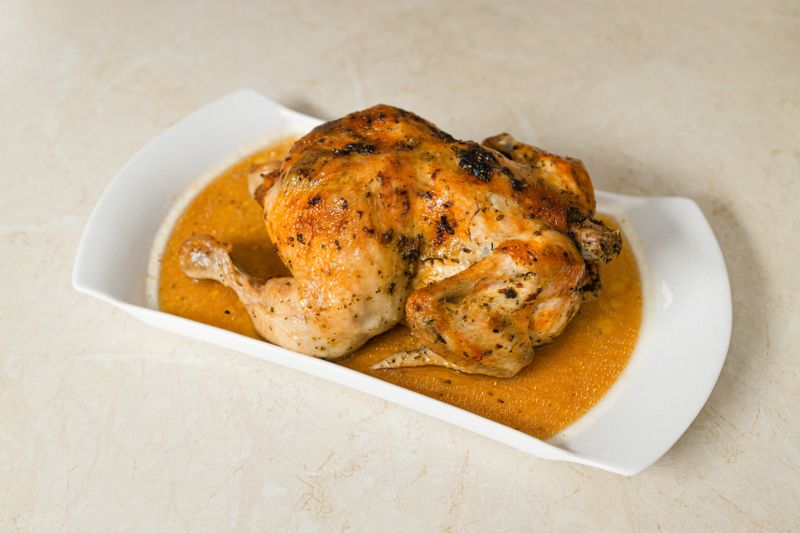
Oval keeps one real advantage: it’s built for the shape of the food, not the shape of the stove. A whole chicken, a pork loin, or a rack of ribs lies flat with room on both ends in an oval pot, where the same cut curls awkwardly against the walls of a round one. If that’s genuinely what gets cooked most, oval earns its place. Here’s the honest breakdown, including what the site’s own oval pick actually revealed.
Oval vs Round Dutch Oven — Head to Head
| Factor | Round | Oval | Winner |
|---|---|---|---|
| Stovetop heat distribution | Even — matches a round burner | The pointed ends run cooler | Round |
| Whole chicken, roasts, ribs | Meat curls against round walls | Lies flat with room to spare | Oval |
| Bread baking (round loaves) | Dough rises evenly on all sides | Dough can slump toward the ends | Round |
| Soups and stews (stirring, ladling) | No corners for food to hide in | Tapered ends can trap food | Round |
| Accessory and lid availability | Widest selection, easiest to replace | Fewer options, brand-specific | Round |
| Storage and stacking | Nests with other round cookware | Awkward shape to store alongside round pots | Round |
| Price (same brand, similar capacity) | Typically the baseline price | Often a small premium | Round |
| Interior length for long cuts | Limited by the pot’s diameter | Meaningfully longer for the same volume | Oval |
The Actual Difference: Why Shape Changes How a Pot Cooks
A round Dutch oven sits directly over a round stovetop burner or induction coil, so heat radiates outward evenly from the center to every point on the pot’s wall at roughly the same distance. An oval pot breaks that symmetry: the two rounded ends sit farther from the burner’s center than the straight sides do, so they receive less direct heat. On most home stoves the difference is minor — a slow braise in the oven evens things out regardless of shape — but it becomes noticeable during active stovetop searing or simmering, where the oval’s ends can lag behind the center.
This is also why oval Dutch ovens are marketed primarily as oven vessels rather than all-purpose stovetop-to-oven pots: their shape is optimized for what fits inside them, not for how evenly they sit over a flame.
What the Site’s Own Oval Pick Actually Showed
The Cuisinart Chef’s Classic Oval Casserole, reviewed separately, is the only oval Dutch oven covered on this site, and its own review data lines up with the general pattern above. One recurring point from its critical reviews and product photos: buyers occasionally mistake the listing photos for a round pot and are surprised to receive an oval one — a real, documented confusion that says something useful about how differently most people picture a “Dutch oven” by default. Amazon’s own attribute data for that product tagged cooking performance positive overall, with no shape-specific complaints beyond the general expectation mismatch, suggesting the oval shape’s stovetop tradeoff is real but minor enough that it doesn’t show up as a dedicated owner complaint.
Size and Capacity: Reading the Numbers Correctly
Round and oval Dutch ovens are usually sold in the same quart sizes, which makes them look directly comparable on a spec sheet — but the interior shape means that volume is distributed differently. A 5.5-quart round pot has a wider, more uniform base; a 5.5-quart oval pot of the same volume is longer and narrower, trading width for length. That’s exactly why the oval shape suits a whole chicken or a rack of ribs better at the same capacity: the extra length is where the food actually needs the room, not spread evenly in a circle around it.
The practical takeaway when comparing listings: don’t assume a round and an oval pot of the same quart size will hold food identically. Check the interior length and width dimensions specifically if a particular cut of meat is the deciding factor, rather than relying on the quart number alone.
Which One Should You Buy?
Buy round if: soups, stews, braises, and bread are the bulk of what a Dutch oven gets used for; you want the widest possible selection of sizes, colors, and replacement lids; or this is a first Dutch oven and you want the shape every recipe and accessory assumes by default. The Dutch oven buying guide covers the round options across every price tier, from the Lodge Bare Cast Iron 5 Qt to the Staub 5.5-Qt Cocotte.
Buy oval if: whole chickens, pork loins, or rib racks are a regular fixture, and the round pot you already picture just doesn’t fit them well. The Cuisinart Chef’s Classic Oval Casserole is the site’s reviewed pick in this shape.
The honest middle ground: most kitchens that own one Dutch oven are better served by round, since it handles the widest range of everyday cooking without a stovetop-heat tradeoff. Oval is a second-pot upgrade for a specific, recurring need — not a default first purchase.
Which Should You Choose for This? Task by Task
| Task | Better Choice | Why |
|---|---|---|
| No-knead round bread loaf | Round | Dough shape naturally matches the pot |
| Whole roast chicken | Oval | Bird lies flat instead of curling upright |
| French onion soup, stews | Round | Even heat, easy stirring, no hidden corners |
| Pork loin or rack of ribs | Oval | Length matches the cut without curling |
| Stovetop searing before a braise | Round | Even contact with the burner’s heat |
| Oven-only slow roasts | Tie | Oven heat surrounds either shape evenly |
Cleaning: Does the Shape Make a Difference?
Marginally. A round pot’s smooth, continuous curve gives a sponge or brush nothing to catch on, so wiping it clean is a single uninterrupted motion. An oval pot’s transition from straight side to rounded end creates a subtle seam that can hold onto stuck-on food slightly more stubbornly, particularly in the tighter curve at each tip. It’s a minor annoyance rather than a real durability or hygiene issue, and it disappears entirely with a soak, but it’s a genuine small difference worth knowing about if easy cleanup is a priority.
Frequently Asked Questions
Does the shape really affect how evenly a Dutch oven cooks?
On the stovetop, yes, slightly — a round pot matches a round burner’s heat pattern, while an oval pot’s tapered ends sit farther from the center and run a little cooler. In the oven, where heat surrounds the pot from every direction, the difference is negligible.
Can you bake round bread in an oval Dutch oven?
Yes, as long as the pot’s shorter interior dimension is wide enough for the loaf. It will have more empty space at the ends than a round pot of the same volume, which doesn’t hurt the bread but doesn’t help it either.
Is an oval Dutch oven more expensive than round?
Often, yes, though the gap is usually modest — typically a small premium within the same brand and capacity, reflecting the less common shape rather than a functional upgrade.
Which shape is more common and easier to find accessories for?
Round, by a wide margin. Replacement lids, trivets, lid racks, and third-party accessories are designed around round pots far more often, since round is the default shape across nearly every brand’s core lineup.
Should a first-time Dutch oven buyer choose round or oval?
Round, in almost every case. It handles the widest range of everyday cooking without any stovetop-heat tradeoff, and every general Dutch oven recipe assumes round unless it says otherwise.
Bottom Line
Round wins on stovetop heat distribution, accessory availability, price, and everyday versatility — it’s the right default for a first or only Dutch oven. Oval wins on exactly one thing: fitting elongated cuts of meat without curling them against a wall, which matters a lot if that’s a regular need and barely at all if it isn’t. The Dutch oven buying guide covers both shapes across every price tier, and the bare vs enameled cast iron comparison covers the other major decision most buyers face alongside shape.

I'm Glenn, and I started Kitchenware Compare to cut through conflicting product reviews and help readers pick kitchen gear with confidence. I don't own or test the products I write about — these guides are built from verified-purchase reviews, manufacturer specifications, and independent testing where it exists, with the reasoning shown, not just a rating.
Leave a Reply