This post may contain affiliate links. If you buy through my links, I may earn a commission at no extra cost to you.
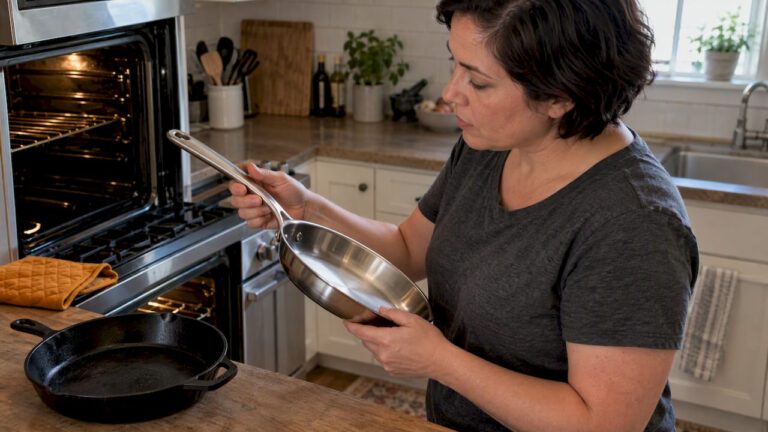
Most all-metal cookware, including bare cast iron, carbon steel, and fully stainless pieces, can go in the oven at high temperatures without trouble. The catch is everything attached to that metal: plastic or wood handles, silicone grips, and glass or enameled lids often carry their own, much lower temperature limit. Checking those components first is the fastest way to know whether a pan belongs in the oven at all, especially when considering specific material behaviors like those explained in insulated ceramic mugs with replaceable inserts.
TL;DR:
- Oven safety mainly depends on the material of the pan and the specific components, such as handles and lids, which often have lower temperature limits.
- Bare cast iron, carbon steel, and stainless steel with all-metal handles generally tolerate high oven temperatures above 500°F, but plastic or silicone parts limit maximum use.
- Nonstick coatings are sensitive to temperatures above 250°C (482°F) and degrade faster if exposed to high heat for prolonged periods.
- Glass bakeware safety varies: borosilicate withstands thermal shock better than soda-lime glass, which is more vulnerable to rapid temperature changes.
- Always verify oven safety by checking manufacturer markings, model specifications, and performing cautious tests, especially for cookware with plastic or silicone components.
1. Which materials are generally oven-safe
Metal cookware is the safest bet for high heat, but the details change by material. Bare cast iron tolerates oven temperatures well past 500°F and is a go-to for searing on the stovetop, then finishing in the oven. Enameled cast iron performs similarly, though manufacturers often cap it lower to protect the enamel coating from chipping or crazing over repeated high-heat cycles.
Stainless steel and clad cookware (the kind with an aluminum or copper core sandwiched between steel layers) generally handles very high oven heat, but the handle attachment matters. Riveted, all-metal handles hold up fine; welded or hollow handles can behave differently depending on the brand, so it is worth checking the manufacturer’s rating rather than assuming.
Carbon steel behaves a lot like cast iron: it is thin, heats quickly, and oven-roasts well after a stovetop sear, making it a favorite for searing-then-roasting proteins.
Nonstick coatings are the most temperature-sensitive surface in most kitchens. According to a 2024 peer-reviewed study on aluminum nonstick cookware, heating aluminum-based nonstick pans above 250°C (482°F), or for longer than about 45 minutes, degraded their internal structure, and the authors advise keeping them below 250°C for no more than 45 minutes.
Glass and glass-ceramic bakeware is a separate category entirely, and the type matters more than most cooks realize:
- Borosilicate glass has low thermal expansion, which helps it resist sudden temperature swings.
- Soda-lime tempered glass, used in much mainstream U.S. bakeware, handles drops well but is more vulnerable to thermal shock, according to Iowa State Extension.
- Neither type should go from freezer to hot oven without a buffer step.
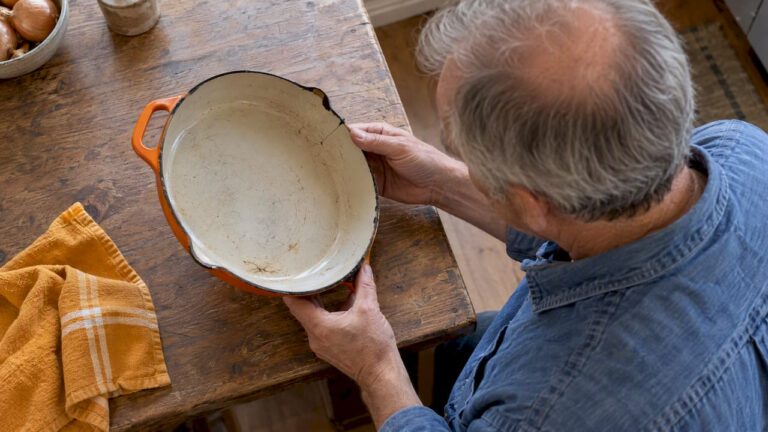
2. How to check if your specific pan is oven safe
Markings, manuals, and manufacturer sites each give a different piece of the puzzle, and combining them is more reliable than trusting any one source alone.
- Flip the pan over and look for a stamped or printed oven icon and a temperature number; according to Taste of Home, there is no industry-standard symbol, so icons vary by brand and sometimes go missing on older or generic cookware.
- Search the model number on the manufacturer’s website or a retailer listing if the base markings are worn or unclear.
- Inspect every handle, knob, rivet, and lid separately. According to Comfy Kitchen, oven ratings are brand- and model-specific. Pieces within the same cookware set can carry different limits depending on what their handles and lids are made from.
- If nothing turns up, run a cautious test: preheat the oven to 350°F, place the empty pan inside for 10 to 15 minutes, then check for odors, warping, or discoloration before trusting it with food.
- When the result is still uncertain, skip the broiler and avoid long bakes at very high heat with that piece.
Pro Tip: Photograph the maker’s mark and model number on any unlabeled pan before you start searching online: it makes matching the listing much faster than typing in a vague description.
3. Typical temperature limits by material and component
Manufacturer specifications always take precedence over general ranges, but these figures reflect common limits across major cookware categories.
| Material or component | Typical maximum oven temperature |
|---|---|
| Bare cast iron | 500°F and above |
| Carbon steel | 500°F and above |
| Stainless steel (all-metal) | generally safe for moderate to high oven temperatures depending on construction |
| Enameled cast iron | usually rated for moderate oven temperatures to protect enamel |
| Hard-anodized aluminum | generally rated for moderate oven temperatures |
| Nonstick coating | limited to moderate oven temperatures to preserve coating |
| Borosilicate glass | better resistance to thermal shock and suitable for typical baking temperatures |
| Tempered soda-lime glass | more vulnerable to thermal shock; handle with care at baking temperatures |
| Silicone handles or grips | typically safe up to moderate oven temperatures |
| Wooden or plastic knobs | generally not safe for high oven temperatures and risk damage |
A 2024 peer-reviewed study found structural changes in aluminum alloy nonstick pans heated above 250°C (482°F) or for extended periods, according to PMC research on thermal effects in nonstick cookware, so it makes sense to keep nonstick pans well below that ceiling.
4. Safe oven use practices: broiler, thermal shock, and long bakes
Broiling is a different exposure than baking, and it catches a lot of home cooks off guard. According to Comfy Kitchen, “oven safe” and “broiler safe” are not interchangeable, because broilers produce intense, direct heat that can exceed the limits of many oven-safe pieces. Tasting Table quotes a cookware author who warns against putting Pyrex under the broiler or on the stovetop.
Thermal shock is the other major risk, especially for glass bakeware:
- Never move a dish directly from the freezer into a hot oven.
- Never set a hot glass dish on a cold or wet countertop or stovetop.
- Let glass bakeware come closer to room temperature before it meets high heat.
Prolonged high heat also takes a toll on coatings and aluminum-based pans over time, consistent with the heating study cited above, which found that temperatures beyond 250°C or prolonged heating degraded the pans it tested.
Pro Tip: Retire any piece with chips, cracks, deep scratches, or a warped base: damage like that is exactly where thermal shock and coating failure tend to start.
5. Choosing oven-safe cookware for common cooking jobs
Matching material to task saves money and prevents the kind of damage that shortens a pan’s life.
- For high-heat roasting or searing-then-roasting: pick all-metal cast iron or carbon steel with a solid metal handle, no plastic or wood anywhere near the heat.
- For braises and long, slow oven cooking: enameled cast iron or a stainless-steel Dutch oven with a metal lid handles extended time at moderate heat well.
- For baking and freezer-to-oven convenience: choose borosilicate glass or a product the manufacturer explicitly rates for that use, and treat standard soda-lime glass more cautiously.
- For nonstick finishes: expect a lower max temperature and a shorter lifespan in exchange for easy release at low to moderate heat.
- Before buying, confirm clear oven temperature guidelines, metal handles, replaceable knobs, and care instructions on the packaging or product page. The cookware guide for induction cooktops breaks down how these same materials perform across different heat sources, which is a useful cross-check when a piece needs to work on both the stovetop and in the oven.
6. How this guide was put together
This guide draws on manufacturer specifications, extension service safety guidance, consumer and technical reporting, and peer-reviewed thermal research rather than hands-on product testing. Comparisons like the one covering the most durable cookware types and the breakdown of cast iron versus ceramic cookware go deeper into the material tradeoffs touched on here, and pull from the same kind of specification and owner-review research used throughout this site. Readers who want material-specific buying advice for a particular cooktop or recipe style will find more detail in those companion guides.
7. What matters most when judging oven safety
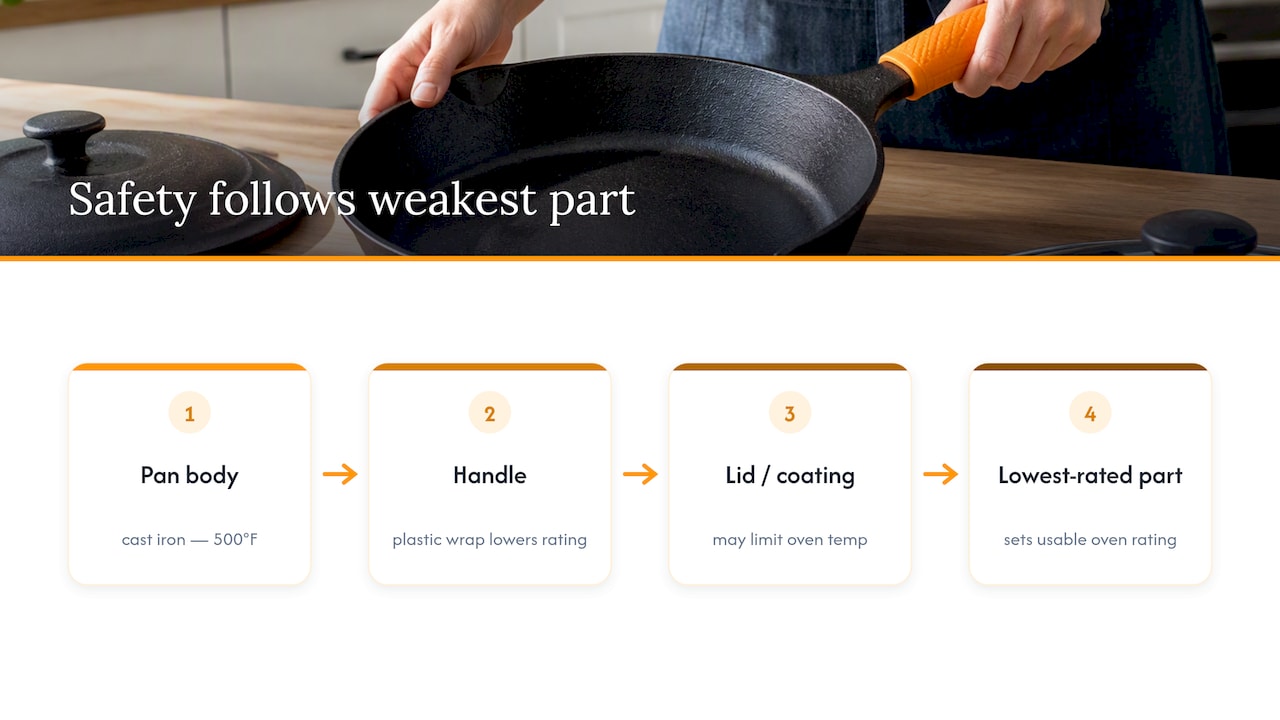
The biggest blind spot in most oven-safety advice is treating “oven safe” as a property of the whole pan rather than its weakest part. A cast iron skillet is oven safe at 500°F, but the moment it comes with a plastic-wrapped handle, that rating belongs to the handle, not the pan body. Readers chasing a single number for “oven safe cookware” are asking the wrong question; the better one is “what is the lowest-rated component on this specific piece?”
Thermal shock deserves more attention than it gets, too. A glass dish that survives years of oven use can fail instantly from one bad transition, like landing on a wet counter straight from the oven. That single moment causes more broken bakeware than years of normal heat exposure ever will.
Before buying or trusting any pan at high heat, check the handle and lid materials first, the pan body second. That order catches the failures that actually happen in home kitchens.
— Glenn
FAQ
Which pans are oven safe?
All-metal cookware made from bare cast iron, carbon steel, or stainless steel is generally oven safe at high temperatures. Pieces with plastic, wood, or silicone components, or unlabeled nonstick coatings, need a manufacturer check before they go in the oven.
How do you know if your cookware is oven safe?
Check the pan for a stamped oven-safe symbol and temperature rating, though according to Taste of Home, these symbols are not standardized across brands. When markings are missing, look up the model number on the manufacturer’s site, since according to Comfy Kitchen, ratings are brand- and model-specific even within the same cookware set.
Which cookware is best for the oven?
Bare cast iron and carbon steel tend to offer the widest safe temperature range and perform well for both roasting and searing-then-roasting. For baking, borosilicate glass or manufacturer-verified tempered glass products handle oven heat more predictably than generic soda-lime glass.
Which pans are not oven safe?
Pans with plastic or wood handles, silicone grips, or rubberized knobs are usually not safe above roughly 350°F to 400°F, regardless of what the pan body is made from. Many glass pieces and some nonstick coatings also are not rated for broiler use, which produces far more intense direct heat than regular baking, according to Comfy Kitchen.
Can a skillet with a plastic handle go in the oven?
No skillet with a plastic handle should go in a hot oven, since plastic typically softens or melts well below standard baking temperatures. Checking whether the handle is removable or metal is the deciding factor, not the material of the pan body itself.
Sources
- How to know oven-safe symbol (Taste of Home)
- Thermal effects on aluminum nonstick cookware (PMC)
- How to check if cookware is oven safe (Comfy Kitchen)
- How to know cookware is oven safe (Tasting Table)
- Glass kitchenware cautions (Iowa State Extension)
Recommended
- How to Clean a Fan-Assisted Oven (Including the Fan)
- How to Clean a Microwave: What the USDA Actually Says

I'm Glenn, and I started Kitchenware Compare to cut through conflicting product reviews and help readers pick kitchen gear with confidence. I don't own or test the products I write about — these guides are built from verified-purchase reviews, manufacturer specifications, and independent testing where it exists, with the reasoning shown, not just a rating.
Leave a Reply