I may earn a commission if you buy through links on this site, at no extra cost to you. See the affiliate disclosure.
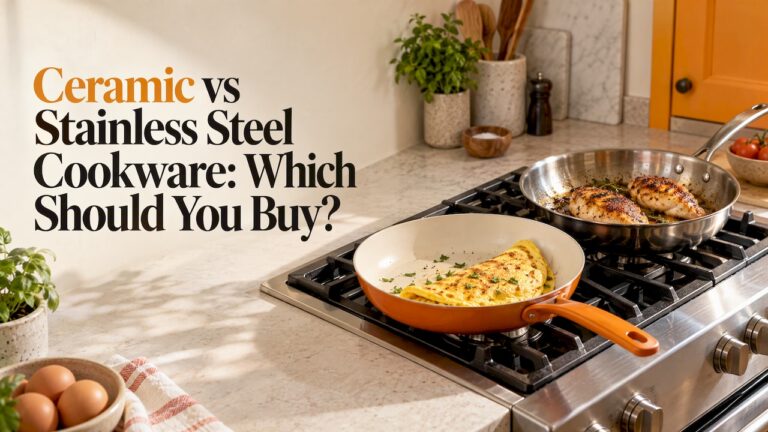
Ceramic-coated pans win on easy, low-fat cooking for eggs, pancakes and delicate fish. Stainless steel wins on durability, high-heat searing and pan sauces. Most home cooks end up happiest with one of each, and the right first purchase depends on what you cook three nights a week, not on which material sounds better on the box.
I write about kitchenware from specifications, owner reviews and cited third-party sources. I do not own or use the products I compare, and I will say so plainly wherever a point rests on owner feedback instead of lab data. This guide covers the two materials as they are sold in the US, what each does well, where each falls short, and how to choose by budget and cooking style.
TL;DR
- Choose ceramic-coated if you cook eggs, crepes, fish and other sticky foods with little oil, and you are happy to treat the pan as a gentler, shorter-lived tool.
- Choose stainless steel if you sear meat, build pan sauces, braise, or want one set that can last for decades.
- Budget buyers: a single ceramic-coated skillet plus one stainless skillet usually costs less and covers more than a full set of either.
- Gift shoppers: a stainless set is the safer gift for a cook you do not know well; a ceramic-coated skillet suits someone who wants easy breakfasts.
- Whichever you buy, keep metal utensils and aggressive heat away from coated pans, and preheat stainless properly.
What the two materials actually are
The labels cause most of the confusion, so start there.
Ceramic cookware in most stores is not solid ceramic. It is usually an aluminum or steel pan with a ceramic-style coating. GreenPan, for example, says the raw material for its Thermolon coating is derived from sand and that the coating is made without PFAS. The coating is what gives the pan its slippery surface. Solid stoneware or clay pots exist, but they are a different category with different handling.
Stainless steel cookware is steel alloyed with chromium. Clemson University’s Home & Garden Information Center notes it may also contain nickel, molybdenum or titanium, which help it resist high heat, scratching and corrosion. Better pans are “clad”: layers of aluminum or copper sandwiched between stainless layers so heat spreads evenly. A thin single-layer stainless pan heats unevenly and is the reason some people decide they dislike stainless.
That difference sets everything else. A coated pan depends on a thin surface layer staying intact. A stainless pan is metal all the way through, so there is no layer to wear off.
Side-by-side comparison
| Factor | Ceramic-coated | Stainless steel (clad) |
|---|---|---|
| Food release | Very good when new, with little or no oil | Needs preheating and some fat |
| Searing and browning | Fair; high heat shortens coating life | Excellent, builds browned bits for sauces |
| Lifespan | Shorter; owners commonly report the slickness fading | Long; the surface does not wear out |
| Utensils | Wood, silicone, nylon | Anything, including metal |
| Heat tolerance | Moderate; medium heat is the sweet spot | High; suited to hot searing |
| Weight | Usually light | Usually heavier when clad |
| Upfront price | Low to mid | Mid to high for good clad sets |
| Cost over many years | Replace when coating declines | Often buy once |
| Best for | Eggs, pancakes, fish, quick weeknight meals | Steaks, sauces, braises, everything else |
The table is a general pattern drawn from manufacturer specifications and owner reviews, and individual lines vary. Always check the spec sheet of the exact pan, especially the oven-safe limit and the base construction.
Food release and cooking with less fat
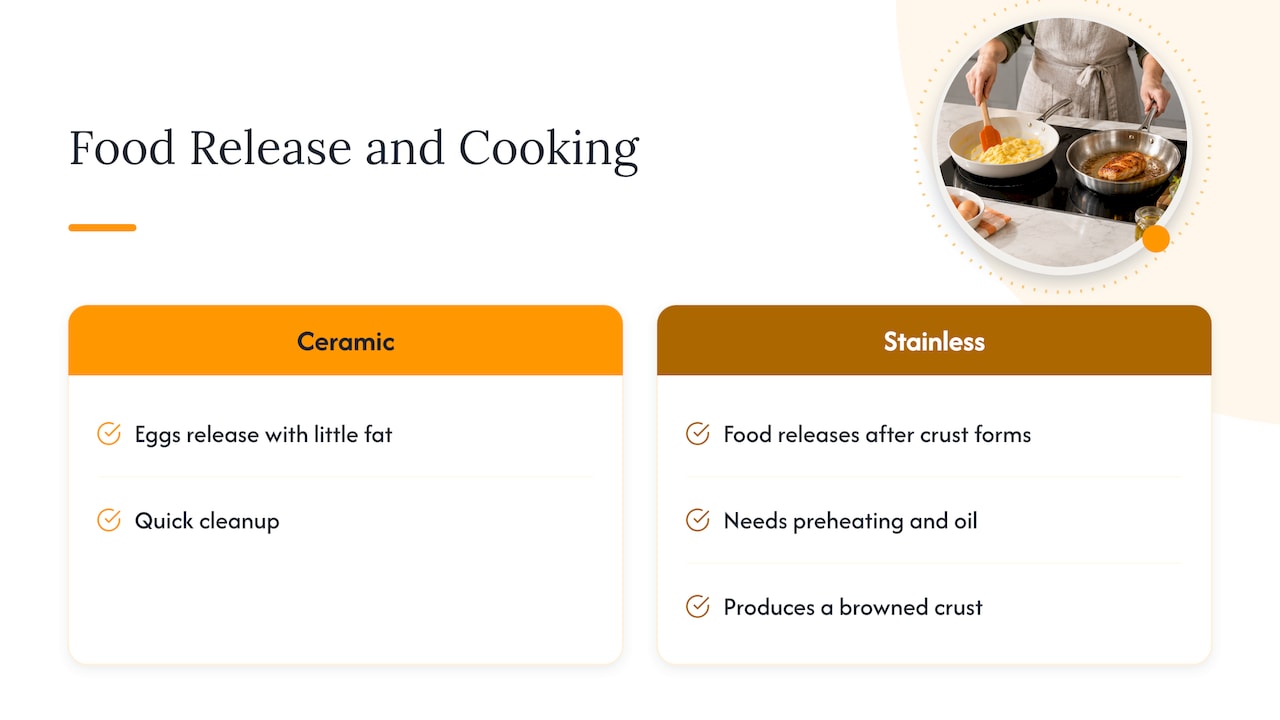
This is the reason people buy ceramic. A fresh coating lets an egg slide with a teaspoon of butter or none at all, and cleanup is quick because food has little to grip. For a first-time buyer who is nervous about scrambled eggs welding themselves to the pan, that is a real benefit.
Stainless works differently. Food sticks at first, then releases by itself once a proper crust forms. All-Clad’s beginner guide puts preheating first: heat the pan, add enough oil to coat the surface, start cooking once the oil shimmers, then be patient and do not rush to move the food. Skipping the preheat is the usual reason a stainless pan grabs food. Once the habit is built, the same pan produces a browned crust that coated pans struggle to match.
If you want a deeper look at coated pans in general, I compare ceramic against traditional nonstick in a separate guide, and the nonstick versus stainless steel breakdown covers the trade-offs from the other side.
Searing, sauces and high heat
Stainless steel is the pan for browning. Seared meat leaves caramelized bits stuck to the surface, called fond. Deglaze that with wine or stock and you have the base of a pan sauce. A slick coating releases those bits so cleanly that there is little fond to build on, which is exactly what makes it good for eggs and poor for steak.
Heat matters for coated pans too. GreenPan’s care and use page says its coating gets hot enough to sear even on low to medium heat, and steers cooks toward that range. Running a coated skillet at maximum for a hard sear works against that advice. If your cooking leans toward high heat, stainless is the more natural fit.
For oven use, stainless usually has the higher limit, but the figure depends on the lid and the handle, not just the pan body. Check the manufacturer’s listed oven-safe temperature for the specific item before you put anything under the broiler.
Durability and common complaints
Here the two materials are furthest apart.
With ceramic-coated pans, the coating is the part that wears, and how fast depends partly on care. GreenPan’s care page asks for low to medium heat, silicone or wood utensils, butter or oil rather than spray oils (it says the fine spray particles burn and leave a carbonized layer), and letting a hot pan cool before it meets cold water. The sources differ on the dishwasher: GreenPan calls its pans dishwasher safe, while it still recommends a soft sponge and warm, soapy water, and many other makers ask for hand washing. Follow the care card for your own pan.
With stainless steel, the usual complaints are different: weight, sticking while you learn the preheat, and discoloration or rainbow tints from heat. Those are cosmetic or technique issues, not wear. Clemson’s HGIC calls stainless a durable cookware choice because it will not permanently corrode, though it warns that undissolved salt can pit the surface.
In practice, I would not describe either material as bad. I would describe ceramic as a consumable that earns its price in the early months, and stainless as an investment that pays back slowly.
Care and daily use
A short routine keeps each type working.
Ceramic-coated pans
- Cook on low to medium heat and let the pan preheat gently.
- Use wood, silicone or nylon tools.
- Let the pan cool before washing, and wash by hand with a soft sponge.
- Stack with a pan protector or hang it, since stacking bare pans can scratch a coating. My pan storage ideas guide shows racks and organizers that prevent this.
Stainless steel pans
- Preheat before adding oil, and add the food only when the oil flows freely.
- Do not move food too early; let it release from the crust by itself.
- Let the pan cool a little before it meets water, which helps prevent warping on thinner pans.
- Wash after each use with ordinary dish soap and a sponge.
Neither routine is demanding. The coated pan asks for gentleness. The stainless pan asks for patience.
Which one fits your situation
First-time buyers
If you are setting up a first kitchen, buy one stainless skillet of about 10 to 12 inches and one smaller ceramic-coated pan for eggs. That pairing covers most meals. My kitchen essentials list for a new home puts these pans in context with the rest of what a starter kitchen needs.
Budget-conscious cooks
Spend the money where it lasts. A mid-priced clad stainless skillet is the better long-term value. For the coated pan, a low-cost option is reasonable precisely because you will probably replace it. Full 10- and 18-piece sets look like bargains, but they often include pieces you will rarely use. In most kitchens two or three pans do most of the work. You can see what a large set contains in my 18-piece NutriChef set review.
Professional chefs and serious home cooks
Stainless dominates professional work because of its heat tolerance, ability to take metal tools and long service life. Coated pans do appear for omelets and delicate proteins, usually as a cheap, replaceable station tool. If you are deciding between stainless and another metal option, see my hard anodized versus stainless steel guide.
Gift shoppers
For someone whose habits you do not know, a good stainless skillet or set is the safe pick: it suits every cooking style and does not demand special care. A ceramic-coated skillet makes a thoughtful gift for a person who loves weekend breakfasts, ideally with a set of silicone utensils alongside.
Health and safety questions
Many people choose ceramic because they want to avoid certain chemicals found in older nonstick coatings. That is a reasonable thing to look into, and it is worth reading the maker’s own product page for what the coating is made from. For stainless, the main practical point concerns people with a nickel allergy, who should look at the alloy listed in the product specs, since Clemson’s HGIC notes stainless may contain nickel, and ask their doctor or allergist if they are unsure. Whichever you choose, avoid heating any empty pan on high for long periods, and use the stove fan.
My view on ceramic vs stainless steel
Choosing between these two is really choosing a cooking habit, not a material.
If you cook eggs and light dishes most days, a ceramic-coated pan removes friction from your mornings; just expect to replace it sooner than a stainless pan.
If you want one pan to do the heavy lifting for decades, clad stainless is the answer. Check the base construction and the oven-safe limit on the spec sheet before you buy.
I would rather you buy two well-chosen pans than a 12-piece set you resent.
Find the right pan on Kitchenware Compare
When you are ready to pick specific models, the cookware reviews and buying guides cover specific ceramic-coated and stainless pans and sets. If timing matters, my guide on when to buy kitchen equipment covers the sale periods.
The Kitchenware Compare homepage lists the latest comparisons by category.
FAQ
Is ceramic cookware better than stainless steel?
Neither is better across the board. Ceramic-coated pans release food easily with little fat, which suits eggs and fish. Stainless steel handles high heat, metal utensils and years of use, which suits searing and sauces. Many cooks keep one of each.
Does ceramic cookware last as long as stainless steel?
Usually not. A ceramic coating is a thin surface layer that wears with use, while a clad stainless pan keeps working because there is no coating to wear away. Gentle heat, soft utensils and hand washing are the habits that help a coated pan last longer.
Can I use metal utensils on ceramic pans?
It is best to avoid it. Metal can scratch a ceramic coating and shorten its useful life, so wood, silicone or nylon tools are the safer choice. Stainless steel pans accept metal utensils without trouble.
Which is better for a beginner?
A beginner who wants forgiving, quick meals will find a ceramic-coated skillet easy to start with. A beginner who wants to learn browning and sauces, and to buy once, should start with a mid-priced clad stainless skillet and learn the preheat routine.
Is a full set worth it?
Often not. Most cooks use two or three pans for the majority of meals. Buying one skillet of each material first, then adding a saucepan or a Dutch oven as needed, tends to cost less and fits real cooking better.
Sources
- Care and Use, GreenPan
- Technology Information, GreenPan
- Cooking on Stainless Steel for Beginners, All-Clad
- Cookware Safety, Clemson University HGIC
- How I Review Kitchen Equipment
Recommended
- Ceramic vs Nonstick Cookware: Which Should You Buy?
- Aluminum vs Stainless Cookware: Which Fits Your Cooking?
- Nonstick vs Stainless Steel: Which Pan Fits Your Cooking?
- Hard Anodized vs Stainless Steel Cookware: Which to Buy

I'm Glenn, and I started Kitchenware Compare to cut through conflicting product reviews and help readers pick kitchen gear with confidence. I don't own or test the products I write about — these guides are built from verified-purchase reviews, manufacturer specifications, and independent testing where it exists, with the reasoning shown, not just a rating.
Leave a Reply