I may earn a commission if you buy through links on this site, at no extra cost to you. See the affiliate disclosure.
For anything that gets hot, glass is the safer default and plastic is the material that needs rules. That is the short answer, and it holds whether you are choosing a baking dish, a dish for reheating lunch or the carafe and reservoir on a coffee maker. I stick to the cooking-and-heating side of this question here, because heat is where the two materials really separate. I have not used any of these products myself. Everything below comes from specifications, owner reviews and the named official sources I link.
TL;DR
- Heat is the dividing line. Iowa State University Extension describes glass as non-reactive and heat-tolerant, and says glass can go in the microwave and the oven.
- Plastic is not automatically unsafe. The FDA says there is not sufficient scientific evidence that microplastics from food packaging migrate into foods. Heating is where the guidance tightens.
- Not all glass is equal. Borosilicate resists sudden temperature swings better than tempered soda-lime glass, so the type matters for bakeware.
- If you do use plastic, look for the resin code, keep it away from the oven and skip it for hot, acidic or fatty food.
- For coffee gear, glass and steel where hot water touches the part, plastic for housings and handles, is a sensible rule of thumb.
Why heat decides this comparison
Most glass-versus-plastic arguments online mix two separate questions: what happens to the material when it is hot, and what happens to it over years of use. They need different answers, so I split them.
On heat, the FDA’s own testing guidance is revealing. Under the agency’s rules, a new substance meant to touch food sold in the U.S. generally needs FDA review before it is marketed, and its safety is judged by migration testing under the intended conditions of use. For containers meant only for the microwave, the FDA’s guidance specifies a fatty-food simulant at 130°C (266°F) for 15 minutes and an aqueous simulant at 100°C (212°F) for 15 minutes.
The same guidance explains something that matters at home: the temperature a material reaches in a microwave depends on the food’s composition, the heating time, the amount of food and the shape of the dish. A dish that handled one meal fine is not automatically right for a different, fattier, longer-heated one. That is the practical argument for a material whose limits are wide, and glass has wider limits than most plastics.
Glass vs plastic at a glance
| Factor | Glass | Plastic |
|---|---|---|
| Microwave | Generally yes, per Iowa State Extension | Only if marked microwave-safe |
| Oven | Yes, if the product is rated for it | No for most; check the maker |
| Dishwasher | Yes | Usually top rack and with wear over time |
| Weight | Heavier | Light |
| Breakage | Can chip, crack or shatter | Dents and warps rather than shatters |
| Staining and odors | Non-porous, so little carry-over | Can stain and hold odors as it ages |
| Lifespan | Long if not shocked or dropped | Shorter; replace when scratched or cloudy |
| Typical cost per piece | Higher | Lower |
The weight and cost differences are the real reasons people choose plastic. Iowa State Extension lists weight, breakability, cost and bulk as the downsides of glass, and I agree they are the trade you accept for heat tolerance.
Glass: what you get, and which type to buy
Why glass suits baking and reheating
Glass does not react with acidic food like tomato sauce or citrus, and it does not carry flavors from one meal to the next. Iowa State Extension says glass, stainless steel and ceramic do not release chemicals into food and that glass and ceramic can be microwaved. The San Francisco Environment Department goes further: it says that if plastic must be used, don’t heat it, and move the food to a glass or ceramic dish for the oven or microwave.
Glass is also the long-standing choice where a non-reactive surface matters elsewhere in the home, which is why it is the standard for storing wine properly.
Borosilicate vs tempered glass
The word “glass” on a box hides two materials. According to the Pyrex entry on Wikipedia, borosilicate has around three times the thermal shock resistance of soda-lime glass, while tempered soda-lime is roughly twice as strong against physical impact, such as a drop. In kitchen terms:
- Borosilicate copes better with going from a hot oven to a cooler counter or from fridge to heat.
- Tempered soda-lime is tougher against knocks but less forgiving of sudden temperature change.
Neither is a reason to avoid glass. It is a reason to read the label and follow the maker’s temperature rules. I break the two down further in my guide to borosilicate vs tempered glass bakeware.
Handling rules that prevent most breakage
Glass breaks from two things, impact and sudden temperature change (the Pyrex entry on Wikipedia notes that drops are believed to be the most common cause), so a few habits prevent most breakage:
- Do not move a hot dish onto a wet or cold surface. Use a dry towel or trivet.
- Do not add liquid to an empty hot dish.
- Do not use a glass dish under a broiler or on a burner unless the maker says it is designed for it.
- Let a dish rest before washing it.
- Retire a piece that has a deep chip or crack.
The same logic applies to glass lids and glass-based pans. I cover how to read handles, lids and ratings in is your cookware oven safe, and glass pieces made for the cooktop itself in glass top cookware: what to buy and what to avoid.
Plastic: where it works and where it stops
What the FDA does and does not say
Plastic gets a worse reputation online than the official record supports. The FDA’s consumer page says there is not sufficient scientific evidence that microplastics or nanoplastics from plastic food packaging migrate into foods and beverages, and that current evidence does not show detected levels pose a human-health risk. The agency also says it will act if that changes.
Heat is the caveat that keeps coming up. Iowa State Extension’s AnswerLine and the San Francisco Environment Department both put glass, stainless steel and ceramic ahead of plastic, and the San Francisco department’s advice is not to heat plastic containers at all.
Resin codes in plain terms
The small triangle with a number on the bottom is the resin identification code. It tells you what the plastic is made of. Iowa State Extension names codes 2, 4 and 5 (HDPE, LDPE and polypropylene) as the safe ones for food storage, says code 7, the category that includes polycarbonate and BPA, should not be used with food, and describes 1, 3 and 6 as single-use containers or bottles.
If a dish has no code, no “microwave-safe” mark and no maker instructions, treat it as unsuitable for heat.
Rules for plastic that sees heat
NSF, an independent public-health organization, advises that not all food-storage containers are safe for reheating and that you should check the maker’s instructions before microwave or oven use. It also says leftovers should be reheated to at least 165°F. A few more rules come straight from the sources:
- Replace scratched, stained or damaged plastic. Iowa State Extension says it can harbor bacteria, and the San Francisco Environment Department notes plastic may release BPA under heat stress or when scratched.
- Old plastic is worth retiring. Iowa State notes that Tupperware sold in the U.S. and Canada has been BPA-free since March 2010 and that older pieces should be discarded.
- Be careful with melamine dishware. The FDA’s melamine Q&A says migration rises when highly acidic foods are heated to 160°F or higher, and that foods should not be heated on melamine dinnerware in the microwave.
- Do not reuse takeout tubs and similar packaging for heating. NSF warns against reusing packaging that was not made for repeated use.
Marlene Geiger, writing for Iowa State’s AnswerLine, adds that a food-grade material is only food-safe when used as intended, and that plastic lacks the longevity of glass or stainless steel, so swapping it out when it discolors or picks up odor is the norm.
Coffee gear: where glass and plastic meet hot water
Coffee equipment is a good test of the heat rule, because the water is near boiling. A drip machine or pour-over setup has a few different parts, and each has a different job:
- Carafes and brewing vessels: glass or stainless steel is the usual choice for the part that holds hot coffee. A glass carafe adds a heat limit of its own, so it should not go on a stovetop or into a hot oven.
- Water reservoirs: many are plastic, because the water is not yet at brewing temperature. Where hot water flows through a plastic part, a glass or steel path is the cleaner design.
- Housings, lids and handles: plastic is fine here. These parts are not meant to touch hot coffee.
When I compare machines, I look at which parts touch hot water and what the maker says about them. A spec sheet that names the materials, such as borosilicate glass carafe or stainless steel brew path, tells you more than a “BPA-free” badge, which only says one chemical was left out. My guide to the best electric kettle without plastic applies the same check to kettles.
How to choose: a short decision guide
Choose glass when the dish will go from the oven or microwave to the table, you cook acidic or fatty food, you bake often or you want something that will not stain or hold odors.
Choose plastic when weight matters more than anything else, such as a lunch bag or a kitchen where dropped dishes are a daily event, and you will not heat it. Check the code and the maker’s markings.
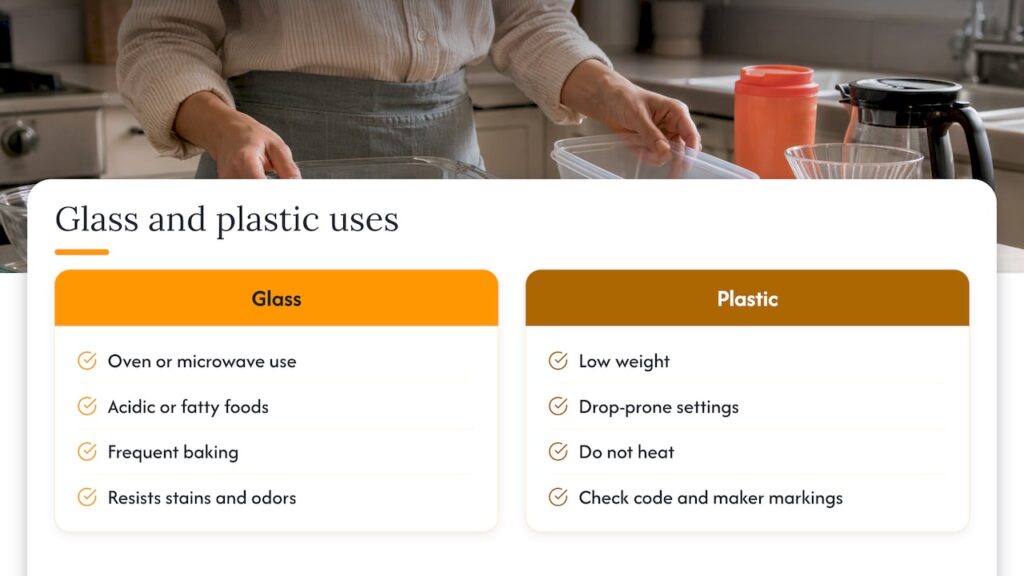
Buy both when your routine covers both jobs. Plenty of kitchens end up with glass for the heat and plastic for the light, cool jobs.
By reader
- First-time buyers: start with a borosilicate or clearly rated tempered glass baking dish. It does the most jobs.
- Budget-conscious buyers: glass costs more per piece but lasts longer, and NSF-style certification marks are worth looking for on plastic. NSF recommends choosing products certified to its P386 protocol for home food-storage containers, which it says confirms they are easy to clean and made of food-safe materials.
- Professional chefs: your kitchen likely already runs on steel and heavy-gauge pans, and glass joins them mostly for oven-to-table service.
- Gift shoppers: a boxed glass baking set is a safe present, because it needs no explanation and suits most kitchens.
If you are building a kitchen from scratch, my list of kitchen essentials for a new home shows where a glass dish fits among the first purchases.
Food safety timing that applies to either material
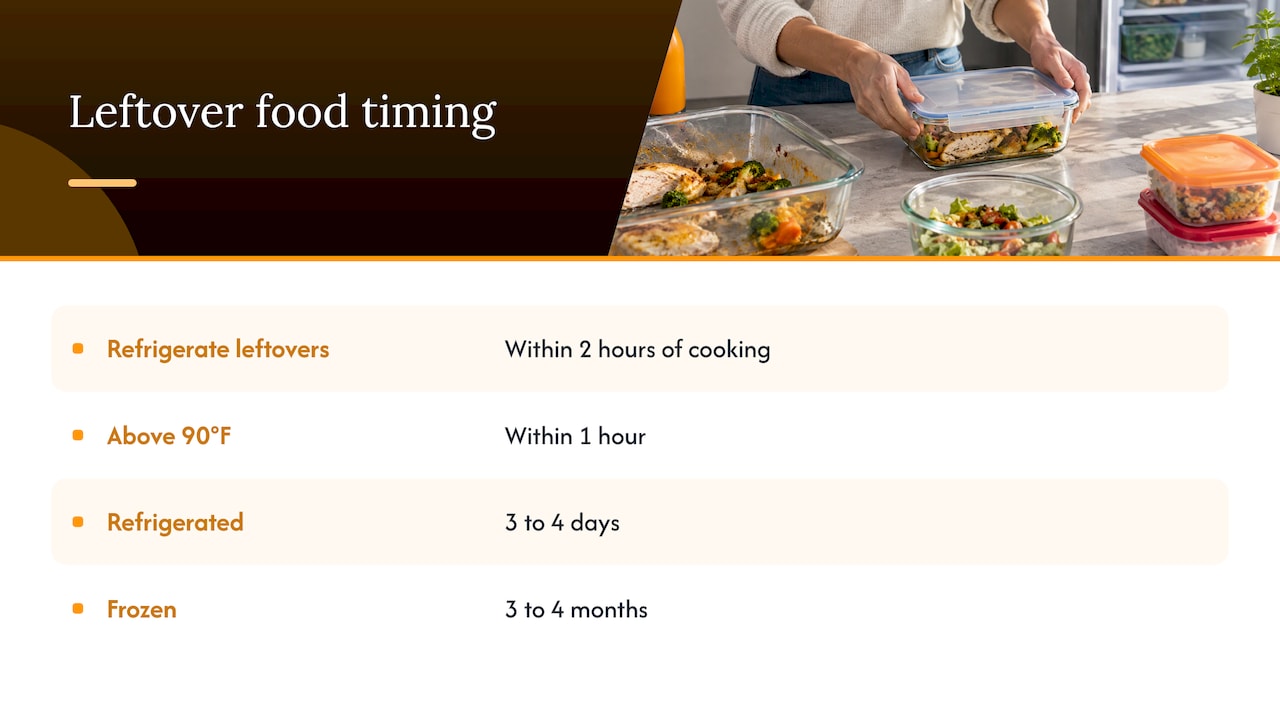
The material does not change the clock. The USDA’s Food Safety and Inspection Service says leftovers should be refrigerated within 2 hours of cooking, or within 1 hour when it is above 90°F. It advises dividing food into shallow dishes so it cools quickly, and says leftovers keep 3 to 4 days in the refrigerator or 3 to 4 months frozen. Hot food can go straight into the fridge. NSF gives the same 3 to 4 day window.
Glass that is rated for the oven and microwave makes the reheating step simple: the same dish can go from the fridge to the heat without transferring food, as long as the maker’s temperature rules are followed.
How I would compare specific products
When I compare glass or plastic kitchen products, I use the same checklist every time:
- Material type: borosilicate, tempered or something else, and the resin code for plastic.
- Stated temperature limits: oven, microwave, broiler and cold-to-hot changes.
- Lid material: the lid is often plastic even on a glass dish, so its limits may be lower than the dish’s.
- Owner-reported failures: cracking, warping, clouding and stained lids.
- Price per piece and per set: compared across retailers.
You can see how I weigh these in how I review kitchen equipment.
My view
I recommend glass first for anything that goes near heat. The reasoning is simple: glass has the widest heat tolerance, it does not hold flavors, and the sources I trust, from a city environment department to a university extension service, all point to it when heating is involved.
Plastic still earns its place for light, cool jobs, and I read its labels as carefully as I read a glass dish’s temperature rating. What I value in a comparison is that the material, the lid, the limits and what owners report are all on one page, so you do not discover a lid’s temperature limit after you have bought the set.
That is the reason I build side-by-side comparisons. I own and test nothing I review, so I rely on specs, owner reviews and named sources, and I say where each fact comes from.
Where to go next
If you are choosing cookware to go with a glass baking dish, my cookware reviews and buying guides cover specific pans and sets, with the sources for each claim. My affiliate disclosure explains how the site earns from those links.
For a wider view of what to buy first, start with the Kitchenware Compare home page.
FAQ
Is glass safer than plastic for heating food?
For heating, yes, glass is the more cautious choice. Iowa State Extension says glass can go in the microwave and oven, and the San Francisco Environment Department advises moving food to glass or ceramic for heating if you have been using plastic. Check the maker’s temperature rating on the glass piece too.
Is it safe to microwave plastic marked microwave-safe?
A microwave-safe mark means the product was assessed for that use. NSF still advises checking the usage instructions before microwaving. Use it as directed, replace it when it scratches or clouds, and avoid heating very fatty or acidic food in it for long periods.
What do the numbers on the bottom of plastic mean?
They are resin identification codes that name the type of plastic. Iowa State Extension lists 2, 4 and 5 as safe for food and says to avoid 7 with food. It describes 1, 3 and 6 as single-use containers or bottles.
Can glass bakeware break in the oven?
It can if it takes a sudden temperature change. Borosilicate resists thermal shock better than tempered soda-lime glass, according to the Pyrex entry on Wikipedia. Keep dishes off wet or cold surfaces when hot, and do not use them under a broiler unless the maker allows it.
Sources
- Safe Food Storage Containers, Iowa State University Extension AnswerLine
- Microplastics and Nanoplastics in Foods, FDA
- Guidance for Industry: Preparation of Premarket Submissions for Food Contact Substances, FDA
- Melamine in Tableware Questions and Answers, FDA
- Food storage tips to reduce toxics exposure, San Francisco Department of the Environment
- Food Storage Containers, NSF
- Leftovers and Food Safety, USDA FSIS
- Pyrex, Wikipedia
Recommended
- Glass vs Plastic Blender Jars: Which Should You Buy?
- Borosilicate vs Tempered Glass: Which Bakeware to Buy
- What Can You Put in an Air Fryer? Glass, Metal and More
- Best Electric Kettle Without Plastic: 4 Picks Compared

I'm Glenn, and I started Kitchenware Compare to cut through conflicting product reviews and help readers pick kitchen gear with confidence. I don't own or test the products I write about — these guides are built from verified-purchase reviews, manufacturer specifications, and independent testing where it exists, with the reasoning shown, not just a rating.
Leave a Reply