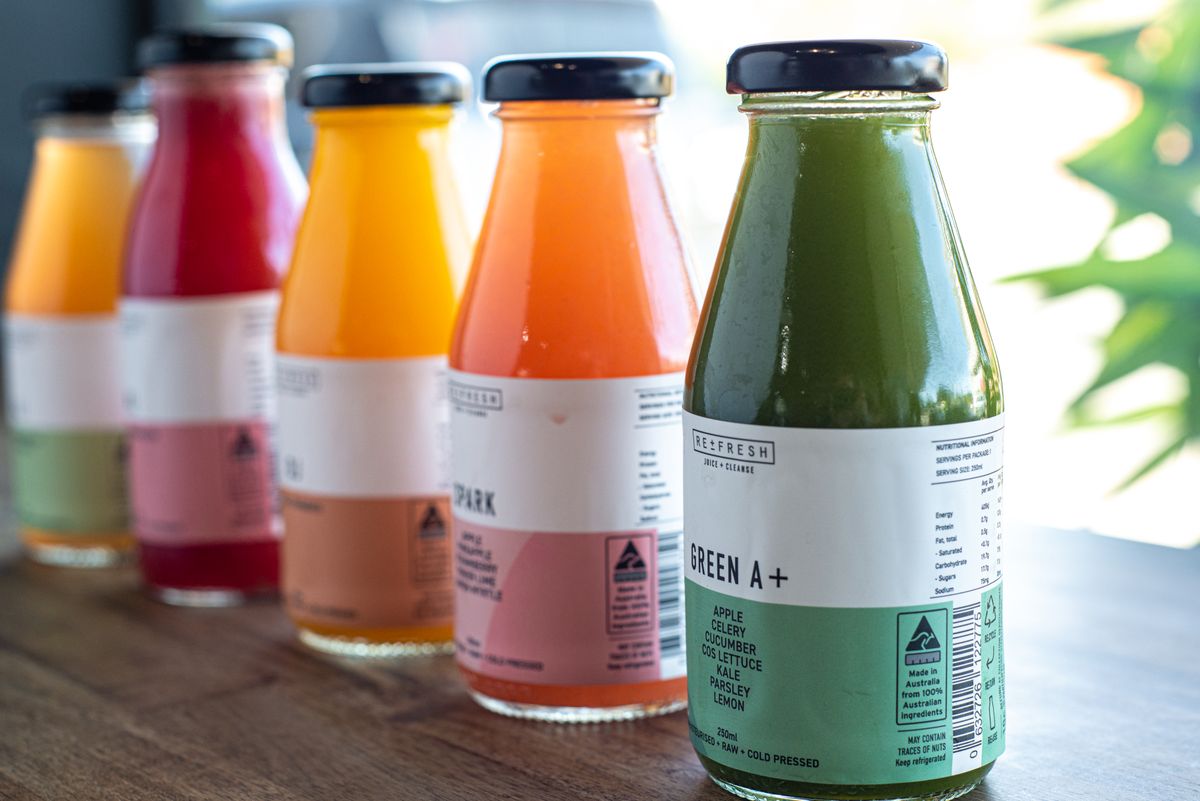
The short answer: for quality, drink it the same day — a day or two at a push if it came off a slow juicer into a full, sealed glass bottle in a cold fridge. For safety, home-made juice is unpasteurised, and that is a separate question with a different answer. Most guides only answer the first one.
You are actually asking two different questions
“How long does fresh juice last” collapses two things that behave differently:
- How long does it stay good? Colour, flavour, aroma, separation. This degrades gradually and predictably, and you can see and taste it happening. For the buying guides and the maintenance walkthroughs, see the juicers hub.
- How long is it safe? Governed by bacteria, not by taste. It does not announce itself, and juice that tastes fine can still be a problem.
Nearly every page answering this question answers only the first and presents the result as though it settled the second. They are not the same, and the gap between them is where people get caught out.
Question one: how long it stays good
Fresh juice starts degrading the moment it leaves the machine. Oxygen is the main culprit — it drives the browning, the flattening of flavour, and the loss of the bright aroma that made you want fresh juice in the first place. Heat and light accelerate it, agitation folds more air in, and the pulp still suspended in the juice gives the whole process more surface area to work on.
You will see confident figures quoted everywhere: 24 hours for centrifugal juice, 48 or 72 for cold press. Treat those as rules of thumb rather than measurements. They circulate widely, they are directionally right, and I have not found an independent test behind the specific numbers — so this page will not present them as fact. What is worth understanding is what actually moves the figure.
| Factor | Why it matters |
|---|---|
| Juicer type | A fast centrifugal disc whips air through the juice; a slow auger folds in far less. This is the single biggest variable. |
| Headspace in the container | Air trapped above the juice keeps oxidising it. A part-full bottle ages faster than a full one. |
| Container material | Glass is inert and seals well. Plastic holds odours and is usually less airtight. |
| Fridge temperature | The door is the warmest part of a fridge. The back of a shelf is the coldest. |
| What you juiced | Acidic citrus holds up notably better than apple, pear or leafy greens. |
| Time before chilling | Juice left on the counter for an hour has already spent its best window. |
Question two: the safety side, which is not about taste
Juice you make at home is unpasteurised. That is the whole point of it, and it is also the thing that changes the storage question.
The FDA is direct about the mechanism: when fruits and vegetables are fresh-squeezed or used raw, bacteria from the produce can end up in the juice, and unless the produce or the juice has been pasteurised or otherwise treated, the juice could be contaminated. The agency says it has received reports of foodborne illness outbreaks traced to drinking juice and cider that was not treated.
It is worth noticing how seriously that is taken commercially. Untreated juice sold in the United States has to be kept refrigerated and has to carry a warning label saying it has not been pasteurised and may contain harmful bacteria. Your kitchen juicer produces the same category of product with none of the labelling.
This is not an argument against juicing at home. It is an argument for treating storage time as a safety decision rather than a flavour one.
Who should not be storing fresh juice at all
The FDA names the groups at greater risk from foodborne illness: children, older adults, pregnant women, and people with weakened immune systems, including transplant patients. For those groups, unpasteurised juice carries a risk that most healthy adults can shrug off.
If you are juicing for someone in one of those categories, the sensible approach is to make it and drink it straight away rather than store it, or to use pasteurised juice. That is the FDA’s framing rather than mine, and it is worth following.
Why the sniff test does not do what you think
Smelling and tasting juice tells you whether it has spoiled. It does not tell you whether it is contaminated. Those are different processes caused by different organisms, and the second one does not necessarily produce any smell, taste or appearance change at all.
So use your senses to catch juice that has obviously turned, but do not treat “it smells fine” as clearance for juice that has been sitting for three days. There is no home test for the thing that actually matters, which is precisely why the honest answer to the headline question is shorter than most pages make it.
Signs it has definitely gone
- Fizzing, bubbles, or pressure when you open the bottle. That is fermentation. Pour it away.
- A sour, yeasty or alcoholic smell where there was not one before.
- Sliminess, or any visible film or fuzz.
- A flavour that has gone sharp or bitter beyond what the produce would explain.
Separation is not spoilage. Fresh juice settling into layers in the fridge is normal and expected — it is suspended pulp sinking, not a sign of anything wrong. Shake it and look at the other signals instead. Cold press juice separates less, which is one of the genuine reasons people pay more for it.
Getting the most out of the window you have
- Chill it immediately. The clock that matters starts when the juice leaves the machine, not when you remember to put it away.
- Fill the container to the brim. This is the highest-value habit on the list. Less headspace means less trapped air. A bottle filled to the neck keeps visibly better than the same juice half-filling a jug.
- Use glass with a proper seal. Swing-top or screw-cap bottles. Glass is inert, seals tightly and does not carry over yesterday’s smell.
- Put it at the back of a shelf, not in the door. The door swings into room temperature every time someone opens the fridge.
- Add something acidic. A squeeze of lemon or lime slows browning in apple, pear and green juices. It changes the flavour slightly; that is the trade.
- Wash the produce first. The FDA makes this point specifically: wash it even if you plan to peel it, so dirt and bacteria are not transferred from the surface when you cut into it.
- Start with clean equipment. Juice sitting in a machine that was not properly washed starts its life with a head start it should not have. The routine is in how to clean a juicer.
Can you freeze fresh juice?
Yes, and it is a better answer than pushing fridge storage further than it should go. Freeze it in a container with a little headspace so it can expand, or in ice cube trays if you want small portions.
Expect two changes. Texture separates more on thawing, so shake it. And freezing does not reverse oxidation that has already happened — freeze it fresh, not on day two. Thaw in the fridge rather than on the counter, and treat the thawed juice as you would fresh juice rather than resetting the clock.
Freezing does not sterilise anything either. It pauses the process; it does not undo it.
Does your juicer actually change how long juice keeps?
Yes, and this is the one place where the machine genuinely matters rather than being marketing. A centrifugal juicer shreds produce against a disc spinning at 10,000 RPM or more, which whips air through the juice as it works. A masticating juicer turns an auger at 40 to 80 RPM and folds in far less. More dissolved oxygen means faster browning, faster flavour loss and more separation.
That is the honest case for spending more — not enzymes or nutrients, which is where cold press marketing usually goes, but the practical ability to make juice in the morning and drink it at lunch without it looking tired. The masticating vs centrifugal comparison goes through the rest of that trade-off, and the Ninja JC151 vs Breville JE98XL head-to-head covers two machines at the same price that sit on opposite sides of it.
If you juice once and drink it immediately, none of this is worth paying for. If you batch on Sunday for the week, it is most of the decision — and the juicer buying guide covers which machines actually deliver it.
How this guide was put together
The safety guidance, the risk groups and the wash-before-juicing point come from the FDA’s consumer guidance on juice safety, read directly rather than paraphrased from another article. Note what the FDA does not provide: it gives no storage duration for home-made juice, so no number on this page is attributed to it. The degradation factors are mechanical and follow from how the two juicer designs work. Where a specific figure circulates without a traceable measurement behind it — the familiar 24, 48 and 72 hour numbers — this page says so rather than repeating it as established fact.
Frequently Asked Questions
How long does fresh juice last in the fridge?
For quality, aim to drink it the same day. A full, sealed glass bottle of cold-press juice kept at the back of a cold fridge will still be pleasant the next day. Separately from taste, home juice is unpasteurised, so treat longer storage as a safety decision rather than a flavour one — and drink it sooner if it was made on a centrifugal juicer.
Is it safe to drink fresh juice the next day?
For most healthy adults, refrigerated properly and drunk within a day, it is normal practice. The FDA notes that raw juice can carry bacteria from the produce and that children, older adults, pregnant women and people with weakened immune systems face greater risk from foodborne illness — those groups are better off drinking it immediately or choosing pasteurised juice.
Why does my fresh juice separate in the fridge?
Suspended pulp settling out under gravity. It is normal and is not a sign of spoilage — shake it and judge by smell and taste instead. Centrifugal juice separates more than cold-press juice because the high-speed disc incorporates more air and leaves finer particles in suspension.
How can I tell if fresh juice has gone bad?
Fizzing or pressure on opening means fermentation and it should go. So does a sour, yeasty or alcoholic smell, sliminess, or visible film. Be aware that these signs detect spoilage, not contamination — juice can be unsafe without smelling or tasting any different, which is why storage time matters more than the sniff test.
Does cold-press juice really last longer?
It keeps its colour, flavour and consistency noticeably longer, because a slow auger folds far less air into the juice than a disc spinning at 10,000 RPM. That is a real, observable difference and the most honest argument for paying more. It does not extend safety indefinitely — the juice is still unpasteurised either way.
Can you freeze fresh juice?
Yes. Leave headspace for expansion, or freeze in ice cube trays for portions. Freeze it fresh rather than on day two, since freezing pauses degradation but does not reverse what has already happened. Thaw in the fridge, expect more separation, and treat the thawed juice as fresh juice rather than starting the clock again.
Related guides
- Best Juicer 2026: Cold Press and Centrifugal Picks Compared
- Masticating vs Centrifugal Juicer: Which Should You Buy?
- How to Clean a Juicer: The 3-Minute Routine
- Why Does My Juicer Clog?

Glenn is the founder of Kitchenware Compare and has spent years researching, testing, and reviewing kitchen appliances, cookware, and gadgets. A lifelong home cook raised in a family that treated every meal as an occasion, Glenn started this site to cut through the noise of conflicting product reviews and give readers honest, practical guidance. When he is not testing the latest air fryer or digging into the specs of a new espresso machine, he can usually be found experimenting with new recipes or hunting for the perfect cast iron skillet at a flea market.
Leave a Reply