• Skip to primary navigation
  • Skip to main content
  • Skip to primary sidebar

Kitchenware Compare

  • Home
  • Product Reviews
    • Air Fryers
    • Coffee
    • Cookware
    • Flat Top Grills
    • Meat Thermometers
    • Food Processors
    • Knives
    • Pizza Ovens
    • Toaster Ovens
    • Juicers
  • Food Blog
  • Helpful Kitchen Tips
  • Data Studies
  • About
  • How I Review
  • Contact
You are here: Home / Archives for Product Reviews

Best Omelette Pan

Last Updated October 12, 2026

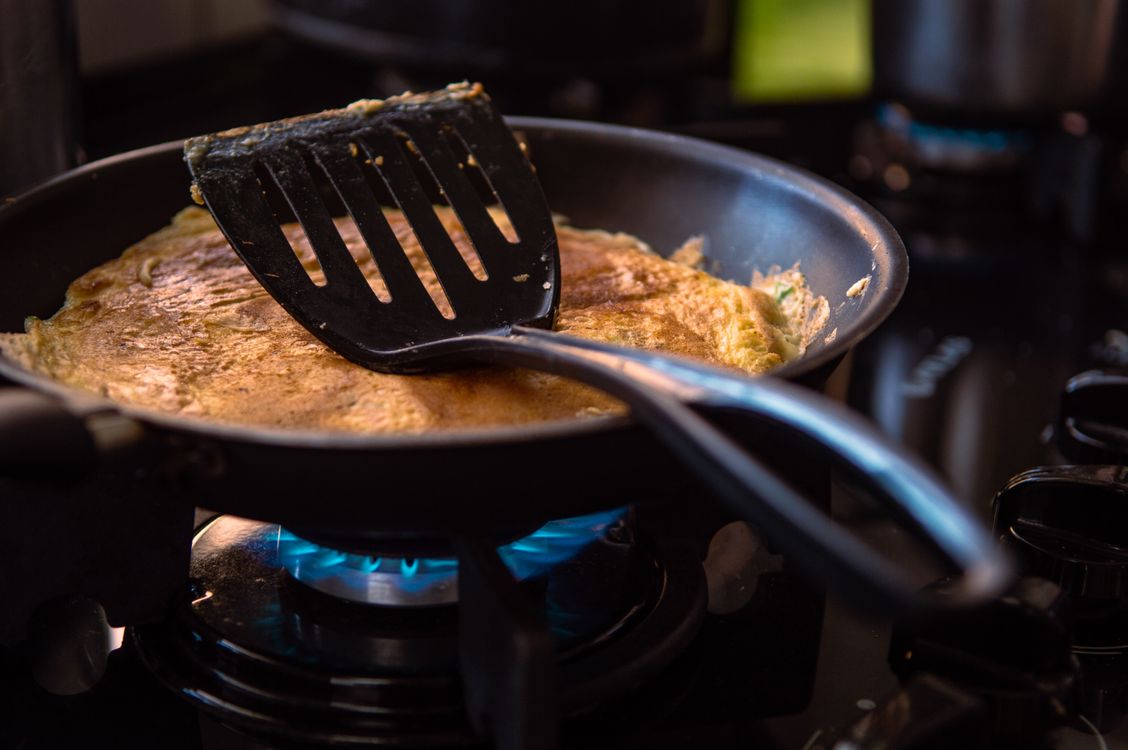
Perfectly cooked omelette in a nonstick frying pan with spatula

This post contains affiliate links. If you buy through my links, I may earn a commission at no extra cost to you.

The right pan matters more for omelettes than almost any other dish. Eggs cook fast, stick easily, and expose every flaw in your cookware. A good nonstick pan removes most of the technical difficulty. It is also why the pan, rather than the fat, is what decides whether eggs cook cleanly without butter.

For most people, the Tramontina Professional 8-Inch is the one to get: an NSF-certified restaurant pan at $28.99 whose owners report years of use before the coating wears. If you want a coating whose maker states it is PTFE-free, or you cook on induction, the SENSARTE Ceramic Pan is the alternative — expect to replace it sooner. If you make Japanese-style rolled omelettes specifically, the TECHEF Tamagoyaki is designed for exactly that task.

These picks are based on product specifications, manufacturer data, and aggregated buyer feedback across thousands of reviews. Where consistent complaints appear, I’ve flagged them.

Best Omelette Pans 2026: Quick Comparison

Product Best For Price Rating Buy
Tramontina Professional 8″ Best overall (8-inch, reinforced nonstick) $28.99 4.6★ (27,115) Check Price
SENSARTE Ceramic 9.5″ Best PTFE-free (9.5-inch, ceramic, PFAS-free) $23.50 4.4★ (35,387) Check Price
CAROTE Granite 8″ Best budget (8-inch, granite-effect nonstick) $14.24 4.6★ (36,154) Check Price
TECHEF Tamagoyaki Japanese omelettes (medium rectangular, Teflon nonstick) $24.99 4.7★ (7,558) Check Price
TECHEF Frittata Frittatas, no flip (9.5-inch round, two halves) $41.99 4.5★ (5,138) Check Price
All-Clad HA1 Set Best premium (8-inch + 10-inch, hard-anodized, PTFE nonstick) $69.99 4.6★ (10,834) Check Price

Prices and ratings were read from Amazon.com on 6 October 2026. The Tramontina and the All-Clad set were sold by Amazon.com; the others were sold by their own brand stores.

Best Omelette Pans 2026: Full Reviews

1. Tramontina Professional 8-Inch Nonstick Fry Pan — Best Overall

Tramontina Professional 8-inch nonstick fry pan with a brushed aluminium body and red silicone handle sleeve

4.6/5  ·  27,115 ratings  ·  $28.99  ·  View on Amazon

This pick replaced the SENSARTE ceramic pan as Best Overall in September 2026. The SENSARTE still releases eggs beautifully and stays on this list for anyone who wants a PTFE-free label, but critical owners of that exact pan report its coating failing anywhere from the first week to about a year. For an overall recommendation, how long a pan keeps working matters more.

The Tramontina Professional is a restaurant-style aluminium pan with a reinforced nonstick coating, NSF-certified and made in Brazil, at $28.99. It holds 4.6 stars across 27,115 ratings, and 24% of its written reviews are critical. What sets it apart is the durability reports: owners describe two, three to four, and five years of regular use before the coating wore out. It is not immune to early failure — a minority of owners report peeling within months, several of them after dishwasher use.

Two things to know before buying. It does not work on induction, and the listing says so plainly. Several owners also report that the 8-inch pan does not sit flat, tipping towards its long handle even with a couple of eggs in it; one owner posted a photo of theirs sitting level, so it may vary by unit, but check it on arrival.

The listing text and specification table give an oven limit of 400°F, although one of the product images says 500°F, so treat 400°F as the limit. It is listed as dishwasher safe, but several owners report the coating or the exterior degrading after dishwasher cycles, so hand wash it. The listing also carries a lifetime warranty.

Pros:

  • Several owners report years of use before the coating wore out
  • NSF-certified restaurant pan with a lifetime warranty, per the listing
  • 27,115 ratings at 4.6 stars, with 24% of written reviews critical
  • Oven-safe to 400°F, with a removable silicone handle sleeve

Cons:

  • Not induction-compatible
  • Several owners say the 8-inch pan tips towards its handle and does not sit flat
  • Food catches around the rivets, which several owners find hard to clean
  • The listing does not claim the coating is PTFE-free — choose the SENSARTE below if that matters

Verdict: The pan to buy if you want an omelette pan that keeps working. Skip it if you cook on induction or want a PTFE-free label; the SENSARTE ceramic pan below covers both. My full Tramontina Professional 8-inch review sets out the durability reports, the balance complaints and the oven-temperature discrepancy.

Check Price on Amazon ↗

2. SENSARTE Nonstick Ceramic Pan — Best PTFE-Free

SENSARTE Nonstick Ceramic 9.5-inch Omelette Pan

4.4/5  ·  35,387 ratings  ·  $23.50  ·  View on Amazon

The SENSARTE is the pick for anyone who wants a PTFE-free label or cooks on induction. A round 9.5-inch skillet with a ceramic coating free of PFAS, PTFE, and PFOA. Works on all stovetops including induction, and the heat-resistant handle stays cool during normal use.

Its 4.4-star rating is pooled with SENSARTE’s other sizes and its granite pan, but owners of this exact pan consistently report clean egg release from the first use. The ceramic coating heats quickly and responds fast to temperature changes — an advantage for omelettes where you need to pull the heat back before eggs overcook. How long that lasts is the catch: critical owners of this exact pan report food sticking anywhere from the first week to about a year, even with hand washing, so treat the coating as a consumable.

Pros:

  • PFAS-free and PTFE-free — the safest coating on this list
  • Induction-compatible, works on all stovetop types
  • Excellent nonstick release — eggs slide cleanly from day one
  • Lightweight and easy to manoeuvre one-handed

Cons:

  • Ceramic degrades faster than PTFE if overheated or dishwashed — hand-wash only, medium heat or below
  • Thinner construction than hard-anodized alternatives

Verdict: The right starting point if you want an omelette pan whose maker states in writing that it is PTFE-free. Expect to replace it sooner than a PTFE pan; my full SENSARTE ceramic review covers the reported lifespans, the pooled rating, and a listing that calls it both dishwasher safe and hand wash only.

Check Price on Amazon ↗

3. CAROTE Nonstick Granite Frying Pan — Best Budget

CAROTE 8-inch Granite Nonstick Frying Pan

4.6/5  ·  36,154 ratings  ·  $14.24  ·  View on Amazon

The CAROTE costs $14.24 and has 36,154 ratings at 4.6 stars — the largest sample on this list, though Amazon pools that count across the 8-, 10-, 12- and 12.5-inch sizes. It is induction-compatible and light enough to flip with one hand. CAROTE labels the coating PFOA-free, but unlike the SENSARTE it does not claim to be PTFE- or PFAS-free.

The granite-effect coating is a speckled stone appearance over aluminium — not actual granite. 8 inches handles a two- or three-egg omelette well; buy the 10-inch if you regularly cook for two. I could not find a reliable lifespan figure for this coating.

Pros:

  • Best value on this list — strong performance under $16
  • 35,000+ ratings at 4.6 stars
  • Sized for a two- or three-egg omelette
  • PFOA-free, all stovetops including induction

Cons:

  • Coating longevity limited at this price — 12 to 18 months before performance drops
  • 8 inches is small for large or multi-filling omelettes

Verdict: If you want to spend as little as possible on a pan that actually works, start here. My full CAROTE 8-inch review covers how long the coating lasts and what the listing does and does not claim about it.

Check Price on Amazon ↗

4. TECHEF Tamagoyaki Japanese Omelette Pan — Best for Japanese-Style Omelettes

TECHEF Tamagoyaki Japanese Rectangular Omelette Pan

4.7/5  ·  7,558 ratings  ·  $24.99  ·  View on Amazon

A rectangular pan designed specifically for Japanese rolled omelettes. Made in Korea from forged aluminium with a three-layer Teflon nonstick coating (PFOA-free), dishwasher-safe and sold as induction-ready, although several owners report induction hobs that do not detect it. The rectangular shape is the point — straight sides let you roll egg layers cleanly without them slipping off a curved edge.

If you only make Western-style omelettes, a round pan handles the fold better. But if tamagoyaki or Japanese breakfast dishes are part of your regular cooking, this is the right tool. 7,558 ratings at 4.7 stars, pooled across the medium and large sizes — strong for a specialist item.

Pros:

  • Rectangular shape is genuinely better for Japanese rolled omelettes
  • Owners report years of use from the Teflon coating, in two cases close to seven
  • Dishwasher-safe, and works on most induction hobs
  • 4.7 stars across 7,500+ ratings

Cons:

  • Rectangular shape limits it to Japanese egg dishes and a few other tasks
  • Smaller usable surface than a round 9.5-inch pan
  • Induction detection is unreliable on some hobs, and TECHEF lists two oven limits: 350°F in the bullets, 450°F in the specification table

Verdict: Buy this if tamagoyaki is part of your regular cooking. Don’t buy it as a general omelette pan. My full TECHEF tamagoyaki review covers the induction reports, the coating and the oven-limit conflict.

Check Price on Amazon ↗

5. TECHEF Frittata and Omelette Pan — Best for Frittatas and No-Flip Cooking

TECHEF Frittata Double-Sided Folding Omelette Pan

4.5/5  ·  5,138 ratings  ·  $41.99  ·  View on Amazon

A double-sided folding design: two nonstick plates that hinge together, letting you cook on one side then fold the pan over so the food lands cleanly on the other plate. No mid-air flip required — genuinely useful for large omelettes packed with fillings that would fall apart during a toss.

At $41.99, you’re paying for the folding mechanism as much as the cooking surface. 5,138 ratings at 4.5 stars, pooled across the black and purple versions, back up the concept. The downside is bulk — two plates plus a hinge takes considerably more cabinet space than a single pan. The bigger practical issue is leaking: several owners report liquid egg escaping at the hinge seams when they fold it, and owners who avoid it fold front to back over the handles rather than side to side.

Pros:

  • Folding design eliminates the flip — easier for large or stuffed omelettes and frittatas
  • Works for pancakes and anything else you’d normally flip without tossing
  • Teflon Select nonstick (PFOA-free), made in Korea, oven-safe to 450°F

Cons:

  • Bulky to store — two plates and a hinge takes more cabinet space
  • Expensive if frittatas aren’t a regular part of your cooking
  • Liquid egg can leak from the hinge seams when folding, and it does not work on induction

Verdict: Worth buying if frittatas appear on your weekly menu. For occasional omelettes, the Tramontina Professional 8-inch gives better everyday utility for less money. My full TECHEF frittata pan review covers the leaking problem and how owners avoid it.

Check Price on Amazon ↗

6. All-Clad HA1 Nonstick 8-Inch and 10-Inch Fry Pan Set — Best Premium Option

All-Clad HA1 hard-anodized nonstick 8-inch and 10-inch fry pans

4.6/5  ·  10,834 ratings  ·  $69.99  ·  View on Amazon

This pick replaced the Calphalon Easy System in September 2026. The Calphalon was down to its last units on Amazon, and its owners reported short, hot handles and a small cooking base.

The All-Clad HA1 set pairs an 8-inch pan for omelettes with a 10-inch pan for everything else, at about $70 for both. The bodies are hard-anodized aluminium on a stainless steel base, so they work on induction, and they are oven-safe to 500°F. All-Clad states plainly that the coating is PTFE nonstick. The set holds 4.6 stars across 10,834 ratings, and 26% of its written reviews are critical.

The reviews carry real warnings for the price. At least six owners report the pans warping, several of them on induction hobs, where even a slight warp makes the base rock. The handles are the other recurring complaint: many owners find them uncomfortable, some say they get hot, and All-Clad’s own product image suggests wrapping a towel around the handle.

Coating reports vary. Some owners are happy after 18 months, others report sticking or peeling within a year, and at least one says All-Clad would not cover peeling under the warranty. Hand washing is the safer choice, even though the listing says dishwasher safe.

Pros:

  • Two pans, 8-inch and 10-inch, for about $70
  • Works on induction and in the oven to 500°F
  • The largest rating sample of the premium options checked: 10,834 ratings at 4.6 stars
  • Double-riveted stainless steel handles

Cons:

  • At least six owners report warping, several on induction
  • Handles that many owners find uncomfortable, and some say get hot
  • A minority report coating failure within a year, and one says peeling was not covered by the warranty

Verdict: Worth it if you want an induction-ready, oven-safe pair from an established brand and can live with the handles. On gas or electric, the Tramontina Professional 8-inch is a single omelette pan with stronger durability reports for much less. My All-Clad HA1 fry pan set review covers the owner reports in full.

Check Price on Amazon ↗

What to Look for in an Omelette Pan

Round vs. Rectangle: It Depends What You’re Making

Round pans with sloped sides are better for Western omelettes — the slope helps you roll or fold the egg over the filling without tearing it. Rectangular pans like the TECHEF Tamagoyaki are designed for Japanese-style rolled omelettes, where straight sides help you build up thin egg layers in a controlled roll. Don’t buy a rectangular pan unless tamagoyaki is actually something you make.

Ceramic vs. PTFE vs. Hard-Anodized

Ceramic (SENSARTE): PFAS-free and PTFE-free, performs well at medium heat but degrades faster if overheated or dishwashed. Conventional nonstick (Tramontina, TECHEF and CAROTE, none of which is labelled PTFE-free): lasts longer at higher temperatures but releases fumes if left empty on a high flame. Hard-anodized (All-Clad HA1): a tougher pan body and a higher oven limit, though the nonstick coating inside wears like any other. For omelettes, the practical difference is small — good technique uses medium or medium-low heat, where all three perform similarly.

Size: 8-Inch vs. 9.5-Inch

An 8-inch pan suits a two- or three-egg omelette for one person. A 9.5-inch pan gives more room for fillings and is better for cooking for two. See my guide to nonstick pans for gas stoves if you need a larger all-purpose option.

Frequently Asked Questions

What makes a pan specifically good for omelettes?

Three things: sloped sides so you can roll without tearing, a reliable nonstick coating so eggs slide, and even heat distribution with no hot spots. Most dedicated omelette pans have all three. A flat-sided skillet can make omelettes but is less forgiving.

Do I need a separate pan just for omelettes?

Not strictly — but it helps. If you use the same pan for bacon or sausage, residue eventually builds up and affects release. A dedicated 8-inch pan kept just for eggs stays slippery much longer. At $15–25, it’s not a significant investment.

How long does a nonstick coating last?

It varies far more than the labels suggest. Owners of the pans in this guide report ceramic coatings failing anywhere from the first weeks to about a year, and conventional nonstick lasting from about two years to more than five. Hard-anodizing toughens the pan body, not the coating. All degrade faster with metal utensils, dishwasher use, or high heat.

Is ceramic nonstick coating safe?

Yes, for normal cooking temperatures. Ceramic coatings are free of PFAS, PTFE, and PFOA. The main risk is overheating above 450°F — avoid preheating an empty pan on high.

What’s the difference between a French and an American-style omelette?

A French omelette is cooked quickly over medium-high heat, rolled so the outside stays pale with no browning. An American omelette is cooked more slowly, folded in half, often with slight browning. French omelettes require fast heat response and very good nonstick release — the Tramontina and SENSARTE both work well.

Can I use an omelette pan for other things?

Yes — a round nonstick omelette pan is just a small frying pan. Works for sautéed vegetables, pan sauces, fish fillets, or anything that fits in 8–9.5 inches. The TECHEF Tamagoyaki is the exception: the rectangular shape limits it to Japanese egg dishes. The Tramontina, SENSARTE and CAROTE suit the widest range of dishes.

How These Picks Were Chosen

Plainly: this is a research-based guide, not a hands-on test. I have not run these side by side, and nothing here should be read as a report from my own kitchen.

What the picks rest on: coating type and how many layers are claimed, base thickness and induction compatibility, sloped-wall geometry that actually lets an omelette roll, and handle construction and oven-safe temperature; plus the complaint patterns in verified-purchase reviews, which for nonstick pans are strikingly consistent – the coating releases well for months, and then it does not.

What I could not establish: how long each coating lasts, which is the only thing separating a good nonstick pan from a bad one. No standardised abrasion test is published for these pans, and owner reports conflate careless use with genuine coating failure. Where a pan is called durable here, that is owner consensus rather than a measured result.

The Bottom Line

For most people, the Tramontina Professional 8-Inch is the right call: a restaurant-grade pan that owners report lasting for years, at $28.99. If you want a PTFE-free label or cook on induction, the SENSARTE Ceramic Pan is the one to buy, on the understanding that its coating may not last as long. The CAROTE is a reasonable alternative if you want to spend less. For five-minute hands-off breakfasts, my Hamilton Beach breakfast sandwich maker review covers the $30 gadget that replaces the drive-through.

If Japanese omelettes are part of your regular cooking, get the TECHEF Tamagoyaki. For frittatas, the TECHEF Frittata Pan earns its cost. The All-Clad HA1 set is the premium choice if you cook on induction and want two pans, provided you can live with the handles.

For more cookware recommendations, see my full cookware guide.


Filed Under: Product Reviews

Best Coffee for French Press

Last Updated October 26, 2026

French Press Coffee Beans

Individual taste is a huge factor in choosing the right coffee, but there are particular types of beans, grinds and roasts that are well suited for a French Press. Each of these beans is assessed on how its roast level and grind tolerance suit the coarser grind and longer steep of a French press — if you also want to try making espresso in a French press, that’s worth a read too.

Part of my complete coffee guide — all reviews, comparisons, and buying advice in one place.

Individual taste aside, for the sweetest richest coffee, I recommend a Coarse Grind and a medium to Dark Roast as the best type of Coffee for the French Press. You should always freshly grind your coffee if possible.  My top 5 picks are:

Full guide: Best French Press Coffee Maker 2026
Full guide: Best Espresso Machine Under $200

I earn a commission if you buy through the Amazon links below, at no extra cost to you.

Quick Comparison

Product Best For Price Rating Buy
San Francisco Bay French Roast (2 lb) Best Value Whole Bean $22.49 4.6★ (6,501) Check Price
Stumptown French Roast Organic (12 oz) Best Craft Roaster $16.99 4.3★ (864) Check Price
Stone Street Cold Brew Coarse Ground (1 lb) Best Pre-Ground Coarse $22.49 4.6★ (6,586) Check Price
Koffee Kult Road Dog (32 oz) Smoothest Dark Roast $51.99 4.6★ (574) Check Price
Death Wish Dark Roast (16 oz) Strongest Brew $18.13 4.6★ (19,077) Check Price

1. San Francisco Bay Coffee French Roast

2. Stumptown Coffee Roasters French Roast Whole Bean Organic Coffee

3. Stone Street Coffee Cold Brew Coarsely Ground Coffee

4. Koffee Kult Whole Colombian Coffee Beans – Road Dog Blend

5. Death Wish Coffee Whole Bean Dark Roast

Below you will find my recommendations of the 5 Best Coffee Brands for a French Press in 2025 and detailed reviews.

San Francisco Bay Coffee
Flavor Notes: Bold and full-bodied with a smoky finish
Origin: Central and South America
Beans: 100% Arabica Beans
Form: Whole Bean Coffee

Check on Amazon

Stumptown Coffee
Flavor Notes: Bittersweet dark chocolate, Syrup & Clove
Origin: Ethiopia
Beans: 100% Arabica Beans
Form: Whole Bean Coffee

Check on Amazon

Stone Street Coffee
Flavor Notes: Nutty / Chocolate notes
Origin: Colombia
Beans: 100% Arabica Beans
Form: Coarse Ground

Check on Amazon

Koffee Kult
Flavor Notes: Spicy, earthy notes and just a hint of nutmeg
Origin: Colombia and Guatemala blend
Beans: 100% Arabica Beans
Form: Whole Bean

Check on Amazon

Death Wish Coffee
Flavor Notes: Cherry and Chocolate
Origin: India and Peru
Beans: Arabica and Robusta
Form: Whole Bean

Check on Amazon

1. San Francisco Bay Coffee French Roast

These French Roast beans are 100% Arabica sourced from Central and South America and roasted dark, which is exactly what the French press wants: the long immersion time pulls plenty out of a dark roast without tipping it into bitterness. Amazon’s listing names French press as one of the three brew methods it is built for.

Tasting notes from the roaster: a bold, full-bodied cup with a smoky finish.

At $22.49 for a 2 lb bag it works out at about $0.70 an ounce, the lowest per-ounce cost in this guide, and its 4.6-star average across 6,501 ratings matches the best-rated coffees here. If you grind coarse and drink dark, this is the default choice.

2. Stumptown Coffee Roasters French Roast Whole Bean Organic Coffee


Another French Roast, 100% Arabica bean. You may be starting to see a pattern here. This sumptuous and sustainable coffee delivers a full bodied experience with dark flavors like Clove and bittersweet dark chocolate

This is a really dark coffee and the beans have been specially selected to withstand a darker roast that really brings out the flavor and sweetness.

The authenticity and quality of the coffee beans are unquestionable here. If you’re in the market for a whole bean, organic, French roast, you cannot go wrong at this price point.

3. Stone Street Coffee Cold Brew Coarsely Ground Coffee


Yes, I know I said you need to freshly grind your own beans for the best flavor, but not everyone is going to have a grinder and sometimes it’s just easier to buy ground coffee. So if you are buying Ground Coffee, this is the best one for a French Press because of the coarse grind and strong flavor.

Even though it includes instructions for cold brewing, you can also use it for French press brewing. If you mostly make cold brew, my best cold brew coffee maker guide compares the makers. They use Dark-roasted Colombian Supremo beans give it a nutty, chocolatey taste.

For a smooth and balanced coffee experience, this coffee has sweet notes and a low acidity level. It also has a one-way valve ensuring freshness while degassing. The Coffee is packaged in a resealable doypack which is great. Although, the coarse grinds may differ in size from fine to medium in some cases.

4. Koffee Kult Whole Bean Colombian Coffee – Road Dog Blend

This magnificent blend comes from the family owned Koffee Kult Coffee Roasters.

They specialize in a dark roast which delivers oil free beans with a smooth flavor and balanced acidity.

This is a highly aromatic blend that features a full body and is complemented by spicy, earthy notes and just a hint of nutmeg.

Because of the strong flavors this is an excellent coffee for a French Press. The packaging isn’t great at keeping the coffee fresh after opening, unlike some of its rivals.

5. Death Wish Coffee Whole Bean Dark Roast

Now I’re talking! According to the manufacturer this is the “Worlds Strongest Coffee”. Now I can’t confirm or deny that claim, but if you’re looking for something to kick you into gear in the morning and still tastes great, this is the coffee for you.

The strength is due to the small batch, slow roasting process, which effectively doubles the amount of caffeine compared to other brands. No additional caffeine or other additives are added during the process.

To taste, this is a smooth, subtle and bold flavor with notes of Cherry and Chocolate, without bitterness. In addition, they offer a no questions asked refund policy. So why not give it a try.

Buying guide for the best coffee for French Presses

How big should the Coffee Grind be?

I know I’m starting to sound like a broken record now, but my advice if you want the best tasting coffee is to grind the beans yourself. This way you can experiment until you find a grind that suits your personal taste. If you do not own a dedicated grinder, you can actually grind coffee beans in a Nutribullet in a pinch, or check out my article on the ultimate kitchen essentials for dedicated grinder recommendations.

As mentioned previously, I recommend a coarse grind. If you grind coarsely, the hot water will have more surface area to penetrate. During steeping, carbon dioxide gasses slowly accumulate in the water, making the brew tastier.

This may take a bit of trial and error, but a handy tip is that if the grounds are too fine it will be difficult to press the plunger and if they’re too coarse there will be very little resistance. Try to find the balance. If you want to get really detailed on this, I found this great coffee grind chart from homegrounds.

Smaller grounds soak in less water, acids and oils directly from the bean and are extracted in a shorter period of time. In contrast, more extensive grounds require more time for extraction.

For optimal flavor extraction, soak the grounds for approximately four minutes. Do not leave the coffee longer than this, as it will continue to brew and become too strong and essentially undrinkable. Just make enough for you and your guests or pour any extra into a flask for later.

When adding your water the simplest way to calculate how much coffee to use is the 1-10 ratio. Again this is completely down to personal preference as you may like your coffee stronger or weaker, but it is a good starting point. A handy way to quickly calculate this is to use your coffee grinder. If your grinder holds 50 grams, you should add 500 grams of water to the French Press.

Here’s a really good video I found to get the best from your French Press.

Is there a specific type of roast to use for French press coffee?

Personal preference is obviously the major factor here, but I highly recommend a dark or at least medium to dark roast if you’re using a French Press. There is a perception that darker roasts can be bitter, but that’s really not the case if you use a plunge pot and especially if you choose a great coffee bean from the list above.

Generally speaking, French press brewing is best performed with medium-dark and dark roasts due to their higher oil content. The different roast temperatures and roast times of coffee beans are listed below.

Light:
Beans that have been light roasted have a brown color and produce coffee that tastes distinctly acidic with a grainy, soft body. No oil is present on the beans’ surface; they are dry.

Medium:
Medium-roasted beans are also dry and oil-free, like light-roasted beans. Nonetheless, it compares to a smoother, more balanced coffee that lacks a grainy taste. Besides having a medium brown color, the beans are also acidic.

Medium-dark:
In addition to being darker than previous roasts, these beans will have noticeably more oil on the outside. The coffee is smooth and balanced in medium-dark roasts with a less acidic taste and has a mild spice flavor.

Dark:
Dark-colored beans almost look black when roasted in this way. Oil, and low acidity levels, contribute to the beans’ shiny surface. Dark-roasted coffee will have a strong, robust flavor, with Smokey, bitter, or burnt notes.

What’s The Best Packaging For Coffee?

What kind of packaging you use will affect how long your coffee stays fresh. By nature, coffee beans are highly perishable and should be stored in airtight containers. Paper bags without a seal are not the best way to store coffee.

Light, heat, excess moisture, and external odors can weaken the flavor of your carefully selected coffee, not to mention that the Beans also absorb these odors. If you want to preserve your Beans’ taste and shelf life, consider some of these packaging options.

Doypack:
An oval bottom and flat top characterize this type of packaging. It is designed to stand upright and to be small so that it can be stored easily. In addition, mesh bags often have a zipper near the top, making resealing the pack easier.

Quad seal bag:
These bags are sealed on all sides, hence their name. Because of their robust design, these bags can carry heavier weights of coffee. The bag keeps its shape and stands by itself. You might also find a resealable zipper built into the bag.

Flat-bottom bag:
In some ways, this bag is similar to a quad seal bag, but the flat bottom, as its name suggests, and fold-over top make it different. Several bags may have integrated zippers, while others may be designed to stand upright without assistance due to their modular shape.

Canister:
The opaque, airtight canisters, made from steel or plastic, ensure that the Beans remain shielded from light, oxygen, and moisture. However, there is one disadvantage of vacuum-sealing: the beans must be degassed before vacuum sealing to prevent them from expanding or exploding. As a result, the beans are initially losing flavor before they are packaged in tins.

A more traditional packaging option is a side-fold bag, which does not include a zipper. Rolling or folding the tops and securing the top with a sticker or tin tie is usually an effective way to close them securely.

If you want to purchase coffee in this bag, I recommend purchasing smaller quantities because this type of seal is not airtight. The front of most degassing pouches now comes with a one-way valve. A valve like this allows carbon dioxide gases to be released while preventing oxygen and other contaminants from entering, causing the packaging to remain fresh and flavored.

Bottom Line:

I really hoped you enjoyed this article. French press coffee is simple to make, and a good bean makes a great cup. Everyones taste differs and there are a huge amount of options available, but hopefully this will help guide you towards getting the best tasting coffee for your French Press. Please leave a comment if you have any questions.

Read also: Best Espresso Machine Under $500

How These Picks Were Chosen

Plainly: this is a research-based guide, not a hands-on test. I have not run these side by side, and nothing here should be read as a report from my own kitchen.

What the picks rest on: roast level and grind suitability for a four-minute immersion brew, bean origin and processing where the roaster states it, roast date policy, and bag size against how quickly you will use it; plus the pattern across verified-purchase reviews, which for coffee concentrates on freshness at delivery more than on the beans themselves.

What I could not establish: how any of these taste to you. Coffee preference is not a specification, and a page that ranks beans as though it were is overreaching. What can be said is which roasts suit the coarse grind and long steep a French press requires.

Frequently Asked Questions

What is the best coffee for a French press overall?

Death Wish Dark Roast is the safest pick — 19,077 ratings at 4.6 stars, organic and fair trade, and its bold profile holds up to the French press’s full-immersion brewing. If you prefer something less intense, the San Francisco Bay French Roast is the gentler dark roast, and its 2 lb bag brings the per-ounce cost down.

Should I buy whole bean or pre-ground coffee for French press?

Whole bean, if you have a grinder — French press needs a coarse, even grind, and grinding just before brewing preserves the aromatics. If you don’t have a burr grinder, the Stone Street pick is coarse-ground specifically for immersion brewing, which beats grinding fine-pre-ground coffee in either case.

Why does French press coffee need a coarse grind?

Two reasons: fine grounds slip through the metal mesh filter into your cup, and the 4-minute immersion time over-extracts fine particles into bitterness. Coarse grounds filter cleanly and extract at the right rate for the longer steep.

Is dark roast better than light roast for French press?

Dark and medium-dark roasts are the classic choice because immersion brewing amplifies body and mutes delicate acidity — a dark roast’s chocolate and caramel notes survive the process better than a light roast’s floral notes. Light roasts work, but most people find them thin and sour from a press.

How much coffee should I use per cup in a French press?

A 1:15 ratio by weight is the standard starting point — roughly 2 tablespoons (10-11 g) of coarse grounds per 160 ml cup. For a stronger cup, shorten to 1:12 rather than steeping longer, which adds bitterness instead of strength.

How should I store coffee beans for freshness?

In an airtight, opaque container at room temperature, away from light and moisture — not the fridge, where humidity and odors degrade the beans. Buy bag sizes you will finish within 2-4 weeks of opening; whole beans hold flavor far longer than ground.

Filed Under: Product Reviews

The Ultimate List of Kitchen Essentials For a New Home

Last Updated November 1, 2026

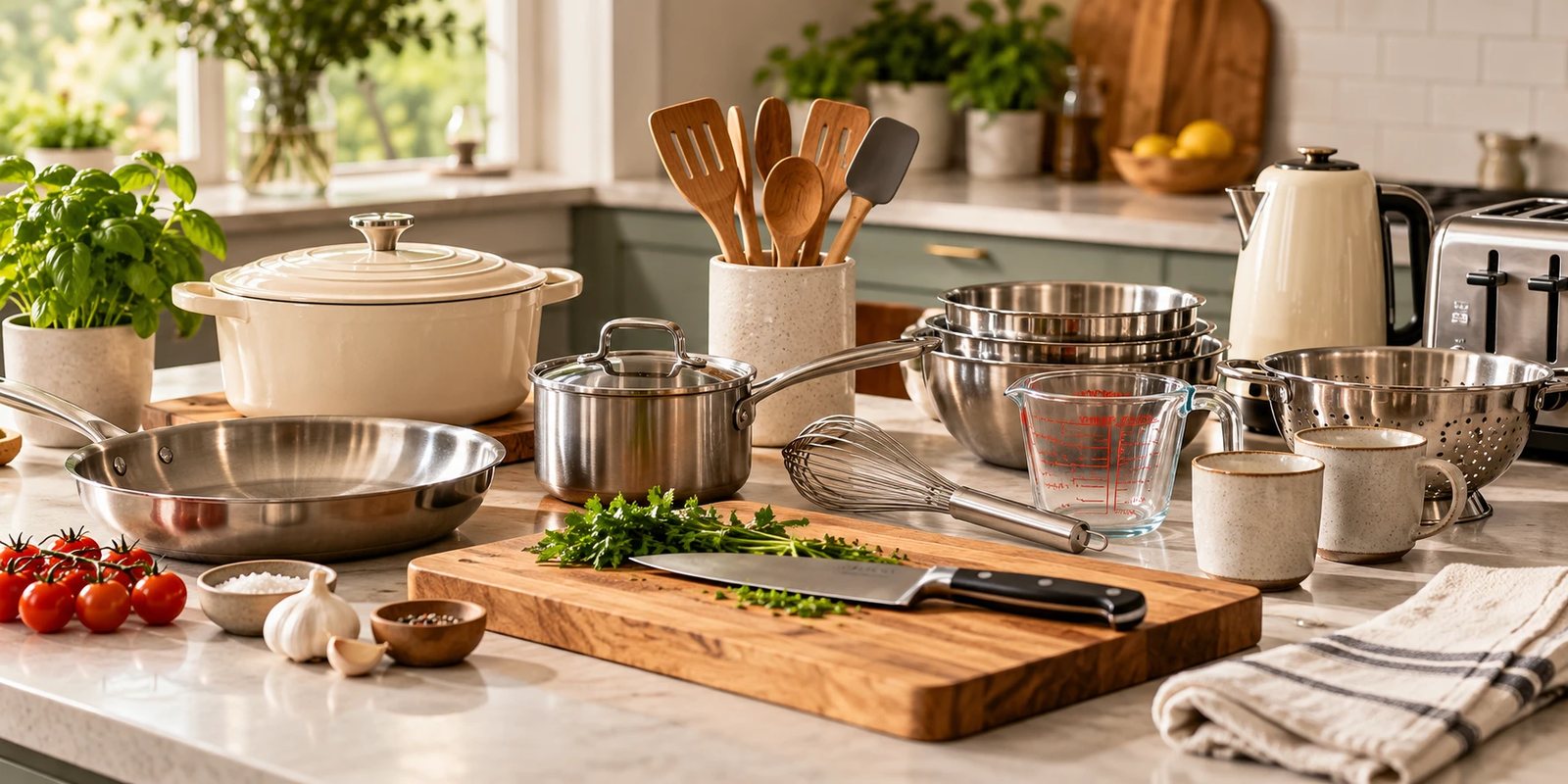
Cream enameled Dutch oven, stainless steel frying pan and saucepan, wooden utensils, a chef’s knife on a cutting board and a kettle on a kitchen counter

I earn a commission if you buy through the Amazon links below, at no extra cost to you.

Missing the right kitchen tool can derail a recipe fast. This is the ultimate kitchen essentials list to prevent that awful moment.

The pattern is always the same: you find the gap mid-recipe. The picks below are affordable options I would put in a first kitchen, not just the cheapest thing that showed up in a search.

Keep reading for the complete list of kitchen essentials, including:

  • Essential Cookware pieces
  • Essential Kitchen Utensils
  • Other essential kitchen items

Kitchen Essentials: What Should Every Kitchen Have?

Here are kitchen essentials that every kitchen should have:

  • Essential cookware (Skillet, saucepans, roasting pans, etc.)
  • Essential Utensils (Chefs knife, Spatula, Whisk, etc.)
  • Knife sharpener
  • Prep Bowls of all sizes
  • Cutting boards
  • Colander
  • Can Opener
  • Toaster & Kettle
  • Tongs
  • Can opener
  • Measuring Cups

A lot of the items named above are categories, not single products, so I broke each one down in detail below with specific recommendations. 

Essential Cookware Pieces

Cooking and getting dinner on the table without the essential cookware pieces every kitchen needs?

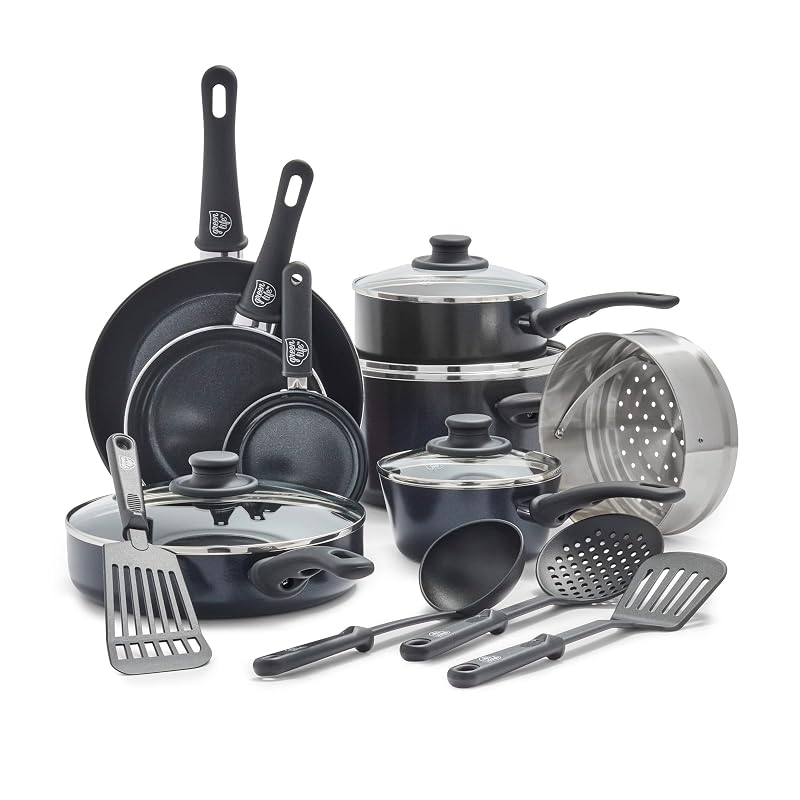
GreenLife 16-Piece Cookware Set

Check Price on Amazon

Yep, that would be pretty hard. Here’s what cookware every kitchen needs.

My all-in-one set recommendation: 16pc Full Essential Cookware Set

Worth knowing: ceramic non-stick coatings like this one typically lose their slick surface within a year or two of regular use, faster than PTFE-based nonstick.

1. Skillet/Frying Pan

Eggs? Bacon? Omelets?

I can’t survive without my favorite fried classics, and that’s exactly why every kitchen needs a frying pan. You may also want to consider getting a Sauté Pan which is very similar but has a lid on top.

Blue Diamond 2-Piece Frying Pan Set

Check Price on Amazon

For most frying tasks, you can use them interchangeably. But this isn’t always the case, so make sure to check your recipe. And if you are a fry fanatic, you may want to consider adding both to your kitchen collection.

Cuisinart 5.5-Quart Sauté Pan with Cover

Check Price on Amazon

Worth knowing: it’s heavier and pricier than a basic saucepan, and the lid adds bulk if you’re tight on cabinet space.

My skillet recommendation: Non-stick 2 piece skillet set for around $50

Worth knowing: same trade-off as any ceramic nonstick — the coating’s performance fades well before the pan itself wears out.

My sauté pan recommendation: Chef’s Classic Stainless 5-1/2-Quart Saute Pan

2. Small Sauce Pan

A saucepan is one of the cookware pieces you’ll use daily. Veggies, pasta, rice — It will probably see daily use.

Go for a small saucepan if you’re mostly boiling water, making a sauce, or cooking for yourself. The next essential is what you’ll need when you have guests around.

Most affordable high-quality saucepan: Stainless Steel, Aluminum-Clad Straight Sided Saucepan with Cover

MICHELANGELO 3-Quart Saucepan with Lid

Check Price on Amazon

Worth knowing: budget stainless steel like this can develop hot spots without a thick aluminum-clad base, so stir more than you would with premium cookware.

Premium Recommendation: All-Clad Sauce Pan with Lid, 3-Quart, Silver

All-Clad D3 Stainless Steel 3-Quart Sauce Pan

Check Price on Amazon

Worth knowing: it’s the priciest saucepan on this list, and All-Clad recommends hand-washing to keep the finish looking new.

3. Large Stockpot

A large stockpot earns its place in every kitchen. Use it for stock, soup, chili, pasta, and so much more. It’s also what saves you when you’re cooking for a crowd and a saucepan just won’t hold everything.

Cook N Home 16-Quart Stainless Steel Stockpot

Check Price on Amazon

Worth knowing: there are no measurement markings inside, and the lid doesn’t vent steam, so keep it cracked when boiling starchy foods.

Affordable 16 Quart Stockpot with Lid, Stainless Steel (4.8 out of 5 stars based on 1990 reviews)

4. Dutch Oven

The Dutch oven is one of my favorite kitchen essentials — it does more jobs than almost anything else in the kitchen. It’s built for braising, but it also works as a skillet or a large saucepan in a pinch. If you’re cooking for a crowd and need extra pots, the Dutch oven backs you up.

Lodge Enamel Cast Iron Dutch Oven, 6 Quart

Check Price on Amazon

Worth knowing: it’s heavy even empty, and the enamel coating can chip if you drop it on a hard tile floor.

Go for at least 5 or 6 quarts — anything smaller runs out of room fast.

My recommendation: 6 quarts enameled cast iron Dutch oven. 

5. Roasting Pan

Roast Chicken? Roast potatoes? Again, you will need a roasting pan for endless delicious recipes, especially if you love large meats and veggies. Also, keep in mind that roasting and braising CANNOT be interchanged, so you will definitely need a roasting pan for your kitchen.

Note: If you’re vegetarian, a roasting pan probably isn’t essential for you — the next item works as an alternative.

Baking Equipment EssentialsBaking equipment

Who doesn’t love baking? Let’s look at what equipment is essential for a good baking session.

1. Baking Sheets

Whether you’re a vegetarian, a meat addict, or whatever your diet may be – baking sheets are essential. Most baking recipes you put into the oven will need them. Plus, some pizza, some chicken, etc., the list goes on and on.

GoodCook Everyday Nonstick Baking Sheet Set, 3-Piece

Check Price on Amazon

Worth knowing: the steel gauge is thin enough that sheets can warp slightly at high oven temperatures — not a dealbreaker, just don’t force them flat while hot.

My recommendation: Check out this Affordable 3-piece baking sheet set 

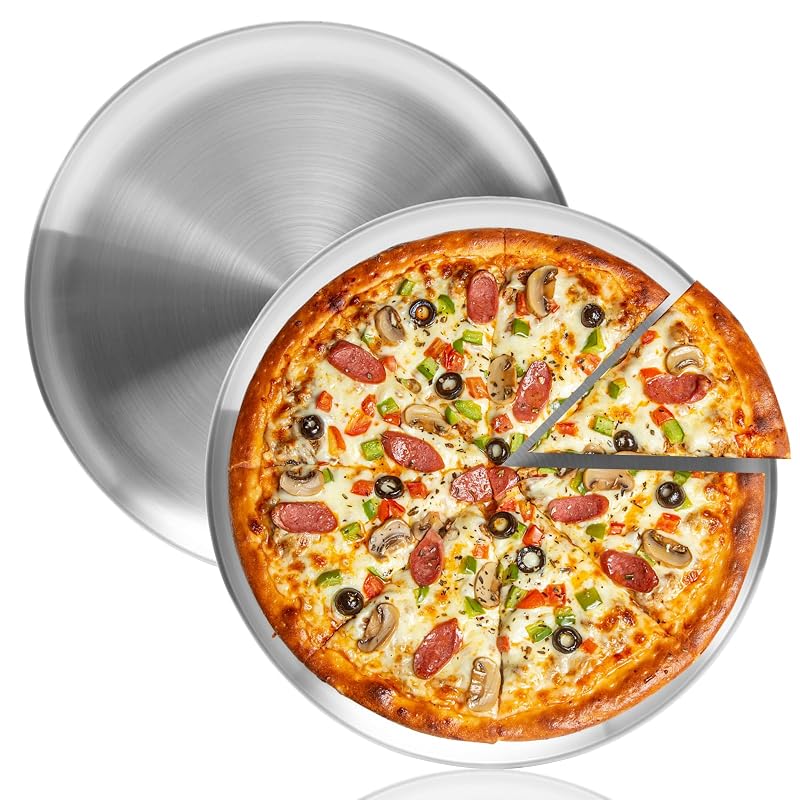
Note if you are a Pizza-lover: You may want to consider getting a Pizza tray too.

YeKuKing 16-Inch Pizza Pan, 2-Pack

Check Price on Amazon

Worth knowing: the steel gauge is thin enough to warp slightly at very high pizza-stone-style oven temperatures.

2. Muffin Pan

Nothing makes a weekend more fun than baking your favorite muffins – so don’t forget the muffin pan in your kitchen. Otherwise, you may end up with muffins that have a strange shape… And again, that destroys the presentation aspect (especially important when you’re showing off to Guests or on social media!)

My choice: Perfect Results Premium Non-Stick Muffin Pan

Wilton Perfect Results Non-Stick Muffin Pan

Check Price on Amazon

Worth knowing: the dark non-stick coating absorbs more heat, so muffins can brown faster on the bottom than in a lighter pan.

3. Glass Measuring Jug

You might occasionally get away measuring by eye. But it can seriously mess up that recipe you found online and have never tried before. So, yes, a good glass measuring jug is essential.

OXO Good Grips 4-Cup Angled Measuring Cup

Check Price on Amazon

Worth knowing: the angled read window is great for pouring but slightly less precise than a straight-sided cup for small liquid amounts.

Looking for an affordable option? OXO Good grips angled measuring cups is just $14.45 (at the time of writing)

4. Rolling Pin

Whether you’re cooking your own pizza or cookies, you’ll need a rolling pin to create a flat, circular shape. Rolling pins are very affordable too, check out the Farberware classic wood rolling pin, which costs just $12.99! 

Farberware Classic Wood Rolling Pin

Check Price on Amazon

Worth knowing: solid wood needs hand-washing and the occasional coat of food-safe oil, or it can dry out and crack over time.

5. Mixing Bowls of All Sizes

When you’re shopping for mixing bowls, buy a set instead of individual pieces — you get several sizes for less money. My recommendation is this set of 6 nested bowls.

Rottay Mixing Bowls Set with Airtight Lids

Check Price on Amazon

Worth knowing: the lids keep dust out but aren’t fully leak-proof, so they’re not a substitute for real food storage containers.

Essential Kitchen Utensils

Now let’s look at which Kitchen Utensils are essential enough to make the cut (no pun intended).

1. Chef’s Knife

“The one thing no kitchen should be without is a good, sharp chef knife. You can do anything with a good knife.” – Executive Chef Rahaf Amer of the Nashville-based wine bar and restaurant Salt & Vine.

A sharp chef’s knife won’t only make your life a lot easier – but it will also help you keep the beautiful presentation thanks to your smooth cuts. Again, if you’re having guests, it’s always nice to show off the presentation of your meals.

Of the many chef’s knives worth considering, the pick here is the ZWILLING 8-inch chefs knife.

ZWILLING Professional S 8-Inch Chef's Knife

Check Price on Amazon

Worth knowing: a knife this sharp needs regular honing to keep its edge — budget for a honing rod if you don’t already own one.

2. Metal & Silicone Spatulas

No kitchen is complete without spatulas.

Yes, that includes both metal and silicone spatulas. Why do you need both?

Amazon Basics Silicone Spatula Set, 4-Piece

Check Price on Amazon

Worth knowing: silicone heads can pick up stains from tomato-based sauces over time — cosmetic only, but worth knowing before you buy the white version.

The metal spatula is essential for flipping and tossing endless foods such as eggs over easy, baked salmon, roasted veggies, and countless others.

Chef Craft Heavy Duty Metal Turner/Spatula

Check Price on Amazon

Worth knowing: the thin stainless blade can flex under a full skillet of food, so it’s better suited to lighter tasks than heavy-duty flipping.

You’ll need your silicone spatulas for folding egg whites into cake batter, or stirring boiling mixtures, so you’ll use them frequently too. 

3. Whisk

Mixing ingredients with a whisk is one of the most fun (and essential) tasks in your kitchen. I recommend going for a medium-sized whisk like the one linked below, as this will be suited for most purposes.

Here’s my favorite affordable whisk set.

304 Stainless Steel Whisk Set, 3-Piece

Check Price on Amazon

Worth knowing: the wire is thinner than a commercial whisk, so it can lose its shape faster if you whisk heavy batters daily.

4. Tongs

Tongs are essential kitchen utensils where you don’t realize how much you need them until you start using them. You can use them to flip just about anything (meat, fish, etc.). Or you may use them to pick up foods like waffles, your Salad, or baked potatoes.

My tongs recommendation is these: Stainless Steel Kitchen Tongs

Hotec Stainless Steel Kitchen Tongs, Set of 2

Check Price on Amazon

Worth knowing: the locking mechanism can loosen up after a few years of daily use — not a common complaint, but one to watch for.

5. Slotted Spoon

Another essential kitchen utensil is the slotted spoon. It’s a large spoon that has little gaps in the middle.

When you’re cooking solid foods like meats, you’ll want to pick them up without the liquid. And that’s exactly what you’ll need the slotted spoon for, as it lets the liquid slip through its openings.

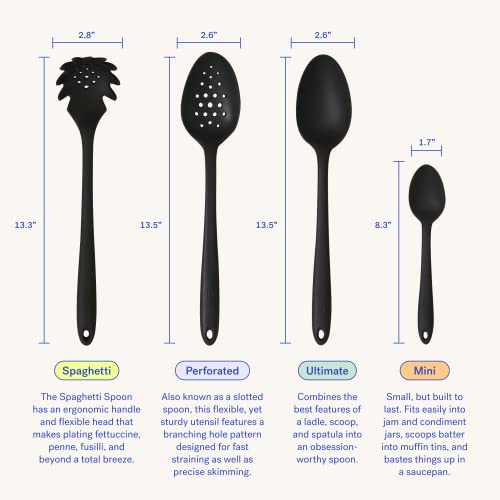
My recommendation: GIR Silicone Spoon

GIR Silicone Slotted Spoon

Check Price on Amazon

Worth knowing: silicone flexes more than metal, so it’s less rigid than a traditional slotted spoon for scooping heavier foods.

6. Stirring Spoons

Every kitchen needs an excellent stirring spoon. I recommend one that is heat resistant and dishwasher safe. Otherwise, you’ll find yourself having to invest in another too soon.

My recommendation: DI ORO Silicone Cooking Spoon Set (2pc) 

DI ORO Silicone Cooking Spoon Set, 2-Piece

Check Price on Amazon

Worth knowing: the solid spoon in this set isn’t meant for draining — you’ll still want a separate slotted spoon for that.

7. Ladle

Your slotted spoons will not be suited to serve dishes like soups, stews, sauces, or any other liquid-based dish. For this, you’ll need a ladle, which is much longer than a traditional spoon, making it well suited for serving these use cases.

Check Out Amazons Top Rated Laddle

OXO Good Grips Nylon Ladle

Check Price on Amazon

Worth knowing: the nylon head isn’t rated for searing-hot oil, so stick to soups and sauces rather than deep frying.

8. Measuring spoons

The good thing about a set of measuring spoons is that they come in all different sizes out of the box. And they work well for measuring both liquids like oil and dry ingredients like sugar and salt. So, no matter what your diet, you will use your measuring spoons a lot.

My recommendation: Affordable Premium Heavy Duty Measuring Spoons

Premium Heavy Duty Stainless Steel Measuring Spoons

Check Price on Amazon

Worth knowing: engraved measurement markings can wear faint after years of dishwasher cycles — hand-drying extends their readability.

9. Can Opener

Whether it’s beans, tuna, or whatever else it may be. Not opening a can of food is very frustrating, so I recommend investing in a strong can opener that will be enough for all your needs.

If you’re looking for a simple yet effective option, I recommend this can opener on Amazon.

KitchenAid Classic Multifunction Can Opener

Check Price on Amazon

Worth knowing: it’s a manual crank, not motorized, so it’s slower going than an electric opener if you’re opening a lot of cans at once.

Glasses & Cups

Wine glasses

Every kitchen needs a decent selection of glasses and cups. Here’s my list of essentials.

1. Large, Medium & Small Glasses

Having glasses of all sizes is essential, especially if you love an occasional alcoholic beverage or even a smoothie. I recommend getting large, medium, and small glasses so you are equipped for all occasions. Here’s my recommendations below.

My large glasses recommendation

Kitchen Lux Pint Glasses, Set of 6

Check Price on Amazon

Worth knowing: at 16oz these are sized for beer or big pours — if you want smaller juice-glass portions, pair them with a second, smaller set.

Small and Medium Glasses Set

US Acrylic Clear Plastic Drinking Glasses, Set of 8

Check Price on Amazon

Worth knowing: acrylic scratches and clouds over time in a way real glass doesn’t, so these are better for outdoor use than a formal table.

2. Coffee Cups/Mugs

Love your early morning coffee? Well, you’ll need a set of coffee cups. For a start, get a set of plain coffee cups so you have enough in your home. Of course, you can add a special one with print to your collection later on.

DOWAN Stackable Coffee Mugs, Set of 4

Check Price on Amazon

Worth knowing: ceramic mugs chip if they knock together in a packed cabinet — stack with care or use a mug tree.

Here’s my recommendation of 4 coffee mugs.

You May Also Like: Best Espresso Machine Under $200

3. Wine Glasses

There’s nothing like Friday night wine and Amazon Prime after an exhausting week of work. Here’s my recommendation for an affordable yet classy wine glass set.

C CREST Wine Glasses, Set of 8

Check Price on Amazon

Worth knowing: the stems are thin, which looks good on the table but chips more easily than heavier tempered glassware.

All-purpose 12 oz wine glasses

Other Essential Kitchen Items

Of course, there’s a lot more to a good kitchen than Utensils and cookware. Let’s take a look at what other essential kitchen items every house needs.

Oven Gloves/Mitts

Don’t burn your hands — it’s a rite of passage every home cook learns the hard way. So make sure to invest in a pair of oven gloves or mitts that will make taking your food out of the oven so much easier. And ensure that they are heat-resistant ones too.

Gorilla Grip Silicone Oven Mitts

Check Price on Amazon

Worth knowing: the silicone exterior means less dexterity than a fabric mitt — fine for pulling a tray out, fiddly for anything requiring finger control.

Cutting boards

Having a flat and sturdy surface to prep on is essential for all cooks. Without a good cooking board, things can get messy quite quickly, or your plates will get scratched. Cutting boards come in all materials ranging from plastic to wood or even glass.

SMIRLY Bamboo Cutting Boards, Set of 3

Check Price on Amazon

Worth knowing: bamboo needs hand-washing and periodic oiling — put it through a dishwasher and it will crack eventually.

Recommended: Gorgeous Bamboo Cutting Board Set

Grater

Whether it’s toasted cheese, egg salad, or any dish that contains cheese sauce, you’ll need a grater. I’d also get a fruit grater to make it a lot easier to make your favorite fruit salads.

Here’s my favorite grater.

Amazon Basics 4-Sided Box Grater

Check Price on Amazon

Worth knowing: there’s no soft-grip handle, so it can get uncomfortable in hand during a big grating job like a block of parmesan.

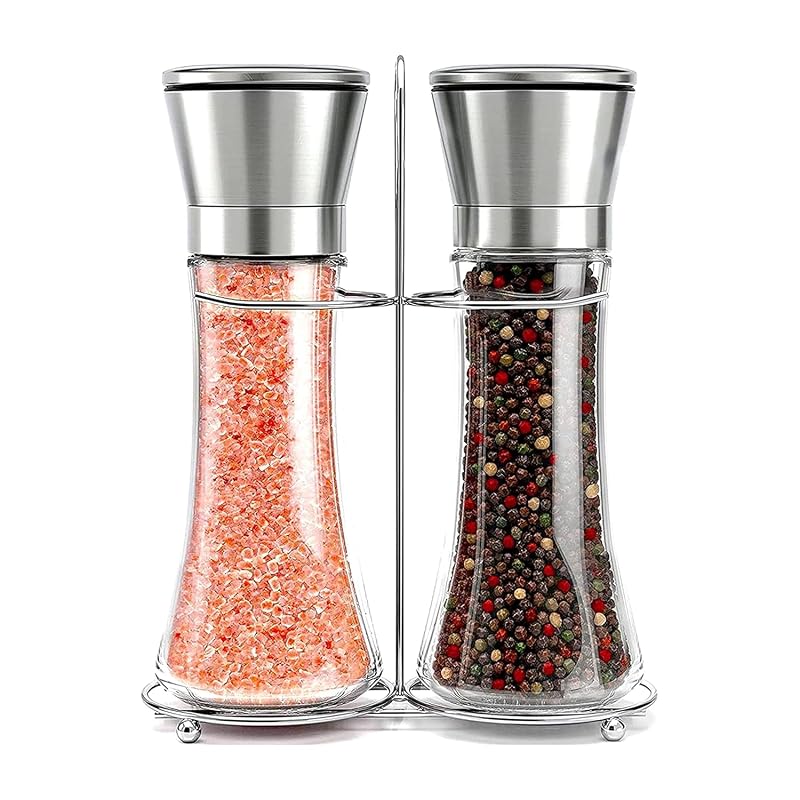
Pepper grinder

Having a good pepper grinder adds more flavor to your kitchen. Here’s my favorite pepper grinders on Amazon below.

Willow & Everett Salt & Pepper Grinder Set

Check Price on Amazon

Worth knowing: like most mechanical grinders, the mechanism needs occasional tightening as it wears in over months of use.

I recommend getting a large pepper grinder, so you won’t have to refill it as much. For a wider comparison, A Food Lover’s Kitchen has a roundup of the best salt and pepper grinders.

Toaster & Kettle Set

No kitchen is complete without a toaster and kettle set. So, no matter whether you’re a tea or coffee person, make sure your kitchen is not missing these two kitchen essentials.

Check out this Toaster & Kettle Set for around $70. 

MegaChef Electric Tea Kettle and Toaster Combo

Check Price on Amazon

Worth knowing: it’s a 2-slice toaster sharing one footprint with the kettle, so it won’t save counter space over two separate appliances if you use both daily.

Kitchen Scissors

You can get away with regular scissors sometimes, but a dedicated pair of kitchen scissors makes snipping herbs and breaking down poultry much easier.

My recommendation: 2-Pack Kitchen Shears

iBayam Kitchen Scissors, 2-Pack

Check Price on Amazon

Worth knowing: keep these for kitchen tasks only — using them on cardboard or paper dulls the blade faster than food prep alone.

Pizza Cutter

Again, this one is only for the Pizza lovers – but if that’s you, you’ll definitely need a pizza cutter. It’s just not the same feeling cutting your pizza with knives, and it does sacrifice the presentation aspect.

My recommendation: Pizza Cutter

KitchenAid Classic Pizza Wheel Cutter

Check Price on Amazon

Worth knowing: it doesn’t come with a protective cover or case — store it separately from other utensils so the blade doesn’t nick anything.

Colander

A colander is another kitchen essential. No matter your diet, you’ll need a colander to strain foods like paste or rinsing vegetables.

Check out the LiveFresh 5-quart Colander here

LiveFresh Stainless Steel 5-Quart Colander

Check Price on Amazon

Worth knowing: there’s no base ring, so it needs to rest in the sink or against something rather than standing freely on a counter.

Knife Sharpener

A knife sharpener will save you lots of money in the long run, as you won’t have to invest in additional knives.

Knife sharpeners start at as little as $10 and will help your cuts stay nice and smooth, so it’s definitely a kitchen essential.

4-in-1 Kitchen Knife Accessories: Knife Sharpener

4-in-1 Kitchen Knife Sharpener

Check Price on Amazon

Worth knowing: a manual pull-through sharpener removes more metal per pass than a whetstone, so it’s better for everyday knives than an expensive chef’s knife you want to preserve.

Summary List of All Items

Finally, here’s a checklist that you can use to make sure you have all the kitchen essentials you need.

  1. Skillet frying pan
  2. Small Saucepan
  3. Large Stockpot
  4. Dutch Oven
  5. Roasting pan
  6. Baking sheets
  7. Muffin Pan
  8. Glass Measuring Jugs
  9. Rolling Pin
  10. Mixing Bowls of All Sizes
  11. Chefs knife
  12. Metal & Silicone Spatulas
  13. Whisk
  14. Tongs
  15. Slotted Spoon
  16. Stirring Spoons
  17. Ladle
  18. Measuring spoons
  19. Can opener
  20. Glasses of all sizes
  21. Coffee cups & mugs
  22. Wine glasses
  23. Oven Gloves/Mitts
  24. Cutting boards
  25. Grater
  26. Pepper grinder
  27. Toaster & kettle set
  28. Kitchen scissors
  29. Pizza cutter
  30. Colander
  31. Knife sharpener

That’s the full list of kitchen essentials every house needs.

How This List Was Put Together

Plainly: this is a research-based list, not a hands-on test. I have not owned or used every item here, and nothing on this page should be read as a report from my own kitchen.

What it rests on: for each category, the specifications that decide the job – blade steel and edge angle for knives, base construction for pans, capacity against footprint for appliances – together with the complaint patterns across verified-purchase reviews, which are read for the failure that repeats rather than the star average. Prices and ratings move constantly on a list this long, so treat any figure here as a snapshot rather than a current quote.

What I could not establish: long-term durability for most of what is listed. A list this broad cannot carry the depth of a dedicated guide, which is why each entry links to one where it exists. Where you are about to spend real money, read the specific guide rather than the line on this page.

Frequently Asked Questions

What’s the minimum kitchen equipment I actually need to start cooking?

A chef’s knife, a cutting board, one good skillet, one saucepan, a set of mixing bowls, and basic measuring tools cover the vast majority of everyday cooking. Everything else on a full kitchen essentials list is genuinely useful but not strictly necessary to start.

Should I buy a full cookware set or individual pieces?

Individual pieces, if you’re building a kitchen from scratch on a budget. Full sets often bundle pieces you’ll rarely use (like a small saucepan you already own two of) at a higher total cost than buying just the pieces you need.

What kitchen items are worth spending more on?

A chef’s knife and a skillet or Dutch oven see daily use and benefit most from higher quality — better steel holds an edge longer, and better cookware distributes heat more evenly. Items used occasionally (specialty tools, extra serving pieces) are fine to buy cheap.

How do I furnish a kitchen on a tight budget?

Prioritize the multi-purpose items first: a chef’s knife, one good skillet, a stockpot, and a cutting board handle most meals. Add specialty tools (pizza cutter, melon baller, garlic press) only once you notice yourself needing them repeatedly.

Filed Under: Product Reviews

  • « Go to Previous Page
  • Page 1
  • Interim pages omitted …
  • Page 39
  • Page 40
  • Page 41

Recent Articles

  • Coffee Grinder Static: Why It Happens and How to Fix It
  • How to Descale an Electric Kettle
  • Saucepan vs Saucier: Which Pan Do You Need?
  • Espresso Shot Troubleshooting: Fast, Slow, Sour or Bitter
  • How to Clean a Coffee Grinder: What Makers Say

Search


HOME          Contact          Affiliate Disclosure          Terms of Service          Privacy Policy


kitchenwarecompare.com is a participant in the Amazon Services LLC Associates Program, an affiliate advertising program designed to provide a means for sites to earn advertising fees by advertising and linking to Amazon.com, Endless.com, MYHABIT.com, SmallParts.com, or AmazonWireless.com. Amazon, the Amazon logo, AmazonSupply, and the AmazonSupply logo are trademarks of Amazon.com, Inc. or its affiliates. As an Amazon Associate I earn from qualifying purchases.


Copyright © 2026 kitchenwarecompare.com, ALL RIGHTS RESERVED.