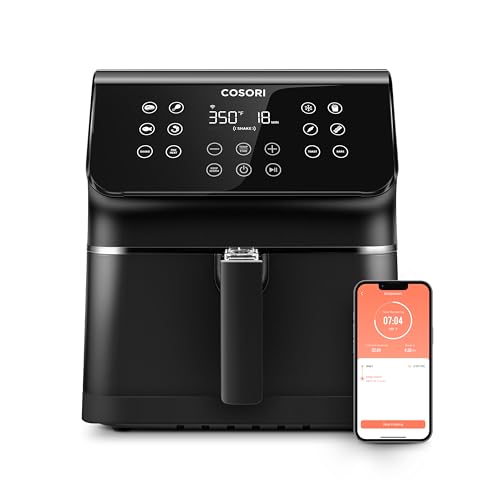
• Skip to primary navigation
  • Skip to main content
  • Skip to primary sidebar

Kitchenware Compare

  • Home
  • Product Reviews
    • Air Fryers
    • Coffee
    • Cookware
    • Flat Top Grills
    • Meat Thermometers
    • Food Processors
    • Knives
    • Pizza Ovens
    • Toaster Ovens
    • Juicers
  • Food Blog
  • Helpful Kitchen Tips
  • Data Studies
  • About
  • How I Review
  • Contact
You are here: Home / Archives for Product Reviews

Best Meat Slicers: 5 Home Picks Reviewed

Last Updated October 20, 2026

This post contains affiliate links. If you buy through my links, I may earn a commission at no extra cost to you.
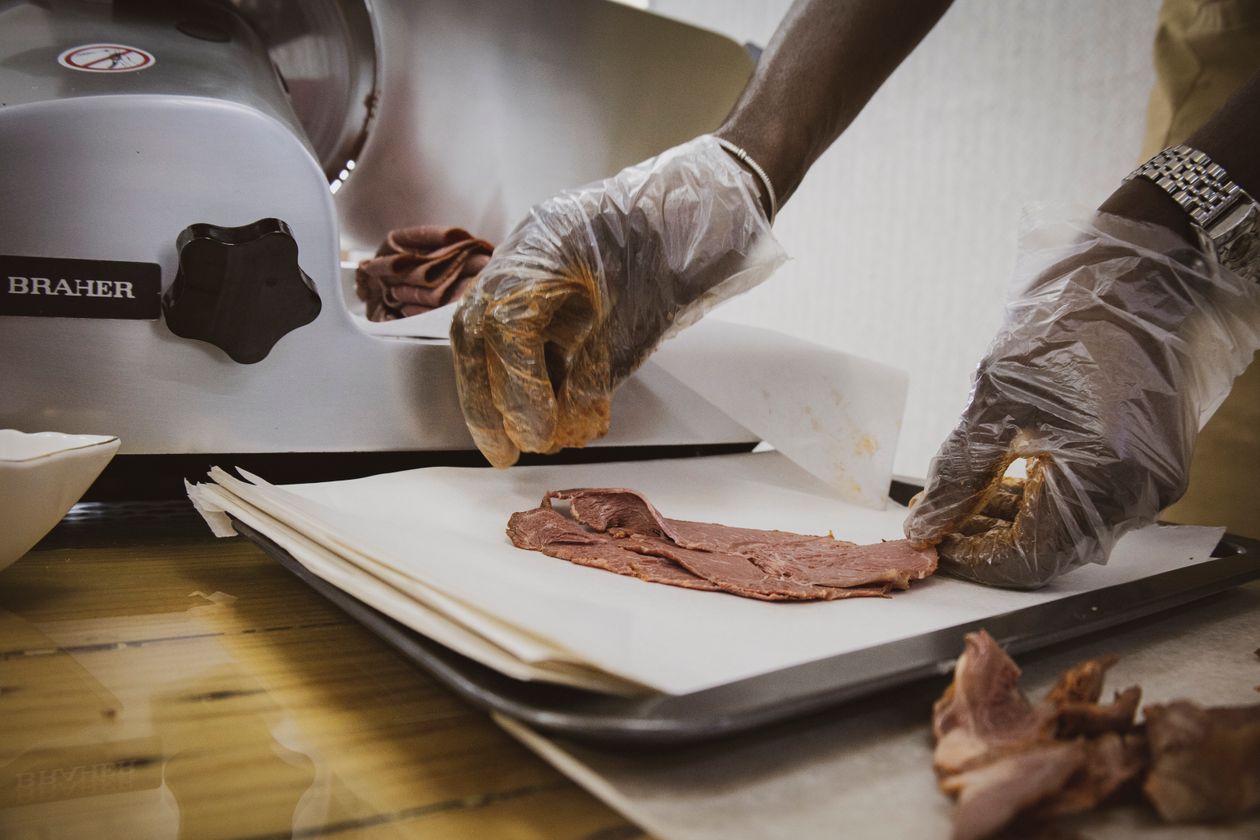
Hands slicing beef on an electric meat slicer

Photo by Tubarones from Pexels

Disclosure: I earn a small commission if you buy through links on this page, at no extra cost to you.

Home meat slicers used to be a professional kitchen item. Now they sit in suburban kitchens next to the stand mixer, used for deli-thin turkey after Thanksgiving, paper-thin prosciutto for charcuterie boards, and uniform cheese slices that a knife will never produce. The market has filled up accordingly — with some genuinely good machines and a lot of cheap hardware that vibrates across the counter and jams on the first pass through roast beef.

The CUSIMAX Electric Deli Meat Slicer is the right starting point for most households: 5,089 reviews at 4.3 stars, a dual-blade setup that handles both smooth and serrated cuts, and an adjustable thickness dial from 1 to 20mm. If you want a trusted consumer appliance brand with simpler operation, the Cuisinart FS-75 has 3,877 reviews at a similar price point. Both are reviewed in full below.

These picks are based on confirmed Amazon product data, verified specifications, and aggregated buyer reviews. All ASINs verified before inclusion.

Best Meat Slicers 2026: Quick Comparison

Product Best For Price Rating Buy
CUSIMAX Dual Blade Best overall (8.7-inch dual blade, 200W) $123.98 4.3★ (5,089) Check Price
Cuisinart FS-75 Best brand name (7.5-inch single blade, 130W) $129.95 4.2★ (3,877) Check Price
Techwood 9″ Blade Best for large cuts (9-inch single blade, 200W) $120.35 4.3★ (1,153) Check Price
Borlebbi Dual Blade Best mid-range (7.5-inch dual blade, 200W) $90.23 4.3★ (4,099) Check Price
FOHERE Dual Blade Best budget (7.5-inch dual blade, 200W) $66.30 4.2★ (657) Check Price

Prices and ratings were read from Amazon.com on 6 October 2026. Only the Cuisinart FS-75 was sold by Amazon.com; the others were sold by their own brand stores or third-party sellers.

Best Meat Slicers 2026: Full Reviews

1. CUSIMAX Electric Deli Meat Slicer — Best Overall

CUSIMAX Electric Deli Meat Slicer with dual 8.7 inch stainless steel blades

4.3/5  ·  5,089 reviews  ·  $123.98  ·  View on Amazon

With over 5,000 reviews, the CUSIMAX is the most validated home meat slicer at this price by a significant margin. It comes with two 8.7-inch blades — one serrated for bread and cured meats, one smooth for cold cuts and cheese — and a thickness adjustment that runs from 1mm to 20mm. That range covers deli-thin turkey slices at the fine end and thick-cut bacon at the other. The food carriage removes for cleaning, which matters a lot with a machine that collects meat debris in every crevice.

4.3 stars across just over 5,000 buyers is a credible validation. Common complaints in the reviews center on the motor running warm during extended sessions — this is a home machine, not a commercial one, and it’s not designed for continuous 20-minute runs. Use it in 5-minute intervals and it handles everything a home kitchen will throw at it. At $123.98 it is no longer the cheapest machine here — the Techwood, Borlebbi and FOHERE all undercut it, and the Cuisinart FS-75 has now risen past it — but it is the only one at this level that ships both a serrated and a smooth blade.

Pros:

  • 5,089 reviews — most validated home slicer in this category
  • Dual blade (serrated + smooth) handles bread, cured meats, cheese, and deli cuts
  • 1–20mm thickness range covers paper-thin to thick-cut in one machine
  • Removable food carriage makes cleaning significantly easier

Cons:

  • Motor warms after extended use — designed for home sessions, not continuous commercial runs
  • 8.7″ blade limits maximum cut width; won’t handle very large roasts in one pass
  • 4.3 stars is good but not exceptional — some buyers report inconsistent thickness at fine settings

Verdict: The right first choice for most households. More buyer validation than any comparable home slicer, dual-blade setup, and genuine thickness range.

Check Price on Amazon ↗

2. Cuisinart Kitchen Pro Food Slicer FS-75 — Best Brand Name

Cuisinart Kitchen Pro Food Slicer FS-75 in gray with 7.5 inch stainless blade

4.2/5  ·  3,877 reviews  ·  $129.95  ·  View on Amazon

Cuisinart’s FS-75 is the most straightforward slicer on this list. One 7.5-inch stainless blade, a thickness knob that runs from 1/32″ to 1/2″ (roughly 0.8mm to 13mm), a tray that removes for cleaning, and a build quality that reflects Cuisinart’s consumer appliance standards rather than the budget-focused construction you get from lesser-known brands. The motor is 130W rather than 200W, which is the main functional trade-off — it handles standard deli cuts and cheese without issue but can slow on very dense cold cuts or partially frozen meat.

3,877 reviews at 4.2 stars puts it slightly below the CUSIMAX in both validation volume and average rating. The appeal here is the brand: Cuisinart has warranty support, consistent parts availability, and a track record in consumer kitchens. If you’d rather buy from a name you trust than an unknown brand with more reviews, that’s a legitimate preference.

Pros:

  • Cuisinart brand — established warranty, parts, and customer support
  • 3,877 reviews — well-validated with 10+ years of buyer feedback
  • Simple single-blade operation — fewer parts to clean and maintain
  • Compact footprint; easier to store than larger commercial-style slicers

Cons:

  • 130W motor is weaker than 200W alternatives — slows on dense or semi-frozen meat
  • Single blade only — no serrated option included
  • 4.2 stars — lowest rating among the first three picks; more durability complaints in reviews

Verdict: Right for buyers who prioritise brand trust over spec-sheet performance. Slightly weaker motor at the same price as the CUSIMAX, but backed by Cuisinart’s consumer support.

Check Price on Amazon ↗

3. Techwood 9-Inch Meat Slicer — Best for Large Cuts
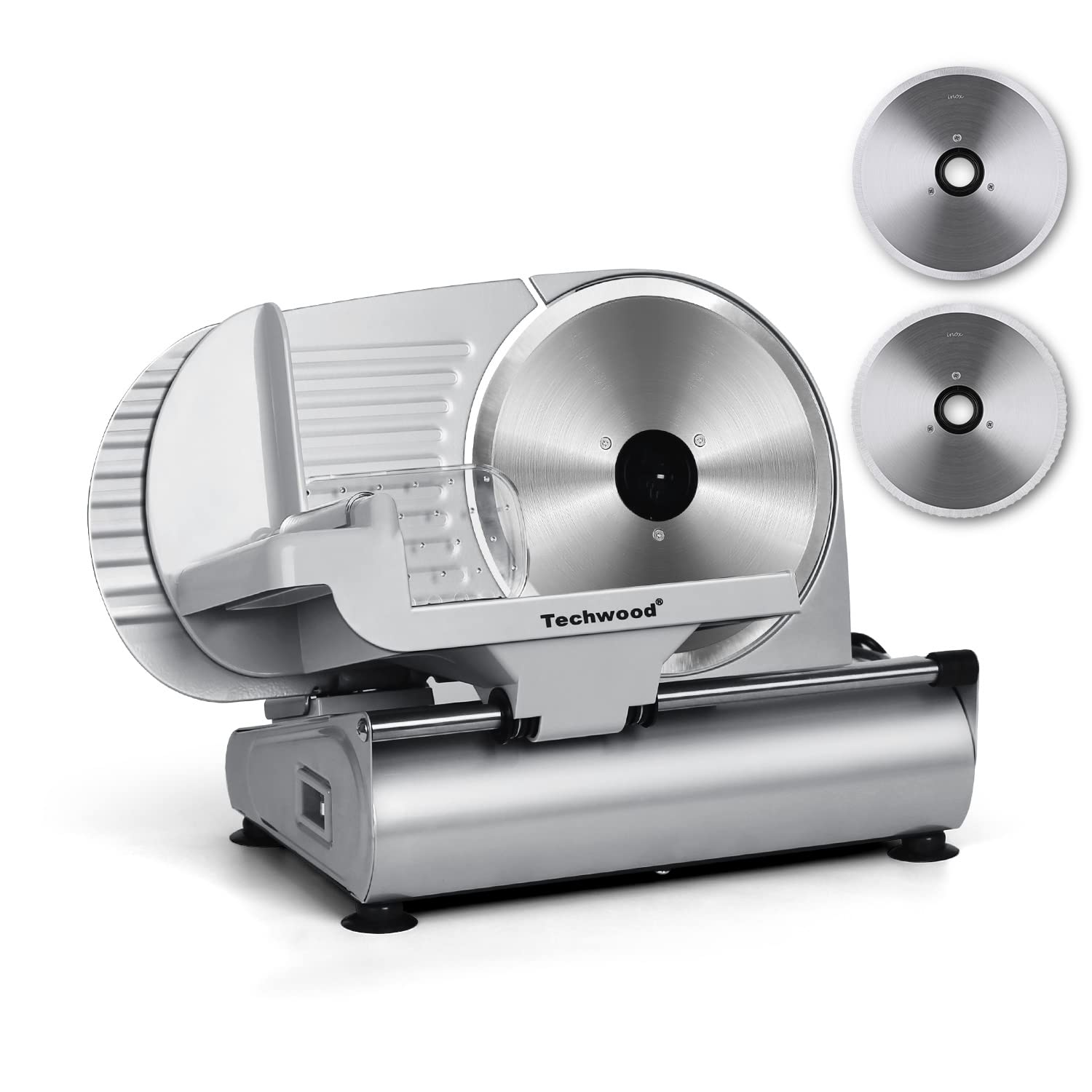
Techwood electric meat slicer with 9 inch stainless steel blade

4.3/5  ·  1,153 reviews  ·  $120.35  ·  View on Amazon

The Techwood has a 9-inch blade — the largest on this list — which matters if you’re slicing large roasts, full turkey breasts, or wide cuts that a 7.5-inch blade has to make multiple passes on. Aluminum housing, a stainless carriage tray and a 200W motor round it out, with non-slip feet to keep it in place during use.

At $120.35 it undercuts the CUSIMAX and Cuisinart FS-75, but costs about $30 more than the Borlebbi. That makes it the least expensive way to get the largest blade here, though its 1,153-review sample is the second smallest in this guide, after the FOHERE’s.

Pros:

  • 9″ blade — largest on this list; handles wide roasts and turkey breasts in fewer passes
  • The only 9-inch blade on this list, at $120.35 against $90.23 for the Borlebbi
  • 200W motor, ahead of the Cuisinart FS-75’s weaker motor
  • 4.3 stars across 1,153 reviews

Cons:

  • Ships one blade, where the CUSIMAX and Borlebbi ship two
  • Heaviest machine on this list at 15.42 lb; needs more storage space
  • Smallest review sample of any pick in this guide

Verdict: Best choice if you regularly slice large roasts or want the extra blade width without paying a premium for it. The tradeoff is one blade instead of two, and a smaller track record than its rivals here.

Check Price on Amazon ↗

4. Borlebbi 200W Dual Blade Meat Slicer — Best Mid-Range

Borlebbi 200W electric meat slicer with two removable 7.5 inch stainless steel blades

4.3/5  ·  4,099 reviews  ·  $90.23  ·  View on Amazon

The Borlebbi runs a 200W motor against two removable 7.5″ stainless blades with a 0–15mm thickness dial. That is the same motor rating and the same blade count as the CUSIMAX, on a blade about an inch smaller, for roughly $34 less. It also lists a child lock, non-slip suction feet, and a food pusher that doubles as a blade guard.

Its 4,099 ratings at 4.3 stars make it the second-largest review base in this guide, behind only the CUSIMAX. That matters more than the score itself. A 4.3 drawn from four thousand buyers is a steadier signal than a higher average drawn from a few hundred, and it is the main reason this machine is here rather than one of the thinly-rated alternatives at the same price.

One thing to check before you buy. The listing copy describes the housing as die-cast aluminium, while Amazon’s own specification table for the same product lists the material as ABS plastic and stainless steel. Those cannot both be right. Judge it as a plastic-bodied machine with stainless fittings at 10.7 pounds, and if the metal housing is the reason you were buying it, ask the seller before ordering.

Pros:

  • $90.23 — fills the gap between the budget and mid-price machines
  • 4,099 ratings — second-largest review base in this guide
  • 200W motor with two removable 7.5″ stainless blades
  • Child lock, non-slip feet, and a food pusher that doubles as a blade guard

Cons:

  • The listing contradicts itself on housing material — the specification table says ABS plastic, not the die-cast aluminium claimed in the description
  • Blade types are not specified, so there is no way to tell whether the second blade is serrated
  • 7.5″ blade — joint smallest here, so not the choice for large roasts
  • Hand wash only

Verdict: The sensible middle. If the FOHERE looks too light and the CUSIMAX is more than you want to spend, this is the machine in between, and it has the review volume to back that up.

Check Price on Amazon ↗

5. FOHERE 200W Dual Blade Meat Slicer — Best Budget

FOHERE 200W Electric Meat Slicer with dual 7.5 inch stainless blades in silver

4.2/5  ·  657 reviews  ·  $66.30  ·  View on Amazon

At $66.30, the FOHERE is the cheapest machine on this list that still includes two blades (serrated and smooth). The 200W motor matches the CUSIMAX on wattage, the 0–15mm thickness range covers standard home use, and the dual-blade design is the same core feature that makes the CUSIMAX appealing — at $58 less. The trade-off is build quality. The housing is lighter plastic, the blade rotation isn’t as smooth as pricier options, and the 4.2-star rating (the lowest on this list) reflects real buyer dissatisfaction with long-term durability and vibration at full speed.

For occasional use — slicing deli meats a few times a month — the FOHERE does the job. For weekly or heavy use, the build quality will become apparent faster than the CUSIMAX or Techwood. Buy it if budget is the genuine constraint; budget for an upgrade within 2–3 years.

Pros:

  • $66.30 — lowest price on this list for a dual-blade slicer
  • 200W motor — adequate wattage despite low price
  • Dual blades (serrated + smooth) for bread and deli cuts
  • 0–15mm thickness adjustment covers standard home use

Cons:

  • 4.2 stars — lowest rating on this list; durability and vibration complaints in reviews
  • Lighter plastic construction than any other pick here; not built for heavy use
  • 650 reviews — moderate validation compared to CUSIMAX (5,089) or Cuisinart (3,877)

Verdict: Adequate for occasional use at the lowest price on this list. If budget is the constraint, it gets the job done. For regular use, add $58 and buy the CUSIMAX instead.

Check Price on Amazon ↗

How to Choose a Home Meat Slicer

Blade Size: 7.5″ vs 8.7″ vs 9″

Blade diameter determines the maximum width of cut you can make in a single pass. A 7.5-inch blade (the Cuisinart and FOHERE) handles standard deli cuts and average roasts. An 8.7-inch blade (the CUSIMAX) adds margin for wider cuts.

A 9-inch blade (the Techwood) is the right choice if you regularly slice full turkey breasts or large standing roasts. For sandwich meat and charcuterie, 7.5 inches is sufficient. For whole roasts, go larger.

Above that there is a commercial class again — 10-inch machines built to slice continuously rather than in short bursts, which I cover in my BESWOOD 250 review and my KWS MS-10NT review, or the two compared head to head. For more on cutting-focused cookware, see my cookware hub.

Wattage: Does Motor Power Matter?

For home use, 130W is sufficient for standard deli meats, cooked chicken, and soft cheese. Where motor power becomes relevant is semi-frozen or very dense meat — thick salami, hard sausage, or partially frozen cuts that you’re slicing for portions rather than deli paper.

A 200W motor (CUSIMAX, Borlebbi, FOHERE and Techwood) handles these tasks better than a 130W motor (Cuisinart). At normal home use frequencies, both will perform well. If you process larger volumes, prioritise wattage.

Single Blade vs Dual Blade

A serrated blade cuts bread and cured meats with a sawing action that a smooth blade can’t replicate without tearing. A smooth blade produces clean, precise slices for fresh meats, turkey, and semi-firm cheese. If you want both functions, buy a slicer that includes both blades (CUSIMAX, FOHERE).

The Borlebbi also ships with two blades, though its listing does not say which types or check whether your chosen model offers optional blades sold separately. The Cuisinart FS-75 has aftermarket blade options available. For related equipment guides, see my cookware for gas stoves page.

Frequently Asked Questions

What’s the best home meat slicer for beginners?

The CUSIMAX. It has the most buyer reviews of any home slicer (5,089), a dual-blade setup that handles most home use cases, and a straightforward thickness dial. The main thing to know upfront: don’t run it for more than 5–10 minutes continuously.

Let it rest between sessions. It’s designed for home portions, not continuous commercial use.

Can a home meat slicer cut through bone?

No. Every slicer on this list is designed for boneless meat only. Attempting to slice through bone will damage the blade and potentially the motor. For bone-in cuts (lamb chops, ribs, T-bone), use a band saw or ask your butcher to cut them before purchase.

How thick can a home meat slicer cut?

Most home slicers on this list go up to 15–20mm (roughly 3/4 inch). The CUSIMAX reaches 20mm; the others stop at 15mm. For context: standard deli thin is 1–2mm, sandwich-ready is 3–5mm, and thick-cut bacon territory starts at 6mm and up. These machines cover the full range for practical home use.

How do you clean a meat slicer safely?

Unplug it first, put on cut-resistant gloves, and set the thickness dial to zero before you remove anything. Wash the blade, carriage and tray by hand in hot soapy water — hand wash, not the dishwasher, because the detergent is hard on plated and coated blade edges. Wipe the body with a damp cloth and never submerge it.

Dry everything fully before reassembly, and clean after every session rather than letting residue dry on. My full guide to how to clean a meat slicer covers the part most people skip: the area behind the blade, which you cannot reach without taking the machine apart.

Is a 200W or 130W motor better for home use?

For standard deli cuts and cheese, 130W is sufficient. The difference becomes noticeable with semi-frozen meat or dense cured sausage — a 200W motor powers through these more cleanly. If your primary use is turkey and ham for sandwiches, either works. If you process thicker or denser cuts regularly, prioritise 200W.

Do meat slicers need sharpening?

Yes, eventually. Most home slicers include a built-in sharpener on the housing — a ceramic wheel you run the blade through to restore the edge. How often depends on use frequency.

For typical home use (a few times a month), most buyers report the blade staying sharp for 6–12 months before the built-in sharpener is needed. Some higher-end models, like the Cuisinart FS-75, also support aftermarket blade replacement.

How These Picks Were Chosen

Plainly: this is a research-based guide, not a hands-on test. I have not run these side by side, and nothing here should be read as a report from my own kitchen.

What the picks rest on: blade diameter and whether it is stainless or carbon, motor wattage against the density of what you are actually slicing, the thickness dial range and whether it holds a setting, and how far the machine strips down for cleaning; plus the complaint patterns across verified-purchase reviews, which for slicers concentrate on two things – blades loosening over time, and food residue trapped in seams that do not come apart.

What I could not establish: slice consistency, which is the whole job. Measuring it means slicing the same chilled product at one setting repeatedly and measuring every slice, and no independent test does that for these machines. Blade size and wattage are used here as proxies, and a proxy is not a measurement.

The Bottom Line

For most households, the CUSIMAX is the right first slicer — the most validated machine at this price, dual blades, and a genuine thickness range. If you want a trusted consumer brand, the Cuisinart FS-75 trades some performance for brand support. Slicing large roasts regularly?

Get the Techwood 9-inch. Want the middle of the range? The Borlebbi sits between the two on price and has the second-largest review base here.

Working to a budget? The FOHERE dual-blade gets the job done for occasional use.

Everything on this site about slicers is collected in my meat slicer hub. For more kitchen equipment comparisons, see my cookware hub and my guide to best cookware sets.

Slicing by hand with good knives instead? The board matters more than most people think — my cutting boards for Japanese knives guide explains why hard boards quietly ruin sharp edges.

For powered prep beyond slicing — chopping, shredding, dough — see my food processors and choppers hub.


The full CUSIMAX review covers what the second blade actually buys, why 200W is a duty-cycle number, and how the recent price rise changes the value case.

Filed Under: Product Reviews

Blackstone 28-Inch vs 36-Inch Griddle: Which Size Should You Buy?

Last Updated October 26, 2026

Pressing smash burgers on a hot flat top griddle

The quick answer

For a family of four doing regular outdoor cooking, buy the 28-inch. Owner reports are full of people who bought the 36-inch first and wished they had started smaller. The 36-inch is the right choice if you cook for large groups regularly or want to batch cook seriously — but for everyday family cooking, it’s more work than the extra cooking surface is worth.

I earn a commission if you buy through the Amazon links below, at no extra cost to you.

Blackstone 28-Inch Omnivore Griddle

Blackstone 28″ Omnivore
(2 burners)

Check Price
Blackstone 36-Inch 4-Burner Griddle Cooking Station

Blackstone 36″
(4-burner cooking station)

Check Price

I’m going to tell you something that Blackstone’s marketing won’t: bigger is not always better with flat top griddles. The 36-inch is an excellent piece of equipment, but it’s the right choice for a narrower range of people than most comparison articles would have you believe.

The two sizes get bought for different jobs — weekend breakfasts for a family, weeknight dinners, summer cookouts for twenty people — and owner reports separate fairly cleanly along those lines. What follows is an honest answer rather than a hedge.

Product Best For Price Rating Buy
Blackstone 28″ Omnivore Everyday family cooking $249.99 4.7★ (12,146) Check Price
Blackstone 36″ (4 burners) Large groups & batch cooking $399.00 4.7★ (10,726) Check Price

Prices and ratings checked 21 September 2026. Both links go to Blackstone’s standard Amazon listings (4.7★ with 10,000+ ratings each). In July these were out of stock and this page linked bundled versions instead, a 28″ with a hard cover and a 36″ with a hood; both standard listings are available again.

Feature Blackstone 28-Inch Blackstone 36-Inch
Cooking surface 470 sq inches 720 sq inches
Burners 2 4
BTU output 34,000 total 60,000 total
Weight ~68 lbs ~120 lbs
Dimensions (approx.) 52 x 22 x 36″ 62 x 22 x 36″
Typical price $250 $399
With hood option Yes (some models) Yes (some models)

The cooking surface: what those numbers mean in practice

470 square inches sounds abstract. Here’s what it means: on the 28-inch, you can simultaneously cook a dozen eggs, a pound of bacon, and a stack of pancakes. That’s a full breakfast for four people, all at once.

The 28-inch is a large cooking surface. It just doesn’t feel like it in photos.

720 square inches is the surface area that lets you cook for eight to ten people simultaneously without any batching. It’s the surface that lets you smash a dozen burgers at once, or cook a week’s worth of meal prep in a single session. It’s a lot of griddle.

The case for the 28-inch (which is stronger than you think)

For a family of four, much of a 36-inch surface will sit unused on most cooks, which means heating, holding temperature on and cleaning a surface you only partly use. The 28-inch would do the same job with less fuel, a faster heat-up and less cleanup.

The weight difference is real and it matters more than people anticipate. At 68 lbs, the 28-inch is manageable — one person can move it, store it for winter, take it tailgating. At 120 lbs, the 36-inch is functionally permanent.

Once it’s in your backyard, it stays there. Make sure you want it there before you buy it.

The 28-inch also heats more evenly, because two burners across a 28-inch surface delivers more consistent coverage than four burners across 36 inches where the outer edges can lag slightly.

The case for the 36-inch (and who actually needs it)

The 36-inch is unambiguously better when you’re cooking for a crowd. Six or more people for dinner, a cookout for twenty, meal prep for the week — these are the use cases where the extra surface earns its place.

The four-burner setup gives you meaningful heat zone control. Left side screaming hot for searing, right side medium for keeping things warm, middle for active cooking. This is genuinely useful when you’re managing a complex meal with multiple proteins and vegetables at different stages.

The 28-inch’s two burners create a more limited temperature gradient. Either way, a wireless probe thermometer makes it easier to track multiple proteins across those zones without cutting into anything to check.

If you run a weekend pop-up, cater parties, feed an extended family regularly, or just genuinely love the ritual of a big cook, the 36-inch will make you happy every time you use it. But be honest with yourself about how often that actually describes you.

Cleanup: the thing nobody mentions in comparisons

Cleaning a flat top after cooking takes a few minutes regardless of size. But cleaning 720 square inches versus 470 square inches adds up. Every session on the 36-inch involves scraping, wiping, and re-seasoning a significantly larger area.

Over a summer of regular use, that difference is noticeable. This sounds minor and it is — but if you’re already someone who finds post-cook cleanup tedious, don’t make it 50% bigger.

Buy the 28-Inch if…

  • You cook for two to four people most of the time
  • You want the option to move it or take it with you
  • You want faster heat-up and more even coverage
  • You don’t want to dedicate permanent outdoor space to it
  • You’re buying your first flat top and want to start right

Buy the 36-Inch if…

  • You regularly cook for six or more people
  • You want serious heat zone control with four independent burners
  • You batch cook or meal prep in large quantities
  • You have a dedicated outdoor cooking area and it can live there permanently
  • You run events or cook for extended family gatherings

The verdict

Start with the 28-inch. If you find yourself consistently running out of cooking surface — actually running out, not just theoretically wanting more — then you’ll know exactly why to upgrade. Most people who buy the 36-inch first find they’re using 60% of it most of the time. The 28-inch is an excellent flat top griddle for the way most people actually cook outdoors.

Check 28″ Price on Amazon Check 36″ Price on Amazon

How This Comparison Was Put Together

Plainly: this is a research-based comparison, not a hands-on test. I have not run these two side by side.

What it rests on: the published specification for both – cooking area in square inches, burner count and total BTU, and how BTU per square inch compares between them, which is the number that actually decides whether the extra size costs you heat; plus cart and shelf configuration, and the pattern across verified-purchase reviews, where the recurring themes are rust after seasoning lapses and uneven heat between burner zones.

What I could not establish: heat evenness across either plate, which is the practical difference between the two sizes. Measuring it needs a grid of infrared readings across a fully preheated surface, and no independent test does that for these griddles. Burner layout and BTU per square inch are the indicators used here.

Frequently Asked Questions

Is the Blackstone 28-inch big enough for a family?

Yes. Its 470 square inches of cooking surface handles a dozen burgers or a full pancake breakfast for four at once. Most people who buy the 36-inch report using around 60% of the surface for everyday cooking, which is roughly what the 28-inch gives you.

What is the main difference between the Blackstone 28-inch and 36-inch?

Size and heat output. The 28-inch has 470 square inches of cooking surface with two independently controlled burners producing 34,000 BTU total. The 36-inch has 720 square inches with four burners producing 60,000 BTU. Cooking capability is otherwise identical — the 36-inch just does more at once.

Which Blackstone griddle should I buy first?

Start with the 28-inch unless you regularly cook for large groups or batch cook seriously. It costs less, heats up faster, and has less surface to clean and season. If you consistently run out of cooking surface, that is your signal to upgrade.

Where do the Amazon links go?

Both links go to the standard Blackstone 28-inch and 36-inch listings. In July those were out of stock, so this page linked bundled versions with a hard cover or a hood; both standard listings are available again, so the links now go to them.

Related: See all my flat top grill reviews and guides
Related: Best flat top grill: all options compared


Whichever size you pick, seasoning it correctly matters more for day-to-day performance than the size difference does.

For the full breakdown of the 36″ model specifically, see my Blackstone 36″ review.

Filed Under: Product Reviews

Lodge vs Le Creuset Dutch Oven: Is the Price Difference Worth It?

Last Updated October 26, 2026

The quick answer

The honest answer: Lodge makes a very good Dutch oven for the money, and if budget is the constraint, buy it and cook happily. But if you cook with a Dutch oven three or four times a week and you’re buying once for a decade, the Le Creuset is worth every penny of the price difference. The quality gap is real — the question is whether it matters for how you cook.

I earn a commission if you buy through the Amazon links below, at no extra cost to you.

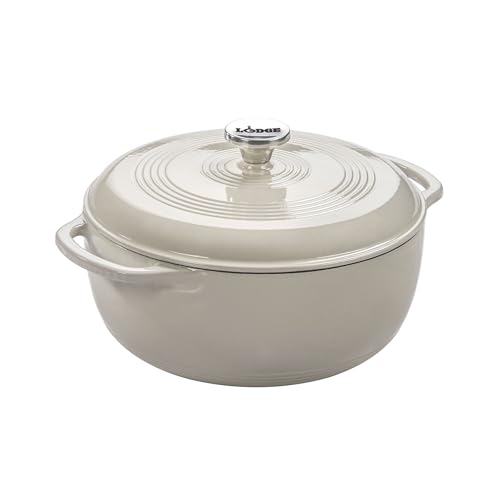
Lodge 6-Quart Enameled Cast Iron Dutch Oven
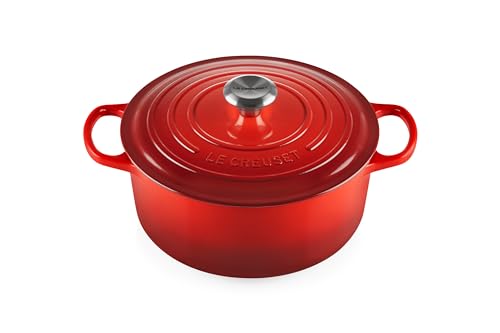
Le Creuset Signature 5.5-Quart Dutch Oven

I want to be straight with you about something before I go any further: I have not cooked with either of these. This comparison is built from published specifications, owner reviews at scale, and the testing other outlets have published. On the evidence, the Le Creuset is the better piece of cookware — better enamel, better lid seal, better heat retention. The question is whether that difference is worth spending about $200 more.

It depends entirely on how you cook. Let me explain what you actually get for the extra money, and then you can decide.

Product Best For Price Rating Buy
Lodge Essential Enamel 6 Qt Best Value $89.90 4.7★ (39,179) Check Price
Le Creuset Signature 5.5 Qt Best Long-Term Buy $299.98 4.7★ (7,884) Check Price
Feature Lodge 6qt Enameled Le Creuset 5.5qt Signature
Capacity 6 quarts 5.5 quarts
Material Enameled cast iron Enameled cast iron
Made in China France
Oven safe to 500°F 500°F
Induction compatible Yes Yes
Warranty Lifetime limited Lifetime limited
Typical price about $90 $279–$465, by colour

What you actually get for the extra money

I know $200 is a lot, and I’m not going to pretend it isn’t. But let me describe the differences as specifically as I can, because ‘it’s just better’ isn’t useful.

Enamel quality

This is where the gap shows most clearly. Le Creuset’s enamel is thicker, smoother, and significantly more resistant to chipping. Lodge’s enamel is good — it’s not bad enamel — but after two or three years of regular use, you’re quite likely to see chips on the rim and on the corners of the lid where impact is most common. This is one of the most consistent complaints about Lodge Dutch ovens in long-term reviews.

Le Creuset’s enamel on a well-maintained pot looks essentially the same after ten years as it did when new. That’s not an accident — it’s the result of a manufacturing process that Lodge’s price point doesn’t allow.

Interior cooking surface

The interior of a Le Creuset is lighter in colour (cream/off-white) and smoother than Lodge’s darker interior. The lighter colour is actually functional — you can see browning more clearly, which helps you judge when a fond is developed or when garlic is about to burn. The smoother surface is easier to clean and behaves more predictably with acidic ingredients like tomatoes.

Lid fit and heat retention

This is the clearest practical difference. The Le Creuset lid fits more precisely, which means more steam stays in the pot during long braises and especially when baking bread. No-knead bread bakers know this well — a tight lid seal in the first phase of baking is what creates the steam environment that makes the crust. The Lodge lid is good, not perfect.

Both pots retain heat exceptionally well once up to temperature — that’s just cast iron physics. But Le Creuset’s slightly thicker walls mean marginally more even heat distribution across the base.

Where Lodge is completely fine

For braising — pot roasts, lamb shanks, chicken thighs, short ribs — Lodge performs as well as Le Creuset. Once you’ve got liquid in the pot and the lid is on, the small differences in lid seal and interior surface matter very little. The physics of braising are forgiving. A Lodge turns out genuinely spectacular braises.

For stovetop soups, stews, and anything where the pot is a vehicle rather than the critical tool, Lodge is more than adequate. You’re not leaving quality on the table in these applications.

The bread baking argument

If you bake no-knead or Dutch oven bread, the Le Creuset is meaningfully better. The lid fit matters. The light-coloured interior shows you what’s happening.

The oven performance is more consistent. Bread bakers who have upgraded from Lodge to Le Creuset almost universally report noticeably better crusts. If you bake bread weekly, that difference adds up.

The honest long-term calculation

Here’s the argument for Le Creuset that I find most compelling: over ten years of regular use, a Lodge might need replacing (or at minimum, the chipped enamel becomes something you live with rather than enjoy). A Le Creuset bought today will be in excellent condition in fifteen years. The per-use cost of a $300 pot used three times a week for ten years is under $0.20 per use. That’s cheap cookware.

But that calculation only works if you actually cook with it that often. If you’re buying your first Dutch oven and you’re not sure how much you’ll use it, start with Lodge. If you already love Dutch oven cooking and you’re replacing a pot you’ve worn out, buy Le Creuset and stop thinking about it.

Buy the Lodge if…

  • Budget is a genuine constraint
  • You’re buying your first Dutch oven and want to try the format
  • You cook with it occasionally rather than weekly
  • You use it primarily for braising and soups where the lid seal matters less

Buy the Le Creuset if…

  • You cook with a Dutch oven three or more times a week
  • You bake bread in it regularly
  • You want to buy once and keep it for ten to fifteen years
  • You care about the cooking surface staying pristine

The verdict

Buy Lodge if budget matters or if you’re not yet certain how much you’ll use it. Buy Le Creuset if you already know you love Dutch oven cooking and you want the best version of the thing. Both are good pots. One is significantly better.

Related: See all my cookware reviews and guides
Related: Best cast iron Dutch ovens 2026: full buying guide

How This Comparison Was Put Together

Plainly: this is a research-based comparison, not a hands-on test. I have not run these side by side.

What it rests on: the published specification for both – capacity, weight, enamel type, knob material and its oven-safe limit, and the warranty each carries, which is the clearest signal of what each maker expects of its own enamel; plus the pattern across verified-purchase reviews for each, where the Lodge theme is enamel chipping and the Le Creuset theme is whether the price difference is justified rather than whether the pot works.

What I could not establish: whether Le Creuset’s enamel genuinely outlasts Lodge’s by enough to justify the gap. That needs controlled thermal-shock and impact testing on both, and no independent test covers it. Warranty terms and the balance of owner reporting are what this comparison reasons from, and both are weaker than a measurement.

Frequently Asked Questions

Is Le Creuset worth the extra cost over Lodge?

For daily, long-term use, yes — the smoother enamel, better lid seal, and heat retention are real, measurable differences. For occasional cooking or a first Dutch oven, Lodge delivers most of the same results for a third of the price.

Which is better for bread baking, Lodge or Le Creuset?

Both work well for no-knead bread baking — the enclosed cast iron traps steam either way. Le Creuset’s tighter lid seal holds slightly more moisture, which can help with crust development, but the difference is marginal enough that most bakers won’t notice it.

Do Lodge and Le Creuset Dutch ovens work the same on all stovetops?

Yes — both are compatible with gas, electric, induction, and oven use. Cast iron is magnetic, so induction heating works efficiently on either brand.

Which has better resale value, Lodge or Le Creuset?

Le Creuset holds resale value noticeably better — its enamel finish and brand recognition mean used pieces regularly sell for 40-60% of retail on the secondhand market. Lodge Dutch ovens have minimal resale value, which is consistent with their lower purchase price.

Filed Under: Product Reviews

Ninja AF101 vs COSORI Pro II: Which Air Fryer Should You Actually Buy?

Last Updated October 6, 2026

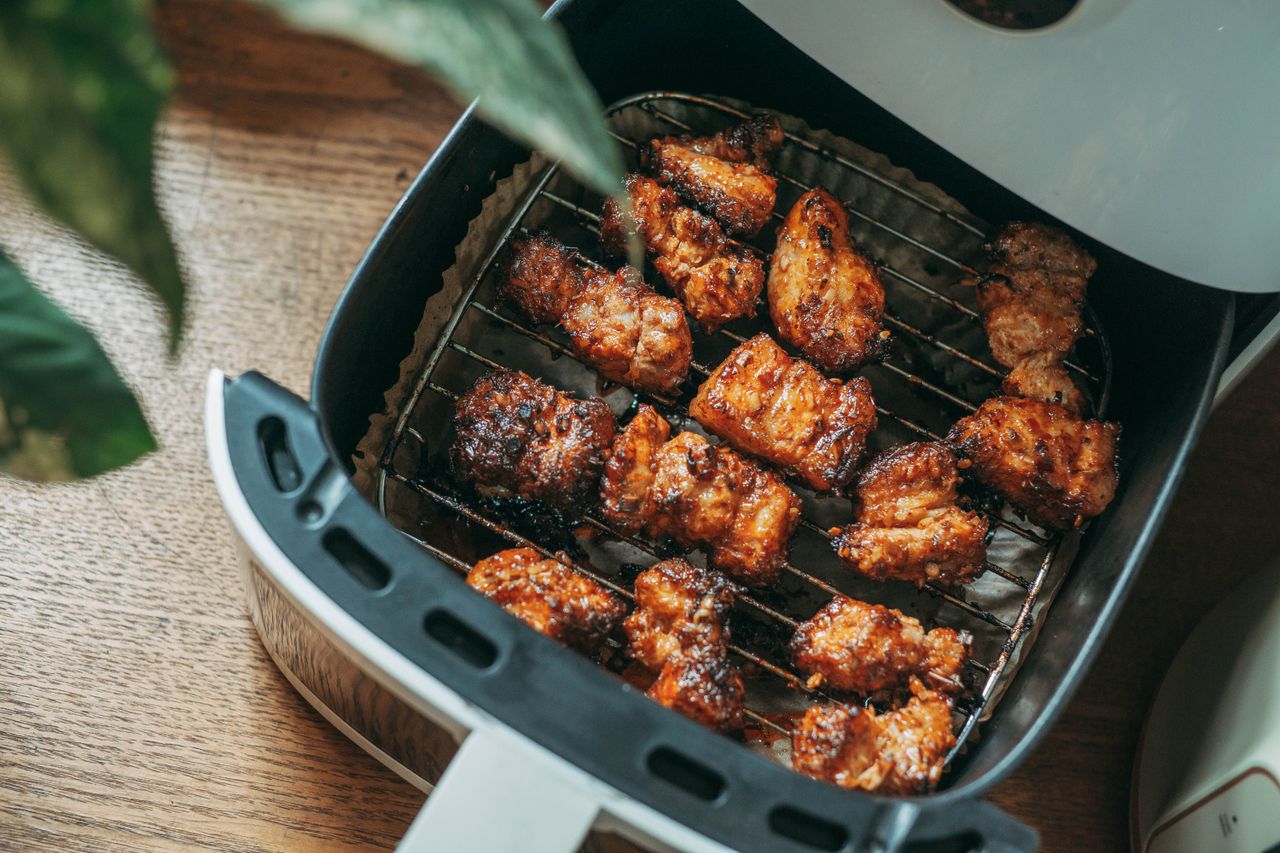
Crispy chicken pieces cooked in an air fryer basket

The quick answer

For most households of one to three people, buy the Ninja AF101. At the same $119.99 price, it takes up less counter space and is easier to clean. If you regularly cook for four or more — or want to fit a whole chicken without engineering a compromise — the COSORI Pro II’s larger basket is the better fit. That’s the whole decision.

I earn a commission if you buy through the Amazon links below, at no extra cost to you.

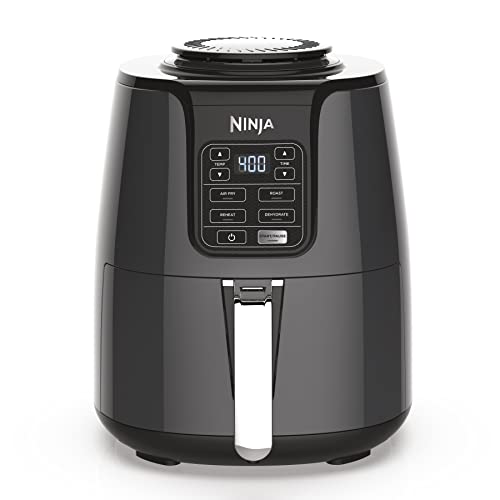
Ninja AF101 4-Quart Air Fryer

Ninja AF101 (4 QT)

Check Price
COSORI 6-Quart Air Fryer

COSORI Pro II (5.8 QT)

Check Price

These two have been the default budget air fryer recommendation for years, and the internet makes the comparison much more complicated than it needs to be. Both of these air fryers cook food well. Both are well-built for the price. The question is never which is better — it’s which one fits how you actually cook.

Before I get into the details: don’t buy an air fryer based on the preset buttons. You’ll use them twice and then ignore them for the life of the machine. The thing that actually matters is basket size, and I’ll explain exactly why.

Product Best For Price Rating Buy
Ninja AF101 (4 QT) 1-3 people, compact kitchens $119.99 4.7★ (59,440) Check Price
COSORI Pro II (5.8 QT) Families, batch cooking $119.99 4.6★ (2,392) Check Price

Prices checked 15 September 2026.

Feature Ninja AF101 COSORI Pro II
Capacity 4 quarts 5.8 quarts
Wattage 1,550W 1,700W
Controls Analog dials Digital touchscreen
Presets None 12
Footprint (approx.) 11 x 13.6″ 11.8 x 12.0″
Weight 7.5 lbs 12.3 lbs
Dishwasher safe basket Yes Yes
Typical price $119.99 $119.99

Capacity: the only spec that actually changes your cooking

A 4-quart basket and a 5.8-quart basket sound close on paper. In practice, the difference is significant. In the Ninja AF101, a standard pack of chicken thighs (about four pieces) fits comfortably in a single layer — and a single layer is how you get properly crispy results. Add a fifth piece and you’re starting to overlap, which means steam instead of crispiness.

In the COSORI Pro II, you can fit six chicken thighs flat, or a whole spatchcocked chicken, or a rack of ribs folded to fit. That extra 1.8 quarts isn’t just a number — it’s the difference between cooking dinner in one batch or two.

For one or two people, the Ninja is perfectly sized and you’ll never hit its limits. For a family of four eating together, the COSORI saves you a meaningful amount of time over weeks and months of cooking.

Controls: dials vs digital

People talk about this more than it deserves. The Ninja’s analog temperature and time dials are genuinely easy to use — set temperature, set time, done. The COSORI’s digital touchscreen is clear and responsive, and the 12 presets cover the things people actually air fry: fries, chicken, fish, vegetables, steak.

Here’s my honest take: if you’re the kind of cook who knows what temperature and time they want, you’ll prefer the Ninja’s tactile dials. If you’re newer to air frying or cooking with others who don’t want to think about settings, the COSORI’s presets are genuinely useful. Neither is a disadvantage.

Cooking performance

Both of these machines circulate hot air around food. That’s how air frying works. The Ninja runs at 1,550W; the COSORI at 1,700W. Owner reports describe both cooking evenly when the basket isn’t overcrowded.

Across frozen fries, chicken wings, salmon, roasted vegetables and reheated pizza, owner reports describe the results as indistinguishable.

If someone tells you one of these air fryers produces noticeably crispier food than the other, they’re either imagining it or they had one basket overcrowded. At proper capacity, they cook identically.

Cleaning

Both have dishwasher-safe baskets and inserts. In practice, the Ninja’s basket is slightly simpler — one main basket piece rather than COSORI’s basket-plus-crisper-plate design. The COSORI’s crisper plate does elevate food for better airflow, but it’s one more piece to wash. Neither is a burden, but if you’re cooking for one and already find cleanup tedious, the Ninja is marginally faster.

Build quality and durability

The durability complaint that recurs in owner reviews of both is basket coating wear, so don’t use metal utensils, and hand-wash occasionally rather than always running the basket through the dishwasher.

Buy the Ninja AF101 if…

  • You cook for one or two people
  • You want a smaller footprint on the counter
  • You prefer tactile dials over touchscreens
  • You want slightly easier cleanup

Buy the COSORI Pro II if…

  • You cook for three or four people regularly
  • You want to cook a whole chicken or larger portions in one batch
  • You appreciate preset programmes
  • You want a bit more headroom for batch cooking

The verdict

The Ninja AF101 is the better choice for most people — not because it outperforms the COSORI, but because it’s correctly sized for most households and doesn’t make you pay for capacity you won’t use. If you know you need the larger basket, the COSORI Pro II is excellent at the same price. Buy either with confidence.

Check Ninja AF101 Price Check COSORI Pro II Price

Want the deeper dive on the AF101 specifically, including what almost 60,000 owners report and whether the newer AF141 is a better buy? See my full Ninja AF101 review.

Considering the COSORI side instead? See my full Cosori Pro II review for what over 2,300 owners report and whether the smart features are worth paying for.

How This Comparison Was Put Together

Plainly: this is a research-based comparison, not a hands-on test. I have not run these side by side.

What it rests on: the published specification for both – basket capacity and usable area, wattage, temperature range, preset count and which parts are dishwasher safe; plus the pattern across verified-purchase reviews for each, where the recurring themes are basket coating wear on both and app dependence on the COSORI side.

What I could not establish: how evenly either cooks a full basket, which is the comparison that would actually separate them. It needs identical food cooked in both and assessed by position, and no independent test covers this pairing.

Frequently Asked Questions

Is the Ninja AF101 big enough for a family?

It’s tight for more than two or three people. The 4-quart basket fits about 2 pounds of fries or a small chicken. If you regularly cook for four or more, the COSORI’s 5.8-quart basket gives you noticeably more room without a second batch.

What is the main difference between the Ninja AF101 and the COSORI Pro II?

Capacity and controls. The Ninja AF101 has a 4-quart basket with dial controls; the COSORI Pro II has a 5.8-quart basket with a digital touchscreen and a few more preset programs. Cooking performance between the two is close — the deciding factor is almost always how much food you need to cook at once.

Which air fryer is easier to clean?

The Ninja is marginally easier — its basket is a single piece, while the COSORI uses a basket-plus-crisper-plate design that adds one more part to wash. Neither is a real burden; both have dishwasher-safe parts.

Should I buy the smaller or larger air fryer?

Buy based on how many people you cook for, not on wanting extra capacity ‘just in case.’ A too-large air fryer takes longer to heat and wastes counter space; a too-small one means cooking in batches. For one to three people, the 4-quart Ninja is usually enough.

Related: See all my air fryer reviews and guides
Related: Best cheap air fryer 2026: full buying guide


Filed Under: Product Reviews

Best Dishwasher Detergent for Septic Systems

Last Updated October 26, 2026

Best Dishwasher Detergent for Septic Systems

If you need to find detergent that won’t have a negative impact on your septic system, it is important to review your options. In this article I will take a close look at some of the best dishwasher detergent for septic systems.

I earn a commission if you buy through the Amazon links below, at no extra cost to you.

My top choice is the Seventh Generation Dishwasher Detergent, which uses a natural formula with powerful cleaning capabilities. The enzymes in this detergent break down grease, food residue, and even stains.

Before you make a final decision on a certain detergent, I encourage you to learn about the following products. Each of these detergents balances cleaning power against septic safety a little differently, so it’s worth knowing the trade-offs before you choose.

How I Picked The Best Dishwasher Detergent for Septic Systems

While putting together my list of best dishwasher detergent for septic systems, I focused on a few key criteria. Each of these products is compared on how quickly it is reported to work. The overall efficiency of your detergent is definitely an important factor to consider. This can have a tremendous impact on your monthly utility bill.

Cleaning performance matters most: you will want a product that cleans dishes, glasses and flatware thoroughly and handles tough stains.

Quick Comparison

Product Best For Price Rating Buy
Seventh Generation Free & Clear (90 ct) Best Overall $29.74 4.5★ (16,985) Check Price
Dropps UltraWash Pods (120 ct) Best Plastic-Free $43.41 4.5★ (9,609) Check Price
Puracy Free & Clear Pods (50 ct) Best Fragrance-Free Budget $19.99 4.3★ (7,438) Check Price
Finish Powerball (94 ct) Strongest Cleaning $25.49 4.6★ (74,332) Check Price
If You Care Dishwasher Tablets (40 ct) Most Eco-Focused $11.79 4.2★ (3,594) Check Price

A Spotlight On Some of The Best Dishwasher Detergent for Septic Systems 2023:

Seventh Generation Dishwasher Detergent
Brand: 7th Gen
Item Form: Pods, Tablets
Fragrances Free: Yes
Dyes Free: Yes
Phosphates Free: Yes
Chlorine Free: Yes

Check on Amazon

Dropps Dishwasher Detergent Pods
Brand: Dropps
Item Form: Pods, Tablets
Fragrances Free: Yes
Dyes Free: Yes
Phosphates Free: Yes
Chlorine Free: Yes

Check on Amazon

Puracy Ultimate Clean Dishwasher Pods
Brand: Puracy Brand
Item Form: Pods, Tablets
Fragrances Free: Yes
Dyes Free: Yes
Phosphates Free: Yes
Chlorine Free: Yes

Check on Amazon

Finish All In 1 Fresh Scent Dishwasher Detergent
Brand: Finish Brand
Item Form: Pods, Tablets
Fragrances Free: Yes
Dyes Free: Yes
Phosphates Free: Yes
Chlorine Free: Yes

Check on Amazon

If You Care Dishwasher Tablets
Brand: If You Care
Item Form: Pods, Tablets
Fragrances Free: Yes
Dyes Free: Yes
Phosphates Free: Yes
Chlorine Free: Yes

Check on Amazon

Seventh Generation Dishwasher Detergent

Pp1


The Seventh Generation Dishwasher Detergent uses a formula that is packed with enzymes that break down grease effectively. It does not contain any phosphates, bleach, chlorine, or other things that could negatively affect your septic system.

This detergent comes in the form of pods that you can pop right into your dishwasher. You therefore won’t have to deal with the potential mess that is associated with liquid detergents. These pods are designed to fit perfectly in a vast majority of modern dishwashers.

If you want to get your dishes sparkling clean with no unwanted side effects, this product has a lot to offer. It is a simple and effective solution that will work well for everyone.

The listing describes a natural, plant-based formula. It does an excellent job of getting rid of sticky and stubborn food residue. You can therefore always expect immaculate dishes that are thoroughly clean. It removes bad bacteria that can be very harmful to your health if ingested or even touched.

The film that surrounds each of these detergent pods is designed to break down throughout the dishwashing process. They don’t leave behind any residue or traces whatsoever. This is a far better option than most gels or powders, which can be quite messy and problematic for a number of reasons.

There is no question that the natural formula of this product makes it a great choice when seeking out the best dishwasher detergent for septic systems. It will leave good bacteria intact, which allows for efficient breaking down of waste.

Pros
  • Natural plant-based formula is phosphate-free
  • Dissolvable pods are easy to use
  • Absolutely no food residue left behind with each use
  • No messy hassle to deal with
  • Does a great job of quickly breaking down grease
Cons
  • Lack of consistent pod shape can make it difficult to fit in dishwasher

Dropps Dishwasher Detergent Pods

Pp2

The Dropps Dishwasher Detergent Pods are incredibly effective when it comes to tackling stubborn food residue. These pods will make your glasses shine and dishes sparkle like never before.

One of the great things about this detergent is that you can skip the pre-washing. It cleans dishes thoroughly so you won’t have to do any prep work whatsoever. You won’t have to worry about any residual food, grease, or fragrances.

The mineral-based formula delivers reliable cleaning power day after day. It is completely natural and does not contain any phosphates or other things that could back up your septic system.

You’ll find that these detergent pods all have a uniform shape that fits into most dishwashers very easily. They have a simple but effective design that you will appreciate right away.

Another reason that I put this product on my best dishwasher detergent for septic systems is its eco-friendly design. Its compact cardboard packaging reduces waste, which is great for the environment overall. It is efficient in both size and shape.

If you are searching for a septic-friendly detergent that works well as a whole, Dropps is a great brand to consider. This product breaks down and removes food, grease, and oil within a matter of seconds. It is even capable of eliminating particularly stubborn stains that you can’t seem to get rid of by hand.

Pros
  • Makes dishes and glasses sparkle every time
  • Mineral-based formula is 100% natural and septic-safe
  • No need for pre washing whatsoever
  • Can get rid of stubborn stains very easily
  • Eco-friendly packaging reduces waste significantly
Cons
  • Pods don’t always dissolve completely in dishwasher

Puracy Dishwasher Pods

Pp3


The Puracy Dishwasher Pods use a powerful formula that consists of organic plant-based ingredients. They contain botanical enzymes that are capable of removing grease and grime with stunning efficiency. You will no longer have to deal with any leftover food to clean off your plates.

The listing says this detergent eliminates the need for pre-cleaning. You won’t need to rinse off your glasses or dishes beforehand. Simply scrape your dishes and load them into the dishwasher. This will help you save a lot of time and effort over the years.

This detergent has undergone many tests to ensure consistently reliable performance. You can depend on them to get all of your dishes, glasses, and flatware clean to an impressive degree.

All of the ingredients used in this detergent are made up of minerals and plant matter. This alone makes it an excellent choice when seeking the best dishwasher detergent for septic systems. It can clean very effectively without impacting your septic tank in any negative way.

Some of the contents of this detergent include sodium carbonate (mineral cleanser), sodium citrate (water softener), and alkyl polyglucoside, which is a botanical cleanser.

There are no toxic chemicals or ingredients that could put the health of you or your family at risk. It also does not use any phosphates, which can be devastating to septic systems.

One of the most impressive things about this dishwasher detergent is the consistent results it offers. Each pack of this detergent fits nicely in most dishwashers, so compatibility won’t be an issue.

Pros
  • All-natural formula made up of minerals and botanical ingredients
  • Doesn’t require pre-rinsing (only scraping)
  • Packs fit nicely in a vast majority of dishwashers
  • Dissolves completely with no residue left behind to clean
  • Works great at getting stains out
Cons
  • Plastic packaging is not eco-friendly

Finish All In 1 Dishwasher Detergent

Pp4

The Finish All in 1 Dishwasher Detergent is formulated to soften food and break down residue that is baked onto dishes. It also gets rid of extremely stubborn stains with minimal effort.

You’ll quickly discover that this detergent will make cleaning your dishes much easier and more convenient. It eliminates the need for pre-rinsing, so you can skip this step entirely.

Each of these tabs has a pre-measured amount of detergent, so you won’t have to mess around with a measuring cup. This gives you a quick and easy way to get your dishes sparkling clean on a consistent basis. You will no longer have to contend with stains, spots, or food residue.

The listing says the tabs are not encased in a wrapper. They will dissolve completely by the end of each cleaning cycle in your dishwasher. There is no leftover powder or residue to clean.

One of the reasons I put this product on my best dishwasher detergent for septic systems list is its ability to maintain internal parts. This can actually help extend the life of your dishwasher. You won’t have to worry about residue building up inside, which can cause quite a bit of damage over time.

The fact is that there are actually few other detergents on the market that match this one for sheer effectiveness. It is more than capable of handling stains from coffee, tea, and many other beverages.

Pros
  • Formulated to protect internal dishwasher components
  • No need to rinse your dishes prior to loading
  • Capable of thorough cleaning in short cycles
  • Thoroughly removes all different types of stains quickly
  • Works well in all modern dishwashers
Cons
  • Each tab is individually wrapped

If You Care Dishwasher Tablets

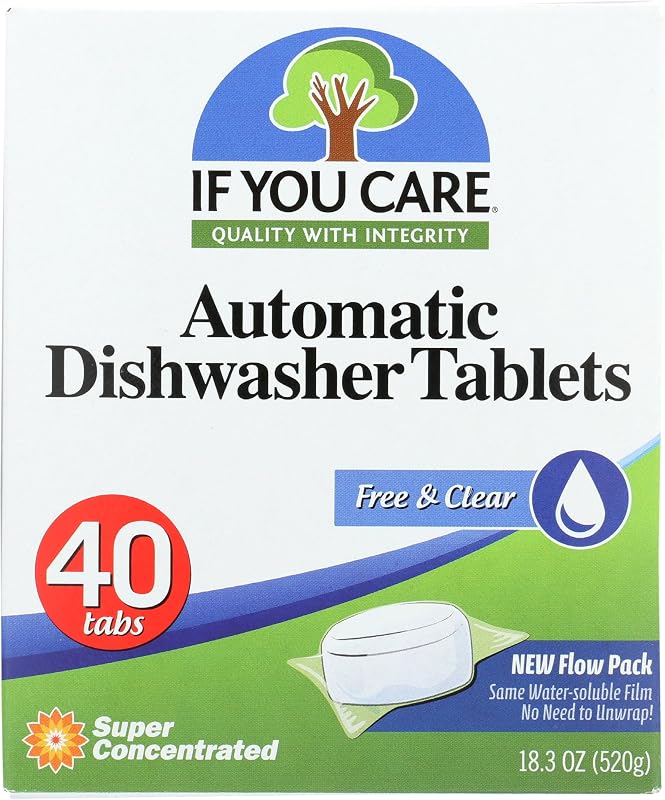
If You Care plant-based dishwasher tablets, 40 count box


The If You Care Dishwasher Tablets are built from a blend of mineral- and plant-derived cleaning ingredients — coconut and rapeseed among them — plus enzymes to break down grease and baked-on food residue.

There is no need to measure out detergent with this product, as it comes in the form of small pods. Each pod contains the same amount of detergent, so you can expect consistent results. The listing says it has no artificial fragrances, dyes or toxic ingredients.

You’ll find that the heavily concentrated design of this detergent will help you save both time and money. It works very efficiently, which means you won’t need to keep your dishwasher running for a long time.

The tablets are super-concentrated, and the wrapper is polyvinyl alcohol film that dissolves in the wash, so there is nothing to unwrap and no plastic shell left behind.

For a septic system the relevant part is what is absent: the formula is free of phosphates and chlorine, which are the two ingredients most often flagged as a problem for a septic tank’s bacterial balance. If You Care also states the tablets are non-toxic and have minimal impact on aquatic life.

You get 40 tablets per box, which at $11.79 works out at about 29 cents a wash — cheaper per load than everything here except the Finish Powerball (about 27 cents).

Pros
  • Plant- and mineral-derived formula, free of phosphates and chlorine
  • Dissolvable PVA wrapper — nothing to unwrap
  • Breaks down and removes tough grease, stains, and residue effectively
  • About 29 cents per wash — the second-cheapest per-load cost here
  • Comes in tablet form so you never have to measure anything
Cons
  • 4.2-star average is the lowest of the five picks here

Best Dishwasher Detergent for Septic Systems Buying Guide

Best Dishwasher Detergent for Septic Systems

When you are searching for the best dishwasher detergent for septic systems, you will need to take a careful look at your options. The list below will help get you started with several important product criteria.

Types of Dishwasher Detergent

There are numerous types of dishwasher detergent that you should consider prior to making a final decision. The more you learn about these options, the easier it will be to select the right one.

Liquid detergents can be quite effective at combating grease and grime, but they require measuring for the best results. You’ll also need to keep in mind that most of these products are fairly mild. While this limits their ability to cause damage to your septic system, it might not be great for removing tough stains.

You can also buy detergent that comes in the form of a powder. These detergents must also be measured out, which can be a pain. They can be quite messy as well, which is never a good thing.

I highly recommend buying detergent pods, as they are convenient and often very effective. Each pod will have the same amount of detergent, which eliminates the need for guesswork.

Natural Formula

As you look into the best dishwasher detergent for septic systems, you’ll need to look at the type of formula each one uses. You will definitely want to select a detergent that has an all-natural formula.

Make sure that the product you decide on doesn’t contain any phosphates, chlorine, artificial colors, alcohol, or ammonia. All of these ingredients can be extremely detrimental to all septic systems.

While it is true that phosphates are good at killing bacteria, this ingredient will ultimately back up your septic tank. This is due to the fact that it tends to destroy “good” bacteria, which is responsible for breaking down waste in your septic system.

Take a very close look at all of the ingredients in each detergent product before settling on one in particular. This will make it easy to choose one that matches your needs perfectly.

All of the ingredients in your new dishwasher detergent should ideally be derived from either plants or minerals. This will really help with ensuring clean dishes with no unnecessary hassle to deal with.

Packaging

You should also take a look at the packaging of each detergent as you research your options. You’ll find that some of the best dishwasher detergent for septic systems uses secure and eco-friendly packaging.

If you want to do your small part for the environment, you should look for detergent that comes in cardboard containers. There are a number of companies that have switched from plastic in an effort to become more environmentally responsible.

Speaking of eco-friendly, I recommend biodegradable detergent pods. These pods will dissolve completely in your dishwasher, so there is no residue left behind.

You’ll also need to make sure that the packaging is secure and keeps the detergent inside so it doesn’t become compromised. You can learn a lot about this by simply looking at photos as well as customer reviews.

Stain Removal

The very best dishwasher detergent for septic systems is capable of removing even the toughest stains. This is definitely something that you should keep in mind when exploring these products.

If you don’t want to deal with manually removing stains on dishes, you will need a detergent that can handle them effectively. There are plenty of detergents with natural formulas that can do this for you.

Ease of Use

As I mentioned above, detergent pods are typically very easy to use. You will, however, want to take a close look at each one’s size and shape. Make sure that you choose one that will fit in your dishwasher without any issues.

I also recommend selecting a pod detergent that eliminates the need for pre-rinsing. This will ultimately save you a lot of time and effort over the years. The fact is that you really shouldn’t have to rinse your dishes beforehand.

Performance

The overall performance of your dishwasher detergent is obviously important. You’ll quickly learn that the best dishwasher detergent for septic systems works quickly and thoroughly.

This means that you won’t have any spots, stains, grease, grime, or residue on your dishes once the full cycle is complete. Make sure that the one you decide to use works efficiently as well. The faster it gets your dishes clean, the less you will have to pay on your utilities.

Conclusion

In order to select the best dishwasher detergent for septic systems, it is important to look at the formula of each one. I strongly recommend a detergent with a 100% natural formula. This will prevent issues with your dishwasher and septic tank. Avoid any products that use phosphates, chlorine, or other toxic ingredients.

Let me know what you think of my list by leaving a comment below.

Related Reading

  • What Are The Most Durable Types Of Cookware
  • Faucet Water Filter Cleaning Tips
  • Original MEATER Wireless Smart Meat Thermometer Review

How These Picks Were Chosen

Plainly: this is a research-based guide, not a hands-on test. I have not run these side by side, and nothing here should be read as a report from my own kitchen.

What the picks rest on: whether the formulation is phosphate-free and enzyme-based rather than chlorine-bleach-based, since chlorine is the ingredient with the clearest mechanism for disrupting a septic tank’s bacterial colony; the form factor and how much packaging dissolves; any third-party certification such as EPA Safer Choice; and the complaint patterns across verified-purchase reviews, which for detergents concentrate on filming on glassware and pods failing to dissolve in short cycles.

What I could not establish: the actual effect of any of these on a working septic system. That would need a controlled study of tank biology over months and no such study exists for these specific products. What can be said is which formulations avoid the ingredient classes septic guidance consistently warns about – that is a reasoned position, not a measured one.

Frequently Asked Questions

What is the best dishwasher detergent for septic systems overall?

Seventh Generation Free & Clear. Its enzyme-based, phosphate-free formula breaks down safely in a septic tank, and 16,719 ratings at 4.6 stars make it the most-proven septic-safe option on this list.

What makes a dishwasher detergent septic-safe?

Septic-safe detergents avoid phosphates, chlorine bleach, and antibacterial agents that kill the bacteria your septic tank relies on to break down waste. Enzyme-based and plant-derived formulas do the cleaning without disrupting that bacterial balance.

Are dishwasher pods safe for septic systems?

Yes, if the formula itself is septic-safe — the pod format is not the problem. Check that the film is PVA (which biodegrades) and the detergent inside is phosphate- and chlorine-free. All five picks in this guide meet that standard.

Is Finish Powerball actually septic-safe?

The standard Finish Powerball formula is phosphate-free and generally regarded as septic-compatible for normal household use, though it is a conventional detergent rather than a plant-based one. If you want maximum caution for an older or sensitive system, choose Seventh Generation or If You Care instead.

What should I avoid in dishwasher detergent with a septic tank?

Phosphates, chlorine bleach, quaternary ammonium compounds (quats), and heavy antibacterial additives. These either poison the tank’s bacteria or pass through into the drain field. Also avoid overdosing — even septic-safe detergent used in excess raises the chemical load on the tank.

How often should a septic tank be pumped if I run the dishwasher daily?

Detergent choice does not change the standard guidance much: every 3-5 years for most households. Daily dishwasher use adds water volume more than solids, so pump frequency depends mainly on household size and tank capacity.

Also thinking about what comes out of your tap, not just what goes down the drain? See my faucet water filter guide.

Short on kitchen space? My countertop dishwasher guide covers compact units that pair well with septic-safe detergent.

Filed Under: Product Reviews

  • « Go to Previous Page
  • Page 1
  • Interim pages omitted …
  • Page 38
  • Page 39
  • Page 40
  • Page 41
  • Go to Next Page »

Recent Articles

  • Coffee Grinder Static: Why It Happens and How to Fix It
  • How to Descale an Electric Kettle
  • Saucepan vs Saucier: Which Pan Do You Need?
  • Espresso Shot Troubleshooting: Fast, Slow, Sour or Bitter
  • How to Clean a Coffee Grinder: What Makers Say

Search


HOME          Contact          Affiliate Disclosure          Terms of Service          Privacy Policy


kitchenwarecompare.com is a participant in the Amazon Services LLC Associates Program, an affiliate advertising program designed to provide a means for sites to earn advertising fees by advertising and linking to Amazon.com, Endless.com, MYHABIT.com, SmallParts.com, or AmazonWireless.com. Amazon, the Amazon logo, AmazonSupply, and the AmazonSupply logo are trademarks of Amazon.com, Inc. or its affiliates. As an Amazon Associate I earn from qualifying purchases.


Copyright © 2026 kitchenwarecompare.com, ALL RIGHTS RESERVED.