To clean a burnt stainless steel pan, let it cool, then boil water with a little dish soap in it and loosen the food with a wooden spoon. If a residue stays, boil baking soda and water, or use a non-chlorine powder cleanser such as Bar Keepers Friend for about a minute and rinse. Skip steel wool and oven cleaner.
This guide sorts burnt food from polymerised oil, heat tint and pitting, and shows where All-Clad, Made In, Cuisinart, Tramontina, Calphalon and Hestan disagree.
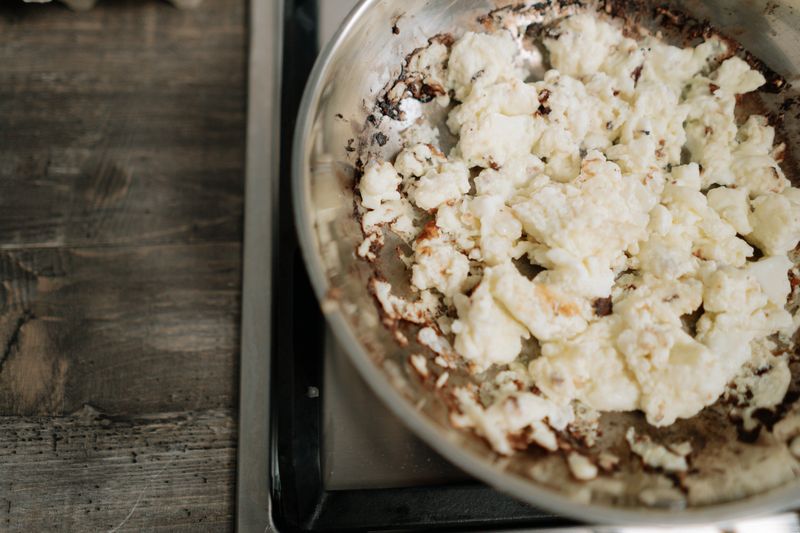
First, Work Out What You Are Looking At
Four different problems get called a burnt pan, and they do not share a fix.
| What you see | What it is | What to do | Permanent? |
|---|---|---|---|
| A black or brown crust, or food stuck in a layer | Burnt-on food | Boil with soap or baking soda, then a paste or powder cleanser (steps below). | No |
| A brown or golden patch that feels slightly sticky | Polymerised oil: cooking oil that has cross-linked into a hard layer. worldstainless calls it very hard to get off. | The same escalation as burnt food. Expect to repeat it. | Usually removable |
| Rainbow, blue or grey colouring | Heat tint. Made In describes a thickened chromium layer that is purely aesthetic. | Vinegar or a mild cleanser. See the short version below and the white spots guide. | Cosmetic, with one maker exception |
| White or grey specks you can feel with a fingernail | Pitting: metal loss, usually from chloride such as salt. Specks that wipe off with warm vinegar are mineral deposits instead. | Nothing restores it. All-Clad says it does not interfere with cooking performance. | Yes |
What Each Maker Says About Burnt-On Food
The makers agree on the first move, which is a boil, and split on almost everything after it. Each row comes from the maker’s own page or booklet.
| Maker and source | Method for burnt-on food | Cleaners it names | Cautions |
|---|---|---|---|
| All-Clad, Use & Care guide and blog | Sprinkle baking soda, add water, boil, and loosen the food with a wooden spoon. For burnt fat and charred food, a paste of a non-chlorine cleanser (All-Clad calls these nonabrasive) on a soft cloth, rinsed and dried at once and repeated if needed. The blog adds a 5 to 10 minute baking soda paste and a 1:1 vinegar and water simmer. | Its own cleaner, Bar Keepers Friend, Bon Ami | No oven cleaners, steel wool, steel scouring pads, or detergents with bleach or peroxide. Nylon pads are fine. Never put a hot pan under cold water. |
| Made In, burnt-pan article and care guide | Boil water with dish soap and scrape with a wooden spoon, then use a powdered cleaner and soap, leave it a few minutes and scrub with a stainless steel scrubber. Repeat. The care guide adds a 1:1 vinegar and water boil. | Its own Stainless Steel Cleaner, Bar Keepers Friend | The care guide says avoid bleach and steel wool, let the pan cool before cold water, and add salt only after the water boils. |
| Cuisinart, MultiClad Pro booklet (an older Canadian edition) | 1 inch of water and 1 tablespoon of non-lemon dishwasher detergent, boil, simmer 15 minutes, cool in the pan, then loosen with a sponge or plastic spatula. Ventilate; the fumes can irritate. | Bon Ami, Cameo and Nevr-Dull for a pasta or oatmeal film | No steel wool or metal pads that make coarse scratches. Oven cleaner is allowed on the outside bottom only. |
| Tramontina, care blog | Simmer half an inch of water a couple of minutes, with a tablespoon of baking soda for bad cases. Light burn: half an inch of water and a quarter cup of vinegar, boil a minute, off the heat, add 2 tablespoons of baking soda, pour out and scrub. | Bar Keepers Friend | Says steel wool and oven cleaner scratch the finish permanently. Its FAQ says the warranty excludes improper cleaning with harsh cleansers or detergents, and overheating. |
| Calphalon, stainless guide | Heat a little vinegar, take it off the heat, add baking soda so it foams, and scrub with a non-abrasive sponge. | Bar Keepers Friend for tint; its help article says rinse thoroughly because cleansers can leave a powdery residue | Avoid steel wool. |
| Hestan Cue, support article | Boil 1 part baking soda, 1 part vinegar and 3 parts water for about 10 minutes (Hestan describes this on a Cue cooktop), then scrub with a non-scratch sponge. | Bar Keepers Friend, with a warning | Never oven cleaners or abrasive cleaners. Bar Keepers Friend may dull the cooking surface. |
| Demeyere, U.S. FAQ | No burnt-food method is published. | A non-abrasive cleaner | Gentle detergents, no harsh scouring pads. |
| British Stainless Steel Association (BSSA), not a maker | Pre-soak in hot water with detergent, then a nylon brush and fine scouring powder if necessary. | Fine scouring powder | Abrasive powder can scratch polished surfaces. No chloride cleaners or long bleach soaks. |
The Cuisinart booklet is an older Canadian edition, so current U.S. instructions may differ. Your own maker’s page comes first, and the table is a comparison, not a ranking.
How to Clean a Burnt Stainless Steel Pan Step by Step
- Let the pan cool. All-Clad and Bar Keepers Friend say to let it cool before cleaning, and Made In says before it meets cold water. All-Clad warns that cold water on a hot pan can warp it, and the warped pan guide explains what that looks like.
- Wipe, then boil to loosen. Made In says to wipe off what you can with dish soap and a sponge first. Cover the burnt area with water and a little dish soap (Made In), or with baking soda and water (All-Clad), and boil. Loosen the food with a wooden spoon, which All-Clad and Made In name; Cuisinart says a plastic spatula. Metal utensils for cooking are a separate question, covered in can you use metal utensils on stainless steel.
- Try a baking soda paste. All-Clad’s blog leaves it on for 5 to 10 minutes before scrubbing with a non-abrasive sponge. worldstainless says a paste of gentle dish soap and baking soda left for several hours loosens burnt-on residue.
- Use a non-chlorine powder cleanser if it is still there. The Bar Keepers Friend label (the label lists a glass oxide abrasive) says to sprinkle it on a wet surface, rub gently, rinse within a minute, and test a hidden spot first. Wear gloves for prolonged use, and do not mix it with bleach or ammonia.
- Rinse and dry at once, then repeat rather than scrub harder. All-Clad, Made In and BSSA all say to repeat, and BSSA notes that abrasive powder can scratch polished surfaces.
Keep chlorine out of it. BSSA says not to soak cookware in dilute bleach for long periods such as overnight, and Bar Keepers Friend lists chlorine bleach, chloride cleaners and oven cleaner among the products that cause pitting.
Heat Tint, Polymerised Oil and Pitting: The Short Versions
Heat tint. All-Clad says to wipe a blue or rainbow stain with a sponge and white vinegar, and that rainbow or cloudy marks usually do not mean the pan is damaged. Made In suggests a vinegar and baking soda scrub or a 1:1 vinegar and water boil, and Calphalon uses Bar Keepers Friend with a soft sponge. The white spots guide explains the tint itself.
Polymerised oil. worldstainless says cooking sprays burn fast and leave a hard polymerised-oil layer that food then sticks to and burns on. Made In lists it, burnt food and heat tint as separate problems with one set of methods, and no maker I read gives polymerised oil its own, so the boil, paste and powder sequence above is the route to try.
Pitting. If white or grey specks stay after a warm vinegar soak and you can feel them, they are pits. No cleaner brings the metal back, which is why the chlorine and salt cautions in this guide matter.
Is it safe to cook in, and when to replace it? No maker page I read says burnt-on residue or heat tint makes a pan unsafe to cook in. All-Clad says pitting does not interfere with cooking performance, Made In calls tint purely aesthetic, and worldstainless says burnt-on residue is sticky and affects how food releases. I would replace a pan that no longer sits flat (see the warped pan guide) or is badly pitted.
Where the Makers Disagree
The instructions conflict, so this table names who says what rather than blurring it into “makers recommend”.
| Question | Who allows it | Who cautions or forbids it | Where that leaves you |
|---|---|---|---|
| Steel wool and metal scourers | Hestan says steel wool is fine on its NanoBond coating. Made In’s burnt-pan article tells readers to use a stainless steel scrubber. | All-Clad (no steel wool or steel pads), Cuisinart (no coarse-scratching metal pads), Tramontina, Calphalon and Made In’s care guide. BSSA says iron particles from wire wool or scouring pads can embed and leave rust marks, and suggests fine scouring powder with a nylon brush instead. | Nylon is the safe default. Made In disagrees with itself across two pages. |
| Oven cleaner | Cuisinart: stains on the outside bottom only, then rinse thoroughly. | All-Clad, Tramontina, Hestan Cue and Bar Keepers Friend say never. | Do not use it. The only maker endorsement found is for the outside base. |
| How long Bar Keepers Friend may sit | All-Clad says let the paste soak before scrubbing. Made In says a few minutes. | The Bar Keepers Friend label says rinse within a minute and not to let it sit longer than necessary. Tramontina says no more than a minute. | Follow the product label, and know that two makers say longer. |
| Bar Keepers Friend at all | All-Clad, Calphalon, Made In and Tramontina name it. | Hestan Cue says it may dull the cooking surface and must stay away from electronic contacts and Cue cooktops. Bar Keepers Friend says to test a hidden spot, and that the powder suits non-magnetic stainless. | Check your pan’s maker first. |
| Baking soda with vinegar | Made In, Calphalon, Tramontina and Hestan Cue give a combined method. | All-Clad’s stainless instructions give baking soda and, separately, a vinegar boil, but never mix them. Acid and base neutralise each other, so the foam is short-lived. | No source shows the mix beats either one alone. |
| Vinegar and salt | Nearly every source suggests hot vinegar. Made In’s burnt-pan article suggests a coarse salt scrub; no other maker I read suggests a salt scrub. | BSSA says common salt added during cooking, or concentrated salt and vinegar mixtures, may cause pitting over time. All-Clad, Made In’s care guide and Bar Keepers Friend say add salt only after the water boils. | Keep vinegar dilute (All-Clad and Made In say 1:1 with water), keep contact short, rinse, and never add salt to the vinegar boil. |
The sources also differ on what tint is. Most makers call it harmless, but Hestan describes colouring on its NanoBond coating as a food film from heat, oil and trace minerals, worldstainless says tint or pitting means the pan is not clean, and Cuisinart says a gas flame licking up the sides can permanently discolour them.
How to Stop Food Burning On
All-Clad says to preheat on low to moderate heat, use enough oil, start with dry room-temperature food, and keep high heat for boiling. Cuisinart says never to use high heat and not to leave the pan empty on a hot burner. worldstainless says food added too soon traps in the surface and burns on.
Stainless steel cladding explains how clad construction spreads heat across the pan instead of letting it pool under the burner. If you are replacing a pan rather than rescuing it, nonstick vs stainless steel covers the trade-off, the Cuisinart MultiClad Pro review and Tramontina Signature Tri-Ply review cover two of the stainless lines above, and the cookware hub lists the rest.
How This Page Was Put Together
This page is based on the makers’ own care pages and booklets, an industry-association advisory sheet and an industry-body brochure, not on testing; I do not own or test cookware. The BSSA sheet is old and written mainly for architectural and industrial users.
What I could not establish: which method works best, because I could not open any independent head-to-head test; whether any regulator or standards body addresses discolouration or cleaner residue on cookware, since I found no statement; whether oxalic acid cleaners leave anything harmful beyond the maker’s instruction to rinse; whether heating a pan in an oven to burn off residue is safe for a given pan, since no maker endorses it; and whether baking soda with vinegar beats either alone.
Also open: Demeyere publishes no burnt-food method, Hestan’s NanoBond blogs differ from its Cue support page, only Cuisinart’s and Tramontina’s warranty wording was read, and there is no data on how many burnt pans are fully recoverable.
The Verdict
Cool the pan, boil water with soap or baking soda, scrape with a wooden spoon, then move to a paste and a non-chlorine powder cleanser if you need to. Use nylon rather than steel wool, keep oven cleaner off the cooking surface, and read your own maker’s page first. Next, read the white spots guide if marks remain, or the cookware hub for the rest of the cookware guides.
Frequently Asked Questions
Is a burnt stainless steel pan ruined or unsafe to cook in?
Usually not. No maker page I read says burnt-on residue or heat tint makes a pan unsafe to cook in, and All-Clad says pitting does not interfere with cooking performance. Pits are permanent, though. I would replace a pan that no longer sits flat or is badly pitted.
Can you use steel wool on a burnt stainless steel pan?
Check your maker first. All-Clad, Cuisinart, Tramontina and Calphalon say to avoid steel wool or metal pads, and BSSA says embedded steel particles can rust. Hestan allows it only on its NanoBond coating. Made In’s burnt-pan article suggests a stainless scrubber, though its care guide says avoid steel wool.
Can you use oven cleaner on a stainless steel pan?
I would not. All-Clad, Tramontina, Hestan Cue and Bar Keepers Friend all say never to use it. Cuisinart’s booklet is the one exception: it allows oven cleaner on the outside bottom only, for burner stains, followed by a thorough rinse. No maker I read allows it inside the pan.
Does baking soda and vinegar work on burnt stainless steel?
Made In, Calphalon, Tramontina and Hestan Cue give a combined method. All-Clad gives baking soda and, separately, a vinegar boil, but never mixes them. Acid and base neutralise each other, and I found no evidence that the mix beats either alone. Most methods boil and scrape first.
How do you get rainbow marks off a stainless steel pan?
All-Clad says to wipe with a sponge and white vinegar. Made In suggests a 1:1 vinegar and water boil, and Calphalon uses Bar Keepers Friend with a soft sponge, rinsed thoroughly. Most makers call the marks harmless. The white spots guide covers heat tint in more detail.
Can you use Bar Keepers Friend on a burnt stainless steel pan?
All-Clad, Calphalon, Made In and Tramontina name it. The label says rinse within a minute and test a hidden spot first. Hestan Cue warns it may dull the cooking surface. It contains oxalic acid, and the label advises gloves for prolonged use.
How do you stop food burning onto stainless steel?
All-Clad says to preheat on low to moderate heat, add enough oil, start with dry room-temperature food and keep high heat for boiling. Cuisinart says never to leave the pan empty on a hot burner. worldstainless warns that cooking sprays burn fast and leave a hard layer.

I'm Glenn, and I started Kitchenware Compare to cut through conflicting product reviews and help readers pick kitchen gear with confidence. I don't own or test the products I write about — these guides are built from verified-purchase reviews, manufacturer specifications, and independent testing where it exists, with the reasoning shown, not just a rating.
Leave a Reply