• Skip to primary navigation
  • Skip to main content
  • Skip to primary sidebar

Kitchenware Compare

  • Home
  • Contact
  • Product Reviews
  • Food Blog
  • Helpful Kitchen Tips
  • About Us

How Does A Microwave Toaster Oven Combo Work?

Last Updated October 22, 2021

Microwave Toaster Oven Combo

Microwave toaster oven combos are a great way to save space and energy. They allow you to cook multiple types of food while only using one appliance.

The microwave toaster oven is a kind of combined kitchen equipment that is an upgrade from an ordinary microwave oven and toaster into a powerful 2-in-1 combo that serves the same purposes or even better. In this article, I’m going to put you through everything you need to know about this. But first, how does it work?

A microwave toaster oven works as a multifunctional device that doubles up as a microwave oven and a toaster. It heats food just like a standard microwave, serves as a toaster, and bakes foods just like an oven. It functions by utilizing microwaves and a fan (sometimes infrared radiation) to warm up food substances from within and a grilling component that heats from the outside.

You can use microwaves and an oven simultaneously because microwaves are non-ionizing radiation, while conventional light bulbs and ovens emit ionizing radiation.

What Food Can I Make In A Microwave Toaster Oven Combo?

There are varieties of foods that you can make with this device. They include;

  • Baked potatoes
  • Grilled sandwiches
  • Toasted bread
  •  Grilled cheese
  • Flatbread Margherita Pizza
  • Pizza rolls

Features To Look Out For When Purchasing A Microwave Toaster Oven Combo

When purchasing any appliance, there are some features you should consider. These features tell us how authentic these appliances are and how efficient they will be in carrying out their essential functions. What then should you look out for in a microwave toaster oven combo?

Wattage

Wattage is one of the most crucial factors to consider if you purchase a microwave toaster oven combination. The wattage of this appliance determines your cooking speed. So the higher wattage, the less time your food will spend heating up or cooking.

Although microwave toaster combo models with less wattage tend to be cheaper, they will likely slow down your cooking process and prevent your food from cooking evenly.

The majority of microwave toaster oven combos have a wattage ranging from about 600 to 1,200 watts. But usually, anything between 800 and 1000 watts will help in cooking your food efficiently.

Size

The size of the appliance is also a crucial factor. You need to consider two aspects of size.

First, the space you’ll need it to fit in. Either in a small open cupboard or on top of a kitchen counter. For such a multifunctional appliance, you need proper ventilation primarily because it deals with heat.

So, be sure the appliance is not too large for the space you cleared for it such that there’s still little space left on each side, the top, and the rear. We advise about 3 inches of space away from the wall or another object.

Secondly, the amount of food you wish to cook with this appliance matters. Think about the foods you often cook or heat up. Will they fit in the appliance? You don’t want to purchase what will not be helpful in the long run.

Pre-Programmed Settings

If you want to ease stress and take out the guesswork when cooking, it’s best to purchase a microwave toaster oven combo with a pre-programmed setting. Appliances like this will automatically compute the duration and power you need to get your food properly cooked and in a safe manner too. All you would have to do is correctly set the type and weight of the food.

Likewise, check which of the functions can be pre-programmed. You should probably purchase the one that automates most of the processes you utilize from time to time.

Maintenance

The major maintenance this appliance needs is occasional cleaning. Thus, it is advisable to purchase one that is relatively easy to clean. Ensure you pay proper attention to the lighting, fixtures, vents, and hinges, as these components require lots of effort and patience to clean.

Benefits Of Using A Microwave Toaster Oven Combo

Saves Money

Instead of purchasing a microwave, an oven, and a toaster separately, the multifunctional microwave toaster oven combo already offers you a three-in-one solution. Meaning you can buy this combo instead of buying separate appliances.

Also, you would only need one device instead of two if you need to perform all functions at once.

Microwave toaster oven combos also consume less energy. All these would surely help you save money.

Saves Time

Due to its ability to incorporate toasting and microwaving capabilities, you can cook or heat your food faster.

Also, you will spend less time moving food from one oven to the other, waiting for food first to heat up or defrost before you do what’s next. You can maximize one device for all.

Offers Versatility

Sometimes you don’t have the financial luxury of being able to buy all your appliances at once. Well, if you’ve been wondering which to purchase first and which to save for later probably, you have that problem solved. With just this combo, you can enjoy all functionalities from just one single unit.

Saves Space

This device is very efficient if you have a small kitchen space. It can fit in a small space, such as a cupboard or on a kitchen counter. Instead of adding multiple appliances dotted around the kitchen, this might be all you need.

Is The Microwave Toaster Oven Safe For Cooking?

Yes. A good microwave toaster oven is safe for cooking. It is also a very effective and highly suitable process. Although there is no evidence that it can cause any harm, letting the heat spread when cooking to kill harmful bacteria is essential.

This appliance is good at preserving food nutrients and deterring the formulation of any harmful substance in food.

However, you should avoid overheating or underheating your food. Also, do not stand too close to the microwave due to the heat. Avoid heating anything in a plastic container unless it has been labeled or marked safe for use by the manufacturer.

What should you not heat in a microwave?

You should not reheat foods that can quickly spoil or foods that cannot retain their flavor and texture properties when microwaved, such as raw seafood, eggs, dairy products like milk and cheese. The high temperatures of this device would only cause these ingredients to degrade faster than if they were cooked using other means. Also, avoid heating any moist food because it could splash on you while cooking inside the appliance, which is hot enough at 240 degrees Fahrenheit (115 Celsius).

Microwave Toaster Oven Combo Features:

-Compact Design for small kitchen space

-Pre-programmed settings with LED display

-Sandwich included for making delicious sandwiches

-Can be used as a regular oven with broil and bake functions and toasting bread.

-Toast function for perfect color browning on toast

-Convenient size lets you cook more dishes at once

-Includes an easy open glass door that you can easily clean after use.

Conclusion:

This appliance is great for busy people who are always on the go. You can use it to toast bread, bake cookies, or even heat leftovers in a matter of minutes. It saves time, space and it is effortless to use!

We will be writing a full review of the best appliances on the market soon. But for now, here are some of our top picks from Amazon.

We really hope you found this article useful. Don’t forget to check out our guide to air fryers and our ultimate list of kitchen essentials.

Filed Under: Helpful Kitchen Tips

Can You Grind Coffee Beans In A Nutribullet? A Step By Step Guide

Last Updated October 19, 2021

Can You Grind Coffee Beans in a Nutribullet

The short answer is yes; you can grind coffee beans in a nutribullet. The long answer is that it’s not as easy as using your typical grinder, and there are some things you need to know if you want to give it a try.

First of all, the blade on a nutribullet isn’t going to be nearly as sharp or strong as the blades on a traditional coffee bean grinder – so this means that grinding will take longer and won’t turn out quite as finely ground. You also need to know that the nutribullet won’t be able to handle as much weight as a traditional grinder, so there’s a chance you’ll end up with clogged blades if you try it.

It also doesn’t grind relatively as evenly or consistently, which can make for some inconsistently brewed coffee, depending on what kind of machine you have. However, you can use the Nutribullet as an alternative to a regular coffee grinder. If you follow our guide below, you should get good results with a bit of trial and error.

Nutribullet: The Smart Kitchen Gadget

A Nutribullet is not your regular blender that chops your fruits into tiny watery bits. It breaks them down, releasing all nutrients embedded in your fruits for optimum nutrition. It’s a great kitchen appliance.

It has powerful blades that rotate at 20,000 revolutions per minute, and at this rate, it can liquefy anything that has liquid in it. You have to be careful not to place your finger in it because a machine this powerful grinds your finger into ‘liquid’ too. 

A Nutribullet comes with an extractor blade, but it is not advisable to grind your coffee beans with it. Grinding coffee beans using an extractor blade would wear out the edge faster because it is designed for soft and juicy food items. Your coffee beans can also get stuck between the extractor blades, depriving you of all the coffee powder you can get. 

The correct blade to use is the milling blade. The milling blade, also referred to as a flat blade, would blend your coffee beans perfectly, just like you like it. You would have to purchase a milling blade for this purpose since an ordinary Nutribullet doesn’t come with one. To get your choice of coffee texture, operating the Nutribullet using the appropriate method will make your progress go smoothly.

How To Use A Nutribullet To Grind Your Coffee Beans.

Unlike a regular blender, you do not control a Nutribullet using a knob or a dial. It is managed by pulse control. To use the nutribullet, apply pressure to the cup on the top of the appliance. The blades will rotate for as long as you apply pressure to the cup.

Steps

  • As common with using new appliances, always read through the user’s guide manual for easy assembling. Be sure to avoid connecting the Nutribullet to power while assembling it, so you don’t hurt yourself.
  • Remove the lid of the cup and fill three-quarters of the cup with coffee beans. The extra space in the cup is to give the blades some room to work. 
  • Replace the lid and attach the cup to the base(motor).
  • Pulse your Nutribullet to get it started. 

Grinding your coffee beans using a Nutribullet can be as simple as learning the alphabet if you follow these steps.

For Different Coffee Textures 

  • For Coarse Coffee, you need about 3-5 secs. Put your coffee beans in the cup and pulse just three times. Remember, don’t fill up the cup so that the milling blades can move freely.
  • For Fine Coffee, it takes about 15-20 secs. First, grind it into a coarse texture for about 5 seconds and then grind it into fine particles. To achieve this, you pulse ten times, checking to ensure that the beans get a consistent grind. If this is not the case, hold the cup’s lid and shake to allow the bigger particles to move downward toward the blade. Do this for another 15 seconds or until you’ve achieved your desired texture.

Store your coffee in a suitable container and keep it in a cool and dry place.

Cleaning/ Washing The Nutribullet

Washing your Nutribullet before and after use is as important as washing your hands before and after eating. Regular cleaning helps you maintain your appliance properly. It also ensures that at every point in time, your Nutribullet is free of dirt and germs that can contaminate whatever you put in it later on.

Steps To Follow

  • Detach the cup from the base. You can wash the cup without using a dishwasher.
  • If you come upon tough-to-come-off stains in the cup, fill it with warm, soapy water, and leave for some minutes, then attempt to rewash it.
  • To clean the base, you can only use a damp rag. Make sure you don’t have water dripping from the rag onto the bottom because water and electronics aren’t exactly friendly.
  • Carefully wipe the blades so you don’t get hurt by cutting yourself.

What Kind Of Beans Can The Nutribullet Grind?

The milling blade is specially designed for nuts, grains, and seeds, and your coffee beans fall right into one of the listed categories. You can conveniently grind your coffee beans in a Nutribullet, provided you have the right kind of blade.

You can purchase a milling blade separately, or there is the Nutribullet 600 that comes as an 8-piece set. It also comes with a milling blade and some other added accessories. It is a little bit more expensive than the normal Nutribullet 600 that doesn’t come with accessories. You can check it out below on Amazon.

We hope you found this article helpful. Please let us know in the comments. Also, make sure to look at our other helpful articles like our great tips and tricks for your Air Fryer and the ultimate guide to kitchen essentials. 

Filed Under: Helpful Kitchen Tips

Can You Freeze Crème Fraiche?

Last Updated October 18, 2021

Can You Freeze Crème Fraiche

Crème Fraiche is a vital ingredient used for making exquisite dishes in the kitchen. Regardless of its benefits, it is essential to know how to preserve it well for future use. By preservation, we mean freezing. This article enlightens you on what you need to know about freezing creme fraiche. So, can you freeze Crème Fraiche? Let’s find out.

Can you Freeze Crème Fraiche?

Yes, you can freeze creme fraiche but not indefinitely due to its fat content. Typically, frozen crèmes last up to four months, provided that it is appropriately stored before freezing and handled well when defrosting. You can freeze it by placing it in a bag, an ice tray, or any airtight container. However, some tips can make the crème last longer. Do read on!

What is Crème Fraiche?

Crème Fraiche is a French word for “Fresh cream.” It is a thick cream that contains high-fat content and is made from heavy cream, buttermilk, or yogurt. Although its thickness is obtained by culturing bacteria, crème Fraiche remains one of the best creams used in the kitchen due to its versatility. Whether you want to spoon it over fresh fruits or garnish it with your dishes, crème Fraiche is always there to make your meal an exquisite one. It is more expensive than sour cream and can easily be found in food stores or at the dairy aisle in some supermarkets.

Is it Safe to Freeze Crème Fraiche?

Yes, it is relatively safe to freeze crème Fraiche once you are not ready to use it. Besides, freezing the crème enables it to last longer and use another time.

How to Freeze your Crème Fraiche?

Freezing is one of the best ways of preserving your crème Fraiche. You can do this effectively through an ice tray or a bag.

Using an Ice Tray

You can freeze your crème Fraiche through the use of an ice tray. This method is preferable for scooping out the portion you need and takes only a few steps. Here are the steps.

  • Scoop the crème into an herb freezing or ice tray
  • Ensure you divide the cream into portions so that you can scoop the quantity you need without defrosting everything
  • Put the tray into the freezer for about 3-4 hours.
  • Take out the frozen cream and secure it in a freezer airtight container or a freezer bag to keep it intact.
  • Label the bag or container with the date you are just preserving it
  • Put the container or bag into the freezer and store for months. With this, the crème can last for about four months at a steady zero degree Fahrenheit.

If you want to use only bags to store your crème, you can consider the following instructions.

  • Get some heavy-duty or thick freezer bags to prevent leakages or allow foul odor to come in contact with your crème Fraiche.
  • Put your crème fraiche into the bag. You are only allowed to spoon the amount you will use later to make it last longer.
  • Squeeze out the air in the bag and deal tightly
  • Put the bags in the freezer.

Tips for Freezing Crème Fraiche

Now that you have gotten the steps. Here are some tips that can increase the shelf life of your crème Fraiche.

  • Freeze your unused crème as soon as possible. It is better to freeze sooner than later as defrosted crème could get spoiled if unused for a more extended period.
  • It is better to freeze branded crème Fraiche as a result of its preservability. Although this doesn’t necessarily mean preservatives, it means some branded crème can last longer when frozen.
  • Do not freeze a sauce that contains crème Fraiche. It affects the texture of the sauce negatively and may not make it taste good. Hence, you can freeze your sauce without putting the crème Fraiche in it.

Does Crème Fraiche Freeze Well?

Crème Fraiche freezes well. However, its longevity is usually determined by whether you purchase it or make it at home. Purchased crème Fraiche usually freezes more than homemade due to how you make it.

Besides, the fat content also determines how the crème freezes. The higher the fat in the creme fraiche, the worse the freezing could be. Freezing high fatty crème could make it separate or turn runny once the ice melts.

Also, the way you handle the crème before freezing is another crucial factor. If you wait too long before you freeze the crème, the quality will deteriorate when defrosting it. In addition, the crème is affected by the period with which it stays outside of the freezer. That is, if you keep your frozen crème Fraiche out of the freezer often or keep it outside for an extended period, the process could have an impact on how the product freezes. However, if you place it back in the freezer early, the quality may remain the same nor slightly change.

How Long Does Frozen Crème Fraiche Last?

After opening your creme fraiche container, it could last for about 3-4 days before spoilage. However, some brands opine that it could last for about 15 days if appropriately preserved in the fridge. In other words, the brand of the crème influences its shelf life. Hence, you may need to check with the label on the crème container to know about its shelf life. Nonetheless, many crème Fraiche lasts for about four months if frozen properly.

How Can I Tell If My Crème Fraiche Has Gone Bad?

Your crème Fraiche has gone bad if it gives off an odd smell (usually a foul one) or some molds have developed in it. Unless this happens, you can still use your creme. Separation is not a cause for alarm here, as all you need to do is to whisk it to return to its original state.

How Can I Defrost my Crème Fraiche?

Defrosting crème Fraiche isn’t a difficult task at all. All you need to do is transfer the frozen crème from the freezer into the fridge to soften the ice content. You can leave overnight to do this. Then, allow the crème to thaw. As it is thawing, scoop the portion into a mixing bowl. Then, whisk it vigorously for a few minutes to make it creamy once again. If you don’t whisk it properly, you will be left with a clumsy mess that won’t look good and affect the food you use with it.

Can I Refreeze the Crème Fraiche?

The answer is no. Once you freeze your crème once, refreezing it won’t make it look good again. It will reduce the quality of your creme adversely and create a negative impact when added to any food.

How Do You Make Crème Fraiche?

To make crème Fraiche, you first need to place a jar of heavy cream in a dark dry place for about 24 hours until it thickens. Then, put some yogurt cultures into this mixture and allow them to ferment together overnight at room temperature. Afterward, refrigerate your mixture until needed before using as creme Fraiche and pouring off any excess liquid content if too runny. It’s really easy and only takes a few minutes. We’ve also found this helpful video for you.

Final Thoughts

Crème Fraiche is a delicious and versatile ingredient. It can be frozen and defrosted for future use if you follow the steps outlined in this article. I recommend trying to make your own, as homemade is always best. We hope you found this article helpful, and please let us know if you have any comments.

If you enjoyed this article, please have a look at our other helpful posts like how to reheat Nachos, how to correctly freeze Vinegar and Almond Milk.


Filed Under: Helpful Kitchen Tips

Air Fryer Tips, Tricks and FAQs. Your Complete Guide

Last Updated July 20, 2021

Air Fryer

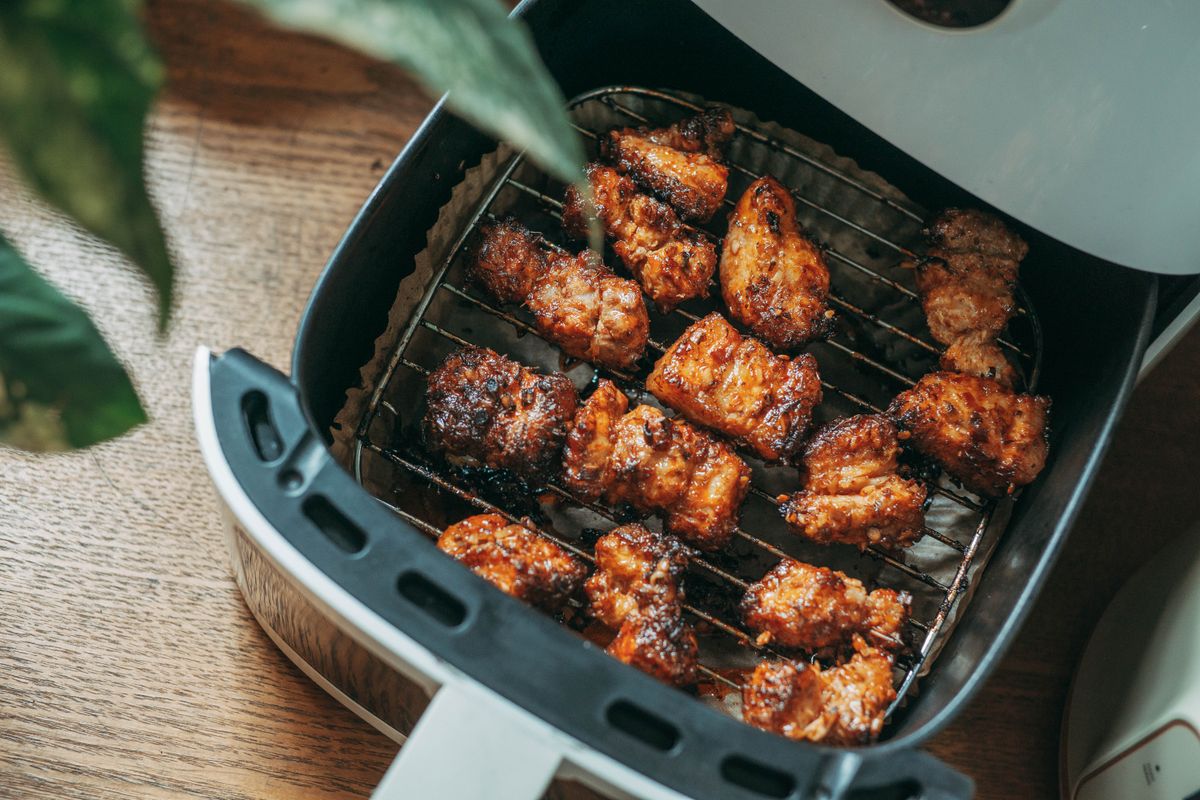
Air fryers are becoming more and more popular recently. People are starting to realize that this is a really convenient kitchen appliance, and it can do far more than just cook French Fries! So, we’ve decided to put together a helpful article to address some of the more common questions out there about using your new air fryer. Hopefully, this will help you get the most out of this great kitchen appliance.

If you haven’t yet purchased your Air Fryer and you need some help deciding, please check out our article on the best Air Fryers for a family of 4. Please also check out some of our other reviews on the best cheap espresso machines, the best small chest freezers, and the best cookware for gas stoves.

Now, let’s jump in.

Do you have to use oil in an air fryer?

No, you do not have to use oil in an air fryer. If the recipe calls for it, though, then you should add a tablespoon of vegetable or canola cooking spray before putting your food into the basket and set the timer accordingly. The great thing about using an Air Fryer is that you don’t need as much fat because there are fewer hot spots on the surface of the food.

Are air fryers dangerous?

Air fryers use convection currents for cooking the food, and there is no hot oil involved. They are one of the safest ways to cook foods without having an open stovetop or oven that can get out of control quickly if you’re not careful with it!

Air Fryers also keep your kitchen cool because they don’t heat up as much as other appliances like an oven does. Just remember not to over-fill them, and make sure you clean them regularly for best results!

How do you clean an air fryer?

Cleaning the inside of your Air Fryer is a breeze. For most models, you can wipe down the crumb tray and remove any grease or debris accumulated on the bottom of it with a damp rag. You should also periodically check for the build-up and remove if any food particles have fallen in between the grill vents so they don’t get cooked onto your next meal! Safety first!

The outside of your Air Fryer will need to be cleaned more often than its interior because it’s exposed to spills and splatters from frying foods like French fries or chicken fingers. We recommend using warm water and soap or baking soda mixed before scrubbing with a dishcloth.

How do air fryers work?

Air fryers cook food by circulating hot air around them using convection currents. These currents are created because warm, less dense hot air rises above cooler, denser cold air. The air fryer usually rotates the food to ensure that the heat is distributed evenly and all sides are cooked.

The hot air crisps the food by quickly vaporizing the moisture on its surface. It is sometimes necessary to coat food with a thin layer of oil before cooking it so that this moist outer coating can be heated and evaporates, leaving only crisp-cooked surfaces behind.

What cooks best in an air fryer?

You can cook a whole range of different foods in an Air Fryer. It’s perfect for roasting, baking, and frying all kinds of tasty meals! You’ll have access to a wide variety of recipes from sweet to savory that will take your cooking experience up a level.

In general, the foods that work best in the air fryer are high in water and fat content like french fries, fried chicken, or even cake!

Examples of foods that can all be cooked in an air fryer:

– Bacon

– Broccoli

– Carrots

– Corn on the cob

– Mushrooms

– Onions

– Potatoes, french fries, or roasted potatoes can be cooked in an air fryer. You can also peel and dice the potatoes before cooking them to make mashed potatoes! They will cook much faster than on the stovetop as well! You should use vegetable oil when roasting these types of foods because it allows for better browning. Just remember not to overfill your basket so things won’t stick together. Roasted vegetables taste especially good from an Air Fryer oven because you don’t need any added oil!

– Chicken drumsticks

– Chicken wings

– Pork chops, pork loin, or tenderloin

– Salmon fillets (thicker cuts)

– Bacon-wrapped asparagus spears that are lightly coated in olive oil. These will be crispy on the outside and cooked to perfection! Just make sure you don’t overcrowd your basket when cooking these and rotate them so they’ll cook evenly on all sides. It’s important not to use more than one layer of bacon at a time because it will take too long to crisp up without burning. You want nice even layers of food with nothing sticking together! Cooking times may vary slightly depending on the thickness of the cut, but usually, about 12 minutes is a good starting point if you’re unsure.

– Salmon

– Chicken breasts or legs (although the best way to cook these is by roasting them in the oven – they’ll come out juicier and more flavorful)

– Shish kebabs that are marinated with a mixture of olive oil, lemon juice, garlic powder, and salt. You can also add some cumin for extra flavor and even chopped parsley if you want! The simplest recipe only takes about 15 minutes on medium-high heat. Just be sure not to overcrowd your basket too much because this will cause it to steam instead of air fry properly. Rotate the food every five minutes, so there’s an even distribution of flavors while cooking as well!

You should not cook the following foods in an air fryer:

– Rice

– Bread that needs to be baked through at a very high temperature. These will come out soggy and overcooked. You can toast bread in an air fryer, but it won’t have the same texture as when you bake it because of how quickly the heat is distributed throughout the food by convection currents!

– Vegetables with tender skins like tomatoes, eggplant, or zucchini are more susceptible to burnt edges.

Air Fryers cook the best cuts of meat such as chicken breasts, pork chops, and salmon that are thick enough to allow for even cooking.

How to make sure food doesn’t stick in the air fryer

In an air fryer, food will cook much quicker than on the stovetop or in the oven. The fastest cooking time for most foods is about 12 minutes, and it’s best not to overcrowd your basket, so things don’t stick together while cooking. Rotate them every five to six minutes as well!

You also want to make sure that you use a high-heat vegetable oil spray when roasting certain types of food like french fries, potatoes, and carrots because they are very low in fat content which causes them to burn if cooked without any added oils easily. This should help ensure more even browning during the frying process (and caramelization!)

To make sure that food doesn’t stick together while it’s being cooked, follow these tips:

– Use a nonstick dish or pan liner, and the basket will glide in and out of the fryer with ease! You’ll also be able to use minimal oil because there won’t be any sticking problems. If you don’t have one yet, then I recommend getting an inexpensive one from your local grocery stores such as Fred Meyer or Safeway. They’re worth every penny if you want things to go smoothly when using an Air Fryer. The liners also come in different sizes, so they fit most baskets perfectly without needing extra time on cutting them down at home!

How is an air fryer different from a convection oven?

A convection oven is an electric oven with a fan inside that circulates heat evenly to cook food quickly.  A few differences between these two are:

– Air Fryers will not brown your food as deeply as Convection Ovens do (although this depends on how you adjust your thermostat)

– The surface area in an Air Fryer is much larger, so more people -or if you want, bigger portions–can fit into one, whereas in a convection oven, you’re limited to just one dish at a time.

– The cooking process is much shorter in an Air Fryer than it would be in a Convection Oven

The best use for an air fryer versus the other types of ovens mentioned above is that they are specifically designed to cook foods with low-fat content such as french fries, potatoes, and carrots without burning them on the outside while leaving them soft inside!

Do you have to preheat the air fryer?

No, you do not have to preheat the air fryer before use. It will stay at a constant temperature as long as it is plugged in and turned on!

What is the best wattage for an air fryer?

This is not a common question, and there isn’t any “best wattage” for you to choose. Typically, the higher the wattage on an appliance means that it will cook your food more quickly, so I recommend choosing one with at least 1800 watts if you want something fast!

You can also find cheaper models in 1000 or 1300 watts which are still very efficient but may take longer than desired depending on what type of food you’re cooking. To be safe, go ahead and buy a model with as much power as possible because then you’ll know it’s going to work well no matter what kind of dish or recipe you have planned out. Don’t stress about this too much though-these machines typically come set up to turn off when it automatically reaches the desired cooking temperature, so you can’t really go wrong.

What size air fryer should you get?

A larger air fryer may hold more food, but it also needs a much bigger counter-top space. This is because the basket sizes are often larger, so you’ll need an adequate surface area to set your machine on while cooking! I recommend getting one that doesn’t take up too much room if possible, especially if you’re living with limited kitchen space or don’t have enough storage for these types of things.

No matter what size appliance you decide on, ensure that they allow for even heat distribution during use! You can do this by checking out customer reviews online before making any purchases. If people mention uneven heating, then forget about buying them -you want good quality from whichever brand you choose to buy from.

Popular Air Fryer Recipes:

Ginger and Citrus Fruit Air Fryer Baked Apples

Ingredients:

– One apple per person (green cooking apples work best)

– Fresh ginger root, peeled and thinly sliced

– Zest from one orange or lemon. Use a Microplane grater to get the most of it off for maximum flavor!

– Granulated sugar substitute that tastes similar to brown sugar, like stevia or Truvia. Add more if you want them sweeter than normally baked apples. A little goes a long way here, so be careful not to use too much because then they’ll taste overly sweet when cooked in the air fryer! TIP: You can use honey instead of this ingredient, but I recommend using a little less than you would when using sugar so that it doesn’t have an overly strong flavor.

– A pinch of cinnamon to top things off!

Instructions:

– Slice your apples in half and then take out the center core with either a spoon or melon baller (this prevents them from exploding too much)!

– Spray each side evenly with cooking spray before adding any other ingredients like ginger, orange zest, etc. The oil will help keep these items stuck onto the apple while they cook, which is ideal because there’s nothing worse than having everything fall off midway through roasting time! Feel free to add more spices if desired for extra flavoring -the possibilities are endless here!

– Place the apple halves in an air fryer and cook them on high heat for ten minutes, then turn it down to medium. They should be done cooking after about 12-14 minutes total -keep a close eye on them so that they don’t overcook!

Air Fryer Banana Bread Recipe with Chocolate Chips

Ingredients:

– One large egg white (or two small ones)

– Two tablespoons of Greek yogurt or other dairy substitutes like almond milk, coconut milk, etc. This is optional, but I recommend using one if you want your bread to come out softer than usual by adding some moisture into the mix. It’s perfect to use when baking gluten-free food items because there are no eggs included here as the main ingredient!

– One mashed banana (or half if you’re using one egg white)

– Two cups of self-rising flour. This is important because it’s really common for people to forget this and end up with pancakes instead of bread, which tastes amazing but isn’t what we want here. So be careful not to make that mistake! Add in some sugar substitute, like honey or brown sugar, so that the final product doesn’t come out too bland tasting -this would also work great if you don’t have any dairy on hand either since these products are good substitutes when baking without eggs. The choice is yours, though, depending on your preferences about how sweet they should taste after cooking!

Instructions:

– In a large bowl, combine all of the ingredients -you’ll know it’s done when the dough is dry and doesn’t stick to your hands.

– Shape into loaves or other shapes using pre-oiled parchment paper on top for easy removal from the air fryer after they’re cooked!

— Bake in an air fryer for about 12-14 minutes.

Some other tips for using an air fryer are:

– Be sure to clean the basket and lid of your fryer after use.  Use a paper towel or dish rag that has been dipped in warm water mixed with vinegar. The high temperatures from cooking will cause many different food particles to stick to the surface, so be careful when wiping it down!

– You can season food before adding it into the basket by mixing some salt, pepper, garlic powder, and paprika, then sprinkling liberally on all sides of meats like chicken breasts or pork chops. This is optional, but I recommend doing this if you want more flavor than just eating plainly cooked meat! It’ll make things taste even better once they emerge from the fryer.

– The oil spray you use to coat your food before cooking can also be used as a marinade for meat. Just mix it with salt and pepper beforehand to create a sauce of sorts!

– Make sure not to place any frozen items into an air fryer. Frozen food may not cook evenly or fully. Let them thaw out first if possible.

After reading these tips on how best to roast different foods in an Air Fryer, we hope that you will have more success cooking without having many mishaps along the way! This is by no means a complete list but hopefully some helpful pointers if you’re new to this type of cooking.

Filed Under: Helpful Kitchen Tips

Does Balsamic Vinegar Go Bad? All You Need To Know.

Last Updated July 12, 2021

Balsamic Vinegar

Balsamic Vinegar is a traditional Italian dressing that has been used for over two thousand years. It is made from the juice of white grapes, boiled down to a syrup, and then fermented with yeast or bacteria. The vinegar undergoes a process called reduction, whereby it becomes more concentrated as water evaporates.

The French call this condiment “Vinaigre de Modan,” while Italians refer to it as “Aceto Balsamico Tradizionale.” This indulgent vinegar has been produced in Italy for more than 300 years, and the quality of its ingredients ensures that it will last you nearly a lifetime. You can use it as a marinade; it will give your meat a rich, tangy taste. It’s the perfect ingredient for soups and salad dressings. This product contains concentrated acetic acid, and it should always be stored in the refrigerator to retain its pungent flavor.

If stored correctly, Balsamic vinegar does not go bad. However, the quality of an opened bottle will deteriorate over time. If stored in a cool, dry place, it should last up to three years and can be kept longer if refrigerated.

It can be stored in the fridge after opening for up to four years, but it does not stop going bad eventually. There are many different ways to tell if your balsamic vinegar has gone bad: you may notice that the liquid inside the bottle starts turning brownish-yellow; there may be mold growing on top of the liquid, and you might detect an unpleasant odor coming from inside of the bottle.

Does Balsamic vinegar need to be refrigerated?

No, it does not require refrigeration, and it will keep for years at room temperature if unopened. It should be stored in a cool, dry place that is away from sunlight. Your condiment can be stored for up to one year after opening, but it will eventually go bad regardless of what you do.

Balsamic vinegar that has been stored for a long time may not have the same flavor as when it was purchased because, over time, it loses its acidity and some of its Balsamico flavor. In its traditional Modena Balsamic form, it is aged for over 12 years. The Balsamico flavor changes as it ages.

If you want it to last for longer, all you need to do is store it in the fridge. When stored in a refrigerator, it can last for over three years if opened and up to six years if kept unopened. You may notice that when stored in a refrigerator, it becomes thicker. This is because the cold temperatures cause the Balsamico flavor to thicken.

How long does Balsamic vinegar last?

Stored properly, unopened Balsamic vinegar can last nearly indefinitely.  Once opened, most bought vinegar bottles usually have a shelf life of 3-5 years if stored in a cool, dry place. The quality will then start to deteriorate rapidly.

It is best used within one year to two years after opening. This is due to its Balsamico flavor and acidity both going down as time goes on.

Can you use Balsamic Vinegar after the expiration date?

Balsamic vinegar that has been past its expiration date is still usable. Ensure that there is no mold present and that it has maintained its color and odor.

It also does not go bad when cooked, so that It can be used in cooking without any concern.

What’s the difference between balsamic vinegar and regular vinegar?

Balsamic vinegar is made in a traditional way from Balsamico grapes. It undergoes an aging process which makes it thicker and sweeter than regular vinegar.

Balsamic vinegar can enhance the flavor of any food, especially meat, fish, and vegetables. It is made from the Balsamico grapes produced in the Bologna region of Italy, and it has a sweet Balsamico flavor. It is often served with food because its Balsamico flavor brings balance to spicy dishes. Additionally, it also has a stronger Balsamico flavor and acidity when compared to regular vinegar.

Can you freeze Balsamic Vinegar?

Yes, it can be frozen for up to six months if stored in an airtight freezer-safe container. In its traditional Balsamico form contains a high percentage of Balsamico flavor. When it has been frozen, it will become thick. This is because the Balsamico liquid will thicken as it freezes and then thaws. It should never be refrozen, but you can safely use it after it has defrosted.

How to store Balsamic Vinegar after opening:

For the longest shelf life, Balsamic vinegar should be stored in a refrigerator. It should be placed on the top shelf of the refrigerator because the Balsamico flavor will evaporate.

The lid should be tightly closed, as it can easily become contaminated with bacteria if not stored properly. The vinegar will become thick, and the Balsamico flavor will evaporate if left open, so it is important to close the lid tightly.

Balsamic Vinegar that has become contaminated with bacteria can be easily identified because the flavor will change to a sour smell like spoiled milk or rotten eggs. The contaminating bacteria may grow very quickly and can often go undetected until a strong Balinguc odor is detected.

Are there any benefits from Balsamic vinegar?

There are no recorded health benefits from Balsamic vinegar. It contains a very high-calorie content, and it also contains sugar. So, it tastes delicious, but don’t use it as part of your weight loss program.

Where can I buy balsamic vinegar?

You can purchase it online from several different websites, but make sure the product you are buying contains traditional Italian Bocimaco grapes, or it may not be authentic.

You can also find it at most supermarkets and food stores.

Here’s a selection of our favorites from Amazon:

Can old balsamic vinegar make you sick?

If it’s left open and becomes contaminated with bacteria, you may become sick.  Bacterial contamination can occur if the seal on the jar has been broken or not properly closed. The longer you leave the bottle open, the more likely it will become contaminated with bacteria.  Balsamic Vinegar that has been contaminated with bacteria can cause vomiting and diarrhea if consumed. If you feel ill after consuming, make sure to seek medical attention.

How can you tell if balsamic vinegar has gone bad?

Unscrew the lid and take in a whiff.  You should smell the sweet Balsamico flavor. If you detect an odor similar to rotten eggs, then your Balsamic vinegar may have been contaminated with bacteria and is no longer safe for consumption.

How can you tell if balsamic vinegar is real?

If your vinegar doesn’t contain the ingredient traditional Balsamo, then it may not be real. The easiest way to tell if you’ve purchased an imitation is by taking a few drops on a spoon and see how quickly it dries.  Real balsamic vinegar will dry very slowly because it has high water content. The  Imitation product dries much faster because it contains significantly less water.

What is a good substitute for balsamic vinegar?

If you don’t have any in your kitchen or are trying to cut back on calories, several different substitutes can be used instead of real Balsaico:   – Add a little sweetness to your salad dressing with honey or agave nectar. – Substitute red wine vinegar in dressings and vegetable dishes. – Use rice vinegar for sushi rice or as a substitute in Asian recipes.

If you are going to substitute for Balsamic vinegar, you should use 2 tablespoons of vinegar for every 1 tablespoon used in the recipe. The flavor of the substitute will not be as strong.

If you want the real stuff, though, nothing beats authentic balsamic vinegar!

Conclusion:

Storing your balsamic vinegar is an important part of maximizing its shelf-life. It would be best if you stored it in a cool, dark place with minimal exposure to air and light. If you have any other questions about how best to care for your Vinegar, or if you’re wondering what kind would be right for the recipes that you love, contact us! We can help answer those questions to know exactly which type will work best for all of your needs.

If you enjoyed this article, make sure to check out our other helpful guides on whether you can freeze Vinegar, Chicken Salad, Caviar, and Almond Milk.

Filed Under: Helpful Kitchen Tips

  • « Go to Previous Page
  • Page 1
  • Interim pages omitted …
  • Page 7
  • Page 8
  • Page 9
  • Page 10
  • Page 11
  • Go to Next Page »
  • Facebook
  • Instagram
  • Twitter

Recent Articles

  • What Does Coriander Taste Like?
  • Pros and Cons of Ductless Range Hood vs Ducted
  • The Benefits of Ductless Range Hood Ventilation
  • How to Reduce Noise Levels of a Ductless Range Hood
  • How to properly install a ductless range hood
 

HOME          Contact          Affiliate Disclosure          Terms of Service          Privacy Policy


kitchenwarecompare.com is a participant in the Amazon Services LLC Associates Program, an affiliate advertising program designed to provide a means for sites to earn advertising fees by advertising and linking to Amazon.com, Endless.com, MYHABIT.com, SmallParts.com, or AmazonWireless.com. Amazon, the Amazon logo, AmazonSupply, and the AmazonSupply logo are trademarks of Amazon.com, Inc. or its affiliates. As an Amazon Associate we earn from qualifying purchases.


Copyright © 2026 kitchenwarecompare.com, ALL RIGHTS RESERVED.