• Skip to primary navigation
  • Skip to main content
  • Skip to primary sidebar

Kitchenware Compare

  • Home
  • Product Reviews
    • Air Fryers
    • Coffee
    • Cookware
    • Flat Top Grills
    • Meat Thermometers
    • Food Processors
    • Knives
    • Pizza Ovens
    • Toaster Ovens
    • Juicers
  • Food Blog
  • Helpful Kitchen Tips
  • Data Studies
  • About
  • How I Review
  • Contact
You are here: Home / Archives for Glenn

Best Roasting Pan for Prime Rib 2026: 5 Picks for Perfect Results

Last Updated June 27, 2026

This post contains affiliate links. If you buy through my links, I may earn a commission at no extra cost to you.
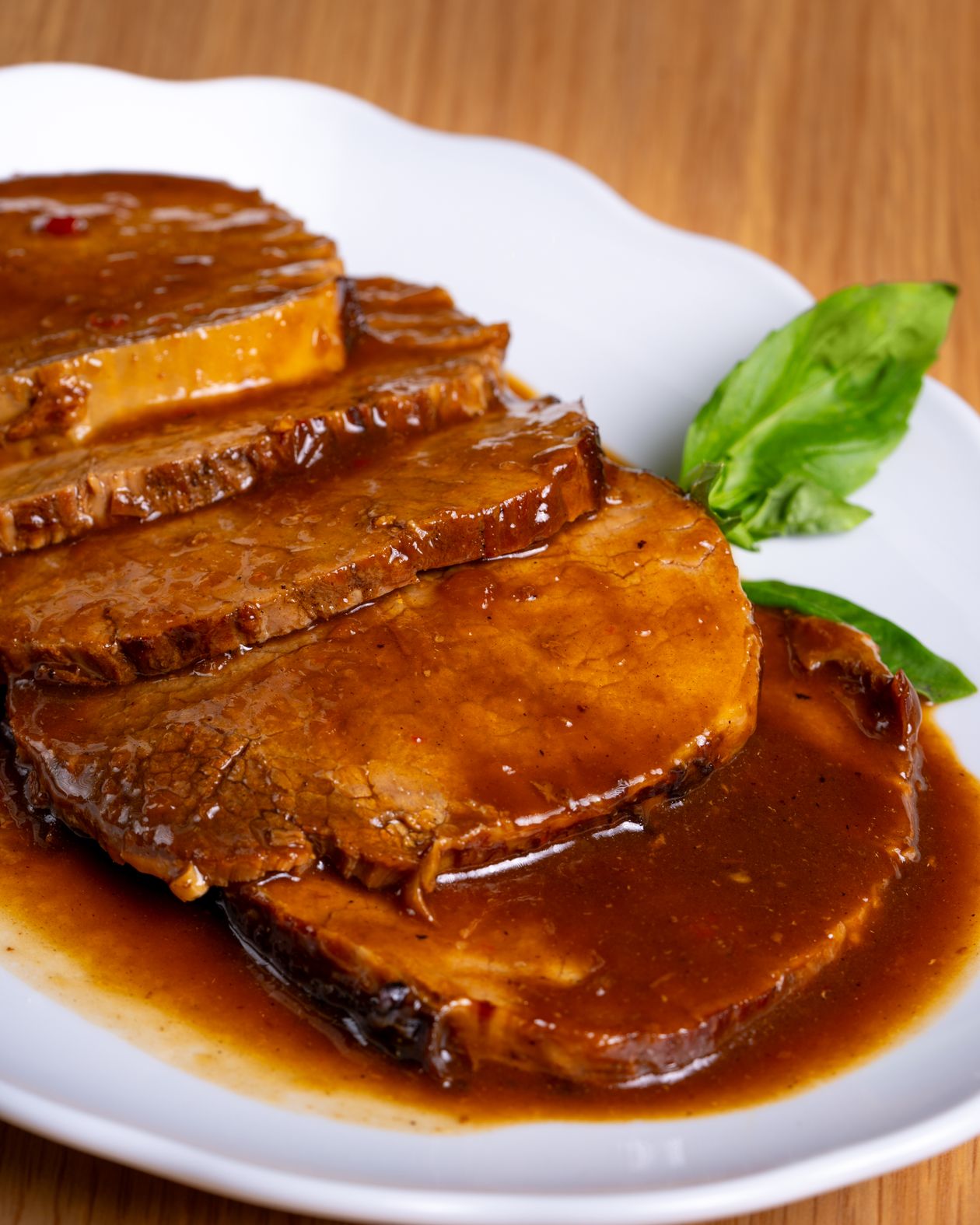
Tender sliced beef roast with rich gravy — best roasting pans for prime rib

Disclosure: As an Amazon Associate I earn from qualifying purchases. This doesn’t affect which products I recommend — I only include items I’d stand behind.

These picks are based on a review of Amazon customer data — ratings, review counts, and verified purchase feedback — alongside technical specifications for prime rib roasting: pan size relative to roast weight, rack inclusion, material heat tolerance, and stovetop compatibility for making pan gravy.

The Circulon Total Bakeware Nonstick Roaster is the best roasting pan for prime rib for most cooks — large enough for a 5-bone roast, includes a proper rack, and is built heavy enough that it won’t warp at prime rib temperatures. Below are five picks that cover every situation from budget to premium, compact to family-feast size.

Best Roasting Pan for Prime Rib 2026: Quick Comparison

Product Best For Price Rating Buy
Circulon Nonstick Roaster Best Overall $69.59 4.7★ (9,113) Check Price
IMUSA Oval Roaster Best Oval Shape $103.13 4.7★ (3,590) Check Price
P&P CHEF 16″ V-Rack Best Value $43.99 4.7★ (1,535) Check Price
Cuisinart Multiclad Pro Best Premium $159.95 4.7★ (1,398) Check Price
Cooks Standard Best Compact $84.36 4.8★ (1,135) Check Price

Best Roasting Pan for Prime Rib 2026: Full Reviews

1. Circulon Total Bakeware Nonstick Roaster 17×13″ — Best Overall

Circulon Total Bakeware Nonstick Roaster 17x13 inch

At 17×13 inches, this is the largest nonstick option on the list and one of the few that comfortably fits a full 5-bone prime rib without the roast overhanging the edges. The included flat rack lifts the meat off the pan surface so heat circulates underneath rather than steaming the bottom. With 9,113 reviews at 4.7 stars, it’s the most-reviewed nonstick roaster on Amazon.

The hard-anodized exterior handles oven heat at roasting temperatures (325–350°F) without issue. The Dupont nonstick interior makes cleanup straightforward — drippings release easily after the pan cools. One limitation: nonstick construction means it can’t go on a stovetop burner for deglazing, so you’d transfer drippings to a saucepan to make au jus.

Pros

  • 17×13″ fits a 5-bone roast with room to spare
  • Rack included; hard-anodized construction holds up at roasting temps
  • Easiest cleanup of the five picks; dishwasher safe
  • 9,113 reviews — most proven nonstick roaster option

Cons

  • Not stovetop-safe — can’t deglaze directly for pan gravy
  • Nonstick coating won’t last forever with metal utensils or aggressive scrubbing

Bottom line: The most practical choice for most households — large, includes a rack, cleans easily, and proven at scale. Accept the stovetop limitation and it’s hard to beat.

Check Price on Amazon

2. IMUSA Cajun Cast Aluminum Oval Roaster — Best for Prime Rib Shape

IMUSA Cajun Cast Aluminum Oval Roaster

Prime rib is a naturally elongated, rounded roast — an oval pan fits that shape better than a rectangular one. The IMUSA oval roaster is cast aluminum, which distributes heat more evenly than stamped steel and holds temperature steadier during the long low-and-slow roast phase. It’s stovetop-safe, so you can deglaze drippings directly in the pan after roasting.

The lid traps steam during any resting or warming phase, which matters if dinner timing isn’t perfectly coordinated. At $103.13, it costs more than the other nonstick and value options but less than the premium stainless pick.

Pros

  • Oval shape matches prime rib roast proportions — less empty pan space
  • Cast aluminum heats evenly with no hot spots
  • Stovetop compatible for direct deglazing and pan sauce
  • Lid included for resting and keeping warm

Cons

  • More expensive than rectangular nonstick options
  • No included rack — roast sits on the pan base

Bottom line: The right call if you cook prime rib regularly and want a pan that matches the roast shape, with stovetop capability for the drippings. The missing rack is the main drawback.

Check Price on Amazon

3. P&P CHEF 16″ V-Rack Roasting Pan — Best Value

P&P CHEF 16 inch V-Rack Roasting Pan with rack

At $43.99 with a V-rack included, this is the most affordable stainless option on the list. The 16-inch length fits a standard 4-bone prime rib without difficulty. Stainless construction means it’s broiler-safe for the final high-heat blast that builds the crust on prime rib — something nonstick pans can’t handle. It also goes on the stovetop for deglazing drippings into au jus.

The trade-off for the price is gauge — the pan is thinner than the premium picks and can flex slightly when loaded with a heavy roast and full drip capacity. It won’t warp at oven temperatures, but it doesn’t have the solidity of the Cuisinart. For occasional prime rib use, the difference is minor.

Pros

  • Best price-to-function ratio on the list — V-rack included under $50
  • Stainless: broiler-safe, stovetop-compatible, no coating to preserve
  • 16″ fits 4-bone prime rib comfortably
  • Dishwasher safe, with no coating to worry about scrubbing off

Cons

  • Thinner gauge than premium options — flexes slightly when fully loaded
  • Handles are lower profile and can be harder to grip with oven mitts

Bottom line: For cooks who make prime rib once or twice a year and don’t need a lifetime pan, this delivers everything that matters at a price that’s hard to argue with.

Check Price on Amazon

4. Cuisinart Multiclad Pro Triple Ply 16″ — Best Premium

Cuisinart Multiclad Pro Triple Ply 16 inch Roasting Pan

Triple-ply construction — stainless exterior, aluminum core, stainless interior — gives this pan the most even heat distribution of the five picks. The aluminum core eliminates the hot spots you can get with single-layer stainless, which matters when you’re collecting drippings at high oven temperatures. Fully stovetop compatible across all hob types including induction, rated to 550°F, and broiler-safe.

The rack is sold separately, which is a notable omission at $159.95. The pan itself is excellent; you’re essentially paying for better metallurgy and the assurance that this pan will last decades. At 16″, it handles 4-bone prime rib well.

Pros

  • Triple-ply construction for the most even heat distribution
  • Stovetop-safe on all hob types including induction
  • 550°F oven rating — handles any prime rib technique
  • Built for decades of use; lifetime warranty

Cons

  • Rack sold separately — unexpected omission at this price
  • Most expensive pick; premium you pay for is longevity and even heat

Bottom line: The right pan if you roast prime rib regularly, want one pan that does everything, and are comfortable buying a rack separately. The metallurgy is genuinely better than the other stainless options.

Check Price on Amazon

5. Cooks Standard Classic 14×12″ V-Rack — Best Compact

Cooks Standard Classic 14x12 inch V-Rack Roasting Pan

At 14×12 inches, this is sized for a 3-bone prime rib (serves 4–6) rather than the larger holiday roasts. It’s the highest-rated pan on this list at 4.8 stars across 1,129 reviews. Stainless construction with riveted handles means it’s stovetop-safe and durable. The V-rack is included and fits the pan proportions correctly — no adapting required.

The 14-inch length is the limiting factor. A 4-bone or larger prime rib won’t fit without overhang, and you lose the benefit of the rack when the roast extends past the pan sides. Know your roast size before buying.

Pros

  • Highest-rated pan on this list — 4.8 stars across 1,129 reviews
  • V-rack included; stainless with riveted handles for durability
  • Stovetop-compatible; right size for a 3-bone roast without wasted space
  • Under $80 with rack — better value than similarly-sized competitors

Cons

  • 14″ only fits a 3-bone prime rib — won’t accommodate larger holiday roasts
  • Smaller drip capacity than 16″+ pans

Bottom line: The best option for a smaller prime rib (3-bone, 4–6 people) where you don’t want to pay for a larger pan that’s mostly empty. The 4.8-star rating reflects genuine buyer satisfaction.

Check Price on Amazon

What to Look for When Buying a Roasting Pan for Prime Rib

Match Pan Length to Your Roast Size

Pan length is the first thing to check. A 3-bone prime rib (serves 4–6) needs at least a 14-inch pan. A 4-bone roast (serves 6–8) needs 16 inches. A 5-bone or larger holiday roast (serves 8–10+) needs 17 inches or more.

A roast that overhangs the pan edges won’t cook evenly — the exposed sections get direct oven heat while the pan-covered sections stay cooler. Measure your typical roast before buying.

Rack vs. Flat Pan

A rack lifts the roast off the pan surface so hot air circulates underneath. For prime rib this matters — sitting in drippings steams the bottom of the roast rather than roasting it, and the fat won’t render as cleanly.

Four of the five picks above include a rack. The IMUSA oval is the exception; its oval shape reduces base contact naturally. If you already own a roasting pan without a rack, a universal V-rack ($15–25) solves the problem without replacing the pan.

Stovetop Compatibility for Pan Gravy

After prime rib comes out of the oven, the drippings left in the pan are the base for au jus or pan gravy. If the pan is stovetop-safe — stainless or cast aluminum — you deglaze directly on the burner.

Nonstick pans can’t go on a stovetop burner (the coating degrades above direct heat), so you’d pour drippings into a separate saucepan first. For most home cooks, this is a minor extra step. For frequent prime rib cooks who value keeping everything in one vessel, stovetop compatibility is worth paying for.

Best Roasting Pan for Prime Rib: FAQ

What size roasting pan do I need for prime rib?
A 3-bone roast (4–6 servings) fits in a 14″ pan. A 4-bone (6–8 servings) needs 16″. A 5-bone or larger holiday roast needs 17″ or more.

The key is that the roast shouldn’t overhang the pan sides — overhanging sections cook unevenly because they’re exposed to direct oven heat without the pan’s buffer underneath.

Do I need a rack in my roasting pan for prime rib?
A rack is recommended. Without one, the bottom of the roast sits in accumulated drippings and steams rather than roasts, which gives you uneven texture.

A rack lifts the roast so heat circulates all the way around. Four of the five picks above include a rack. If your pan doesn’t come with one, a universal V-rack ($15–25) is a worthwhile addition.

Should I cover prime rib while roasting?
No — cook prime rib uncovered. Covering the pan traps steam and softens the crust you’re trying to build.

The exception is resting: after the roast comes out of the oven, tenting loosely with foil for 20–30 minutes (longer for larger roasts) lets the juices redistribute before carving. The IMUSA oval roaster’s lid is designed for this resting phase, not the cooking phase.

Can I use a nonstick roasting pan for prime rib?
Yes, with one limitation. Nonstick pans can’t go on a stovetop burner for making pan gravy, so you’d transfer drippings to a separate saucepan.

They’re also not suitable for the dry-sear technique some prime rib methods use. If you’re roasting at standard temperatures (325–350°F) and don’t need stovetop deglazing, a nonstick pan like the Circulon works fine and is easier to clean than stainless.

What temperature do I cook prime rib in the oven?
Most methods use 325°F for the main cook, with an optional 450–500°F blast at the start or finish to build a crust. All five pans above are rated for 450°F or higher.

The reverse-sear method — low-and-slow at 225–250°F, then a final 500°F blast — has become popular for more consistent edge-to-edge doneness. Any of these pans handles the temperature range involved.

How do I make pan gravy from prime rib drippings?
After the roast rests, pour the drippings from the roasting pan into a saucepan (or use the pan directly if it’s stovetop-safe). Skim most of the fat.

Add beef stock, deglaze any browned bits, season with salt and pepper, and reduce over medium heat. For a thicker gravy, whisk in a small amount of cornstarch slurry. The fond — the browned bits stuck to the pan — is where most of the flavor comes from, so don’t skip deglazing.

How These Picks Were Chosen

Plainly: this is a research-based guide, not a hands-on test. I have not run these side by side, and nothing here should be read as a report from my own kitchen.

What the picks rest on: gauge and material, whether a rack is included and whether it holds a heavy roast clear of the fat, interior dimensions against both a standard rib roast and a standard oven, and handle design for lifting something heavy in oven gloves; plus the complaint patterns in verified-purchase reviews, which for roasting pans concentrate on warping at high heat and handles too small to grip safely when loaded.

What I could not establish: how each pan behaves at sustained high heat. Warping is the common failure and it depends on gauge, material and how fast the pan is heated. No independent test covers it for these pans, so this guide reasons from construction rather than from measurement.

The Bottom Line

For most households, the Circulon Total Bakeware Nonstick Roaster is the right choice — large, includes a rack, has a nonstick coating that wipes clean without scrubbing, and is proven by 9,113 buyers. If you want stovetop-safe for deglazing pan drippings, the P&P CHEF stainless pan delivers that at under $50. For the serious prime rib cook who wants lifetime quality, the Cuisinart Multiclad Pro is the one to buy.

For more on cookware choices, see the cookware hub for guides to individual pan types, the best cookware for gas stove guide if you’re cooking over an open flame, or the best cookware sets guide for a full kit around your new roasting pan.

Filed Under: Product Reviews

Best Cookware for Gas Stoves

Last Updated June 27, 2026

This post contains affiliate links. If you buy through my links, I may earn a commission at no extra cost to you.

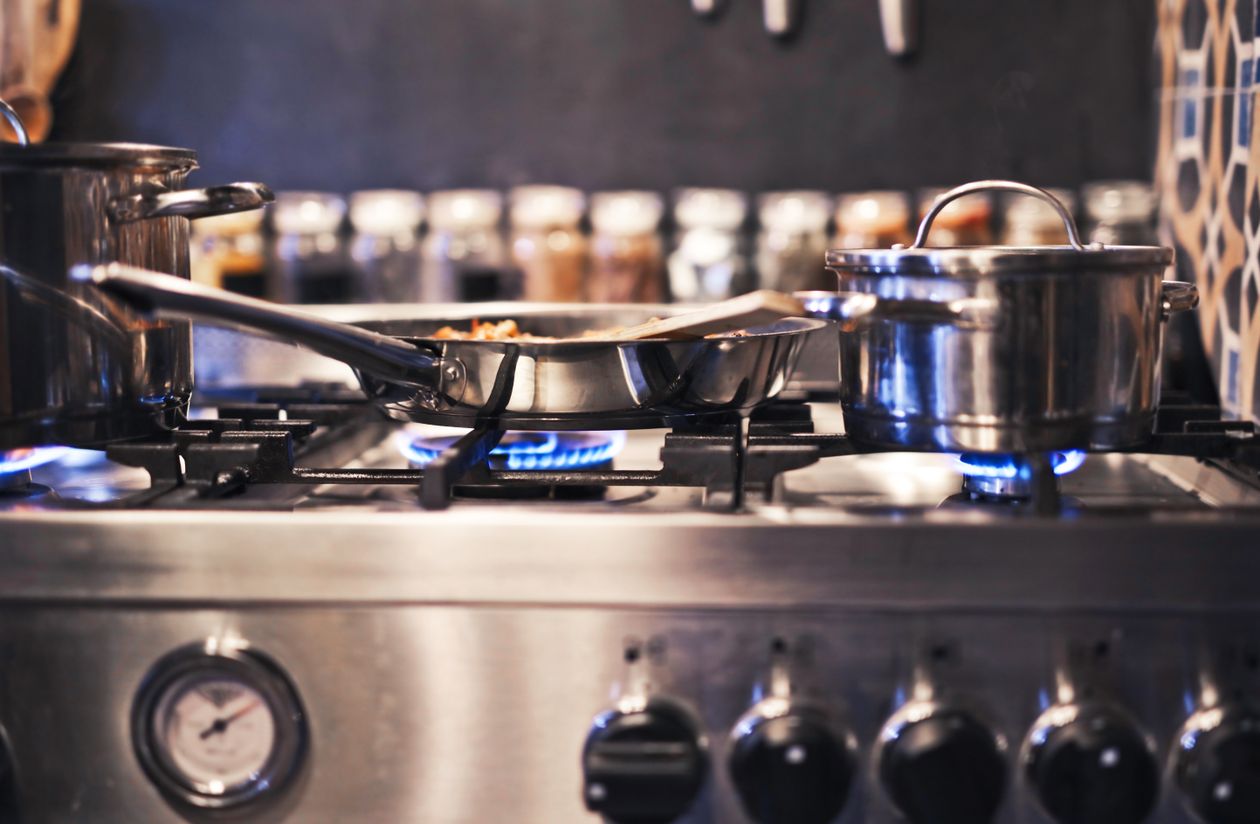
Stainless steel pots and pans on a gas stove with blue flames — best cookware for gas stoves

Photo by Nicolas Postiglioni from Pexels

Disclosure: I earn a small commission if you buy through links on this page, at no extra cost to you.

Gas stoves heat fast, burn hot, and concentrate heat at the base of the pan rather than spreading it evenly the way an induction burner does. Concentrated heat under a wide base is also one of the ways a pan base warps out of true, so matching pan size to burner size is worth doing. That concentrated heat is the whole point — it’s why gas stoves are preferred for searing, wok cooking, and high-heat techniques. But it also means the cookware needs to handle rapid temperature changes and distribute heat across the base quickly, or you end up with hot spots in the centre of every pan.

The T-fal Ultimate Hard Anodized 17-piece set is the most validated option at an accessible price: 18,857 reviews at 4.7 stars, a hard-anodized aluminum construction that distributes heat well on gas, and enough pieces to outfit a full kitchen. If you want stainless steel that develops proper fond for searing and sauce-making, the Tramontina Signature Tri-Ply Clad Set at ~$315 is fully clad rather than disc-bottomed, and all twelve of its pieces are cookware. Both are reviewed in full below.

These picks are based on confirmed Amazon product data, verified specifications, and aggregated buyer reviews. All ASINs verified before inclusion.

Best Cookware for Gas Stove 2026: Quick Comparison

Set Best For Material Pieces Price Buy
T-fal Ultimate 17pc Best overall Hard-anodized 17 ~$230 Check Price
Tramontina Signature Tri-Ply Best heavy-duty stainless Stainless 12 ~$315 Check Price
Cuisinart MultiClad Pro 12pc Best triple-ply Tri-ply SS 12 ~$220 Check Price
GreenPan Lima 12pc Best PFAS-free Ceramic 12 ~$160 Check Price
T-fal Signature 12pc Best budget Aluminum nonstick 12 ~$110 Check Price

Best Cookware for Gas Stove 2026: Full Reviews

1. T-fal Ultimate Hard Anodized 17-Piece Set — Best Overall

T-fal Ultimate Hard Anodized Nonstick 17 Piece Cookware Set in Onyx black

4.7/5  ·  18,857 reviews  ·  ~$230  ·  View on Amazon

With nearly 19,000 reviews at 4.7 stars, the T-fal Ultimate is the most-reviewed cookware set on this list, though the T-fal Signature is now close behind. Hard-anodized aluminum distributes heat faster and more evenly than standard aluminum, which is a genuine advantage on gas burners where the flame concentrates heat in the centre of the base. The set includes 17 pieces — frying pans, saucepans, a Dutch oven, stockpot, and a griddle — which covers most households’ complete cooking needs in one purchase.

Oven-safe to 400°F and dishwasher-safe. The hard-anodized surface is more durable than standard nonstick coatings — it resists scratching better and holds up longer under regular use. The main limitations are the same as any nonstick: avoid metal utensils, don’t pre-heat an empty pan on high, and replace when the coating shows wear. At ~$230 for 17 pieces, it’s difficult to find more buyer-validated value at this price.

Pros:

  • 18,857 reviews — the most validated cookware set at this price
  • Hard-anodized aluminum distributes gas heat more evenly than standard nonstick
  • 17 pieces covers a complete kitchen setup
  • 4.7 stars — consistently high ratings across a massive review base
  • Oven-safe to 400°F; dishwasher-safe

Cons:

  • Nonstick coating requires non-metal utensils and eventually needs replacing
  • Not suitable for very high-heat searing or induction cooktops
  • 17 pieces may be more than needed if you already own cookware

Verdict: The right starting point for most households. More buyer validation than any other set at this price, and the hard-anodized construction handles gas heat better than standard nonstick.

Check Price on Amazon ↗

2. Tramontina Signature Tri-Ply Clad 12-Piece Set — Best Heavy-Duty Stainless

Tramontina Signature tri-ply clad stainless steel 12-piece cookware set with stainless lids

4.4/5  ·  1,726 reviews  ·  ~$315  ·  View on Amazon

Full tri-ply clad construction — stainless, an aluminium core, stainless again — carried through the walls of each pan and not just the base. On a gas hob that is the difference that matters: a flame heats the bottom and licks up the sides, and clad walls spread that instead of concentrating it in a ring.

All twelve pieces are cookware. You get 8-inch and 10-inch frying pans, three saucepans with lids at 1.5, 2 and 3 quarts, a 6-quart sauté pan with a lid, and an 8-quart stock pot with a lid. Unlike the T-fal and GreenPan sets further down this list, none of the twelve is made up with utensils.

The lids are stainless rather than glass, which is why the whole set stays oven-safe to 500°F with a lid on rather than dropping to a lower number the way a glass-lidded set does. It is heavy at 26.4 pounds, NSF certified, and carries a lifetime warranty.

Amazon’s listing says it is made in Brazil. At least one owner reports receiving a set marked otherwise, so read that as the manufacturer’s claim rather than something I can confirm.

Pros:

  • All twelve pieces are cookware — two frying pans, three saucepans, a 6-quart sauté pan and an 8-quart stock pot
  • Full tri-ply clad walls rather than a disc base — even heat up the sides on a gas flame
  • Stainless lids keep the set oven-safe to 500°F throughout; NSF certified with a lifetime warranty
  • Works on every hob type including induction, and takes metal utensils

Cons:

  • Staining and cleaning is the most common complaint by a wide margin — stainless demands proper preheating and oil
  • 8% one-star reviews, the highest share on this list, mostly from buyers who expected food to release like nonstick
  • One owner reports pitting on the top edge inside a month despite hand washing and drying
  • 26.4 pounds; and at ~$315 the Cuisinart MultiClad Pro below is the cheaper way into tri-ply

I have written this one up separately — read the full Tramontina Signature Tri-Ply Clad review, which covers what the 8% one-star share is actually about and what owners report after two years.

Verdict: The set to buy if you want clad stainless that should outlast everything else here and you already know how to cook on it. If you do not, read up on preheating before you order — most of the unhappy reviews are about technique rather than the pans.

Check Price on Amazon ↗

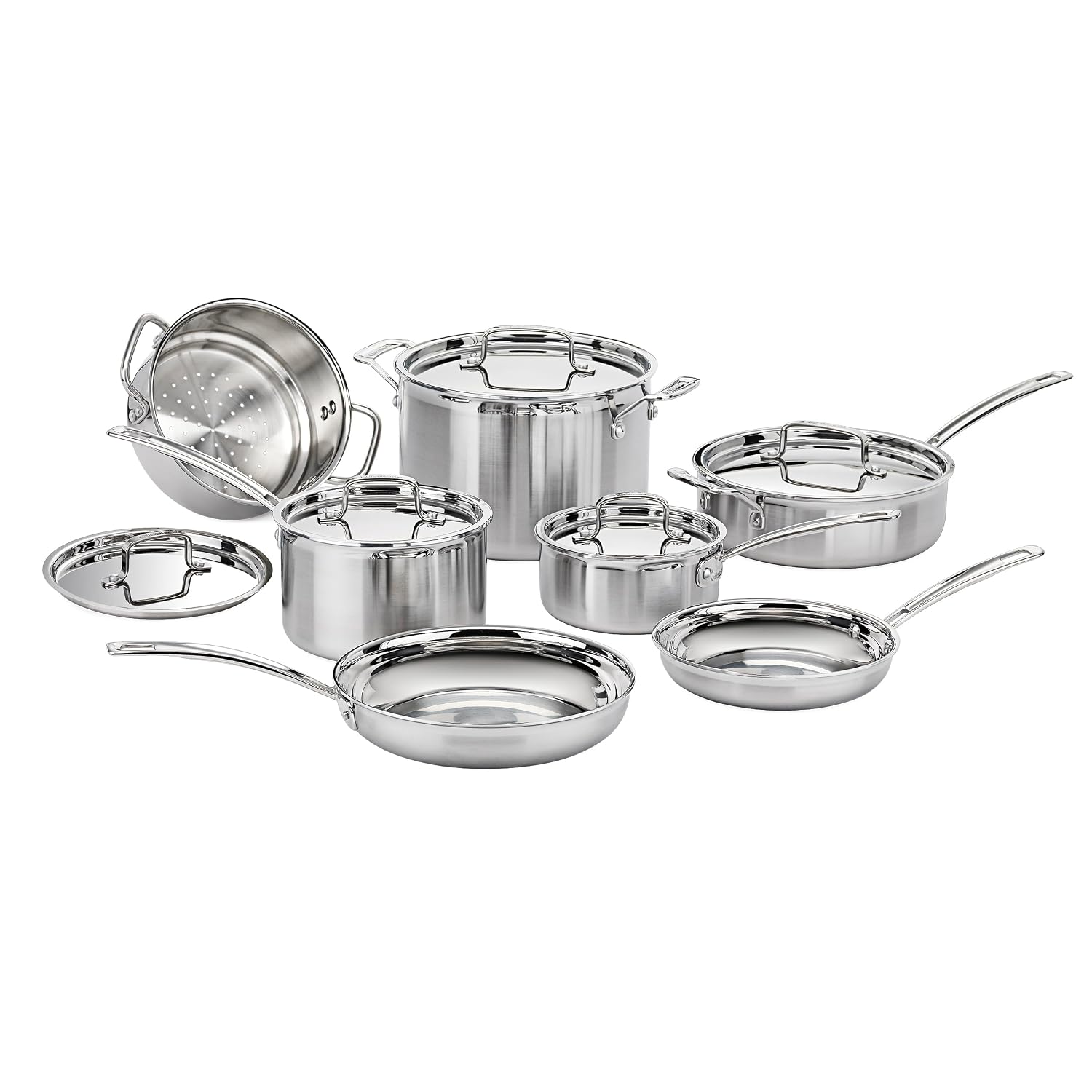
3. Cuisinart MultiClad Pro 12-Piece Set — Best Triple-Ply Stainless

Cuisinart MultiClad Pro Triple Ply Stainless Steel 12 piece cookware set

4.5/5  ·  11,209 reviews  ·  ~$220  ·  View on Amazon

The MultiClad Pro is Cuisinart’s tri-ply line — stainless exterior, aluminum core, stainless interior — which is the construction professional kitchens use. The aluminum core extends up the sides of each pan, not just across the base, which means heat distribution on a gas burner is significantly more even than with a disc-bottom stainless set. Gas stoves are particularly prone to creating hot spots at the centre of the pan where the flame concentrates, and a full tri-ply construction addresses this more completely than an impact-bonded base.

All 12 pieces are oven-safe to 500°F, dishwasher-safe (though hand washing extends longevity), and induction-compatible. The flared rims pour well. My full Cuisinart MultiClad Pro review goes into the Heat Surround cladding and the warping reports.

At $219.95 for 12 pieces of true tri-ply construction, this represents substantially better value than equivalent tri-ply from premium brands. It also rates slightly higher than the Tramontina Signature above (4.5 vs 4.4) across six times as many reviews, though it gives up some heat retention to the thinner construction and its glass lids cap the oven rating below the Tramontina’s stainless ones.

Pros:

  • Full tri-ply construction (not just disc-bottom) distributes gas heat evenly up the sides
  • Oven-safe to 500°F — higher than most sets at this price
  • 12 pieces covers most kitchen needs; well-designed lids
  • 11,209 reviews at 4.5 stars — substantial buyer validation

Cons:

  • Some buyers report handle rivets collecting residue
  • Thinner gauge than premium tri-ply options; slight warping reported in a subset of reviews

Verdict: The right pick if you want true tri-ply construction — not just disc-bottom — at an accessible price. The 500°F oven tolerance and full-wall heat distribution make it particularly well-suited to high-heat gas cooking.

Check Price on Amazon ↗

4. GreenPan Lima 12-Piece Set — Best PFAS-Free

GreenPan Lima Hard Anodized Healthy Ceramic Nonstick 12 Piece Cookware Set in Gray

4.4/5  ·  1,614 reviews  ·  ~$160  ·  View on Amazon

GreenPan’s Lima set uses Thermolon ceramic coating — free of PTFE, PFAS, PFOA, and lead. On a gas stove this matters more than on other cooktops: the open flame beneath the pan concentrates heat rapidly, and concerns about conventional nonstick coatings releasing fumes at high temperatures are amplified by gas’s ability to reach those temperatures quickly. The hard-anodized aluminum base handles gas heat well; the ceramic coating runs cooler than PTFE-based nonsticks and requires slightly lower heat settings for best results.

The 12-piece set includes everything you need for a complete kitchen setup. At ~$160 it sits mid-table on price here, which is the trade-off for the PFAS-free certification. Ceramic nonstick also has a shorter useful life than PTFE-based coatings under heavy use — it typically degrades after 2–3 years of daily cooking versus 5+ years for good hard-anodized nonstick. Worth it if the toxicity concern is primary for you; less compelling if you cook on low-to-medium heat and already use conventional nonstick without issue.

Pros:

  • PTFE and PFAS-free — the right choice for health-conscious buyers, provided you keep to low and medium heat
  • Hard-anodized construction handles gas burner heat well
  • 12 pieces; pans oven and broiler safe to 600°F, glass lids to 425°F

Cons:

  • Mid-priced rather than cheap at ~$160; lower review count than other sets at this price tier
  • Ceramic coating degrades faster than PTFE nonstick under heavy daily use — expect 2–3 year lifespan

GreenPan care guidance is hand wash, and the most specific damage reports come from owners who used a dishwasher: exterior finish coming off at two months, pan bottoms gone at eighteen. I have written the set up in full — read the GreenPan Lima 12-piece review.

Verdict: Buy it specifically for the PFAS-free construction. If you cook on gas regularly at high heat and want to avoid PTFE, this is the most accessible full-set option with meaningful buyer validation.

Check Price on Amazon ↗

5. T-fal Signature 12-Piece Set — Best Budget

T-fal Signature Nonstick 12 Piece Cookware Set in Black

4.7/5  ·  18,392 reviews  ·  ~$110  ·  View on Amazon

The T-fal Signature is the entry-level pick — standard aluminum nonstick, lighter than the hard-anodized Ultimate, oven-safe to 350°F, and 18,392 reviews at 4.7 stars across years of sales. It works fine on gas stoves for everyday cooking: eggs, sautéed vegetables, sauces, and anything that doesn’t require very high heat. The trade-off versus the T-fal Ultimate is straightforward: the Signature is lighter and simpler, the Ultimate is harder-anodized, more durable, and includes a griddle.

At $109.99 against the Ultimate’s ~$230, the choice between them depends on use. The Signature is right for households who want the lightest, simplest nonstick setup and don’t regularly push gas burners past medium-high. The Ultimate is right for households who cook at higher heat and want a more durable long-term nonstick. Both are good; the Signature’s rating validation (18,392 reviews at 4.7 stars) gives it considerable reliability credibility.

Pros:

  • 18,392 reviews at 4.7 stars — among the most validated nonstick sets available
  • Lighter weight than hard-anodized options — easier to handle daily
  • ~$110 for 12 pieces; good entry point for new households

Cons:

  • Standard aluminum nonstick is less durable than hard-anodized — shorter coating lifespan under heavy use
  • Oven-safe to 350°F only — limiting for high-heat gas oven finishes
  • Three of the twelve pieces are plastic tools, and the large fry pan is 10 inches — the listing bullets say 11

I have written this one up separately: read the full T-fal Signature 12-piece review, which covers what the twelve pieces actually are and what 18,392 owners report about the coating.

Verdict: A solid, heavily-validated budget choice. The right pick for households who want simple nonstick at the lowest risk of buyer disappointment. Just be aware the T-fal Ultimate offers meaningfully better construction, and larger pans, for about $120 more.

Check Price on Amazon ↗

What to Look for When Buying Cookware for a Gas Stove

Material Choice Matters More on Gas

Gas burners heat from below in a concentrated circle. The flame size rarely matches the base of the pan exactly, which means the centre of the base gets significantly hotter than the edges. This is less of an issue on induction or electric ceramic, where heat spreads across a larger surface area. On gas, the material’s ability to distribute heat outward — called thermal conductivity — has a much larger effect on cooking performance.

Aluminum (including hard-anodized) is the best heat conductor of common cookware materials. A full-aluminum or hard-anodized pan distributes gas heat fastest and most evenly. Triple-ply stainless (with an aluminum core) achieves similar distribution.

Disc-bottom stainless distributes heat across the base but not up the sides. Plain stainless without an aluminum layer creates hot spots on gas and should be avoided for most cooking.

Handle Heat and Oven Compatibility

Gas produces more radiant heat than other cooktop types — the heat doesn’t just go through the base, it also radiates up the sides of the pan and toward the handle. Stainless or hard-anodized handles stay cooler than all-metal designs with thinner sections. Helper handles on larger pots reduce the leverage required when moving heavy pans across gas grates.

Oven compatibility directly follows from gas stove use: many dishes started on a gas burner finish in the oven (seared steaks, frittatas, braised meats). Check the oven-safe temperature for any set you buy. The Cuisinart MultiClad Pro’s 500°F tolerance and the T-fal Ultimate’s 400°F are both practical; the T-fal Signature’s 350°F limits you if you regularly finish dishes in a hot oven.

Flat Bottoms and Grate Stability

Unlike induction, which requires magnetic contact across the entire base, gas grates don’t care about base flatness for heat transfer. But stability matters — a pan that rocks on the grate creates a safety risk. Check that the base is true-flat before purchase (easily visible in photos, and reviewers mention warping issues quickly if they exist). Gas grates can also scorch aluminium if a pan sits directly on an undersized grate; most modern gas ranges have wide enough grates to avoid this, but it’s worth checking your range’s grate design before buying a very lightweight set.

Best Cookware for Gas Stove: FAQ

Is stainless steel or nonstick better for gas stoves?
Depends on what you cook. Stainless steel — especially triple-ply — handles high heat better and develops fond for sauces and braises.

Nonstick is easier for eggs and fish and requires less technique. Most households benefit from both: a nonstick skillet for daily use and a stainless pan for searing and high-heat cooking on gas.

Does copper or cast iron work on gas?
Both work well. Cast iron is excellent on gas — it retains heat extremely effectively and the open flame compensates for cast iron’s slow heating.

Copper is the best heat conductor of common metals but requires more care and is expensive. Neither is in this buying guide because they’re specialist materials; see the cast iron and stainless-only guides if those are your priorities.

Why does my nonstick pan get hot spots on gas?
The flame is concentrating heat in a circle smaller than the pan base. Use medium heat instead of high, allow the pan to preheat for 1–2 minutes on low before adding food, and consider upgrading to hard-anodized aluminum, which distributes gas heat significantly more evenly than standard aluminum.

Are PFAS-free pans worth it for gas cooking specifically?
There’s a reasonable argument for it. PTFE-based nonstick coatings can release fumes at temperatures above 500°F (260°C), and gas burners can reach those temperatures faster than electric or induction cooktops.

If you regularly cook on high heat on gas, a PFAS-free ceramic set like the GreenPan Lima is a logical precaution. At lower heat levels, the risk from conventional nonstick is generally considered negligible.

How do I stop stainless steel from sticking on a gas stove?
Three steps: (1) preheat the pan on medium heat for 90–120 seconds before adding anything; (2) add oil and let it heat until it shimmers; (3) add food and don’t move it for 2–3 minutes. The food will release naturally when properly seared. Gas stoves reach temperature faster than electric, so the preheat time is shorter — but the test is the same: water should bead and dance in the hot pan before you add oil.

How long should cookware last on a gas stove?
Stainless steel lasts indefinitely with proper care. Hard-anodized nonstick typically lasts 5–7 years of daily use. Standard aluminum nonstick lasts 3–5 years.

Ceramic nonstick lasts 2–3 years. Gas stoves are harder on coatings than induction because of the radiant heat and occasional grate scratching — budget accordingly and avoid sliding pans across cast iron grates when possible.

How These Picks Were Chosen

Plainly: this is a research-based guide, not a hands-on test. I have not run these side by side, and nothing here should be read as a report from my own kitchen.

What the picks rest on: base construction and how well the material spreads heat from a concentrated flame, whether the base is fully clad or disc-bottomed, handle material and how far it sits from the flame, and oven-safe temperature; plus the complaint patterns across verified-purchase reviews, where the gas-specific issues that recur are handles heating up and bases discolouring or warping over a burner ring.

What I could not establish: warping resistance over years of high-flame use. That is the failure that actually ends a pan on a gas hob, and no independent test covers it for these sets. Base thickness is the best available indicator and is used that way here, but it does not settle the question.

Final Thoughts

For most households cooking on gas, the T-fal Ultimate Hard Anodized is the straightforward choice: 18,857 reviews, 4.7 stars, hard-anodized construction that handles gas heat well, and 17 pieces at ~$230. My full T-fal Ultimate review covers what owners say about the coating, the lids and gas-grate stability. If you want stainless for proper searing and sauce development, the Tramontina Signature Tri-Ply Clad Set is the heaviest and best-warrantied option on the list, and the Cuisinart MultiClad Pro is the cheaper way in.

For more on cookware choices, see the best cookware sets guide for a wider set of options, the cookware hub for guides to individual pan types, or the best omelette pan guide if you’re looking for a quality nonstick skillet to complement your new set. For holiday roasting, the best roasting pan for prime rib guide covers the dedicated pans built for the job.

Gas cooking produces combustion byproducts on top of smoke and grease — if your kitchen has no exterior duct, my best ductless range hood guide covers recirculating hoods that handle gas-stove kitchens honestly.

Wondering why material matters so much for gas cooking specifically? My guide to cookware materials for gas stoves explains the mechanics behind my picks above.

Gas burners put more heat and combustion byproducts into the air than electric or induction, which is exactly why ventilation matters more here than on other cooktops. If you’re not on ducted venting, this guide to ductless range hoods covers what actually works and how often to replace the filters.

Filed Under: Product Reviews

Best Probe Thermometers 2026: Wired, Wireless and Instant-Read

Last Updated June 26, 2026

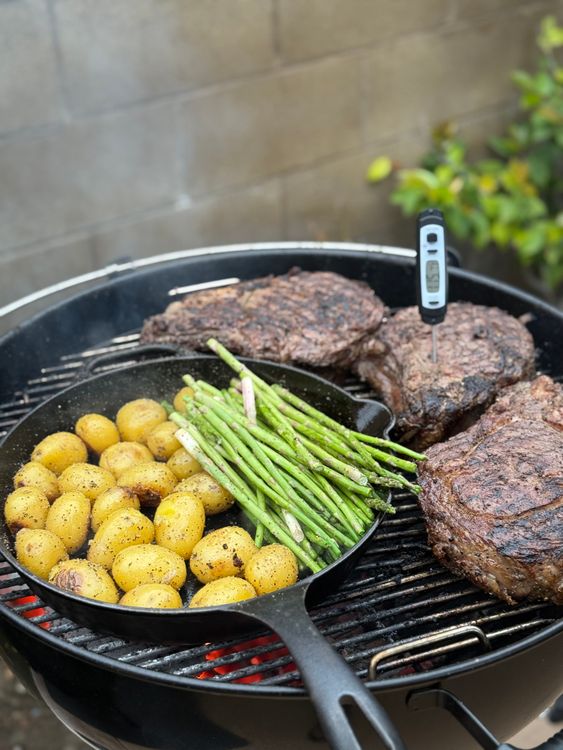
Ribeye steaks on a grill — knowing internal temperature is essential for perfect results

This post contains affiliate links. If you buy through my links, I may earn a commission at no extra cost to you.

“Probe thermometer” covers three distinct types: wired leave-in probes (stay in the meat, tethered to a display), wireless leave-in probes (stay in the meat, transmit to your phone), and instant-read probes (insert briefly for a fast reading, then remove). The right choice depends on how you cook. For most home cooks, one wireless leave-in probe and one instant-read is the complete toolkit.

This guide covers all three types, recommends the best option in each category, and explains what to look for when buying.

Quick Comparison

Model Type Price Best For Buy
TempPro TP16 Wired leave-in $16.99 Oven roasting, budget pick Check Price
MEATER Plus Wireless leave-in $79.99 Truly wireless, guided cooks Check Price
TempPro TempSync Wireless multi-probe $52.99 Monitoring multiple proteins Check Price
Lavatools Javelin PRO Instant-read $43.99 Fast checks, steaks, burgers Check Price

The three types of probe thermometer

Type How it’s used Best for Price range
Wired leave-in Stays in meat, cable to display unit Oven roasting, set-and-forget cooking $17–$50
Wireless leave-in Stays in meat, transmits to phone Grilling, smoking, monitoring at a distance $40–$150
Instant-read Insert briefly, read, remove Steaks, burgers, quick end-of-cook checks $15–$100

Wired leave-in probes

Wired leave-in probes have a probe on a long cable that runs from inside the meat to a display unit outside the oven or grill.

They’re simple, reliable, and cheaper than wireless alternatives. The trade-off: the cable needs to be routed through a gap in the oven door or grill lid, and you need to be within sight of the display to read the temperature.

TempPro TP16 — best wired leave-in probe

TempPro TP16 Digital Probe Meat Thermometer

The TP16 (rebranded from ThermoPro) is the classic wired leave-in probe that millions of home cooks own. Large display, long cable, simple operation.

You set the target temperature, insert the probe, route the cable through the oven door, and the display sounds an alarm when the meat reaches target. No app, no Bluetooth, no complexity. Exactly what you need it to be.

Pros: Very affordable, large backlit LCD, 40-inch braided cable, magnetic back, built-in timer, no app or pairing required
Cons: Cable must be routed through oven door gap; must stay near display to read temperature; single probe only
Current price: $16.99

Check Price on Amazon →

Wireless leave-in probes

Wireless leave-in probes stay in the meat throughout the cook and transmit live temperature readings to your phone via Bluetooth or Wi-Fi. No cable to route through the oven door. You can monitor from anywhere in the house (Bluetooth) or anywhere with phone signal (Wi-Fi). For my full rankings of wireless probes, see the best Bluetooth meat thermometer guide.

MEATER Plus — best wireless probe, no cable

MEATER Plus Wireless Smart Meat Thermometer

The MEATER Plus is the best wireless leave-in probe for most home cooks. It goes entirely inside the meat — no cable at all — and transmits temperature data via Bluetooth to the MEATER app. The app’s guided cook mode calculates estimated finish time and rest time based on live data. 165-foot Bluetooth range covers most kitchens, gardens, and patios.

Pros: Fully cable-free, dual sensor (meat + ambient temp), guided cook mode with rest time estimate, IP67 waterproof, 165-ft range
Cons: Single probe only — can’t monitor two proteins simultaneously; requires phone nearby; more expensive than wired alternatives
Current price: $79.99

Check Price on Amazon →

TempPro TempSync — best multi-probe wireless option

TempPro TempSync 4-Probe Bluetooth Thermometer

The TP25 is the best option for monitoring multiple cooking zones or proteins simultaneously. Four probes connect to a Bluetooth receiver (cables to receiver, not to you), which then transmits to your phone app. 650-foot Bluetooth range is the longest in this price category. Unlike the MEATER, probes are wired to the receiver — it’s “wireless” in the sense that you monitor on your phone from a distance, but the probes themselves have cables.

Pros: Four probes at once, 650-ft Bluetooth range, physical display plus app, 40-hour battery, per-probe high/low alarms
Cons: Probes are cabled to receiver (not truly wireless like MEATER); receiver must stay near the grill; app is functional but not as polished as MEATER
Current price: $49.99

Check Price on Amazon →

Instant-read probes

Instant-read probes are designed for speed — insert the probe into the thickest part of the meat, get a reading in 2–5 seconds, remove the probe. They’re the right tool for steaks, burgers, chicken pieces, fish fillets, and any cook where you want a quick check at the end rather than continuous monitoring. Do not leave an instant-read probe in the meat during cooking — they are not rated for extended oven or grill temperatures.

Lavatools Javelin PRO — best instant-read probe

Lavatools Javelin PRO Classic Instant Read Thermometer

The Javelin PRO reads temperature in 2 seconds — fast enough to check a steak without leaving the grill lid open for long. The auto-rotating display orients itself to be readable at any angle.

NSF certification and IP65 water resistance make it genuinely durable. The magnetic back sticks to your fridge or grill frame. At $43.99 it delivers professional-grade accuracy at a home-cook price.

Pros: 2-second read, auto-rotating backlit display, ±0.9°F accuracy, IP65 water resistant, NSF certified, magnetic back
Cons: Not suitable for leave-in use; no app or Bluetooth; folds shut (small chance of accidental pocket activation)
Current price: $43.99

Check Price on Amazon →

What to look for in a probe thermometer

Accuracy

Consumer probe thermometers typically claim ±1°F or ±0.9°F accuracy. This is sufficient for meat cookery — the difference between 134°F and 135°F is not meaningful in practice. More important is calibration consistency: a thermometer that reads 2°F high consistently is fine (you learn to adjust); one that drifts randomly is not. Verify accuracy with the ice water method (should read 32°F) and boiling water method (should read 212°F at sea level).

Response time

For instant-read probes, response time matters. Under 3 seconds is fast; 5–8 seconds is slow. For leave-in probes, response time is less critical — you’re monitoring over minutes or hours. The Javelin PRO’s 2-second read is genuinely fast enough to check multiple steaks without significantly affecting cooking temperature.

IP (waterproof) rating

IP65 means splash-proof — fine for grill use and rinsing. IP67 means submersible to 1 metre for 30 minutes. For a thermometer you’ll be rinsing under a tap and using near a grill, IP65 is the minimum worth buying. Thermometers with no IP rating will fail eventually from steam and splash exposure.

Bluetooth range (wireless probes)

Advertised range is always measured in open air. Expect roughly 50–60% of the stated range through walls. The TP25’s 650-foot range translates to comfortable monitoring from inside the house with your grill on the patio. The MEATER Plus’s 165-foot range is enough for most home setups but may struggle if you’re multiple walls away from your cooking surface.

Probe count

One probe covers one piece of meat. If you regularly cook for four or more people with multiple proteins — a chicken and a roast simultaneously, or four steaks at different doneness levels — a multi-probe thermometer like the TP25 saves significant hassle.

How These Picks Were Chosen

Plainly: this is a research-based guide, not a hands-on test. I have not run these through a cook, and nothing here should be read as a report from my own kitchen.

What the picks rest on: stated accuracy tolerance, maximum probe temperature, and the practical differences between wired, wireless and instant-read designs; and the complaint patterns in verified-purchase reviews, which separate cleanly by type — wired probes fail at the cable, wireless ones fail at the app, and instant-reads are judged almost entirely on how fast they settle.

What I could not establish: whether these units actually meet their stated accuracy. Every tolerance figure here is the manufacturer’s own claim. I found no independent verification for these specific models, and a thermometer that is confidently wrong is worse than one that is slow — so if accuracy is critical to you, check yours against ice water when it arrives rather than trusting the box.

Frequently Asked Questions

What’s the difference between a leave-in probe and an instant-read thermometer?

A leave-in probe stays in the meat throughout the entire cook and provides continuous temperature monitoring — ideal for roasts, whole chickens, and anything that takes more than 30 minutes. An instant-read thermometer is inserted briefly at the end of the cook for a fast spot-check — it’s not rated for extended use inside an oven or grill. Most serious cooks own one of each.

Can you leave a probe thermometer in the oven?

Only if it’s specifically rated for oven use (all leave-in probes on this list are). Instant-read thermometers are not designed for leave-in use — the electronics cannot handle sustained high temperatures. Check the manual: oven-rated probes specify a maximum cable and probe temperature; instant-reads will say “not for use in oven.”

What internal temperature should chicken reach?

165°F (74°C) at the thickest part of the thigh, away from bone. For whole chickens, check multiple locations — the breast, the thigh, and the area between thigh and body. The thigh typically takes longest. Rest for 5 minutes before carving; temperature will rise slightly during rest.

How accurate are probe thermometers?

The thermometers on this list are accurate to ±1°F or better, which is sufficient for all meat cookery. Verify your thermometer with the ice water method (32°F) and boiling water method (212°F at sea level, adjusting for altitude). If it reads within 2°F of the expected value, it’s calibrated correctly. Most probe thermometers can be recalibrated if they drift.

What’s the best probe thermometer for a smoker?

The TempPro TempSync for monitoring multiple probes across long low-and-slow cooks — brisket, pork shoulder, and ribs simultaneously. The MEATER Plus if you want a single truly wireless probe with no cable running out of your smoker lid. Either pairs well with a dedicated smoker setup. For the full guide to wireless options, see my best Bluetooth meat thermometer roundup.

Do I need a wired or wireless probe thermometer?

Wired if you primarily oven-roast and want simplicity at the lowest price. Wireless if you grill or smoke and want to monitor without standing next to the cooker. The MEATER Plus is the upgrade that most cooks who start with a wired probe eventually make — the cable-free experience is a genuine quality-of-life improvement once you’ve owned one.

The bottom line: A $17 wired probe thermometer (TempPro TP16) and a $44 instant-read (Lavatools Javelin PRO) covers 90% of home cook needs for under $65. The MEATER Plus is the upgrade that makes leave-in monitoring genuinely effortless. The TempPro TempSync is for cooks who regularly run multiple proteins.

Related guides

  • best thermometer for brisket
  • Bluetooth vs Wi-Fi meat thermometers
  • are wireless meat thermometers accurate?
  • Meat Thermometers: Reviews & Buying Guide
  • Best Bluetooth Meat Thermometer 2026
  • How to Calibrate a Meat Thermometer
  • Meat Temperature Guide
  • Best Wireless Meat Thermometers 2026
  • Best BBQ Thermometers 2026
  • Best Meat Thermometer for Smoking 2026
  • MEATER vs ThermoPro: Which Is Better?

Filed Under: Product Reviews

Blackstone 28-Inch vs 36-Inch Griddle: Which Size Should You Buy?

Last Updated June 25, 2026

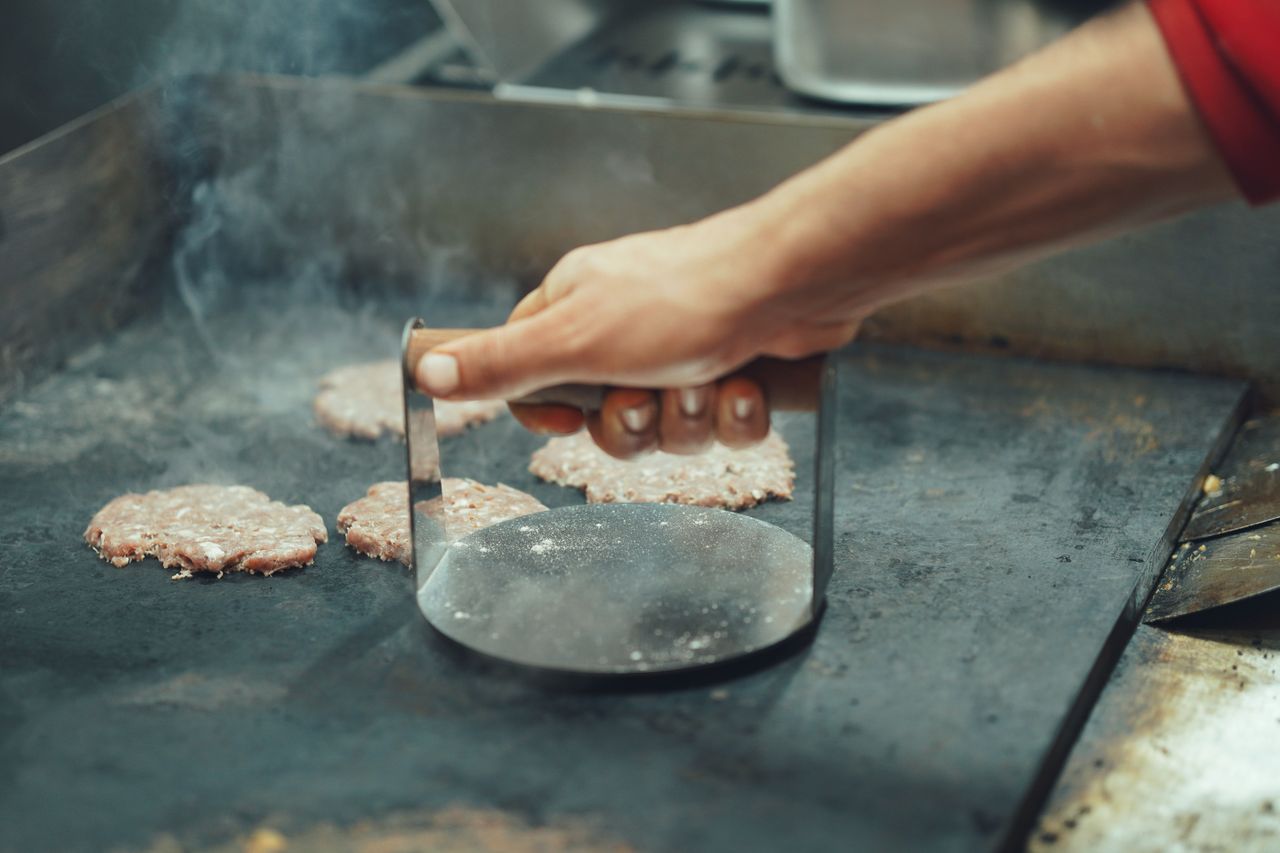
Pressing smash burgers on a hot flat top griddle

The quick answer

For a family of four doing regular outdoor cooking, buy the 28-inch. Owner reports are full of people who bought the 36-inch first and wished they had started smaller. The 36-inch is the right choice if you cook for large groups regularly or want to batch cook seriously — but for everyday family cooking, it’s more work than the extra cooking surface is worth.

I earn a commission if you buy through the Amazon links below, at no extra cost to you.

Blackstone 28-Inch Omnivore Griddle

Blackstone 28″ Omnivore
(2 burners)

Check Price
Blackstone 36-Inch 4-Burner Griddle Cooking Station

Blackstone 36″
(4-burner cooking station)

Check Price

I’m going to tell you something that Blackstone’s marketing won’t: bigger is not always better with flat top griddles. The 36-inch is an excellent piece of equipment, but it’s the right choice for a narrower range of people than most comparison articles would have you believe.

The two sizes get bought for different jobs — weekend breakfasts for a family, weeknight dinners, summer cookouts for twenty people — and owner reports separate fairly cleanly along those lines. What follows is an honest answer rather than a hedge.

Product Best For Price Rating Buy
Blackstone 28″ Omnivore Everyday family cooking $249.99 4.7★ (12,146) Check Price
Blackstone 36″ (4 burners) Large groups & batch cooking $399.00 4.7★ (10,726) Check Price

Prices and ratings checked 21 September 2026. Both links go to Blackstone’s standard Amazon listings (4.7★ with 10,000+ ratings each). In July these were out of stock and this page linked bundled versions instead, a 28″ with a hard cover and a 36″ with a hood; both standard listings are available again.

Feature Blackstone 28-Inch Blackstone 36-Inch
Cooking surface 470 sq inches 720 sq inches
Burners 2 4
BTU output 34,000 total 60,000 total
Weight ~68 lbs ~120 lbs
Dimensions (approx.) 52 x 22 x 36″ 62 x 22 x 36″
Typical price $250 $399
With hood option Yes (some models) Yes (some models)

The cooking surface: what those numbers mean in practice

470 square inches sounds abstract. Here’s what it means: on the 28-inch, you can simultaneously cook a dozen eggs, a pound of bacon, and a stack of pancakes. That’s a full breakfast for four people, all at once. The 28-inch is a large cooking surface. It just doesn’t feel like it in photos.

720 square inches is the surface area that lets you cook for eight to ten people simultaneously without any batching. It’s the surface that lets you smash a dozen burgers at once, or cook a week’s worth of meal prep in a single session. It’s a lot of griddle.

The case for the 28-inch (which is stronger than you think)

Here’s what I’ve noticed cooking on the 36-inch for a family of four: I rarely use more than half of it. Which means I’m heating, maintaining temperature on, and cleaning a cooking surface I’m only partially using. The 28-inch would have done the same job with less fuel, faster heat-up time, and significantly less cleanup.

The weight difference is real and it matters more than people anticipate. At 68 lbs, the 28-inch is manageable — one person can move it, store it for winter, take it tailgating. At 120 lbs, the 36-inch is functionally permanent. Once it’s in your backyard, it stays there. Make sure you want it there before you buy it.

The 28-inch also heats more evenly, because two burners across a 28-inch surface delivers more consistent coverage than four burners across 36 inches where the outer edges can lag slightly.

The case for the 36-inch (and who actually needs it)

The 36-inch is unambiguously better when you’re cooking for a crowd. Six or more people for dinner, a cookout for twenty, meal prep for the week — these are the use cases where the extra surface earns its place.

The four-burner setup gives you meaningful heat zone control. Left side screaming hot for searing, right side medium for keeping things warm, middle for active cooking. This is genuinely useful when you’re managing a complex meal with multiple proteins and vegetables at different stages. The 28-inch’s two burners create a more limited temperature gradient. Either way, a wireless probe thermometer makes it easier to track multiple proteins across those zones without cutting into anything to check.

If you run a weekend pop-up, cater parties, feed an extended family regularly, or just genuinely love the ritual of a big cook, the 36-inch will make you happy every time you use it. But be honest with yourself about how often that actually describes you.

Cleanup: the thing nobody mentions in comparisons

Cleaning a flat top after cooking takes a few minutes regardless of size. But cleaning 720 square inches versus 470 square inches adds up. Every session on the 36-inch involves scraping, wiping, and re-seasoning a significantly larger area. Over a summer of regular use, that difference is noticeable. This sounds minor and it is — but if you’re already someone who finds post-cook cleanup tedious, don’t make it 50% bigger.

Buy the 28-Inch if…

  • You cook for two to four people most of the time
  • You want the option to move it or take it with you
  • You want faster heat-up and more even coverage
  • You don’t want to dedicate permanent outdoor space to it
  • You’re buying your first flat top and want to start right

Buy the 36-Inch if…

  • You regularly cook for six or more people
  • You want serious heat zone control with four independent burners
  • You batch cook or meal prep in large quantities
  • You have a dedicated outdoor cooking area and it can live there permanently
  • You run events or cook for extended family gatherings

The verdict

Start with the 28-inch. If you find yourself consistently running out of cooking surface — actually running out, not just theoretically wanting more — then you’ll know exactly why to upgrade. Most people who buy the 36-inch first find they’re using 60% of it most of the time. The 28-inch is an excellent flat top griddle for the way most people actually cook outdoors.

Check 28″ Price on Amazon Check 36″ Price on Amazon

How This Comparison Was Put Together

Plainly: this is a research-based comparison, not a hands-on test. I have not run these two side by side.

What it rests on: the published specification for both – cooking area in square inches, burner count and total BTU, and how BTU per square inch compares between them, which is the number that actually decides whether the extra size costs you heat; plus cart and shelf configuration, and the pattern across verified-purchase reviews, where the recurring themes are rust after seasoning lapses and uneven heat between burner zones.

What I could not establish: heat evenness across either plate, which is the practical difference between the two sizes. Measuring it needs a grid of infrared readings across a fully preheated surface, and no independent test does that for these griddles. Burner layout and BTU per square inch are the indicators used here.

Frequently Asked Questions

Is the Blackstone 28-inch big enough for a family?

Yes. Its 470 square inches of cooking surface handles a dozen burgers or a full pancake breakfast for four at once. Most people who buy the 36-inch report using around 60% of the surface for everyday cooking, which is roughly what the 28-inch gives you.

What is the main difference between the Blackstone 28-inch and 36-inch?

Size and heat output. The 28-inch has 470 square inches of cooking surface with two independently controlled burners producing 34,000 BTU total. The 36-inch has 720 square inches with four burners producing 60,000 BTU. Cooking capability is otherwise identical — the 36-inch just does more at once.

Which Blackstone griddle should I buy first?

Start with the 28-inch unless you regularly cook for large groups or batch cook seriously. It costs less, heats up faster, and takes noticeably less time to clean and season. If you consistently run out of cooking surface, that is your signal to upgrade.

Where do the Amazon links go?

Both links go to the standard Blackstone 28-inch and 36-inch listings. In July those were out of stock, so this page linked bundled versions with a hard cover or a hood; both standard listings are available again, so the links now go to them.

Related: See all my flat top grill reviews and guides
Related: Best flat top grill: all options compared


Whichever size you pick, seasoning it correctly matters more for day-to-day performance than the size difference does.

For the full breakdown of the 36″ model specifically, see my Blackstone 36″ review.

Filed Under: Product Reviews

Lodge vs Le Creuset Dutch Oven: Is the Price Difference Worth It?

Last Updated June 25, 2026

The quick answer

The honest answer: Lodge makes a very good Dutch oven for the money, and if budget is the constraint, buy it and cook happily. But if you cook with a Dutch oven three or four times a week and you’re buying once for a decade, the Le Creuset is worth every penny of the price difference. The quality gap is real — the question is whether it matters for how you cook.

I earn a commission if you buy through the Amazon links below, at no extra cost to you.

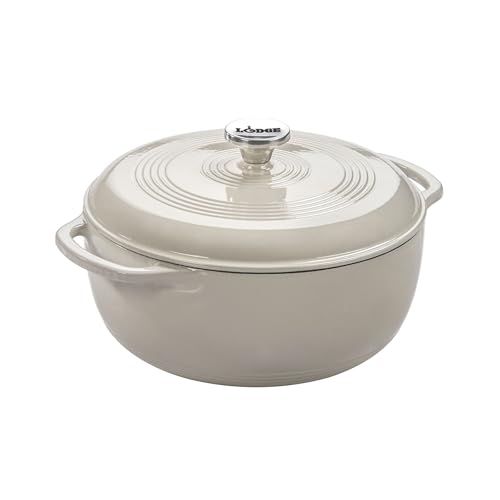
Lodge 6-Quart Enameled Cast Iron Dutch Oven
Le Creuset Signature 5.5-Quart Dutch Oven

I want to be straight with you about something before I go any further: I have not cooked with either of these. This comparison is built from published specifications, owner reviews at scale, and the testing other outlets have published. On the evidence, the Le Creuset is the better piece of cookware — better enamel, better lid seal, better heat retention. The question is whether that difference is worth spending about $200 more.

It depends entirely on how you cook. Let me explain what you actually get for the extra money, and then you can decide.

Product Best For Price Rating Buy
Lodge Essential Enamel 6 Qt Best Value $89.90 4.7★ (39,179) Check Price
Le Creuset Signature 5.5 Qt Best Long-Term Buy $289.99 4.7★ (7,884) Check Price
Feature Lodge 6qt Enameled Le Creuset 5.5qt Signature
Capacity 6 quarts 5.5 quarts
Material Enameled cast iron Enameled cast iron
Made in China France
Oven safe to 500°F 500°F
Induction compatible Yes Yes
Warranty Lifetime limited Lifetime limited
Typical price about $90 $279–$465, by colour

What you actually get for the extra money

I know $200 is a lot, and I’m not going to pretend it isn’t. But let me describe the differences as specifically as I can, because ‘it’s just better’ isn’t useful.

Enamel quality

This is where the gap shows most clearly. Le Creuset’s enamel is thicker, smoother, and significantly more resistant to chipping. Lodge’s enamel is good — it’s not bad enamel — but after two or three years of regular use, you’re quite likely to see chips on the rim and on the corners of the lid where impact is most common. This is one of the most consistent complaints about Lodge Dutch ovens in long-term reviews.

Le Creuset’s enamel on a well-maintained pot looks essentially the same after ten years as it did when new. That’s not an accident — it’s the result of a manufacturing process that Lodge’s price point doesn’t allow.

Interior cooking surface

The interior of a Le Creuset is lighter in colour (cream/off-white) and smoother than Lodge’s darker interior. The lighter colour is actually functional — you can see browning more clearly, which helps you judge when a fond is developed or when garlic is about to burn. The smoother surface is easier to clean and behaves more predictably with acidic ingredients like tomatoes.

Lid fit and heat retention

This is the difference I notice most in actual cooking. The Le Creuset lid fits more precisely, which means more steam stays in the pot during long braises and especially when baking bread. No-knead bread bakers know this well — a tight lid seal in the first phase of baking is what creates the steam environment that makes the crust. The Lodge lid is good, not perfect.

Both pots retain heat exceptionally well once up to temperature — that’s just cast iron physics. But Le Creuset’s slightly thicker walls mean marginally more even heat distribution across the base.

Where Lodge is completely fine

For braising — pot roasts, lamb shanks, chicken thighs, short ribs — Lodge performs as well as Le Creuset. Once you’ve got liquid in the pot and the lid is on, the small differences in lid seal and interior surface matter very little. The physics of braising are forgiving. A Lodge turns out genuinely spectacular braises.

For stovetop soups, stews, and anything where the pot is a vehicle rather than the critical tool, Lodge is more than adequate. You’re not leaving quality on the table in these applications.

The bread baking argument

If you bake no-knead or Dutch oven bread, the Le Creuset is meaningfully better. The lid fit matters. The light-coloured interior shows you what’s happening. The oven performance is more consistent. Bread bakers who have upgraded from Lodge to Le Creuset almost universally report noticeably better crusts. If you bake bread weekly, that difference adds up.

The honest long-term calculation

Here’s the argument for Le Creuset that I find most compelling: over ten years of regular use, a Lodge might need replacing (or at minimum, the chipped enamel becomes something you live with rather than enjoy). A Le Creuset bought today will be in excellent condition in fifteen years. The per-use cost of a $290 pot used three times a week for ten years is under $0.20 per use. That’s cheap cookware.

But that calculation only works if you actually cook with it that often. If you’re buying your first Dutch oven and you’re not sure how much you’ll use it, start with Lodge. If you already love Dutch oven cooking and you’re replacing a pot you’ve worn out, buy Le Creuset and stop thinking about it.

Buy the Lodge if…

  • Budget is a genuine constraint
  • You’re buying your first Dutch oven and want to try the format
  • You cook with it occasionally rather than weekly
  • You use it primarily for braising and soups where the lid seal matters less

Buy the Le Creuset if…

  • You cook with a Dutch oven three or more times a week
  • You bake bread in it regularly
  • You want to buy once and keep it for ten to fifteen years
  • You care about the cooking surface staying pristine

The verdict

Buy Lodge if budget matters or if you’re not yet certain how much you’ll use it. Buy Le Creuset if you already know you love Dutch oven cooking and you want the best version of the thing. Both are good pots. One is significantly better.

Related: See all my cookware reviews and guides
Related: Best cast iron Dutch ovens 2026: full buying guide

How This Comparison Was Put Together

Plainly: this is a research-based comparison, not a hands-on test. I have not run these side by side.

What it rests on: the published specification for both – capacity, weight, enamel type, knob material and its oven-safe limit, and the warranty each carries, which is the clearest signal of what each maker expects of its own enamel; plus the pattern across verified-purchase reviews for each, where the Lodge theme is enamel chipping and the Le Creuset theme is whether the price difference is justified rather than whether the pot works.

What I could not establish: whether Le Creuset’s enamel genuinely outlasts Lodge’s by enough to justify the gap. That needs controlled thermal-shock and impact testing on both, and no independent test covers it. Warranty terms and the balance of owner reporting are what this comparison reasons from, and both are weaker than a measurement.

Frequently Asked Questions

Is Le Creuset worth the extra cost over Lodge?

For daily, long-term use, yes — the smoother enamel, better lid seal, and heat retention are real, measurable differences. For occasional cooking or a first Dutch oven, Lodge delivers most of the same results for a third of the price.

Which is better for bread baking, Lodge or Le Creuset?

Both work well for no-knead bread baking — the enclosed cast iron traps steam either way. Le Creuset’s tighter lid seal holds slightly more moisture, which can help with crust development, but the difference is marginal enough that most bakers won’t notice it.

Do Lodge and Le Creuset Dutch ovens work the same on all stovetops?

Yes — both are compatible with gas, electric, induction, and oven use. Cast iron is magnetic, so induction heating works efficiently on either brand.

Which has better resale value, Lodge or Le Creuset?

Le Creuset holds resale value noticeably better — its enamel finish and brand recognition mean used pieces regularly sell for 40-60% of retail on the secondhand market. Lodge Dutch ovens have minimal resale value, which is consistent with their lower purchase price.

Filed Under: Product Reviews

  • « Go to Previous Page
  • Page 1
  • Interim pages omitted …
  • Page 42
  • Page 43
  • Page 44
  • Page 45
  • Page 46
  • Interim pages omitted …
  • Page 53
  • Go to Next Page »

Recent Articles

  • Bosch Universal Plus Stand Mixer Review: Built for Bread Bakers
  • Hamilton Beach 63326 Stand Mixer Review: Real Value, Real Limits
  • Ninja Foodi XL Pro Review (DT201): Biggest Capacity, Lowest Price
  • Cuisinart SM-50 Stand Mixer Review: Solid Value, Real Trade-Offs
  • Breville Smart Oven Pro Review (BOV845BSS): Fast, Even, One Real Flaw

Search


HOME          Contact          Affiliate Disclosure          Terms of Service          Privacy Policy


kitchenwarecompare.com is a participant in the Amazon Services LLC Associates Program, an affiliate advertising program designed to provide a means for sites to earn advertising fees by advertising and linking to Amazon.com, Endless.com, MYHABIT.com, SmallParts.com, or AmazonWireless.com. Amazon, the Amazon logo, AmazonSupply, and the AmazonSupply logo are trademarks of Amazon.com, Inc. or its affiliates. As an Amazon Associate I earn from qualifying purchases.


Copyright © 2026 kitchenwarecompare.com, ALL RIGHTS RESERVED.