• Skip to primary navigation
  • Skip to main content
  • Skip to primary sidebar

Kitchenware Compare

  • Home
  • Product Reviews
    • Air Fryers
    • Coffee
    • Cookware
    • Flat Top Grills
    • Meat Thermometers
    • Food Processors
    • Knives
    • Pizza Ovens
    • Toaster Ovens
    • Juicers
  • Food Blog
  • Helpful Kitchen Tips
  • Data Studies
  • About
  • How I Review
  • Contact
You are here: Home / Archives for Helpful Kitchen Tips

How Often to Descale Espresso Machine?

Last Updated December 1, 2022

Full guide: Best Espresso Machine Under $200
Part of my complete coffee guide — all reviews, comparisons, and buying advice in one place.

Woman making fresh espresso in coffee maker

What is the recommended frequency of descaling of an espresso machine? Here is what I’ve found out about this question. The best results come from descaling on a schedule rather than waiting until the machine tells you something’s wrong.

You should descale your espresso machine every three to six months. If your water is hard, you may need to increase the frequency of descaling.

As discussed in this article, a descaler is often needed for espresso machines. In addition, I’ll explain why coffee tastes bad after descaling and what happens if you don’t descale. Read on for more information.

How Often to Descale an Espresso Machine?

Making espresso is performed by a machine where hot water is pumped through and forced into the ground coffee to produce espresso. There are dissolved minerals in almost all water. There is a mineral accumulation on the heating element and in the machine’s tubes, which needs to be cleaned. Descaling involves removing this build-up of minerals.

When determining how often to descale your espresso machine, you must consider two factors. Your usage frequency and water hardness. If you are unsure if your water is hard or soft, you can purchase home kits to test your water.

Usage Frequency

Your espresso machine’s usage pattern will affect how often it needs to be descaled. With only one to three cups of espresso prepared each day, less descaling will be required than if you prepare six cups daily.

To make an espresso, the water must be heated in order to precipitate minerals. Mineral build-up directly correlates with the frequency of use.

The build-up is twice as bad when you drink twice as much espresso. Additionally, there is one other important factor that impacts the frequency of descaling, and that is the hardness of the water.

The Hardness of the Water

Water hardness is determined by the number of minerals dissolved in it. Having hard water refers to water with a high mineral content. Your water is said to be soft if it contains few minerals.

Depending on the hardness of your water, you should descale it at least once a month to avoid build-up.

For those who live in areas with hard water and dislike descaling their espresso machines so often, a water softener might be a good investment. Softening water is achieved by removing minerals from tap water. With one of these, you can reduce the frequency of descaling on your espresso machine.

Best Way to Descale Your Espresso Maker

  • To descale your espresso machine, you need to mix water with a descaler as per instructions on the packet.
  • You can then run the espresso machine with the mixture while the coffee beans are not in it.
  • Clean water should be used to rinse away descaler residue from the espresso machine and water tank.
  • Making a hot, tasty espresso is now easier than ever, thanks to your clean espresso machine.

What Can I Use as a Descaler?

A descaling agent can be either a home solution or a commercial solution. First, let’s look at two of the most popular solutions.

Vinegar

You can descale your coffee machine with vinegar, a common home remedy. One part water should be mixed with three parts vinegar.

In general, vinegar-to-water ratios of three to one should be fine for most espresso machines. However, it may damage some espresso machines. It is recommended that you use a one-to-one ratio for those unsure whether their espresso system is capable of handling higher vinegar levels.

Citric Acid

You can also descale your coffee maker with citric acid at home. You can use citric acid to descale water by adding a teaspoon per cup.

Lemon juice is sometimes recommended as a descaler for espresso systems, but citric acid is more effective. Almost every health food store or online retailer carries citric acid.

Commercial Descalers

My next topic will be commercial descalers. Even though there are many descalers available, it’s best to use an organic descaler that is free of any harmful substances.

Black coffee machine and a horn with ground grains on the table.

Why Do I Need to Descale My Coffee Machine?

Water makes up nearly 99% of a cup of coffee, making it an essential part of the process. You may get a lower, inconsistent yield if scale builds up in the boiler or pipes of an espresso machine.

The importance of descaling can be summed up as follows.

Water Won’t Reach the Proper Heating Temperature

Generally, lower brew temperatures result in lower extraction yields, and higher brew temperatures result in higher extraction yields. As the water heats up at the brew point, more ground coffee is released into the cup. A change in brew temperature will have an effect on taste, despite the relatively small difference in extraction yield.

If water is not heated to its ideal brew temperature – or the brew temperature varies – it will be difficult to maintain consistency in cupping profiles. Regarding taste, specialty coffee professionals generally agree that bitterness, sweetness, and body increase as the brew temperature increases, with acidity, slightly decreasing. As brew temperatures are lowered, that taste is lowered.

As a result, the taste becomes more acidic and sweet, bitter, and the body decreases. As your boiler’s temperature falls due to scale build-up, it will likely result in an acidic extraction, leaving your coffee lacking the delicious flavors you love.

There Is a Possibility That Your Machine Will Stop Working

Without proper maintenance, the scale can eventually accumulate in the system’s pipes, obstructing water flow completely or partially. As a result of partially blocked pipes, steam wands and brew heads may experience limited water flow.

This will result in poor extraction and ineffective heating and aeration of milk. Steam and milk cannot be produced when the pipes inside an espresso machine are completely blocked by scale build-up. The level probe inside the boiler can also accumulate scale. Due to this, the machine cannot detect water levels in the boiler, causing the boiler to overfill and overflow.

When Using Filtered Water, Will My Espresso Machine Need to Be Descaled?

You need to descale the espresso machine even with filtered water. You can reduce scale build-up in your espresso machine by filtering your water, although you cannot eliminate it. Filtered water is generally recommended for brewing – both for keeping your machine in good working order and for improving the taste of your coffee.

Several methods exist for filtering, including faucet filters or connecting your espresso machine to the mains via a filter fitting. Floating filters are also available for your machine’s water tank. All do the same thing.

Conclusion

Keeping your espresso machine at its peak performance requires regular descaling. Due to the different construction of each espresso machine, all espresso machines require different descaling instructions. Therefore, it is strongly recommended that you follow the instructions provided by your machine manufacturer to clean and descale your appliance.

I also recommend installing a freshwater filter that removes impurities from the water and taking the necessary steps to reduce scale build-up in areas with hard water. Once your machine needs descaling, and you still have coffee made from it, go ahead and descale it, and you will notice the difference. Such a small step to improve the overall taste of your morning, afternoon, or evening espresso.

See Also

  • best cheap espresso machines

If descaling doesn’t stop it, the leak may be a separate mechanical issue — see why espresso machines leak and how to fix it for the other common causes.
Filed Under: Helpful Kitchen Tips

Can You Put Aluminium Foil in an Air Fryer?

Last Updated October 5, 2022

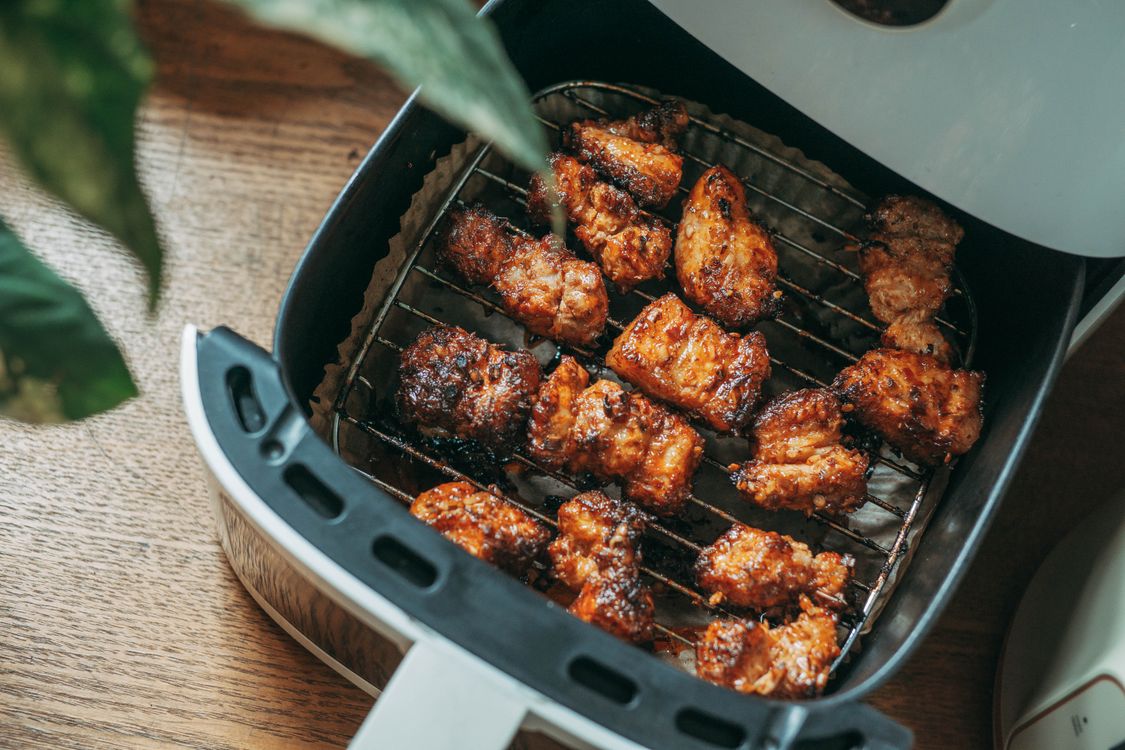
Crispy chicken pieces cooked in an air fryer basket

This post contains affiliate links. If you buy through my links, I may earn a commission at no extra cost to you.

I earn a commission from qualifying purchases made through links on this page, at no extra cost to you.

Yes — aluminium foil is safe in an air fryer basket, provided it doesn’t cover the perforations and isn’t placed in the appliance without food on top. The problems only arise when people use it wrong.

Food sitting on aluminium foil in an air fryer basket, with the basket perforations visible around the edges
Foil in the centre of the basket, perimeter clear — the correct way to use it.

The conditions below are based on how air fryer circulation works and are consistent with manufacturer guidance from Ninja, Cosori, and Philips.

When Foil Works in an Air Fryer

Foil earns its place when you’re cooking something that produces liquid or sticks badly. Saucy meats, oily fish, and heavily marinated vegetables are the main use cases — the foil catches the mess and keeps the basket cleaner. It also helps when cooking something delicate that would fall through the basket holes.

The key is to fold the foil so it sits flat in the centre of the basket, clear of the edges. You want air to circulate around and through the basket, so the perforations need to stay open.

When Not to Use Foil

There are four situations where foil causes more problems than it solves — two are about cooking quality, two are safety issues.

Don’t cover the perforations

An air fryer cooks by circulating hot air through the basket. Block those holes and you’ve turned it into a slow, uneven oven. Food won’t crisp up properly, cooking times will be unpredictable, and the whole point of the appliance is lost.

Keep the foil in the centre of the basket only. The perimeter should be clear.

Don’t use foil with acidic foods

Tomatoes, citrus, vinegar-based marinades — anything acidic reacts with aluminium and leaches small amounts of metal into your food. The health risk from occasional exposure is low, but the taste impact is real: food cooked in acidic marinades with foil often has an off, metallic edge.

Use parchment paper instead when cooking acidic ingredients.

Never place foil in the appliance without food on top

This one matters. Lightweight foil that isn’t anchored by food can get pulled towards the heating element by the air fryer’s fan. If it contacts the element, it can catch fire. Always make sure foil has food on top of it to hold it in place before you start the appliance.

Don’t use foil during the preheat cycle

For the same reason — an empty air fryer with foil in it is a fire risk. If your recipe calls for preheating, do it with an empty basket, then add the foil and food together before cooking begins.

How to Use Foil Safely

  1. Cut the foil to size. It should sit in the base of the basket without touching the sides or covering the perforations around the edge.
  2. Place food on the foil before switching on. The weight of the food holds the foil in place. Never put foil in an empty, running air fryer.
  3. Fold up the edges slightly. A small lip catches drips and stops them running down into the drawer below the basket.
  4. Don’t treat it as standard kit. Foil solves a specific problem — it isn’t necessary for every cook. Most foods brown and crisp better with direct contact with the basket.

What to Use Instead

If you want something more reusable, perforated parchment paper liners are worth trying. They’re made for air fryers, they don’t carry the acidic food problem that foil does, and pre-cut versions make them easy to handle. Silicone liners are another option — dishwasher safe and reusable indefinitely.

If you’re looking for an air fryer that’s easier to clean generally, the best air fryers guide covers models with non-stick drawers that barely need lining at all.

The Verdict

Aluminium foil is fine in an air fryer when it’s used with food on top, kept away from the perforations, and avoided with acidic ingredients. The fire risk from unsecured foil near the heating element is real, not theoretical — that’s the one rule worth remembering.

For more on getting the best out of your appliance, the complete air fryer guide covers everything from cooking times to maintenance. Still choosing a model? My top-rated air fryers are compared by basket size, wattage, and value.

FAQs

Can you put aluminium foil in any air fryer?

Yes — foil is safe in basket-style and drawer-style air fryers, provided it doesn’t block the airflow holes and has food on top. Be more careful with oven-style air fryers where the heating element sits close to the rack level.

Does foil affect cooking time in an air fryer?

It can. Foil insulates the food slightly, which may extend cooking time by a few minutes. More significantly, foil that covers the perforations will reduce air circulation and noticeably slow cooking. Keep the holes clear and the effect is minimal.

Is parchment paper better than foil in an air fryer?

For most cooks, yes. Parchment doesn’t react with acidic foods, it’s easier to handle, and pre-cut perforated liners designed for air fryers are widely available. The main advantage of foil is that it can be shaped more precisely around food, which some people prefer for fish or saucy cuts of meat.

Can the foil touch the sides of the air fryer basket?

Better to avoid it. Foil pressed against the basket wall blocks airflow from those sections, which leads to uneven cooking. Cut the foil to fit the base only, with a clear gap around the perimeter.

Filed Under: Helpful Kitchen Tips

Are Air Fryers Healthy?

Last Updated October 5, 2022

Buying guide: Best Cheap Air Fryer 2026
Part of my complete air fryer guide — all reviews, comparisons, and buying advice in one place.
 father and beautiful mother with son and daughter preparing healthy snacks in kitchen using air fryer at home

Air fryers cook food by circulating hot air around it. When you use convection heating, food is heated, resulting in a crispy, crunchy exterior that requires little fat, allowing chips and fried chicken to be prepared without adding fat.

Do Air Fryers Offer a Healthier Eating Option?

The fat content of deep-fried foods is not only higher, but they are also more calorie-dense, contributing to the likelihood of weight gain when consumed. Fried foods are associated with an increased risk of obesity. If you want to slim down, you may want to switch to air-fried foods instead of deep-fried ones.

Carbohydrates and protein are more calorie-dense than fat, containing 9 calories per gram. That is a lot when you think about something with a huge amount of fat. Compared to deep-fried foods, air-fried foods have a lower fat content, so switching to an air fryer could reduce your calorie intake and help you lose weight.

Acrylamide Levels Are Reduced by Using an Air Fryer

It is possible for oil-fried food to produce dangerous compounds, for example, acrylamide. Certain foods form this compound when they are cooked at high temperatures, for example, deep-fried foods. Many cancers have been linked to acrylamide, including endometrial, pancreatic, ovarian, breast, and oesophageal cancer.

There is also evidence that dietary acrylamide may be linked to a higher risk of cancer in the kidneys, ovaries, and endometrial system. By using air frying instead of deep frying, you can reduce the risk of having food contaminated with acrylamide.

Nutrition May Be Preserved

Air fryers, which use convection heat, may help retain some nutrients, including vitamin C and polyphenols, which are protective compounds found in plants.

Is It Better to Air Fry Your Food Instead of Grilling It?

Hot air is used for cooking food in an air fryer. Despite its size, it functions similarly to an oven. Some believe air fryers can replace grills for specific purposes and are gaining popularity for preparing healthy meals.

Air frying is more health-conscious than grilling since minimal oil is used. It’s easier for food to cook evenly, and more fat drips off when cooking. Your food contains fewer calories and fat. However, air frying does not produce the same charred, crispy texture and flavors as grilling.

Air fryers are one of the easiest appliances to clean. Unlike many stovetops, the bottom of this one has a small, nonstick tray that collects all the fat and grease, allowing you to clean it much more easily after cooking. With an air fryer, you must remove the charred food from the grill after cooking. The rungs are often baked with it. This is the main difference between a grill and an air fryer. Cooking the same meal on the grill or in the air fryer is about equal health-wise.

Conventional Oven vs. Air Fryer

Due to the similar heating methods used by the oven and the air fryer, the nutrients will remain the same, irrespective of which appliance you use. That’s a win in my book!

In air-fried fish, polyunsaturated fats (especially omega-3 fatty acids) may be reduced, and inflammatory compounds may increase. However, it’s extremely important to remember that whenever a portion of food becomes heated, its composition changes, leading to the formation of inflammatory compounds. It has also been found that microwaving or roasting fish alters the fat content and produces substances that cause inflammation. There has also been growing evidence that adding herbs could help slow the oxidation of fish fat during air-frying, so add anti-inflammatory herbs to your fish when you cook it.

Compared with deep-fried foods, air-frying is healthier, but oven-baked foods often preserve good nutrients while eliminating bad ones, resulting in baked foods that are healthier than air fried.

Deep Frying vs. Air Frying

The air fryer wins by a long shot on the ‘healthier’ question. In addition to using less oil, air frying is healthier than deep frying. There is no need for oil when air frying, while deep fat frying uses a few liters!

In contrast to deep frying, air frying absorbs significantly less oil than deep frying. Using an air fryer saves oil, which reduces the chance of obesity and weight gain as fewer calories are used, which means fewer calories are gained. Fat isn’t forbidden, it just needs reducing. The Food and Nutrition Board recommends 20-35% fat as part of your diet. Too much-fried food can cause you to consume too much fat and calorie intake.

Tips on How to Keep Your Air Frying Recipe Healthier

The air fryer is only as healthy as what you put in it. Here are a few tips to consider when trying to keep your air-fried foods on a healthier level.

  • Breading can be skipped.
  • To make your meals flavorful, choose seasonings and spices that are light.
  • Avoid fattening meats and eat chicken air fryer recipes instead.
  • Make sure that you choose foods that are low in calories.
  • Air fryer snacks are a healthier alternative to fatty and unhealthy snacks.
  • Try and avoid frozen foods as they contain more sodium than homegrown.
  • Make vegetarian dishes more often. The more vegetables, the better.
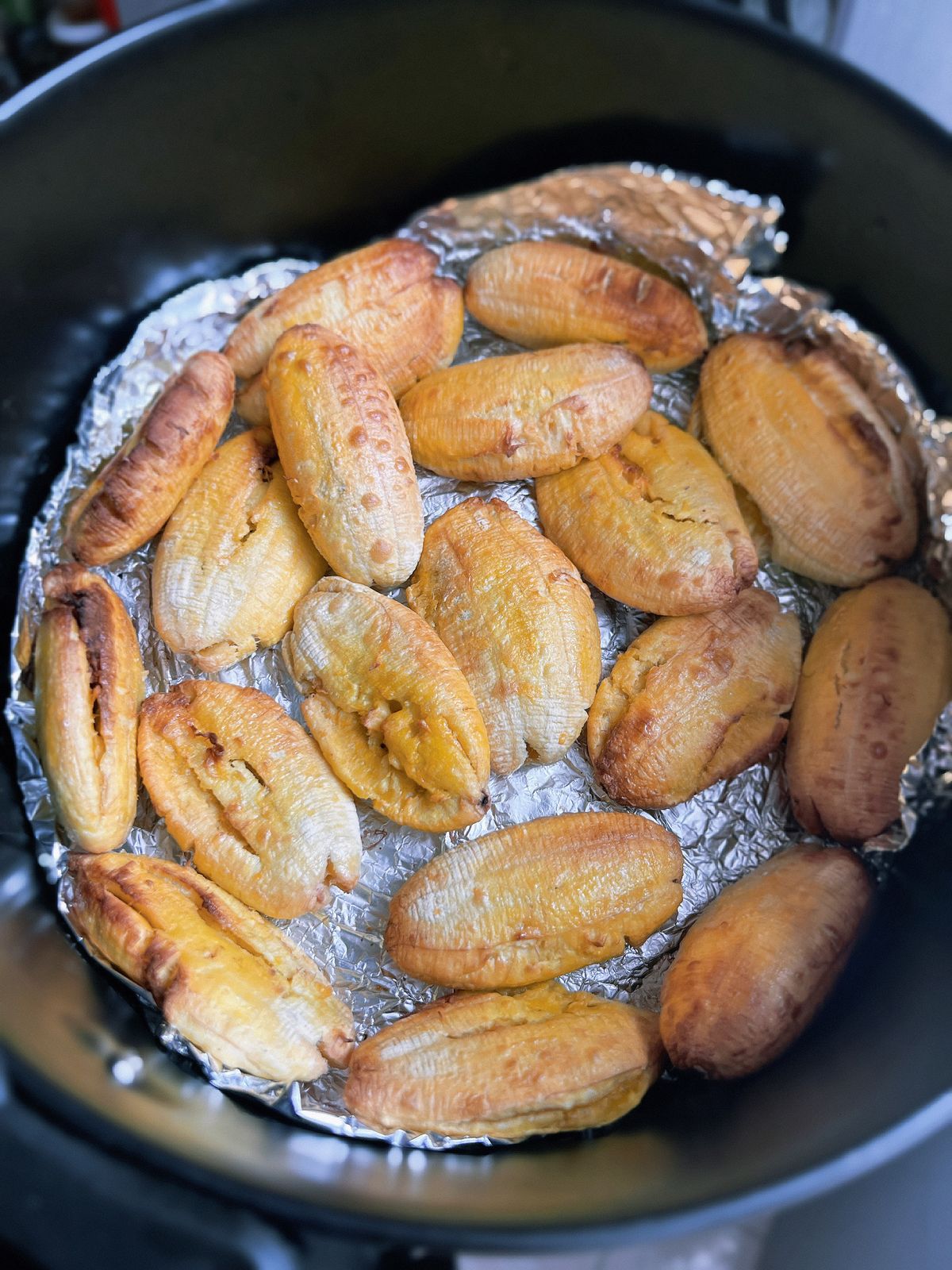
Roasted sweet potato cooked by airfryer at home

One often-overlooked tip: be careful about what you put in the basket alongside your food. Aluminium foil is fine with the right technique — it needs to stay clear of the perforations and away from acidic ingredients. If you’re not sure, my guide on using aluminium foil in an air fryer covers the rules in full.

Air Frying: What Do Dieticians Say

Now let’s step back and answer the question I was asked at the beginning of this page—what is the healthiness of an air fryer? I need to define “healthy” and compare it to other cooking methods to determine whether it is healthy.

As an alternative to deep frying, this kitchen appliance has fewer calories and is less likely to cause inflammation, thus lowering the chances of chronic disease.

As I consider the question “What makes a healthy meal?” the real determinant is what you eat and cook in the air fryer. The nutritional value of fruits, vegetables, whole grains, fish, and lean meats that are cooked in an air fryer will be just as good as the nutritional value of those that are baked or roasted in an oven.

Even though air fryers are healthier than deep fryers, it doesn’t mean you can eat unlimited amounts of high-calorie foods. Remember that air-frying doesn’t require oil, so you may not see the same benefits once you start using significantly more oil for air-fried foods. It would be best to remember that foods like chicken nuggets have a deep-fried coating, so they are already bad before you even turn the air fryer on.

When Food Is Air-Fried, How Does It Taste?

Do air-fried foods taste as good as classic fried food? Ultimately, it’s a subjective decision.

In frying food, grease is absorbed by the batter you use to cook the food. The crunch on the outside of fried foods is obtained through this process, which keeps the inside moist. Fried foods also possess a rich, dark, and pleasing color after they are fried.

As long as you air fry the food long enough, you can still get a crunch, but the mouth feel and look won’t be the same. According to one study, air frying and oil frying produce similar colors and moisture levels but produce different textures.

You should also pay attention to your cooking technique. Food can become unevenly cooked depending on how crowded the basket is. Some areas may be soggy, while others may be crisp.

Can I Reheat Food in an Air Fryer?

Many air fryers have a reheat function. The air fryer is better than the microwave here as microwaves release toxins and small amounts of radiation when used. It’s healthier to reheat in the air fryer and food will taste better.

Conclusion

Healthy versions of your favorite fried food are prepared quickly and conveniently using an air fryer. Furthermore, an air fryer does not require any cooking skill on your part. There are other healthy cooking methods besides air fryers; baking, roasting, and steaming can also be healthy. Food type still matters, whatever cooking method you use. Maintaining a healthy diet is important to consume various healthy, whole foods to ensure you get all the nutrition you need.

Even healthy foods can contain harmful things, such as chemicals used to repel bugs and insects. Chicken can contain growth hormones. Fruit can have chemicals added to help them ripen faster.

Everything in moderation is a popular motto for a reason. While air frying won’t replace the health benefits of foods like raw fruit and vegetables, it’s much better than oil frying.

See Also

  • top-rated air fryers

If yours has started smoking during cooks, that’s a separate maintenance issue — see why air fryers smoke and how to stop it.

Filed Under: Helpful Kitchen Tips

How Does A Microwave Toaster Oven Combo Work?

Last Updated October 22, 2021

Microwave Toaster Oven Combo

Microwave toaster oven combos are a great way to save space and energy. They allow you to cook multiple types of food while only using one appliance.

The microwave toaster oven is a kind of combined kitchen equipment that is an upgrade from an ordinary microwave oven and toaster into a powerful 2-in-1 combo that serves the same purposes or even better. These combos earn their place in small kitchens where counter space is tight, and this article covers everything you need to know about how they work, plus what actually matters when you’re comparing models.

A microwave toaster oven works as a multifunctional device that doubles up as a microwave oven and a toaster. It heats food just like a standard microwave, serves as a toaster, and bakes foods just like an oven. It functions by utilizing microwaves and a fan (sometimes infrared radiation) to warm up food substances from within and a grilling component that heats from the outside.

You can use microwaves and an oven simultaneously because microwaves are non-ionizing radiation, while conventional light bulbs and ovens emit ionizing radiation.

What Food Can I Make In A Microwave Toaster Oven Combo?

There are varieties of foods that you can make with this device. They include;

  • Baked potatoes
  • Grilled sandwiches
  • Toasted bread
  •  Grilled cheese
  • Flatbread Margherita Pizza
  • Pizza rolls

Features To Look Out For When Purchasing A Microwave Toaster Oven Combo

When purchasing any appliance, there are some features you should consider. These features tell me how authentic these appliances are and how efficient they will be in carrying out their essential functions. What then should you look out for in a microwave toaster oven combo?

Wattage

Wattage is one of the most crucial factors to consider if you purchase a microwave toaster oven combination. The wattage of this appliance determines your cooking speed. So the higher wattage, the less time your food will spend heating up or cooking.

Although microwave toaster combo models with less wattage tend to be cheaper, they will likely slow down your cooking process and prevent your food from cooking evenly.

The majority of microwave toaster oven combos have a wattage ranging from about 600 to 1,200 watts. But usually, anything between 800 and 1000 watts will help in cooking your food efficiently.

Size

The size of the appliance is also a crucial factor. You need to consider two aspects of size.

First, the space you’ll need it to fit in. Either in a small open cupboard or on top of a kitchen counter. For such a multifunctional appliance, you need proper ventilation primarily because it deals with heat.

So, be sure the appliance is not too large for the space you cleared for it such that there’s still little space left on each side, the top, and the rear. I advise about 3 inches of space away from the wall or another object.

Secondly, the amount of food you wish to cook with this appliance matters. Think about the foods you often cook or heat up. Will they fit in the appliance? You don’t want to purchase what will not be helpful in the long run.

Pre-Programmed Settings

If you want to ease stress and take out the guesswork when cooking, it’s best to purchase a microwave toaster oven combo with a pre-programmed setting. Appliances like this will automatically compute the duration and power you need to get your food properly cooked and in a safe manner too. All you would have to do is correctly set the type and weight of the food.

Likewise, check which of the functions can be pre-programmed. You should probably purchase the one that automates most of the processes you utilize from time to time.

Maintenance

The major maintenance this appliance needs is occasional cleaning. Thus, look for one with a removable crumb tray and a door that wipes down without disassembly. Ensure you pay proper attention to the lighting, fixtures, vents, and hinges, as these components require lots of effort and patience to clean. The microwave side needs the same routine attention — my guide to cleaning a microwave oven covers the steam method that lifts baked-on splatter without scrubbing.

Benefits Of Using A Microwave Toaster Oven Combo

Saves Money

Instead of purchasing a microwave, an oven, and a toaster separately, the multifunctional microwave toaster oven combo already offers you a three-in-one solution. Meaning you can buy this combo instead of buying separate appliances.

Also, you would only need one device instead of two if you need to perform all functions at once.

Microwave toaster oven combos also consume less energy. All these would surely help you save money.

Saves Time

Due to its ability to incorporate toasting and microwaving capabilities, you can cook or heat your food faster.

Also, you will spend less time moving food from one oven to the other, waiting for food first to heat up or defrost before you do what’s next. You can maximize one device for all.

Handles More Than One Job

Sometimes you don’t have the financial luxury of being able to buy all your appliances at once. Well, if you’ve been wondering which to purchase first and which to save for later probably, you have that problem solved. With just this combo, you can enjoy all functionalities from just one single unit.

Saves Space

This device is very efficient if you have a small kitchen space. It can fit in a small space, such as a cupboard or on a kitchen counter. Instead of adding multiple appliances dotted around the kitchen, this might be all you need.

Is The Microwave Toaster Oven Safe For Cooking?

Yes. A good microwave toaster oven is safe for cooking. It is also a very effective and highly suitable process. Although there is no evidence that it can cause any harm, letting the heat spread when cooking to kill harmful bacteria is essential.

This appliance is good at preserving food nutrients and deterring the formulation of any harmful substance in food.

However, you should avoid overheating or underheating your food. Also, do not stand too close to the microwave due to the heat. Avoid heating anything in a plastic container unless it has been labeled or marked safe for use by the manufacturer. Cardboard takeout containers have their own rules — check whether you can microwave cardboard safely before reheating in the box.

What should you not heat in a microwave?

You should not reheat foods that can quickly spoil or foods that cannot retain their flavor and texture properties when microwaved, such as raw seafood, eggs, dairy products like milk and cheese. The high temperatures of this device would only cause these ingredients to degrade faster than if they were cooked using other means. Also, avoid heating any moist food because it could splash on you while cooking inside the appliance, which is hot enough at 240 degrees Fahrenheit (115 Celsius).

Microwave Toaster Oven Combo Features:

-Compact Design for small kitchen space

-Pre-programmed settings with LED display

-Sandwich included for making delicious sandwiches

-Can be used as a regular oven with broil and bake functions and toasting bread.

-Toast function for perfect color browning on toast

-Convenient size lets you cook more dishes at once

-Includes an easy open glass door that you can easily clean after use.

Conclusion:

This appliance is great for busy people who are always on the go. You can use it to toast bread, bake cookies, or even heat leftovers in a matter of minutes. It saves time, space and it is effortless to use!

The difference between a good one and a bad one usually comes down to even heat distribution rather than the wattage number on the box. If you’re comparing standalone options, my convection toaster oven comparison covers the top picks in more detail.

I really hope you found this article useful. Don’t forget to check out my guide to air fryers and my ultimate list of kitchen essentials.

Frequently Asked Questions

Is a microwave toaster oven combo actually worth it?

If your kitchen is short on counter space, yes. You give up a little in per-function performance compared to a dedicated toaster oven or microwave, but you get both jobs done from one footprint.

Can you run the microwave and toaster functions at the same time?

No. These combos share a single heating chamber, so you pick one mode at a time — microwave, toast, or bake/broil, depending on the model.

How long do these combos typically last?

Expect 3 to 5 years of regular use. The microwave side tends to outlast the toaster/convection side, since the heating element and door hinge see more daily wear.

Do they take up more counter space than a microwave and toaster bought separately?

Usually less, since you’re not running two separate footprints side by side, but a combo unit is taller than a standalone microwave, so check the height clears your upper cabinets before buying.

For more on choosing between toaster oven types, see my toaster oven buying guide.

Filed Under: Helpful Kitchen Tips

Can You Grind Coffee Beans In A Nutribullet? A Step By Step Guide

Last Updated October 19, 2021

Can You Grind Coffee Beans in a Nutribullet

The short answer is yes; you can grind coffee beans in a nutribullet. The long answer is that it’s not as easy as using your typical grinder, and there are some things you need to know if you want to give it a try.

The notes below are drawn from the manufacturer’s own guidance and the pattern in owner reports, rather than from the marketing copy, not just what the box says it can do.

I earn a commission if you buy through the Amazon links below, at no extra cost to you.

Part of my complete coffee guide — all reviews, comparisons, and buying advice in one place.

First of all, the blade on a nutribullet isn’t going to be nearly as sharp or strong as the blades on a traditional coffee bean grinder – so this means that grinding will take longer and won’t turn out quite as finely ground. You also need to know that the nutribullet won’t be able to handle as much weight as a traditional grinder, so there’s a chance you’ll end up with clogged blades if you try it.

Full guide: Best French Press Coffee Maker 2026
Full guide: Best Espresso Machine Under $200

It also doesn’t grind relatively as evenly or consistently, which can make for some inconsistently brewed coffee, depending on what kind of machine you have. However, you can use the Nutribullet as an alternative to a regular coffee grinder. If you follow my guide below, you should get good results with a bit of trial and error.

Nutribullet: The Smart Kitchen Gadget

A Nutribullet is not your regular blender that chops your fruits into tiny watery bits. It breaks them down, releasing all nutrients embedded in your fruits for optimum nutrition. It’s a great kitchen appliance.

It has powerful blades that rotate at 20,000 revolutions per minute, and at this rate, it can liquefy anything that has liquid in it. You have to be careful not to place your finger in it because a machine this powerful grinds your finger into ‘liquid’ too. 

A Nutribullet comes with an extractor blade, but it is not advisable to grind your coffee beans with it. Grinding coffee beans using an extractor blade would wear out the edge faster because it is designed for soft and juicy food items. Your coffee beans can also get stuck between the extractor blades, depriving you of all the coffee powder you can get. 

The correct blade to use is the milling blade. The milling blade, also referred to as a flat blade, would blend your coffee beans perfectly, just like you like it. You would have to purchase a milling blade for this purpose since an ordinary Nutribullet doesn’t come with one. To get your choice of coffee texture, operating the Nutribullet using the appropriate method will make your progress go smoothly.

How To Use A Nutribullet To Grind Your Coffee Beans.

Unlike a regular blender, you do not control a Nutribullet using a knob or a dial. It is managed by pulse control. To use the nutribullet, apply pressure to the cup on the top of the appliance. The blades will rotate for as long as you apply pressure to the cup.

Steps

  • As common with using new appliances, always read through the user’s guide manual for easy assembling. Be sure to avoid connecting the Nutribullet to power while assembling it, so you don’t hurt yourself.
  • Remove the lid of the cup and fill three-quarters of the cup with coffee beans. The extra space in the cup is to give the blades some room to work. 
  • Replace the lid and attach the cup to the base(motor).
  • Pulse your Nutribullet to get it started. 

Grinding your coffee beans using a Nutribullet can be as simple as learning the alphabet if you follow these steps.

For Different Coffee Textures 

  • For Coarse Coffee, you need about 3-5 secs. Put your coffee beans in the cup and pulse just three times. Remember, don’t fill up the cup so that the milling blades can move freely.
  • For Fine Coffee, it takes about 15-20 secs. First, grind it into a coarse texture for about 5 seconds and then grind it into fine particles. To achieve this, you pulse ten times, checking to ensure that the beans get a consistent grind. If this is not the case, hold the cup’s lid and shake to allow the bigger particles to move downward toward the blade. Do this for another 15 seconds or until you’ve achieved your desired texture.

Store your coffee in a suitable container and keep it in a cool and dry place.

Cleaning/ Washing The Nutribullet

Washing your Nutribullet before and after use is as important as washing your hands before and after eating. Regular cleaning helps you maintain your appliance properly. It also ensures that at every point in time, your Nutribullet is free of dirt and germs that can contaminate whatever you put in it later on.

Steps To Follow

  • Detach the cup from the base. You can wash the cup without using a dishwasher.
  • If you come upon tough-to-come-off stains in the cup, fill it with warm, soapy water, and leave for some minutes, then attempt to rewash it.
  • To clean the base, you can only use a damp rag. Make sure you don’t have water dripping from the rag onto the bottom because water and electronics aren’t exactly friendly.
  • Carefully wipe the blades so you don’t get hurt by cutting yourself.

What Kind Of Beans Can The Nutribullet Grind?

The milling blade is specially designed for nuts, grains, and seeds, and your coffee beans fall right into one of the listed categories. You can conveniently grind your coffee beans in a Nutribullet, provided you have the right kind of blade.

You can purchase a milling blade separately, or there is the Nutribullet 600 that comes as an 8-piece set. It also comes with a milling blade and some other added accessories. It is a little bit more expensive than the normal Nutribullet 600 that doesn’t come with accessories. You can check it out below on Amazon.

I hope you found this article helpful. Please let me know in the comments. Also, make sure to look at my other helpful articles like my great tips and tricks for your Air Fryer and the ultimate guide to kitchen essentials. 

Frequently Asked Questions

Can you actually grind coffee beans in a Nutribullet?

Yes — a Nutribullet’s blades are sharp and fast enough to grind coffee beans, though the result is closer to a coarse, uneven grind than what a dedicated burr grinder produces. It works fine for French press or cold brew, where a coarser, less consistent grind is acceptable.

Will grinding coffee ruin my Nutribullet?

Occasional coffee grinding won’t damage a Nutribullet, but the blades and cup can retain coffee oils and odor over time, which may transfer to smoothies later. Many people keep a dedicated cup just for coffee and dry ingredients to avoid cross-contamination of flavors.

How is a Nutribullet grind different from a burr grinder?

A burr grinder crushes beans between two surfaces for a consistent particle size — critical for espresso and pour-over. A Nutribullet (like any blade grinder) chops beans unevenly, producing a mix of fine powder and larger chunks. This inconsistency is fine for French press but will make espresso taste off.

What’s the best way to grind coffee beans in a Nutribullet?

Use short pulses (2-3 seconds) rather than continuous blending, and shake the cup between pulses to redistribute the beans. This helps even out the grind and prevents the blades from over-processing the beans closest to them into powder while larger pieces remain untouched at the top.

If pushing your blender this hard has led to a leak at the base, here’s why that happens and how to fix it.

If your combo blender handles both smoothies and food prep, see my Ninja BN801 review for a full breakdown of how well that dual-purpose approach actually works.

Filed Under: Helpful Kitchen Tips

  • « Go to Previous Page
  • Page 1
  • Interim pages omitted …
  • Page 14
  • Page 15
  • Page 16
  • Page 17
  • Go to Next Page »

Recent Articles

  • Cuisinart DLC-10SYP1 Review: Durable, But a Newer Bowl
  • COSORI Pro Gen 2 Review: Big Basket, Fragile Handle
  • Dash Tasti-Crisp Review: Cheap, but the Coating Wears Fast
  • Chefman TurboFry Touch Review: Cheap, but the Coating Wears
  • Chef’sChoice 15XV Review: Very Sharp, With Scratch Reports

Search


HOME          Contact          Affiliate Disclosure          Terms of Service          Privacy Policy


kitchenwarecompare.com is a participant in the Amazon Services LLC Associates Program, an affiliate advertising program designed to provide a means for sites to earn advertising fees by advertising and linking to Amazon.com, Endless.com, MYHABIT.com, SmallParts.com, or AmazonWireless.com. Amazon, the Amazon logo, AmazonSupply, and the AmazonSupply logo are trademarks of Amazon.com, Inc. or its affiliates. As an Amazon Associate I earn from qualifying purchases.


Copyright © 2026 kitchenwarecompare.com, ALL RIGHTS RESERVED.