• Skip to primary navigation
  • Skip to main content
  • Skip to primary sidebar

Kitchenware Compare

  • Home
  • Product Reviews
    • Air Fryers
    • Coffee
    • Cookware
    • Flat Top Grills
    • Meat Thermometers
    • Food Processors
    • Knives
    • Pizza Ovens
    • Toaster Ovens
    • Juicers
  • Food Blog
  • Helpful Kitchen Tips
  • Data Studies
  • About
  • How I Review
  • Contact
You are here: Home / Archives for Glenn

Can You Use Metal Utensils on Stainless Steel Pans?

Last Updated November 8, 2026

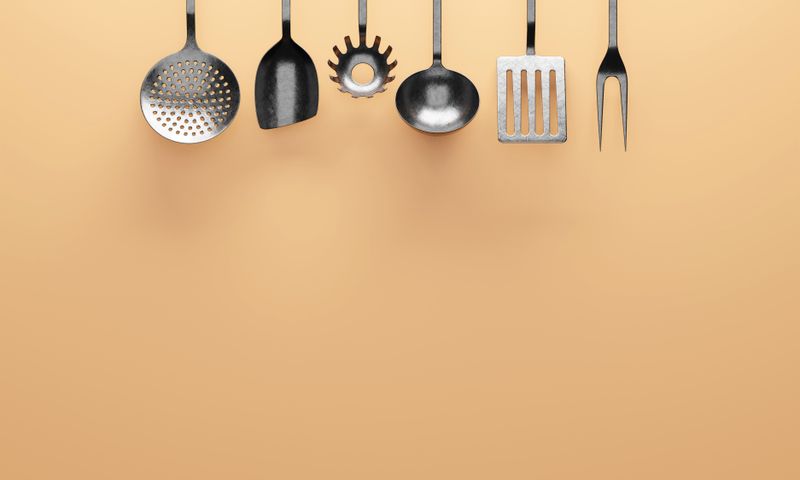
Metal skimmer, ladle, slotted spatula and carving fork hanging against a tan background

Yes — stainless steel is one of the few cooking surfaces built to take metal utensils. The surface is harder than the metal in most spatulas and spoons, so a metal utensil won’t gouge or damage it the way it would ruin a non-stick coating. The worst that happens is light cosmetic scratching, which doesn’t affect how the pan cooks.

Why Stainless Steel Can Take It

Stainless steel cookware sits at roughly 5.5 to 7 on the Mohs hardness scale. Most kitchen utensils — stainless spoons, spatulas, whisks — fall around 4 to 5.5. The pan is simply harder than the tool. On top of that, the chromium in stainless steel forms a thin, self-healing oxide layer on the surface.

That layer is also what chloride attacks, which is why white spots on a stainless steel pan are sometimes permanent pits rather than removable deposits. If a utensil does leave a fine scratch, that layer re-forms over it within hours, which is why old stainless pans that have taken metal for years still cook exactly the same as new ones, even once they look worn.

When It’s Actually a Problem

  • Cosmetic scratching over time. Years of metal-on-metal contact will leave fine scratch marks, especially with rougher tools like whisks or aggressive scraping. It’s a look issue, not a performance one — the pan still heats and cooks the same.
  • Sharp knife edges. Don’t cut food directly in a stainless pan with a knife. That’s a different kind of contact than a spatula pushing food around, and it can leave deeper gouges.
  • Non-stick and hard-anodized cookware. This is where metal utensils genuinely cause damage — those coatings are soft and scratch easily, unlike bare stainless steel. That scratching is one of the two reasons a non-stick pan starts sticking, and it is the reason that cannot be undone. Keep metal tools for stainless and cast iron, and use silicone or wood on anything coated.

Stainless Steel Grades: Does It Matter Which One?

Cookware is almost always 18/10 or 18/8 stainless (18% chromium, 10% or 8% nickel) — the numbers describe corrosion resistance and shine, not hardness against utensils. There’s no “premium grade” that’s more scratch-resistant than a budget one; the metal-utensil safety comes from the base alloy every food-grade cookware maker uses, not a tier you pay extra for. The one grade to actually watch for is 18/0 (no nickel) on very cheap pans, which is more prone to rust spotting — a separate issue from utensil scratching.

Metal Utensils Across Different Cookware Materials

Material Metal Utensils Safe? Why
Stainless steel Yes Harder than most utensils, self-healing oxide layer
Cast iron Yes Extremely hard surface; metal utensils won’t damage seasoning if it’s properly cured
Non-stick (PTFE/ceramic) No Coating is soft and scratches or flakes under metal contact
Hard-anodized aluminum No Anodized layer is a coating, not solid metal — behaves like non-stick for this purpose

Myths Worth Correcting

  • “Scratches ruin the pan.” Cosmetic scratches don’t affect heat conduction, food safety, or cooking performance on stainless steel. They only matter if you care how the pan looks.
  • “Professional kitchens use special utensils on stainless.” The opposite is usually true — commercial kitchens run stainless steel pans hard with metal tongs, spatulas, and whisks daily for years, precisely because it holds up to that treatment better than coated alternatives.
  • “Metal utensils mean the pan needs replacing sooner.” Stainless steel cookware routinely outlasts non-stick pans by a decade or more, and normal utensil use isn’t a factor in that lifespan.

Which Utensils Actually Work Best

Any metal utensil is fine, but some suit stainless steel better for practical reasons unrelated to scratching: metal tongs give better control for searing and flipping, a fish spatula’s thin edge slides cleanly under food on a flat stainless surface, and a metal whisk clears a fond (the browned bits) for sauce-making in a way silicone can’t. Save silicone-tipped tools for delicate tasks like folding eggs, not because stainless requires it.

What Actually Causes Food to Stick (It’s Not the Utensil)

If you’re asking this question because food is sticking and you suspect your metal spatula is the cause, it almost certainly isn’t. Stainless steel usually sticks when the pan isn’t hot enough before food goes in, when the food is wet, or when it’s moved before it releases. Makers disagree on whether the steel has pores at all, and on whether to heat the pan empty or with fat in it, so follow your pan’s booklet. Why food sticks to stainless steel sets out what each maker says; none of it depends on the utensil you’re using.

If you are choosing between materials rather than utensils, cast iron vs stainless steel compares heat retention, care and what an Oregon State study found on nickel and chromium leaching.

FAQ

Will metal utensils scratch stainless steel pans?

They can leave fine cosmetic scratches over time, but stainless steel’s hardness and self-healing oxide layer mean this doesn’t affect cooking performance. The pan works the same whether it looks brand new or well-used.

Can you use metal utensils on stainless steel cookware in the dishwasher too?

Yes, that’s unrelated to the utensil question — most stainless steel cookware is dishwasher-safe. Just avoid the dishwasher for pieces with wooden or riveted handles that can loosen over time.

Is it safe to use metal utensils on all stainless steel, or only some grades?

All food-grade stainless steel cookware (typically 18/10 or 18/8) handles metal utensils fine. The hardness that resists scratching comes from the chromium and nickel content standard across cookware-grade stainless, not a premium tier.

Should I still avoid metal utensils on stainless steel?

Only if you care about keeping the surface looking pristine and scratch-free for appearance’s sake. There’s no functional or safety reason to avoid them — unlike non-stick pans, where metal utensils are a genuine mistake.

The Short Answer

Use whatever utensil is convenient. Stainless steel is one of the few surfaces in the kitchen where that’s true without a caveat. Save the wood and silicone for your non-stick and hard-anodized pans, where metal actually does damage. If you’re shopping for a set rather than maintaining one you own, the best cookware sets guide has current picks, and best non-stick pan covers the coated side of the kitchen where utensil choice actually matters.

For material-by-material tradeoffs beyond stainless, see the most durable types of cookware, or browse the full cookware hub for reviews across every material.

Based on cookware-grade stainless steel’s standard hardness properties relative to common utensil metals — not laboratory material testing.
Filed Under: Helpful Kitchen Tips

How to Season a Blackstone Griddle (Step by Step)

Last Updated October 5, 2026

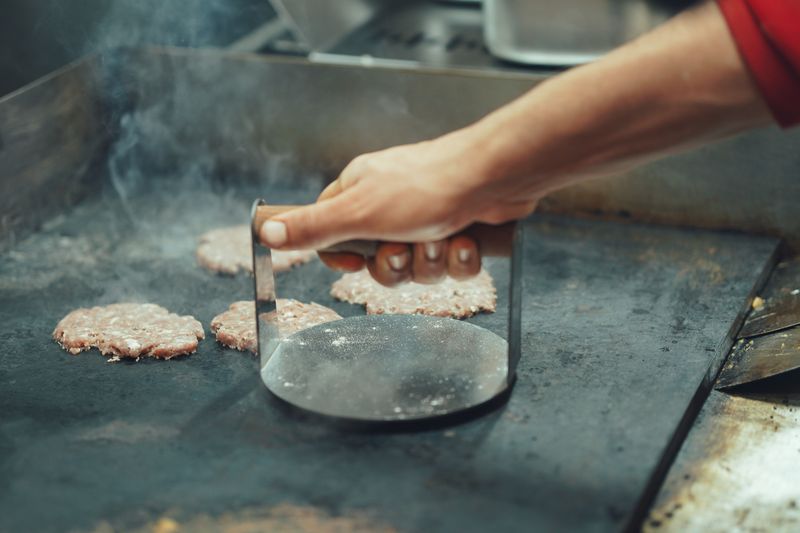
A hand pressing burger patties with a press on a hot flat top griddle

Seasoning a Blackstone comes down to thin oil, real heat, and patience — skip any one of those and you get the sticky, blotchy surface almost every new owner ends up asking about. Wash the griddle, heat it until it discolors, wipe on a thin coat of high-smoke-point oil, and run it hot until the oil stops smoking and turns matte black. Repeat that three or four times before you cook on it for real.

What You Need

  • A high smoke-point oil. Flaxseed, avocado, canola, or Blackstone’s own Cast Iron Conditioner all work. Skip olive oil and butter — both smoke and burn before the surface reaches seasoning temperature.
  • Paper towels or a lint-free cloth for spreading oil and wiping off excess. You’ll go through more than you expect.
  • Dish soap and water for the first-time factory-residue wash only. Never use soap again after this step — it strips seasoning. My guide to cleaning a flat top grill covers what to use instead for routine cleaning.
  • Heat-resistant gloves or tongs for handling a griddle that’s about to be genuinely hot.

How to Season It, Step by Step

  1. Wash the bare griddle with soap and water. New griddles ship with a factory coating that has to come off before oil can bond to the metal. Rinse and dry completely — any leftover water spots into rust fast.
  2. Preheat on high for 10–15 minutes until the surface starts to discolor and change from silver to a duller grey-brown across the whole plate, not just the center.
  3. Turn the heat off (or down low) and add a thin layer of oil. Pour a small amount and spread it with folded paper towels until the surface looks damp, not wet — you should barely see a sheen, not a puddle.
  4. Turn the heat back to high and let the oil smoke. This takes 10–15 minutes per layer. The smoke means the oil is polymerizing — bonding to the metal as a hard, matte black finish, not just sitting on top of it. Don’t rush this step by pulling it off heat early; that’s the single most common reason seasoning turns out sticky instead of smooth.
  5. Let it cool, then repeat. Wipe off any pooled oil, add another thin coat, and run it hot again. Do this three to four more times — a brand-new griddle typically needs four to five total layers before the color is even and dark across the whole surface.

Why Seasoning Goes Wrong (and How to Fix It)

The surface is sticky, not smooth

This is almost always too much oil, not too little. A thick layer can’t fully polymerize — it partially burns and leaves a tacky residue instead of a hard finish. The fix is more heat, not more oil: run the griddle hot for another 10–15 minutes to finish burning off the excess, then start your next layer thinner than you think it needs to be. If food keeps sticking even after the seasoning itself looks fine, my guide to griddle sticking covers the other causes — preheat, cooking oil, and technique — that aren’t a seasoning problem at all.

The finish is blotchy or uneven

Usually uneven oil application, or a cold spot on the griddle that never got hot enough to polymerize. Spread oil corner to corner, including the edges people tend to skip, and confirm the whole surface — not just the middle — reaches a light smoke before you count that layer as done.

Rust spots have appeared

Rust means water got to bare metal, usually from washing with soap after the first seasoning, air-drying instead of towel-drying, or storing it uncovered outdoors. Scrub the rust off with a grill stone or fine steel wool down to clean metal, then re-season from step 2 as if it were new.

How Often to Reseason

Not every use — that’s a myth that leads directly to the over-oiled, sticky surface above. A well-seasoned griddle that’s cleaned properly (hot water and a scraper, no soap) and lightly oiled after each cook holds its seasoning for months. Plan on a full reseasoning pass two to four times a year for a griddle in regular use, or any time you see rust, consistent sticking, or bare metal showing through.

FAQ

What’s the best oil for seasoning a Blackstone griddle?

Any oil with a high smoke point works: flaxseed, avocado, canola, or a dedicated product like Blackstone’s Cast Iron Conditioner. Avoid olive oil and butter, which burn before the surface gets hot enough to polymerize properly.

How many layers of seasoning does a new griddle need?

Four to five thin layers for a brand-new griddle. A griddle that’s already seasoned but needs a touch-up usually only needs two to three passes.

Can you season a Blackstone griddle indoors?

Not safely. The smoke produced during proper seasoning is heavy and this is a propane appliance — it needs to run outdoors with good ventilation, the same as normal cooking use.

Do you have to season a griddle before the first use?

Yes. Cooking directly on unseasoned bare steel causes everything to stick and leaves metallic flavor in the food. Seasoning first is not optional, even if you’re eager to cook.

Next Steps

Once it’s seasoned, day-to-day care is simple: scrape it clean while it’s still warm, wipe with a thin layer of oil, and skip the soap. If you’re still deciding which griddle to buy in the first place, the best flat top grill guide covers current picks, and Blackstone 28-inch vs. 36-inch breaks down which size actually fits your cooking habits. For the full category, start at the flat top grills hub.

Steps based on manufacturer guidance and repeated owner-reported troubleshooting patterns — not laboratory testing.

Filed Under: Helpful Kitchen Tips

How to Sharpen Food Processor Blades (and When to Replace Them)

Last Updated October 19, 2026

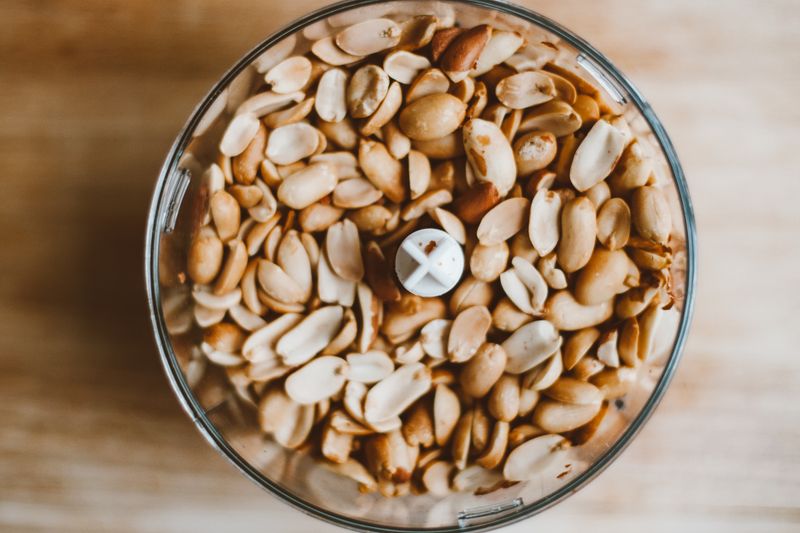
Overhead view of shelled peanuts in a food processor bowl with the S-blade in the center

A blade that used to chop onions in three pulses now turns them to watery mush, and you’re wondering whether it can be sharpened or the whole machine is heading for the bin. The main S-blade can be sharpened with a fine whetstone or a small file, and I’ll walk through exactly how below. But before you start, check whether sharpening is actually the right fix — about half the time, it isn’t.

Sharpen or Replace? The Honest Answer First

Sharpen the S-blade if it’s simply dull from normal use. Replace it if the edge is chipped, the metal is corroded, or the replacement is cheap enough that your time is worth more than the saving. Shredding and slicing discs can’t be meaningfully sharpened at all; those get replaced, not fixed.

That’s the part most sharpening guides skip. A genuine sharpening job on an S-blade takes 20–30 minutes of careful work around an awkward curved edge, and a factory-fresh replacement blade is not free: Cuisinart’s own parts store lists its 7- and 9-cup chopping blade and its 11-cup chopping blade at $41.95 each (checked October 2026), and other brands price by model. If your time is worth anything to you, sharpening only wins when the blade is discontinued, the replacement is overpriced, or you already own the stone and know how to use it.

How to Tell the Blade Is Actually Dull

Don’t sharpen on a hunch — a surprising number of “dull blade” complaints are actually overloaded bowls or worn drive couplings. A genuinely dull blade shows up as:

  • Bruised, not cut, herbs. Basil and parsley come out dark, wet, and mushy at the edges instead of cleanly sliced.
  • Uneven chopping. Half the onion is paste, the other half is in big chunks, no matter how carefully you pulse.
  • Longer run times. Jobs that took five pulses now take fifteen, and the motor sounds like it’s working harder.
  • Tomatoes smear instead of dice. Soft produce is the first thing a dull edge fails on.

Run your test with a single carrot: a healthy blade cuts clean discs of shrapnel-sized pieces in a few pulses. If you get ragged, crushed pieces, the edge is gone.

What You Need

  • A fine sharpening stone (1000-grit or higher) or a small diamond file. Electric knife sharpeners and bench grinders are the wrong tools here — they remove too much metal and can overheat the edge, and the S-blade’s curve doesn’t fit their slots anyway.
  • Cut-resistant glove for the hand holding the blade. Optional but sensible — you’ll be gripping a curved knife by its hub for 20 minutes.
  • Dish soap and a towel for cleanup before and after.

How to Sharpen the S-Blade, Step by Step

  1. Unplug the processor and remove the work bowl. Release the blade — most lift straight off the drive shaft; some twist-lock.
  2. Wash and dry the blade completely. Grip it only by the plastic center hub from here on. The two wings stay sharp enough to cut you even when they’re too dull to chop.
  3. Soak or wet the stone per its instructions, and set it on a damp towel so it can’t slide.
  4. Find the factory bevel. Look at the cutting edge of one wing under good light — you’ll see a narrow angled strip, usually a shallow 15–20 degrees, on the top face only. That’s the angle you’re matching. Food processor blades are single-bevel: sharpened face on top, flat underneath.
  5. Stroke the beveled edge along the stone, following the wing’s curve, pushing away from your body. Keep the bevel flat against the stone. Eight to ten light strokes, maintaining the same angle each pass — consistency matters more than pressure.
  6. Remove the burr. Flip the blade and make two or three nearly-flat passes on the underside to strip off the wire edge the sharpening raised.
  7. Repeat on the second wing, same stroke count so both edges cut evenly.
  8. Wash, dry, reinstall, and test on an onion or carrot. Clean discs and even pieces mean you’re done. Still ragged? The edge is likely chipped or worn past what a stone can recover — replace it.

What About Shredding and Slicing Discs?

Replace them. Disc cutters are stamped and machine-ground with dozens of small raised teeth, and there’s no practical way to re-establish those edges by hand without changing their geometry — at which point the disc cuts worse, not better. The good news for your wallet: discs dull far slower than the S-blade because they slice on a single pass instead of smashing into food thousands of times per minute.

What Dulls the Blade in the First Place

An S-blade stays usable for years mostly by avoiding four things:

  • Ice and frozen food. The single fastest way to chip an edge. Let frozen ingredients soften for ten minutes first — or use a blender, which is built for it. (If you routinely need both jobs done, a blender food processor combo covers ice without sacrificing your processor blade.)
  • Whole spices and coffee beans. Hard, glassy seeds act like an abrasive on the edge.
  • The dishwasher. Hot cycles and harsh detergent corrode the edge microscopically — the blade comes out clean and measurably duller for it. Thirty seconds of hand-washing preserves the edge.
  • Loose drawer storage. A blade rattling against other metal dulls itself between uses. Store it in the bowl or a sleeve.

Finding a Replacement Blade

Search your model number plus “S-blade” — the model number is printed on the base’s underside label. Cuisinart, KitchenAid, and Ninja all sell first-party replacement blades through their parts stores, and a first-party blade is worth the few extra dollars over a generic: third-party blades often sit a millimeter too high or low on the drive shaft, which ruins chopping consistency. If the machine is over a decade old and a blade costs half of what a new processor does, put that money toward a current machine instead — my picks are in the food processor buying guide.

FAQ

Can you sharpen food processor blades?

Yes — the main S-blade can be sharpened with a fine whetstone or diamond file, matching the factory bevel on the top face of each wing. Shredding and slicing discs cannot be sharpened and should be replaced when dull.

How often do food processor blades need sharpening or replacing?

With hand-washing and no ice-crushing, an S-blade typically stays sharp for 3–5 years of regular home use. Heavy use, dishwasher cleaning, or frozen ingredients can halve that.

Are food processor blades dishwasher safe?

Most are technically rated dishwasher-safe, but hot cycles and detergent dull the edge faster than any amount of chopping. Hand-wash the blade if you want it to stay sharp.

Why does my food processor puree everything instead of chopping?

Either the blade is dull (crushing instead of cutting) or the bowl is overloaded. Fill the bowl no more than half full and use short pulses; if evenly-loaded pulses still produce mush, the blade needs attention.

Worth Sharpening? Usually Once

Sharpen a healthy-but-dull S-blade once and you’ll get a real second life out of it. But when the same blade dulls again — or was chipped or corroded to begin with — buy the replacement and spend your half hour cooking instead. If this repair is part of deciding whether to keep the machine at all, start with the food processor guide for what’s actually worth owning, and see what else the machine can do before you write it off.

This guide is based on manufacturer service documentation and the pattern in owner-reported blade wear — not laboratory testing.

If you’re shopping for a new machine rather than fixing this one, see the best food processor for shredding cheese for a disc-by-disc comparison.

If you’re shopping for a full-size processor specifically, see my Cuisinart DFP-14BCNY review for a detailed look at the 14-cup Best Overall pick.

Filed Under: Helpful Kitchen Tips

What Cookware Material Works Best on a Gas Stove?

Last Updated October 19, 2026

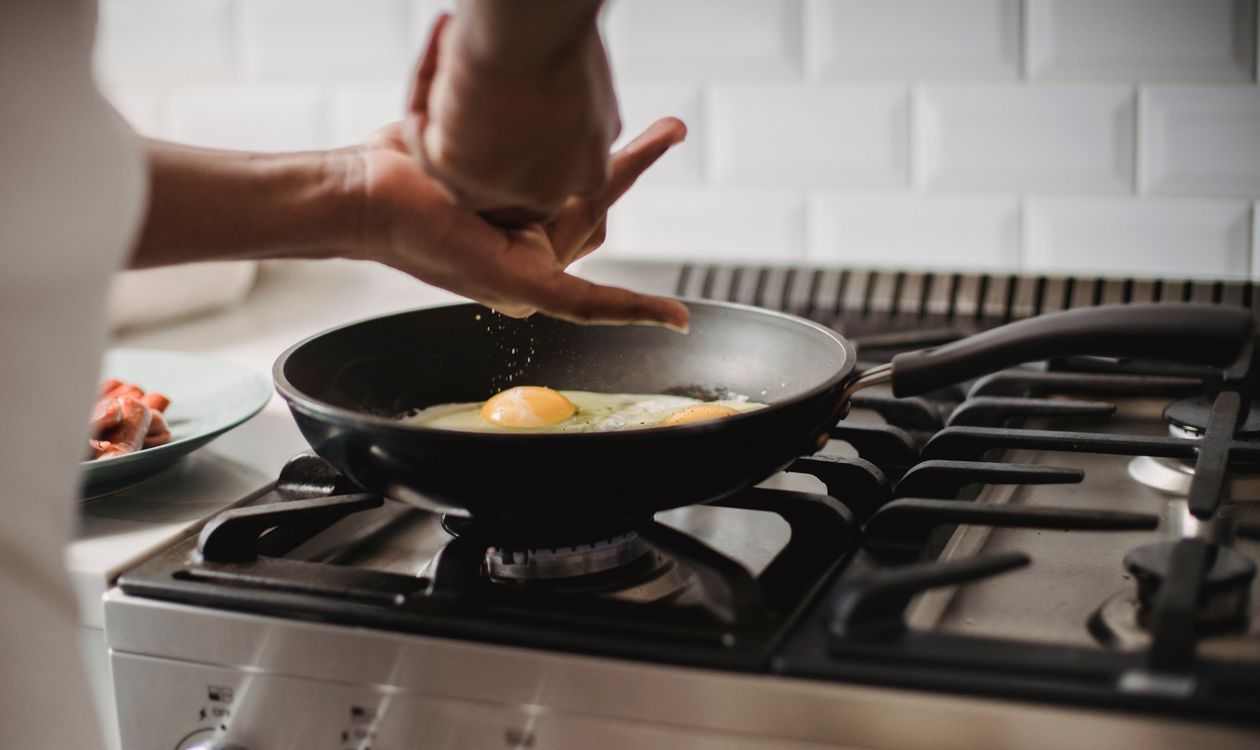
Pan cooking eggs directly on a gas stove burner

Part of my cookware reviews hub — all reviews, comparisons, and buying advice in one place.

Stainless steel and cast iron handle gas heat best. Gas burners produce an open flame that touches the pan directly, rather than the even, diffused heat you get from an electric or induction element. That direct flame contact rewards thick, heavy-gauge materials that spread heat evenly and punishes thin, lightweight pans that develop hot spots or warp.

Why material matters more on gas than other stovetops

On an electric coil or induction burner, the heating element itself is flat and spreads heat fairly evenly across the base of the pan. A gas flame does the opposite — it’s a ring of concentrated heat that licks up the sides of the pan as well as the bottom. Thin cookware (especially cheap aluminum) develops a visible hot ring right where the flame touches, which means food at the center of the pan cooks slower than food near the edges.

This is why the material and construction of a pan matters more on gas than on any other stovetop. A well-made pan spreads that flame-shaped heat pattern out before it reaches the food.

Best materials for gas stoves, ranked

Stainless steel (clad, not single-layer)

Fully-clad stainless steel — where a layer of aluminum or copper is sandwiched between layers of steel — is the most reliable all-around choice for gas. The conductive core spreads the flame’s heat across the full base before it reaches the cooking surface. Cheap single-layer stainless steel doesn’t have this core and will develop hot spots just like thin aluminum does, so the construction matters as much as the material name on the box.

Cast iron

Cast iron’s thickness and mass make it almost immune to hot spots — it takes longer to heat up, but once it’s hot, the heat stays even and holds through temperature changes (like adding cold food to the pan). It’s the best choice for high-heat searing and for anyone who leaves a pan on the stove for long, slow cooking. The tradeoff is weight and the extra care cast iron needs to avoid rust.

Carbon steel

Carbon steel behaves like a lighter-weight cousin of cast iron: less mass so it heats up faster, but still thick enough to handle gas flame without warping. It’s a common choice for woks specifically because gas is the traditional heat source for wok cooking — the shape and the flame are designed around each other.

Hard-anodized aluminum

Hard-anodized aluminum conducts heat quickly and evenly, and the anodizing process makes the surface hard enough to resist warping under gas flame in a way that untreated aluminum can’t. It’s lighter than stainless or cast iron, which is worth considering if weight matters to you.

Copper

Copper is the fastest, most even heat conductor of any common cookware material, which makes it excellent on gas — but it’s expensive, needs regular polishing, and most copper cookware is lined with a thinner metal (tin or stainless) that limits how hot you can safely run it.

Ceramic-coated nonstick — fine, with a caveat

Ceramic and traditional nonstick coatings work on gas stoves the same way they work on any stovetop — the coating itself isn’t affected by flame type. The caution is heat tolerance: nonstick coatings (ceramic or PTFE) degrade faster at the high, sometimes uneven heat gas can produce if you’re not careful with flame size. Keep the flame at or below the pan’s base diameter and you’ll avoid most of the problem. See my ceramic vs traditional nonstick comparison if you’re deciding between coating types.

What to avoid: glass and thin stamped aluminum

Glass cookware isn’t rated for stovetop use at all in most cases — it’s for oven and microwave use, and direct flame contact can cause it to crack. Thin stamped aluminum (the kind that flexes slightly when you pick it up) is the most likely material to warp on a gas burner, especially if it’s ever heated empty or moved from a hot burner to a cold surface.

The practical recommendation

For most home cooks, a fully-clad stainless steel or hard-anodized aluminum set covers the most ground on a gas stove — even heating, reasonable weight, and no special care requirements. Add a cast iron skillet if you sear regularly, and a wok in carbon steel if you cook a lot of stir-fry. My Best Cookware for Gas Stove guide has specific picks in these categories, and my Best Fry Pans for Gas Stove guide narrows it down further if you just need one pan.

Frequently Asked Questions

Can you use any cookware on a gas stove?

Almost any cookware works on gas in the sense that it won’t damage the stove, but thin or lightweight pans will develop hot spots and cook unevenly. Glass cookware is the main exception — most glass cookware isn’t rated for direct flame at all.

Does induction-compatible cookware work fine on gas?

Yes. Induction compatibility is about the base containing enough magnetic material (usually steel) to work with an induction coil — it doesn’t affect how a pan performs on gas. Most induction-compatible stainless and cast iron cookware works well on gas too.

Is nonstick cookware safe on high gas heat?

Most nonstick coatings, ceramic or PTFE, are rated for medium-high heat but not the highest settings on a gas burner, especially with a flame that extends past the base of the pan. Keeping the flame sized to the pan avoids most overheating issues.

Why does my pan have a discolored ring where the flame touches it?

That’s heat scorching from uneven heat distribution — a sign the pan’s material or construction isn’t spreading the flame’s heat evenly across the base. It’s common on thin stainless steel and cheap aluminum, and much less common on fully-clad stainless, cast iron, or hard-anodized aluminum.

Is cast iron overkill for a gas stove?

Not overkill, but not necessary for everything either. Cast iron is the best choice for searing and long, slow cooking where its heat retention matters. For quick weeknight cooking like eggs or reheating, a lighter stainless or nonstick pan heats up faster and is easier to handle.

The bottom line

On a gas stove, material and construction quality matter more than on any other stovetop because the open flame creates an uneven heat pattern that only thick, well-made cookware can spread out. Fully-clad stainless steel and cast iron are the two safest choices for most cooking; thin aluminum and glass are the two to avoid. If you want specific picks, my Best Cookware for Gas Stove guide covers full sets, and my Best Fry Pans for Gas Stoves guide covers nonstick options specifically.

Filed Under: Helpful Kitchen Tips

Best Non-Stick Pan Without Teflon: 5 PFAS-Free Picks That Actually Work

Last Updated November 7, 2026

Cooking eggs in a nonstick frying pan on an induction stovetop

“Teflon-free” gets used as a catch-all for two different things: pans coated in PTFE that just don’t carry the Teflon brand name, and pans coated in something else entirely, usually a ceramic (sol-gel) coating. “Stone” and “granite” describe how a coating looks, not what it is made of, and pans sold under those names turn up in both groups. If you’re avoiding Teflon specifically because of PTFE, only pans whose listings actually say PTFE-free or PFAS-free qualify. After checking coating chemistry, pricing and owner feedback across dozens of listings, the Blue Diamond 12″ Nonstick Frying Pan is the best non-stick pan without Teflon to buy first — a PFAS-free diamond-ceramic coating with 7,679 ratings averaging 4.3 stars and a $32.99 price that doesn’t ask you to gamble on an unproven brand.

I earn a commission if you buy through the Amazon links below, at no extra cost to you.

Quick Comparison

Product Best For Price Rating Buy
Blue Diamond 12″ Best Overall $32.99 4.3★ (7,679) Check Price
Blue Diamond 8″ Best Budget $15.92 4.3★ (15,468) Check Price
GreenPan Rio 12″ Best Established Brand $27.99 4.2★ (2,274) Check Price
Caraway 10.5″ + Lid Best Premium $185.00 4.6★ (531) Check Price
SENSARTE 9.5″ Best for Eggs $23.50 4.4★ (35,186) Check Price

How I Picked These

Every pan here is coated in ceramic (a silica-based sol-gel coating baked onto the metal) rather than PTFE, and every pick’s maker states the coating is PFAS-free (which covers PTFE), not just PFOA-free or “non-toxic,” which is a marketing word with no fixed meaning. GreenPan, and SENSARTE on one of its ceramic pages, limit that claim to intentionally added PFAS. Beyond coating chemistry, three things separated the pans worth buying from the ones to skip: review volume, base heat retention, and honest handle design. Ceramic coatings wear out faster than PTFE under real use, so a pan holding 4.3-4.4 stars across thousands of ratings has survived enough kitchens long enough to trust; a coating that failed fast would show up in the rating within a year.

Many pans written off as worn are actually carrying a layer of polymerised residue that cleans off. Base thickness matters more here than on a PTFE pan because ceramic doesn’t forgive hot spots — thin bases scorch eggs in the center while the edges stay raw. And stay-cool handles aren’t a luxury on an all-metal-body pan that goes from stovetop to oven.

Price range on this list runs from $15.92 to $185 for a reason: at the low end you’re paying for the ceramic coating and not much else, which is fine for a pan you’ll replace in a year or two. At the high end (Caraway) you’re paying for an aluminum-core body, a glass lid and the brand’s design — not a fundamentally different chemistry, and not a higher heat rating: Caraway rates its pan oven-safe to 550°F, against 600°F for the Blue Diamond pans.

The 5 Best Non-Stick Pans Without Teflon

1. Blue Diamond 12″ Nonstick Frying Pan — Best Overall


Blue Diamond 12 inch nonstick frying pan with diamond-infused ceramic coating

Best for: Anyone who wants one full-size pan that covers most stovetop cooking without a lot of research.

Blue Diamond says it has added diamonds to its ceramic coating, which sounds like marketing until you look at the review pattern: 7,679 ratings holding at 4.3 stars is a solid, stable sample for a $33 pan. That’s the real signal — a cheap ceramic pan that degraded fast would have dragged this rating down by now. The 12″ size handles a full four-egg scramble or a family-size stir-fry, the stay-cool handle survives medium stovetop heat without a towel, and it’s rated safe for the oven up to 600°F and for the dishwasher, though hand-washing extends coating life on any ceramic pan regardless of what the label says.

Key specs:

  • 12″ diameter, diamond-infused ceramic coating
  • PFAS-free, PFOA-free
  • Oven safe to 600°F, dishwasher safe
  • Compatible with gas and electric stovetops — not induction

Pros:

  • Stable 4.3-star rating across 7,679 ratings
  • Full 12″ cooking surface for family-size meals
  • Price stays under $35 even with the size

Cons:

  • Coating shows the same wear-over-time pattern as every ceramic pan — don’t expect PTFE-level lifespan
  • Single-handle design means it’s awkward one-handed once it’s fully loaded and heavy

Verdict: Buy this if you want one pan that does most jobs well and you’re comfortable replacing ceramic cookware every couple of years. Skip it if you specifically want a smaller everyday egg pan — go to the SENSARTE or the Blue Diamond 8″ pick instead.

Check Price on Amazon ↗

2. Blue Diamond 8″ Ceramic Frying Pan — Best Budget


Blue Diamond 8 inch diamond-infused ceramic nonstick frying pan in blue

Best for: One or two eggs, a grilled cheese or a single portion, for the least money a pan labelled PFAS-free costs on this list.

Why this pick changed: this slot previously went to the CAROTE 8″ granite pan. CAROTE labels that pan PFOA-free and nothing more, keeps “PFAS free” and “ceramic” for a separate range, and several owners report the granite coating is PTFE. A pan whose maker will not call it Teflon-free does not belong on a Teflon-free list, and my CAROTE 8-inch review sets out the evidence.

The Blue Diamond 8″ is the smaller sibling of the best overall pick, and at $15.92 it was the cheapest 8″ pan I found whose listing puts the claim in writing: a diamond-infused ceramic coating described as free of PFAS, PFOA, lead and cadmium. It holds 4.3 stars across 15,468 ratings, about twice the sample of the 12″ version. Buying the same brand for two slots is a fair criticism of this list, but the two cheaper best-sellers checked, CAROTE’s and SENSARTE’s granite pans, both stop short of a PTFE-free claim. For how ceramic and PTFE coatings compare on safety and lifespan, see ceramic vs Teflon pans.

Key specs:

  • 8″ diameter, diamond-infused ceramic coating
  • Listing states free of PFAS, PFOA, lead and cadmium
  • Oven and broiler safe to 600°F; dishwasher safe
  • Riveted stainless steel handle
  • Gas and electric stovetops — not induction

Pros:

  • The cheapest pan on this list, with the PFAS-free claim on the listing
  • Oven and broiler safe to 600°F, so a frittata can finish under the grill
  • Riveted handle rather than a screw-fitted one

Cons:

  • Does not work on induction
  • 8″ is too small for anything beyond single servings
  • Ceramic coatings lose their release sooner than PTFE, so expect to replace it sooner too

Verdict: Buy this as a cheap second pan for eggs and single portions if you want the PFAS-free claim in writing. Skip it if you cook on induction — the SENSARTE is the induction-compatible egg pan on this list.

Check Price on Amazon ↗

3. GreenPan Rio 12″ — Best Established Ceramic Brand


GreenPan Rio 12 inch ceramic nonstick frying pan

Best for: Buyers who specifically want the brand that says it pioneered ceramic nonstick in 2007.

GreenPan’s coating is Thermolon, a ceramic nonstick the brand says it pioneered in 2007 and makes through an affiliate company. The Rio uses Thermolon reinforced with diamonds on a heavy-gauge body, and GreenPan’s own listing words the PFAS claim carefully: made without intentionally added PFAS. At $27.99 with 2,274 ratings averaging 4.2 stars, the sample size is smaller than either Blue Diamond pan or the SENSARTE, which is worth knowing going in, but the brand has over a decade of ceramic-coating manufacturing behind it, which matters if you’re choosing based on who actually understands this coating type best. On induction, GreenPan’s Amazon listing for this Rio says non-induction; GreenPan’s own store now sells the Rio Advanced, whose 12″ page says it works on all stovetops, including induction, and I could not confirm the two are the same pan, so check the listing you are buying from before you rely on it for an induction hob.

Key specs:

  • 12″ diameter, Thermolon ceramic coating
  • Maker states free of PFAS (including PTFE), PFOA, lead and cadmium; the Rio listing says made without intentionally added PFAS
  • Dishwasher safe; oven safe to 350°F
  • Heavy-gauge construction; gas and electric stovetops, and the Amazon listing says non-induction (GreenPan’s Rio Advanced page says induction)

Pros:

  • The brand says it pioneered ceramic nonstick in 2007
  • Heavy-gauge construction, which GreenPan says provides excellent heat conduction
  • Full 12″ surface at a similar price to smaller pans

Cons:

  • Fewer total ratings than the Blue Diamond or SENSARTE pans, so the track record is thinner
  • 4.2-star average is the lowest of the ceramic pans on this list, driven mostly by coating-longevity complaints after 12+ months

Verdict: Buy this if brand pedigree in ceramic coating matters to you specifically. If you just want the longer track record at this price, the Blue Diamond 12″ has more than three times as many ratings.

Check Price on Amazon ↗

4. Caraway Ceramic Frying Pan (10.5″, Glass Lid) — Best Premium


Caraway 10.5 inch ceramic nonstick frying pan with glass lid

Best for: Buyers who want a heavier pan, a lid included, and don’t mind paying 5-12x more for it.

Caraway built its whole business around ceramic cookware sold as a design-forward alternative to Teflon, and the $185 price for a single 10.5″ pan reflects that positioning — you’re paying for a heavier aluminum-core body, a glass lid (most pans on this list don’t include one), and a ceramic coating Caraway says is made without PTFE, PFOA and PFAS. The 531 ratings at 4.6 stars is a smaller sample than the budget pans, but it’s consistent with the pattern across their product line. This is not a pan to buy if the goal is avoiding Teflon as cheaply as possible; it’s a pan to buy if you want the included lid, the heavier feel, and don’t mind the DTC price.

Independent testing backs the coating. Consumer Reports recommends Caraway’s ceramic-coated non-stick pan: in its tests eggs fried without oil slid out one after another, and the coating stood up well in its durability test. Two cautions from the same source: it names the tested model only as the Caraway Ceramic-Coated Non-Stick, so it may not be this exact 10.5″ pan with a lid, and it lists the pan as not dishwasher safe.

Key specs:

  • 10.5″ diameter, 2.7-quart capacity, includes glass lid
  • Maker states made without PTFE, PFOA, PFAS, lead and cadmium
  • Compatible with gas, electric, and induction
  • Oven safe to 550°F

Pros:

  • Only pan on this list that includes a matching lid
  • Noticeably heavier body than the budget pans, which helps with even heating
  • Widest color selection if kitchen aesthetics matter to you

Cons:

  • $185 for one pan is 5-12x the price of the other options here for the same underlying coating chemistry
  • Smaller review sample than the budget picks

Verdict: Buy this if a matching lid and heavier build are worth the premium to you. Skip it if you just want the coating chemistry without the design markup — the Blue Diamond 12″ gets you a PFAS-free ceramic coating and a bigger pan for under a fifth of the price.

Check Price on Amazon ↗

5. SENSARTE 9.5″ Ceramic Frying Pan — Best for Eggs and Omelets


SENSARTE 9.5 inch ceramic nonstick omelette frying pan in cream white with a woodgrain handle

Best for: Eggs, omelets, and crepes specifically — anything where the coating needs to release a delicate, thin food cleanly.

SENSARTE markets this specifically as an omelet pan, and the shallower sloped sides back that up — you can slide an omelet out onto a plate without folding it against a straight wall the way you’d have to on a standard skillet.

Check which SENSARTE you are buying. The brand sells a near-identical 9.5″ pan with a “Swiss Granite” coating labelled PFOA-free only, and this list previously linked to that version by mistake. This is the ceramic one: its listing states the coating is free of PFOA, PTFE, PFAS, lead and cadmium. SENSARTE’s own page for the lidded version of its ceramic pan words that as free of “intentionally added” PFOA, PTFE and PFAS, and I could not match this Amazon pan to one of the two pages for certain.

It costs $23.50 and holds 4.4 stars across 35,186 ratings, but Amazon pools that count with SENSARTE’s granite pans, so treat it as a rating for the brand’s omelette pans rather than for this coating alone. The 9.5″ size sits between the 8″ budget pick and the full-size 12″ pans, which makes it a reasonable single everyday pan for one or two people who mostly cook eggs.

Key specs:

  • 9.5″ diameter, ceramic coating with sloped sides
  • Listing states free of PFOA, PTFE, PFAS, lead and cadmium
  • Cast aluminium body with an induction base
  • Removable woodgrain Bakelite handle; oven safe to 550°F with the handle removed

Pros:

  • Sloped sides genuinely help with omelets and crepes
  • The PTFE-free claim is on the listing, unlike SENSARTE’s granite version
  • Works on induction, unlike the Blue Diamond pans

Cons:

  • Its 4.4-star rating is pooled with the granite version, so it says less about this coating than it seems to
  • Still too small for a family-size meal
  • Same ceramic-coating lifespan trade-off as every pan on this list

Verdict: Buy this if eggs and omelets are most of what you cook and you want a dedicated PTFE-free pan. Skip it if you need one pan to do everything — go with the Blue Diamond 12″ instead. My full SENSARTE ceramic review covers the pooled rating and how long owners say the coating lasts.

Check Price on Amazon ↗

How to Choose a Non-Stick Pan Without Teflon

Size and capacity

An 8-9.5″ pan covers one to two servings — eggs, a single portion of stir-fry, grilled cheese. A 10.5-12″ pan is what you want if you’re regularly cooking for a household of three or more, or if you want a single do-everything pan instead of buying multiple sizes. If budget allows, most kitchens are better served by owning one small (8-9.5″) and one large (12″) pan than one mid-size pan trying to do both jobs.

Budget and what you actually get at each price

Under $20 buys you the ceramic coating and a basic aluminum body — functional, but expect to replace it within one to two years of regular use. $25-35 gets you a name-brand coating with a larger, more consistent review history, which is the sweet spot for most buyers.

Above $100, you’re paying for a heavier body, included accessories like a lid, and marginally better heat retention — not a fundamentally more durable coating. My comparison of ceramic vs. traditional nonstick cookware covers this tradeoff in more depth if you’re deciding between coating types generally.

What “PFOA-free” and “PFAS-free” actually mean

PFOA was historically used in the process of making PTFE (Teflon), not as an ingredient of the finished coating. Under the EPA’s PFOA Stewardship Program, eight major companies committed to work toward eliminating PFOA from emissions and product content by 2015, and the EPA says those companies have phased out U.S. production and import of it. So “PFOA-free” on a pan’s box is not a distinguishing feature, and it does not tell you whether the coating itself is PTFE.

“PFAS-free” is the more meaningful claim, since PTFE itself is a PFAS. If avoiding that whole chemical family is the goal, check that the maker says PFAS-free, not just PFOA-free. The makers of all five picks do (four brands; Blue Diamond makes two), in the wording below, quoted from each maker’s own site and, for the GreenPan Rio, from GreenPan’s own listing for the pan.

Pick Coating, as the maker names it What the maker says it is free of Source
Blue Diamond 12″ and 8″ Diamond-infused ceramic nonstick Coating “completely free of PFAS, PFOA, lead, and cadmium”; Blue Diamond says it does not use “any PFAS including PTFE or PFOA” Blue Diamond FAQ (brand-wide)
GreenPan Rio 12″ Thermolon healthy ceramic nonstick, reinforced with diamonds Brand-wide: “PFAS, including PTFE, PFOA, and their replacements”, plus lead and cadmium. The Rio listing: “made without intentionally added PFAS” GreenPan safety page; GreenPan’s Rio listing
Caraway 10.5″ Proprietary ceramic coating, made from inorganic ingredients “Made without PTFE, PFOA, PFAS, lead, and cadmium” Caraway materials page
SENSARTE 9.5″ Natural ceramic “Free from harmful substances like PFOA, PTFE, PFAS, lead, and cadmium” SENSARTE product page

Read the scope as well as the list. The Blue Diamond and GreenPan safety statements sit on brand-wide pages, though each pan’s own listing repeats the PFAS, PFOA, lead and cadmium claim. GreenPan’s pages carry a footnote limiting “PFAS-free” to no intentionally added PFAS, and Caraway says its coating is tested by independent, accredited labs for over 600 types of PFAS. These are the makers’ own statements, not lab results I have checked.

The coatings overlap more than the brand names suggest: Blue Diamond’s own California AB 1200 disclosure names its coating as Thermolon Ceramic Nonstick, in wording identical to GreenPan’s own disclosure, so by the makers’ own pages 3 of the 5 picks share one coating family. For what each label rules out across every type of cookware, including anodized aluminum and titanium, see my guide to PFAS-free cookware.

Compatibility and care

Check the base for an induction symbol if you cook on an induction stovetop — not every ceramic pan includes the magnetic base layer induction requires. Both Blue Diamond pans and the GreenPan Rio are listed as dishwasher-safe, though both makers recommend hand washing to make the coating last. Caraway tells owners to hand-wash its pans, and Consumer Reports lists its pan as not dishwasher safe; SENSARTE recommends hand washing its ceramic pan for longer pan life. Where a listing says dishwasher-safe and the maker’s care page says hand-wash, follow the care page.

Avoid aerosol cooking sprays on any ceramic pan: Blue Diamond says sprays will carbonize on its nonstick surface, and GreenPan and Caraway also tell owners to avoid them. Use a small amount of oil or butter instead. For care of cookware more broadly, my guide to cookware materials on gas stoves covers how coating type interacts with different heat sources.

Heat is the other half of care. Caraway’s own care guide says ceramic holds heat more efficiently than traditional pans, so it recommends cooking on low to medium heat, preheating for no more than about 90 seconds, and never leaving an empty pan on a hot burner. Blue Diamond’s FAQ gives similar advice, recommending a lower heat setting than for a conventional nonstick pan, and it is a sensible habit for every ceramic pan on this list.

Durability expectations

Set expectations correctly going in: ceramic coatings wear faster than a well-kept PTFE pan, and nobody publishes a precise figure. Consumer Reports says most nonstick pans have to be replaced every few years, and sooner if they are scratched. For ceramic specifically, the pattern in owner reviews is a year or two of regular use before a pan needs more oil to stop food sticking; that is a rule of thumb drawn from reviews, not a lab measurement, and a careful owner of a better pan can expect longer. This isn’t a defect specific to any pan on this list — it’s how sol-gel ceramic coatings behave as a category, and it’s the real tradeoff you’re making by choosing this coating type.

If coating lifespan matters more to you than avoiding PTFE specifically, it’s worth reading my breakdown of cast iron vs. ceramic cookware, since cast iron sidesteps the coating-wear problem entirely at the cost of more maintenance.

Teflon-Free Without a Coating: Carbon Steel and Cast Iron

Ceramic is not the only way to avoid PTFE. Carbon steel and cast iron carry no synthetic coating at all. Food releases from them only once they hold a seasoning layer, which is oil baked onto the metal, so they are stick-resistant rather than non-stick on day one, and they need a little upkeep to stay that way. They are also heavier than most ceramic pans, and acidic foods such as tomato sauce can damage the seasoning.

The trade is effort for lifespan: a seasoned pan does not wear out the way a ceramic coating does, which is the one weakness every pick above shares. Carbon steel is lighter and heats faster; cast iron holds heat longer.

Pure titanium pans are a newer uncoated option: nothing to wear off and no seasoning to keep up, but like bare steel they only release food once the pan is preheated with oil. ChopChic’s Plateful titanium pan review walks through that learning curve. My titanium cookware guide sets out what the label means and which titanium pans have a documented construction.

My carbon steel vs cast iron comparison works through which suits which cook, and the cast iron skillet buying guide has five verified picks. Ceramic still makes more sense if you cook eggs or delicate fish with very little oil and do not want to season anything. If a pan you already own has started to stick, my guide to why non-stick pans stick helps tell residue from coating wear.

The same coating question applies to rice cookers, where nearly every inner pot is nonstick. My best rice cooker for brown rice guide lists the ceramic and uncoated stainless options.

Frequently Asked Questions

What is the best non-stick pan without Teflon overall?

The Blue Diamond 12″ Nonstick Frying Pan. Its diamond-infused ceramic coating is PFAS-free, and with 7,679 ratings holding at 4.3 stars, it has a long and stable track record for a pan in this price range.

What is the best non-stick pan without Teflon for eggs?

The SENSARTE 9.5″ pan, purpose-built as an omelet pan with sloped sides that let a folded omelet slide out cleanly onto a plate rather than catching on a straight-walled skillet.

Is ceramic-coated cookware actually free of harmful chemicals?

Ceramic (sol-gel) coatings don’t contain PTFE or the PFAS chemical family PTFE belongs to, which is the specific concern most people mean when they say “Teflon-free.” They’re generally silica-based. The makers of all five picks state that the coating is free of PFOA and PFAS, though GreenPan, and one of SENSARTE’s ceramic pages, word the claim as no intentionally added PFAS.

What should I avoid when buying a Teflon-free nonstick pan?

Avoid pans that only advertise “non-toxic” without specifying PFOA-free or PFAS-free — that phrase has no regulated meaning. Also avoid using aerosol cooking sprays on any ceramic pan; Blue Diamond, GreenPan and Caraway all tell owners to avoid them.

How long does a ceramic nonstick pan actually last?

Expect roughly a year or two of strong nonstick performance with regular use and hand-washing, and less than a well-kept PTFE pan. That figure is a rule of thumb from owner reviews, not a lab measurement; Consumer Reports says most nonstick pans have to be replaced every few years. This is a category-wide tradeoff of sol-gel ceramic coatings, not a flaw specific to any brand on this list.

Is Caraway better than GreenPan?

They use comparable ceramic coating chemistry. Caraway’s $185 pan includes a glass lid and a heavier aluminum-core body; GreenPan’s $27.99 Rio comes from the brand that says it pioneered ceramic nonstick, at a fraction of the price and without a lid. I found no published test showing either coating outlasting the other — the difference is mostly build weight, accessories, and price.

Are “stone” or “granite” coated pans actually different from ceramic?

It depends on the pan. “Stone” and “granite” describe how a coating looks, not what it is made of. Some pans sold under those names use a ceramic (sol-gel) coating with mineral flecks; others carry no PTFE-free claim at all. The label is the only reliable guide: CAROTE and SENSARTE both sell granite pans labelled PFOA-free only, alongside separate ceramic ranges labelled PTFE-free and PFAS-free — which is why the SENSARTE on this list is the ceramic version.

Can you use metal utensils on a ceramic nonstick pan?

Most brands claim metal-utensil compatibility, but wood or silicone utensils genuinely extend coating life regardless of what the packaging says — ceramic coatings are more brittle than PTFE and small scratches accumulate faster than they do on a Teflon pan.

Are there non-stick pans without Teflon that are not ceramic?

Yes. Carbon steel and cast iron have no synthetic coating at all; they become stick-resistant once seasoned with baked-on oil. They are heavier than most ceramic pans, need more upkeep, and are not non-stick straight out of the box, but a seasoned pan does not wear out like a coating.

How These Picks Were Chosen

Plainly: this is a research-based guide, not a hands-on test. I have not run these side by side, and nothing here should be read as a report from my own kitchen.

What the picks rest on: what the alternative coating actually is – almost always a ceramic sol-gel layer, occasionally seasoned carbon steel or enamel – along with maximum safe temperature, induction compatibility, base construction and oven-safe rating; plus the complaint patterns across verified-purchase reviews, where the consistent finding for ceramic is that release is excellent at first and declines faster than PTFE does.

What I could not establish: how long each coating lasts, which is the trade-off at the centre of this category. There is no standardised abrasion test published for consumer ceramic pans. Anyone presenting a PTFE-free pan as equally durable is asserting something the available evidence does not support.

Bottom Line

If you want one pan to buy first, buy the Blue Diamond 12″ — a stable 4.3-star rating across 7,679 ratings at a price that doesn’t punish you if the coating wears out in two years. If you specifically cook a lot of eggs and want a dedicated pan for it, the SENSARTE 9.5″ is the better shape for the job.

Whichever you choose, remember that “Teflon-free” means a different coating with different tradeoffs, not a coating that lasts longer or performs better — the trade is avoiding PTFE and, by the makers’ own statements, intentionally added PFAS. For more on how these coatings compare to traditional nonstick and to uncoated cookware, see my ceramic vs. nonstick comparison or browse the full cookware reviews hub.

If you are also replacing bakeware, see my best non-toxic baking sheets guide.

Related reviews: Copper Chef Titan Pan · Best Non-Stick Copper Cookware · Best Omelette Pan

Filed Under: Product Reviews

  • « Go to Previous Page
  • Page 1
  • Interim pages omitted …
  • Page 59
  • Page 60
  • Page 61
  • Page 62
  • Page 63
  • Interim pages omitted …
  • Page 70
  • Go to Next Page »

Recent Articles

  • Burr vs Blade Grinder: Which One Should You Buy?
  • Stainless Steel Pan Sticking? Causes and the Water Test
  • Carbon Steel Pan Rusting: What Makers Say to Do
  • Moka Pot Grind Size: What to Set and How to Dial It In
  • Hard Anodized vs Stainless Steel Cookware: Which to Buy

Search


HOME          Contact          Affiliate Disclosure          Terms of Service          Privacy Policy


kitchenwarecompare.com is a participant in the Amazon Services LLC Associates Program, an affiliate advertising program designed to provide a means for sites to earn advertising fees by advertising and linking to Amazon.com, Endless.com, MYHABIT.com, SmallParts.com, or AmazonWireless.com. Amazon, the Amazon logo, AmazonSupply, and the AmazonSupply logo are trademarks of Amazon.com, Inc. or its affiliates. As an Amazon Associate I earn from qualifying purchases.


Copyright © 2026 kitchenwarecompare.com, ALL RIGHTS RESERVED.