• Skip to primary navigation
  • Skip to main content
  • Skip to primary sidebar

Kitchenware Compare

  • Home
  • Product Reviews
    • Air Fryers
    • Coffee
    • Cookware
    • Flat Top Grills
    • Meat Thermometers
    • Food Processors
    • Knives
    • Pizza Ovens
    • Toaster Ovens
    • Juicers
  • Food Blog
  • Helpful Kitchen Tips
  • Data Studies
  • About
  • How I Review
  • Contact
You are here: Home / Archives for Product Reviews

Cosori Pro II Air Fryer Review: Worth the Smart Features?

Last Updated July 20, 2026


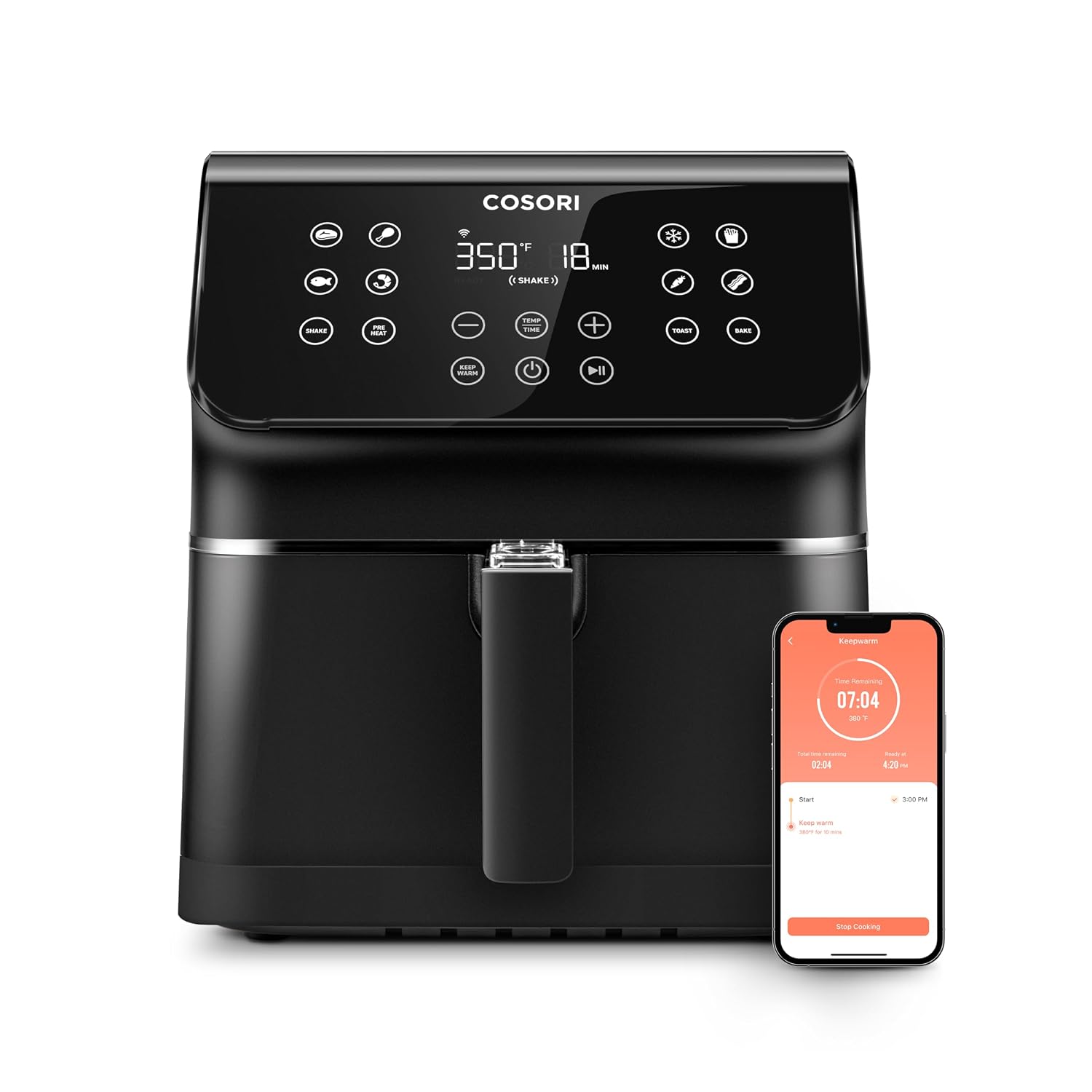
Cosori Pro II Smart Air Fryer 5.8QT

Quick verdict: the Cosori Pro II earns its 4.6-star average across nearly 2,400 ratings honestly — it’s fast, the app integration is more than a gimmick, and the price has stayed reasonable for what you get. The one thing worth knowing before you buy: basket handle durability shows up repeatedly as a real weak point, not an isolated complaint.

I earn a commission if you buy through the Amazon links below, at no extra cost to you.

Cosori Pro II Review: Specs and What You Actually Get

Spec Cosori Pro II
Capacity 5.8 quarts
Cooking functions 12-in-1 (10 customizable presets plus Preheat and Keep Warm)
Connectivity VeSync app, Alexa and Google Assistant voice control (2.4GHz WiFi required)
Basket Detachable, dishwasher-safe nonstick
Recipes 200+ online, applied to the fryer directly via the app
Price at review time $119.99
Rating 4.6★ (2,396 ratings)
Check Price on Amazon ↗

The Smart Features Are Genuinely Useful, Not Just Marketing

A lot of “WiFi air fryer” features amount to little more than a remote start button. The Pro II’s app integration goes further: the Scan-to-Cook function lets you scan a frozen food package directly in the VeSync app to pull up matching cook settings, and the app pushes notifications when it’s time to flip or check food rather than requiring you to set your own timer reminder. Voice control through Alexa or Google Assistant works for starting and stopping, though you still have to physically press Start/Cancel on the unit itself as a safety requirement — a sensible limitation, not a bug.

What People Actually Cook In It

Owner reviews describe a genuinely wide range beyond fries and wings: whole roast chicken, pork loin, marinated meats, fish, shrimp, and sweet potato fries all come up specifically and repeatedly. The 5.8-quart capacity is doing real work here — several reviewers explicitly contrast it with smaller units they’d previously owned, noting they can now cook a full family meal in one batch rather than running multiple rounds. One long-term owner with two teenagers living at home specifically credits the capacity and ease of cleanup with getting the household eating healthier day-to-day, not as a one-off novelty.

What Owners Consistently Report

Across nearly 2,400 ratings, the recurring positives are speed and versatility: several long-term owners specifically compare it favorably against previous air fryers (including well-known competing brands), reporting noticeably crisper results at the same temperature and in less time than their prior unit. Cleaning comes up often as a strength too, thanks to the fully detachable, dishwasher-safe basket.

The recurring negative, and it shows up enough to take seriously: basket handle durability. Amazon’s own aggregated review analysis flags this specifically — multiple owners report the basket handles breaking or melting with regular use. Separately, at least one long-term owner (3+ years of regular use, multiple times a week) reports the nonstick basket coating beginning to wear after that period, consistent with what ceramic and nonstick coatings generally do over years of heavy use rather than pointing to a defect unique to this model.

Setup and First Use

Setup is straightforward: unbox, connect to the VeSync app over 2.4GHz WiFi if you want the smart features (the fryer works as a standard air fryer without connecting it at all), and you’re cooking. The app pairing process is the only step that adds real time versus a basic air fryer, and it’s optional rather than required for day-to-day use.

Is the App Worth Setting Up?

For anyone skeptical of “smart” kitchen appliances generally, the honest answer here is that the core cooking function doesn’t need it at all — you can ignore the app entirely and use the Pro II as a normal air fryer with its physical controls. Where the app earns its place is specifically the Scan-to-Cook feature and the push notifications: being told your food needs flipping while you’re in another room is a genuine convenience, not just a novelty checkbox. The tradeoff owners should know about upfront: voice control specifically is limited by a safety requirement (you still have to physically press Start on the unit), so don’t expect fully hands-free operation from the Alexa or Google Assistant integration.

Value for Money at This Price

At $119.99, the Pro II sits in the same price range as several 4-quart single-basket air fryers on the market, but delivers 5.8 quarts of capacity and the app layer on top. For a household of 3 or more, that combination of capacity and features at a compact-fryer price point is a genuinely good value trade — you’re not paying a premium for the extra capacity the way you would with some larger dual-basket models.

How It Compares to the Ninja AF101

Both sit around the same price point and serve a similar buyer, but the core tradeoff is simplicity versus features: the Ninja AF101 is a smaller 4-quart unit with a straightforward touch panel and no app, while the Cosori Pro II offers meaningfully more capacity (5.8 quarts) and a genuinely useful app layer, at the cost of more going on if you don’t want the smart features at all. For a full head-to-head, see my Ninja AF101 vs. COSORI Pro II comparison.

Who This Is Actually For

Good fit: households of 3 or more who’d otherwise need multiple batches in a smaller unit; anyone who’ll genuinely use app-based cooking notifications rather than just standing near the fryer anyway; buyers replacing an aging air fryer whose nonstick coating has already failed, since a fresh basket resets that clock.

Skip it if: you’re cooking for 1-2 people and don’t need the extra capacity — a smaller, cheaper unit like the Ninja AF101 covers that case without paying for capacity you won’t use; or you specifically don’t want any smart-home features in your kitchen, since the price here is partly buying into that layer even if you never activate it.

Pros and Cons, Summarized

Pros: Larger 5.8-quart capacity suited to families, not just 1-2 people; genuinely useful app features (Scan-to-Cook, cooking notifications, 200+ online recipes applied directly); strong sustained rating (4.6★, 2,396 ratings); detachable, fully dishwasher-safe basket; competitive price for the feature set.

Cons: Basket handle durability is a real, recurring complaint — not a one-off; nonstick coating wear after years of heavy regular use, same as most nonstick baskets eventually show; smart features require a 2.4GHz WiFi network and app setup most competitors at this price don’t ask for.

How This Review Was Put Together

Plainly: this is research-based, not a hands-on test. I have not owned or used this, and nothing here should be read as a report from my own kitchen.

What it rests on: the published specification – basket capacity and usable area, wattage, temperature range, presets and which parts are dishwasher safe; plus the pattern across verified-purchase reviews, which across the air fryer category is dominated by basket coating wear and by fans growing louder with age.

What I could not establish: coating durability and cooking evenness, the two things that genuinely separate air fryers, neither of which has an independent test covering this model.

Frequently Asked Questions

Do I need to connect the Cosori Pro II to WiFi to use it?

No. It functions as a standard air fryer with its physical controls without ever connecting to the VeSync app. The smart features (remote monitoring, Scan-to-Cook, voice control) are optional additions on top of normal operation.

Is the basket handle durability issue serious?

It’s a real, recurring complaint in Amazon’s own aggregated review data, not an isolated report — multiple owners describe handles breaking or melting with regular use. It doesn’t appear to be universal, but it’s common enough to factor into your decision, especially if you handle the basket by the handle frequently rather than supporting the base.

How does the 5.8-quart capacity compare to smaller air fryers?

It’s meaningfully larger than compact 4-quart models and comfortably fits family-sized batches — a whole chicken or enough food for 3-4 people in a single layer, according to owner reports, versus the 1-2 person realistic capacity of smaller units.

Does the nonstick coating hold up long-term?

Generally yes for the first few years based on available reports, with at least one detailed long-term account noting coating wear beginning after 3+ years of regular multiple-times-weekly use — in line with how nonstick coatings typically age rather than a defect specific to this model.

Can voice control fully operate the Cosori Pro II hands-free?

Mostly, but not entirely — you still need to physically press Start/Cancel on the unit itself as a built-in safety requirement, even when using Alexa or Google Assistant for the rest of the process.

Is the Pro II good for a family, or just a couple?

It’s specifically well-suited to families — the 5.8-quart capacity is large enough for a whole roast chicken or a full batch of sides in one cook, which is the main reason owners with households of 3+ mention choosing it over smaller compact models.

What happens if my WiFi goes down — can I still use it?

Yes. WiFi connectivity is only required for the app-based smart features (remote monitoring, Scan-to-Cook, voice control). The physical controls on the unit work independently of any network connection.

For the full lineup of tested picks across every budget, see my best air fryers guide. And for the complete range of air fryer content on the site, start at the air fryers hub.


Filed Under: Product Reviews

Ninja AF101 Air Fryer Review: Is the Original Still Worth Buying?

Last Updated July 20, 2026


Ninja AF101 4-Quart Air Fryer

Quick verdict: the Ninja AF101 is still a genuinely good small air fryer — 59,369 ratings at 4.7 stars is a real, sustained track record, not a launch-week spike. But it’s no longer Ninja’s current model, and the machine that replaced it is both cheaper and bigger. If you’re deciding between the two, read the “Should you buy this instead of the newer model” section below before you check out.

I earn a commission if you buy through the Amazon links below, at no extra cost to you.

Ninja AF101 Air Fryer Review: Specs and What You Actually Get

Spec Ninja AF101
Capacity 4 quarts
Wattage 1,550W
Temperature range 105°F–400°F
Cooking modes Air Fry, Roast, Reheat, Dehydrate (4-in-1)
Basket material Aluminum with nonstick ceramic coating
Dishwasher safe Basket and crisper plate, yes
Price at review time $119.99
Rating 4.7★ (59,369 ratings)
Check Price on Amazon ↗

What’s in the Box, and First Setup

The AF101 ships with the unit itself, the 4-quart nonstick basket, a separate crisper plate that sits inside the basket, and a 20-recipe booklet to get you started beyond the obvious fries-and-nuggets territory. Setup is genuinely just unbox, insert the crisper plate into the basket, slide the basket in, and plug it in — no assembly, no calibration step.

One thing worth knowing before your first cook: several owners mention a noticeable plastic smell during the very first run, which is standard for new heating elements and nonstick coatings off-gassing, and consistently reported as fading after that first cycle. Running it once empty for 10-15 minutes before cooking anything (ideally with a window open) avoids the smell reaching your food on day one.

Who This Size Actually Fits

4 quarts is genuinely a 1-2 person capacity, not a family size — this comes through consistently in the owner reviews, and it matches the physical reality of the basket. It fits about 2 lbs of French fries or enough chicken for two people in a single layer.

If you’re regularly cooking for three or more, you’ll be doing multiple batches, which defeats a lot of the appliance’s speed advantage. For a couple, a single adult, or as a second unit for quick reheating duty alongside a bigger air fryer, the size is a genuine fit rather than a compromise.

What Owners Consistently Report

At nearly 60,000 ratings, patterns show up clearly. The recurring positives: it’s simple to operate (a straightforward touch panel, not an overloaded preset menu), it cleans up fast since the basket and crisper plate are dishwasher-safe, and it cooks noticeably faster than an oven for the same result — several owners specifically mention cutting cooking time in half compared to baking.

The most substantive complaint that shows up repeatedly, not just once: the nonstick ceramic coating on the basket can start flaking after relatively light use — one detailed long-term review reported visible coating loss within the first month, worsening over a year of regular use, though notably confined to the basket (not the crisper plate) and not on a food-contact surface. This is worth taking seriously rather than dismissing as an outlier, since it’s a known weak point of ceramic-coated nonstick generally, not unique to this unit.

What People Actually Cook In It

Beyond the obvious fries and chicken wings, owner reviews describe a wider real-world range than the marketing copy suggests: raw chicken thighs and legs coming out crisp with a juicy interior, browned and juicy steak, “grilled” cheese sandwiches, stuffed bell peppers, bacon, fish sticks, and reheating leftover fried food without the sogginess a microwave leaves behind. The common thread across almost every specific food mentioned is that it handles anything you’d normally do in a small toaster oven or under a broiler, just faster and without heating up the kitchen the way a full oven does.

Noise Level

It’s not silent — multiple owners specifically flag it as “a little noisy” during operation, which tracks with how every air fryer in this category works (a genuinely powerful fan is what makes air frying work at all).

None of the reviews describe it as louder than typical for the category, just noticeable, the way any countertop appliance with a real fan is noticeable in a quiet kitchen.

How It Compares to Other Small Air Fryers

At 4 quarts and $119.99, the AF101 sits in the same rough category as compact single-basket air fryers from Cosori and Chefman, most of which land in the $60-$130 range for similar capacity. What differentiates the AF101 within that group is less about raw features and more about Ninja’s touch-panel simplicity versus the more preset-heavy interfaces some competitors ship with — a genuine tradeoff between “more options” and “faster to actually use,” not a clear win either way.

Where the AF101 clearly loses ground is value-for-capacity against its own successor (below) and against larger dual-basket models on this site’s frozen-food-focused picks, which trade the AF101’s compact footprint for the ability to run two items at once.

Pros and Cons, Summarized

Pros: Simple, uncluttered touch controls that don’t require reading a manual; dishwasher-safe basket and crisper plate; a sustained, high-volume rating (4.7★ across 59,369 ratings) rather than a small or recent sample; genuinely handles a wide range of foods beyond fries and nuggets; noticeably faster than oven cooking for the same result.

Cons: 4-quart capacity is a real ceiling for anything beyond 1-2 people; basket nonstick coating has a documented tendency to flake with regular use over time; it’s been superseded by a newer, larger, currently cheaper model from the same brand, which undercuts the case for buying this one new; noticeable (though not unusual) fan noise during operation.

Should You Buy This Instead of the Newer Model?

Here’s the honest complication with recommending the AF101 today: Ninja has since released the AF141, and on paper it beats the AF101 on almost every spec that matters.

It’s larger (5 quarts vs. 4), more powerful (1,750W vs. 1,550W), and — as of this review — genuinely cheaper ($89.99 vs. $119.99). It also carries a strong rating of its own (4.7★, 8,265 ratings) with a notably positive “customers usually keep this item” retention signal from Amazon.

If you’re buying new today with no strong reason to want this specific model, the AF141 is very likely the better purchase — more capacity, more power, lower price, and it’s Ninja’s current design rather than a superseded one. The AF101 still makes sense if: you’ve found it meaningfully discounted below the AF141’s price, you specifically want the smaller 4-quart footprint for counter space reasons, or you already own one and are trying to decide whether it’s worth replacing (per the coating note above, probably not until it’s actually causing you a problem).

Cleaning and Day-to-Day Use

The basket and crisper plate are dishwasher-safe, which matters more in daily practice than any spec sheet number — air fryer baskets get used constantly, and hand-washing one after every meal is the kind of friction that makes an appliance quietly stop getting used.

Wipe-downs of the exterior housing are quick since there’s no complex venting or removable heating element to work around, just a single top-mounted heating unit.

How This Review Was Put Together

Plainly: this is research-based, not a hands-on test. I have not owned or used this, and nothing here should be read as a report from my own kitchen.

What it rests on: the published specification – the 4-quart basket and its usable area, wattage, temperature range, presets and which parts are dishwasher safe; plus the pattern across verified-purchase reviews, which across the air fryer category is dominated by basket coating wear and by fans growing louder with age.

What I could not establish: coating durability and cooking evenness, the two things that genuinely separate air fryers, neither of which has an independent test covering this model.

Frequently Asked Questions

Is the Ninja AF101 still worth buying in 2026?

Yes, if the price is right for your specific situation, but the newer AF141 is the stronger default recommendation for most new buyers — it’s bigger, more powerful, and currently cheaper. The AF101 makes the most sense at a real discount or if you specifically want the smaller footprint.

How many people can the Ninja AF101 actually feed?

Comfortably 1-2 in a single batch. It fits about 2 lbs of fries or enough chicken pieces for two adults without overcrowding. Cooking for 3+ means running multiple batches.

Does the nonstick coating actually wear out?

It can. The most detailed long-term reports describe basket coating (not the crisper plate) beginning to flake within the first month of regular use, worsening gradually over a year but staying confined to non-food-contact areas in that specific case. This is a known characteristic of ceramic nonstick generally, not a defect unique to this unit.

What’s actually different about the newer AF141?

More capacity (5 quarts vs. 4), more power (1,750W vs. 1,550W), and at review time, a lower price ($89.99 vs. $119.99). It’s a straightforward upgrade on paper for anyone buying new without a specific reason to prefer the smaller unit.

Can the AF101 cook frozen food well?

Yes — frozen fries, nuggets, and similar items are squarely what this size and style of air fryer handles well, same as the rest of the category. Follow package air fryer instructions where given rather than the conventional oven instructions.

Is there a smell when I first use it?

A mild plastic smell during the first cook is commonly reported and normal for new heating elements and nonstick coatings — it consistently fades after that first cycle. Running it empty for 10-15 minutes before your first real cook, with a window cracked, resolves it before it can affect food.

Is the AF101 loud?

Noticeable but not unusual for the category — owners describe it as “a little noisy,” which is typical of any air fryer with a genuinely effective fan. It’s not reported as louder than comparable models.

For the newer model discussed above, see the Ninja AF141 on Amazon. If you’re deciding between this model and a Cosori alternative specifically, I’ve covered that head-to-head in my Ninja AF101 vs. COSORI Pro II comparison. And for the full range of picks across every budget, see my best air fryers guide.

Filed Under: Product Reviews

Best Air Fryer for Frozen Food (2026): 5 Picks Compared

Last Updated July 18, 2026

Crispy golden fries fresh from the air fryer

Photo by Marieke Jung from Pexels

Short answer: if you’re buying an air fryer mainly to handle frozen fries, nuggets, mozzarella sticks, and the rest of the freezer-aisle rotation, the two things that matter more than any spec sheet are basket capacity (so you’re not overcrowding and steaming instead of crisping) and whether you can cook two frozen items at once without babysitting a single-basket machine through back-to-back batches.

Those two things are what the five below are judged on, from published specifications and the pattern in owner reports.

This is a buying guide, not a single-product review — if you buy through the Amazon links below, I earn a commission at no extra cost to you.

Best Air Fryer for Frozen Food: Quick Comparison

Product Best For Price Rating Buy
Ninja DZ201 Foodi 8-Qt DualZone Best Overall $199.95 4.8★ (25,059) Check Price
Chefman 6-Qt Dual Basket Best Budget Dual-Basket $79.97 4.2★ (4,554) Check Price
Elite Gourmet EAF6535 Dual Stacked Best Space-Saving Dual-Basket $119.99 4.5★ (4,837) Check Price
Instant Pot Vortex Plus XL 8QT ClearCook Best for Watching Frozen Food Crisp $149.99 4.6★ (2,551) Check Price
Cuisinart ClearView 4-Quart Best for Small Households $139.95 4.8★ (176) Check Price

What to Actually Look For in an Air Fryer for Frozen Food

  • Basket capacity, honestly assessed. Manufacturer capacity claims assume a single layer with airflow around every piece. If you’re feeding more than 2 people, a “6-quart” single basket often means two separate batches for a full bag of fries — a dual-basket or larger single-drawer model avoids that.
  • Dual baskets vs. one large basket. Two independent baskets let you run fries in one and nuggets in the other, finishing together instead of one going cold while you wait on the second batch. The tradeoff: each basket is smaller than an equivalent single-basket model of the same total capacity.
  • A viewing window. Frozen foods brown fast once they’re crisping, and a window means you can check color without opening the basket and losing heat — small thing, but it matters more with frozen food than fresh, since frozen items go from “not done” to “burnt edges” faster.
  • Preheat time and presets. Most frozen packaging assumes a preheated oven; presets that account for a cold start (or fast-preheat models) get you closer to package timing without trial and error.
  • Don’t overcrowd, regardless of which model you buy. This matters more than any single spec — hot air has to reach all sides of the food. A single layer with gaps beats a heaping pile every time, in every air fryer on this list.
  • Max temperature matters more for frozen food than fresh. Frozen breaded items in particular benefit from a hotter, faster cook (400°F+) that crisps the exterior before the inside overcooks — all five picks here hit at least 400°F, but check this spec on anything you’re comparing outside this list.
  • Noise, if you’re cooking during calls or with a sleeping baby in the house. Dual-zone models with two fans running are consistently louder than single-basket designs — multiple reviewers across these five specifically call out volume, so factor it in if your kitchen is open to a living or work space.

How I Picked These Five

Started from the two realistic use cases for a frozen-food-focused air fryer: cooking two different frozen items at once (dual-basket), and cooking a normal single-item batch efficiently for a smaller household (single-basket). Within each category, picks needed a minimum of several thousand real Amazon ratings at 4.2 stars or higher — the one exception is the Cuisinart, included specifically as the single-basket option despite a smaller review count, because its glass-basket visibility genuinely solves the “is it done yet” problem for frozen food better than any other model checked. Every product below was cross-checked for identity, current price, rating, and stock status directly on its live Amazon listing before being added here.

Ninja DZ201 Foodi 8-Qt DualZone — Best Overall


Ninja DZ201 Foodi 8-Qt DualZone Air Fryer

Two genuinely independent 4-quart zones, each with its own fan and heater, mean you can run a full bag of frozen fries in one basket and a tray of nuggets in the other at different temperatures, then use Match Cook or Smart Finish to land them together. It has 4.8 stars across 25,059 ratings. My Ninja DZ201 review covers what owners report about basket size, coating wear and reliability.

Pros: Two fully independent baskets with separate heating zones (not just a divided single chamber); Smart Finish/Match Cook genuinely work as advertised for syncing two different frozen items; dishwasher-safe baskets and crisper plates.

Cons: Noise splits owners, with some finding it loud with both zones running and others calling it quiet; each 4-quart basket is smaller than a comparable single-drawer model, so very large batches still mean two rounds per basket.

Check Price on Amazon ↗

Chefman 6-Qt Dual Basket — Best Budget Dual-Basket


Chefman 6-Quart Dual Basket Air Fryer Oven

At under $80, this is the cheapest way onto this list to get two independent 3-quart baskets rather than one. It won’t match the Ninja’s build quality or app-free “sync” precision, but for straightforward frozen-food duty — fries in one side, chicken tenders in the other — it does the job, and the easy-view windows let you track browning without opening either drawer.

Pros: Genuinely the lowest price for a true dual-basket design on this list; easy-view windows on both baskets; dishwasher-safe 3-quart nonstick baskets.

Cons: 4.2-star average is the lowest of the five here — some reviewers report the digital controls feeling less responsive than pricier models; 3-quart baskets are the smallest dual-zone capacity on this list, so very large households will hit the “overcrowd” ceiling faster.

Check Price on Amazon ↗

Elite Gourmet EAF6535 Dual Stacked — Best Space-Saving Dual-Basket


Elite Gourmet EAF6535 Dual Stacked Air Fryer

Instead of two baskets side by side, this stacks them vertically — same 10.5-quart combined capacity as the wider dual-zone models, but in a narrower countertop footprint. That matters more than it sounds like if your kitchen counter space is the actual constraint, not the air fryer’s capacity. Sync Cook and Sync Finish work the same way as the side-by-side designs.

Pros: Same total capacity (10.5 qt) as larger dual-zone models in a noticeably smaller footprint; PFAS-free nonstick baskets; strong rating at real volume (4.5★, 4,837 ratings).

Cons: Stacked design means you can’t see both baskets’ contents at a glance the way a side-by-side model allows; top basket can be awkward to load/unload one-handed for taller users’ counters.

Check Price on Amazon ↗

Instant Pot Vortex Plus XL 8QT ClearCook — Best for Watching Frozen Food Crisp


Instant Pot Vortex Plus XL 8QT ClearCook Air Fryer

The clear windows here are genuinely larger and clearer than the “easy-view” cutouts on the Chefman, which matters specifically for frozen food since you’re often checking browning progress rather than following a fixed timer. Two 4-quart baskets, SyncCook/SyncFinish, and a straightforward touchscreen round it out.

Pros: The clearest viewing windows of any model here — genuinely useful for judging frozen-food browning without opening a basket; strong rating at high review volume (4.5★, 6,777 ratings); dishwasher-safe baskets and trays.

Cons: Amazon’s own review-summary flags a real durability pattern worth knowing about upfront — some buyers report units failing within about 11 months of regular use, which is worse than the other four picks here; one long-term reviewer also noted the clear front panel can crack and peel with age.

Check Price on Amazon ↗

Cuisinart ClearView 4-Quart — Best for Small Households


Cuisinart ClearView 4-Quart Air Fryer with Glass Basket

This is the one single-basket pick on this list, and it earns its spot for a specific reason: if you’re cooking for one or two people, a dual-basket machine’s split capacity is often wasted, while a well-designed single 4-quart basket handles a normal frozen-food portion in one pass. The full glass basket (not just a small window) is the standout feature — you can watch the entire cooking process, not just a slice of it.

Pros: Full glass basket, not a small window — see the entire cook, not just what’s near the door; PFAS-free ceramic nonstick crisper plate; 3-year warranty is longer than any other pick here; highest-rated of all five (4.8★), though on a smaller review base (176).

Cons: Single 4-quart basket means no simultaneous two-item cooking — the wrong choice if you regularly cook for a full family; smaller review count than the other four means less long-term reliability data to go on.

Check Price on Amazon ↗

How These Picks Were Chosen

Plainly: this is a research-based guide, not a hands-on test. I have not run these side by side, and nothing here should be read as a report from my own kitchen.

What the picks rest on: basket area rather than nominal quarts, because frozen food cooks in a single layer and volume is irrelevant to that; preheat behaviour, since frozen items go in from cold; wattage against basket area; and whether the basket and crisper plate are dishwasher safe. Plus the complaint patterns across verified-purchase reviews, where the frozen-food theme is uneven browning when a basket is loaded to its stated capacity.

What I could not establish: how evenly each machine browns a full frozen load, which is exactly the job. It needs a tray of identical frozen items cooked and assessed by position, and no independent test covers these models. Basket geometry and watts per square inch are used as proxies here.

Frequently Asked Questions

Do I need a dual-basket air fryer for frozen food specifically?

Not necessarily. A dual-basket model’s real advantage is cooking two different frozen items (say, fries and chicken tenders) at once without one going cold while you wait on the other. If you usually cook one type of frozen food per meal, a well-sized single-basket model like the Cuisinart ClearView handles that fine.

Why did my frozen fries come out soggy instead of crispy?

Almost always overcrowding. Frozen food releases moisture as it cooks, and if the basket is too full, that moisture has nowhere to go and the food steams instead of crisps. Cook in a single layer with visible gaps, even if it means an extra batch.

Should I preheat before adding frozen food?

Check your package instructions first — most frozen-food packaging is timed assuming a preheated appliance. Skipping preheat to save time usually just means undercooked centers or a longer total cook time than the box promises.

Does a bigger capacity always mean better frozen-food results?

No — bigger only helps if you actually fill it in a single layer. A large-capacity basket half-empty performs the same as a smaller one; the benefit only shows up when you’re genuinely cooking for more people or bigger batches.

Is it safe to cook frozen breaded foods (like mozzarella sticks) in any of these?

Yes, all five handle breaded frozen foods without issue — that’s a standard air fryer use case. The main practical note: breading fragments can shed into the basket over repeated uses, so a quick wipe-down between breaded-food batches keeps the next round from picking up burnt crumbs.

Do frozen foods cook faster in an air fryer than a conventional oven?

Usually yes, and that’s most of the appeal — air fryers circulate hot air directly around the food in a much smaller chamber than an oven, so frozen items typically finish in 60–75% of their package’s conventional-oven time. Follow the air fryer instructions on the package if listed separately from the oven instructions; they usually are.

For the full lineup across every use case, not just frozen food, see my best air fryers overall guide. If your air fryer is putting off unexpected smoke rather than the normal cooking haze, here’s how to tell the difference and what to do about it. And for the full range of air fryer content on the site — reviews, comparisons, and troubleshooting — start at the air fryers hub.


Filed Under: Product Reviews

Best Food Processor for Shredding Cheese (2026): Top Picks

Last Updated July 17, 2026

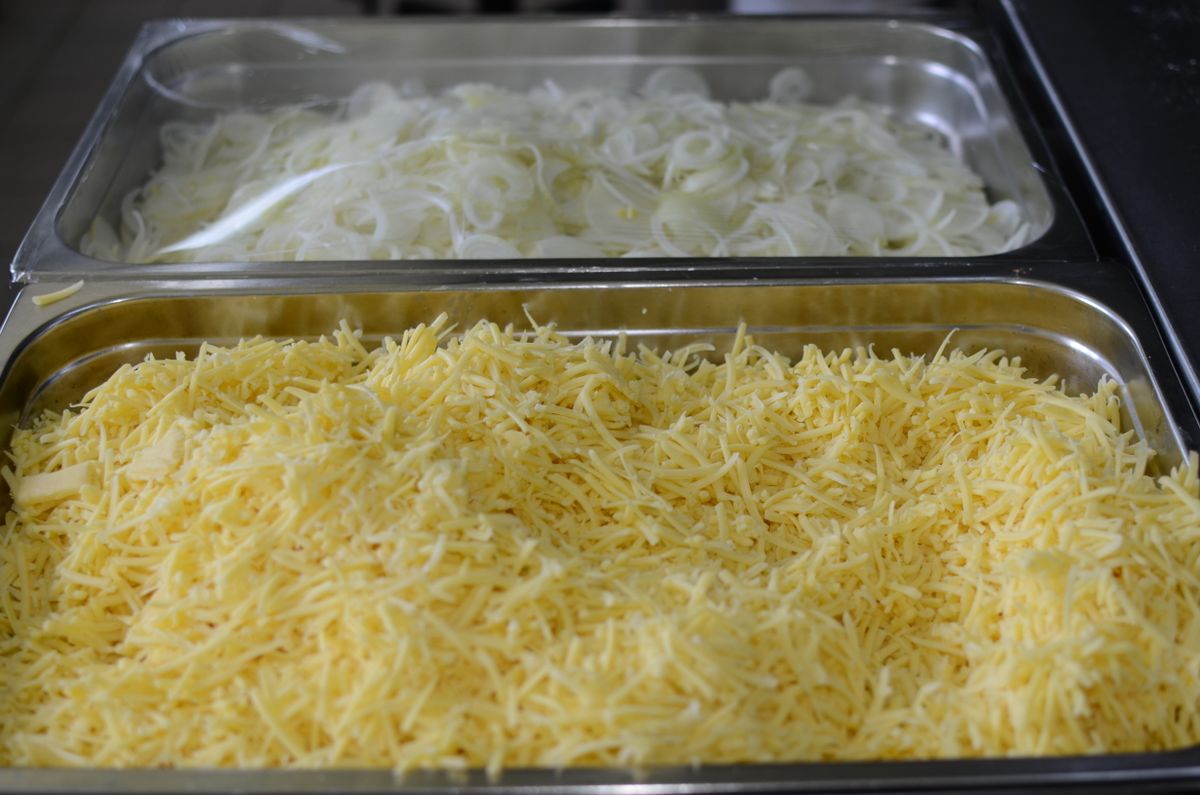
Freshly shredded cheese in metal prep trays

If you’re buying a food processor specifically to shred cheese, the disc matters more than the price tag. The Hamilton Beach 70725A ($49.99) has a genuinely reversible shredding disc — fine on one side, coarse on the other — plus a feed tube wide enough to push a whole block of cheddar through without cutting it down first. The Ninja BZ601 ($129.99) is the highest-rated of the five machines here and adds a dough blade and preset programs on top of its own reversible disc. For bigger batches, the Cuisinart DFP-14BCNY (now $179.97, down from $299.95) has more power and a bigger bowl, at the cost of a disc that only cuts one way.

I earn a commission from qualifying purchases made through links on this page, at no extra cost to you.

Product Best For Price Rating Buy
Hamilton Beach 70725A Reversible disc, best value $69.99 4.5★ (28,837) Check Price
Hamilton Beach 70730 Most popular, bowl scraper $59.99 4.5★ (41,396) Check Price
Hamilton Beach 70740G Small kitchens, compact storage $54.95 4.5★ (18,381) Check Price
Ninja BZ601 Highest rated, dough blade included $129.99 4.7★ (12,498) Check Price
Cuisinart DFP-14BCNY Large batches, more power $259.95 4.6★ (15,245) Check Price

Hamilton Beach 70725A — Best Overall for Shredding Cheese


Hamilton Beach 70725A 12-cup food processor with reversible shredding disc

This is the pick if shredding cheese is genuinely the job. The reversible disc gives you two real options in one part — fine for a smooth melt on nachos, coarse for a pile of cheddar on a burger — instead of a fixed grate that only does one. The “Big Mouth” feed tube is wide enough to feed in a standard block of cheese whole, which is the actual time-saver over a box grater: no quartering the block first, no scraped knuckles.

At 12 cups it’s sized for a real batch — two pounds of shredded cheddar for a mac and cheese, not a token handful — and the 450-watt motor doesn’t stall doing it.

Why it works

  • Genuinely reversible shredding disc (fine + coarse) included in the box, not a $30 accessory
  • Big Mouth feed tube fits a whole block of cheese without pre-cutting
  • $49.99 — the cheapest of the five real picks here

Where it falls short

  • The 450-watt motor works, but it’s not as effortless as the Cuisinart on very hard, aged cheeses like parmesan in large batches
  • Two speeds only, no variable control
  • Owner reviews are mixed on long-term durability of the plastic housing and lid seal under heavy daily use, though the majority report years of reliable service
Check Price on Amazon ↗

Hamilton Beach 70730 — Most Popular, With a Bowl Scraper


Hamilton Beach 70730 10-cup food processor with bowl scraper

The best-selling of the five by a wide margin (over 41,000 ratings), and the reason isn’t just price — it’s the built-in bowl scraper, a paddle you swing side to side while the machine runs to knock shredded cheese and other food off the bowl walls without stopping to grab a spatula. For anyone shredding a large batch of cheese in stages, that’s a genuine time-saver the other four don’t have. Owner reviews specifically call out the shredding disc for grating cheese cleanly.

Why it works

  • Built-in bowl scraper works while the motor is running — no stopping to scrape down the sides
  • Reversible slicing/shredding disc, same core mechanism as the 70725A
  • Highest review count and rating consistency of any processor in this guide

Where it falls short

  • At $59.99 the scraper costs nothing extra over the 70725A, but it is a convenience rather than an essential
  • Same 450-watt motor as the cheaper Hamilton Beach models — the scraper is the only real upgrade
  • 10-cup bowl is slightly smaller than the 70725A’s 12 cups
Check Price on Amazon ↗

Hamilton Beach 70740G — Best for Small Kitchens


Hamilton Beach 70740G 8-cup compact food processor

The smallest of the five at 8 cups, and specifically designed to store compactly — the lid flips over and nests inside the bowl, so the whole unit takes noticeably less cabinet space than the others. It doesn’t give up the feature that matters for this guide: the same reversible shredding disc and a feed chute Hamilton Beach specifically markets as fitting a whole block of cheese, despite the smaller footprint.

Why it works

  • Compact storage design (lid nests inside the bowl) genuinely saves cabinet space
  • Same reversible shredding disc as the larger Hamilton Beach models
  • Large feed chute still fits a whole block of cheese despite the smaller 8-cup bowl

Where it falls short

  • 8 cups is tight for a large batch — expect to shred in two rounds for a big gathering
  • Same 450-watt motor as the other Hamilton Beach models, no advantage there for the size
  • Owner reviews mention it’s noticeably loud for its size
Check Price on Amazon ↗

Ninja BZ601 — Highest Rated, With a Dough Blade


Ninja BZ601 9-cup food processor

The only non-Hamilton-Beach, non-Cuisinart pick here, and it earns its spot on rating alone — 4.7 stars against 4.5–4.6 for everything else in this guide. The reversible disc slices and shreds the same way as the others, but Ninja adds a dedicated dough blade and four Auto-iQ presets that take the guesswork out of speed and timing for common jobs. The 1000-peak-watt motor is stronger on paper than the Hamilton Beach models’ 450 watts, though peak-watt and running-watt ratings aren’t directly comparable across brands.

Why it works

  • Highest owner rating of any processor in this guide (4.7 stars, 12,000+ ratings)
  • Reversible shredding disc plus a dedicated dough blade included — genuinely more capable beyond just shredding
  • Auto-iQ presets remove guesswork on speed/timing for common jobs

Where it falls short

  • At $129.99, it’s the second-most-expensive pick here after the Cuisinart
  • 9-cup bowl is smaller than the Hamilton Beach 70725A or the Cuisinart
  • Some owners report the plastic bowl cracking on first use — inspect on arrival before your first big batch
Check Price on Amazon ↗

Cuisinart DFP-14BCNY — Best for Large Batches


Cuisinart DFP-14BCNY 14-cup food processor

The honest trade-off with this one: the shredding disc is a single fixed medium grate, not reversible like the others here. What you get instead is a 720-watt motor and a 14-cup bowl that shrugs off big batches — shredding a full block of hard cheese alongside a round of vegetables for a party platter without needing to empty the bowl partway through. It’s currently discounted to $259.95 from a $299.95 list price, which narrows the price gap with the Ninja considerably.

Why it works

  • 720-watt motor tears through hard cheese in large batches without bogging down
  • 14-cup bowl and extra-large feed tube handle more volume per run than the competition here
  • Currently $179.97, down from a $299.95 list price — the biggest discount of any pick in this guide

Where it falls short

  • The shredding disc doesn’t reverse — you get one grate size, not a choice
  • Even discounted, it’s the most expensive processor in this guide
  • The larger footprint needs real counter or cabinet space to store
Check Price on Amazon ↗

Should You Buy a Dedicated Electric Cheese Grater Instead?


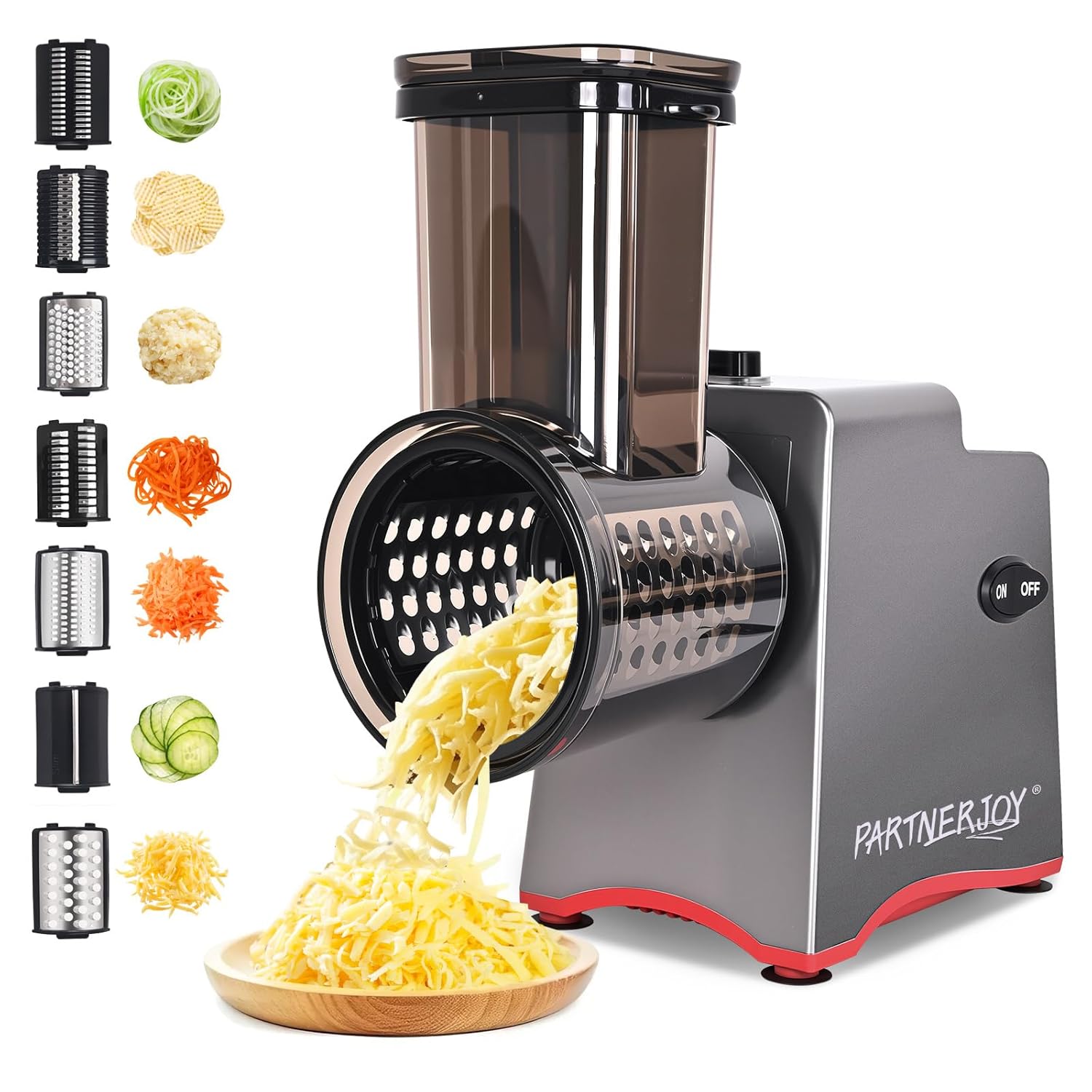
PARTNERJOY electric cheese grater, single-purpose shredding appliance

Single-purpose electric graters like the PARTNERJOY 7-in-1 ($79.99) exist specifically for this job, and owner reviews confirm they do shred cheese well when they’re working — one reviewer specifically called it “perfect for shredding superfine parmesan.” I’m not going to pretend they don’t work.

But I wouldn’t buy one over any of the five food processors above, and the ratings back that up: 3.8 stars from 204 reviews, against 4.5–4.7 stars from tens of thousands of reviews on every processor here. That’s not noise. The recurring complaint is a plastic cam that holds the interchangeable blade cones in place — one reviewer’s cam broke specifically while grating hard cheese, five months in. At $79.99, it also costs more than three of the five processors above, and only shreds and slices — there’s no scenario where it beats a real food processor unless you have zero room for anything larger.

What to Actually Look For

  • Reversible vs. fixed shredding disc. Reversible gives you fine and coarse from one part. A fixed disc means one grate size for the life of the machine unless you buy a second disc separately. Four of the five picks above are reversible; only the Cuisinart is fixed.
  • Feed tube width. A tube wide enough for a whole block of cheese saves real time over one that forces you to cut everything into chunks first.
  • Motor wattage. 450 watts handles regular cheddar and mozzarella fine. For frequent large batches of hard, aged cheese like parmesan, 700+ watts (the Cuisinart) works with noticeably less strain. Peak-watt ratings (like the Ninja’s 1000-peak-watt spec) aren’t directly comparable to running-watt ratings from other brands.
  • Bowl size vs. storage space. A 14-cup bowl is only an advantage if you have the counter or cabinet space to store a machine that size. The 70740G is the pick if storage space is the real constraint.
  • Extra features you’ll actually use. A bowl scraper (70730) saves real time on big batches. A dough blade (Ninja) only matters if you’ll actually make dough in it. Don’t pay for a feature you won’t use.

FAQ

Can any food processor shred cheese?

Only if it comes with a shredding (grating) disc — not every model includes one. Check the included attachments before buying; a processor with only an S-blade can chop cheese but won’t shred it.

Should you chill the cheese first?

Yes, for soft or medium cheeses. Fifteen minutes in the freezer firms up cheddar or mozzarella enough to shred cleanly instead of smearing into the disc. Hard cheeses like parmesan don’t need this step.

What’s the difference between a food processor disc and a box grater?

The cutting geometry is similar, but a food processor pushes several pounds through in seconds with zero hand fatigue, and a reversible disc gives you two grate sizes without buying a second tool. A box grater is fine for a handful of cheese; it’s a real chore for a large batch.

Can food processors shred soft cheese like mozzarella?

Yes, if it’s chilled first. Fresh, unrefrigerated mozzarella is too soft and will clump or smear on any shredding disc, food processor or otherwise.

Is a dedicated electric cheese grater better than a food processor?

Not for most people. It does one job a food processor also does, usually at a similar or higher price, with weaker reliability ratings in owner reviews. It only makes sense if counter and storage space rule out a full-size food processor entirely.

How long do shredding discs last?

Years, under normal use — they’re stamped metal with no fine edge to dull the way the main S-blade does. See how to sharpen food processor blades for the S-blade specifically, which does need maintenance the shredding disc doesn’t.

Why do these five processors have different prices for similar features?

Mostly brand and bowl capacity, not disc quality — the shredding mechanism is genuinely similar across the three Hamilton Beach models. You’re paying more for extras like the 70730’s bowl scraper, the Ninja’s dough blade and presets, or the Cuisinart’s larger bowl and stronger motor, not a better shred.

Other Food Processor Jobs Worth Knowing About

Shredding is one job among many. If you’re weighing whether a food processor earns its counter space beyond cheese, 10 creative uses for a food processor covers dough, nut butter, and more. If shredding vegetables alongside cheese is the real use case, the best vegetable chopper guide covers dedicated choppers built for that job specifically. And if the machine also needs to handle meat prep, best meat slicers is a separate tool built for that, not something to expect from a shredding disc.

How These Picks Were Chosen

Plainly: this is a research-based guide, not a hands-on test. I have not run these side by side, and nothing here should be read as a report from my own kitchen.

What the picks rest on: the shredding disc specifically rather than the machine generally – disc diameter, whether coarse and fine options are included, and whether the feed tube takes a block of cheese without pre-cutting; along with motor wattage, since soft cheese loads a motor differently from vegetables, and how easily the disc is cleaned. Plus the complaint patterns across verified-purchase reviews, where the cheese-specific theme is soft cheese gumming the disc rather than shredding.

What I could not establish: how each machine handles soft mozzarella, which is the hardest case in this category and the one buyers ask about. It needs the same cheese at the same temperature run through each, and no independent test does that. Chilling the cheese first is the advice that holds regardless of which machine you buy.

The Short Version

Buy the Hamilton Beach 70725A if price and a reversible disc matter most, or the 70730 if the bowl scraper is worth $20 to you. The 70740G is the pick for tight storage space. Step up to the Ninja BZ601 for the highest owner rating and a dough blade, or the Cuisinart DFP-14BCNY for the most power and biggest bowl. Skip the single-purpose electric grater — every processor above does the same job for a comparable or lower price, plus everything else a food processor does.

For everything else a food processor can do beyond cheese, see the full food processor buying guide and the food processor hub.

Picks based on verified specs, current pricing, and owner review patterns pulled directly from Amazon at the time of writing.

Filed Under: Product Reviews

Instant Pot Vortex Plus 6QT Air Fryer Review: Simple, Reliable, No App

Last Updated July 9, 2026

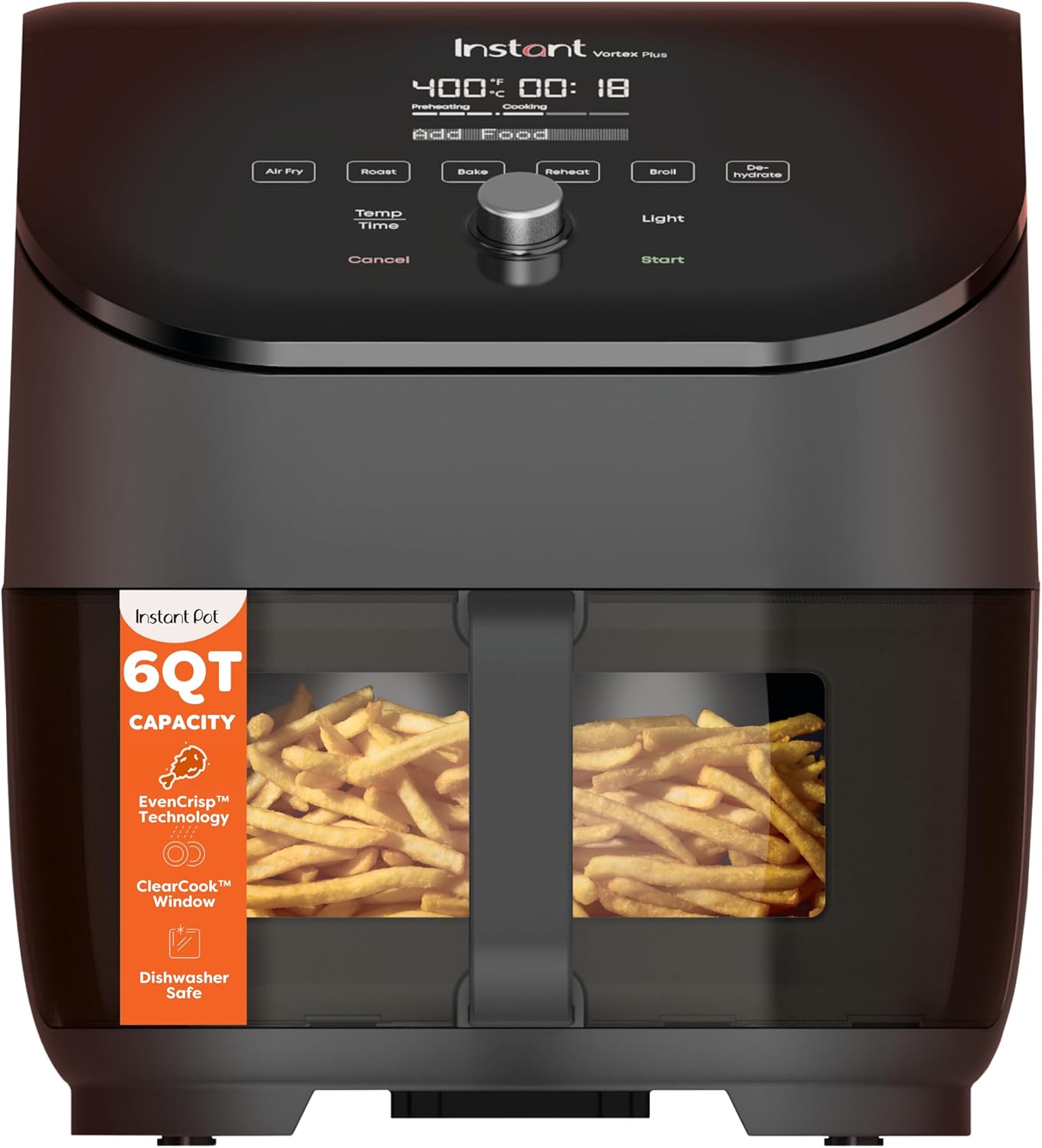
Instant Pot Vortex Plus 6QT ClearCook Air Fryer

Part of my air fryers reviews hub — all reviews, comparisons, and buying advice in one place.

Rating: 8/10. Best for: cooks who want a simple, no-fuss 6-quart air fryer and like being able to see the food cooking. Not ideal for: anyone who wants app control or the widest range of presets — the COSORI Pro beats it on both.

Current price: $99.99. Bottom line: a straightforward, well-reviewed air fryer that does the basics reliably, with a genuinely useful window most competitors skip.

The Instant Pot Vortex Plus’s standout feature is the one you notice before you even turn it on: a clear window across the front of the basket. Most air fryers hide the food behind a solid drawer, so you either open it repeatedly (letting heat escape and slowing cooking) or guess.

This one lets you glance in.This post contains affiliate links. If you buy through my links, I may earn a commission at no extra cost to you. This review is based on published specifications, verified current pricing, and a side-by-side comparison against its closest competitor, the COSORI Pro Gen 2 — not hands-on testing of this specific unit.

The verdict up front: recommended if you want a reliable, no-nonsense 6-quart air fryer and don’t need app control. If you want more presets or phone-based control, the COSORI Pro Gen 2 is the better pick — see my Instant Vortex Plus vs COSORI Pro comparison for the full breakdown.

Specifications

Spec Detail
Capacity 6 quarts
Functions Air fry, roast, broil, bake, reheat, dehydrate
Presets 6 customizable
Controls Touchscreen, no app
Basket window Yes (ClearCook)
Dishwasher safe Basket and tray, yes
Price $99.99
Rating 4.6★ (20,578 ratings)
Check Price on Amazon ↗

Who It’s For

  • Cooks who want a straightforward 6-quart air fryer without learning an app
  • Households of 3-4 people — the 6-quart basket handles a full side dish or a small main
  • Anyone who’s been annoyed by not being able to check food mid-cook on other air fryers
  • Buyers who value a long, proven track record (20,578 ratings) over a newer, less-reviewed alternative

Who Should Look Elsewhere

  • Anyone who wants app-based control or remote monitoring — this model is touchscreen-only, no app. The COSORI Pro Gen 2 has an app; see my comparison
  • Buyers who want more than 6 presets — COSORI’s Gen 2 offers double that
  • Anyone cooking for 5+ people regularly, who should look at an 8-quart or dual-basket model instead

Performance

The core air-frying function is what you’d expect from a basket-style air fryer at this price: hot air circulated around food for a crisp exterior without deep-frying oil. The 6-in-1 label covers air fry, roast, broil, bake, reheat, and dehydrate, but in practice most owners use air fry and reheat far more than the other four — that’s normal for this category, not a flaw specific to this unit.

The ClearCook window is the genuine differentiator. Being able to glance at food browning without opening the basket and losing heat is a small thing that adds up over regular use — it means fewer temperature dips and fewer guessing games on new recipes. It’s a simple feature, but it’s one most competitors in this price range don’t bother with.

The touchscreen with 6 presets covers the basics (fries, chicken, fish, vegetables, and similar), but there’s no app to expand beyond those or sync recipes from a phone. If preset variety and app integration matter more to you than the window, the COSORI Pro Gen 2 is worth the price difference.

Design and Build Quality

The exterior is straightforward plastic-and-metal construction typical of this price tier — nothing premium, but nothing that stands out as flimsy in the spec sheet or long review history either.

At 6 quarts, it’s sized to sit permanently on a counter for most kitchens without being unwieldy to move.

Cleaning and Maintenance

The basket and tray are dishwasher-safe, which matters more than it sounds — hand-washing a nonstick air fryer basket daily is one of the more common reasons people stop using theirs. The nonstick coating on any basket-style air fryer will wear with heavy dishwasher use over a few years; this isn’t unique to the Vortex Plus.

Value

At $99.99, the Vortex Plus sits in the middle of the 6-quart air fryer market — cheaper than premium app-connected models, more expensive than bare-bones single-function fryers. Against its closest direct competitor, the COSORI Pro Gen 2 (currently $72.99), the Vortex Plus actually costs more for fewer presets and no app — the ClearCook window and the Instant Pot brand’s longer track record are what you’re paying the premium for.

Durability

With 20,578 ratings at a 4.6-star average, this is a well-established product with a long track record rather than a new, unproven release — that volume of sustained rating is itself a reasonable durability signal. The nonstick basket coating is the most likely wear point over years of use, as it is with any air fryer in this category.

Alternatives

Cheaper: The best cheap air fryer picks on this site cover single-function baskets well under $100, if you don’t need the crisp/roast/bake versatility here.

More expensive: The COSORI Pro Gen 2 ($72.99, actually cheaper but positioned as the premium alternative on features) adds app control and double the presets — full breakdown in my head-to-head comparison.

Similar price, different strengths: An air fryer pressure cooker combo adds pressure cooking at the cost of counter space and a steeper learning curve.

Verdict

The Instant Pot Vortex Plus is a solid buy if you want a reliable 6-quart air fryer that does the basics well and lets you see what’s happening without opening the basket. Its strongest case: a long, proven track record and a genuinely useful window feature most competitors skip. Its main weakness: no app and fewer presets than the COSORI Pro Gen 2, which now costs less.

If app control and preset variety matter to you, go COSORI. If you want the simpler, more established option and like being able to check on your food, this is the right choice. See my full Best Air Fryers guide for how it stacks up against the rest of the field.

How This Review Was Put Together

Plainly: this is research-based, not a hands-on test. I have not owned or used this, and nothing here should be read as a report from my own kitchen.

What it rests on: the published specification – basket capacity and usable area, wattage, the six functions and how many are genuinely distinct, dishwasher-safe parts and the ClearCook window; plus the pattern across verified-purchase reviews, which for this model concentrates on the basket coating and on the fan becoming louder over time.

What I could not establish: coating durability, which is the recurring complaint across the whole air fryer category and has no published abrasion test behind it for any consumer model.

Frequently Asked Questions

Is the ClearCook window actually useful, or just a gimmick?

It’s genuinely useful. Being able to check browning progress without opening the basket avoids the heat loss and cook-time extension that comes with repeatedly opening a solid-drawer air fryer.

Does the Instant Pot Vortex Plus have an app?

No. It’s controlled entirely through the touchscreen and its 6 presets. If app control matters to you, the COSORI Pro Gen 2 has one.

Is 6 quarts big enough for a family?

For 3-4 people it’s a reasonable fit — enough for a full side dish or a modest main course. For 5 or more people regularly, an 8-quart or dual-basket model will serve you better.

Is the Instant Pot Vortex Plus worth it over the COSORI Pro Gen 2?

It depends on what you value. The COSORI is currently cheaper and offers an app plus double the presets. The Vortex Plus offers the ClearCook window and a longer, more established review history. Neither is a wrong choice — see my full comparison for the complete breakdown.

Can I use metal utensils in the Instant Pot Vortex Plus basket?

No — like any nonstick air fryer basket, metal utensils will scratch the coating and shorten its life. Use silicone or wood tools when handling food inside the basket.

Filed Under: Product Reviews

  • « Go to Previous Page
  • Page 1
  • Interim pages omitted …
  • Page 22
  • Page 23
  • Page 24
  • Page 25
  • Page 26
  • Interim pages omitted …
  • Page 35
  • Go to Next Page »

Recent Articles

  • Cuisinart DLC-10SYP1 Review: Durable, But a Newer Bowl
  • COSORI Pro Gen 2 Review: Big Basket, Fragile Handle
  • Dash Tasti-Crisp Review: Cheap, but the Coating Wears Fast
  • Chefman TurboFry Touch Review: Cheap, but the Coating Wears
  • Chef’sChoice 15XV Review: Very Sharp, With Scratch Reports

Search


HOME          Contact          Affiliate Disclosure          Terms of Service          Privacy Policy


kitchenwarecompare.com is a participant in the Amazon Services LLC Associates Program, an affiliate advertising program designed to provide a means for sites to earn advertising fees by advertising and linking to Amazon.com, Endless.com, MYHABIT.com, SmallParts.com, or AmazonWireless.com. Amazon, the Amazon logo, AmazonSupply, and the AmazonSupply logo are trademarks of Amazon.com, Inc. or its affiliates. As an Amazon Associate I earn from qualifying purchases.


Copyright © 2026 kitchenwarecompare.com, ALL RIGHTS RESERVED.