• Skip to primary navigation
  • Skip to main content
  • Skip to primary sidebar

Kitchenware Compare

  • Home
  • Product Reviews
    • Air Fryers
    • Coffee
    • Cookware
    • Flat Top Grills
    • Meat Thermometers
    • Food Processors
    • Knives
    • Pizza Ovens
    • Toaster Ovens
    • Juicers
  • Food Blog
  • Helpful Kitchen Tips
  • Data Studies
  • About
  • How I Review
  • Contact
You are here: Home / Archives for Product Reviews

Best Non-Stick Pan Without Teflon (2026): 5 PFAS-Free Picks That Actually Work

Last Updated July 9, 2026

Cooking eggs in a nonstick frying pan on an induction stovetop

“Teflon-free” gets used as a catch-all for two different things: pans coated in PTFE that just don’t carry the Teflon brand name, and pans coated in something else entirely, usually a ceramic (sol-gel) coating. “Stone” and “granite” describe how a coating looks, not what it is made of, and pans sold under those names turn up in both groups. If you’re avoiding Teflon specifically because of PTFE, only pans whose listings actually say PTFE-free or PFAS-free qualify. After checking coating chemistry, current pricing, and real owner feedback across dozens of listings, the Blue Diamond 12″ Nonstick Frying Pan is the one to buy first — a PFAS-free diamond-ceramic coating with 7,678 ratings averaging 4.3 stars and a $32.99 price that doesn’t ask you to gamble on an unproven brand.

I earn a commission if you buy through the Amazon links below, at no extra cost to you.

Quick Comparison

Product Best For Price Rating Buy
Blue Diamond 12″ Best Overall $32.99 4.3★ (7,678) Check Price
Blue Diamond 8″ Best Budget $16.58 4.3★ (15,459) Check Price
GreenPan Rio 12″ Best Established Brand $27.99 4.2★ (2,273) Check Price
Caraway 10.5″ + Lid Best Premium $185.00 4.6★ (521) Check Price
SENSARTE 9.5″ Best for Eggs $25.99 4.4★ (35,160) Check Price

How I Picked These

Every pan here is coated in ceramic (a silica-based sol-gel coating baked onto the metal) rather than PTFE, and every listing verified explicitly states PFOA-free or PFAS-free manufacturing — not just “non-toxic,” which is a marketing word with no fixed meaning. Beyond coating chemistry, three things separated the pans worth buying from the ones to skip: review volume, base heat retention, and honest handle design. Ceramic coatings wear out faster than PTFE under real use, so a pan with 30,000+ ratings sustained at 4.5 stars has survived enough kitchens long enough to trust; a coating that failed fast would show up in the rating within a year.

Worth noting that many pans written off as worn are actually carrying a layer of polymerised residue that cleans off. Base thickness matters more here than on a PTFE pan because ceramic doesn’t forgive hot spots — thin bases scorch eggs in the center while the edges stay raw. And stay-cool handles aren’t a luxury on an all-metal-body pan that goes from stovetop to oven.

Price range on this list runs from $14.99 to $148 for a reason: at the low end you’re paying for the ceramic coating and not much else, which is fine for a pan you’ll replace in a year or two. At the high end (Caraway) you’re paying for a heavier cast-aluminum body, a glass lid, and a coating rated for slightly higher heat tolerance — not a fundamentally different chemistry.

The 5 Best Non-Stick Pans Without Teflon

1. Blue Diamond 12″ Nonstick Frying Pan — Best Overall


Blue Diamond 12 inch nonstick frying pan with diamond-infused ceramic coating

Best for: Anyone who wants one full-size pan that covers most stovetop cooking without a lot of research.

Blue Diamond mixes actual crushed diamonds into its ceramic coating, which sounds like marketing until you look at the review pattern: 7,678 ratings holding at 4.3 stars is a solid, stable sample for a $33 pan. That’s the real signal — a cheap ceramic pan that degraded fast would have dragged this rating down by now. The 12″ size handles a full four-egg scramble or a family-size stir-fry, the stay-cool handle survives medium stovetop heat without a towel, and it’s rated safe for the oven up to 600°F and for the dishwasher, though hand-washing extends coating life on any ceramic pan regardless of what the label says.

Key specs:

  • 12″ diameter, diamond-infused ceramic coating
  • PFAS-free, PFOA-free
  • Oven safe to 600°F, dishwasher safe
  • Compatible with gas and electric stovetops — not induction

Pros:

  • Stable 4.3-star rating across 7,678 ratings
  • Full 12″ cooking surface for family-size meals
  • Price stays under $35 even with the size

Cons:

  • Coating shows the same wear-over-time pattern as every ceramic pan — don’t expect PTFE-level lifespan
  • Single-handle design means it’s awkward one-handed once it’s fully loaded and heavy

Verdict: Buy this if you want one pan that does most jobs well and you’re comfortable replacing ceramic cookware every couple of years. Skip it if you specifically want a smaller everyday egg pan — go to the SENSARTE or the Blue Diamond 8″ pick instead.

Check Price on Amazon ↗

2. Blue Diamond 8″ Ceramic Frying Pan — Best Budget


Blue Diamond 8 inch diamond-infused ceramic nonstick frying pan in blue

Best for: One or two eggs, a grilled cheese or a single portion, for the least money a pan labelled PFAS-free costs on this list.

Why this pick changed: this slot previously went to the CAROTE 8″ granite pan. CAROTE labels that pan PFOA-free and nothing more, keeps “PFAS free” and “ceramic” for a separate range, and several owners report the granite coating is PTFE. A pan whose maker will not call it Teflon-free does not belong on a Teflon-free list, and my CAROTE 8-inch review sets out the evidence.

The Blue Diamond 8″ is the smaller sibling of the best overall pick, and at $16.58 it was the cheapest 8″ pan I found whose listing puts the claim in writing: a diamond-infused ceramic coating described as free of PFAS, PFOA, lead and cadmium. It holds 4.3 stars across 15,459 ratings, about twice the sample of the 12″ version. Buying the same brand for two slots is a fair criticism of this list, but the two cheaper best-sellers checked, CAROTE’s and SENSARTE’s granite pans, both stop short of a PTFE-free claim.

Key specs:

  • 8″ diameter, diamond-infused ceramic coating
  • Listing states free of PFAS, PFOA, lead and cadmium
  • Oven and broiler safe to 600°F; dishwasher safe
  • Riveted stainless steel handle
  • Gas and electric stovetops — not induction

Pros:

  • The cheapest pan on this list, with the PFAS-free claim on the listing
  • Oven and broiler safe to 600°F, so a frittata can finish under the grill
  • Riveted handle rather than a screw-fitted one

Cons:

  • Does not work on induction
  • 8″ is too small for anything beyond single servings
  • Ceramic coatings lose their release sooner than PTFE, so expect to replace it sooner too

Verdict: Buy this as a cheap second pan for eggs and single portions if you want the PFAS-free claim in writing. Skip it if you cook on induction — the SENSARTE is the induction-compatible egg pan on this list.

Check Price on Amazon ↗

3. GreenPan Rio 12″ — Best Established Ceramic Brand


GreenPan Rio 12 inch ceramic nonstick frying pan

Best for: Buyers who specifically want the brand that pioneered ceramic nonstick, not a newer imitator.

GreenPan invented Thermolon, the sol-gel ceramic coating that most of the industry (including several other pans on this list) has since copied in some form. The Rio line is their entry-level tier — same PFAS-free coating chemistry as their $150+ cookware, in a simpler aluminum body. At $27.99 with 2,273 ratings averaging 4.2 stars, the sample size is smaller than either Blue Diamond pan or the SENSARTE, which is worth knowing going in, but the brand has over a decade of ceramic-coating manufacturing behind it, which matters if you’re choosing based on who actually understands this coating type best.

Key specs:

  • 12″ diameter, Thermolon ceramic coating
  • PFAS-free, PFOA-free, cadmium-free, lead-free
  • Dishwasher safe
  • Hard-anodized aluminum body

Pros:

  • Original ceramic-coating manufacturer, not a copycat brand
  • Hard-anodized body resists warping better than thin stamped aluminum
  • Full 12″ surface at a similar price to smaller pans

Cons:

  • Fewer total ratings than the Blue Diamond or SENSARTE pans, so the track record is thinner
  • 4.2-star average is the lowest of the ceramic pans on this list, driven mostly by coating-longevity complaints after 12+ months

Verdict: Buy this if brand pedigree in ceramic coating matters to you specifically. If you just want the longer track record at this price, the Blue Diamond 12″ has more than three times as many ratings.

Check Price on Amazon ↗

4. Caraway Ceramic Frying Pan (10.5″, Glass Lid) — Best Premium


Caraway 10.5 inch ceramic nonstick frying pan with glass lid

Best for: Buyers who want a heavier pan, a lid included, and don’t mind paying 4-5x more for it.

Caraway built its whole business around ceramic cookware sold as a design-forward alternative to Teflon, and the $185 price for a single 10.5″ pan reflects that positioning — you’re paying for a heavier cast-aluminum body, a glass lid (most pans on this list don’t include one), and a coating Caraway rates as more scratch-resistant than typical drugstore ceramic. The 495 ratings at 4.6 stars is a smaller sample than the budget pans, but it’s consistent with the pattern across their product line. This is not a pan to buy if the goal is avoiding Teflon as cheaply as possible; it’s a pan to buy if you want the included lid, the heavier feel, and don’t mind the DTC price.

Key specs:

  • 10.5″ diameter, 2.7-quart capacity, includes glass lid
  • PTFE-free, PFOA-free
  • Compatible with gas, electric, and induction
  • Oven safe (check current spec sheet for temperature limit before broiling)

Pros:

  • Only pan on this list that includes a matching lid
  • Noticeably heavier cast body than the budget pans, which helps with even heating
  • Widest color selection if kitchen aesthetics matter to you

Cons:

  • $185 for one pan is 5-12x the price of the other options here for the same underlying coating chemistry
  • Smaller review sample than the budget picks

Verdict: Buy this if a matching lid and heavier build are worth the premium to you. Skip it if you just want the coating chemistry without the design markup — the Blue Diamond gets you 90% of the practical benefit for a fifth of the price.

Check Price on Amazon ↗

5. SENSARTE 9.5″ Ceramic Frying Pan — Best for Eggs and Omelets


SENSARTE 9.5 inch ceramic nonstick omelette frying pan in cream white with a woodgrain handle

Best for: Eggs, omelets, and crepes specifically — anything where the coating needs to release a delicate, thin food cleanly.

SENSARTE markets this specifically as an omelet pan, and the shallower sloped sides back that up — you can slide an omelet out onto a plate without folding it against a straight wall the way you’d have to on a standard skillet.

Check which SENSARTE you are buying. The brand sells a near-identical 9.5″ pan with a “Swiss Granite” coating labelled PFOA-free only, and this list previously linked to that version by mistake. This is the ceramic one: its listing states the coating is free of PFOA, PTFE, PFAS, lead and cadmium.

It costs $25.99 and holds 4.4 stars across 35,160 ratings, but Amazon pools that count with SENSARTE’s granite pans, so treat it as a rating for the brand’s omelette pans rather than for this coating alone. The 9.5″ size sits between the 8″ budget pick and the full-size 12″ pans, which makes it a reasonable single everyday pan for one or two people who mostly cook eggs.

Key specs:

  • 9.5″ diameter, ceramic coating with sloped sides
  • Listing states free of PFOA, PTFE, PFAS, lead and cadmium
  • Cast aluminium body with an induction base
  • Removable woodgrain Bakelite handle; oven safe to 550°F with the handle removed

Pros:

  • Sloped sides genuinely help with omelets and crepes
  • The PTFE-free claim is on the listing, unlike SENSARTE’s granite version
  • Works on induction, unlike the Blue Diamond pans

Cons:

  • Its 4.4-star rating is pooled with the granite version, so it says less about this coating than it seems to
  • Still too small for a family-size meal
  • Same ceramic-coating lifespan trade-off as every pan on this list

Verdict: Buy this if eggs and omelets are most of what you cook and you want a dedicated PTFE-free pan. Skip it if you need one pan to do everything — go with the Blue Diamond 12″ instead. My full SENSARTE ceramic review covers the pooled rating and how long owners say the coating lasts.

Check Price on Amazon ↗

How to Choose a Non-Stick Pan Without Teflon

Size and capacity

An 8-9.5″ pan covers one to two servings — eggs, a single portion of stir-fry, grilled cheese. A 10.5-12″ pan is what you want if you’re regularly cooking for a household of three or more, or if you want a single do-everything pan instead of buying multiple sizes. If budget allows, most kitchens are better served by owning one small (8-9.5″) and one large (12″) pan than one mid-size pan trying to do both jobs.

Budget and what you actually get at each price

Under $20 buys you the ceramic coating and a basic aluminum body — functional, but expect to replace it within one to two years of regular use. $25-35 gets you a name-brand coating with a larger, more consistent review history, which is the sweet spot for most buyers.

Above $100, you’re paying for a heavier cast body, included accessories like a lid, and marginally better heat retention — not a fundamentally more durable coating. My comparison of ceramic vs. traditional nonstick cookware covers this tradeoff in more depth if you’re deciding between coating types generally.

What “PFOA-free” and “PFAS-free” actually mean

PFOA was a chemical used in manufacturing PTFE (Teflon) coatings that the EPA phased out of U.S. production by 2013 — every Teflon pan sold in the U.S. today, ceramic or not, is already PFOA-free. So “PFOA-free” on a ceramic pan’s packaging isn’t actually a distinguishing feature; it’s true of nearly everything on shelves now.

“PFAS-free” is the more meaningful claim, since PFAS is the broader chemical family PTFE belongs to. If avoiding that entire chemical family is the goal, confirm the listing specifically says PFAS-free, not just PFOA-free, before buying — all five pans on this list meet that bar.

Compatibility and care

Check the base for an induction symbol if you cook on an induction stovetop — not every ceramic pan includes the magnetic base layer induction requires. All five pans here are dishwasher-safe per their listings, but ceramic coatings last measurably longer with hand-washing; the abrasion and heat cycling of a dishwasher is one of the more common reasons owners report early coating failure.

Avoid aerosol cooking sprays on any ceramic pan — the propellants leave a residue that bakes onto the coating and is genuinely difficult to remove, and it’s one of the most common self-inflicted causes of a ceramic pan “losing” its nonstick surface early. Use a small amount of oil or butter instead. For care of cookware more broadly, my guide to cookware materials on gas stoves covers how coating type interacts with different heat sources.

Durability expectations

Set expectations correctly going in: ceramic coatings, across every brand, typically hold their nonstick performance for 12-24 months of regular use before requiring more oil to prevent sticking. That’s shorter than a well-maintained PTFE pan, which can often go 3-5 years. This isn’t a defect specific to any pan on this list — it’s how sol-gel ceramic coatings behave as a category, and it’s the real tradeoff you’re making by choosing this coating type.

If coating lifespan matters more to you than avoiding PTFE specifically, it’s worth reading my breakdown of cast iron vs. ceramic cookware, since cast iron sidesteps the coating-wear problem entirely at the cost of more maintenance.

Frequently Asked Questions

What is the best non-stick pan without Teflon overall?

The Blue Diamond 12″ Nonstick Frying Pan. Its diamond-infused ceramic coating is PFAS-free, and with 7,678 ratings holding at 4.3 stars, it has a long and stable track record for a pan in this price range.

What is the best non-stick pan without Teflon for eggs?

The SENSARTE 9.5″ pan, purpose-built as an omelet pan with sloped sides that let a folded omelet slide out cleanly onto a plate rather than catching on a straight-walled skillet.

Is ceramic-coated cookware actually free of harmful chemicals?

Ceramic (sol-gel) coatings don’t contain PTFE or the PFAS chemical family PTFE belongs to, which is the specific concern most people mean when they say “Teflon-free.” They’re generally silica-based. All five pans on this list are verified PFOA-free and PFAS-free by their current listings.

What should I avoid when buying a Teflon-free nonstick pan?

Avoid pans that only advertise “non-toxic” without specifying PFOA-free or PFAS-free — that phrase has no regulated meaning. Also avoid using aerosol cooking sprays on any ceramic pan; the residue bakes on and is one of the most common causes of a coating failing early.

How long does a ceramic nonstick pan actually last?

Expect 12-24 months of strong nonstick performance with regular use and hand-washing, shorter than a well-maintained PTFE pan’s 3-5 years. This is a category-wide tradeoff of sol-gel ceramic coatings, not a flaw specific to any brand on this list.

Is Caraway better than GreenPan?

They use comparable ceramic coating chemistry. Caraway’s $148 pan includes a glass lid and a heavier cast body; GreenPan’s $29.99 Rio is the original ceramic-coating brand at a fraction of the price with a thinner aluminum body. Neither coating outlasts the other meaningfully — the difference is mostly build weight, accessories, and price.

Are “stone” or “granite” coated pans actually different from ceramic?

It depends on the pan. “Stone” and “granite” describe how a coating looks, not what it is made of. Some pans sold under those names use a ceramic (sol-gel) coating with mineral flecks; others carry no PTFE-free claim at all. The label is the only reliable guide: CAROTE and SENSARTE both sell granite pans labelled PFOA-free only, alongside separate ceramic ranges labelled PTFE-free and PFAS-free — which is why the SENSARTE on this list is the ceramic version.

Can you use metal utensils on a ceramic nonstick pan?

Most brands claim metal-utensil compatibility, but wood or silicone utensils genuinely extend coating life regardless of what the packaging says — ceramic coatings are more brittle than PTFE and small scratches accumulate faster than they do on a Teflon pan.

How These Picks Were Chosen

Plainly: this is a research-based guide, not a hands-on test. I have not run these side by side, and nothing here should be read as a report from my own kitchen.

What the picks rest on: what the alternative coating actually is – almost always a ceramic sol-gel layer, occasionally seasoned carbon steel or enamel – along with maximum safe temperature, induction compatibility, base construction and oven-safe rating; plus the complaint patterns across verified-purchase reviews, where the consistent finding for ceramic is that release is excellent at first and declines faster than PTFE does.

What I could not establish: how long each coating lasts, which is the trade-off at the centre of this category. There is no standardised abrasion test published for consumer ceramic pans. Anyone presenting a PTFE-free pan as equally durable is asserting something the available evidence does not support.

Bottom Line

If you want the safest choice, buy the Blue Diamond 12″ — a stable 4.3-star rating across 7,678 ratings at a price that doesn’t punish you if the coating wears out in two years. If you specifically cook a lot of eggs and want a dedicated pan for it, the SENSARTE 9.5″ is the better shape for the job.

Whichever you choose, remember that “Teflon-free” means a different coating with different tradeoffs, not a coating that lasts longer or performs better — it lasts measurably less time in exchange for sidestepping PTFE and PFAS entirely. For more on how these coatings compare to traditional nonstick and to uncoated cookware, see my ceramic vs. nonstick comparison or browse the full cookware reviews hub.

Related reviews: Copper Chef Titan Pan · Best Non-Stick Copper Cookware · Best Omelette Pan
Filed Under: Product Reviews

Ceramic vs Nonstick Cookware: Which Should You Buy?

Last Updated July 8, 2026

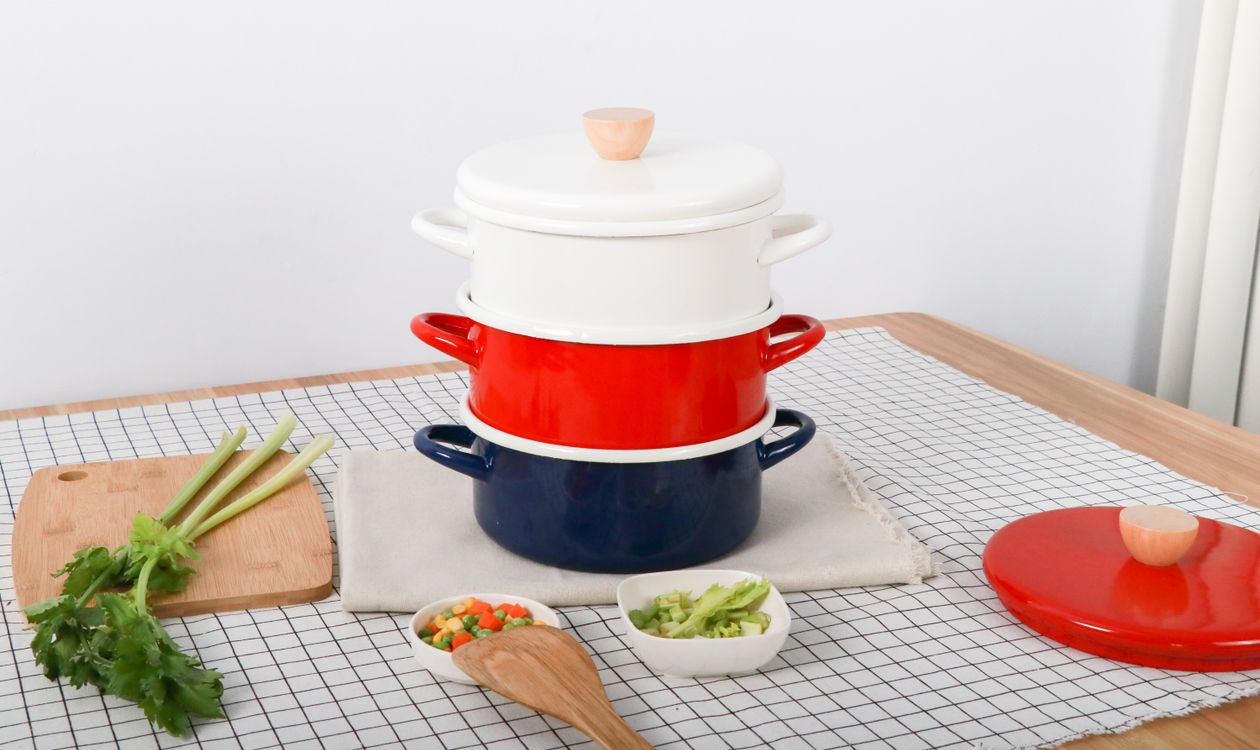
Stacked ceramic and enamel cookware on a kitchen table

Part of my cookware reviews hub — all reviews, comparisons, and buying advice in one place.

Ceramic coatings win if you want zero PTFE or PFAS in your cookware, even knowing you’ll likely replace the pans sooner. Traditional nonstick (PTFE) coatings win if you want the surface to still work well after three or four years of regular cooking.This post contains affiliate links.

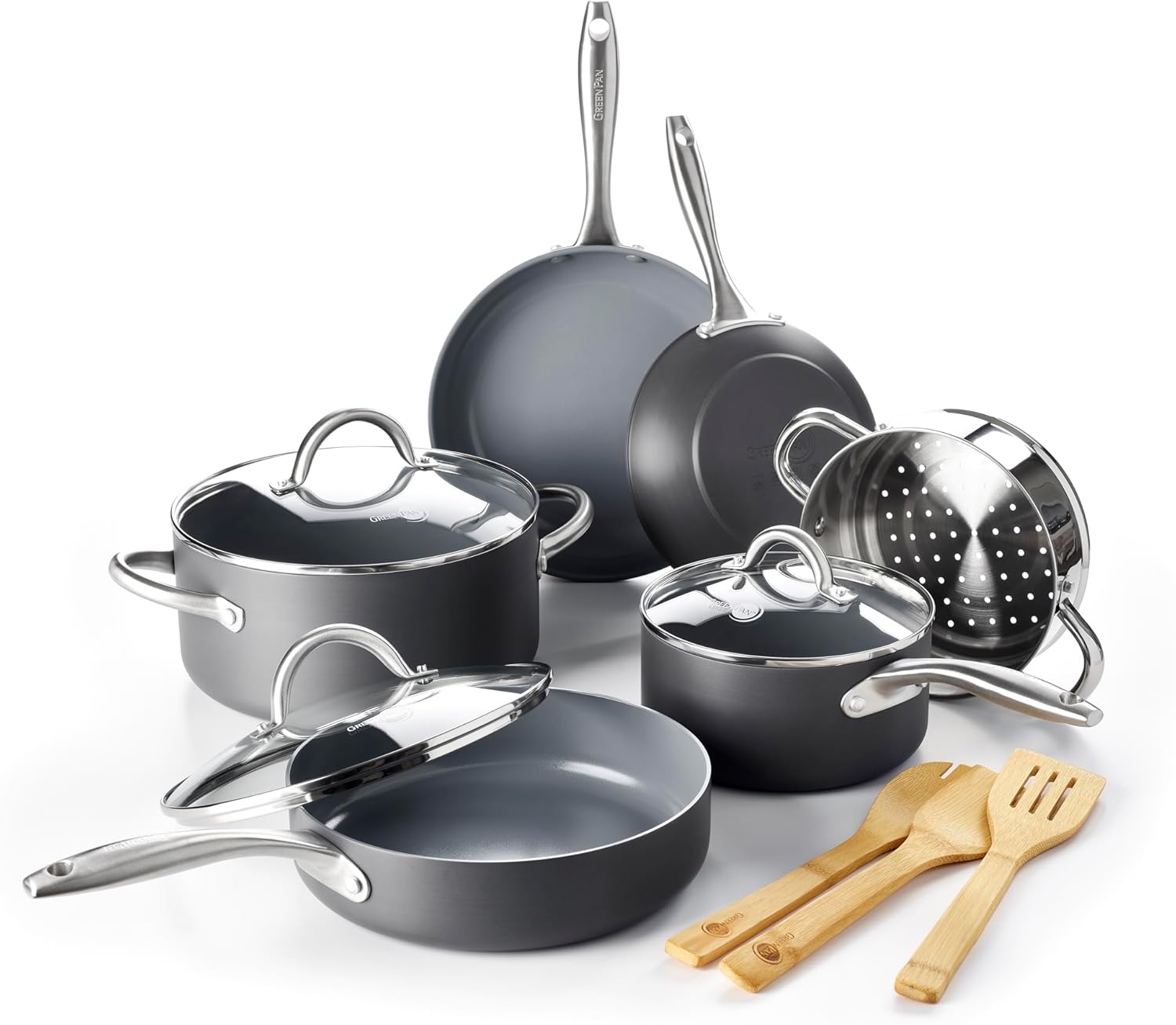
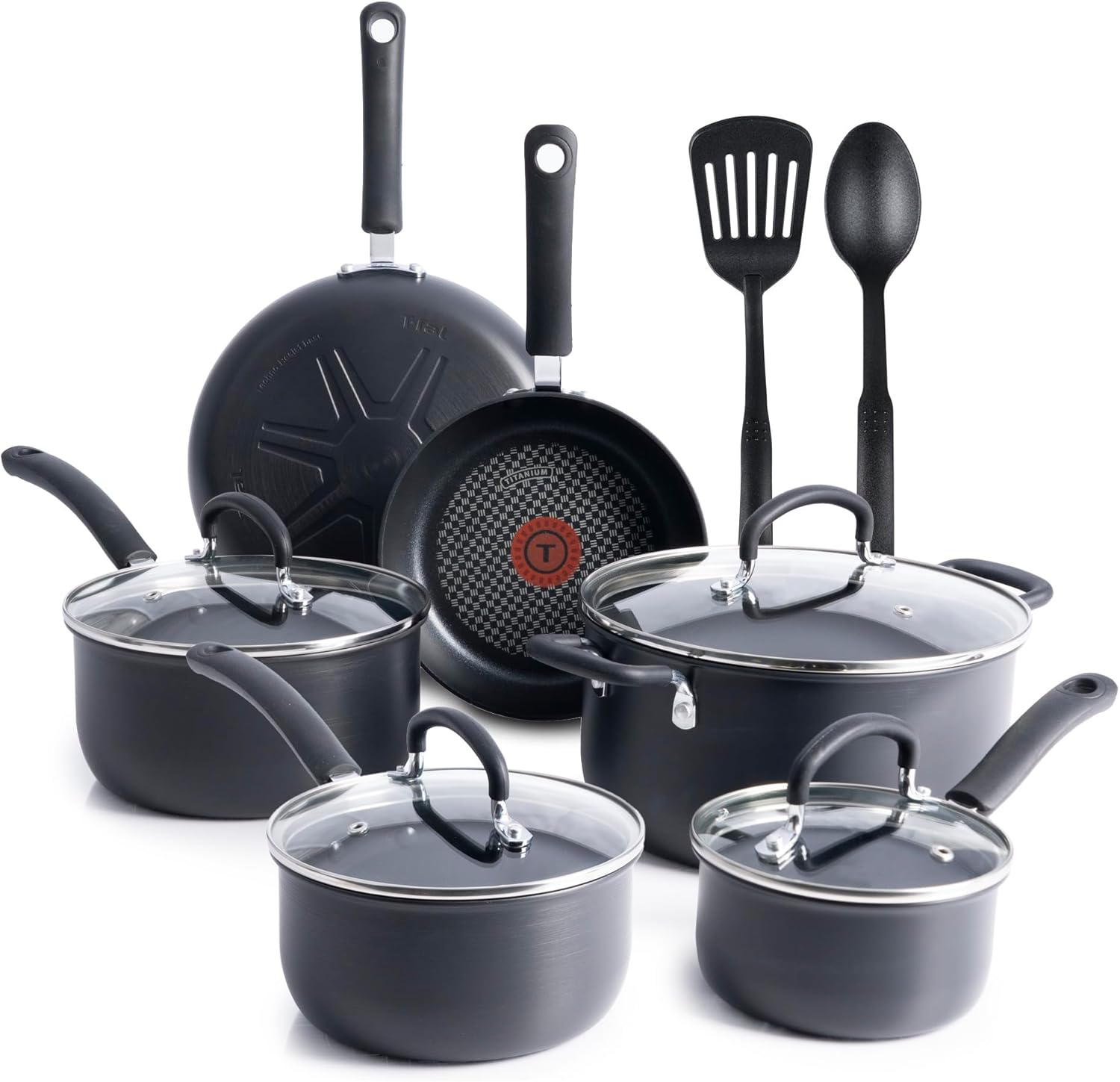
If you buy through my links, I may earn a commission at no extra cost to you. My pick for most people is traditional nonstick — it holds up more consistently over years of normal home use than ceramic does. Throughout this comparison I’m using the GreenPan Lima and T-fal Ultimate Hard Anodized as real, currently-available examples of each coating type, not as the only two sets worth considering.

Both are 12-piece hard-anodized aluminum sets in a similar price range ($159–$175), which makes this a genuinely useful comparison — the difference that matters here is the coating, not the price tier. The trade-off between the two coatings is simple: ceramic starts out with a slicker, “cleaner” feel and no chemical-coating concerns, but it degrades faster with everyday use. Traditional nonstick lasts longer if you treat it right, but it’s still PTFE.

Product Best For Price Rating Buy
GreenPan Lima 12-Piece Ceramic PTFE/PFAS-free cooking $159.76 4.4★ (1,609) Check Price
T-fal Ultimate Hard Anodized 12-Piece Long-term nonstick performance $159.99 4.7★ (8,672) Check Price

Spec Comparison

Spec GreenPan Lima (Ceramic) T-fal Ultimate (Traditional Nonstick)
Coating Ceramic (PTFE/PFAS-free) Traditional PTFE nonstick
Body material Hard-anodized aluminum Hard-anodized aluminum
Pieces 12 12
Oven safe Yes (check listing for max temp) 400°F (lids to 350°F)
Dishwasher safe Hand wash recommended Yes
Rating 4.4★ (1,609 reviews) 4.7★ (8,677 reviews)
Price $159.76 $175.47
GreenPan Lima 12-Piece Ceramic Nonstick Cookware Set

Nonstick Performance

Ceramic coatings, like the one on the GreenPan Lima, are excellent for the first several months — eggs and fish slide off with barely any oil, and there’s no PTFE smell if you accidentally overheat an empty pan. The problem is longevity. Ceramic coatings lose their slick surface faster than PTFE does, especially if you cook with any regularity at medium-high heat. Owners of ceramic pans commonly report needing extra oil for eggs within a year of near-daily use.

Traditional PTFE coatings, illustrated here by the T-fal Ultimate, start almost as slick and stays that way much longer. Two to three years of regular use is a realistic expectation before you notice real degradation, provided you’re not scraping it with metal utensils. For anyone who cooks eggs, fish, or pancakes several times a week, this is the practical difference that matters most.

Heat Distribution and Searing

Both sets use hard-anodized aluminum bodies, so heat distribution is essentially identical — no noticeable hot spots in either, and both preheat at the same rate on a gas or induction burner. Neither set is designed for aggressive searing; the nonstick coating on both limits how much of a crust you’ll get on a steak compared to stainless steel or cast iron. If searing is a priority, neither of these sets is the right tool regardless of coating type.

Response Time and Everyday Handling

Handle comfort and weight are nearly the same across both sets — both use stay-cool stainless handles and comparable pan weights for their sizes. The GreenPan lids run slightly lighter, which some people prefer when lifting a pot one-handed to check on food.

Design and Usability

Both sets come as full 12-piece kits with lids, so the count and coverage are identical — you’re choosing between coatings on otherwise comparable cookware. The GreenPan’s lighter overall build makes it marginally easier to handle for anyone with wrist or grip issues; the T-fal feels slightly more substantial but not in a way that changes daily use.

T-fal Ultimate Hard Anodized 12-Piece Nonstick Cookware Set
Check Price on Amazon ↗

Cleaning and Maintenance

T-fal’s set is dishwasher-safe according to the listing, though hand-washing extends nonstick life on any coating. GreenPan recommends hand washing — ceramic coatings are more sensitive to the heat and detergent cycles of a dishwasher, and skipping the dishwasher is one of the few things that meaningfully slows ceramic’s faster wear curve. Neither coating tolerates metal utensils or cooking spray with propellants (both build up a sticky residue over time) — use wood, silicone, or nylon tools on either set.

Value for Money

At $159.76 vs $175.47, the price difference is small enough that it shouldn’t be the deciding factor. The real cost question is replacement frequency: if ceramic needs replacing in 12–18 months of regular use and PTFE lasts 2–3 years, traditional nonstick works out cheaper over time despite the higher upfront price — the T-fal Ultimate is a good example of that — assuming you’re replacing the whole set rather than a single worn pan.

Who Should Buy Each

Buy ceramic (like the GreenPan Lima) if:

  • You specifically want to avoid PTFE and PFAS in cookware, even knowing the coating won’t last as long
  • You cook lighter-duty meals (a few times a week, not daily high-heat searing)
  • You’re comfortable hand-washing your cookware rather than using a dishwasher

Buy traditional nonstick (like the T-fal Ultimate Hard Anodized) if:

  • You cook daily or near-daily and want the nonstick surface to still work in three years
  • You want to use the dishwasher without worrying about coating wear
  • PTFE itself isn’t a concern for you (it’s not linked to health issues in cookware use — that concern is mainly about PFOA, which was phased out of nonstick manufacturing in the US years ago)

Long-Term Ownership

Neither set includes a meaningful long-term warranty against nonstick wear — that’s normal for cookware in this price range, and it’s true of nearly every set on the market. Realistically, plan to replace the frying pans in either set (not necessarily the pots) every 1–3 years depending on use, and expect ceramic to be on the shorter end of that range.

Verdict

For most people, traditional PTFE nonstick is the better choice of coating. It holds up longer under normal home cooking and tends to be dishwasher-safe. The T-fal Ultimate Hard Anodized used in this comparison is a good example of that category done well — its 4.7 rating across 8,677 reviews, well ahead of the GreenPan’s 4.4 across 1,609, is consistent with what you’d expect from the coating difference, though individual products vary within each category.

That said, if avoiding PTFE entirely is a genuine priority for you — not just a vague preference — go with ceramic. The GreenPan Lima is a legitimately good example, not a compromise pick. Just go in knowing you’ll likely be replacing the frying pans sooner regardless of which ceramic set you choose. For the full lineup of sets, see my Best Nonstick Cookware Sets guide, and if the health angle is what’s driving your decision, my piece on cast iron vs ceramic cookware covers that in more depth.

If you specifically want to avoid PTFE and PFAS entirely rather than choosing between coating types, see my guide to the best non-stick pans without Teflon.

How This Comparison Was Put Together

Plainly: this is a research-based comparison, not a hands-on test. I have not run these two side by side.

What it rests on: what the two coatings actually are – a sol-gel silica layer versus PTFE – and how that difference shows up in maximum safe temperature, behaviour with metal utensils, and the mechanism by which each eventually stops releasing food; plus the pattern across verified-purchase reviews for pans of both types, where the ceramic complaint is a fast, early decline and the PTFE complaint is scratching.

What I could not establish: how long either lasts in a specific kitchen. There is no standardised abrasion test published across both coating types for consumer pans, and owner reports conflate careless heat and metal utensils with genuine coating failure. The direction of the difference is well documented; the timeline is not.

FAQs

Is ceramic cookware actually PFAS-free?

Reputable ceramic-coated cookware, including the GreenPan Lima, is genuinely PTFE- and PFAS-free — the coating is a mineral-based sol-gel finish, not a fluoropolymer. That’s different from “ceramic-look” coatings some budget brands use, which can still contain PTFE underneath a ceramic-style top layer.

Which lasts longer, ceramic or traditional nonstick?

Traditional PTFE nonstick, in almost every real-world case. Ceramic coatings typically show reduced slickness within 12–18 months of regular cooking; PTFE coatings commonly last 2–3 years or more with reasonable care.

Can I use metal utensils on either of these sets?

No. Metal utensils will scratch both coatings and accelerate wear. Use wood, silicone, or nylon utensils on either set.

Is ceramic cookware oven safe?

Yes, most ceramic cookware including the GreenPan Lima is oven safe, though always check the specific temperature limit on the listing — it’s usually lower than hard-anodized PTFE sets rated to 400°F+.

Which is easier to clean day to day?

They’re similar when the coating is new. T-fal’s set is dishwasher-safe, which makes it more convenient for daily cleanup; GreenPan recommends hand washing, which is one more step but extends the ceramic coating’s usable life.

Do either of these need to be seasoned like cast iron?

No. Both ceramic and PTFE nonstick coatings work straight out of the box — seasoning is a cast iron and carbon steel concept, not something either of these coatings needs or benefits from.

Looking for other options? My Best Non-Stick Copper Cookware guide covers copper-core sets, a third coating/construction approach not covered here.

Filed Under: Product Reviews

NutriChef Non-Stick Kitchenware Pots & Pans – 18-Piece Review

Last Updated July 8, 2026

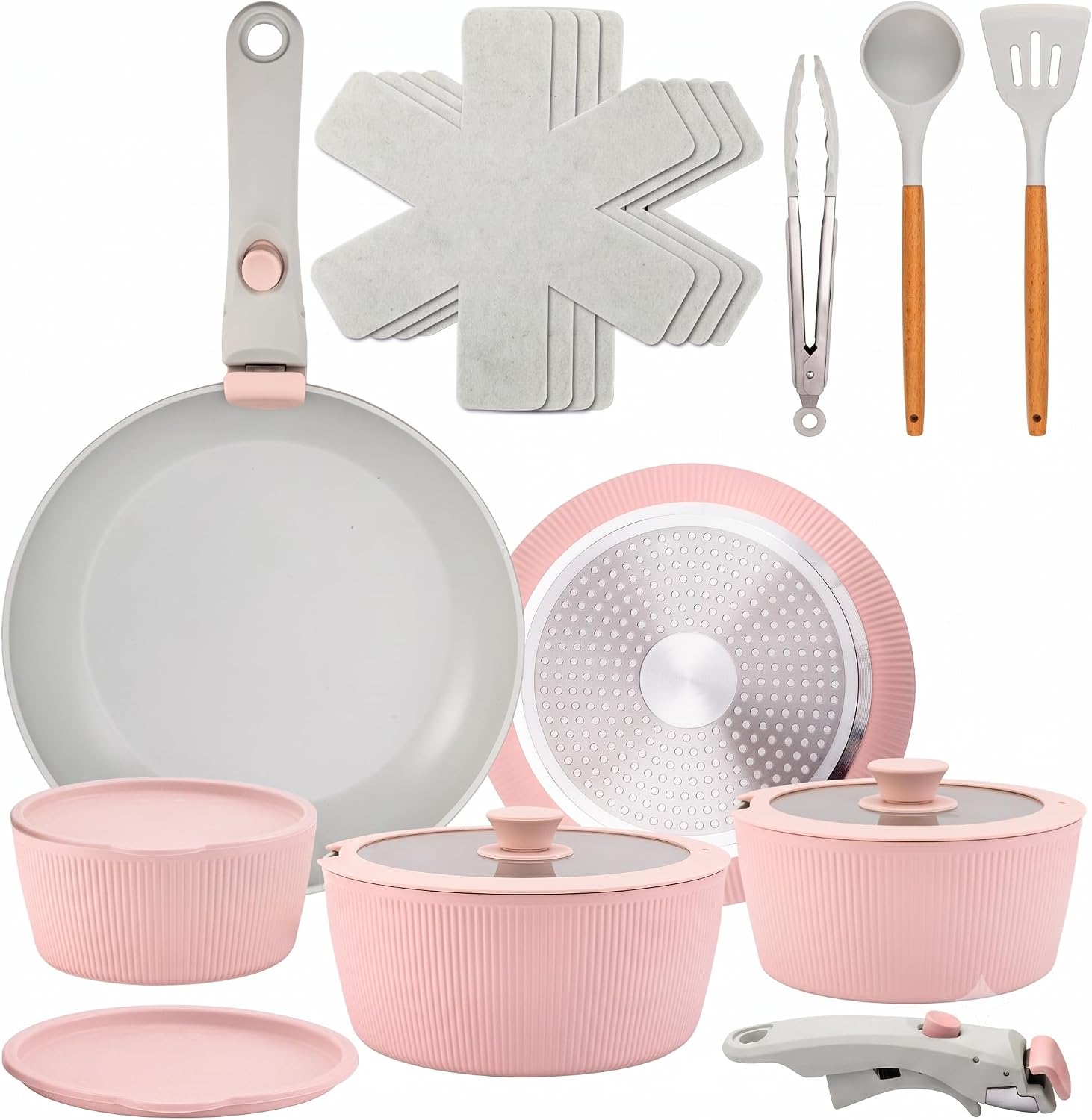
NutriChef 18-Piece Nonstick Ceramic Cookware Set
Part of my cookware reviews hub — all reviews, comparisons, and buying advice in one place.

The NutriChef Non-Stick Kitchenware Pots & Pans set now ships as an 18-piece lineup (it was an 11-piece set when this review was first written; NutriChef has since expanded the line to 18 pieces).This post contains affiliate links. If you buy through my links, I may earn a commission at no extra cost to you. This review looks at what the specification promises for the ceramic coating and detachable handles, and at what owners report about how both hold up.

Check Price on Amazon ↗
This stylish set not only looks great with its elegant diamond pattern and red exterior, but it also offers a range of benefits that can greatly enhance your cooking experience.

Firstly, the non-stick coating on these pots and pans makes cooking and cleaning a breeze. No more worrying about food sticking to the surface or spending hours scrubbing away burnt-on residue. This non-stick feature also promotes healthy cooking, as you can use less oil and butter without sacrificing flavor. But here’s the drawback – if you don’t own this set, you’re missing out on these features.

Cooking may become more time-consuming and tedious with pots and pans that don’t have a non-stick coating. Plus, you might find it challenging to achieve that perfect heat distribution and retention that’s crucial for even cooking. Alright, now that I’ve mentioned the NutriChef Non-Stick Kitchenware, I’m going to take a deeper look at this set and provide you with all the necessary information. Here’s the full review. Click to view the NutriChef Non-Stick Kitchenware Pots Pans-18-Piece. Stylish Kitchen Cookware Set w/Elegant Diamond Pattern, Gray Inside Red Outside, Metal, Silicone Handle, PTFE/PFOA/PFOS Free, Red.

How the NutriChef Non-Stick Kitchenware Works

The NutriChef Non-Stick Kitchenware Pots & Pans set is designed to provide a superior cooking experience with its innovative features and stylish design. This 18-piece cookware set includes a 1.7qt saucepan pot with lid, a 3.6qt dutch oven pot with lid, a 2.1qt cooking pot with lid, an 11″ large fry pan, an 8″ small fry pan, a soup ladle, a pasta fork, and a spatula.

Elegant Diamond Pattern

One of the standout features of this cookware set is its elegant diamond pattern. The diamond line pattern adds a touch of style and modernity to your kitchen, making it the perfect addition to any home decor.

Non-Stick Coating

The NutriChef cookware set features a durable and long-lasting non-stick coating. This non-stick coating allows for easy tossing, cleaning, and healthy cooking. With the non-stick surface, you can prepare your favorite dishes with minimal oil or butter, promoting a healthier lifestyle.

Silicone Touch Handle Grips

Cooking should be a comfortable and safe experience, which is why the NutriChef cookware set features cool-touch ergonomic handles. These silicone touch handle grips not only ensure safe cooking but also provide a comfortable grip while cooking. They are heat-resistant, allowing you to handle the pots and pans without the risk of burning your hands.

NutriChef Non-Stick Kitchenware Uses

The NutriChef Non-Stick Kitchenware Pots & Pans set offers a wide range of uses in your kitchen. Here are some examples:

Versatile Cooking

This cookware set handles the usual methods, including sautéing, frying, boiling, stewing, and more. With the different pots and pans included in the set, you can easily prepare a variety of dishes to satisfy your culinary cravings.

Even Heat Distribution

The cookware set is designed to distribute heat evenly, ensuring that your food is cooked to perfection. The pots and pans effectively retain heat, allowing you to achieve consistent results every time you cook.

Induction Ready

The NutriChef cookware set is suitable for use on gas, electric, ceramic, and induction cooktops. Whether you have a traditional gas stove or a modern induction cooktop, this cookware set is compatible and will deliver outstanding results. Click to view the NutriChef Non-Stick Kitchenware Pots Pans-18-Piece. Stylish Kitchen Cookware Set w/Elegant Diamond Pattern, Gray Inside Red Outside, Metal, Silicone Handle, PTFE/PFOA/PFOS Free, Red.

Product Specifications

To help you visualize the specifications of the NutriChef Non-Stick Kitchenware Pots & Pans set, here is a table showcasing the details:

Piece Capacity Dimensions
Saucepan Pot 1.7qt N/A
Dutch Oven Pot 3.6qt N/A
Cooking Pot 2.1qt N/A
Large Fry Pan N/A 11″ diameter
Small Fry Pan N/A 8″ diameter

Note: Dimensions for the pots and lids are not specified.

Who Is The NutriChef Non-Stick Kitchenware For

The NutriChef Non-Stick Kitchenware Pots & Pans set is suitable for anyone who enjoys cooking. The set covers the pans most home kitchens actually use. Here are some examples of who would benefit from this product:

  • Home cooks who want high-quality cookware that delivers exceptional performance.
  • Health-conscious individuals who prefer non-stick cookware for healthier cooking options.
  • Cooking enthusiasts who appreciate a stylish and modern design in their kitchen.
  • Individuals with different types of cooktops, including gas, electric, ceramic, and induction.

Pros and Cons

Pros:

  • Durable non-stick coating for easy cooking and cleaning.
  • Silicone touch handle grips for comfortable and safe cooking.
  • Elegant diamond pattern adds style to the kitchen.
  • See-through lids with vent holes for steam escape.
  • Induction-ready and compatible with various cooktops.
  • Made of reinforced forged aluminum for enhanced durability.
  • Includes heat-resistant nylon silicone utensils.

Cons:

  • Lack of specified dimensions for pots and lids.
  • Limited color options (only available in red).

FAQ’s

  1. Is the non-stick coating safe and free from harmful chemicals?
    • Yes, the non-stick coating is PTFE, PFOA, and PFOS free, ensuring a safe cooking experience.
  2. Can I use metal utensils with this cookware set?
    • It is recommended to use the included heat-resistant nylon silicone utensils to preserve the non-stick coating. Metal utensils may scratch or damage the surface over time.
  3. Are the pots and pans dishwasher safe?
    • Yes, the cookware is dishwasher safe, making cleaning up a breeze.

What Customers Say About NutriChef Non-Stick Kitchenware

Customers have praised the NutriChef cookware set for its exceptional non-stick performance and stylish design. Many customers appreciate the even heat distribution and the easy cleaning process. The silicone touch handle grips have also received positive feedback for providing a comfortable grip while cooking.

Overall Value

The NutriChef Non-Stick Kitchenware Pots & Pans set offers excellent value for its price. With its durable non-stick coating, versatile uses, and induction compatibility, this cookware set is a top choice for home cooks and professionals alike. The elegant diamond pattern adds a touch of sophistication to your kitchen, making it a stylish addition to any home decor.

Tips and Tricks for Best Results

  • Use low to medium heat settings to prevent overheating and prolong the lifespan of the non-stick coating.
  • Avoid using metal utensils to preserve the non-stick surface.
  • Hand wash the cookware to maintain its quality and extend its lifespan.
  • Store the pots and pans in a safe and dry place to prevent damage and scratches.

How This Review Was Put Together

Plainly: this is research-based, not a hands-on test. I have not owned or used this, and nothing here should be read as a report from my own kitchen.

What it rests on: the published specification – what the coating actually is, base construction and whether the set is induction compatible, oven-safe temperature, and which pieces the headline count includes, since lids are routinely counted as pieces; plus the pattern across verified-purchase reviews, which for budget sets concentrates on coating life and on handles loosening at the rivets.

What I could not establish: coating durability, which decides whether a budget set is a bargain or a false economy. No standardised abrasion test is published for these pans. The guide reports what owners consistently say without converting it into a lifespan figure it cannot support.

Conclusion

In conclusion, the NutriChef Non-Stick Kitchenware Pots & Pans-18-Piece. is a remarkable cookware set that combines style and functionality. With its non-stick coating, silicone touch handle grips, and versatile uses, this set delivers exceptional cooking performance.

The elegant diamond pattern adds a touch of sophistication to your kitchen, making it a must-have for any cooking enthusiast. For a durable and stylish cookware set that offers excellent value, the NutriChef Non-Stick Kitchenware Pots & Pans set is my top recommendation.

Product Summary

The NutriChef Non-Stick Kitchenware Pots & Pans-18-Piece. Stylish Kitchen Cookware Set w/Elegant Diamond Pattern, Gray Inside & Red Outside, Metal, Silicone Handle, PTFE/PFOA/PFOS Free, Red is a durable and stylish cookware set designed to enhance your cooking experience. With its non-stick coating, silicone touch handle grips, and versatile uses, this cookware set is a top choice for both home cooks and professionals.

Final Recommendation

I highly recommend the NutriChef Non-Stick Kitchenware Pots & Pans for anyone in need of a reliable and stylish cookware set that delivers exceptional cooking performance. I hope you found this review helpful. However, before making your choice of cookware, please make sure you check out my comparison reviews on the best Best Non Stick Pans for Gas Stove and Best Non Stick Copper Cookware. Click to view the NutriChef Non-Stick Kitchenware Pots Pans-18-Piece. Stylish Kitchen Cookware Set w/Elegant Diamond Pattern, Gray Inside Red Outside, Metal, Silicone Handle, PTFE/PFOA/PFOS Free, Red.

If you’re comparing budget nonstick sets, I’ve also reviewed the Gotham Steel Hammered 10-Piece and the CAROTE 14-Piece, or see my full Best Nonstick Cookware Sets ranking for my top picks.

Filed Under: Product Reviews Tagged With: Cookware Set, Diamond Pattern, Gray Inside, Metal, Non-Stick, PFOA Free, PFOS Free, Red Outside, Silicone Handle

MEATER Plus Wireless Smart Meat Thermometer Review

Last Updated July 8, 2026

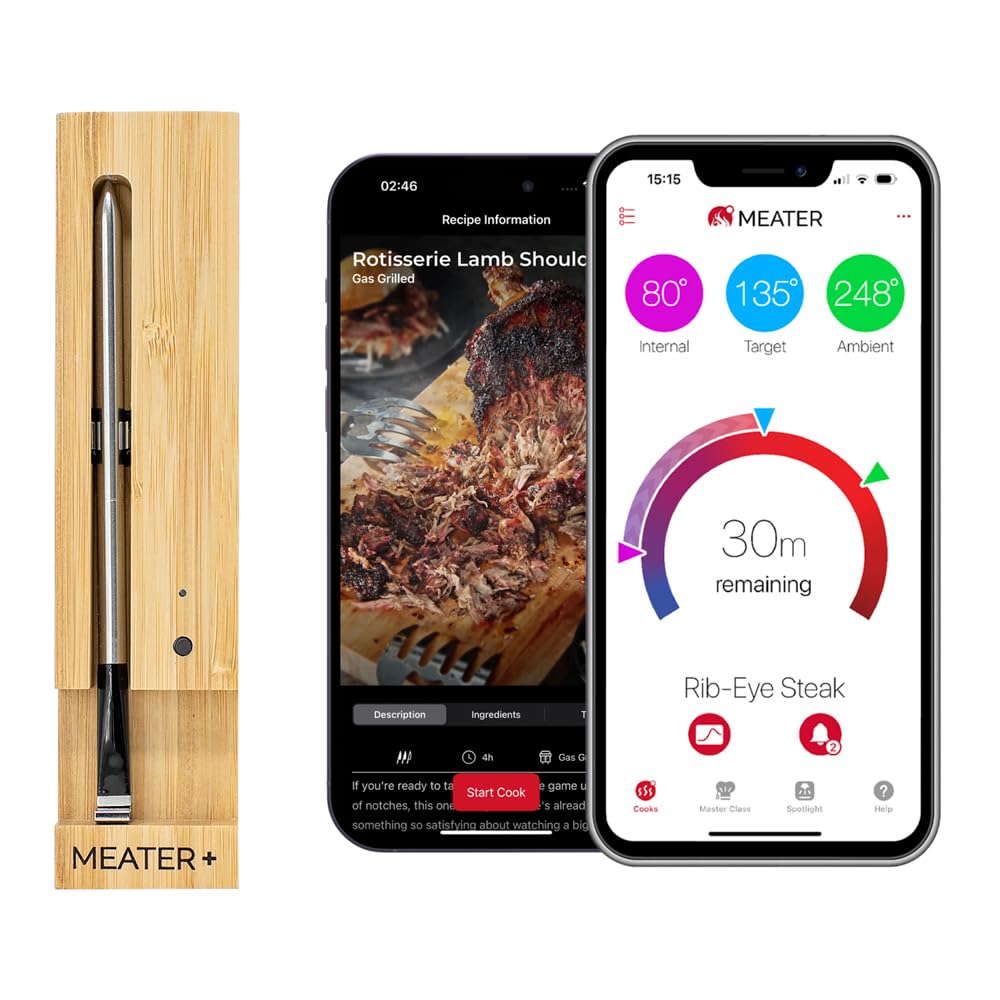
MEATER Plus Wireless Smart Meat Thermometer
Part of my meat thermometer guide — all reviews, comparisons, and buying advice in one place.

MEATER Plus is a wire-free smart meat thermometer with dual sensors — one tracks internal meat temperature up to 212°F, the other tracks ambient/oven temperature up to 527°F — so you get both readings from a single probe. It pairs over Bluetooth to a free iOS/Android app that walks you through cook stages and estimates when your food will hit target temperature.This post contains affiliate links.

If you buy through my links, I may earn a commission at no extra cost to you. As of this update, MEATER Plus runs $79.95 on Amazon (4.4★, 48,251 ratings). This review covers how the dual-sensor setup, app, and wireless range hold up in real cooking use. If you want a side-by-side against other bluetooth probes, see my Best Bluetooth Meat Thermometer guide.How The MEATER Plus Works

The MEATER Plus is a 100% wire-free meat thermometer that allows you to cook with complete freedom and flexibility. This Long Range Model was one of the first wireless meat thermometers on the market. It utilizes dual temperature sensors to monitor both the internal meat temperature (up to 212°F) and the ambient/external temperature (up to 527°F) simultaneously.

The MEATER Plus comes with a free app, available for both iOS (version 12.2.0 and later) and Android (version 8.0 and later) devices, which allows you to easily monitor the cooking progress. The app provides a guided cook system that walks you through each stage of the cooking process, so you get consistent readings without guesswork. Additionally, you can set up custom alerts and notifications based on temperature and/or time to keep you on track.

This review looks at how the dual-sensor setup and app are specified, and at what owners report about how both hold up across roasts and grill sessions outside the box, not just on spec.

I earn a commission if you buy through the Amazon links below, at no extra cost to you.

Convenient Product Uses

  • Perfectly Cooked Meat: By monitoring the internal meat temperature, the MEATER Plus helps you achieve the perfect level of doneness for your meat. Whether you’re grilling, baking, or roasting, this smart meat thermometer ensures that your meat is cooked to perfection.
  • Optimal Temperature Control: In addition to monitoring the meat temperature, the MEATER Plus also keeps track of the ambient temperature, ensuring that your grill or oven is operating at the right temperature. This feature prevents undercooking or overcooking and guarantees consistent results.
  • Meal Planning Made Easy: The MEATER Plus features an Advanced Estimator Algorithm that helps you plan your meal and manage your time effectively. It estimates the ideal cooking and resting times for your food, alleviating the stress of meal planning and allowing you to sit back and relax.

Product Specifications

To give you a clear understanding of the MEATER Plus’ capabilities, here are the key specifications:

Specification Details
Wireless Range 165 feet
Max Internal Temperature 212°F
Max Ambient Temperature 527°F
Connection Bluetooth 4.0
Battery Life Over 24 hours of continuous cooking per charge
Charger Real wood charger that matches any kitchen or outdoor decor
Backing Magnetic backing to attach the MEATER Plus to any surface
Smart Home Integration Alexa Skill enabled
Compatibility iOS (version 12.2.0 and later) and Android (version 8.0 and later) smartphones and tablets
Dishwasher Safe Yes
Check Price on Amazon ↗

Who Is The MEATER Plus For?

The MEATER Plus works well for anyone who grills, roasts, or smokes regularly and wants to stop cutting into meat to check if it’s done. It’s overkill if you only cook a roast a few times a year. For example, if you love hosting barbecues and want to ensure that your grilled meats are cooked to perfection, the MEATER Plus will be a valuable tool in your arsenal. Similarly, if you enjoy experimenting with different recipes in your kitchen, this smart meat thermometer will help you master the art of precise cooking.

Pros and Cons

Pros:

  • Wire-free convenience allows for flexible cooking.
  • Dual temperature sensors enable monitoring of internal and ambient temperatures simultaneously.
  • Guided Cook System removes the guesswork on timing.
  • Custom alerts and notifications keep you on track.
  • Advanced Estimator Algorithm simplifies meal planning.
  • Dishwasher-safe, so cleanup is quick.
  • Extensive wireless range of 165 feet.

Cons:

  • Requires a compatible smartphone or tablet for app connectivity.
  • Smartphone is not included in the package.
  • Bluetooth range drops off past about 33 feet without a clear line of sight to the probe — walking to another room can disconnect the app mid-cook.
  • The probe isn’t rated for submersion, so it’s not an option for sous vide or any liquid-based cooking method.

FAQ’s

  1. Is the MEATER Plus waterproof? The MEATER Plus is water-resistant but not fully waterproof. It is designed to withstand exposure to moisture during cooking, but it should not be submerged in water or exposed to heavy rainfall.
  2. Can I connect the MEATER Plus to my home WiFi? Yes, you can extend the wireless range of the MEATER Plus over WiFi with MEATER Link. All you need is a second smartphone or tablet to bridge the connection to your home WiFi network.
  3. How long does the battery last? The internal probe battery runs about 24 hours per charge in the charging block, which is enough for one long cook — top it up between uses rather than letting it run flat.
  4. Can I use the MEATER Plus for more than one piece of meat at a time? No — each probe tracks one item. If you’re cooking multiple proteins simultaneously and want to monitor each independently, you’d need a second MEATER probe. See my MEATER+ vs MEATER Pro Duo comparison for whether the dual-probe Pro Duo is worth the upgrade.

Tips and Tricks for Best Results

To get the most out of your MEATER Plus, keep these tips in mind:

  1. Ensure that the MEATER Plus probe is properly inserted into the meat, avoiding contact with bones or large fat deposits.
  2. Place the MEATER Plus charger within range of the probe to ensure a stable connection.
  3. Clean the MEATER Plus probe thoroughly after each use to maintain accurate temperature readings.
  4. Use the MEATER Plus app’s custom alerts and notifications to optimize cooking times and achieve desired results.

Conclusion

MEATER Plus is a solid pick if you cook meat often enough to want dual internal/ambient readings without running a wire out of the oven or grill. The 165ft wireless range and 24-hour battery cover most kitchens and backyard setups; the main trade-off is that you need a phone within range to see live readings, and the wood charger dock needs a dry spot on the counter.

Final Recommendation

MEATER Plus is worth the money if dual internal/ambient temperature readings and app-guided cooking matter to you — it’s a genuine step up from a single-probe thermometer for anyone who grills or roasts regularly. If the extra ambient sensor isn’t essential and you want to save some money, my Original MEATER (MEATER SE) review covers the simpler single-sensor option. Get your own MEATER Plus: Wireless Smart Meat Thermometer | for BBQ, Oven, Grill, Kitchen, Smoker, Rotisserie | 165ft Bluetooth Wireless Range | iOS Android App | Apple Watch, Alexa Compatible | Dishwasher Safe today.

How This Review Was Put Together

Plainly: this is research-based, not a hands-on test. I have not owned or used this, and nothing here should be read as a report from my own kitchen.

What it rests on: the published specification – one probe carrying both an internal and an ambient sensor, the range figure quoted via the bundled repeater block, the maximum ambient rating, and how the probe charges; plus the pattern across verified-purchase reviews, which for MEATER concentrates on range falling short indoors and on probes eventually refusing to charge in the block.

What I could not establish: real range, which is the specification this product is sold on. The quoted figure is line-of-sight through the repeater, and the distance that matters is through a wall from a kitchen to a grill. No independent measurement covers this model.

Filed Under: Product Reviews Tagged With: meat thermometer, MEATER Plus, Review, wireless

MEATER vs TempPro TempSync: Which Wireless Meat Thermometer Should You Buy?

Last Updated July 5, 2026

Steaks grilling on a smoky barbecue

This post contains affiliate links. If you buy through my links, I may earn a commission at no extra cost to you. Read the full disclosure.

The quick answer

These are fundamentally different thermometers that suit different cooks. The MEATER Plus is a true wireless probe — no wires at all, goes inside the meat, stays there throughout the cook.

The TempPro TempSync gives you four probes at a lower price, but with traditional wires into the meat. If you hate managing cables and cook one protein at a time, buy MEATER. If you regularly monitor multiple proteins or smoke large quantities, the TP25’s four probes make more sense.

This comparison gets asked a lot — and it’s a fair question, because both are popular Bluetooth meat thermometers at similar price points. But once you understand how differently they work, the right choice becomes obvious for most people. Both also feature in my broader best Bluetooth meat thermometer guide, where they’re tested alongside three other top picks.


ProductBest ForPriceRatingBuy
MEATER PlusBest Wireless Probe$79.994.3★ (48,459)Check Price
TempPro TempSyncBest Multi-Probe Value$49.994.5★ (10,328)Check Price

Head-to-head specs

Feature MEATER Plus TempPro TempSync
Number of probes 1 (true wireless) 4 (wired probes)
Wireless type Bluetooth Bluetooth
Range 165 ft (50m) 650 ft (200m)
Probe design Wireless — no cable Traditional wired probes
Simultaneous monitoring 1 protein Up to 4 proteins / zones
Ambient temp sensor Yes — built-in Yes — clip-on ambient probe
App guided cooking Yes (MEATER app) Yes (TempPro app)
Charging Bamboo block (AA batteries) USB rechargeable base
Water resistance IP67 IP65
Typical price ~$54.95 ~$45.99

The real difference: wires vs no wires

The MEATER probe is entirely wireless. It goes inside the meat — fully submerged — and transmits temperature data via Bluetooth from inside the cooking chamber. There is no cable running from the meat to a receiver. You close the oven or grill lid and walk away.

The TempPro TempSync uses traditional wired probes: thin stainless steel probes attached to heat-resistant cables that run from the meat to a receiver unit outside the oven or grill. You need to route the cables through a gap in your oven door or grill lid. It works well — millions of people cook with wired probes — but it is less elegant and requires a bit more setup.

For most cooks, the difference matters more than it sounds. Wires require planning: where does the cable exit? Is the gap large enough?

Will the cable get pinched? A wireless probe eliminates this entirely. You insert it, close everything up, and the signal goes through the lid.


When the TempPro TempSync wins

Four probes is a genuine advantage for certain cooks. If you’re running a large smoker with chicken, ribs, and a pork shoulder all going at once, the TP25 lets you monitor every protein simultaneously. The MEATER Plus can only do one.

The 650-foot Bluetooth range is also significantly better than MEATER’s stated 165 feet (which in practice is closer to 50–80 feet through walls). If your smoker is far from your house, or you’re regularly losing Bluetooth connection with MEATER, the TP25’s range is a meaningful advantage.


When the MEATER Plus wins

For the most common cooking scenario — a single roast, whole chicken, or thick steak — MEATER’s no-wire design is genuinely superior. There’s nothing to route, nothing to kink, nothing to get pinched in the oven door. The ambient temperature sensor is built into the probe itself, not a clip-on attachment. The guided cook feature in the MEATER app (which calculates rest time and estimated finish time based on live temperature data) is best-in-class.

MEATER is also the better choice for charcoal grills and kamado-style cookers where routing a wire out of a sealed lid is awkward. The probe sits inside the cook chamber without any external cables.

Buy the MEATER Plus if…

  • You cook one protein at a time
  • You want a completely cable-free experience
  • You use a sealed oven, kamado, or kettle grill
  • You value the MEATER app’s guided cook feature
  • Wireless convenience matters more than probe count

Buy the TempPro TempSync if…

  • You regularly cook multiple proteins simultaneously
  • You need longer Bluetooth range
  • You want four probes at a comparable price
  • You’re running a large smoker with multiple zones
  • You don’t mind managing cables


How they compare in real cooking scenarios

Oven roasting (Sunday roast, whole chicken, lamb leg)

MEATER Plus is the better tool here. You insert the probe, put the joint in the oven, close the door, and monitor from your phone. No cable to route through the door seal, no risk of the cable getting pinched. The MEATER app’s guided cook calculates estimated finish time based on the live internal temperature — genuinely useful when you’re timing a roast around other dishes.

TempPro TempSync works fine in the oven but requires routing a cable through the door gap, which can let out heat over a long cook. For a single roast, this inconvenience is unnecessary when MEATER eliminates it entirely.

Charcoal grilling and kamado cookers

MEATER wins again. Kamado cookers (Big Green Egg, Kamado Joe) seal tightly — routing a cable out of the lid degrades the seal and can cause heat loss. MEATER’s probe sits inside the cooking chamber with no cable exiting. The same applies to kettle grills where you’re cooking indirect with the vents nearly closed: MEATER doesn’t interfere with airflow management.

The TempPro TempSync’s 650-foot range does give it an advantage once you have the cable sorted: you can monitor from across the garden without losing signal, which matters more on a long charcoal cook where you’re not constantly watching the grill.

Overnight low-and-slow smoking

This is where TempPro TempSync’s four probes earn their place. A pork shoulder and a brisket going simultaneously for 12 hours demands multi-protein monitoring — MEATER Plus can’t do that with a single probe. The TP25 also has a 40-hour battery life, meaning it outlasts any overnight cook without needing a recharge mid-session.

If you’re smoking one protein at a time, MEATER Plus handles it — but if your smoker regularly runs multiple racks or proteins simultaneously, TempPro TempSync’s four probes are the decisive advantage.


App comparison

The MEATER app (iOS and Android) is the standout in this comparison. The guided cook feature uses your target doneness, the current internal temperature, and the ambient cook temperature to calculate an estimated finish time — and updates it in real time as conditions change.

The rest timer kicks in automatically when you pull the meat. For cooks who want hand-holding through the process, it’s genuinely excellent. The app interface is clean and well-designed.

The TempPro app is functional rather than guided. You set high and low temperature alarms for each probe, monitor the four readings simultaneously, and view a temperature history graph.

There’s no guided cook mode or rest timer. For experienced cooks who just need the numbers, this is all you need. For less confident cooks, MEATER’s guided approach is more supportive.

Neither app requires a subscription. Both are free to use with the hardware. TempPro TempSync also has a physical display unit with a backlit screen showing all four probe temperatures — useful if you want to monitor without your phone, or if your phone battery is running low during a long cook. See my full meat thermometer buying guide for how this compares across the whole category.

The verdict

For most home cooks, the MEATER Plus is the better thermometer. The no-wire design removes friction from every cook, and monitoring a single protein covers 90% of everyday cooking. The TempPro TempSync is the right call if probe count genuinely matters to you — four simultaneous readings at this price is hard to beat. Neither is a wrong choice; they solve the same problem differently.

See MEATER Plus Price →
See TempPro TempSync Price →

Related guides

Related: Best Bluetooth Meat Thermometer 2026
Related: MEATER Plus vs MEATER Pro Duo
Related: Bluetooth vs Wi-Fi Meat Thermometers
Related: Are Wireless Meat Thermometers Accurate?

How This Comparison Was Put Together

Plainly: this is a research-based comparison, not a hands-on test. I have not run these side by side.

What it rests on: the published specification for both lines – truly wireless probe versus a wired probe and transmitter, probe count, maximum ambient and internal ratings, stated range and how it is achieved, and app design; plus the pattern across verified-purchase reviews for each, where the MEATER theme is range and charging and the ThermoPro theme is cables failing at the strain relief.

What I could not establish: range or accuracy for either. Both sets of figures are manufacturer claims measured line-of-sight and under undisclosed conditions. This comparison is about the trade-off in design – no cable versus no charging – which is a real and checkable difference, rather than about which is more accurate, which it cannot establish.

Frequently Asked Questions

Is MEATER better than TempPro TempSync?
It depends on your cooking style. MEATER Plus is better if you want a completely wireless probe with no cables and cook one protein at a time.

TempPro TempSync is better if you need four simultaneous probes, longer Bluetooth range, or prefer a lower entry price. Both are accurate to +/-1C and produce reliable results.

Does the TempPro TempSync have an app?
Yes. The TempPro TempSync has a companion app (TempPro) that lets you monitor all four probes from your phone, set temperature alarms, and track cook history. The app works alongside the physical display unit, which shows all four probe temperatures simultaneously without needing your phone.

Can MEATER Plus monitor multiple probes?
The standard MEATER Plus is a single-probe system. To monitor two probes simultaneously, you need the MEATER Pro Duo. To monitor four probes, you need the MEATER Block (which holds and charges four probes and extends range via Wi-Fi).

What is the battery life of the TempPro TempSync?
The TempPro TempSync receiver is USB rechargeable and lasts approximately 40 hours per charge. The probes themselves don’t require separate batteries — they connect via cable to the receiver.

Which is easier to set up, MEATER Plus or TempPro TempSync?
MEATER Plus is simpler to set up: charge the bamboo block, pair with the app via Bluetooth, and it’s ready.

TempPro TempSync requires connecting each probe cable to the receiver, pairing the receiver with the app, and routing cables appropriately for your cooking setup. Once set up, both work reliably. MEATER is meaningfully easier for first-time users.

Can I use MEATER Plus in a gas grill?
Yes. MEATER Plus works in gas grills, charcoal grills, kamado cookers, and kitchen ovens. The probe is rated for ambient temperatures up to 527F, which covers all standard grill environments. The wireless design is particularly well-suited to gas grills where you want to monitor temperature without a cable trailing from the grill lid.


Filed Under: Product Reviews

  • « Go to Previous Page
  • Page 1
  • Interim pages omitted …
  • Page 23
  • Page 24
  • Page 25
  • Page 26
  • Page 27
  • Interim pages omitted …
  • Page 35
  • Go to Next Page »

Recent Articles

  • Cuisinart DLC-10SYP1 Review: Durable, But a Newer Bowl
  • COSORI Pro Gen 2 Review: Big Basket, Fragile Handle
  • Dash Tasti-Crisp Review: Cheap, but the Coating Wears Fast
  • Chefman TurboFry Touch Review: Cheap, but the Coating Wears
  • Chef’sChoice 15XV Review: Very Sharp, With Scratch Reports

Search


HOME          Contact          Affiliate Disclosure          Terms of Service          Privacy Policy


kitchenwarecompare.com is a participant in the Amazon Services LLC Associates Program, an affiliate advertising program designed to provide a means for sites to earn advertising fees by advertising and linking to Amazon.com, Endless.com, MYHABIT.com, SmallParts.com, or AmazonWireless.com. Amazon, the Amazon logo, AmazonSupply, and the AmazonSupply logo are trademarks of Amazon.com, Inc. or its affiliates. As an Amazon Associate I earn from qualifying purchases.


Copyright © 2026 kitchenwarecompare.com, ALL RIGHTS RESERVED.