• Skip to primary navigation
  • Skip to main content
  • Skip to primary sidebar

Kitchenware Compare

  • Home
  • Product Reviews
    • Air Fryers
    • Coffee
    • Cookware
    • Flat Top Grills
    • Meat Thermometers
    • Food Processors
    • Knives
    • Pizza Ovens
    • Toaster Ovens
    • Juicers
  • Food Blog
  • Helpful Kitchen Tips
  • Data Studies
  • About
  • How I Review
  • Contact
You are here: Home / Archives for Product Reviews

Hamilton Beach Stack & Snap 70725A Review: Is the Budget Pick Worth It?

Last Updated July 25, 2026

Hamilton Beach Stack and Snap 12-cup food processor

This post contains affiliate links. If you buy through a link here, I may earn a commission at no extra cost to you.

Quick verdict:

  • Buy it if: you mostly slice, shred, and mix dough, and want a 12-cup processor for well under $100
  • Skip it if: chopping and pureeing are your main uses, or you routinely process large volumes of liquid-heavy food
  • My take: genuinely good at the things it’s good at, and the site’s own buying guide picks it as “Best Budget” for a reason — but go in knowing exactly which two jobs it’s weaker at

The Hamilton Beach Stack & Snap 70725A ($69.99) is the budget pick in my best food processor buying guide, and it’s never had its own dedicated review here — just a line in a roundup. It deserves a closer look, because the picture is more specific than “good value”: it’s excellent at some things and genuinely weak at others, and which camp you fall into depends entirely on what you actually make.

I haven’t run this one through my own kitchen, so I’m not going to pretend otherwise. What follows is built on two real sources: TechGearLab’s independent lab testing of this exact machine (scored chopping, mixing, pureeing, shredding, slicing, and cleaning against a field of competitors), and the patterns across Hamilton Beach’s own 28,749 Amazon ratings. That’s a more honest foundation than a first impression, and it’s exactly the kind of gap between marketing copy and real performance this review exists to close.

Hamilton Beach 70725A — Key Specs

Spec Hamilton Beach Stack & Snap 70725A
Price $69.99
Rating 4.5★ (28,749)
Bowl capacity 12 cups, sealed
Motor 450 watts, 2-speed
Attachments S-blade, single reversible slicing/shredding disc
Assembly Stack & Snap (no twist-lock)
Feed chute Big Mouth, fits whole potatoes/tomatoes
Dishwasher safe Yes (avoid the Sani setting)
Buy Check Price

What It Does Well

TechGearLab’s lab testing found this machine genuinely excels at three things: mixing, slicing, and shredding. It whipped up mayo from scratch using the built-in oil dispenser, handled pizza and pie dough with only minor manual assistance, and produced clean, uniform slices of tomatoes, potatoes, and zucchini. Shredding potatoes and carrots came out uniform with minimal waste. For a sub-$70 machine, that’s a genuinely strong result — the review specifically noted it held its own against processors costing far more in those categories, which is why it earned a Best Buy Award in that lab’s testing.

Owners echo this on the practical side: the Stack & Snap assembly (no twisting or aligning tabs) shows up repeatedly in reviews as the single biggest quality-of-life improvement over older food processors, especially for anyone with limited hand strength or dexterity.

What It Doesn’t Do Well

The same lab testing found two clear weak points: chopping and pureeing. Onions chopped down reasonably evenly, but carrots and almonds didn’t — the almonds in particular needed ten-plus pulses and still left whole pieces mixed in with pulverized ones, since the single-speed pulse control doesn’t give much precision. Pureeing showed a similar pattern: hummus stayed grainy rather than smooth, and tomato sauce still had visible garlic chunks the blade had missed.

The other real issue is the lid. It has no rubber seal or gasket, and the lab’s leak test — filling the bowl to the 7-cup line with water — ended with water sprayed across the counter. If you regularly process anything liquid-heavy near the fill line, that’s worth planning around; underfilling by a cup or two avoids it entirely.

Amazon’s own review base adds one more pattern worth flagging: a recurring complaint about small plastic parts, most often the food pusher, cracking if dropped, plus scattered reports of the motor or buttons failing outright after moderate use. At this price point some of that is the tradeoff for lighter-duty plastics — but it’s a real pattern, not a one-off.

Cleaning

Dishwasher-safe parts and a sealed bowl without tight crevices make day-to-day cleanup straightforward, according to both the lab review and repeat owner comments. The one recurring snag: the enclosed Stack & Snap joint between lid and bowl can trap moisture, and a few owners report it takes an extra pass or an overnight air-dry to fully dry out. My own food processor cleaning guide covers the parts most people miss on any machine, seals included.

Value for Money

At $69.99, this is priced to compete with processors that do far less. The trade a buyer is actually making is precision on two tasks (chopping, pureeing) for real strength on three others (mixing, slicing, shredding) plus a 12-cup capacity that’s genuinely large for the price. That’s a fair trade for a lot of kitchens, and it’s exactly why it’s the “Best Budget” pick in my food processor buying guide rather than an afterthought entry.

How It Compares to the Best Overall Pick

My buying guide’s top pick, the Cuisinart DFP-14BCNY, costs roughly three times as much and it shows in exactly the two places this Hamilton Beach is weakest: chopping precision and puree smoothness, both helped by a more refined blade geometry and speed control. What the Cuisinart doesn’t beat this machine on is value — if slicing, shredding, and dough are your main uses, the extra money buys you refinement you may not need.

Who Should Buy This

Buy the Hamilton Beach 70725A if:

  • Slicing, shredding, or mixing dough are your primary uses
  • You want a large 12-cup capacity without a large price tag
  • Easy assembly matters more to you than twist-lock precision
  • You’re comfortable underfilling slightly to avoid the lid’s leak risk

Look elsewhere if:

  • Fine, uniform chopping or smooth purees are what you do most
  • You want a sealed lid you can fill to the max line without a second thought
  • You’d rather pay more up front than risk a plastic part failing early

Verdict

The Stack & Snap 70725A earns its spot as a budget pick honestly — it’s not a compromise across the board, it’s genuinely strong at three specific tasks and genuinely weak at two others. If your kitchen’s actual workload leans toward slicing, shredding, and dough, this is a fair amount of processor for well under $100. If you chop and puree more than you slice, the gap between this and a pricier machine will show up in the results, not just the price tag.

Full context: my best food processor buying guide, my Cuisinart DFP-14BCNY review if you want the premium option, and my food processor sizing guide if you’re still deciding on capacity, or my direct Hamilton Beach vs. BLACK+DECKER comparison if you’re weighing this against the other budget pick.

How This Review Was Put Together

Plainly: this is research-based, not a hands-on test. I have not owned or used this, and nothing here should be read as a report from my own kitchen.

What it rests on: the published specification – 12-cup bowl, 450W motor, the stack-and-snap assembly that removes the twist-lock most processors use, the blades and discs included, and dishwasher-safe parts; plus the pattern across verified-purchase reviews, which for this model concentrates on the assembly mechanism being genuinely easier and on the motor being modest for dough.

What I could not establish: motor longevity under heavy loads. 450W is low for a 12-cup bowl and no independent test covers how that plays out over years.

Frequently Asked Questions

Is the Hamilton Beach Stack & Snap 70725A good for chopping?

It’s the weakest of its five main functions. Independent lab testing found it handled onions reasonably well but struggled with carrots and almonds, leaving uneven pieces even after many pulses. It’s fine for casual chopping, not for anything needing a uniform fine dice.

Does the lid leak?

It can, if filled close to the max line. The lid has no rubber gasket, and lab testing found it sprayed water when filled to 7 cups. Filling a cup or two below the line avoids the issue.

How does it compare to more expensive food processors?

It matches or beats many pricier machines at slicing, shredding, and mixing dough, but falls behind on chopping precision and puree smoothness — both areas where more expensive blade and speed designs show their advantage.

Is it durable?

Mostly, based on Amazon’s aggregated owner data, though there’s a recurring pattern of small plastic parts (especially the food pusher) cracking if dropped, and scattered reports of motor or button failure with heavy use.

Is it dishwasher safe?

Yes, all removable parts are dishwasher safe, though Hamilton Beach’s manual specifically warns against using a “Sani” high-heat setting, which can damage the plastic components.
Filed Under: Product Reviews

Gaggia Classic Pro vs De’Longhi Stilosa: Which Should You Buy?

Last Updated July 24, 2026

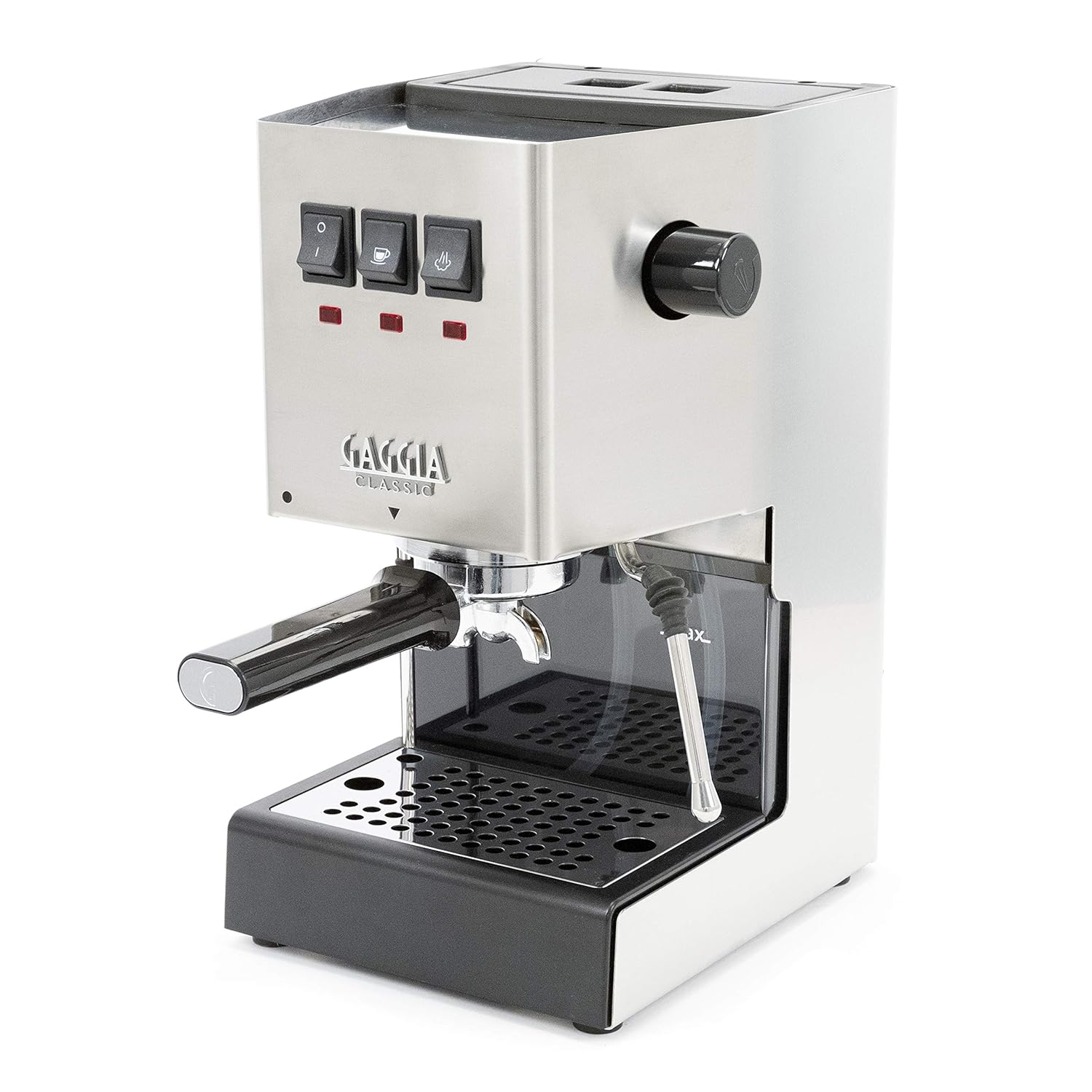
Gaggia Classic Evo Pro espresso machine in brushed stainless steel De'Longhi Stilosa espresso machine

This post contains affiliate links. If you buy through a link here, I may earn a commission at no extra cost to you.

Quick verdict:

  • Gaggia Classic Pro wins for: anyone serious about learning real espresso on equipment worth keeping and repairing for a decade
  • De’Longhi Stilosa wins for: a genuinely tight budget, or a first machine to find out if espresso is a habit worth investing in
  • My pick for most people asking this question: the Gaggia — but only if $449 is actually in the budget. If it isn’t, the Stilosa is a sensible place to start, not a consolation prize.

These two get compared a lot more than their price tags suggest they should. The Gaggia Classic Pro ($449) is a 58mm commercial-style machine built to be learned on, modded, and repaired for decades. The De’Longhi Stilosa (~$150) is a genuinely different category of product — a compact, mostly-plastic entry machine aimed at someone who isn’t sure yet whether they’ll stick with espresso.

My Gaggia Classic Pro review covers that machine on its own, and a separate comparison sets the Stilosa against the Breville Bambino. My De’Longhi Stilosa review covers the Stilosa on its own. This one puts the Gaggia and the Stilosa head-to-head on the things that actually change your morning: shot quality, steam, build, and what each one costs you beyond the sticker price.

Gaggia Classic Pro vs Stilosa — Specs Side by Side

Spec Gaggia Classic Pro De’Longhi Stilosa
Price $449.00 $149.95
Rating 4.4★ (3,162) 4.2★ (13,831)
Portafilter 58mm commercial 51mm
Heat-up time ~5 min to fully warm ~45 seconds
Steam wand Manual commercial-style wand Manual pannarello
Temperature control Thermostat (PID moddable) Small stainless steel boiler, no PID
Housing Steel, made in Italy Mostly plastic, stainless accents
Water tank 2.1 L 1 L
User-repairable Yes — full parts availability No — largely sealed, budget internals
Buy Check Price Check Price

Shot Quality

There’s no real contest here once a decent grinder is in the picture. The Gaggia’s 58mm commercial basket spreads the puck thinner and more evenly than the Stilosa’s 51mm pressurized basket, which caps how good a shot the Stilosa can pull no matter how well you dial in the grind — the pressurizing screen does some of the work for you, and it shows up as flatter, less complex espresso. The Gaggia has a real shot ceiling; the Stilosa has a shot floor that’s decent for the price and doesn’t move much past that.

To be fair to the Stilosa, it’s not making bad coffee — with fresh beans and a real burr grinder, it pulls a perfectly drinkable shot, and 13,831 people rating it 4.2 stars isn’t nothing. It just isn’t trying to compete on this axis, and shouldn’t be judged like it is.

Steam Wand and Milk Drinks

The Gaggia’s commercial-style wand produces genuinely better microfoam once you’ve learned it, with enough power for real latte art. The Stilosa’s pannarello wand is better than its price suggests — it makes usable foam for a cappuccino or latte without much drama — but it can’t match the Gaggia’s texture ceiling, and neither machine automates the process for you (see my milk frothing guide if you want the manual technique either way). If your household leans hard on milk drinks and you want the best result the manual route can give, that’s the Gaggia. If you just want workable foam without spending much, the Stilosa clears that bar.

Temperature Stability and the “15 Bar” Number

Neither machine has a PID out of the box, but they get there differently. The Gaggia’s aluminum boiler cycles around a basic thermostat — experienced owners “temperature surf” (flush water, time the shot off the heating light) to land it consistently, and a PID mod (~$100 in parts) closes the gap for good if you want to go there. The Stilosa’s small stainless steel boiler heats fast (owners report about a minute or less) but has no meaningful temperature stability strategy beyond that — it’s built to get hot quickly, not to hold a target precisely.

One number worth clearing up: both machines are commonly listed at “15 bar pump pressure.” That’s marketing, not the number that matters. Espresso extracts properly around 9 bar, and both machines regulate down to roughly that at the group head — the 15-bar figure just describes the pump’s maximum capacity before regulation. Don’t use it to compare these two, or any two espresso machines.

Build Quality and Long-Term Ownership

This is where the price gap earns itself. The Gaggia is steel, made in Italy, and fully user-serviceable — gaskets, thermostats, even the boiler are documented and available, and forty-year-old Classics are still pulling shots on their original frames. It carries a 1-year warranty, but the real story is that it doesn’t need one for long; it’s designed to be opened up.

The Stilosa is mostly plastic with a stainless-look front, and it’s built for its price point rather than for the long haul — I wouldn’t expect the portafilter fit or the internals to feel as tight in year three as they did on day one. That’s not a knock on it as a starter machine; it’s a reason to think of it as a two-to-three-year appliance rather than a lifetime purchase.

Value for Money

These aren’t really competing for the same dollar, which makes the “value” question different depending on what you’re solving for. At $449, the Gaggia is genuinely one of the better values in home espresso — commercial-grade hardware and a decade-plus lifespan for less than half what a comparable machine cost a few years ago. At $149.95, the Stilosa is the cheapest machine I’d actually recommend for real espresso; anything meaningfully less than that and you’re buying a machine with inconsistent pressure and temperature, not just a smaller version of the same thing.

If you’re stuck between the two prices and don’t strictly need either extreme, the Breville Bambino sits in between — faster and more consistent than the Stilosa, more automated (and less repairable) than the Gaggia. My full Gaggia vs Bambino comparison covers that middle path in depth.

Who Should Buy Each

Buy the Gaggia Classic Pro if:

  • You want to actually get better at espresso, not just own an espresso machine
  • You’re comfortable spending $449 on equipment you’ll still be using — and repairing — in ten years
  • You want standard 58mm commercial baskets, bottomless portafilter options, and a PID mod down the road
  • You already have or plan to buy a real burr grinder

Buy the De’Longhi Stilosa if:

  • Your budget is genuinely close to $150, not $450
  • You’re not sure yet whether espresso is going to be a regular habit
  • You mostly want milk drinks and can live with manual steaming that’s good, not great
  • You’d rather find out what you actually want from a machine before committing real money

Check Gaggia Price on Amazon  Check Stilosa Price on Amazon

The Honest Take

I’d buy the Gaggia every time if the budget allows it — not because the Stilosa is bad at what it does, but because the 58mm basket and the repairability aren’t small conveniences, they’re the difference between a machine you outgrow and one you keep. But I don’t think everyone should spend $449 on a first espresso machine, and the Stilosa is an honest way to find out if you’re going to be someone who cares about this before you commit real money to it.

Verdict

For anyone serious about the craft and able to spend $449, the Gaggia Classic Pro is the better machine, full stop — higher shot ceiling, real steam performance, and hardware built to outlast the coffee habit it’s making possible. For a genuinely tight budget or a first machine, the De’Longhi Stilosa is an honest, capable starting point that won’t embarrass itself, as long as you go in knowing it’s a stepping stone rather than a destination.

Full deep-dives: my Gaggia Classic Pro review, and my Breville Bambino vs De’Longhi Stilosa comparison if the Stilosa’s price point is right but you want a stronger machine at it. Comparing more machines? Start with best semi-automatic espresso machines or browse all coffee equipment guides.

How This Comparison Was Put Together

Plainly: this is a research-based comparison, not a hands-on test. I have not run these side by side.

What it rests on: the published specification for both – a stainless boiler and 58mm commercial portafilter against a compact machine with a small boiler with a proprietary basket, three-way solenoid presence, steam wand type, and how serviceable each is; plus the pattern across verified-purchase reviews for each, where the gap in price maps onto a real gap in what you can modify later.

What I could not establish: shot quality on either, which at these prices is decided by the grinder and the operator. What the comparison settles is what each machine lets you control and what it fixes for you.

Frequently Asked Questions

Is the Gaggia Classic Pro worth it over the Stilosa?

If espresso is going to be a real, ongoing habit, yes. The Gaggia’s 58mm commercial basket and full repairability make it a machine you can grow into rather than one you outgrow. If you’re not sure yet, the Stilosa is the cheaper way to find out.

Which makes better espresso?

The Gaggia, clearly, once paired with a decent grinder. Its 58mm basket spreads the puck more evenly than the Stilosa’s pressurized 51mm basket, which caps shot quality regardless of technique.

Which is better for milk drinks — lattes and cappuccinos?

The Gaggia’s commercial-style wand produces better microfoam, but the Stilosa’s pannarello wand is genuinely usable for the price and can make a decent cappuccino with practice.

Does “15 bar pump pressure” mean the Stilosa or Gaggia makes stronger espresso?

No — that number describes maximum pump capacity, not extraction pressure. Both machines regulate down to roughly the 9 bar that actually matters for espresso. Don’t use the 15-bar spec to compare machines.

Do I need a separate grinder for either machine?

Yes, for both. Neither has a built-in grinder, and pre-ground coffee wastes what either machine is capable of. Budget $100–300 for a proper burr grinder alongside whichever machine you choose.

Filed Under: Product Reviews

Best Cast Iron Skillet 2026: 5 Picks From Lodge, Victoria, Stargazer & More

Last Updated July 22, 2026

A cast iron skillet with a hot meal cooking outdoors

Photo by Abdullah Öğük from Pexels

This post contains affiliate links. If you buy through one, I may earn a small commission at no extra cost to you. See my affiliate disclosure for details.

The Lodge Seasoned Cast Iron Skillet is the best cast iron skillet for most people: it’s $23.99, sears steak, bakes cornbread, and will outlive most kitchens it sits in. But it isn’t the only right answer: if weight bothers your wrists or you want a smoother cooking surface out of the box, one of the other four picks below fits better. This guide compares five specific, currently-in-stock skillets, based on real specs and each product’s own Amazon review history — not a single in-house lab test, which I say plainly below. If you’re weighing cast iron against other pans entirely, my full cookware buying hub covers Dutch ovens and nonstick sets too.

Quick Comparison

Product Best For Price Rating Buy
Lodge Seasoned Cast Iron Skillet, 12″ Best Overall $23.99 4.6★ (144,642) Check Price
Utopia Kitchen Cast Iron Skillet, 12″ Best Budget $25.49 4.6★ (27,295) Check Price
Lodge Cast Iron Skillet, 8″ Best for Small Households $14.39 4.6★ (131,954) Check Price
Stargazer Cast Iron Skillet, 10.5″ Best Smooth Surface / Splurge $155.00 4.6★ (492) Check Price
Victoria Cast Iron Skillet, 12″ Best Alternative to Lodge $32.99 4.6★ (14,007) Check Price

What Size Should You Actually Buy?

How I picked these: I didn’t run a side-by-side lab test on these five pans. Every pick and every con above comes from verified live pricing, each product’s own specifications, and the patterns that show up repeatedly across its aggregated Amazon review history — not a single hands-on cook-off. Where testing-based reviews from outlets that do run that kind of lab comparison say something different, I’ve noted it rather than pretending I ran the same test.

Size matters more than brand for day-to-day happiness with a cast iron skillet. An 8-inch pan is genuinely a one-egg, one-person pan — comfortable for a single serving, but you’ll be cooking in batches for anyone else at the table. A 10.25-inch pan is the size most people should own first: enough room for two eggs side by side or a bone-in chicken thigh, still light enough to lift one-handed out of the oven.

A 12-inch pan is the family-and-searing size — a whole pound of ground beef, a full skillet cornbread for six, or a steak with room to move it around without crowding. If you only ever buy one skillet, 10.25 inches covers the most ground; I’ve picked mostly 12-inch models below because they’re each brand’s flagship listing with the deepest review history, but every product here is also sold in 8-, 10.25-, and sometimes 6.5-inch sizes if you want to size down.

The 5 Best Cast Iron Skillets

1. Lodge Seasoned Cast Iron Skillet, 12-Inch — Best Overall

Lodge Seasoned Cast Iron Skillet, 12-inch

Lodge has cast this exact pan in South Pittsburg, Tennessee since long before “buy it for life” was a marketing phrase, and its 144,642 ratings make it the single most-reviewed cast iron skillet sold on Amazon by a wide margin. It’s PFAS-free, pre-seasoned with vegetable oil, and carries Lodge’s lifetime warranty. Amazon’s own review summary calls out durability and versatility most often — searing steaks, baking cornbread, and everyday eggs all show up repeatedly as strengths.

Cons: Lodge’s factory seasoning ships with a noticeably bumpy, pebbly texture rather than a smooth finish, and several owners report eggs sticking for the first few months until the seasoning builds up with use — a real break-in period, not an instant nonstick surface. It’s also on the heavier side for its size (3.6 kg for the 12-inch), which a meaningful share of reviewers flag as a genuine workout to lift one-handed out of the oven.

For the full breakdown of how this pan performs on searing, eggs, cleaning, and long-term durability, see my full review of the Lodge 12-Inch Skillet.

Check Price on Amazon

2. Utopia Kitchen Cast Iron Skillet, 12-Inch — Best Budget

Utopia Kitchen Cast Iron Skillet, 12-inch

At $25.49 (often lower with Amazon’s rotating coupon), this is the cheapest full-size 12-inch skillet on this list that still clears 27,000+ ratings at 4.6 stars. It’s PFAS-free, pre-seasoned, and works on every stovetop including induction. For a first cast iron pan bought mainly to see if you’ll actually use one, it’s the lowest-risk entry point of the five.

Cons: Quality control is a genuine step down from Lodge’s consistency — a recurring theme in owner reviews is a factory seasoning that looks noticeably rougher or patchier out of the box than expected, requiring an immediate full re-seasoning before the pan performs the way the listing promises. It’s also the heaviest pan per inch of cooking surface on this list at 7.83 lbs for 12 inches.

For the full breakdown of how this pan performs against Lodge, see my full review of the Utopia Kitchen 12-Inch Skillet.

Check Price on Amazon

3. Lodge Cast Iron Skillet, 8-Inch — Best for Small Households

Lodge Cast Iron Skillet, 8-inch

This is the same Lodge line as my overall pick, sized down to 8 inches and $14.39. It shares Lodge’s aggregated 144,642-rating pool — a quirk of how Amazon groups size variants of one core listing together, not a sign the two products are identical in hand. At 3.2 lbs it’s genuinely light enough to leave on the stove permanently for daily eggs, and it’s the size to buy if you cook for one or two people and rarely need to feed a table.

Cons: Too small for anything beyond 1–2 servings at once — plan on cooking meat or pancakes in batches for any more than that. It inherits the same pebbly factory seasoning and initial-stickiness break-in period as the 12-inch version above. Note that a pan that stays tacky after you season it is a different problem from a rough factory finish, and it is usually caused by too much oil.

For the full breakdown of how this pan performs against the 12-inch, see my full review of the Lodge 8-Inch Skillet.

Check Price on Amazon

4. Stargazer Cast Iron Skillet, 10.5-Inch — Best Smooth Surface / Splurge

Stargazer Cast Iron Skillet, 10.5-inch

Stargazer is a Pennsylvania foundry that CNC-machines the entire interior of every casting to a smooth, micro-textured finish instead of leaving the rougher “as-cast” surface that Lodge and Victoria ship with. The result, per its own reviewers, is a pan that behaves closer to a well-seasoned 80-year-old skillet right out of the box — less initial stickiness, and a genuinely lighter feel in the hand than a same-size Lodge. It also carries a lifetime warranty against manufacturing defects.

Cons: $155 is more than five times the price of the budget pick on this list, and buyer sentiment on whether that premium is worth it is genuinely split in the reviews — some call it the best pan they own, others say a $30 Lodge does the same job for a fraction of the cost. Independent testers have also flagged Stargazer’s wide, deeply indented handle shape as less comfortable to grip than a traditional teardrop handle, a design tradeoff worth knowing about before you pay a premium price.

For the full breakdown of what the smooth surface actually buys you, see my full review of the Stargazer 10.5-Inch.

Check Price on Amazon

5. Victoria Cast Iron Skillet, 12-Inch — Best Alternative to Lodge

Victoria Cast Iron Skillet, 12-inch

Victoria has cast iron cookware in Medellín, Colombia since 1939, and its 12-inch skillet is the closest like-for-like competitor to Lodge at a similar price point ($32.99 vs. $23.99). The main practical difference is the handle: Victoria’s is longer and more curved, which several reviewers who’ve owned both brands describe as easier to lift with an oven mitt, and the skillet ships roughly a pound lighter than Lodge’s equivalent size. It’s seasoned with flaxseed oil rather than the vegetable oil Lodge uses.

Cons: Quality control between individual units is less consistent than Lodge’s — some owners report their pan arriving with visibly uneven seasoning patches or a spot of surface rust that needed extra attention before the pan was ready to use, and getting a warranty replacement, while possible, was described by at least one reviewer as a slow, multi-week process.

For the full breakdown of the handle and quality-control trade-offs, see my full review of the Victoria 12-Inch.

Check Price on Amazon

Smooth vs. Pebbled Surface — and Why I Left Out Enameled Cast Iron

Lodge and Victoria both ship with a rougher, slightly pebbled cooking surface, while Stargazer’s is machined smooth. Neither texture is objectively better — both release food fine once properly seasoned, and the smooth surface’s main real advantage is less stickiness in the first few weeks of ownership, not better long-term performance. What you’re really paying for with a smooth-surface pan is a shorter break-in period and a lighter, more refined-feeling pan, not a fundamentally different cooking result.

This guide also deliberately excludes enameled cast iron (Le Creuset, Staub, and similar) — a fair-sounding alternative, but a genuinely different product. Enameled cast iron trades some of bare iron’s heat retention and searing performance for a coating that never needs seasoning and can safely simmer acidic sauces for hours, at a price that typically starts around $180–$230 for a comparable skillet. If that trade-off sounds better for how you cook, my cast iron Dutch oven guide covers enameled options in that format, and my cast iron vs. ceramic cookware comparison covers the health and coating question directly.

Seasoning and Care, Briefly

All five pans above arrive pre-seasoned and ready to cook with, but every one of them improves with a few rounds of your own seasoning before regular use — rub a thin layer of a high-smoke-point neutral oil over the entire pan, then bake it upside down at 230°C (450°F) for an hour and let it cool in the oven. Repeat two or three times. If you’re deciding between cast iron and a nonstick alternative for your everyday pan, my best non-stick pan guide covers that side of the choice, and my guide to the most durable cookware materials puts cast iron’s longevity in context against steel and ceramic.

Day to day: hand-wash with warm water (a little dish soap is fine despite the old myth that it isn’t), dry immediately over heat, and wipe on a thin coat of oil before storing. Never let one soak in the sink — that’s the single most common way these pans end up rusted. For the full breakdown on sizing, brand-by-brand detail, and rust recovery, see my complete cast iron skillet care guide.

Frequently Asked Questions

What’s the cheapest cast iron skillet actually worth buying?

The Utopia Kitchen 12-inch at $25.49 is the cheapest full-size skillet here that still holds a genuine 4.6-star average across 27,000+ ratings. Going cheaper than that usually means a much smaller pan or one without any real review history to judge it by.

Do I need a lid for a cast iron skillet?

Not for most cooking. A lid helps for braising, melting cheese quickly, or trapping heat when finishing something in the pan, but searing, frying, and baking cornbread all work fine open. Lids for these exact models are sold separately if you decide you want one later.

Can I use metal utensils on a cast iron skillet?

Yes — this is one of cast iron’s real advantages over nonstick cookware. Metal spatulas and turners won’t damage a properly seasoned cast iron surface the way they would a Teflon coating.

Is a heavier cast iron skillet better than a lighter one?

Not necessarily. Weight mostly reflects wall thickness, not quality — a heavier pan holds slightly more heat, but a well-made lighter pan like the Stargazer performs just as well in normal home cooking and is easier to maneuver, especially when full.

Will a cast iron skillet work on my glass-top or induction stove?

Yes to both, for every pan on this list. On induction it works directly since cast iron is magnetic. On a glass-top range, set it down and lift it rather than sliding it, since the rough underside can scratch glass cooktops over time.

How long will a cast iron skillet actually last?

Decades, with basic care — cast iron skillets from the early 1900s are still fully usable today, which is the entire appeal of the category. Damage almost always comes from rust caused by improper storage, not from normal cooking wear.

How These Picks Were Chosen

Plainly: this is a research-based guide, not a hands-on test. I have not run these side by side, and nothing here should be read as a report from my own kitchen.

What the picks rest on: casting weight against diameter, the smoothness of the cooking surface as delivered – a milled surface seasons faster than a rough sand-cast one – handle length and whether a helper handle is fitted, pour spouts that actually pour, and whether the pan arrives pre-seasoned; plus the complaint patterns across verified-purchase reviews, which for cast iron are unusually consistent, concentrating on rough surfaces and on pre-seasoning flaking off in the first few uses.

What I could not establish: long-term seasoning behaviour, which is the thing cast iron is bought for and which unfolds over years rather than weeks. No independent test tracks it for these pans. Surface finish is the best available predictor and is used that way here.

Bottom Line

For most people, the Lodge Seasoned Cast Iron Skillet is still the right default — cheap enough to not think twice about, backed by the deepest review history of any pan on Amazon, and genuinely built to outlast the kitchen it’s used in. Buy the Utopia if price is the only thing that matters, size down to the 8-inch Lodge if you’re cooking for one, and spend the extra money on the Stargazer only if a smoother, lighter pan is worth five times the price to you personally.

Filed Under: Product Reviews

Broan-NuTone 413004 vs. BCDF130SS: Which Range Hood Should You Buy?

Last Updated July 21, 2026

Kitchen with a stainless steel range hood installed above the cooktop

Last Updated July 21, 2026

Quick verdict: these two solve different ventilation problems, not the same one at different prices. The Broan-NuTone 413004 (currently $112) is a ductless-only insert — it recirculates filtered air back into the kitchen and nothing else. The BCDF130SS ($129) is a 4-way convertible unit that can actually vent outside through three different ducting configurations, or run ductless if you don’t have ducting. If you have or can install ducting, the BCDF130SS is the only one of the two that actually removes heat and humidity rather than just filtering smoke. If ducting isn’t an option, the 413004 does the ductless job for a third of the price.

I earn a commission if you buy through the Amazon links below, at no extra cost to you.

Broan-NuTone 413004 vs. BCDF130SS: Specs Side by Side

Product Best For Price Rating Buy
Broan-NuTone 413004 Ductless-only, budget $112.08 4.6★ (20,445) Check Price
Broan-NuTone BCDF130SS Convertible ducted/ductless $129.00 4.5★ (4,749) Check Price

Full spec comparison:

Spec Broan-NuTone 413004 Broan-NuTone BCDF130SS
Venting options Non-ducted (recirculating) only 4-way convertible: 2 ducted configurations, 7″ round ducted, or non-ducted
Blower performance 2 speeds, CFM not published 375 max CFM, 5.5 Sones
Lighting Up to 75W bulb (not included) Integrated 2-level LED modules (included)
Filter Charcoal (replaceable) Dual dishwasher-safe micro-mesh filters, plus charcoal for ductless mode
Controls 2 rocker switches (fan, light) Tap-touch capacitive controls
Price at review time $112.08 $129.00
Rating 4.6★ (20,445 ratings) 4.5★ (4,749 ratings)

The Core Difference: Ducted Capability vs. Ductless Only

This comparison isn’t really about which one is “better” — it’s about which ventilation setup you actually have. The 413004 is a non-ducted insert, full stop: it filters smoke and grease through a charcoal filter and blows the same air back into the kitchen.

The BCDF130SS is a genuinely different category of product — it installs in one of three ducted configurations (rear or top 3.25″x10″ rectangular duct, or a 7″ round top vent) that actually vents smoke, heat, and humidity outside, and only falls back to non-ducted recirculation if you choose that installation instead. If your kitchen has existing ductwork, the BCDF130SS is the only one of these two that uses it. If it doesn’t, both machines end up doing the same basic job, just at very different price points.

Power and Airflow

The BCDF130SS publishes real performance numbers — 375 max CFM and 5.5 Sones — while Broan doesn’t publish a CFM rating for the 413004 at all, consistent with it being positioned as a basic economy insert rather than a performance-rated one. Owner reviews for both describe adequate airflow for normal cooking; nobody describes either as struggling with everyday smoke and steam. The real airflow advantage of the BCDF130SS only shows up if you install it ducted, since venting outside moves heat and humidity in a way no recirculating hood can match, regardless of CFM rating.

Lighting

This is a genuine, concrete difference: the BCDF130SS ships with integrated 2-level LED lighting built in and ready to use. The 413004 accepts up to a 75W bulb, but doesn’t include one — you’re buying a bulb separately before it’s usable out of the box. If out-of-box readiness matters to you, that’s a real point in the BCDF130SS’s favor.

Noise Level

Owner reports on both are similar in shape: quiet at low and medium fan speeds, noticeably louder at the highest setting. BCDF130SS owners specifically flag high-speed noise as the one place the “quiet” marketing claim doesn’t fully hold up, though several also note it’s still quieter than the units they replaced. Neither product’s owners describe it as a dealbreaker at any speed below maximum.

What Owners Report

The 413004’s aggregated review themes center on installation, appearance, and value for money, with a specific, recurring installation quirk: the stock mounting screws assume a flush cabinet bottom, which most real cabinets don’t have. The BCDF130SS’s aggregated themes cover installation, brightness, appearance, and noise level, with detailed owner reports describing the ducted installation as more involved than a simple swap — getting the rear duct opening to align within a quarter inch of the existing wall duct, sealing joints with foil tape, and sourcing a wire bushing not included in the box. Both are real, specific complaints rather than vague dissatisfaction, and both are solvable with a bit of extra effort during install.

Value for Money

At $112, the 413004 is the clear value pick if ductless recirculation is all you need — you’re not paying for ducted capability you won’t use. The BCDF130SS’s value case depends entirely on whether you’ll actually duct it: done that way, it’s the only one of the two that meaningfully improves kitchen air quality by venting outside, which can be worth the premium. At $129 it is also no longer the expensive option it briefly appeared to be: an earlier low-stock third-party offer had pushed the listing to $349.99, and that has since resolved.

Buy the 413004 If…

You don’t have kitchen ductwork and aren’t planning to add it, you want the cheapest way to cut down smoke and odor, and you’re comfortable buying a light bulb separately.

Buy the BCDF130SS If…

You have or can install ducting and want a hood that actually vents outside, you want integrated lighting with nothing extra to buy, and you’re willing to take on a somewhat more involved installation for real ventilation performance.

The Verdict

These two aren’t competing for the same buyer. The 413004 is the pick for a straightforward, cheap ductless replacement. The BCDF130SS is the pick if you have ducting and want a hood that uses it — its integrated lighting and published CFM rating reflect a more complete product, and that’s what the higher price is paying for, not just a nicer badge on the same basic insert.

How This Comparison Was Put Together

Plainly: this is a research-based comparison, not a hands-on test. I have not run these side by side.

What it rests on: the published specification for both – airflow in CFM, whether each is ducted or ductless in the configuration compared, filter type and replacement cost, noise in sones where published, and physical dimensions against a standard cabinet opening; plus the pattern across verified-purchase reviews for each.

What I could not establish: real odour and grease removal, which no manufacturer measures publicly and which CFM alone does not describe – particularly for a recirculating configuration, where air passes a filter rather than leaving the room.

Frequently Asked Questions

Can the 413004 be ducted to the outside?

No. It’s a non-ducted (ductless) unit only. If you want ducted capability, the BCDF130SS is the one of these two that provides it.

Does the BCDF130SS include a light bulb?

Yes — it has integrated 2-level LED lighting built in. The 413004 requires you to buy your own bulb separately.

Which is quieter?

Both are quiet at low and medium fan speeds; both get noticeably louder on their highest setting, per each product’s own owner reviews. Neither pattern is unique to one product.

Is the BCDF130SS installation harder than the 413004’s?

Generally yes, if installed ducted — owners describe needing to align duct openings precisely and seal joints with foil tape. The 413004’s install challenge is different: its stock mounting screws don’t reach solid wood on cabinets with a recessed lip.

How much does the BCDF130SS cost?

It currently sells for $129. An earlier low-stock third-party offer had it listed at $349.99, well above its normal price, but that has resolved — the hood is back on a standard listing at a price close to the 413004.

Which one actually improves air quality more?

The BCDF130SS, but only if installed in a ducted configuration — venting outside removes heat and humidity that a recirculating hood can’t touch. Installed ductless, the two perform a similar basic job.

Which is the better budget pick?

The 413004, for anyone without ducting. See my full 413004 review for the complete breakdown of what owners report.

For the full lineup of ductless range hoods across every budget, see my best ductless range hood buying guide. If you’re still deciding whether a ducted or ductless setup makes more sense for your kitchen, my ductless range hood guide covers that decision in more depth, and my charcoal filter replacement guide is worth bookmarking once either hood’s filter starts to wear.

Filed Under: Product Reviews

Broan-NuTone 413004 Range Hood Review: Worth It for the Price?

Last Updated July 21, 2026


Broan-NuTone 413004 30-Inch Non-Ducted Ductless Range Hood

Last Updated July 21, 2026

Quick verdict: the Broan-NuTone 413004 is a $112 ductless range hood insert that does one job well: it fits under an existing cabinet, filters smoke and grease with a charcoal filter, and lights the cooktop. It’s not powerful, it’s not fancy, and it doesn’t include a light bulb. For a straightforward under-cabinet replacement on a budget, it’s an easy recommendation — just budget an extra 10 minutes for the installation quirk covered below.

I earn a commission if you buy through the Amazon links below, at no extra cost to you.

Broan-NuTone 413004: Specs at a Glance

Spec Broan-NuTone 413004
Type Non-ducted (recirculating) under-cabinet insert
Sizes available 24″, 30″, 36″, 42″
Filter Charcoal, replaceable, dishwasher-safe housing
Fan speeds 2 (separate rocker switch from the light)
Lighting Up to 75W incandescent or LED (bulb not included)
Minimum height above cooktop 18 inches
Warranty 1 year limited
Price at review time $104.04
Rating 4.6★ (20,445 ratings)

Check Price on Amazon ↗

What It Actually Does

This is a non-ducted (ductless) hood insert, not a full range hood system — it slides into the space under an existing cabinet and does two jobs: pulls air through a charcoal filter to catch smoke and grease before recirculating it back into the kitchen, and lights the cooktop with a bulb you supply yourself. It doesn’t vent outside, so it won’t remove heat or humidity the way a ducted hood does, but for cutting down smoke and cooking odors in a kitchen that isn’t set up for external venting, that’s exactly the job it’s built for.

The fan has two speeds controlled by a separate rocker switch from the light, and the charcoal filter is replaceable — Broan sells the 41F replacement filter specifically for this series, and it’s worth budgeting for a replacement every few months of regular cooking, same as any recirculating hood.

Installation: The One Thing to Know Before You Buy

The 413004 is genuinely easy to wire — it’s a simple white/black/ground hookup to your existing cabinet wiring, no different from swapping in a like-for-like replacement. Where it trips people up is mounting: the included screws assume the cabinet bottom is flush, but most real cabinets have a recessed lip around the underside edge, which means the stock screws don’t reach far enough to bite into solid wood. Owners who’ve hit this work around it in one of two ways — adding a thin plywood spacer between the hood and the cabinet, or drilling new mounting holes further in from the edge and using longer screws.

Neither is difficult, but neither is mentioned in the box, and there’s no installation template included to help you mark drill points ahead of time. Budget an extra 10-15 minutes versus a flush-mount install, and have a friend around to hold it in place — it’s light, but awkward to hold overhead while also driving screws.

Noise and Lighting

Owner reports on noise are mixed but land on the reasonable side: it’s not silent, but nothing in the aggregated review data describes it as objectionably loud for a budget recirculating hood, and several owners specifically call out that it’s quieter than the unit it replaced. Neither of the two fan speeds is described as particularly powerful, which tracks with this being a $104 insert rather than a high-CFM ducted system — it’s built to reduce smoke and odor in normal cooking, not to handle heavy searing or wok-style high-heat cooking.

The lighting is a genuine gap worth knowing about before you order: no bulb is included, and the unit is rated for up to a 75W incandescent or an equivalent LED, so you’ll need to buy one separately before it’s usable out of the box.

What Owners Report

Amazon’s own aggregated review summary for this listing centers on installation, appearance, and value for money as the most-mentioned themes, followed by functionality, quality, and noise level. The consistent praise is that it looks clean and matches other stainless appliances, the fan and light work as expected, and it’s a straightforward budget upgrade from an older or broken hood.

The one recurring practical complaint, beyond the cabinet-lip mounting issue above, is that a small number of owners describe the fan as underpowered on both speeds for heavier cooking — consistent with what you’d expect from a hood in this price range rather than a sign of a defect.

Who This Is For

Anyone replacing an old or broken under-cabinet range hood who doesn’t have external ducting and wants a straightforward, inexpensive insert.

It’s a good fit for normal weeknight cooking — boiling, sauteing, baking — where the goal is cutting down smoke and odor rather than handling heavy grease output.

Who Should Look Elsewhere

If you cook with high heat regularly — wok cooking, heavy searing, deep frying — a $104 recirculating insert with 2 fan speeds isn’t going to keep up. Anyone in that situation is better served by a ducted range hood with a higher CFM rating, even if it costs considerably more.

The Verdict

The Broan-NuTone 413004 does exactly what a budget ductless range hood insert should do: replace an old unit, cut down smoke and odor, and light the cooktop, all for close to $100. It’s not powerful and it doesn’t include a bulb, and the mounting screws assume a cabinet shape that most kitchens don’t actually have — but none of that is a surprise once you know about it going in, and none of it stopped 20,000+ owners from rating it 4.6 stars.

If you’re weighing whether a budget appliance like this is worth it over a pricier alternative, my breakdown of price vs. satisfaction across kitchen appliances is worth a read — this is a case where the cheaper option genuinely does the job.

Considering the step-up convertible model instead?

See my 413004 vs. BCDF130SS comparison for a direct breakdown of ducted capability, lighting, and price.

How This Review Was Put Together

Plainly: this is research-based, not a hands-on test. I have not owned or used this, and nothing here should be read as a report from my own kitchen.

What it rests on: the published specification – airflow in CFM, the ducted or ductless configuration and what changes between them, filter type and replacement interval, noise rating, and dimensions against a standard 30-inch cabinet; plus the pattern across verified-purchase reviews, which for under-cabinet hoods concentrates on noise at the top setting and on light fittings failing.

What I could not establish: actual odour removal.

CFM describes air movement, not what the filter captures, and no independent measurement covers this model.

Frequently Asked Questions

Does the Broan-NuTone 413004 include a light bulb?

No. It accepts up to a 75W incandescent bulb or an equivalent LED, but you need to buy one separately.

Will the stock mounting screws work with my cabinet?

Only if your cabinet bottom is flush with no recessed lip. Most cabinets have a lip around the underside edge, which means the stock screws won’t reach solid wood — owners work around this with a thin spacer board or by drilling new holes further in and using longer screws.

How loud is it?

Owner reports are mixed but generally favorable — several specifically describe it as quieter than the unit it replaced. Neither fan speed is described as powerful, which matches its price point.

Can this be ducted to the outside instead of recirculating?

No. The 413004 is a non-ducted (ductless) unit only — it filters and recirculates air through a charcoal filter rather than venting outside. If you need a ducted option, look at Broan-NuTone’s convertible models instead.

How often does the charcoal filter need replacing?

Broan doesn’t give a fixed interval, but budget for a replacement every few months of regular cooking to keep grease and odor capture effective. See my guide to charcoal filter replacement for signs it’s time to swap.

What sizes does this come in?

24″, 30″, 36″, and 42″. This review covers the 30-inch version, the size reviewed on the main buying guide.

Is this powerful enough for heavy cooking?

Not really. It’s built for normal weeknight cooking rather than high-heat searing, wok cooking, or deep frying. For heavier cooking, a ducted hood with a higher CFM rating is the better fit.

For the full lineup of ductless range hoods across every budget, see my best ductless range hood buying guide. If you’re deciding between a ducted and ductless setup in the first place, my ductless range hood guide covers installation and noise considerations in more depth.

Filed Under: Product Reviews

  • « Go to Previous Page
  • Page 1
  • Interim pages omitted …
  • Page 20
  • Page 21
  • Page 22
  • Page 23
  • Page 24
  • Interim pages omitted …
  • Page 35
  • Go to Next Page »

Recent Articles

  • Cuisinart DLC-10SYP1 Review: Durable, But a Newer Bowl
  • COSORI Pro Gen 2 Review: Big Basket, Fragile Handle
  • Dash Tasti-Crisp Review: Cheap, but the Coating Wears Fast
  • Chefman TurboFry Touch Review: Cheap, but the Coating Wears
  • Chef’sChoice 15XV Review: Very Sharp, With Scratch Reports

Search


HOME          Contact          Affiliate Disclosure          Terms of Service          Privacy Policy


kitchenwarecompare.com is a participant in the Amazon Services LLC Associates Program, an affiliate advertising program designed to provide a means for sites to earn advertising fees by advertising and linking to Amazon.com, Endless.com, MYHABIT.com, SmallParts.com, or AmazonWireless.com. Amazon, the Amazon logo, AmazonSupply, and the AmazonSupply logo are trademarks of Amazon.com, Inc. or its affiliates. As an Amazon Associate I earn from qualifying purchases.


Copyright © 2026 kitchenwarecompare.com, ALL RIGHTS RESERVED.