• Skip to primary navigation
  • Skip to main content
  • Skip to primary sidebar

Kitchenware Compare

  • Home
  • Product Reviews
    • Air Fryers
    • Coffee
    • Cookware
    • Flat Top Grills
    • Meat Thermometers
    • Food Processors
    • Knives
    • Pizza Ovens
    • Toaster Ovens
    • Juicers
  • Food Blog
  • Helpful Kitchen Tips
  • Data Studies
  • About
  • How I Review
  • Contact
You are here: Home / Archives for Helpful Kitchen Tips

Cast Iron Skillet Guide: Sizes, Brands & Care Tips

Last Updated September 7, 2023

Shakshuka served in a cast iron skillet

A cast iron skillet is one of those purchases you make once and keep forever. This guide covers size selection, what to look for when buying, and how to care for your pan so it lasts generations. If the seasoning has started shedding black flakes, there is a separate guide to why cast iron seasoning flakes off and how to rebuild it.

If a pan has come out of the oven tacky, there is a separate guide to cast iron that is sticky after seasoning. This guide follows the seasoning-to-rust-to-reseasoning cycle that cast iron owners actually run into, rather than stopping at what the manufacturer’s care card says.

What Size Cast Iron Skillet Do You Actually Need?

6-inch: Single-serve only

Good for a single egg or individual skillet dessert. Not practical as an everyday pan — too small for most meals.

8-inch: Right for one or two people

Comfortable for two eggs side by side, a small steak, or a couple of fish fillets. Lighter than larger sizes, which matters more than most people think once you’ve been using cast iron for a while.

10-inch: The one most people should buy

The most versatile size. A 10-inch skillet handles a full breakfast for two, two large steaks side by side, sautéed vegetables, or a shakshuka for four. Large enough to be genuinely useful, light enough to be practical. If you’re buying one cast iron skillet, buy a 10-inch.

12-inch: For families and batch cooking

Fits a whole spatchcocked chicken or a large shakshuka for six. The trade-off is weight — a quality 12-inch typically weighs 3.5–4.5 kg (8–10 lb), which is genuinely difficult to transfer from oven to counter one-handed safely.

Pre-Seasoned vs. Raw Cast Iron

Almost every cast iron skillet sold today comes pre-seasoned — the manufacturer has applied thin coats of oil to the cooking surface and baked them at high temperature to create the initial non-stick layer. Pre-seasoned pans are ready to use straight out of the box and improve significantly with every cook. For most people, a pre-seasoned pan from Lodge or Victoria is the right starting point.

Surface Texture: Rough vs. Smooth

Traditional sand-cast skillets (Lodge, Victoria) have a slightly pebbly surface texture — a result of the casting process, not a quality defect. That texture smooths out over time as seasoning builds up. A well-used Lodge skillet cooked on weekly for a year is noticeably smoother and more non-stick than a brand-new one.

Premium brands like Finex and Stargazer machine-grind the cooking surface to a smooth finish before seasoning. More non-stick from day one, but typically three to five times the price of a Lodge equivalent. For most everyday cooking, Lodge gets there within a few months.

Cast Iron vs. Other Cookware

Cast iron is the right tool for searing, hob-to-oven cooking, and long slow braising. It’s not the right tool for delicate sauces (iron can react with acidic ingredients) or for eggs if the seasoning isn’t yet well established. High-heat searing also produces real smoke, so if you cook cast iron often, good kitchen ventilation matters more than it does with most other cookware.

If you’re trying to decide between a cast iron skillet and a cast iron dutch oven, my best cast iron dutch oven guide covers the case for each and reviews the top picks. I also have a detailed Lodge vs Le Creuset dutch oven comparison if you’re weighing whether the price premium is worth it. For the health question, my cast iron vs ceramic cookware comparison covers both materials in depth.

Ready to buy? My full best cast iron skillet guide compares five specific, currently-verified picks with prices, ratings, and buy links.

Which Brands Are Worth Buying?

Lodge ($25–$50)

See my full review of the Lodge 12-Inch Seasoned Cast Iron Skillet for a deeper look at performance and long-term ownership.

The default recommendation for good reason. Lodge has been making cast iron in Tennessee since 1896. Consistent, well-priced, and well pre-seasoned.

The main downside: it ships with a rougher, pebbly surface than the pricier brands, so eggs stick more in the first few months until it smooths out with use. Buy a Lodge if you’re buying your first cast iron skillet and don’t mind that early break-in period.

Victoria ($25–$45)

A Colombian brand that’s become a popular alternative to Lodge at a similar price. Victoria uses a slightly thinner casting, which some people prefer for the reduced weight. Very competitive quality at the price.

Field Company and Stargazer ($80–$150)

American-made skillets with machined smooth surfaces and designs that are genuinely lighter than Lodge or Victoria. The machining shows in the finish, and the price reflects it. Worth it if you cook on cast iron regularly and want the extra smoothness from day one.

I earn a commission if you buy through the Amazon links below, at no extra cost to you.

Skillet Best For Price Rating Buy
Lodge 10.25″ First cast iron skillet $24.90 4.6★ (144,427) Check Price
Victoria 10″ Lighter weight at a similar price $33.29 4.6★ (13,987) Check Price
Stargazer 10.5″ Premium, machined-smooth surface $155.00 4.6★ (485) Check Price

Prices checked 13 July 2026.

Caring for Your Cast Iron Skillet

After Each Use

Rinse under hot water while still warm. Use a stiff brush or chainmail scrubber for stubborn bits — both are fine and won’t damage the seasoning.

A small amount of dish soap is also fine on a well-seasoned pan; the idea that soap ruins cast iron is a persistent myth. Dry immediately and completely — cast iron rusts quickly when left wet. While still warm, wipe a very thin layer of oil over the cooking surface.

If It Rusts

Rust is not the end. Scrub the affected area with steel wool, wash, dry immediately, and re-season by applying a thin coat of oil and baking at 230°C for an hour. A heavily rusted pan can be fully restored in an afternoon. The same process applies to a dutch oven — see my guide on cleaning a cast iron dutch oven.

Frequently Asked Questions

Can I use cast iron on an induction hob?

Yes. Cast iron is magnetic and works on induction without any adaptor. It heats more slowly than on gas, but once hot it retains heat exceptionally well.

Can I cook acidic foods in cast iron?

Occasionally and briefly, yes. A quick tomato sauce for 15 minutes is fine. A two-hour tomato braise isn’t — the acid will strip the seasoning and can impart a metallic taste. Use enamelled cast iron or stainless for long-cooked acidic dishes.

How do I know when my cast iron is well-seasoned?

The surface should look dark, feel slightly smooth rather than rough and pebbly, and have a slight sheen. Eggs should slide around with minimal sticking. Cast iron will never be as reliably non-stick as PTFE-coated pans — that’s expected, it’s a different tool for different tasks.

How often should I re-season the whole pan in the oven?

Only if the seasoning has been damaged — by rust, extended acidic cooking, or harsh cleaning. For a pan in regular use that’s oiled after each cook, oven re-seasoning should be a rare event, not a routine step.

How This Guide Was Put Together

Plainly: this is a research-based guide, not a hands-on test. I have not seasoned and used each of these pans, and nothing here should be read as a report from my own kitchen.

What it rests on: the metallurgy and physics of cast iron, which are well documented and not in dispute – heat capacity, the polymerisation that makes seasoning work, and why surface finish affects how quickly a pan becomes non-stick; along with manufacturer specifications for weight, diameter and factory seasoning; and the complaint patterns across verified-purchase reviews for pans in this category.

What I could not establish: anything about long-term seasoning behaviour from direct experience. The chemistry is documented; how a specific pan behaves after five years in a specific kitchen is not something this guide has measured.

Cooking Techniques: Getting the Most from Your Cast Iron

Searing Meat

Cast iron is the best home kitchen tool for searing. The key is temperature: get the pan properly hot before the meat goes in — about 3–5 minutes over medium-high heat. A drop of water should skitter and evaporate immediately, not just bubble. Pat the meat completely dry, season generously with salt and pepper, then place it in the pan without moving it.

Don’t touch it for at least 2–3 minutes. The meat will release naturally from the surface when a crust has formed; if it sticks, it’s not ready to flip. Sear the second side, then transfer the whole pan to a hot oven (230°C / 450°F) to finish cooking through. This method — hob sear, oven finish — consistently produces the best results for steaks, chicken thighs, and pork chops.

Oven Use

Cast iron is one of the very few pan types that can go from hob to oven at any temperature with no issues. It has no plastic or silicone components, no risk of warping, and no coating that degrades at high heat. This makes it ideal for frittatas, shakshuka, skillet breads and cornbread, and anything else that starts on the hob and needs to finish in the oven.

Preheat the pan on the hob first, then add ingredients and slide straight into the oven. Always remember: the handle stays hot long after the pan comes out. A folded tea towel over the handle is a good visual reminder.

Deep Frying and Shallow Frying

Cast iron’s high heat retention makes it excellent for shallow frying — the oil temperature drops less when food goes in, which means better browning and less greasy results. Fill the pan no more than halfway with oil to avoid overflow when adding food. Use a thermometer to check oil temperature before adding anything, and don’t crowd the pan. For full deep frying, a dutch oven shape is more practical than a skillet — see my best cast iron dutch oven guide for suitable picks.

Baking

Skillet cornbread is one of the simplest things you can bake in cast iron, and one of the best. Pour the batter into a preheated, lightly oiled skillet and bake at 220°C / 425°F for 20–25 minutes. The bottom and sides develop a golden, slightly crispy crust from direct contact with the hot iron — something you can’t achieve in a regular baking tin. The same principle applies to skillet cookies, single-serve cakes, and focaccia.

Cooking Eggs

Eggs in cast iron have a reputation for sticking, which puts some people off. It’s a technique problem, not a pan problem. Preheat the pan properly (2–3 minutes over low-medium heat), add a generous amount of butter, let the butter foam and subside, then add the eggs over a slightly lower heat.

The protein needs to set quickly, but not so fast that the egg seizes and sticks. A well-seasoned pan makes eggs considerably easier; a newer pan may need more butter or oil to compensate. With practice, this becomes as natural as any other cooking method.

Filed Under: Helpful Kitchen Tips Tagged With: cast iron, Kitchen, skillet

Basic Cooking Tools Every Chef Should Own

Last Updated September 6, 2023

In the world of culinary arts, having the right tools is essential for success. Whether you cook every day or you’re just starting out in the kitchen, there are some basic cooking tools that every aspiring chef should have in their arsenal. From a sharp chef’s knife to a sturdy cutting board, these tools not only make cooking easier and more efficient, but they also help in achieving that perfect dish. In this article, I will highlight some of the essential cooking tools that every chef should own, making their culinary journey a breeze.

Basic Cooking Tools 1024x683

Knives

Chef’s knife

One of the most essential tools in every chef’s arsenal is the Chef’s knife. This knife handles all-purpose cutting, slicing, and dicing. With a long, sharp, and wide blade, it effortlessly glides through vegetables, meats, and herbs. A well-made Chef’s knife is worth the investment.

Its balanced weight and ergonomic handle allow for precise control and comfortable gripping, ensuring that every cut is smooth and effortless. From chopping onions to slicing tomatoes, the chef’s knife handles more of the daily work in a kitchen than any other blade.

Paring knife

Next up on my list is the Paring knife. This small, narrow-bladed knife suits delicate tasks that require precision, such as peeling fruits and vegetables or trimming excess fat from meat. Its compact size and sharp point allow for intricate cuts and detail work, making it an indispensable tool for any chef.

Whether you are coring an apple or creating intricate garnishes, the Paring knife is a must-have in every kitchen. Don’t underestimate its size – this little knife handles fine, precise work most other knives can’t.

Serrated knife

Completing my trio of essential knives is the Serrated knife. Known for its jagged edge, this knife cuts cleanly through foods with tough exteriors and soft interiors, such as bread, tomatoes, and delicate cakes. The saw-like teeth of the blade ensure that you can make clean cuts without crushing or tearing the food. Whether you are creating the perfect sandwich or slicing through a crusty baguette, the Serrated knife is a reliable companion that will make all your slicing tasks a breeze.

Cutting Boards

Plastic cutting board

There are two main options for cutting boards: plastic and wood. Plastic cutting boards are a popular choice due to their durability, affordability, and ease of maintenance.

They are lightweight, making them easy to maneuver in the kitchen, and they come in a variety of colors to prevent cross-contamination. Plastic cutting boards are also dishwasher-safe, making cleaning up a breeze. Whether you are chopping fruits and vegetables or carving a turkey, a plastic cutting board is a practical choice every chef should have in their kitchen.

Wooden cutting board

On the other hand, wooden cutting boards are a favorite among many chefs. Not only do they add a rustic and natural touch to your kitchen, but they also provide a durable and sturdy surface for cutting. Wooden cutting boards are gentle on knife blades, reducing the risk of dulling them quickly.

They also have natural antimicrobial properties, preventing the growth of bacteria. However, wooden cutting boards require special care and maintenance, such as regular oiling and hand washing. Despite the extra effort, the beauty and functionality of a well-cared for wooden cutting board make it a cherished tool in many kitchens.

Measuring Tools

Measuring cups

Accurate measurements are essential in cooking and baking, which is why every chef should have a set of measuring cups. Whether you are measuring flour, sugar, or liquids, measuring cups provide precise measurements for consistent results.

They often come in sets, ranging from 1/4 cup to 1 cup, allowing you to measure various quantities accurately. Look for measuring cups with clear markings and easy-to-grip handles for comfortable use. With measuring cups in your kitchen, you can confidently follow recipes and create delicious dishes with precision.

Measuring spoons

In addition to measuring cups, a set of measuring spoons is a must-have tool for any chef. Measuring spoons come in various sizes, such as 1/4 teaspoon, 1/2 teaspoon, 1 teaspoon, and 1 tablespoon, allowing you to measure both small and large quantities of ingredients accurately. Whether you are adding a pinch of spices or a precise amount of baking powder, measuring spoons ensure that your recipes are perfectly balanced. Look for measuring spoons made of durable materials with clearly marked measurements and easy-to-store designs for convenience in your kitchen.

Kitchen scale

For precise measurements, a kitchen scale is an invaluable tool that every chef should own. While measuring cups and spoons provide approximate measurements, a kitchen scale offers precise weight measurements in grams, ounces, or pounds.

This is especially important when baking, as slight variations in ingredient quantities can significantly impact the final outcome of your baked goods. A kitchen scale allows you to measure ingredients with accuracy and achieve consistent results every time. Look for a scale with a large, easy-to-read display and a sturdy platform that can handle the weight of various ingredients.

Mixing Bowls

Stainless steel mixing bowls

Mixing bowls are an essential tool for combining ingredients, and stainless steel mixing bowls are a popular choice among chefs. These bowls are durable, heat-resistant, and non-reactive, making them suitable for a wide range of ingredients and preparations.

Stainless steel bowls also have a sleek and professional look, adding a touch of elegance to your kitchen. They clean up quickly, making them a practical choice for any busy chef. With a set of stainless steel mixing bowls, you can effortlessly whisk, mix, and fold your way to culinary perfection.

Glass mixing bowls

If you prefer to see the ingredients as you mix, glass mixing bowls are an excellent option. These bowls are transparent, allowing you to visually monitor the consistency and color of your mixture. Glass bowls are also microwave and oven-safe, so they work for both prep work and baking.

While they may be heavier and more fragile than stainless steel bowls, their aesthetic appeal makes them a favorite among many chefs. Whether you are tossing a salad or proofing dough, glass mixing bowls provide a beautiful backdrop for your culinary creations.

Whisks

Whisks work well for incorporating air into a mixture and creating smooth and fluffy textures. They come in various sizes and styles, but the classic balloon whisk is the most common type, and it handles the widest range of tasks. The balloon whisk features a bulbous shape with numerous thin wires, which effortlessly blend ingredients together.

Whisks are ideal for beating eggs, whisking sauces, and incorporating dry ingredients into wet ones. Whether you’re making meringues or creating a velvety smooth hollandaise sauce, a whisk is an essential tool that will help you achieve the perfect consistency every time.

Peeler

A peeler is a simple yet essential tool for preparing fruits and vegetables. Whether you’re peeling potatoes, apples, or carrots, a peeler allows you to remove the tough, outer skins efficiently. The sharp blade glides smoothly across the surface, minimizing waste and ensuring that you retain as much of the edible portion as possible.

When selecting a peeler, choose one with a comfortable grip and a sharp, reliable blade. A good peeler makes meal preparation quicker and more efficient, allowing you to focus on cooking rather than struggling with tough skins.

Grater

Graters are used to grate or shred various ingredients. From cheese to vegetables, a grater can quickly transform ingredients into fine shreds or coarse gratings. Graters come in different styles, such as box graters and handheld graters, each offering their own unique benefits.

Box graters offer different grating sizes, allowing for greater flexibility in your cooking and meal preparation. Handheld graters, on the other hand, are compact and easy to use, making them ideal for smaller tasks. Whichever style you choose, a grater is a useful tool for adding texture and flavor to your dishes.

Can Opener

Opening cans may seem like a simple task, but having a reliable can opener is essential in every kitchen. Whether you’re opening a can of tomatoes for your pasta sauce or a can of beans for your chili, a can opener ensures that you can access the ingredients efficiently.

Look for a can opener with a sharp cutting wheel and a comfortable grip so it doesn’t fight you mid-can. Additionally, some can openers also come with a built-in magnet that lifts the lid once it’s cut, preventing any contact with sharp edges. With a trusty can opener, you’ll never face the frustration of struggling with a can again.

Tongs

Tongs are indispensable tools for handling food safely and efficiently. Whether you’re flipping burgers on the grill or tossing a salad, tongs allow for precise control and prevent any unnecessary handling of food. Look for tongs with a scalloped or ridged grip for a firm grasp on both solid and delicate items.

Some tongs also come with a lock feature, allowing for easy storage and preventing any accidental injuries while reaching for other utensils. With a pair of tongs in hand, you’ll be able to handle even the most delicate of foods with ease.

Chef’s Apron

Last but certainly not least, a chef’s apron is an essential accessory for any serious cook. Protecting your clothing from spills, splatters, and stains, an apron keeps you looking clean and professional in the kitchen. Choose an apron made of durable materials that hold up to washing, such as cotton or polyester.

Look for adjustable neck straps and long ties, ensuring a comfortable fit for any body type. Additionally, some aprons come with pockets, allowing you to keep essential utensils or recipes close at hand. With a chef’s apron, you’ll feel like a pro in the kitchen while keeping your clothes pristine.

Having the right tools makes a real difference for any chef, whether you’re a professional or an amateur cook. Knives, cutting boards, measuring tools, mixing bowls, and various utensils all play a vital role in making your time in the kitchen efficient and enjoyable. By choosing tools that are actually well-made and maintaining them properly, you’ll set yourself up for success in all your culinary endeavors. So, stock up your kitchen with these basic cooking tools, and get ready to create delicious dishes with confidence and precision. Happy cooking!

See Also

  • best cutting boards
  • top frying pans
  • best bread makers
  • best meat slicers

If a stand mixer is on your list, my KitchenAid Classic vs Artisan comparison breaks down the two most-bought models, and the stand mixer buying guide covers the wider field.

Filed Under: Helpful Kitchen Tips Tagged With: Basic Cooking Tools, Chef, Own

Choosing The Right Kitchen Scales And Thermometers For Your Needs

Last Updated September 6, 2023

Part of my meat thermometer guide — all reviews, comparisons, and buying advice in one place.

Guessing measurements and temperatures in the kitchen leads to inconsistent results. This guide covers how to pick the right kitchen scales and thermometers for your specific needs.

From digital to analog scales, from instant-read to leave-in thermometers, I’ve got you covered. Say goodbye to ruined recipes and hello to precise cooking with the right tools in your kitchen arsenal. Get ready to take your culinary skills to new heights!

Kitchen Scales 1024x683

Types of Kitchen Scales

Digital Kitchen Scales

Digital kitchen scales are a popular choice for many home cooks and professional chefs alike. These scales feature a digital display that shows the weight of the ingredients in either metric or imperial measurements. Some digital scales also have the ability to toggle between different measurement units, making them versatile and convenient for any recipe.

Mechanical Kitchen Scales

Mechanical kitchen scales, also known as analog or balance scales, are a more traditional option. They usually consist of a platform with a weighing mechanism and a pointer or needle that indicates the weight. Although they require manual adjustments and may not be as precise as digital scales, many people appreciate the nostalgic feel and aesthetic appeal of these scales.

Smart Kitchen Scales

Smart kitchen scales are the latest innovation in the world of kitchen gadgets. These scales connect to your smartphone or tablet via Bluetooth or Wi-Fi and come with companion apps that offer a wide range of features. Smart scales can not only measure weight but also provide nutritional information, track ingredient inventory, and even suggest recipes based on the ingredients you have on hand. They are a great option for tech-savvy home cooks who want to streamline their cooking process.

Features to Consider When Choosing Kitchen Scales

Weight Capacity

When choosing a kitchen scale, it is essential to consider the weight capacity. Different scales can handle different maximum weights, so it is important to determine your specific needs. If you frequently cook large quantities or bulk meals, a scale with a higher weight capacity would be more suitable.

Measurement Units

The measurement units available on the scale are important to consider, especially if you frequently follow recipes from different countries or cookbooks that use different units. Many modern scales offer multiple measurement options, such as grams, ounces, pounds, and kilograms, allowing you to easily switch between units as needed.

Accuracy

Accurate measurements are crucial in cooking, especially for baking and precise recipes. Look for a scale with a reputation for accuracy and precision. Digital scales are generally known for their accuracy, but it’s always a good idea to read reviews and choose a reliable brand.

Tare Function

The tare function is a useful feature that allows you to reset the scale to zero after placing a container on it. This allows you to measure only the weight of the ingredients, excluding the weight of the container. It is particularly useful when measuring liquids or items that cannot be placed directly on the scale.

Auto-off Function

An auto-off function helps conserve battery power by automatically turning off the scale after a period of inactivity. This feature can be handy, especially if you tend to forget to turn off the scale manually. Additionally, it helps prolong the battery life, saving you the hassle of frequent battery replacements.

Display Size and Visibility

Consider the display size and visibility when choosing a kitchen scale. A clear and easy-to-read display is important for accurate measurements, especially when measuring small quantities. Look for a scale with a backlit display or a large display that can be easily seen from different angles.

Platform Size

The size of the scale’s platform is another factor to consider. A larger platform can accommodate larger bowls or containers, making it easier to weigh bulky or irregularly shaped ingredients. However, if you have limited counter space in your kitchen, a smaller platform may be more practical.

Cleaning

Kitchen scales can come into contact with various ingredients, so choosing a scale that’s simple to wipe down is worth prioritizing. Look for scales with removable and washable platforms or those with a smooth, easy-to-wipe surface. Avoid scales with crevices or hard-to-reach parts that can trap food particles and make cleaning difficult.

Battery Life

The battery life of a kitchen scale is worth considering, especially if you use it frequently. Look for scales with long battery life or models that come with rechargeable batteries. It is also a good idea to check customer reviews to gauge the actual battery performance of the scale.

Additional Features

Some kitchen scales come with additional features that can enhance your cooking experience. These may include built-in timers, ingredient timers that allow you to weigh multiple ingredients in one session, memory functions to store frequently used measurements, or even Bluetooth connectivity for syncing with recipe apps or fitness tracking devices. Consider these additional features and choose the ones that align with your specific needs.

Types of Kitchen Thermometers

Instant-Read Thermometers

Instant-read thermometers are essential tools for any cook. These thermometers provide quick and accurate temperature readings and are versatile enough to be used for various cooking methods, from grilling to baking. Simply insert the probe into the food, and within a few seconds, you will have an accurate temperature reading.

Probe Thermometers

Probe thermometers, also known as leave-in thermometers, are ideal for monitoring the temperature of food during cooking. These thermometers consist of a long probe that remains inserted in the food while it cooks. The probe is connected to a digital display located outside the oven or grill, allowing you to monitor the temperature without opening the oven door.

Oven-Safe Thermometers

Oven-safe thermometers are designed to be left inside the oven throughout the cooking process. They can withstand high heat and provide accurate temperature readings of the food while it is roasting, baking, or broiling. Oven-safe thermometers usually come with a metal clip or hook that secures them onto the oven rack or food.

Candy Thermometers

Candy thermometers are specifically designed to measure high temperatures required for making candy, caramel, and other sweet treats. They usually feature a long, narrow probe and a clip or handle that allows them to be attached to the side of the pot or pan. Candy thermometers are essential for achieving precise temperatures when making candies or confections.

Infrared Thermometers

Infrared thermometers, also known as laser thermometers, measure the surface temperature of an object without making direct contact. These thermometers work by detecting the infrared energy emitted by the object and converting it into a temperature reading. Infrared thermometers are ideal for quickly measuring the surface temperature of objects like grills, stovetops, or heated pans.

Inkbird Ibt 4xs Bluetooth Wireless Grill Bbq Thermometer for Grilling with 4 Probes Timer Alarm150 Ft Barbecue Cooking K 285x300

Features to Consider When Choosing Kitchen Thermometers

Temperature Range

Consider the temperature range when choosing a kitchen thermometer, as different cooking methods require different temperature readings. Some thermometers are designed specifically for high-temperature cooking, while others are better suited for low-temperature tasks like tempering chocolate or making yogurt. Make sure the thermometer you choose covers the range needed for your intended use.

Accuracy and Speed

Accuracy and speed are crucial features for kitchen thermometers. Look for models that are known for their accuracy and provide quick temperature readings. Instant-read thermometers, in particular, should be able to provide accurate readings within a few seconds.

Ease of Use

Thermometers should be easy to use and operate. Consider the design and interface of the thermometer, ensuring that the buttons or controls are straightforward and intuitive. A thermometer with a clear and easy-to-read display is also important for quick and accurate readings.

Probe Length and Material

The length and material of the probe are important factors to consider. A long probe allows you to reach the center of large roasts or deep pots without the risk of burning yourself. Look for probes made from stainless steel or other durable materials that can withstand constant use and high temperatures.

Display and Alerts

The thermometer’s display should be easy to read, especially in low-light conditions. Some thermometers feature backlit displays or large digits for better visibility. Look for models that also offer customizable temperature alerts, which can be useful when you need to monitor temperature changes while cooking.

Waterproof or Splash-Resistant

Kitchen thermometers are likely to come into contact with liquids, so choosing a waterproof or splash-resistant model is advisable. This feature ensures that accidental spills or immersion in water won’t damage the thermometer, prolonging its lifespan.

Auto-off Function

An auto-off function helps conserve battery power by automatically turning off the thermometer after a period of inactivity. If you tend to forget to turn off your thermometer after use, this feature can be beneficial, especially for thermometers that rely on disposable batteries.

Calibration

Regular calibration is important to ensure the accuracy of your thermometer. Some thermometers come with built-in calibration features, while others may require manual calibration using a calibration tool or a boiling water test. Consider the calibration method and frequency when choosing a thermometer.

Battery Life

Battery life is an essential consideration, especially if you use your thermometer frequently. Look for thermometers with long battery life or those with rechargeable batteries. It is also a good idea to check customer reviews for insights into the actual battery performance of the thermometer.

Additional Features

Some thermometers come with additional features worth checking for before you buy. These may include pre-set temperature settings for specific types of meat, timers to help you keep track of cooking times, or connectivity options to sync with smartphone apps. Consider these additional features and choose the ones that align with your specific cooking needs.

Choosing a Kitchen Scale Based on Your Cooking Needs

Baking Needs

If you frequently bake, a kitchen scale is an essential tool for accurately measuring ingredients. Look for a scale with a high weight capacity to accommodate large mixing bowls or batches of dough. The accuracy of the scale is also important for precise measurements of baking ingredients like flour, sugar, and yeast. The tare function can be particularly useful when adding ingredients to a mixing bowl to ensure accurate measurement without the need for multiple containers.

Portion Control and Calorie Counting

For those who are mindful of portion control or following specific dietary plans, a kitchen scale can be a valuable tool. Look for a scale with clear measurement units and a display that is easy to read. Scales with built-in memory functions can be useful for tracking the nutritional content of your meals and allowing you to monitor your caloric intake accurately.

Dietary Restrictions

If you have specific dietary restrictions or preferences, a kitchen scale can help ensure adherence to your chosen eating plan. For example, if you are following a low-carb or ketogenic diet, a scale can assist in measuring precise quantities of ingredients. Look for a scale with accurate measurements for smaller quantities and multiple measurement units, such as grams or ounces.

Bulk Cooking and Meal Prep

If you frequently cook in large quantities or do meal prepping, a kitchen scale with a high weight capacity is essential. Look for a scale that can handle a significant amount of ingredients to simplify your cooking and meal preparation process. The tare function is also beneficial when portioning out meals into individual containers or bags.

Kitchen Space and Storage

Consider your kitchen space and storage options when choosing a kitchen scale. If counter space is limited, a compact and lightweight scale that can be easily stored in a drawer or cabinet may be more suitable. Alternatively, look for a scale with a slim design or one that can be hung on a wall or stored vertically to save space.

Choosing a Kitchen Thermometer Based on Your Cooking Needs

Meat and Poultry Cooking

For cooking meat and poultry, a reliable probe thermometer is essential. Look for a thermometer with a long probe that can easily reach the thickest part of the meat without touching bone. Accuracy and speed are crucial when cooking meat to ensure it reaches the desired level of doneness and remains safe to eat. My Best Probe Thermometers guide covers specific picks if you want a recommendation rather than just the buying criteria.

Baking and Pastry Making

Precision is key when it comes to baking and making pastries. An instant-read thermometer is a versatile option for checking the internal temperature of baked goods, such as bread or cakes, ensuring they are fully cooked. Additionally, a candy thermometer is essential for tasks like tempering chocolate or achieving specific temperatures for sugar syrup.

Candy Making

When making candies or confections, a candy thermometer is a must-have tool. Look for a thermometer with a high-temperature range and a sturdy clip that can be attached to the side of the pan. Accuracy is crucial when working with high temperatures, so choose a thermometer known for its precision.

Frying and Deep-Frying

For deep-frying or frying tasks, an instant-read or probe thermometer is suitable. Look for a thermometer with a wide temperature range, as different frying techniques require different temperatures. The probe should be long enough to reach the oil without risk of burning yourself.

Sous Vide Cooking

Sous vide cooking involves precise temperature control, making a probe thermometer an ideal choice. Look for a thermometer with a wide temperature range and high accuracy to ensure your sous vide cooking is successful. The thermometer should be able to withstand immersion in water for extended periods without damaging the device.

Budget Considerations for Kitchen Scales and Thermometers

Quality vs. Price

When choosing kitchen scales and thermometers, it is important to consider the balance between quality and price. While it can be tempting to opt for the cheapest option available, investing in a higher-quality scale or thermometer often pays off in the long run. Cheaper options may lack accuracy or durability, resulting in inaccurate measurements or frequent replacements.

Long-Term Investment

Consider kitchen scales and thermometers as long-term investments for your culinary endeavors. Spending a little more upfront for a higher-quality device can save you money in the long run by avoiding the need for frequent replacements. Look for brands with a reputation for durability and reliability.

Accessories and Warranty

While not essential, accessories such as protective cases or extra probes can enhance the usability and longevity of kitchen scales and thermometers. Consider whether these additional accessories are worth the extra cost. Additionally, check the warranty information provided by the manufacturer to ensure you are covered in case of any defects or issues with the device.

Where to Buy Kitchen Scales and Thermometers

Specialty Kitchen Stores

Specialty kitchen stores often carry a wide range of kitchen scales and thermometers, offering expert advice and personalized recommendations. Visiting these stores can give you the opportunity to see the products in person, compare different models, and ask questions to knowledgeable staff.

Online Retailers

Online retailers such as Amazon, eBay, or specialty kitchenware websites offer a vast selection of kitchen scales and thermometers. The online shopping experience allows you to easily compare prices, read customer reviews, and make an informed decision from the comfort of your own home. Be sure to check the return policy and warranty information before making a purchase.

Department Stores

Department stores often have a dedicated kitchenware section where you can find a variety of kitchen scales and thermometers. While the selection may not be as extensive as specialty stores, department stores offer the convenience of one-stop shopping and the ability to see the products firsthand.

Local Supermarkets

Some larger supermarkets carry a selection of kitchen scales and thermometers in their home goods or kitchenware sections. While the options may be limited, this can be a convenient option if you are already grocery shopping. It’s worth checking the quality and features of the available products, as they may be geared towards basic home use.

Reading and Understanding Kitchen Scale and Thermometer Reviews

Reliable Sources for Reviews

When researching kitchen scales and thermometers, it is important to rely on reliable sources for reviews. Look for reputable cooking publications, consumer review websites, or trusted online retailers that have verified customer reviews. Reading multiple reviews from different sources can help you get a well-rounded perspective on the pros and cons of different products.

Consideration of User Feedback

User feedback can provide valuable insights into the practicality and performance of kitchen scales and thermometers. Pay attention to common complaints or concerns raised by users and assess whether these issues may affect your intended use of the product. Also, keep in mind that personal preferences can vary, so consider a range of opinions before making a decision.

Comparing Different Brands and Models

Comparing different brands and models is an essential step in choosing the right kitchen scale or thermometer. Look for brands with a good reputation for quality and reliability. Compare the features, specifications, and prices of different models within your budget range to determine which one best suits your specific needs. Reading reviews and user experiences can help guide you towards the most suitable option.

Maintenance and Care for Kitchen Scales and Thermometers

Cleaning Instructions

Follow the manufacturer’s cleaning instructions to ensure the longevity and cleanliness of your kitchen scale or thermometer. Most scales and thermometers can be wiped clean with a damp cloth or sponge. For more stubborn stains, mild dish soap can be used. Avoid immersing the device in water unless it is specifically designed to be waterproof.

Storage Tips

Proper storage can help protect your kitchen scale or thermometer from damage. Clean and dry the device before storing it to prevent moisture buildup or corrosion. If the device comes with a protective case, use it to prevent scratches or accidental damage. Consider storing the device in a cool, dry place away from direct sunlight or extreme temperatures.

Battery Replacement

Replace the batteries in your kitchen scale or thermometer as needed. Refer to the manufacturer’s instructions for guidance on battery replacement. Keep spare batteries on hand to ensure uninterrupted use of your device. If your scale or thermometer has a rechargeable battery, ensure it is properly charged before each use.

Calibration Procedures

Regular calibration is important to ensure the accuracy of your kitchen scale or thermometer. Refer to the manufacturer’s instructions for specific calibration procedures.

Some devices may require manual calibration using a calibration tool or a boiling water test. Follow the recommended calibration schedule to maintain accurate measurements. For the full step-by-step process, see my dedicated calibration guide.

Choosing the right kitchen scales and thermometers is essential for accurate and efficient cooking. By considering the features and options available, as well as your specific cooking needs, you can find the perfect tools to enhance your culinary adventures. Whether you’re an avid baker or a master of grilling, the right kitchen scale and thermometer can make all the difference in achieving culinary success. So, a scale and thermometer that match how you actually cook will save more frustration than any single recipe technique.

Frequently Asked Questions

Do I really need both a kitchen scale and a thermometer?

Not necessarily both at once, but they solve different problems. A scale gives you consistent portions and accurate baking ratios; a thermometer confirms doneness and food safety. Bakers benefit most from a scale first; anyone cooking meat should prioritize a thermometer first.

What is the most important feature to prioritize on a budget?

For scales, accuracy and a tare function matter more than extra features like nutritional calculations. For thermometers, response speed and calibration ability matter more than a wide temperature range you will rarely use.

How often should kitchen scales and thermometers be calibrated?

Check thermometer calibration every 1-2 months with an ice water test (32°F) if used frequently, and immediately after any drop. Digital scales rarely need calibration but should be checked against a known weight if readings start looking off.

Can I use a meat thermometer as a candy thermometer?

Only if it reads high enough — candy making requires temperatures up to 350°F, well above the 165-200°F range most meat thermometers are optimized for. Check the stated maximum range before substituting one for the other.

Filed Under: Helpful Kitchen Tips Tagged With: Kitchen Scales, Thermometers

Tech-savvy Kitchen Gadgets For Your Smart Home

Last Updated September 5, 2023

Technology has become an integral part of daily life, revolutionizing almost every aspect of it, including the kitchen. From smart refrigerators that can keep track of groceries to intelligent cooking appliances that can whip up a gourmet meal with just the touch of a button, the market is flooded with a myriad of tech-savvy kitchen gadgets designed to make my life easier and more convenient. In this article, I’ll look at some of the most useful smart kitchen gadgets and what they actually add over a standard appliance.

Smart Home 1024x683

Tech-savvy Kitchen Gadgets for Your Smart Home

In today’s world, technology has infiltrated every aspect of daily life, including the kitchen. With the rise of smart home devices, it’s no surprise that kitchen gadgets have become smarter too. From refrigerators that can make grocery lists to coffee machines that brew your morning cuppa just the way you like it, there are a plethora of tech-savvy kitchen gadgets available to transform your cooking and dining experience. In this article, I will delve into the world of smart kitchen appliances and explore the benefits, features, and popular brands for various gadgets such as smart refrigerators, ovens, coffee machines, dishwashers, sous vide cookers, blenders, instant pots, air fryers, food scales, and water filters.

Tech-savvy Kitchen Gadgets For Your Smart Home

1. Smart Refrigerators

1.1 Benefits of Smart Refrigerators

Gone are the days of traditional refrigerators that simply stored your food. Smart refrigerators offer a range of benefits that make your life easier and more convenient. With built-in Wi-Fi connectivity and smart features, these innovative appliances are designed to cater to your modern lifestyle. Some of the key advantages of smart refrigerators include:

  1. Enhanced Food Management: Smart refrigerators come equipped with advanced food management systems that allow you to keep track of what’s inside your fridge, so you never accidentally let groceries go bad. You can easily monitor expiration dates, create shopping lists, and receive alerts when items are running low.
  2. Energy Efficiency: Unlike conventional refrigerators, smart refrigerators are designed to optimize energy consumption. They feature sensors and algorithms that regulate temperature settings based on your usage patterns, helping you save on electricity bills while minimizing your carbon footprint.
  3. Convenience: With smart features like voice control and mobile apps, you can easily control your refrigerator from anywhere in your home. Forgot to preheat the oven for tonight’s dinner? No worries! Just use your smartphone to set the desired temperature.

1.2 Top Features of Smart Refrigerators

Smart refrigerators pack in a number of features that change how you interact with your kitchen day to day. Here are some of the more useful ones:

  1. Touchscreen Displays: Most smart refrigerators come equipped with touchscreen displays that let you access a range of features and options. You can view recipes, leave digital notes, stream videos, and even listen to music right from your fridge door!
  2. Camera Systems: Some smart refrigerators feature internal cameras that allow you to see what’s inside your fridge without opening the door. This eliminates the need for guesswork when making a shopping list or determining if you need to restock certain items.
  3. Voice Control: Thanks to voice assistants like Amazon Alexa or Google Assistant, you can control your smart refrigerator using simple voice commands. Just ask your fridge to add items to your shopping list or adjust the temperature, and it will respond accordingly.

1.3 Popular Smart Refrigerator Brands

For smart refrigerators, several brands have established themselves as leaders in the market. Here are some well-known brands known for their quality and innovative features:

  1. Samsung: Samsung is a renowned brand that offers a wide range of smart refrigerators catering to different needs and budgets. Their models boast sleek designs, advanced cooling technologies, and intuitive interfaces.
  2. LG: LG is another trusted brand that has made significant strides in the smart refrigerator industry. Their models feature futuristic designs, intelligent features, and excellent energy efficiency.
  3. Whirlpool: Whirlpool offers a range of smart refrigerators designed to simplify and streamline your food management. Their models come with impressive features like smart home integration, remote monitoring, and adaptive chilling.

Smart refrigerators make a real difference in modern kitchens. They provide a host of benefits, such as enhanced food management, energy efficiency, and convenience. With features like touchscreen displays, camera systems, and voice control, these gadgets fit together into a genuinely futuristic cooking experience. Brands like Samsung, LG, and Whirlpool dominate the smart refrigerator market, providing consumers with reliable and innovative options. Upgrade your kitchen with a smart refrigerator and enjoy the convenience and efficiency it brings to your everyday life.

2. Smart Ovens

2.1 Advantages of Smart Ovens

Like their refrigeration counterparts, smart ovens are designed to make cooking a breeze. These intelligent appliances come with real advantages that make cooking easier and, often, better. Here are some notable benefits of using a smart oven:

  1. Precision Cooking: Smart ovens are equipped with advanced temperature control systems and sensors that ensure precise and consistent cooking results. Say goodbye to overcooked or undercooked meals! With smart ovens, you can achieve perfect culinary perfection every time.
  2. Remote Control: With smart connectivity, you can control your oven from anywhere in your home. Whether you’re in the living room or out running errands, you can preheat your oven, set cooking times, and monitor progress through a dedicated mobile app.
  3. Recipe Assistance: Smart ovens often come with built-in recipe libraries or access to online recipe databases. With just a few taps on the oven’s touchscreen or voice command, you can browse through a wide range of recipes, follow step-by-step instructions, and tailor cooking settings to match the selected dish.

2.2 Noteworthy Features of Smart Ovens

Smart ovens offer a plethora of innovative features that enhance your cooking experience and revolutionize your kitchen routine. Here are some of the more useful features these ovens include:

  1. Intuitive Touchscreens: Most smart ovens are equipped with user-friendly touchscreen displays that make navigating settings and cooking options a breeze. You can select cooking modes, adjust temperatures, and set timers with just a few taps.
  2. Multi-Functionality: Many smart ovens come with multi-functionality, offering various cooking methods within a single appliance. Whether you want to bake, broil, roast, or even air fry, smart ovens can handle it all, eliminating the need for multiple kitchen gadgets.
  3. Voice Control Integration: Thanks to voice assistants like Amazon Alexa or Google Assistant, controlling your smart oven has never been easier. Just speak your commands, and your oven will adjust the temperature, set timers, or even suggest recipes based on your preferences.

2.3 Well-known Smart Oven Brands

For smart ovens, several brands have gained recognition for their innovative features and top-notch quality. Here are some well-known brands that dominate the smart oven market:

  1. Breville: Breville is a trusted brand known for its high-performance smart ovens. Their models offer advanced cooking options, precise temperature control, and intuitive interfaces that cater to both amateur and professional chefs.
  2. GE Appliances: GE Appliances is a reputable brand that offers a wide range of smart ovens designed to meet various cooking needs. Their models feature app-connected cooking algorithms and sleek designs that fit most kitchen decor.
  3. KitchenAid: KitchenAid has made its mark in the smart oven industry by combining style, functionality, and technology. Their smart ovens offer a wide range of cooking options, convenient touch controls, and smart connectivity for enhanced cooking experiences.

Smart ovens are worth considering for any technologically advanced kitchen. The advantages they bring, such as precision cooking, remote control capabilities, and recipe assistance, make them a valuable addition to any culinary enthusiast’s arsenal. With features like intuitive touchscreens, multi-functionality, and voice control integration, cooking becomes an effortless and enjoyable experience. For trusted brands in the smart oven market, options like Breville, GE Appliances, and KitchenAid are sure to meet your expectations for quality and innovation. If you’re outfitting a kitchen from scratch, my kitchen essentials guide covers the basics beyond the smart gadgets. Upgrade your kitchen with a smart oven, and watch as it transforms your cooking skills and brings ease to your everyday meals.

Filed Under: Helpful Kitchen Tips Tagged With: kitchen gadgets, Smart home, Tech-savvy

Types Of Cookware Suitable For Induction Cooktops

Last Updated September 5, 2023

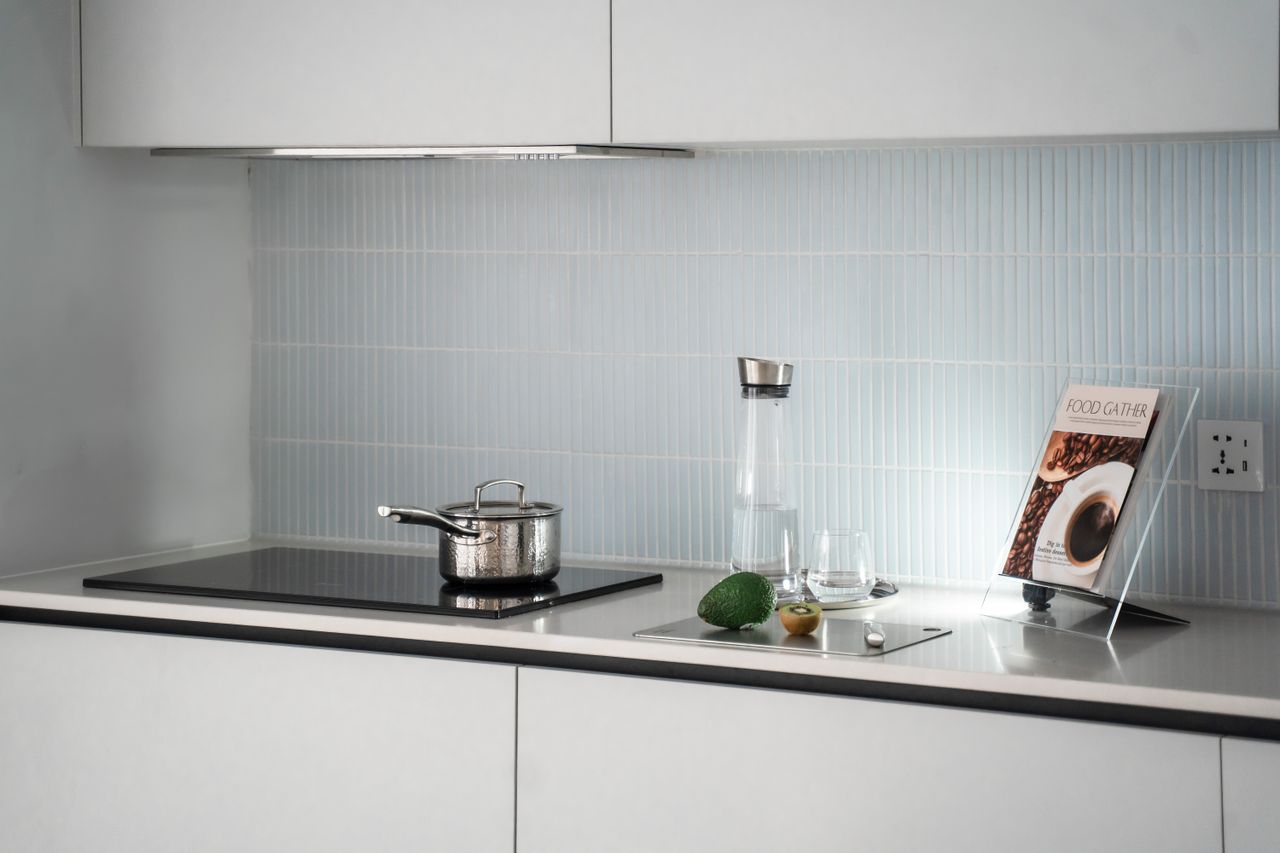
A stainless steel pot on a black glass induction cooktop
Part of my cookware reviews hub — all reviews, comparisons, and buying advice in one place.

Induction cooktops have become increasingly popular in modern kitchens due to their efficiency and precise temperature control. However, not all types of cookware are compatible with these electromagnetic stovetops. To ensure optimal performance and prevent any potential damage, it is essential to use the right cookware. In this article, I will explore the various types of cookware that are suitable for induction cooktops, helping you choose the material that actually fits how you cook. best frying pan for electric stove

Switching to induction means relearning which pans actually work, so this is based on the magnetic and construction requirements rather than just spec sheets.

I earn a commission if you buy through the Amazon links below, at no extra cost to you.

Stainless Steel Cookware

Stainless steel cookware is a popular choice among many home cooks, and for good reason. The benefits go beyond just induction compatibility — it holds up well for daily use in any kitchen. One of the key advantages of stainless steel cookware is its durability.

Stainless steel is resistant to rust, corrosion, and staining, ensuring that your cookware will last for years to come. This makes it a worthwhile investment for anyone looking to outfit their kitchen with a solid cookware set.

In addition to its durability, stainless steel cookware offers excellent heat retention and even heat distribution. This means that your food will cook evenly, with no hot spots or cool areas. Whether you’re searing a steak or simmering a delicate sauce, stainless steel cookware will provide consistent and reliable results.

Another benefit of stainless steel cookware is its non-reactive nature. Unlike some other materials, stainless steel does not react with acidic or alkaline foods, ensuring that your dishes will always taste as intended.

This also means stainless steel cookware wipes clean without any special precautions to avoid damaging the surface. When choosing stainless steel cookware for induction cooktops, look for options with a magnetic base. Induction cooktops use a magnetic field to generate heat, so the cookware needs to have a magnetic property in order for it to work properly. Many stainless steel cookware brands now offer induction-compatible options, so you won’t have to sacrifice your preferred material for the convenience of an induction cooktop.

Some recommended stainless steel cookware brands for induction cooktops include All-Clad, Cuisinart, and Calphalon. These brands have a reputation for producing reliable cookware that is both durable and efficient. They offer a range of options, from individual pieces to complete cookware sets, so you can build a set that matches how you actually cook.

Cast Iron Cookware

Cast iron cookware has long been prized for its excellent heat retention and even cooking. It withstands high temperatures and handles frying, braising, and baking equally well. The key benefit of cast iron cookware is its ability to provide consistent and even heat distribution.

Once heated, cast iron retains heat well, ensuring that your food cooks evenly without any hot spots. Another advantage of cast iron cookware is its natural non-stick surface. When properly seasoned, cast iron develops a layer of oil that prevents food from sticking, making it easy to cook and clean. Additionally, cast iron cookware is extremely durable and can last for generations with proper care.

This makes it an excellent investment for anyone looking to build a collection of cookware that will stand the test of time. When choosing cast iron cookware for induction cooktops, select options with a flat and smooth bottom. Induction cooktops rely on a magnetic field to generate heat, so the cookware needs to have a flat surface in order to make proper contact.

Many cast iron cookware brands now offer options that are specifically designed for induction cooktops, so you can enjoy the benefits of both materials. Some recommended cast iron cookware brands for induction cooktops include Lodge, Le Creuset, and Staub. These brands are known for their and durable cast iron cookware, offering a range of options from skillets to Dutch ovens. With proper care, these pieces will last for generations and become cherished heirlooms in your kitchen.

Carbon Steel Cookware

Carbon steel cookware is a popular choice for professional chefs and home cooks alike. It offers many of the same benefits as cast iron cookware, including excellent heat retention and even cooking. However, carbon steel is lighter and more responsive to heat than plain cast iron, which suits techniques that need quick temperature changes. One of the key benefits of carbon steel cookware is its ability to develop a natural non-stick surface over time.

Similar to cast iron, carbon steel can be seasoned to create a layer of oil that prevents food from sticking. This makes it easy to cook delicate foods, such as fish or eggs, without the risk of them sticking to the pan.

Carbon steel cookware is also known for its durability. It can withstand high temperatures and is suitable for both stovetop and oven use. Additionally, carbon steel is relatively lightweight compared to cast iron, making it easier to handle and maneuver in the kitchen.

When choosing carbon steel cookware for induction cooktops, look for options with a flat and smooth bottom. Induction cooktops rely on a magnetic field to generate heat, so the cookware needs to have a flat surface in order to make proper contact. Many carbon steel cookware brands now offer options that are specifically designed for induction cooktops, ensuring that you can enjoy all the benefits of carbon steel with the convenience of an induction cooktop.

Some recommended carbon steel cookware brands for induction cooktops include de Buyer, Mauviel, and Matfer Bourgeat. These brands are well-known for their carbon steel cookware, which is favored by professional chefs around the world. Whether you’re a home cook or a professional chef, carbon steel cookware rewards the extra care with excellent searing and browning for your dishes.

Enamel-Coated Cookware

Enamel-coated cookware is a popular choice for many home cooks, thanks to its attractive appearance. The enamel coating not only provides a smooth and non-reactive cooking surface, but it also adds a pop of color to your kitchen. Enamel-coated cookware is available in a wide range of vibrant colors, allowing you to choose pieces that complement your kitchen decor. One of the key benefits of enamel-coated cookware is its non-reactive nature.

The enamel coating creates a barrier between the food and the metal, ensuring that there is no leaching of metals into your dishes. This makes enamel-coated cookware a safe and reliable option for cooking a variety of foods, including acidic ingredients like tomatoes or citrus. In addition to its non-reactivity, enamel-coated cookware is also simple to maintain. The smooth, glossy surface prevents food from sticking, making it quick to clean up after cooking.

Enamel-coated cookware is also dishwasher safe, although hand washing is recommended to prolong the life of the enamel coating. When choosing enamel-coated cookware for induction cooktops, look for options with a magnetic base. Induction cooktops use a magnetic field to generate heat, so the cookware needs to have a magnetic property in order for it to work properly.

Many enamel-coated cookware brands now offer induction-compatible options, so you can enjoy the benefits of both materials. Some recommended enamel-coated cookware brands for induction cooktops include Le Creuset, Staub, and Lodge. These brands are known for their enamel-coated cookware, which is durable and available in a range of colors. Whether you’re simmering a stew or baking a casserole, enamel-coated cookware will deliver excellent results and add a touch of style to your kitchen.

Copper Cookware

Copper cookware has been prized by professional chefs for centuries, and for good reason. It offers excellent heat conductivity, allowing for precise temperature control and even cooking. Copper cookware heats up quickly and responds rapidly to changes in heat, giving you greater control over your cooking process.

One of the key benefits of copper cookware is its ability to distribute heat evenly across the entire cooking surface. This eliminates hot spots and ensures that your food cooks uniformly, without any sections being overcooked or undercooked.

This makes copper cookware ideal for delicate dishes that require precise heat control, such as sauces or custards. Another advantage of copper cookware is its stunning appearance. The warm and lustrous glow of copper adds a touch of elegance to any kitchen.

Copper cookware is often displayed and used as a statement piece, showcasing both its beauty and functionality. When choosing copper cookware for induction cooktops, select options with a magnetic base. Induction cooktops use a magnetic field to generate heat, so the cookware needs to have a magnetic property in order for it to work properly. Many copper cookware brands now offer options that are specifically designed for induction cooktops, so you can enjoy the benefits of both materials.

Some recommended copper cookware brands for induction cooktops include Mauviel, Ruffoni, and Falk Culinair. These brands are well-known for their copper cookware, which is crafted with meticulous attention to detail. Copper cookware gives you the fastest, most precise heat control of any material, plus a look that holds up for decades to your kitchen.

Anodized Aluminum Cookware

Anodized aluminum cookware is a popular choice for many home cooks, thanks to its excellent heat conductivity and durability. It undergoes a special electrochemical process that creates a hard and non-reactive surface, making it resistant to corrosion and staining. This ensures that your cookware will last for years, even with frequent use. One of the key benefits of anodized aluminum cookware is its ability to distribute heat evenly across the entire cooking surface.

This eliminates hot spots and ensures that your food cooks uniformly, without any sections being overcooked or undercooked. This makes anodized aluminum cookware ideal for a wide range of cooking techniques, from sautéing and stir-frying to simmering and braising. Another advantage of anodized aluminum cookware is its lightweight nature. Compared to other materials, such as cast iron or stainless steel, anodized aluminum is significantly lighter, making it easier to handle and maneuver in the kitchen.

This is especially beneficial for individuals with limited strength or mobility. When choosing anodized aluminum cookware for induction cooktops, look for options with a magnetic base. Induction cooktops use a magnetic field to generate heat, so the cookware needs to have a magnetic property in order for it to work properly. Many anodized aluminum cookware brands now offer induction-compatible options, so you can enjoy the benefits of both materials.

Some recommended anodized aluminum cookware brands for induction cooktops include Calphalon, Circulon, and Cuisinart. These brands offer a range of options, from individual pieces to complete cookware sets, so you can pick pieces that suit your budget and cooking style. Anodized aluminum cookware is a durable choice that holds up to daily use for years.

Clad Cookware

Clad cookware, also known as multi-ply cookware, is a popular choice for many home cooks due to its excellent heat conductivity and durability. It’s constructed by layering multiple materials together, typically stainless steel and aluminum or copper, to create a piece that offers the benefits of both materials. One of the key benefits of clad cookware is its ability to distribute heat evenly across the entire cooking surface.

The combination of materials allows for excellent heat conductivity, ensuring that your food cooks uniformly, without any hot spots or cool areas. This makes clad cookware suitable for a wide range of cooking techniques, from searing and sautéing to simmering and boiling. Another advantage of clad cookware is its durability. The multiple layers of materials make clad cookware resistant to warping, denting, and scratching, ensuring that it will last for years to come.

Clad cookware is also compatible with both stovetop and oven use. When choosing clad cookware for induction cooktops, look for options with a magnetic base. Induction cooktops use a magnetic field to generate heat, so the cookware needs to have a magnetic property in order for it to work properly. Many clad cookware brands now offer induction-compatible options, so you can enjoy the benefits of both materials.

Some recommended clad cookware brands for induction cooktops include All-Clad, Demeyere, and Viking. These brands are well-known for their clad cookware, which offers superior heat distribution and durability. Whether you’re a professional chef or a passionate home cook, clad cookware gives you dependable, even heating and provides reliable and consistent results.

Glass Cookware

Induction note: plain glass is not magnetic and will not heat at all on an induction cooktop, even though it is included here as a common cookware material. Skip it for induction and use it only on gas, electric, or in the oven.

Glass cookware offers a few genuine benefits for home cooks, though it doesn’t work on induction (more on that below). One of the key benefits of glass cookware is its ability to retain heat.

Once heated, glass retains heat well, ensuring that your food stays warm for longer periods of time. This makes glass cookware ideal for serving dishes that need to be kept warm, such as casseroles or desserts. Another advantage of glass cookware is its transparency.

Unlike other materials, such as stainless steel or cast iron, glass allows you to see the food as it cooks. This can be helpful for monitoring the progress of your dish and ensuring that it is cooked to perfection. Glass cookware is also non-reactive, meaning that it will not interact with acidic or alkaline foods. This ensures that your dishes will always taste as intended and eliminates the risk of any metallic or off-flavors.

Glass cookware is also dishwasher safe, which is convenient for busy cooks. When choosing glass cookware for induction cooktops, look for options with a flat and smooth bottom. Induction cooktops rely on a magnetic field to generate heat, so the cookware needs to have a flat surface in order to make proper contact. Many glass cookware brands now offer options that are specifically designed for induction cooktops, ensuring compatibility and optimal performance.

Some recommended glass cookware brands for induction cooktops include Pyrex, Anchor Hocking, and Arcuisine. These brands offer a range of glass cookware, from individual baking dishes to complete cookware sets, so you can round out your kitchen one piece at a time. Glass cookware works well for serving and baking, and looks good doing it.

Silicone Cookware

Induction note: silicone is not stovetop cookware and will not work on an induction cooktop at all — it has no magnetic properties and is meant for baking, molds, and utensils, not direct heat. It is included here because it is often sold alongside induction-compatible bakeware, not because it works on the cooktop itself.

Silicone cookware has gained popularity in recent years, thanks to its unique properties. One of the key benefits of silicone cookware is its flexibility. Silicone is a pliable and heat-resistant material, allowing for easy removal of food and simple cleaning.

This makes silicone cookware ideal for baking, as it can be easily peeled away from cakes or breads without any sticking. Another advantage of silicone cookware is its non-stick surface.

When properly greased, silicone cookware prevents food from sticking, making it easy to release your dishes without any residue. This eliminates the need for excessive oil or butter, resulting in healthier and lighter meals. Silicone cookware is also extremely durable and resistant to high temperatures. It can withstand temperatures ranging from -40°F to 446°F (-40°C to 230°C), making it suitable for both freezing and baking.

Additionally, silicone is non-reactive and does not leach any flavors or odors into your food. When choosing silicone cookware for induction cooktops, check the manufacturer’s specifications. Some silicone cookware isn’t suitable for use on induction cooktops, as it may not have a magnetic base. However, many silicone cookware brands now offer induction-compatible options, so you can enjoy the benefits of both materials.

Some recommended silicone cookware brands for induction cooktops include Silpat, Lékué, and Mastrad. These brands offer a range of silicone cookware, from baking mats to muffin molds, allowing you to explore your creativity in the kitchen. Silicone cookware is convenient for baking, though — like glass — it doesn’t work on induction.

Ceramic Cookware

Ceramic cookware offers many benefits for home cooks, making it a popular choice for both everyday meals and special occasions. One of the key benefits of ceramic cookware is its excellent heat retention. Once heated, ceramic retains heat well, ensuring that your food stays warm even after it’s removed from the heat source.

This makes ceramic cookware ideal for serving dishes that need to be kept warm, such as stews or casseroles. Another advantage of ceramic cookware is its non-reactive nature. Ceramic is made from natural materials and does not leach any chemicals or flavors into your food. This ensures that your dishes will always taste as intended and eliminates the risk of any metallic or off-flavors.

Ceramic cookware is also dishwasher safe, which is convenient for busy cooks. Ceramic cookware is also known for its attractive appearance. Available in a wide range of colors and designs, ceramic cookware adds a touch of style and elegance to any kitchen.

Whether you prefer classic white or vibrant colors, ceramic cookware allows you to express your personal style and complement your kitchen decor. When choosing ceramic cookware for induction cooktops, look for options with a magnetic base. Induction cooktops rely on a magnetic field to generate heat, so the cookware needs to have a magnetic property in order for it to work properly.

Many ceramic cookware brands now offer options that are specifically designed for induction cooktops, ensuring compatibility and optimal performance. Some recommended ceramic cookware brands for induction cooktops include GreenLife, Emile Henry, and Le Creuset.

These brands offer a range of ceramic cookware, from baking dishes to dutch ovens, giving you room to expand your collection as needed. Ceramic cookware looks good on the table and holds up reasonably well to daily use. The bottom line: stainless steel, cast iron, carbon steel, enamel-coated cast iron, and clad cookware all work well on induction, each with its own strengths.

Glass and silicone do not work on induction at all, regardless of what other guides may claim — both lack the magnetic properties induction cooktops require. When choosing cookware for induction cooktops, check the material’s compatibility with the magnetic field induction cooktops use. By selecting the right cookware and brands specifically designed for induction cooktops, you can enjoy the convenience and efficiency of induction cooking while utilizing the benefits of different materials. The right cookware for your induction cooktop comes down to checking the base is magnetic and matching the material to how you actually cook.

Frequently Asked Questions

Does all stainless steel cookware work on induction cooktops?

No. The steel must contain enough iron to be magnetic — pure or heavily nickel-alloyed stainless steel often isn’t. Check by holding a magnet to the base: if it sticks firmly, it will work on induction.

Why do glass and silicone cookware not work on induction?

Induction cooktops heat cookware directly through a magnetic field, which only works on ferrous (iron-containing) metals. Glass and silicone have no magnetic properties at all, so they simply won’t heat up no matter how long they sit on an induction burner.

Can I use my existing cookware on induction, or do I need to buy new pieces?

Test what you already own first with a refrigerator magnet — cast iron, carbon steel, and most stainless steel pass this test. You likely only need to replace aluminum, copper (without a steel base), glass, and ceramic pieces that don’t have an induction-compatible base.

Is enamel-coated cast iron good for induction cooktops?

Yes — the enamel coating is just a surface layer over the cast iron base, which is what actually interacts with the induction field. Enameled cast iron (like Le Creuset or Lodge’s enameled line) works as well on induction as bare cast iron does.

Filed Under: Helpful Kitchen Tips Tagged With: Induction Cooktops, Types of Cookware

  • « Go to Previous Page
  • Page 1
  • Interim pages omitted …
  • Page 11
  • Page 12
  • Page 13
  • Page 14
  • Page 15
  • Interim pages omitted …
  • Page 17
  • Go to Next Page »

Recent Articles

  • Cuisinart DLC-10SYP1 Review: Durable, But a Newer Bowl
  • COSORI Pro Gen 2 Review: Big Basket, Fragile Handle
  • Dash Tasti-Crisp Review: Cheap, but the Coating Wears Fast
  • Chefman TurboFry Touch Review: Cheap, but the Coating Wears
  • Chef’sChoice 15XV Review: Very Sharp, With Scratch Reports

Search


HOME          Contact          Affiliate Disclosure          Terms of Service          Privacy Policy


kitchenwarecompare.com is a participant in the Amazon Services LLC Associates Program, an affiliate advertising program designed to provide a means for sites to earn advertising fees by advertising and linking to Amazon.com, Endless.com, MYHABIT.com, SmallParts.com, or AmazonWireless.com. Amazon, the Amazon logo, AmazonSupply, and the AmazonSupply logo are trademarks of Amazon.com, Inc. or its affiliates. As an Amazon Associate I earn from qualifying purchases.


Copyright © 2026 kitchenwarecompare.com, ALL RIGHTS RESERVED.