• Skip to primary navigation
  • Skip to main content
  • Skip to primary sidebar

Kitchenware Compare

  • Home
  • Product Reviews
    • Air Fryers
    • Coffee
    • Cookware
    • Flat Top Grills
    • Meat Thermometers
    • Food Processors
    • Knives
    • Pizza Ovens
    • Toaster Ovens
    • Juicers
  • Food Blog
  • Helpful Kitchen Tips
  • Data Studies
  • About
  • How I Review
  • Contact
You are here: Home / Archives for Helpful Kitchen Tips

Pellet Grill Temperature Swings: How Much Is Normal?

Last Updated September 2, 2026

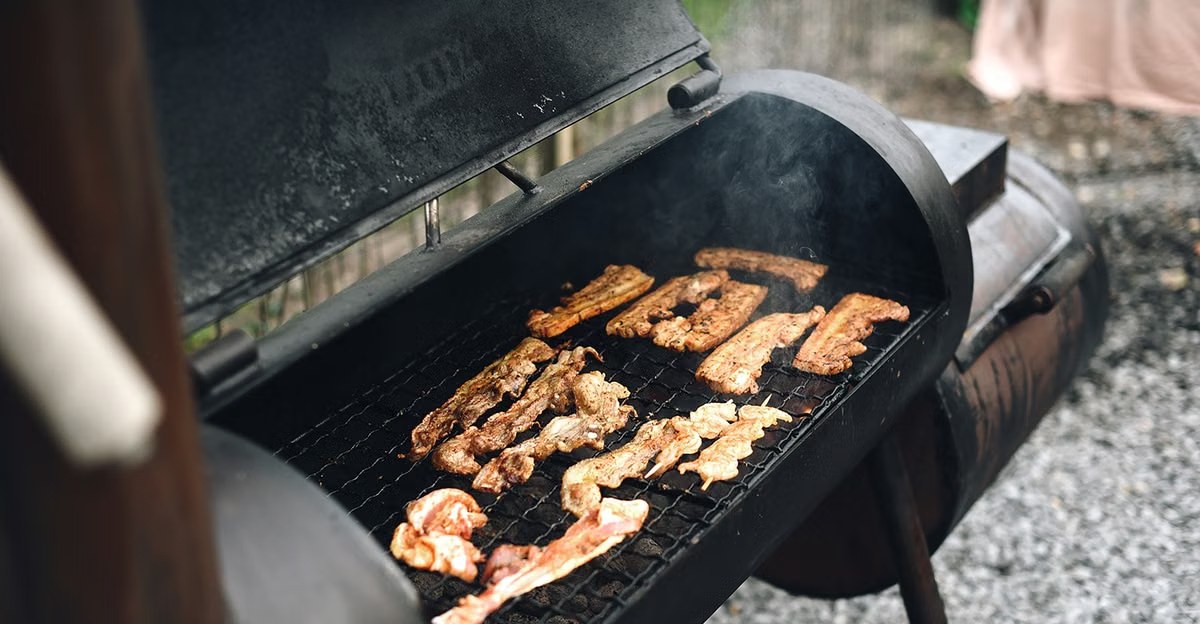
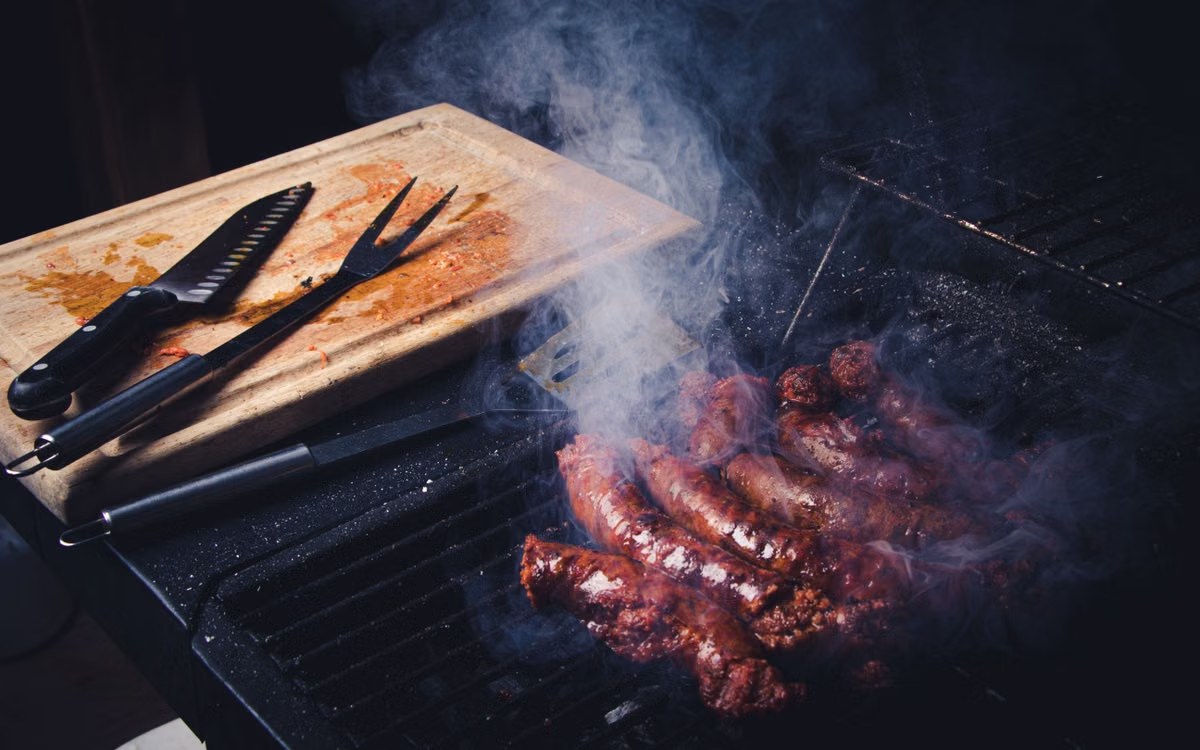
Sausages smoking on a barbecue grate with a wooden board and carving tools alongside

Two manufacturers publish the same number. Traeger says a grill in good weather should fluctuate no more than about 25°F either side of the setting, and Pit Boss says a swing of roughly 25°F is completely normal. So if what you are watching is a wobble of twenty degrees, nothing is wrong. The harder question is whose number you are actually watching, because a pellet grill has at least three thermometers and they are not measuring the same thing.

The number both makers publish

Traeger’s own support documentation is unusually direct about this. Temperature swings are normal, and by design: the controller runs an algorithm specific to each model, and on a typical good-weather day the grill should fluctuate no more than 25°F either way. Beyond that, Traeger treats it as a problem worth investigating.

Pit Boss arrives at the same figure by describing the mechanism rather than the tolerance. Its controller holds temperature by switching the auger on and off at intervals, which it says produces a swing of about 25°F and is completely normal.

Those are two companies with no reason to agree, publishing the same tolerance from opposite directions — one from what the algorithm targets, the other from what the hardware does. Twenty-five degrees is the working answer to “is my grill broken.”

Two useful riders come with it. Traeger notes that fluctuations get larger at low temperatures and larger again on its Super Smoke setting, and that this is deliberate, because the varying fire is part of what produces smoke flavour. So the long, low cook where the swings look worst is the cook where they are most expected.

Which thermometer is telling you this?

This is the part almost nobody covers, and it changes the diagnosis more than anything else on the list.

A pellet grill typically has a sensor wired to the controller, often a dial in the lid, and whatever probe you have added yourself. They disagree, and they are supposed to.

The controller is averaging, not holding a point

Traeger states that its grills cook on an average: the displayed temperature is an estimate of the middle of the grill, built from data collected at many points across the grates, and the fluctuations average out to the set temperature. Pit Boss describes its own control-board probe the same way, as taking an average across the cooking chamber.

A thermometer you place yourself does not do that. It reads one point. Traeger’s position is blunt: even if you put a probe exactly where the grill’s own sensor sits, you will get a different value, because the reading depends on the sensor’s shape, mass, orientation and the radiant heat around it.

The dial in the lid is the least reliable of the three

If the swing you are worried about is the needle in the lid, treat that as a measurement problem first. Pit Boss states that a dome thermometer differing from the control board reading by up to 100°F is normal. It sits at the top of the chamber in the hottest, most turbulent air, and it is a cheap mechanical gauge rather than a calibrated instrument.

Where this argument comes from, and who benefits

Traeger has an obvious interest in owners trusting its controller over a probe bought elsewhere, and it is worth saying so rather than presenting the company as neutral. This site has the opposite interest: it earns commission when readers buy thermometers.

The technical claim survives both. A controller estimating an average across a whole cooking surface and a probe reading one spot six inches away will genuinely disagree, and neither is lying. What follows is not that you should throw the probe away — it is that a disagreement between two instruments is not evidence of a fault, and that the probe earns its keep by telling you about the food rather than by auditing the controller.

What a real swing looks like

Something is genuinely wrong when the pattern stops looking like a wobble and starts looking like a failure to recover.

  • Swings much wider than 25°F on a mild, still day, with the lid shut.
  • The temperature climbing and not coming back down, or falling and not recovering.
  • The fire going out mid-cook.
  • Wild movement that started suddenly, on a grill that used to hold steady.

Anything that only appears in wind, in cold, at the lowest setting, or right after the lid has been open belongs in the normal column until proven otherwise.

Pellets, which both makers put first

Traeger names low-quality or old pellets as the number one cause of temperature management issues, and the test it gives is a physical one rather than a brand preference. Pull a few pellets from the end of the auger or out of the firepot. Good ones have a sheen and snap cleanly. Ones that crumble or look dull have taken on moisture and should be replaced.

The other half of the same problem is the dust at the bottom of the hopper. Sawdust will not ignite, so once it starts feeding through the auger into the firepot the fire becomes intermittent and the temperature follows it.

Pit Boss explains what damp does structurally: water makes pellets swell, disintegrate and then harden, which is how an auger ends up jammed. That is worth knowing because a jammed auger and a temperature swing have the same root cause, and the swing usually shows up first.

Storage is therefore the fix that prevents most of this. A hopper lid keeps light rain off but not much more, so pellets are better kept in a sealed container indoors, and a hopper left loaded through a wet week is asking for trouble.

Air, ash and the things that choke the fire

A pellet grill is a small forced-draught fire, and anything that restricts air destabilises it.

The chimney. Traeger asks for a thumb-size gap between the bottom of the cap and the chimney. Pit Boss goes further and says to raise the cap as high as it will go. Screwing the cap down to keep smoke in is the same instinct that ruins an electric smoker, and it has the same effect here.

Crowding. Traeger asks for an inch of clearance from the edge of the grill when placing food or large pans, because a full-width tray turns the cooking chamber into a baffle and the air stops moving the way the controller expects.

Foil. Both a foil drip liner and a damaged or missing drip tray or heat baffle appear on Traeger’s list of contributors. The baffle is what stops the fire radiating straight at the sensor; without it, or with foil changing how heat moves, the controller is reacting to the wrong thing.

Ash. Pit Boss recommends cleaning after every 40 to 60 pounds of pellets, vacuuming ash out of the firepot and the base. A firepot half full of ash cannot hold a steady fire.

The things you are doing

Three habits produce most of the remaining swings, and all three are free to stop.

Opening the lid. Every opening dumps the chamber heat, and the controller then works to bring it back — which looks exactly like an overshoot because it partly is one. Both makers list it.

Changing the set temperature often. The algorithm is chasing a moving target, and each change starts the recovery cycle again.

Starting or shutting down incorrectly. Traeger lists this explicitly. A startup cycle that is interrupted, or a shutdown that does not run its course, leaves unburnt pellets in the firepot, and the next cook begins with the wrong amount of fuel already in place.

Weather, which is not a fault

Traeger’s tolerance is stated for a typical good-weather day, which is an admission in itself. Cold raises the work the fire has to do and wind strips heat from the walls continuously, so both widen the swing without anything being broken.

Moving the grill out of a draught does more than any part will. If the machine only misbehaves on cold or windy days and holds steady on mild ones, that pattern is the diagnosis.

When it is a part

Once the pellets are dry, the firepot is clean, the chimney is open, the lid has stayed shut and the weather is mild, a short list is left: the temperature sensor itself, the combustion fan, and the auger motor. All three are replaceable on most grills, and all three are worth confirming against the manufacturer’s own troubleshooting steps for your model rather than a general guide, because the procedures are specific to the controller.

That is also the point at which a support ticket beats another afternoon of guessing. Both companies publish model-specific diagnostics and sell the parts.

The order worth working through

  1. Establish which thermometer is reporting the swing — the controller, the lid dial, or a probe you added.
  2. If it is the lid dial, stop there and compare it against the controller before doing anything else.
  3. Measure the size of the swing. Under about 25°F on a mild day is normal on both brands.
  4. Note the conditions: wind, cold, the set temperature, whether a smoke setting is on.
  5. Check the pellets for sheen and snap, and the hopper for sawdust.
  6. Vacuum the firepot and check the drip tray and baffle are present and unfoiled.
  7. Open the chimney cap and give food an inch of clearance from the edges.
  8. Run a cook without opening the lid and without changing the setting.
  9. If it still swings wildly, or will not recover, treat the sensor, fan or auger as the remaining suspects and use the maker’s model-specific guidance.

The order runs from free to expensive, not from most likely to least likely. Neither manufacturer publishes failure-rate data, and a percentage invented here would be worth nothing.

If the grill will not light at all rather than swinging once lit, that is an ignition question rather than a control one, and it is covered in a grill igniter clicking but not lighting.

Cook to the food, not to the display

The practical conclusion of everything above is that the grill’s number and your number will differ, and neither of them is the thing you actually care about, which is the internal temperature of the meat.

A leave-in probe earns its place there rather than as an auditor of the controller, and an ambient sensor alongside it is useful for spotting the difference between a wobble and a fire that has gone out. The options are in the guides to meat thermometers for smoking and BBQ thermometers, which has a section on pellet grills specifically. Whichever you use, check it in iced and boiling water first — the method is in how to calibrate a meat thermometer, and there is no sense arguing with a controller using an instrument you have not verified.

A different machine with a different problem: if the cabinet in question is an electric smoker that never reaches its setting at all, that is covered in an electric smoker not getting hot enough. The rest of the outdoor cooking guides are collected on the outdoor cooking hub.

How This Guide Was Put Together

Plainly: this is a research-based guide, not a hands-on test. I do not own a pellet grill, nothing here is a report from my own garden, and no cook was instrumented to produce these figures.

What it rests on is manufacturer documentation, read at source rather than repeated from other guides. Traeger’s support articles on temperature swings and on third-party thermometers supply the 25°F tolerance, the averaging explanation, the pellet test and the airflow requirements. Pit Boss’s FAQ independently supplies the same 25°F figure, the auger-cycling mechanism behind it, the 100°F dome thermometer tolerance, the damp-pellet failure mode and the cleaning interval.

Where a source has an interest, it is named in the text rather than hidden. Traeger’s argument against third-party thermometers serves Traeger, and this site earns commission on thermometers, so both sides of that argument come from somewhere.

Also not established: whether 25°F is a reasonable tolerance for brands other than these two. Both figures are each company’s statement about its own grills, they happen to agree, and that agreement is suggestive rather than a standard. Several makers publish nothing at all, and no independent body tests pellet grill temperature stability, so an owner of a third brand has only the manual to go on.

Frequently Asked Questions

How much temperature swing is normal on a pellet grill?

About 25°F either side of the setting. Traeger states a grill in good weather should fluctuate no more than that, and Pit Boss says a swing of roughly 25°F is completely normal because its controller cycles the auger on and off. Both figures are each company’s statement about its own grills, but they agree.

Why does my thermometer disagree with the grill controller?

Because they are measuring different things. Traeger says its grills cook on an average, estimating the temperature in the middle of the chamber from data taken across the grates, while a probe you place reads one specific point. Traeger adds that even a probe placed exactly where the built-in sensor sits will read differently.

Is a 100 degree difference on the lid thermometer normal?

On a Pit Boss, yes. The company states that a dome thermometer differing from the control board reading by up to 100°F is normal. The dial sits in the hottest, most turbulent air at the top of the chamber and is a cheap mechanical gauge, so it is the least reliable of the readings available to you.

Why are the swings worse on the smoke setting?

Because they are meant to be. Traeger states that fluctuations get larger at low temperatures and larger again on Super Smoke, and that the varying fire is a key part of producing smoke flavour. The long low cook where the swings look most alarming is the one where they are most expected.

Can bad pellets really cause temperature swings?

Both makers put fuel first. Traeger calls low-quality or old pellets the number one cause of temperature management issues, and says good pellets have a sheen and snap cleanly while damp ones crumble and look dull. Sawdust in the hopper will not ignite at all. Pit Boss adds that water makes pellets swell and then harden, which jams augers.

When should I stop troubleshooting and contact the manufacturer?

When the grill swings far beyond 25°F on a mild, still day with dry pellets, a clean firepot, an open chimney and the lid shut — or when it climbs or falls and does not recover. At that point the sensor, the combustion fan or the auger motor are the suspects, and the diagnostics are specific to your controller.
Filed Under: Helpful Kitchen Tips

Cast Iron vs Ceramic Cookware: Which Is Healthier?

Last Updated September 2, 2026

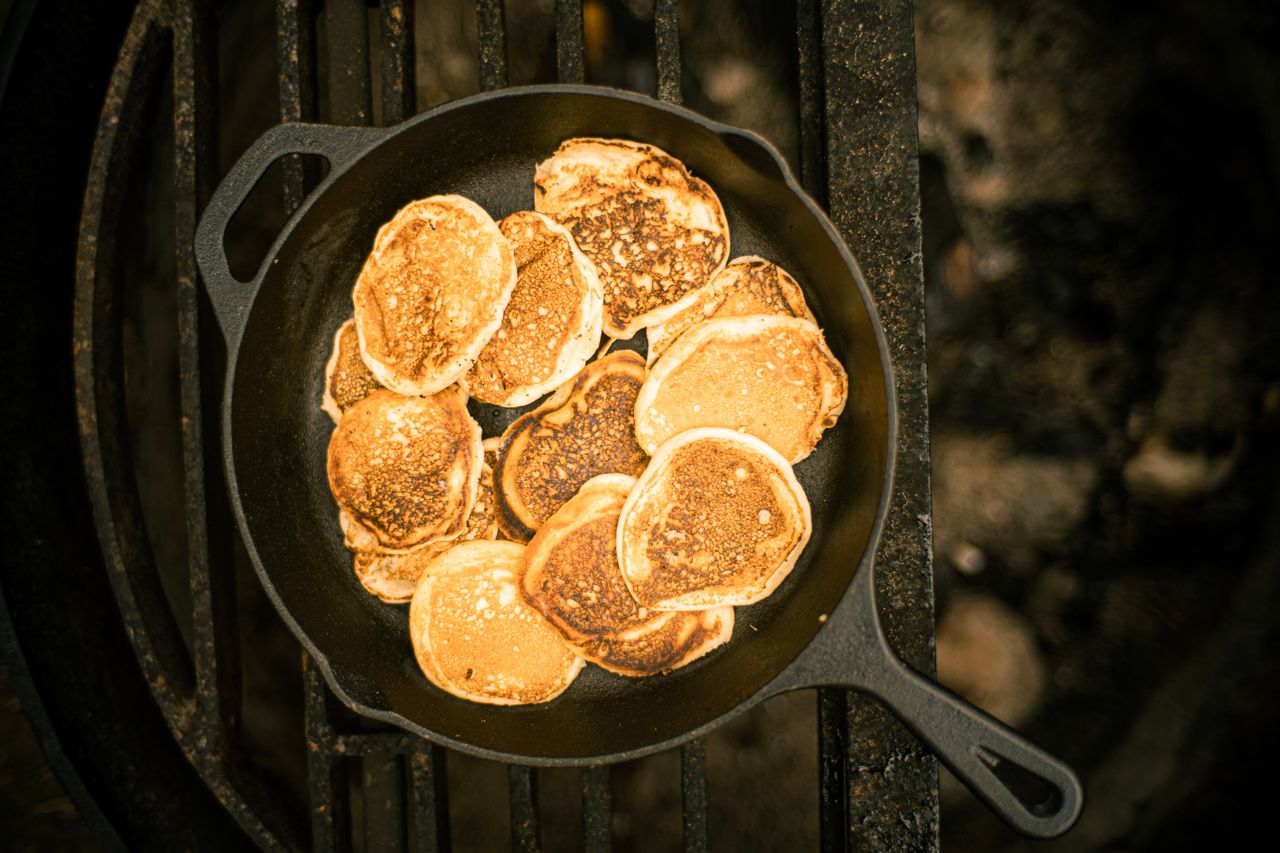
Pancakes cooking in a cast iron skillet over a fire

Neither material is healthier in itself. The health question about cast iron is whether the iron it puts into food helps you or harms you, and that depends entirely on who you are. The health question about ceramic is not really about ceramic at all — it is about the coating people are trying to avoid, and about what happens to any coating as it wears.

The short answer

For most people the difference is small and cast iron has a slight edge, because iron deficiency is far more common than iron overload. If you have haemochromatosis, or a family history of it, cast iron is the one to be careful with and worth raising with a doctor. If your reason for asking is that you want to avoid non-stick chemistry, a ceramic coating does avoid it — but so does bare cast iron, and cast iron does not wear out.

Two different questions wearing one label

“Healthier” is doing a lot of work in this comparison, and the two materials raise entirely separate concerns.

With cast iron the concern is addition: bare iron transfers some iron into what you cook. With ceramic the concern is subtraction: people choose it to get away from conventional non-stick coatings, and the question is what the coating is and how long it stays intact.

Those do not trade off against each other, which is why the symmetrical pros-and-cons treatment this question usually gets does not produce an answer. Taken separately, both have answers.

Cast iron: the iron question

Why extra iron is usually a good thing

Iron deficiency is not a rare condition. Harvard’s Nutrition Source describes iron-deficiency anaemia as affecting about 4 to 5 million Americans a year, and as the most common nutritional deficiency worldwide, with children, people who are pregnant or menstruating, and people on kidney dialysis at highest risk.

Against that background, a pan that adds a little iron is a mild positive for a large share of the population. The recommended daily allowance for adults aged 19 to 50 is 8 mg for men and 18 mg for women, rising to 27 mg in pregnancy, and the tolerable upper limit is 40 mg.

One detail worth knowing if the iron is the reason you are cooking in it: vitamin C improves the absorption of non-heme iron, which is the form cast iron contributes. A tomato sauce, which is both acidic and a source of vitamin C, is close to the best case on both counts.

Who should be careful

There is a group for whom the calculation genuinely reverses. Haemochromatosis is an inherited condition in which iron builds up in the body over years, and if untreated can damage the liver, joints, pancreas and heart. The NHS notes that it most often affects people of white northern European background and is particularly common where many people have Celtic ancestry, such as Ireland, Scotland and Wales, with symptoms typically starting between 30 and 60.

Harvard’s guidance for people with the condition is a low-iron diet and avoiding iron and vitamin C supplements. If that applies to you, or it runs in your family, the cookware question is a small part of a larger conversation with a doctor rather than something to settle from an article.

For everyone else, ordinary cooking in a seasoned pan is not a plausible route to iron overload. Harvard attributes excessive iron mainly to high-dose supplements taken unnecessarily, or to a genetic condition.

What cannot be pinned down

Here is the part most comparisons skip: nobody can tell you how much iron your pan actually adds.

The amount varies with what is being cooked, how long, how acidic it is, how new the pan is and how well seasoned. A well-seasoned pan transfers less than a bare new one, because seasoning is a barrier. Simmering tomato sauce for an hour is at one end of the range and searing a steak for four minutes is at the other. Figures do circulate, but they come from single small studies on particular foods, and a number from one of those is not a number you can plan a diet around.

So the honest framing is directional rather than quantitative: cast iron adds some iron, more with acidic food and long cooking, less as the seasoning matures. If you need iron for medical reasons, a pan is not the treatment. If you must avoid it, a pan is not the main risk either.

Ceramic: the coating question

What people are actually worried about

Almost nobody asks whether ceramic is healthy in isolation. They ask because they have read something about non-stick pans and want an alternative, so it is worth being precise about what that concern is.

The American Cancer Society explains that per- and polyfluoroalkyl substances, PFAS, have been used to make non-stick coatings on cookware. The concern with them is persistence: they do not break down easily and can stay in the environment and in the body for a long time. The society also notes that PFOA and PFOS, the two most studied, are no longer manufactured in the United States.

That is the actual subject of the worry. It is about a class of chemistry used in conventional non-stick, not about the geometry of a frying pan.

What ceramic cookware is

“Ceramic” on a pan almost never means solid ceramic. It means a metal pan — usually aluminium — sprayed with a silica-based sol-gel coating that is cured to a hard, slippery finish. It is not the same chemistry as conventional non-stick, and being free of it is the entire commercial proposition.

Enamelled cast iron is a third thing again, and it is often lumped in here: cast iron with a glass enamel fused to it. It behaves like ceramic on the surface and like cast iron in the hand, and because the enamel seals the metal, it does not add iron to food.

The real issue is wear, not the material

The honest health question about a ceramic pan is not what it is made of on day one. It is what happens by year three.

Sol-gel coatings degrade. They lose their release properties faster than conventional non-stick, and once the surface is scratched through or crazed, you are cooking on whatever is underneath, usually aluminium. Overheating accelerates it, metal utensils accelerate it, and the dishwasher accelerates it.

Which means a ceramic pan is a consumable and cast iron is not, and that difference matters more in practice than any comparison of the two materials on day one. A ceramic pan replaced every couple of years is a reasonable way to cook. A ceramic pan kept for a decade past the point where the coating has gone is not, and it is the commonest way this goes wrong.

Side by side

  Bare cast iron Ceramic-coated
Adds iron to food Yes, amount varies and is not quantifiable in advance No
Conventional non-stick chemistry None None — that is the selling point
Surface that can wear out Seasoning, which is repairable at home Coating, which is not repairable
Realistic lifespan Decades, effectively indefinite A few years before release declines
Acidic food Increases iron transfer; can strip seasoning on long cooks No interaction while the coating is intact
Best suited to Searing, roasting, bread, anything that wants heat retention Eggs, fish, low-fat cooking, anything delicate
Watch out for Haemochromatosis, or a family history of it Keeping it in use long after the coating has gone

What actually changes how healthy your cooking is

Both materials sit some way down the list of things that matter, and it is worth saying so rather than implying the pan is the decision.

How much fat you cook with. A pan that releases food well lets you use less oil, and over years that is a larger effect than anything either material does chemically. This is the one genuine health argument for a good non-stick surface, ceramic included, and it is rarely the one that gets made.

How hot you cook. Very high heat produces more of the compounds people worry about in charred food, and it is also what destroys coatings. Cast iron encourages high heat because it does it so well; that is a reason to be deliberate with it rather than a reason to avoid it.

Whether the pan is intact. A flaking coating is a worse pan than either material in good condition. If the surface of a ceramic pan is scratched through or food has started sticking to bare patches, replace it. The cast iron equivalent is seasoning that has begun flaking off, which is fixable rather than terminal — the method is in the guide to cast iron seasoning flaking off.

So which should you buy

Buy cast iron if you want one pan that will outlive you, you cook meat, cornbread and roasted vegetables, and nobody in the household has an iron-overload condition. The health case is mildly positive for most people and the durability case is decisive.

Buy ceramic if eggs, fish and low-fat cooking are the daily reality, or if the weight of cast iron is a genuine problem. Buy it expecting to replace it, and replace it when it stops releasing rather than when it looks bad.

Buy both, which is what most people who cook a lot end up doing, because the jobs barely overlap. A cast iron skillet and one small ceramic or non-stick pan for eggs covers nearly everything.

If cast iron is where you are heading, the picks are in the guides to cast iron skillets and cast iron Dutch ovens. If the comparison you actually want is ceramic against conventional non-stick, that is a different question and it is covered in ceramic vs non-stick cookware.

How This Guide Was Put Together

Plainly: this is a research-based guide, not a hands-on test, and it is not medical advice. I do not have a laboratory, no pan here was assayed for iron transfer, and anyone weighing this against a diagnosed condition should be talking to a doctor rather than reading a cookware site.

What it rests on is published health guidance rather than cookware marketing. Harvard’s Nutrition Source supplies the prevalence of iron deficiency, the recommended intakes and upper limit, and the point about vitamin C and absorption. The NHS supplies what haemochromatosis is, who it affects and what untreated iron overload damages. The American Cancer Society supplies what the PFAS concern in non-stick coatings actually is, and the fact that PFOA and PFOS are no longer manufactured in the United States.

Also not established: how much iron a cast iron pan transfers in normal use. That is the number the whole “cast iron is healthier” claim rests on, and it is not available in a form worth quoting. What exists is a handful of small studies on particular foods in particular pans, and the variables — acidity, cooking time, pan age, seasoning thickness — move the result enough that a single figure would mislead. This guide gives the direction and declines to give a number.

Frequently Asked Questions

Is cast iron or ceramic cookware healthier?

For most people cast iron has a slight edge, because it adds iron and iron deficiency is far more common than iron overload. Harvard describes iron-deficiency anaemia as the most common nutritional deficiency worldwide. The exception is anyone with haemochromatosis, for whom the calculation reverses and the question belongs with a doctor.

Does cast iron leach too much iron into food?

Not for people without an iron-overload condition. Harvard attributes excessive iron mainly to unnecessary high-dose supplements or to a genetic condition rather than to diet. Transfer from a pan rises with acidity and cooking time and falls as the seasoning matures, and no reliable figure exists for normal use.

Who should avoid cooking in cast iron?

People with haemochromatosis, and anyone with a family history of it, should raise it with a doctor. The NHS describes it as an inherited condition where iron builds up over years and can damage the liver, joints, pancreas and heart if untreated, most common in people of northern European and particularly Celtic background.

Is ceramic cookware free of the chemicals in non-stick pans?

Ceramic coatings are silica-based sol-gel rather than the fluorinated chemistry used in conventional non-stick, and being free of it is their main selling point. The American Cancer Society notes that PFAS have been used in non-stick cookware coatings and that PFOA and PFOS are no longer manufactured in the United States.

How long does ceramic cookware last?

A few years of regular use before the release properties decline noticeably, which is considerably less than conventional non-stick and far less than cast iron. Overheating, metal utensils and the dishwasher all shorten it. Treat it as a consumable and replace it when food starts sticking rather than when it looks worn.

Does enamelled cast iron add iron to food?

No. The enamel is a glass layer fused to the iron, so food never touches the metal. That makes enamelled cast iron a reasonable middle option for anyone who wants the heat retention and durability without the iron transfer, and it needs no seasoning.

Filed Under: Helpful Kitchen Tips Tagged With: cast iron, Ceramic, Cooking, cookware, Health

Electric Smoker Not Producing Smoke? You May Be Looking for the Wrong Thing

Last Updated September 1, 2026

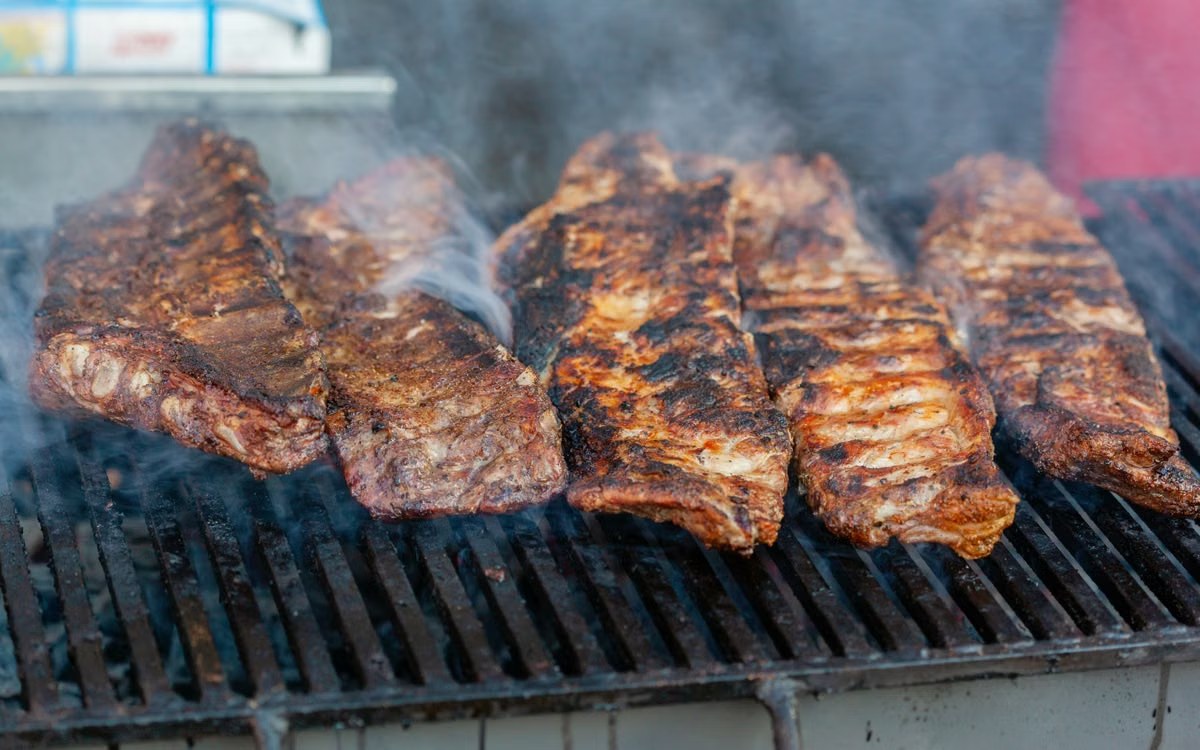
Racks of ribs on a barbecue grate with thin wisps of smoke drifting across them

Most electric smokers that are “not producing smoke” are producing exactly the right kind, and their owners cannot see it. The smoke that makes good barbecue is thin and faintly blue and almost invisible against a bright sky. The thick white cloud people are looking for is the sort that makes food taste bitter. So the first question is not what has broken, but what you are expecting to see.

What the smoke is supposed to look like

Traeger, describing the moisture content of its own pellets, puts the goal plainly: the aim is thin, blue smoke rather than bitter white smoke. That is written about pellets in a pellet grill rather than chips in an electric cabinet, but the point is about combustion rather than about the machine. Wood burning cleanly gives off a wisp; wood smouldering badly, or steaming, gives off a billow.

Weber makes the same argument from the other end, advising that you start with a small amount of wood and add more only if you want a stronger flavour, because too much wood smoke over long periods can make food taste bitter. Two makers, from opposite directions, arriving at the same place: more visible smoke is not the target.

The practical test is the food, not the chimney. If the meat comes out with a smoke ring, a darkened bark and a clear smoky flavour, the smoker worked, whatever you saw coming out of the vent. If it comes out tasting of nothing, there is a real problem, and the rest of this guide is about finding it.

Why it smokes for twenty minutes and then stops

This is the single most common version of the complaint, and on most cabinets it is not a fault at all.

An electric smoker holds temperature by switching its element on and off. The chip tray sits on or immediately beside that element, so the chips only get hot enough to smoulder while the element is actually drawing power. Once the cabinet has reached the set temperature, the element spends most of each cycle off, and the chips sit there doing very little until it comes back on.

That produces exactly the pattern owners describe. Heavy smoke during the preheat, when the element runs continuously to bring the cabinet up. Then, as soon as it settles at 225°F, the smoke drops to almost nothing and comes in short bursts.

Two things follow from this. The first is that a lower set temperature means less smoke, not more, because the element runs less. The second is that chips need topping up on a schedule rather than being judged by eye — if you wait until you can see that the smoke has stopped, you have been running without smoke for a while already.

The chip tray, where most of the real problems live

How much wood, and how it sits

An overfilled tray smoulders worse than a half-full one, because the chips at the bottom are smothered and the ones on top never reach the metal. A tray packed solid is one of the commonest reasons a smoker produces a puff and then nothing.

The tray also has to make proper contact with whatever is heating it. On cabinets where the tray slides in on rails, it is easy to leave it a centimetre short of home, which looks fine through the door and puts the chips out of contact with the element.

Chips, chunks or pellets

Chips are what almost every electric cabinet is designed around, and they are the right default. They are small enough to reach smouldering temperature from the modest heat an electric element gives off.

Chunks are a poor fit for the same reason. They are sized for a charcoal fire, they need far more heat to get going, and in an electric smoker they frequently just sit there and char at one corner. Pellets work in some trays and not others, and they burn through much faster than chips, so they need topping up more often.

Soaking, and why the advice conflicts

Guidance genuinely disagrees here, and it is worth knowing that rather than being told a single confident answer.

Weber recommends soaking — chunks for at least an hour and chips for about thirty minutes — and adds that you should shake the excess water off before the wood goes anywhere near the fire. Traeger, arguing for pellets over chips, characterises soaking as a chore that chips require in order to burn slowly, and is explicit that pellets should be kept dry.

The mechanism is what reconciles them. Water has to boil off before wood can smoulder, so a soaked chip spends its first minutes producing steam rather than smoke. In a charcoal grill, where the wood sits over a fire hot enough to drive that off quickly, the delay buys a longer burn. In an electric cabinet, where the heat is modest and intermittent, that same delay can eat most of the useful window — which is why the shake-off-the-excess instruction matters more here than it does on a grill.

If your smoke is weak, dry chips are the easier experiment to run first, and they cost nothing to try.

Residue, and a tray that has given up

Chip trays carbonise. A layer of old ash and hardened resin insulates the fresh chips from the heat underneath them, and the tray stops working long before it looks broken. Emptying it between cooks is unglamorous and it is the fix that gets skipped.

Trays also warp. Once the base no longer sits flat against its heat source, contact becomes patchy and so does the smoke. On most cabinets the tray is a cheap replaceable part, and replacing a warped one is a better use of an afternoon than diagnosing anything else.

Too cold to smoulder

Wood needs a certain amount of heat before it will produce smoke at all, and a cabinet set low enough for cold-smoking cheese is not going to make chips smoulder the way a cabinet set for pork shoulder does.

This is where a smoke complaint and a heat complaint turn out to be the same complaint. If the cabinet is not reaching the temperature it claims — and on these machines the number in the door is often not the number at the grate — then the element is running less than you think and the chips are getting less heat than you think. That question is worked through separately in the guide to an electric smoker not getting hot enough, and it is worth settling before blaming the wood.

The quick version: put an independent probe on the grate rather than trusting the built-in gauge. If the real temperature is well under the setting, fix that first and the smoke will usually come back with it.

The vent, and the instinct to close it

Closing the vent to keep the smoke in is the most understandable mistake in the whole category, and it makes things worse in two directions.

Smouldering wood needs air. Choke the airflow and the chips produce less smoke, not more — and what they do produce sits in the cabinet, cools, and settles on the food as a stale, sooty deposit rather than passing over it. That is the flavour people describe as acrid or ashy, and it is a symptom of a closed vent far more often than of the wrong wood.

A vent open at least halfway is the usual starting point, and fully open is rarely wrong on a long cook. Weber’s warning that too much smoke over a long period turns food bitter is the same idea seen from the other side: the goal is smoke moving through the cabinet, not smoke trapped in it.

When it is genuinely a fault

Once the tray is loaded properly, the chips are dry and small, the cabinet is holding its real temperature and the vent is open, a short list remains.

  • The element. If the cabinet is also struggling to heat, the element is the common cause of both symptoms, and the heat problem is the easier one to test for.
  • The loading tube or chute. On cabinets with a side-loading tube, chips jam partway down and never reach the tray at all. It looks like an empty tray and it is a blocked chute.
  • A separate smoke generator. Some designs burn wood in a unit of their own rather than on the main element, with their own feed and their own igniter. On those, a smoke failure and a heat failure are unrelated, and the generator is what needs looking at.

None of these is dangerous in the way an electrical fault is. If there is scorching at the plug, a hot cord, or a smell of burning rather than of wood smoke, stop — that is covered in an electric smoker that keeps tripping the breaker, and it is not a smoke problem.

If everything works and you still want more

Five of them are compared, with the reasons to buy one format over another, in the guide to the best pellet tube smoker.

A pellet tube or a maze smoker is the honest answer here. It is a perforated metal tube or tray filled with pellets or dust, lit at one end, that smoulders on its own for several hours regardless of what the element is doing. It sidesteps the whole cycling problem, because it is not connected to the thermostat.

Two cautions. Weber’s advice to start with a small amount of wood applies with force to a device that runs continuously, and a tube plus a full chip tray on a twelve-hour cook is how food ends up bitter. And a tube needs air like anything else, which is another reason not to close the vent.

The order worth working through

  1. Decide what you are actually judging. Taste the food from the last cook rather than watching the vent.
  2. Check the chip tray is seated properly and only loosely filled.
  3. Empty out old ash and resin, and look at whether the tray has warped away from its heat source.
  4. Switch to dry chips rather than soaked ones, and to chips rather than chunks.
  5. Open the vent at least halfway.
  6. Put a probe on the grate and confirm the cabinet is at the temperature it claims.
  7. Top chips up on a timer rather than when the smoke visibly stops.
  8. If it still produces nothing, look at the loading chute, then the element or smoke generator.

That order runs from free to expensive, not from most likely to least likely. No maker publishes figures on which of these causes turns up most often, and a percentage invented here would be worth nothing.

Watching the cook rather than the chimney

Every judgement above gets easier when the cabinet temperature is a reading rather than a guess, because the element cycle drives the smoke and the temperature drives the element cycle. A leave-in probe with an ambient sensor shows both at once — the picks are in the guide to meat thermometers for smoking, and the ambient-probe models are compared in BBQ thermometers.

The rest of the outdoor cooking guides on this site are collected on the outdoor cooking hub.

How This Guide Was Put Together

Plainly: this is a research-based guide, not a hands-on test. I do not own an electric smoker, nothing here is a report from my own garden, and no cook was run to produce these observations.

What it rests on is published manufacturer guidance, used carefully. Traeger supplies the thin-blue-smoke standard, written about pellets in a pellet grill rather than chips in an electric cabinet and used here because it describes what good combustion looks like, not what any particular machine does. Weber supplies the soaking times and the warning about over-smoking, written for charcoal and gas grills for the same reason. Where the two disagree — and on soaking they do — the disagreement is set out rather than resolved by picking a side.

Also not established: how much smoke a working electric cabinet should produce, in any measurable sense. Nobody publishes a figure, the honest answer is that it varies with wood, temperature and airflow, and any number offered here would be invented. That is precisely why this guide points at the taste of the food rather than at the appearance of the vent.

Frequently Asked Questions

Why does my electric smoker stop smoking after twenty minutes?

Because the element has reached the set temperature and switched off. The chip tray sits on or beside that element, so chips only smoulder while it is drawing power. Heavy smoke during preheat followed by very little afterwards is normal behaviour, not a fault. Top chips up on a schedule rather than waiting for the smoke to visibly stop.

Should thick white smoke be coming out of my smoker?

No. Traeger describes the target as thin, blue smoke rather than bitter white smoke, and Weber warns that too much smoke over long periods makes food taste bitter. A faint wisp you can barely see is what you want. Judge the result by the taste and the smoke ring on the food, not by the plume.

Should I soak wood chips for an electric smoker?

Guidance conflicts. Weber advises soaking chips for around thirty minutes and shaking off the excess; Traeger treats soaking as a drawback of chips. The mechanism is that water must boil off before wood smoulders, so soaked chips give steam first and smoke later. In an electric cabinet, where heat is modest and intermittent, dry chips are the easier experiment.

Can I use wood chunks instead of chips?

Chips are the better fit. Chunks are sized for a charcoal fire and need far more heat to start smouldering than an electric element provides, so they often char at one corner and do little else. Pellets work in some trays but burn through faster than chips and need topping up more often.

Should the vent be open or closed?

Open, at least halfway, and fully open is rarely wrong on a long cook. Smouldering wood needs air, so closing the vent reduces smoke rather than trapping it, and the stale smoke that does collect settles on the food as a sooty, acrid deposit. Trapping smoke is what makes food taste ashy.

How do I get more smoke without buying a new smoker?

A pellet tube or maze smoker is the usual answer. It smoulders independently of the element, so it is not affected by the thermostat cycling on and off. Use it instead of a heavily loaded chip tray rather than alongside one, since running both for many hours is a reliable way to make food bitter.

Filed Under: Helpful Kitchen Tips

Electric Smoker Not Getting Hot Enough? Check the Gauge First

Last Updated September 1, 2026

Barrel smoker with the lid open, strips of meat on the grate and smoke rising from the chamber

Before assuming the machine is broken, check whether it is actually cold. On an electric smoker the temperature you are reading almost always comes from a cheap dial in the door, and manufacturers openly admit those dials can be a long way out. A real heating fault is possible, but it is not the first thing to rule out, and it is not the cheapest.

First, find out whether it is actually cold

Every electric smoker shows a number. That number comes from either a bimetallic dial mounted in the door or lid, or a sensor wired to the control panel, and neither is measuring what you care about — the air temperature at the grate, where the food is.

Manufacturers are unusually candid about this. Pit Boss, writing about its pellet grills rather than electric cabinets, states that a lid-mounted dome thermometer differing from the control board reading by up to 100°F is normal. The reason carries straight across to a smoker door: a dial screwed into the top of the chamber sits in the hottest, most turbulent air, far from the grate, and it is a cheap mechanical gauge rather than a calibrated instrument.

Masterbuilt makes the same point from the other direction, noting that its own built-in probe is designed for the appliance’s environment and that an external probe may have different calibration or sensor sensitivity, which leads to discrepancies in the readings. Two makers, two products, the same admission: the number on the machine is an indication, not a measurement.

How to settle it in one cook

Put an independent probe on the grate, next to where the food sits, and run the smoker empty at a set temperature for forty-five minutes. Then compare the two readings.

  • If the grate probe reads close to the setting, nothing is wrong with the smoker. The door dial is what needs replacing, or ignoring.
  • If the grate probe also reads far below the setting, the fault is real and the rest of this guide applies.
  • If the grate probe swings wildly, the element is cycling badly or air is escaping somewhere — look at the seal before the element.

An instant-read is enough to settle the question once, but a leave-in probe with an ambient sensor is what stops it recurring, because it shows grate temperature continuously rather than at the moment you open the door. The picks are in the guide to meat thermometers for smoking, and the ambient-probe models are covered in BBQ thermometers. Whichever you use, check it against boiling and iced water first — the method is in how to calibrate a meat thermometer, and there is no sense diagnosing one instrument with another you have not verified.

What an electric smoker is actually built to do

A good proportion of “not getting hot enough” is a machine performing exactly as designed against an expectation it was never going to meet.

Bradley Smoker is explicit about this in its own troubleshooting answer for a smoker that will not reach full temperature: its heating elements are 500 watts and are not designed for high temperatures, because the cabinets are built to hold low and slow. Other makers rate their elements higher, and the figure on the plate on the back of your own machine is the one that matters — but the principle holds across the category. An insulated box with a modest element is designed to sit at 225°F for twelve hours, not to chase 350°F.

So if the recipe wants crisp chicken skin at 325°F and the cabinet stalls in the 270s, the smoker is not faulty. It is being asked for something outside its range. Finish that cook in the oven or on a grill rather than looking for a part to replace.

The faults that genuinely stop it heating

The power supply, and the extension lead in particular

What counts as a suitable lead is a specification rather than a preference, and it is set out with five cords that meet it in the best extension cord for an electric smoker.

An element starved of voltage produces less heat, and the commonest cause is a thin or long extension cord. Bradley specifies a heavy-duty lead under 20 feet; the same page notes that if a cord is needed at all it should be rated for the job. A domestic extension coiled on the grass, powering a machine drawing continuously for hours, is the first thing to remove from the equation.

Test it the direct way: plug the smoker straight into the socket with no extension at all and run it. If the temperature climbs where it did not before, the lead was the problem. If the smoker is also tripping the electrics rather than merely underperforming, that is a different fault with a different cause — see an electric smoker that keeps tripping the breaker.

The heating element

Elements fail in two ways. They break open, in which case nothing heats at all and the diagnosis is obvious. Or they degrade, which is subtler: the smoker warms, but slowly, and settles well below its setting even on a mild day with the door shut.

The pattern that points here is consistency. A degraded element gives the same disappointing ceiling every time, in every weather, with or without food in the cabinet. Causes that come and go — wind, cold, a heavy load — do not behave like that. On most models the element is a replaceable part sold by the manufacturer, and on an out-of-warranty cabinet that is a reasonable repair.

A door seal that has given up

Heat that leaves as fast as it arrives never reaches the setting. Seals perish, doors sag on their hinges, and latches loosen until the door sits proud on one side.

The check takes a minute. Run the smoker up to temperature and move a hand slowly around the closed door, an inch or two out; escaping heat is easy to feel at a corner or along the top edge. Most makers sell replacement gasket by the metre, and a sagging door can often be corrected at the hinge before anything needs buying.

The things that look like faults and are not

Three causes account for most temperature complaints on a smoker that is working perfectly well. All three come and go, which is how you tell them from a failing element.

Cold, and wind in particular

Bradley’s guidance is to keep the smoker out of the wind and out of below-freezing conditions, and it says plainly that the colder it is, the longer the smoker takes to heat. Pit Boss says the same thing about its own grills: outside temperature and wind are common reasons a machine will not reach its top-end temperature.

Wind matters more than cold on its own, because it strips heat from the cabinet walls continuously rather than just raising the amount of work the element has to do. Moving the smoker against a wall, out of a draught, often recovers more temperature than any part will.

Opening the door

Bradley’s own advice is to open the door as little as possible, because opening it releases the stored heat and the cabinet takes time to build it back. On a modest element that recovery is slow — slow enough that a cook checked every twenty minutes can spend most of its life below the set temperature and never look like it is heating properly.

This is precisely what a leave-in probe solves. If the grate temperature is on a screen, there is no reason to open the door to find it out.

A cabinet full of fridge-cold meat

Bradley recommends putting meat in at room temperature rather than straight from the refrigerator, for the same reason: a cold load pulls the chamber temperature down, and a modest element takes a long time to win it back. A full rack of cold pork shoulder can hold a cabinet below its setting for an hour with nothing wrong at all.

Preheating properly is the other half of this. Bradley suggests preheating before the food goes in, and notes that some owners preheat slightly higher than the target and let it settle. Neither is a trick; both give the element a head start on the work the meat is about to make for it.

The order worth working through

  1. Put an independent probe on the grate and compare it against the built-in reading. Do this before anything else.
  2. Read the wattage on the rating plate and ask whether the temperature you want is inside the machine’s range at all.
  3. Remove the extension lead and run the smoker plugged directly into the socket.
  4. Note the conditions: wind, cold, how often the door was opened, whether the load went in cold.
  5. Run it empty, in still air, with the door shut, and see what it reaches.
  6. Feel around the closed door for escaping heat.
  7. If it still stalls low — empty, sheltered, sealed and directly plugged in — treat the element as the remaining suspect.

That order is arranged by how cheap and quick each check is to run, not by how often each cause turns out to be responsible. No manufacturer publishes failure-rate data for this category, and any percentage given here would be made up.

Repair, or replace

Elements, seals and door catches are replaceable parts on most cabinets, and a manufacturer that still sells them is a good sign for a machine worth keeping. A controller failure is the awkward case: on some models it is a modular part, on others it is bonded into the cabinet, and the cost approaches a new smoker.

Two things push firmly towards replacement rather than repair. One is a cabinet whose insulation has degraded, because that is not a serviceable part on a domestic unit. The other is any sign of an electrical fault rather than a heating one — scorching at the plug, a hot cord, a smell of burning. That is not a temperature problem and it should not be treated as one.

Temperature and smoke are linked on these cabinets, because the chip tray is heated by the element and the element only runs when the thermostat calls for it. If the smoke is disappointing as well as the heat, the companion guide is an electric smoker not producing smoke.

A pellet grill behaves differently again, and swings around the setting rather than failing to reach it — roughly 25°F either way is normal there, for reasons covered in pellet grill temperature swings.

Keeping the temperature honest

Almost every diagnosis above depends on knowing the real grate temperature, which is the one thing the smoker itself cannot reliably tell you. A leave-in probe with an ambient sensor turns the question from guesswork into a reading — the options are in meat thermometers for smoking and BBQ thermometers.

The rest of the outdoor cooking guides on this site are collected on the outdoor cooking hub.

How This Guide Was Put Together

Plainly: this is a research-based guide, not a hands-on test. I do not own an electric smoker, nothing here is a report from my own garden, and no cabinet was instrumented to produce these figures.

What it rests on is published manufacturer documentation. Bradley Smoker’s troubleshooting page answers this exact question and supplies the element rating, the door-opening effect, the preheating advice and the cold-meat point. Pit Boss supplies the dome-thermometer tolerance and the wind and ambient-temperature guidance. That second set is written for its pellet grills rather than for electric cabinets, and it is used here because the measurement problem is the same one, not because the machines are.

Also not established: how far a typical door dial actually drifts on a domestic electric smoker. The 100°F figure quoted above is Pit Boss’s stated tolerance for its own dome thermometers, not a measurement of anyone else’s, and no maker of electric cabinets publishes an equivalent number. It is quoted to show that a large discrepancy is normal and expected, not to put a figure on your machine.

Frequently Asked Questions

How hot should an electric smoker actually get?

Most sit comfortably between 100°F and roughly 275°F, and the rating plate on the back of the unit is the only authority for yours. Bradley states its own 500-watt elements are not designed for high temperatures because the cabinets are built for low and slow. A recipe asking for 325°F is outside what most of these machines were made to do.

Why does my smoker say one temperature and my thermometer say another?

Because they are measuring different air in different ways. The built-in gauge sits in the door or lid, in the hottest part of the chamber, and is usually a cheap mechanical dial. Pit Boss states that a dome thermometer differing from a control-board probe by up to 100°F is normal. Trust the probe on the grate.

Can cold weather stop an electric smoker reaching temperature?

Yes, and wind matters more than cold on its own. Bradley says ambient temperature directly affects how long a smoker takes to heat, and advises keeping it out of the wind and away from freezing conditions. Moving the cabinet against a wall and out of a draught often recovers more heat than replacing a part would.

How do I know if the heating element has failed?

Look for consistency. A degrading element gives the same low ceiling every time, in every weather, empty or loaded. Causes that come and go — wind, a cold load, a door opened often — do not behave that way. If the smoker still stalls low when run empty, sheltered, sealed and plugged straight into the socket, the element is the remaining suspect.

Should I preheat an electric smoker before putting food in?

Yes. Bradley advises preheating before the food goes in, and notes that some owners preheat slightly above the target temperature and let it settle. It also recommends letting meat come to room temperature first, since a cabinet full of fridge-cold food pulls the chamber down and a modest element is slow to recover.

Is a smoker that will not reach temperature dangerous?

Underheating is a cooking problem rather than a safety one, but it becomes a safety problem the moment there is scorching at the plug or socket, a cord hot to the touch, or a smell of burning. Those are electrical faults, not temperature faults. Stop using the smoker and call an electrician.

Filed Under: Helpful Kitchen Tips

Electric Smoker Keeps Tripping the Breaker? Usually Moisture

Last Updated September 1, 2026

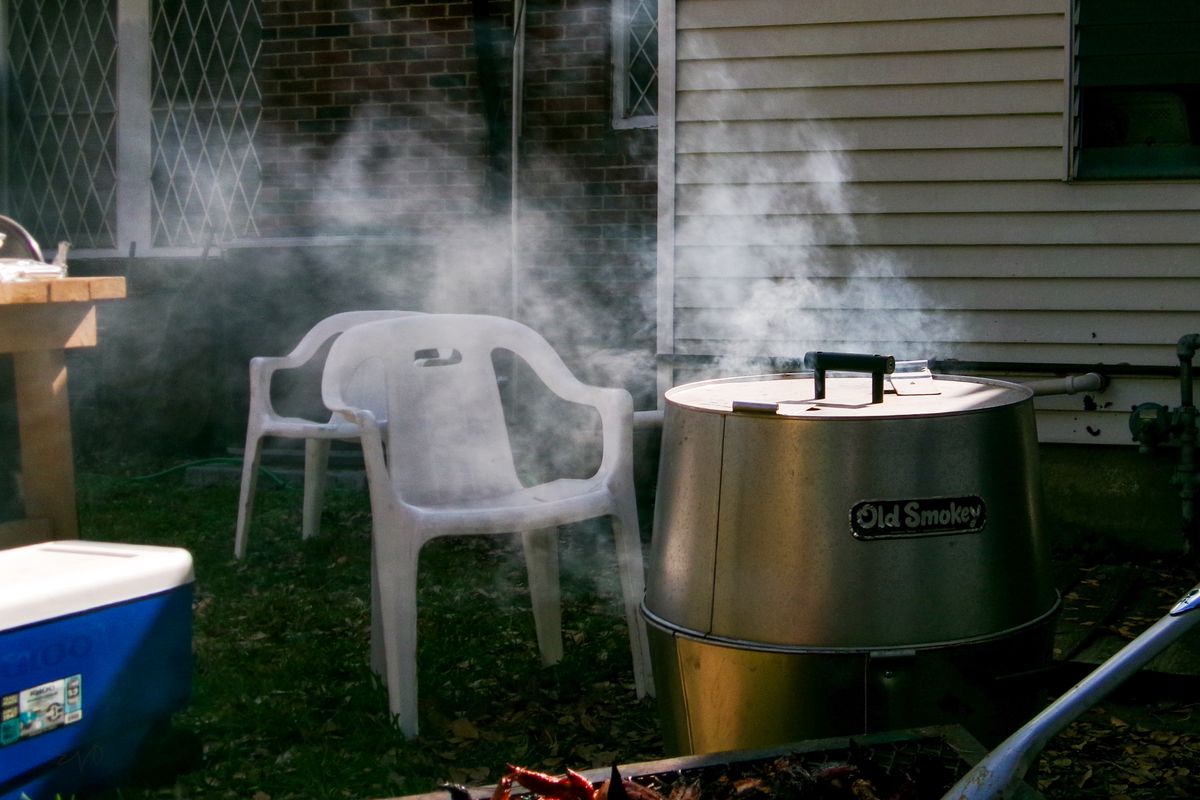
Backyard smoker cabinet running beside a house wall with smoke rising, cooler and garden chairs alongside

An electric smoker that trips the electrics is almost never doing what a kitchen appliance does when it trips. Indoors, the usual answer is an overloaded circuit. Outdoors, on a machine that sits in the weather and gets washed, the usual answer is that current is escaping to earth and a residual-current device is doing its job. The two need opposite responses, and telling them apart takes about a minute.

Check which device tripped, before anything else

Go and look at the panel. A standard circuit breaker protects the wiring from carrying too much current, and it trips on load. A GFCI — the socket with the TEST and RESET buttons, called an RCD in the UK and Ireland — is watching for current leaking somewhere it should not go, and it trips on leakage. They are different devices answering different questions.

The full version of that distinction, including the arithmetic for working out whether a circuit is genuinely overloaded, is set out in the guide to an air fryer that keeps tripping the breaker. It applies to any heating appliance and is worth reading first if the smoker shares a circuit with anything else.

What follows is the part that is specific to smokers, and it is mostly about water.

Why an electric smoker is usually not an overload

Two things separate a smoker from the appliances that genuinely overload a kitchen circuit.

The first is draw. Check the rating plate on the back of the unit rather than taking anyone’s word for it, but electric smokers are generally modest consumers compared with an air fryer, a kettle or a microwave. They hold a low temperature for hours rather than blasting heat for twenty minutes, and the element cycles rather than running flat out. A machine like that is an unlikely candidate for tripping a breaker on load alone.

The second is where it lives. A smoker is plugged in outdoors, or in a garage or on a porch, and outdoor receptacles are GFCI-protected as a matter of course. So the device most likely to be watching that circuit is precisely the one that trips on moisture rather than on load.

Put those together and the probability shifts hard. If the smoker trips the electrics and nothing else on the circuit was running, an overload is not the first thing to suspect.

Moisture is the usual cause

A GFCI trips when the current going out does not match the current coming back, because some of it has found another path to earth. Water is an excellent alternative path. On an appliance that lives outside, water is not an unusual event.

Where the water actually gets in

The vulnerable places are the ones people do not think of as openings.

  • The control panel housing, where a seal has perished or a screw has loosened.
  • The element terminals at the base of the cabinet, which sit at the lowest point where condensation collects.
  • The plug and socket themselves, if the connection is exposed rather than under a weatherproof cover.
  • The cord entry into the body, which flexes every time the smoker is moved and eventually cracks.

Rain is the obvious source, but it is not the only one. A humid night, a smoker stored uncovered, or condensation forming inside a cold cabinet in the morning will all put moisture where it should not be. The symptom that gives this away is intermittence: it trips on damp days and behaves on dry ones.

Washing, and the mistake that follows it

The single most common version of this problem is a smoker that was cleaned, then plugged in before it had dried. Water sits in the base and around the element terminals, and it does not evaporate as fast as the outside of the cabinet suggests.

The fix is patience rather than parts. Unplug it, open the door, take out the racks and the water pan, and leave it somewhere sheltered for a day or more — longer than seems necessary. If it then runs without tripping, the diagnosis is confirmed and nothing was broken.

The extension cord, which is the second most common cause

Most electric smokers end up on an extension lead, because the machine has to stand somewhere ventilated and the socket is rarely convenient. A cord that is not rated for the job causes two separate problems: it heats up under sustained load, and if it is not weatherproof it becomes a leakage path in its own right.

Two manufacturers give specific and compatible guidance here, which is worth noting because they have no reason to agree with each other. Masterbuilt states that an outdoor extension cord must be marked with the suffix letters “W-A” and tagged “Suitable for Use with Outdoor Appliances”, must have grounding terminals in working condition, should be heavier than 16AWG, and should be no longer than 25 feet. Bradley Smoker’s guidance is shorter and points the same way: if an extension cord is needed, it should be heavy-duty and under 20 feet.

Five cords that meet all four points, screened against those exact specifications, are compared in the guide to the best extension cord for an electric smoker.

Read those as a single rule. The cord must be outdoor-rated, properly earthed, thicker than a household lead, and short. A thin indoor extension coiled on damp grass fails every part of that, and it is the cord most people reach for.

Testing this is straightforward: plug the smoker directly into the socket, with no extension at all, and run it. If the tripping stops, the lead was the fault and should be replaced rather than reused elsewhere.

When the element has actually failed

Heating elements fail by developing a path to earth. The sheath cracks, moisture gets into the magnesium oxide insulation packed inside it, and current starts leaking. This produces a distinctive pattern: the smoker trips reliably once it heats up, but not when cold, because the fault only opens up under thermal expansion.

If the machine has been thoroughly dried, is plugged directly into the socket without an extension, and still trips a few minutes into every cook, the element is the most likely remaining explanation. On many models it is a replaceable part, and on an out-of-warranty smoker that is a reasonable repair. It is also the point at which guesswork should stop.

The order worth working through

  1. Look at the panel and note which device tripped — a breaker, or a GFCI or RCD.
  2. Note the timing: instantly on switch-on, or several minutes into the cook.
  3. Remove the extension lead and plug the smoker straight into the socket.
  4. If it has been washed or rained on, dry it thoroughly and give it a full day before retrying.
  5. Try a socket on a different circuit to rule out a fault in the receptacle itself.
  6. If it still trips once hot, with no extension and after drying, treat the element as suspect.
  7. Check whether the smoker has a reset of its own, on the controller or in the plug head, before assuming the trip happened at the panel.

When to stop and call an electrician

Some symptoms are not troubleshooting problems. Stop, and get a qualified electrician, if there is any burning smell or scorching at the plug or socket, if the plug or cord is hot to the touch, if the same smoker trips on more than one circuit in different parts of the property, or if anyone has felt a shock or a tingle from the cabinet. A tingle in particular is the symptom the GFCI exists to prevent, and it means the leakage is real and reaching the metalwork.

Resetting a device that keeps tripping, in order to get the cook finished, is the one response with actual risk attached.

Keeping it from happening again

Most of the causes above are preventable, and the prevention is dull rather than clever.

Let it cool before you cover it. Masterbuilt’s storage guidance is written for its grills rather than its smokers, but the reason carries across every outdoor appliance: do not store or cover the unit until it has completely cooled, and keep it covered in a dry area. A cover thrown over a warm cabinet traps the moisture inside it, which is worse than leaving it uncovered.

Keep the element and its terminals clear. Grease and food debris collect at the base of the cabinet, which is the same low point where water sits. Cleaning that area is worth doing for its own sake, but the part that matters here is what comes afterwards: whatever the cleaning method, the cabinet needs to be properly dry before it is plugged in again.

Give it a circuit to itself. Masterbuilt’s advice for its electric fryer — a different product, but the same electrical problem — is to make sure no other appliance is plugged into the same outlet or circuit. On a cook that runs for hours, that removes the one variable you cannot see from the garden: somebody indoors switching on a kettle or a heater.

Know where your resets are. Some electric smokers have a reset of their own, on the controller or built into the plug head, separate from anything in the consumer unit. It is worth reading the manual for that before a cook rather than during one, because if the smoker’s own reset is the one that needs pressing, the household breaker was never involved.

Keeping the cook going while you diagnose

A trip that happens three hours into a brisket is worse than one that happens at the start, because the meat is now sitting in the danger zone while the cabinet cools. A leave-in probe that alarms on temperature drop is the difference between noticing immediately and noticing at dinner time — the picks are in the guide to meat thermometers for smoking, and the wireless models that alert a phone are covered in BBQ thermometers.

A smoker that is running fine but producing no visible smoke is a third question again, and usually not a fault at all — see an electric smoker not producing smoke.

A smoker that trips the electrics and a smoker that simply never reaches temperature are different faults with different causes. If yours is running without tripping anything but stalling well below its setting, that is covered in an electric smoker not getting hot enough.

The rest of the outdoor cooking guides on this site are collected on the outdoor cooking hub.

How This Guide Was Put Together

Plainly: this is a research-based guide, not a hands-on test. I do not own an electric smoker, nothing here is a report from my own garden, and no meter was put across an element.

What it rests on is three things. The published guidance of two electric smoker manufacturers, Masterbuilt and Bradley Smoker, whose extension cord specifications were written independently and point the same way. The standard behaviour of ground fault protection, set out at greater length in this site’s guide to an air fryer tripping the breaker. And the pattern of what owners consistently report, in which moisture after cleaning and an unsuitable extension lead dominate the cases that turn out to have a simple cause.

Also not established: what proportion of these faults are the element rather than moisture or the cord. That would need a sample of failed units stripped and tested, no manufacturer publishes failure-rate data for this category, and any percentage offered here would be invented. The order of checks above is arranged by how easy each cause is to rule out, not by a measured frequency.

Frequently Asked Questions

Why does my electric smoker trip the breaker but nothing else does?

Because it is probably not the breaker. Outdoor sockets are GFCI-protected, and a GFCI trips on current leaking to earth rather than on load. A smoker that lives outside and gets rained on or washed is far more likely to be leaking than to be overloading a circuit that handles a kettle without complaint.

Can rain make an electric smoker trip?

Yes, and so can a humid night or condensation inside a cold cabinet. The tell is intermittence: it trips on damp days and runs normally on dry ones. Water reaching the control panel housing, the element terminals or an exposed plug gives current an alternative path to earth, which is exactly what a GFCI watches for.

I washed my smoker and now it trips. Is it ruined?

Almost certainly not. This is the most common version of the problem. Unplug it, open the door, remove the racks and water pan, and leave it somewhere sheltered for a full day or more before trying again. Water sits around the element terminals at the base long after the outside feels dry.

What extension cord should I use with an electric smoker?

An outdoor-rated one, earthed, thicker than a normal household lead, and short. Masterbuilt specifies a cord marked “W-A” and tagged for use with outdoor appliances, heavier than 16AWG and no more than 25 feet; Bradley Smoker says heavy-duty and under 20 feet. A thin indoor lead lying on damp grass fails on every count.

How do I know if the heating element has failed?

The pattern is the giveaway. An element with a crack in its sheath leaks current only once it is hot and has expanded, so the smoker trips a few minutes into every cook rather than instantly. If it still does that after being dried thoroughly and plugged straight into the socket with no extension, the element is the most likely remaining cause.

Is it safe to just keep resetting it?

No. The device is doing its job, and repeatedly resetting it while the same fault is present is the one response that carries real risk. Stop altogether and get an electrician if there is a burning smell, if the plug or cord is hot, if it trips on more than one circuit, or if anyone has felt a tingle from the cabinet.

Filed Under: Helpful Kitchen Tips

  • « Go to Previous Page
  • Page 1
  • Page 2
  • Page 3
  • Page 4
  • Interim pages omitted …
  • Page 17
  • Go to Next Page »

Recent Articles

  • Cuisinart DLC-10SYP1 Review: Durable, But a Newer Bowl
  • COSORI Pro Gen 2 Review: Big Basket, Fragile Handle
  • Dash Tasti-Crisp Review: Cheap, but the Coating Wears Fast
  • Chefman TurboFry Touch Review: Cheap, but the Coating Wears
  • Chef’sChoice 15XV Review: Very Sharp, With Scratch Reports

Search


HOME          Contact          Affiliate Disclosure          Terms of Service          Privacy Policy


kitchenwarecompare.com is a participant in the Amazon Services LLC Associates Program, an affiliate advertising program designed to provide a means for sites to earn advertising fees by advertising and linking to Amazon.com, Endless.com, MYHABIT.com, SmallParts.com, or AmazonWireless.com. Amazon, the Amazon logo, AmazonSupply, and the AmazonSupply logo are trademarks of Amazon.com, Inc. or its affiliates. As an Amazon Associate I earn from qualifying purchases.


Copyright © 2026 kitchenwarecompare.com, ALL RIGHTS RESERVED.