• Skip to primary navigation
  • Skip to main content
  • Skip to primary sidebar

Kitchenware Compare

  • Home
  • Product Reviews
    • Air Fryers
    • Coffee
    • Cookware
    • Flat Top Grills
    • Meat Thermometers
    • Food Processors
    • Knives
    • Pizza Ovens
    • Toaster Ovens
    • Juicers
  • Food Blog
  • Helpful Kitchen Tips
  • Data Studies
  • About
  • How I Review
  • Contact
You are here: Home / Archives for Product Reviews

Best Cutting Board for Japanese Knives 2026: 4 Picks

Last Updated July 4, 2026

A good board is half of edge care — the other half is in my knife sharpener guide.

Japanese knife slicing salmon on a soft white cutting board

This post contains affiliate links. If you buy through my links, I may earn a commission at no extra cost to you.

Japanese knives are harder than Western ones — typically 60+ HRC against a German knife’s 56-58 — and that hardness is a trade: keener edges that hold longer, but brittle enough to chip on the wrong surface. The wrong surface includes bamboo and glass, which is why neither appears below (a previous version of this guide recommended bamboo; that was wrong, and the buying guide explains the physics). The Shun Large Hinoki is the pick for most owners: traditional Japanese cypress, soft enough to protect a 62-HRC edge, $89.95. Below it: the synthetic board sushi bars actually use, a 10,000-review end-grain walnut, and a smaller hinoki at $55.

Best Cutting Boards for Japanese Knives — Quick Comparison

Product Best For Price Rating Buy
Shun Large Hinoki (17.75″ x 11.75″) Best Overall $89.95 4.4★ (1,407) Check Price
Yoshihiro Hi-Soft Best Professional $109.99 4.6★ (409) Check Price
Sonder LA End-Grain Walnut Best End-Grain Wood $169.99 4.7★ (10,673) Check Price
Shun Medium Hinoki (15.75″ x 10.75″) Best Budget $54.95 4.4★ (1,407) Check Price

How I Picked

Four boards, not five — this list is defined as much by what’s excluded as included. Every pick was verified live on Amazon today (4 July 2026): price, rating, stock. Selection is research-based, built on the material science of hard steel (surface hardness below the blade’s, no silica content, self-healing cut resistance) and 13,000+ combined owner reviews. Bamboo and glass boards were disqualified on physics, and a bamboo pick from the previous version of this guide was removed — more on that below.

The 4 Best Cutting Boards for Japanese Knives in 2026

1. Shun Large Hinoki — Best Overall

Shun large hinoki wood cutting board

Hinoki — Japanese cypress — is what Japanese knives were designed to meet. It’s measurably softer than maple or walnut, so a 62-HRC edge bites in and releases instead of impacting, and the wood’s natural oils resist bacteria without heavy maintenance. Shun (the knife maker) sells this board specifically to stop customers from blunting Shun knives on the wrong surface, and at 17.75″ x 11.75″ it’s a full prep station. FSC-certified wood, made properly, $89.95.

Downsides: soft wood scars visibly — hinoki trades pristine looks for edge protection, and after six months it shows its work. It’s light enough to slide without a damp towel underneath. And it needs the wood-board rules: no dishwasher, no soaking, occasional oiling.

Check Price on Amazon

2. Yoshihiro Hi-Soft — Best Professional

Yoshihiro Hi-Soft professional Japanese cutting board

Walk into a serious sushi bar and the board under the yanagiba is almost certainly Hi-Soft: a dense, slightly yielding synthetic that behaves like soft wood, never splinters, doesn’t absorb fish odors, and wipes genuinely clean. Yoshihiro’s version is made in Japan and carries the highest rating in this guide (4.6). For raw fish work, heavy daily prep, or anyone who wants wood-like edge protection without wood-care rituals, this is the professional answer.

Downsides: it’s the least handsome thing here — a beige slab that will never grace a cheese-photo. The small size suits a station, not a family dinner prep. Review base is a modest 409 (niche product, though a long-established one). Not dishwasher safe despite being synthetic — heat warps it.

Check Price on Amazon

3. Sonder LA End-Grain Walnut — Best End-Grain Wood

Sonder Los Angeles end-grain black walnut cutting board

End-grain construction is the woodworker’s answer to knife protection: the blade slips between vertical wood fibers, which then close back up — self-healing for the board, cushioning for the edge. Sonder’s made-in-USA black walnut board is the crowd favorite of that style, with 10,673 reviews at 4.7 stars, non-slip feet, a juice groove, and looks that live on the counter. Of the wooden boards here, it’s the one that handles both your Japanese knives and Thanksgiving carving.

Downsides: walnut is harder than hinoki — kinder than any bamboo or plastic, but not the absolute gentlest surface for a fragile single-bevel edge. End-grain boards are thirsty; skip the monthly oiling and it cracks. And at $169.99 and 12 pounds, it’s furniture, not an accessory.

Check Price on Amazon

4. Shun Medium Hinoki — Best Budget

Shun medium hinoki wood cutting board

Same cypress, same maker, $35 less: the medium Shun hinoki gives a smaller kitchen (or a dedicated Japanese-knife board that lives beside a bigger workhorse) the correct surface for $54.95. This two-board strategy is genuinely common among Japanese knife owners: the hinoki for the good knives, something burlier for everything else.

Downsides: 15.75″ x 10.75″ fills up fast on multi-ingredient prep. Same soft-wood scarring and no-dishwasher rules as its big sibling. And light enough that the damp-towel-underneath habit is mandatory, not optional.

Check Price on Amazon

Cutting Board Buying Guide for Japanese Knives

Why bamboo and glass are banned from this list

Here’s the correction this guide owes its readers: an earlier version recommended a bamboo board, and that was a mistake. Bamboo is a grass bonded with adhesive, and its silica content plus glue lines make it harder on an edge than maple — hard enough to roll or microchip the brittle 60+ HRC steel Japanese knives are prized for. Glass boards are worse: they’re edge executioners for any knife. If a surface clicks loudly under the blade, your knife is paying for it.

The hardness logic

The rule is simple: the board must always lose. Western knives at 56-58 HRC tolerate harder boards because their softer steel flexes rather than chips. Japanese blades hold a steeper, thinner, harder edge — the very qualities that make them a joy on a good chef’s knife make them fragile against hard surfaces. Hinoki, soft synthetics like Hi-Soft, and end-grain hardwoods absorb the edge instead of fighting it.

Wood care in 60 seconds

Hand wash, dry upright, and oil monthly (food-grade mineral oil, five minutes, wipe the excess). Never soak, never dishwasher — heat and water cycles crack and warp wood boards of every price. The synthetic Yoshihiro skips the oiling but keeps the no-dishwasher rule. Basic tool care pays for itself across the kitchen; my essential cooking tools guide covers the rest of the kit.

One board or two?

Most Japanese-knife households land on two: a soft board (hinoki or Hi-Soft) reserved for the delicate edges, and a workhorse (the Sonder, or any solid end-grain) for bones, brisket, and everything a meat slicer doesn’t handle. If chopping volume is the real problem, a vegetable chopper saves the good knives for the work that deserves them.

Frequently Asked Questions

Can I use a bamboo cutting board with Japanese knives?

You can, but you shouldn’t — bamboo’s silica and adhesive layers are hard enough to chip high-hardness Japanese edges. It’s the most common board mistake Japanese knife owners make.

What is hinoki and why do Japanese chefs use it?

Japanese cypress: a soft, naturally antibacterial, lightly aromatic wood that yields to an edge instead of resisting it. It’s been the traditional Japanese cutting surface for centuries because it demonstrably preserves sharpness.

Are end-grain boards better than edge-grain for knives?

Yes — the blade slips between vertical fibers rather than cutting across them, which is gentler on the edge and lets the board self-heal. The trade is price and upkeep.

How often should I oil a wooden cutting board?

Monthly with regular use, or whenever the surface looks dry and pale. Food-grade mineral oil, applied generously, rested, wiped. An unoiled board cracks; a cracked board harbors bacteria.

What board do sushi chefs use?

Traditionally hinoki; in modern professional kitchens, very often Hi-Soft synthetic boards like the Yoshihiro here — soft on single-bevel edges, odor-resistant, and sanitizable to commercial standards.

Do plastic cutting boards dull Japanese knives?

Hard polyethylene boards are tougher on edges than they feel — and they scar into grooves that harbor bacteria. Soft-composition synthetics (Hi-Soft class) are the exception designed for exactly this job.

How These Picks Were Chosen

Plainly: this is a research-based guide, not a hands-on test. I have not run these side by side, and nothing here should be read as a report from my own kitchen.

What the picks rest on: material hardness relative to a hard Japanese edge – end-grain wood and soft polyethylene are kind to a thin blade, bamboo and glass are not, and that single distinction decides most of this category – along with thickness and whether the board will warp, size against a standard 8-inch blade, and whether it is dishwasher safe (for wood, it should not be). Plus the complaint patterns in verified-purchase reviews, which cluster on warping and on end-grain boards splitting at the glue lines.

What I could not establish: how much edge life each surface actually costs a knife. It would take controlled cutting on each board with sharpness measured before and after, and no such test exists for these boards. The material ranking here follows from hardness, which is well understood, but the size of the effect is not something this guide can quantify.

Bottom Line

Buy the Shun Large Hinoki and your Japanese knives get the surface they were designed for. Go Yoshihiro Hi-Soft if you prep fish seriously or want zero wood maintenance, and the Sonder end-grain if one beautiful board must do everything. Slicing fresh bread on that new board? My Pullman loaf pan guide makes the loaf; the rest of my kitchen coverage lives in the cookware guides.

Filed Under: Product Reviews

Best Convection Toaster Oven 2026: 5 Picks Compared

Last Updated July 4, 2026

For five-minute hands-off breakfasts, my Hamilton Beach breakfast sandwich maker review covers the $30 gadget that replaces the drive-through.

Man watching bread bake in a red countertop toaster oven

This post contains affiliate links. If you buy through my links, I may earn a commission at no extra cost to you.

A convection toaster oven is the most underrated appliance on the counter: a fan-driven mini oven that toasts, roasts a chicken, revives leftovers properly, and — in the newer generation — air fries, all without heating your kitchen like the full-size oven does. The Breville Smart Oven Pro is the pick for most kitchens: its Element IQ heating logic actually adjusts power between elements per function, and 11,000+ owners hold it at 4.6 stars, the best consensus in the category. Below it: the Ninja for serious air-frying, a 27,000-review Cuisinart value play, a French-door Oster, and an $87 budget workhorse.

Best Convection Toaster Ovens — Quick Comparison

Product Best For Price Rating Buy
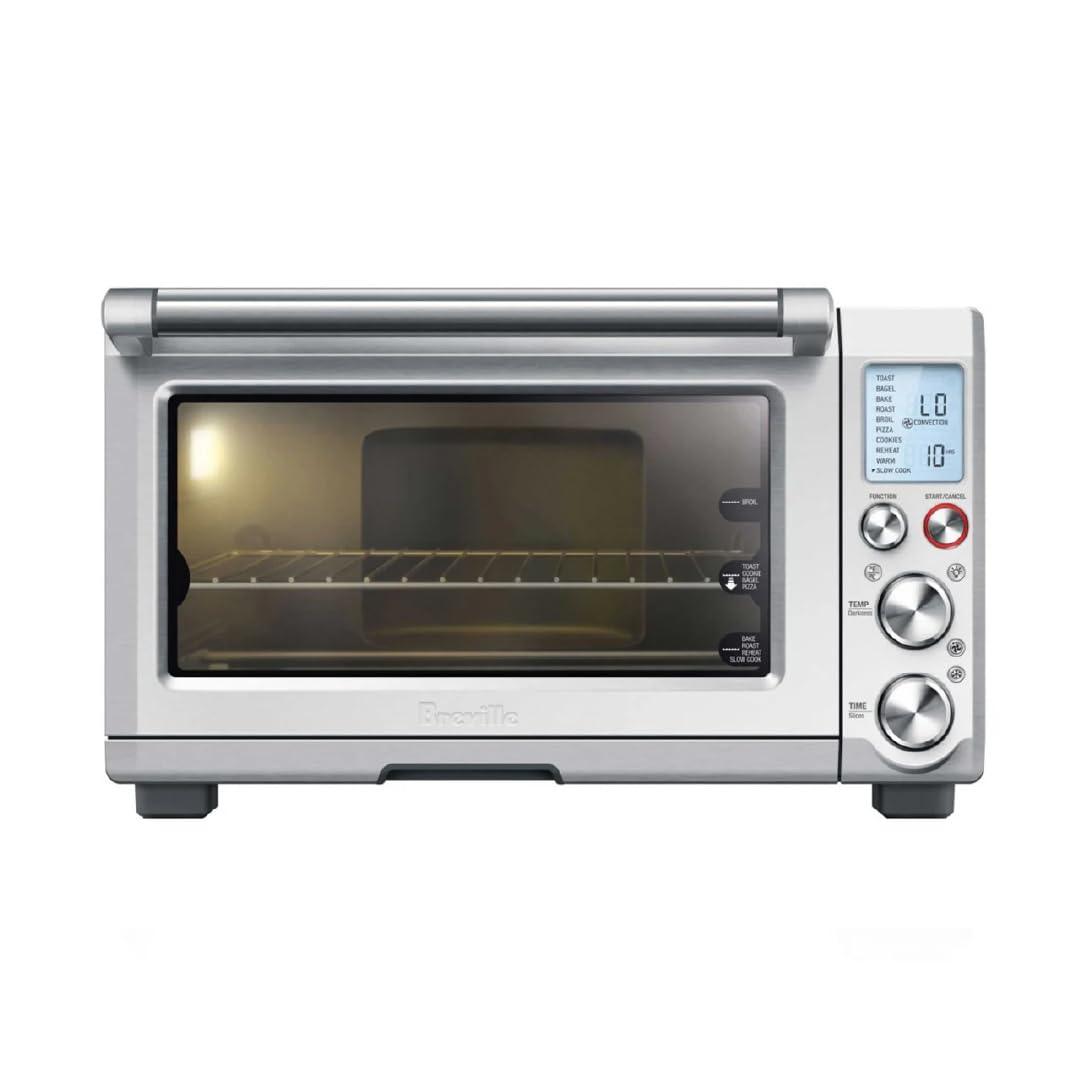
Breville Smart Oven Pro (BOV845) Best Overall $269.95 4.6★ (11,149) Check Price
Ninja DT201 Foodi XL Pro Best Air-Fry XL $329.99 4.4★ (6,672) Check Price
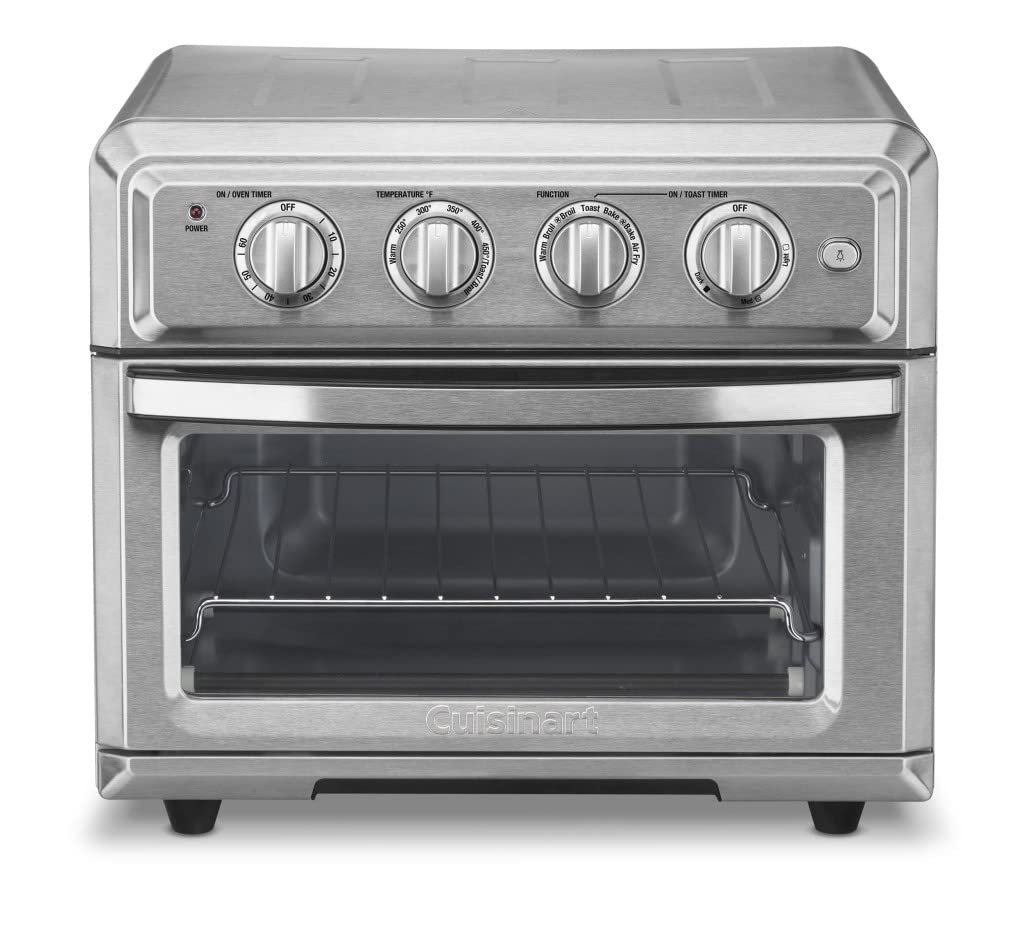
Cuisinart TOA-60 AirFryer Oven Best Value Air-Fry $264.60 4.4★ (27,250) Check Price
Oster XL 42L French Door Best French Door $159.99 4.3★ (514) Check Price
BLACK+DECKER TO3250XSBD 8-Slice Best Budget $86.87 4.3★ (11,829) Check Price

How I Picked

Every pick was verified live on Amazon today (4 July 2026) — current prices, ratings, and stock. That check gutted the previous version of this guide: three of its four products were dead or dying (one listing returned a flat 404, one brand left Amazon’s serious lineup, one premium model sat parked and unavailable).

Only the Ninja survived. Selection weighed heating evenness, real convection performance, capacity per counter-inch, and 57,000+ combined owner reviews. Whichever you land on, the best way to clean a toaster oven covers keeping the interior and tray usable. Research-based and spec-verified.

The 5 Best Convection Toaster Ovens in 2026

1. Breville Smart Oven Pro — Best Overall

Breville Smart Oven Pro BOV845 brushed stainless convection toaster oven

The Smart Oven Pro’s trick is Element IQ: instead of blasting all elements equally, it shifts wattage to where each function needs it — top-heavy for broiling, balanced for baking, gentle for the slow-cook mode that turns it into a countertop braiser. The result is the most even toast and most oven-like baking in the category, which is why its 4.6-star average across 11,000+ reviews leads every serious competitor. Ten functions, an interior light, and a magnetic rack that auto-ejects as the door opens — small touches that read gimmicky and feel essential within a week.

Downsides: no air-fry basket — Breville reserves that for the pricier Smart Oven Air line, so frozen-fries households should look at the Ninja or Cuisinart instead. It’s $270 with no Wi-Fi anything, which is either honest or dated depending on your taste. And the brushed housing gets properly hot in broil mode.

Check Price on Amazon

2. Ninja DT201 Foodi XL Pro — Best Air-Fry XL

Ninja DT201 Foodi XL Pro air fry convection toaster oven

The only survivor from this guide’s previous version, and it earned the spot: 1800 watts, true two-level cooking, and air-fry performance that matches dedicated basket units — with room for a 5-lb chicken and a full sheet pan of vegetables at once. For households already deep in the air-fried lifestyle (my air fryer vs deep fryer comparison explains why that’s most households now), this replaces two appliances credibly.

Downsides: it’s the biggest and most expensive thing here, and the fan at full air-fry tilt is unmistakably Ninja-loud. The stainless exterior runs hot enough that the cabinet clearance guidance in the manual is not a suggestion. Digital interface, but no temperature probe at this price stings next to the Breville ecosystem.

Check Price on Amazon

3. Cuisinart TOA-60 — Best Value Air-Fry

Cuisinart TOA-60 convection air fryer toaster oven in stainless steel

The TOA-60 practically invented the air-fryer-toaster-oven category, and 27,000+ reviews later it remains the value benchmark: 1800 watts, seven functions, a proper air-fry basket, and Cuisinart’s knack for lasting a decade of daily toast. At $264.60 it undercuts the Ninja by around $65 while covering the same core jobs for a typical household.

Downsides: the three-dial interface is charmingly analog until you want a timer more precise than a wrist-flick. Toast evenness trails the Breville — corners run lighter on full batches. And the door is the lightest-feeling component on an otherwise solid unit; owners baby it.

Check Price on Amazon

4. Oster XL 42L French Door — Best French Door

Oster extra-large 42 liter French door convection toaster oven

French doors are the practical luxury of countertop ovens: both doors open with one pull, sideways, so you’re never reaching over a 400°F drop-down door to retrieve a casserole. Oster’s current 42-liter model is the biggest oven in this guide — two 16″ pizzas big — with air-fry racks included at a mid-range $160. Worth knowing: this is the successor listing to the French-door Oster this article originally covered, which vanished from Amazon entirely; the current model carries a young review base as a result.

Downsides: 514 reviews means less multi-year evidence than everything else here. The width that makes it roomy makes it a counter-hog — measure first. And there’s no temperature probe or interior light at a size where both would earn their keep.

Check Price on Amazon

5. BLACK+DECKER TO3250XSBD — Best Budget

BLACK+DECKER TO3250XSBD 8-slice extra wide convection toaster oven

Eighty-seven dollars for an 8-slice-wide convection oven that fits a 12″ pizza, from a listing with nearly 12,000 reviews holding steady at 4.3. This is the honest budget answer: real convection, real capacity, none of the extras. For toast, reheats, frozen pizza, and the occasional tray bake, it does the job the $270 ovens do at 80% quality for 30% money.

Downsides: the thermostat swings wider than the digital competition — bakers will notice on fussy recipes. No air fry, no probe, no interior light. And the wide-but-shallow shape fits pizza beautifully and whole chickens awkwardly.

Check Price on Amazon

Convection Toaster Oven Buying Guide

What convection actually buys you

The fan is the whole upgrade: circulating air erases hot spots, browns evenly, and cooks about 25% faster than a still oven at the same temperature. It also means a countertop unit can genuinely substitute for the big oven on most weeknights — using a fraction of the energy and without preheating your whole kitchen in July. It is also the better tool for reheating takeaway, which should come out of its packaging first — cardboard is not reliably microwave-safe.

Air fry or not?

“Air fry” in a toaster oven is convection with a higher fan speed and a mesh basket. If crispy frozen food is a weekly event, buy a unit designed for it (Ninja, Cuisinart) — retrofitting a basket into a standard convection oven disappoints. If you already own a dedicated basket unit from my best air fryers guide, skip the feature and put the money into build quality instead.

Size against your real counter

Countertop ovens are deceptively deep — the XL units need 20+ inches plus rear clearance for hot exhaust. The honest sizing question is what you’ll actually cook: toast and reheats suit the B+D footprint; sheet-pan dinners for a family need the Ninja or Oster class. Feeding four regularly? Your counter is juggling appliances, and my family-of-4 air fryer guide faces the same trade-offs.

Small-kitchen strategy

For dorms, offices, and micro-kitchens, a convection toaster oven plus a portable hot plate covers 90% of a full kitchen’s jobs in two appliances. Bakers squeezing loaves out of countertop units: a 9×4 Pullman loaf pan fits where full-size bakeware won’t.

Frequently Asked Questions

Is a convection toaster oven worth it over a regular one?

Yes, and it’s not close — the fan delivers even browning, ~25% faster cooking, and real roasting capability. The price gap between still and convection models has collapsed to almost nothing.

Can a convection toaster oven replace a full-size oven?

For one to three people, mostly yes: sheet-pan dinners, roast chickens under 5 lbs, casseroles, and all reheating. Thanksgiving and double-batch baking still need the big box.

What’s the difference between convection and air fry?

Speed of airflow and the basket. Air fry is convection turned up, with mesh underneath the food so hot air hits every surface. Same physics — same foods, crispier results with the right hardware.

Do convection toaster ovens use less electricity than a full oven?

Substantially — typically 1,400–1,800 watts against a full oven’s 3,000+, with far shorter preheats and no whole-kitchen heat load. For small meals it’s the cheaper appliance every time.

Why did toast come out uneven in my convection oven?

Usually rack position — toast wants the middle, and the fan matters less for 90-second jobs. If edges consistently lag on full batches, that’s the gap between budget and premium heating layouts.

How These Picks Were Chosen

Plainly: this is a research-based guide, not a hands-on test. I have not run these side by side, and nothing here should be read as a report from my own kitchen.

What the picks rest on: interior capacity expressed in what it actually fits – slices, a 12-inch pizza, a small roasting tin – rather than in litres; whether the convection fan has its own control; element count and configuration; temperature range and how far the dial drifts from the setting according to owners; and how the interior is cleaned. Plus the complaint patterns across verified-purchase reviews, which for toaster ovens concentrate on thermostats reading low and interior coatings degrading.

What I could not establish: temperature accuracy, which is the most common complaint in this whole category and the easiest thing to get wrong. It needs an oven thermometer logged across a full cycle on each unit. No independent test covers these models, so this guide reports the pattern of owner complaints about accuracy without asserting a figure of its own.

Bottom Line

The Breville Smart Oven Pro is the buy-once answer for serious countertop cooking; the Cuisinart TOA-60 gets air-fry households 90% of the way for $70 less; the BLACK+DECKER proves $87 covers the basics honestly. Whichever way you go, a multi-cooker combo is the other consolidation play worth comparing before you commit counter space.

How do you clean a convection toaster oven?

Empty the crumb tray weekly — it slides out from the front or bottom on every model here — and wipe the interior with a barely-damp cloth once cool. Racks and trays are sink-washable; interiors are not dishwasher country and hate oven cleaner sprays, which can damage the nonstick coatings. Grease on the door glass comes off with baking-soda paste.

Ten minutes a month keeps the convection fan from smoking on preheat. The same fan and grease problem on a full-size oven is a bigger job — my guide to cleaning a fan-assisted oven covers stripping the fan housing and ventilation properly.

For the full picture on what to look for in a toaster oven before you compare specific models, see my toaster oven buying guide.

Filed Under: Product Reviews Tagged With: convection toaster oven, Ninja DT201, Oster, VAL CUCINE, Wolf Gourmet Elite

Air Fryer vs Deep Fryer: Which Should You Buy?

Last Updated July 4, 2026

Basket of french fries being lowered into a deep fryer of bubbling oil

This post contains affiliate links. If you buy through my links, I may earn a commission at no extra cost to you.

Short answer: the air fryer, for most kitchens. It gets you 85% of the crisp with a tablespoon of oil instead of four quarts, no disposal problem, and a machine that also roasts, reheats, and bakes.

The deep fryer keeps exactly one crown — anything in wet batter. Beer-battered fish, tempura, and proper corn dogs physically cannot happen in an air fryer, and if those are your kitchen’s love language, no air fryer replaces the real thing. Here’s the honest breakdown.

Air Fryer vs Deep Fryer — Head to Head

Factor Air Fryer Deep Fryer Winner
Oil per session 0–1 tablespoon 3–4 quarts Air fryer
Fat in the finished food Up to ~75% less Oil is the point Air fryer
Wet batter (fish, tempura) Drips off — can’t do it Its whole reason to exist Deep fryer
Fries & frozen foods Excellent, slightly drier The gold standard Deep fryer, narrowly
Cook time (batch of fries) 15–20 min, no preheat ritual 5–8 min + 10–15 min oil heat-up Roughly even
Cleanup Basket in the dishwasher Cooling, straining, storing or dumping quarts of oil Air fryer
Running cost Electricity only Oil is a subscription ($8–15 per fill) Air fryer
Versatility Roasts, bakes, reheats, dehydrates Fries. That’s it. Air fryer
Safety Enclosed element, auto shut-off Gallons of 350°F oil on the counter Air fryer

The Actual Difference (It’s Physics, Not Marketing)

A deep fryer immerses food in oil at 325–375°F. Oil transfers heat brutally fast and from every direction at once, which is why crusts set in seconds and batter puffs instead of sliding off. An air fryer is a small, violent convection oven: a fan slams hot air across the surface, dehydrating and browning the outside. With a light oil coating, that gets remarkably close to fried texture on solid foods — wings, fries, vegetables, breaded (not battered) items.

The gap shows in two places. Wet batter needs the instant set that only oil immersion provides — in an air fryer it drips through the basket before it cooks. And moisture-rich crispness — the glassy shell on a proper french fry — comes from oil penetrating the surface, which hot air alone can’t replicate. Close, honestly close.

Not identical.

Health: The Math Nobody Argues With

Deep-fried foods absorb oil as they cook — that’s flavor, and it’s also roughly 10–15 extra grams of fat per serving of fries. Air-fried versions of the same foods carry up to about 75% less fat, because a tablespoon of oil spread over a pound of food is all there is to absorb.

Both methods produce acrylamide in starchy foods at high heat, so “air-fried” doesn’t mean “health food” — it means fried-adjacent with a fraction of the fat. My are air fryers healthy? guide covers the full picture without the marketing gloss.

Cost: Purchase Price Lies, Oil Doesn’t

Decent machines in both categories start around $50–70, so the sticker is a wash. The divergence is everything after: a deep fryer drinks 3–4 quarts of oil per fill, and even with careful straining and reuse, frequent fryers buy oil like a subscription — $8–15 a fill, several fills a month if you’re serious.

Then there’s disposal, which your drain pipes will not forgive you for skipping. An air fryer’s running cost is a few cents of electricity. Over a year of weekly use, the air fryer is cheaper by the price of a second air fryer.

Cleanup: The Category Killer

This is what actually retires deep fryers to garage shelves.

After deep frying, you wait an hour for the oil to cool, strain it through cheesecloth if you’re keeping it, find a sealed container, wipe an oil-misted counter, and hand-wash a greasy tank. After air frying, the basket goes in the dishwasher. Owner reviews across both categories tell the same story: deep fryers get used weekly for a month, then monthly, then never.

Air fryers stay on the counter.

Which One Should You Buy?

Buy an air fryer if: you want weeknight fries, wings, and crispy reheats with no oil logistics; counter space is limited and one machine should do many jobs; or the fat math matters to anyone in the house. Start with my best air fryers guide — and if you’re feeding four or more, size matters more than features: see the best air fryer for a family of 4.

Buy a deep fryer if: battered fish, tempura, donuts, or wings with that specific glassy crunch are regulars in your kitchen, and you’ll genuinely deal with the oil ritual. It does its one thing better than anything else made.

The honest third option: most households that “need both” actually need an air fryer plus a heavy pot and a thermometer for the four times a year batter calls. And if you want one machine covering the most ground, a pressure cooker air fryer combo stretches the versatility argument even further. What fits in an air fryer might surprise you — my what can you cook in an air fryer guide runs the full list.

Food by Food: Which Method Wins What

Food Air Fryer Deep Fryer Verdict
French fries Excellent; interior runs slightly drier The benchmark — glassy shell, creamy center Deep fryer by a nose; air fryer wins on effort
Chicken wings Skin crisps while fat renders out — arguably better Great, but greasier Air fryer — the owner-consensus favorite
Breaded tenders & schnitzel Excellent with a spray of oil Excellent Tie — air fryer on cleanup
Battered fish & chips Physically impossible — batter drips off Perfect Deep fryer, no contest
Frozen snacks (nuggets, rolls, fries) Modern packaging literally prints air fryer times Works, but overkill Air fryer
Vegetables (brussels, cauliflower) Caramelized edges, superb Oil-logged unless battered Air fryer
Doughnuts Baked-adjacent imitation The real thing — fried is the definition Deep fryer

The pattern is consistent: solid and breaded foods air-fry beautifully; anything battered or defined by oil immersion doesn’t. Wings are the surprise — rendering fat out of the skin while it crisps is something oil immersion can’t do, which is why wing devotees increasingly side with the air fryer. And if you want both worlds in one appliance, an air fryer pressure cooker combo pairs a real air fryer with a real pressure cooker.

The Energy Math (It’s Not What You’d Guess)

Electricity is nearly a wash. A 1,700-watt air fryer cycling through a 20-minute session draws roughly 0.4 kWh — about 7 cents at average US rates. A 1,800-watt deep fryer heating four quarts of oil and holding temperature lands around 0.5–0.6 kWh — 9 or 10 cents. Nobody’s utility bill will notice either.

The real cost difference is the oil itself: $8–15 per fill, and even stretched across several strained-and-reused sessions, that’s $1–3 every time the deep fryer runs, against effectively zero for the air fryer. (Both, incidentally, embarrass a 3,000-watt full-size oven for small batches.) One safety note for oil reusers: each heating cycle lowers the oil’s smoke point, and oil that smokes at frying temperature or smells off is done — no straining rescues it.

Frequently Asked Questions

Does an air fryer taste as good as a deep fryer?

For fries, wings, and breaded foods: 85–90% as good, and most households stop noticing within a month. For battered foods there’s no contest — the deep fryer wins outright because batter needs oil immersion to set.

Is an air fryer really healthier than deep frying?

Yes, on fat: the same foods carry up to ~75% less of it. It’s not a free pass — starchy foods still form acrylamide at high heat either way — but per serving, the difference is real and large.

Can you deep fry in an air fryer?

No. Never pour oil into an air fryer’s drawer — it’s a fire hazard and it won’t create immersion frying anyway. A tablespoon tossed over the food is the correct maximum.

What can a deep fryer do that an air fryer can’t?

Wet batters (fish and chips, tempura, corn dogs), true doughnuts, and the glassy all-over crust of oil-immersed fries. If none of those are staples for you, you don’t need one.

Do restaurants use air fryers?

No — commercial kitchens deep fry for speed and texture at volume. Which is exactly why restaurant fries taste the way they do, and why home air-fried versions are the everyday compromise.

Bottom Line

The air fryer wins on oil, cost, cleanup, safety, and everything-else-it-does; the deep fryer wins on batter and the last 15% of texture. For most kitchens that’s an easy call — and the whole air fryer lineup, from compact to family-size, lives in my air fryers hub.

Filed Under: Product Reviews Tagged With: Air Fryers, Comparison, Deep Fryers

Best Flat Top Grill 2026: 5 Picks Compared

Last Updated July 4, 2026

Chef cooking fried eggs on an outdoor flat top griddle

This post contains affiliate links. If you buy through my links, I may earn a commission at no extra cost to you.

Let’s be honest about this category up front: Blackstone owns it. Three of my five picks wear the same badge, because after checking every serious flat top on Amazon, that’s what the market looks like — nobody else combines the steel, the burner power, and six-figure review counts. The real question isn’t which brand; it’s which size. I break that decision down head-to-head in my Blackstone 28 vs 36 comparison.

The Blackstone 36″ 4-Burner Station is the pick for families and entertainers: 60,000 BTUs across four independent zones, 4.7 stars from 10,000+ owners, $399.99. Cooking for fewer people? The 28″ version is the sweet spot, and there’s a $115 tabletop for tailgates. One combo unit and one compact two-burner round out the field.

Best Flat Top Grills — Quick Comparison

Product Best For Price Rating Buy
Blackstone 36″ 4-Burner Station Best Overall $399.99 4.7★ (10,726) Check Price
Blackstone 28″ Omnivore Best for Most Backyards $249.99 4.7★ (12,143) Check Price
Royal Gourmet GD401C Combo Best Grill + Griddle Combo $259.99 4.4★ (1,433) Check Price
Blackstone 22″ Tabletop Best Compact Two-Burner $171.83 4.7★ (6,805) Check Price
Blackstone 17″ Tabletop Best Portable $114.98 4.7★ (1,480) Check Price

How I Picked

Every pick was verified live on Amazon today (4 July 2026) — real US prices, current ratings, confirmed in stock.

That check mattered more than usual here: two products from the previous version of this guide had quietly died (Camp Chef’s flat top left Amazon entirely; a Blackstone listing got merged into a broken variant page). Selection weighed cooking surface per dollar, burner zones, steel gauge, grease management, and what 26,000+ combined owner reviews say after seasons of use.

Research-based and spec-verified, with the honest caveat that I haven’t lined up five griddles in a parking lot.

The 5 Best Flat Top Grills in 2026

1. Blackstone 36″ 4-Burner Station — Best Overall

Blackstone 36 inch 4-burner flat top griddle cooking station

The 36″ Blackstone is the reason this category exists on Amazon at all: 756 square inches of cold-rolled steel over four independently controlled burners pushing 60,000 BTUs. That’s pancakes for a crowd on one zone, bacon on another, and a hot sear zone on the third — the wide-open cooking style that made flat tops a backyard movement. Ten thousand reviews at 4.7 stars is the kind of consensus almost nothing at $400 achieves.

Downsides: it’s a commitment — around 120 pounds assembled, and it lives outside under a cover, not in a garage corner. The steel needs seasoning like cast iron, and skipping that care shows up as rust complaints in reviews. And the base model has no hood; windy-day cooking takes planning.

Check Price on Amazon

Read my full Blackstone 36″ review for the complete breakdown, including what over 10,000 owners report and a genuine grease-drain design flaw worth knowing about.

2. Blackstone 28″ Omnivore — Best for Most Backyards

Blackstone 28 inch Omnivore flat top griddle

The highest-reviewed griddle in this guide (12,136 and counting) is not the big one. The 28″ hits the balance most households actually need: two burner zones, enough surface for a family smash-burger night, a rear grease system that’s genuinely tidier than the front-drain designs, and a $150 saving over its big brother. If you’re not regularly feeding eight people, this is the smarter buy.

Downsides: two zones means less temperature separation than the 36″ — you’ll juggle when a meal needs three heats. The Original trim skips side shelves, so plan a prep table. Same seasoning duty as every bare-steel griddle.

Check Price on Amazon

3. Royal Gourmet GD401C — Best Grill + Griddle Combo

Royal Gourmet GD401C 4-burner grill and griddle combo with cover

Can’t choose between grill grates and a griddle plate? The GD401C splits its 48,000 BTU, four-burner surface between both, and throws in a fitted cover — an accessory Blackstone charges extra for. For households that want burgers seared over open flame AND a breakfast griddle in one footprint, it’s the value play at $260.

Downsides: the split surface means neither half is huge — big batches involve rotation. The steel runs thinner than Blackstone’s, which shows in heat retention when you load it with cold food. And its 4.4-star average, while solid, sits visibly below the Blackstone 4.7s; assembly complaints drive most of the difference.

Check Price on Amazon

4. Blackstone 22″ Tabletop Griddle — Best Compact Two-Burner

Blackstone 22 inch tabletop griddle with two burners

The 22″ tabletop is the apartment-balcony and small-patio answer: two independently controlled burner zones and 24,000 BTU across 361 square inches, in a footprint that lifts onto a table and stores in a cupboard. Blackstone quotes 14 burgers or 60 hot dogs at once, which is more than the size suggests, and the two zones mean you can hold one side low for onions while searing on the other.

Downsides: it is rolled steel like every other Blackstone here, so it needs the same seasoning and oiling routine — there is no coated shortcut in this line-up any more. It has no cart, no wheels and no side shelves, so you need a sturdy table to put it on, and the lid is sold separately.

Check Price on Amazon

5. Blackstone 17″ Tabletop — Best Portable

Blackstone 17 inch Omnivore tabletop griddle

Same cold-rolled steel, same 4.7-star owner satisfaction, scaled to a $115 unit you can carry one-handed to a tailgate, campsite, or picnic table. For couples, campers, and anyone testing whether griddle life is for them before committing to a cart-size unit, this is the entry point.

Downsides: single burner zone — one temperature at a time. It needs a table or stand; there are no legs. And 267 square inches feeds two to three people comfortably, not a party.

Check Price on Amazon

Flat Top Grill Buying Guide

Griddle vs grill: know which cooking you want

A flat top can’t do open-flame char or grate marks — it does smash burgers with full crust contact, breakfast spreads, fried rice, fajitas, and anything that would fall through grates. If weeknight variety beats steakhouse marks for your household, the flat top wins; if you want both, that’s the Royal Gourmet combo’s whole argument. For indoor tabletop grilling — Korean BBQ style — see my indoor KBBQ grill guide.

Size by the people you actually feed

The honest sizing rule: 17″ for 2–3 people, 28″ for a family of four with room to spare, 36″ only if you host regularly. Oversizing wastes propane heating steel you never cook on, and the 36″ unit’s 120-pound reality deserves respect before checkout.

Steel care is the ownership cost

Bare-steel griddles season like cast iron: thin oil layers baked into a black, slick patina. Ten minutes after each cook keeps them perfect; neglect earns rust. If that ritual sounds like a chore rather than a pleasure, this is the wrong category for you — every griddle here is bare rolled steel. Surface temperature discipline matters too — a good BBQ thermometer takes the guesswork out of zones, and my meat temperature guide covers doneness once the sear is on.

Wind, covers, and living outside

Flat tops live outdoors, and open burners hate wind — position matters, and a fitted cover is non-negotiable for the bare-steel models (rust never sleeps). Already seeing orange spots on yours? My guide to griddle rust covers how to tell surface rust from normal heat discoloration and fix it. My guide to cleaning a flat top grill covers the routine that actually prevents rust and grease buildup from happening in the first place.

If food is sticking despite good seasoning, my guide to griddle sticking walks through the three separate causes and how to tell them apart. Budget $30–50 for a cover if your pick doesn’t include one; the Royal Gourmet’s bundled cover is a genuine line-item saving. For monitoring long cooks from indoors, a Bluetooth meat thermometer earns its keep.

Griddles run on the same propane hardware as a gas grill, so the same ignition faults apply — and if the burners click without catching, the cause is usually the regulator rather than the igniter, which is covered in a grill igniter clicking but not lighting.

Frequently Asked Questions

Is a flat top grill better than a regular grill?

Different, not better. Flat tops win on versatility (breakfast to stir-fry), even heat, and beginner-friendliness; grills win on char, smoke flavor, and fat drainage. Households that cook outdoors weekly increasingly keep both — or split the difference with a combo.

Why does everyone buy Blackstone?

Thicker cold-rolled steel than most rivals at each price, a parts and accessories ecosystem, and review counts in the tens of thousands that de-risk the purchase. Three of my five picks are Blackstones because that dominance is earned, not sponsored.

Do flat top grills rust?

Bare steel rusts if neglected — it’s the #1 owner complaint across every brand. Season after each cook, cover it, and rust never starts. There is no coated option left in this line-up to opt out of the problem.

What size flat top grill do I need?

17″ for two to three people, 28″ for a typical family, 36″ for regular entertaining. When in doubt, size down — a crowded 28″ cooks better than a half-cold 36″.

Can you cook on a flat top in winter?

Yes — propane burners don’t care, though cold steel takes longer to preheat and wind chill widens temperature swings. A windbreak and a surface thermometer keep winter smash burgers realistic.

What should I cook first on a new flat top?

After the initial seasoning (several thin oil coats, smoked off one at a time): bacon. The rendered fat deepens the seasoning, and the low stakes let you learn the hot spots before anything expensive hits the steel.

Bottom Line

Feed a crowd: the 36″ Blackstone. Feed a family: the 28″ — the best griddle-per-dollar in the category. Test the waters: the 17″ tabletop.

Want flame and flat top in one: Royal Gourmet’s combo. All my outdoor cooking coverage lives at the flat top grills hub.

How These Picks Were Chosen

Plainly: this is a research-based guide, not a hands-on test. I have not run these side by side, and nothing here should be read as a report from my own kitchen.

What the picks rest on: cooking area in usable square inches, burner count and total BTU set against that area, griddle plate thickness and material, and how grease is collected and emptied; plus the complaint patterns across verified-purchase reviews, which for flat tops concentrate on rust after seasoning failures, uneven heat between burner zones, and grease trays that overflow or leak.

What I could not establish: heat evenness across the plate, which is what separates a good flat top from a frustrating one. Measuring it needs an infrared thermometer and a grid of readings across a fully preheated surface, and no independent test does that for these models. Plate thickness and burner layout are used as indicators instead.

You Might Also Like

  • Best meat thermometer for smoking
  • Best fry pans for gas stoves — the indoor rainy-day backup

Just bought one? See how to season a Blackstone griddle before your first cook — it changes how well food releases from day one.

Filed Under: Product Reviews

Copper Chef Titan Pan Review: Still Worth It in 2026?

Last Updated July 3, 2026

Copper Chef Titan Fry 9.5 inch and 8 inch tri-ply non-stick pans

This post contains affiliate links. If you buy through my links, I may earn a commission at no extra cost to you.

Quick Verdict: 7/10

The 2026 reality: the Titan Pan line is mostly discontinued. The 10-piece and 6-piece sets are gone from Amazon; what remains is a 9.5″ + 8″ two-pan bundle at $59.99 — a fraction of its launch price.

Best for: bargain hunters who want genuine tri-ply construction at clearance money and accept a no-questions-asked brand future.

Not ideal for: anyone who wants lids, matching set pieces, or warranty support years from now.

Bottom line: a decent pan at a closeout price from a fading brand. Worth $60. Was never worth $130.

Check Price on Amazon

The Copper Chef Titan Pan arrived in 2020 with the full infomercial treatment — celebrity chef partnership, “tri-ply like the pros,” bundle upsells. Six years on, the honest question isn’t whether it lives up to the hype; the hype machine has moved on, most of the line is discontinued, and the one remaining listing sells two pans for $59.99. This review is research-based — verified listings, spec analysis, and a read through 1,700+ owner reviews — and it answers the question people are actually searching in 2026: is the leftover stock worth buying, and if not, what should you get instead?

Copper Chef Titan Pan Specifications

Spec Copper Chef Titan Fry (current bundle)
What’s included 9.5″ pan + 8″ pan (no lids in current listing)
Construction Tri-ply: stainless exterior, aluminum core, stainless interior
Coating Ceramic-based non-stick, PFOA-free
Compatibility Gas, electric, induction; oven-safe (handle gets hot)
Rating 4.2★ (1,719 Amazon reviews)
Price $59.99 (verified 30 August 2026)
Availability This bundle only — 10-piece and 6-piece sets discontinued

What the Titan Pan Gets Right

Strip away the marketing and the underlying pan is legitimately better-made than most As-Seen-On-TV cookware. Real tri-ply construction — stainless steel sandwiching an aluminum core — is the same architecture premium brands use, and it shows in even heating with no scorch ring. The ceramic non-stick surface releases eggs cleanly when new, the pans work on induction, and the deep 9.5″ shape handles sauces and shallow frying that a standard skillet can’t.

At the original $100+ set pricing, none of that justified the money against established brands. At $59.99 for two tri-ply pans, the math is closer but still favourable — that’s about the price of one T-fal Ultimate, for two pans of construction a tier above it.

What It Gets Wrong

The ceramic coating is the weak point, as with every ceramic pan: owners consistently report the non-stick fading after 12–18 months of regular use, faster with high heat or dishwasher cycles. The stainless handle conducts heat — expect a towel or mitt after ten minutes on the stove. The current bundle ships without lids, and here’s the part that matters in 2026: with the brand winding down, replacement lids, warranty claims, and matching pieces are all a gamble. A pan is a five-plus-year purchase; buy this one as a cheap workhorse, not the start of a collection.

Who Should Buy It

  • Bargain hunters — $59.99 for two tri-ply pans is objectively cheap; nothing else at this price has a stainless-aluminum-stainless sandwich
  • Renters and first kitchens — a capable two-pan starter where longevity expectations are realistic anyway
  • Induction owners on a budget — the stainless base works where cheap aluminum pans don’t

Who Should Look Elsewhere

  • Anyone buying for the long haul — a living brand with parts, lids, and warranty support is worth paying for; my best non-stick pan guide covers the current field
  • Set builders — the Titan sets are gone; a proper cookware set gets you matching lids and pieces that will still exist next year
  • High-heat searers — ceramic coatings hate high heat; it’s the fastest way to kill this pan

Durability and the Discontinued-Brand Problem

Copper Chef is a Tristar Products brand, and its retail lifecycle has followed the infomercial arc: launch, saturation, clearance. The pan itself will physically last years — tri-ply doesn’t warp easily — but the coating won’t outlive the brand’s support window, and there’s no realistic warranty path for a product line in run-out. Price the purchase accordingly: this is a $31 kitchen tool with a 2–3 year working life as a non-stick, and a longer one as a beater pan after the coating fades. If durability matters more to you than nonstick convenience, see my guide to the most durable cookware materials.

Alternatives Worth Considering

Same money, living brand — T-fal: less premium construction, but a company that will still honor a warranty and sell you a lid in 2030. My non-stick pan roundup puts the current T-fal lineup in context.

Ceramic without the gamble: if PFAS-free ceramic coating is why the Titan caught your eye, the best non-Teflon pans guide covers GreenPan and friends — same coating philosophy, active product lines.

Copper looks, modern build: for the aesthetic that made Copper Chef famous, the best copper non-stick cookware guide has options that aren’t in clearance.

Verdict: Worth $60, Not Worth Attachment

The Titan Pan ends its run as a genuinely decent product at a genuinely fair price — which is a strange kind of vindication for a pan that launched on late-night TV asking triple the money. Buy the remaining bundle if a cheap, induction-ready tri-ply two-pack solves a real problem in your kitchen this year. Skip it if you’re building a kitchen you intend to keep: cookware is one purchase where the boring, continuously-manufactured option — see my gas stove pan picks or the full cookware guides — beats the clearance-rack adventure.

Check Price on Amazon

How These Picks Were Chosen

Plainly: this is a research-based review, not a hands-on test. I have not owned or used this pan.

What it rests on: the manufacturer’s stated construction – the ceramic-titanium coating this line is named for, the induction-ready base and the oven-safe rating – and a read through verified-purchase reviews looking for what repeats rather than the star average. For pans marketed on coating technology, the pattern worth isolating is how long buyers report the non-stick lasting, because that is the claim the product is sold on.

What I could not establish: whether the coating outlasts a conventional PTFE non-stick, which is the entire premise of the category. It needs controlled abrasion and heat-cycling on both, and no independent test covers this pan. Where owner reports are cited here, they are labelled as owner reports.

Frequently Asked Questions

Is the Copper Chef Titan Pan discontinued?

Mostly. The 10-piece and 6-piece sets no longer have active Amazon listings as of July 2026; the 9.5″ + 8″ two-pan bundle is the last one standing, at clearance pricing.

Is the Titan Pan actually copper?

No — despite the brand name, it’s tri-ply stainless steel with an aluminum core and a ceramic non-stick coating. Nothing about the current product is copper beyond the logo.

Does the Copper Chef Titan Pan work on induction?

Yes. The stainless exterior is magnetic, and induction compatibility is one of its genuine advantages over cheap aluminum pans at the same price.

How long does the non-stick coating last?

Owners report 12–18 months of reliable release with regular use — typical for ceramic coatings. Hand-wash, keep heat at medium, and skip metal utensils to reach the top of that range.

What should I buy instead of the Copper Chef Titan Pan?

For longevity, a current-production pan from a living brand: T-fal for budget PTFE, GreenPan for ceramic. My best non-stick pan guide compares the 2026 field directly.

Filed Under: Product Reviews

  • « Go to Previous Page
  • Page 1
  • Interim pages omitted …
  • Page 26
  • Page 27
  • Page 28
  • Page 29
  • Page 30
  • Interim pages omitted …
  • Page 35
  • Go to Next Page »

Recent Articles

  • Cuisinart DLC-10SYP1 Review: Durable, But a Newer Bowl
  • COSORI Pro Gen 2 Review: Big Basket, Fragile Handle
  • Dash Tasti-Crisp Review: Cheap, but the Coating Wears Fast
  • Chefman TurboFry Touch Review: Cheap, but the Coating Wears
  • Chef’sChoice 15XV Review: Very Sharp, With Scratch Reports

Search


HOME          Contact          Affiliate Disclosure          Terms of Service          Privacy Policy


kitchenwarecompare.com is a participant in the Amazon Services LLC Associates Program, an affiliate advertising program designed to provide a means for sites to earn advertising fees by advertising and linking to Amazon.com, Endless.com, MYHABIT.com, SmallParts.com, or AmazonWireless.com. Amazon, the Amazon logo, AmazonSupply, and the AmazonSupply logo are trademarks of Amazon.com, Inc. or its affiliates. As an Amazon Associate I earn from qualifying purchases.


Copyright © 2026 kitchenwarecompare.com, ALL RIGHTS RESERVED.