• Skip to primary navigation
  • Skip to main content
  • Skip to primary sidebar

Kitchenware Compare

  • Home
  • Product Reviews
    • Air Fryers
    • Coffee
    • Cookware
    • Flat Top Grills
    • Meat Thermometers
    • Food Processors
    • Knives
    • Pizza Ovens
    • Toaster Ovens
    • Juicers
  • Food Blog
  • Helpful Kitchen Tips
  • Data Studies
  • About
  • How I Review
  • Contact
You are here: Home / Archives for Product Reviews

Best Non-Stick Pan: 5 Picks That Actually Last

Last Updated October 20, 2026

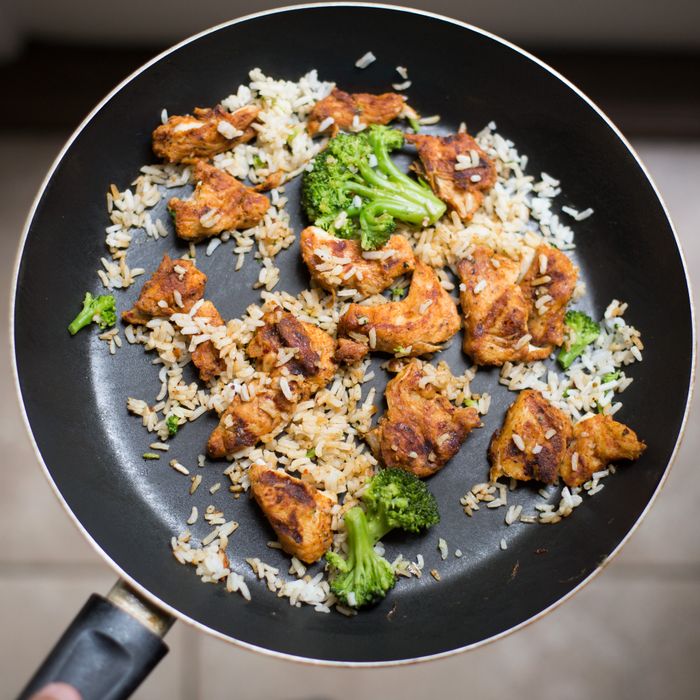
Chicken, broccoli and rice stir fry cooking in a black non-stick frying pan on a stove

This post contains affiliate links. If you buy through my links, I may earn a commission at no extra cost to you. Read the full disclosure.

The best non-stick pan for most people is the T-Fal Ultimate Hard Anodized — 4.7 stars across 14,000 reviews, titanium-reinforced coating, and a lid included at $54.99. It’s the most consistently rated pan in this category, and the reviews reflect real durability, not just a honeymoon period. One caveat: it doesn’t work on induction (which pans do). If that’s your hob type, the SENSARTE Swiss Granite at $34.98 is your pick instead.

Five pans are compared below across different price points, coatings and stove types. The comparison table below covers the full lineup at a glance. Individual reviews follow, with honest pros, real cons, and a clear verdict for each one.

Product Best For Price Rating Buy
T-Fal Ultimate Hard Anodized 12″ Best Overall $54.99 4.7★ (14,235) Check Price
CAROTE Granite 12″ Cream White Best Budget $27.99 4.6★ (35,984) Check Price
SENSARTE Swiss Granite 12″ Best for Induction $34.98 4.4★ (35,186) Check Price
OXO Enhanced Ceramic 12″ Best PFAS-Free $69.99 4.4★ (17,470) Check Price
All-Clad HA1 Hard Anodized 12″ Best Premium $99.99 4.5★ (2,832) Check Price

What I looked for

Coating type matters more than most buyers realise. PTFE coatings — used by T-Fal — are the most slippery when new and handle high heat well, but they degrade if you overheat the pan or use metal utensils. Ceramic coatings (OXO) are PFAS-free, but lose their non-stick properties faster, usually within a year or two of daily use. My guide to the best non-stick pan without Teflon compares the PFAS-free options if that is your priority.

Before replacing any pan, it is worth checking whether a sticking non-stick pan is worn or just fouled with residue, because the second is reversible. Granite and stone coatings (CAROTE, SENSARTE) sit in the middle: more durable than standard ceramic, slightly less slippery than PTFE, and all PFOA-free.

Induction compatibility — roughly half of new hob installations in the US are induction, and a pan that doesn’t list induction compatibility is a gamble. T-Fal’s otherwise excellent pan doesn’t work on induction; the other four in this guide do.

Oven safety — a non-stick pan that can go in the oven gives you more options. T-Fal is rated to 400°F; All-Clad goes to 500°F. CAROTE and SENSARTE handle up to 302°F, which covers most domestic oven uses.

Review depth — I favour pans with thousands of reviews over months, not just a launch spike. Durability issues show up in the 6–12 month reviews, not the first week.

Price realism — above $60, you’re paying for materials or brand. Below $30, you’ll likely be on your second pan within 18 months if you cook daily.

The 5 best non-stick pans

Best Overall: T-Fal Ultimate Hard Anodized Nonstick Frying Pan 12 Inch

Best for: everyday cooking on gas or electric stoves.

T-Fal Ultimate Hard Anodized Nonstick Fry Pan 12 Inch with glass lid in Onyx

The T-Fal Ultimate has 14,000 reviews averaging 4.7 stars — the highest combination of volume and rating in this category. T-fal describes the nonstick coating as titanium-reinforced (my titanium cookware guide covers what that word means), and the Thermo-Spot heat indicator (a ring in the centre of the pan that turns solid red when properly preheated) is one of the few pan features that actually changes how you cook.

The hard anodised exterior resists scratching and warping. The included glass lid means you can cover the pan without hunting for one that fits.

The critical limitation: this pan is not induction compatible. If you cook on induction — or think you might upgrade — this isn’t your pan.

  • Coating: Titanium-reinforced PTFE
  • Compatible with: Gas, electric (not induction)
  • Oven safe: 400°F (lid to 350°F)
  • Lid included: Yes (glass)
  • Dishwasher safe: Yes

Pros:

  • Highest review rating in the category (4.7★, 14K+ reviews)
  • Thermo-Spot preheating indicator is genuinely useful
  • Titanium-reinforced nonstick coating, per T-fal
  • Glass lid included in the price
  • Hard anodised exterior resists warping

Cons:

  • Not induction compatible — a significant limitation for many kitchens
  • Handle rated only to 400°F alongside the pan body
  • Not the lightest pan in the lineup

Verdict: If you cook on gas or electric and want the most dependable non-stick pan under $60, this is it. Skip it only if you have an induction hob.

Check price on Amazon

Best Budget: CAROTE Non-Stick Frying Pan 12 Inch (Cream White Granite)

Best for: buyers who want reliable non-stick performance without spending more than $30.

CAROTE cream white granite non-stick frying pan 12 inch

The CAROTE Granite has 34,000 reviews averaging 4.6 stars — more total reviews than any other pan in this guide, and that’s meaningful. The granite-speckled coating is PFOA-free and releases food cleanly from new. At $27.99, it undercuts most of the competition while still offering induction compatibility.

The realistic expectation: a pan at this price won’t perform identically to a $100 pan after 18 months of daily use. As a second pan for lighter tasks, or a first non-stick pan for someone who cooks infrequently, it’s hard to fault. The cream coating makes it easy to see food browning without squinting into a dark surface.

  • Coating: Granite stone (PFOA-free)
  • Compatible with: Gas, electric, induction
  • Oven safe: 302°F
  • Lid included: No
  • Dishwasher safe: Hand wash recommended

Pros:

  • Best value in the lineup at $27.99
  • Induction compatible at a budget price point
  • 35,000+ verified reviews at 4.6★
  • Cream coating makes browning easy to monitor
  • PFOA-free granite coating

Cons:

  • Shorter expected lifespan vs hard-anodised options with daily use
  • No lid included
  • Lower oven temperature limit (302°F)

Verdict: Buy it if you want a solid everyday pan under $30. Don’t expect it to match a T-Fal or All-Clad after two years of heavy daily cooking.

Check price on Amazon

Best for Induction: SENSARTE Nonstick Frying Pan 12 Inch (Swiss Granite Coating)

Best for: induction hob users who want performance above the budget tier without premium prices.

SENSARTE nonstick frying pan 12 inch Swiss granite coating

The SENSARTE sits at $34.98 — close to the CAROTE’s price but with meaningful upgrades. The Swiss granite coating is denser and smoother than most granite alternatives at this price, and the pan distributes heat more evenly across the base. At 34,000 reviews averaging 4.4 stars, it has a similar review profile to the CAROTE but with slightly deeper sides, making it more useful for sauces and shallow braises alongside frying.

Both the CAROTE and SENSARTE use granite coatings, so the choice comes down to cooking style. Mostly frying eggs and searing chicken? The CAROTE is fine.

One pan for frying and occasional sauce work? SENSARTE wins.

  • Coating: Swiss granite stone (PFOA-free)
  • Compatible with: Gas, electric, induction
  • Oven safe: 302°F
  • Lid included: No
  • Dishwasher safe: Hand wash recommended

Pros:

  • Induction compatible for a stove-type-agnostic choice
  • Swiss granite coating distributes heat more evenly than standard alternatives
  • Slightly deeper sides give more room for sauces
  • PFOA-free
  • 35,000+ reviews at 4.4★

Cons:

  • No lid included
  • Same 302°F oven limit as other granite pans
  • Coating can lose release over time with daily use

Verdict: The better choice over CAROTE if you cook on induction or want one pan that handles more than frying. Otherwise, CAROTE’s $7 price advantage is hard to argue with.

Check price on Amazon

Best PFAS-Free: OXO Enhanced 12 Inch Frying Pan (Ceramic Nonstick)

Best for: cooks who prioritise a PFAS-free, non-toxic coating over maximum non-stick performance.

OXO Enhanced 12 inch frying pan with PFAS-free ceramic nonstick coating in black

The conversation around non-toxic cookware is murkier than most guides admit. Modern PTFE coatings are considered safe at normal cooking temperatures. The concern is PFAS — a broader category of chemicals historically used in coating manufacture. OXO’s ceramic nonstick is made without intentionally added PFAS, and that’s a meaningful distinction for buyers who want to eliminate any uncertainty.

The trade-off is performance over time. Ceramic coatings don’t hold their non-stick properties as long as PTFE or granite alternatives. OXO mitigates this with a hard-anodised aluminium body that conducts heat well and a scratch-resistant surface that tolerates metal utensils better than most ceramic pans.

The stainless steel handle is comfortable and stays cool. At $69.99, if PFAS-free cookware is a firm requirement, there’s nothing meaningfully better at this price.

  • Coating: PFAS-free ceramic nonstick
  • Compatible with: Gas, electric, induction
  • Oven safe: 430°F
  • Lid included: No
  • Dishwasher safe: Yes

Pros:

  • PFAS-free ceramic for the most chemistry-conscious cooks
  • Hard-anodised body heats evenly
  • Rated for metal utensils — unusual in ceramic pans
  • Dishwasher safe
  • Induction compatible

Cons:

  • Ceramic coatings lose non-stick properties faster than PTFE equivalents
  • $69.99 is expensive relative to expected coating lifespan
  • Lower average rating than T-Fal and CAROTE (4.4★)

Verdict: Buy it if PFAS-free cookware is non-negotiable. If you’re primarily after non-stick performance, the T-Fal or All-Clad will serve you better at this budget.

Check price on Amazon

Best Premium: All-Clad HA1 Hard Anodized Nonstick Fry Pan 12 Inch

Best for: serious home cooks who want a pan that performs at a professional level and lasts.

All-Clad HA1 hard anodized nonstick fry pan 12 inch in black

All-Clad’s HA1 is the only pan in this guide I’d confidently recommend someone buy once and not replace. The hard-anodised construction is substantially more durable than granite stone coatings, and the 500°F oven-safe rating means you can sear on the hob and finish in a hot oven without switching pans. The nonstick interior holds up to induction heat consistently, and the stainless steel handle doesn’t wobble over time the way riveted handles on cheaper pans sometimes do.

It’s $99.99. You’re paying for durability and heat tolerance that granite and standard PTFE coatings can’t match. If you cook seriously every day and you’ve been through two or three cheap non-stick pans in recent years, this is where the economics start to make sense.

Cook twice a week? The CAROTE or SENSARTE is the more rational buy.

  • Coating: Hard-anodised nonstick (PFOA-free)
  • Compatible with: Gas, electric, induction
  • Oven safe: 500°F — highest in this lineup
  • Lid included: No
  • Dishwasher safe: Yes

Pros:

  • 500°F oven safety — highest in this lineup by a meaningful margin
  • Hard-anodised construction built for long-term daily use
  • Induction compatible
  • Dishwasher safe
  • 2,800+ reviews at 4.5★ — proven track record

Cons:

  • $99.99 — expensive for a single frying pan
  • No lid included
  • Heavier than ceramic or granite alternatives

Verdict: If you cook seriously and want a pan that lasts five-plus years, this is it. For occasional cooks or anyone budget-constrained, it’s more pan than you need.

Check price on Amazon

How to choose a non-stick pan

Coating types explained

PTFE (Teflon and equivalents) is the original non-stick surface and still one of the most effective. Modern PTFE coatings are PFOA-free. The concern isn’t that PTFE is inherently dangerous at normal temperatures — it isn’t — but some coatings historically included PFAS compounds in manufacture. T-Fal uses titanium-reinforced PTFE that’s meaningfully more durable than standard versions.

Ceramic coatings are made from silica-based compounds with no intentionally added PFAS — the right choice if you want to eliminate any chemistry uncertainty. The downside: ceramic coatings lose their release properties faster than PTFE, typically within one to two years of daily use. Granite and stone coatings (CAROTE, SENSARTE) are typically PTFE-based with a thicker, textured application that improves durability over basic ceramic. Hard-anodised aluminium (All-Clad HA1) refers to the base material — the anodising hardens the aluminium surface, with a nonstick coating applied on top.

Gas, electric, or induction?

Check this before anything else. A non-stick pan that isn’t induction-compatible is useless on an induction hob. Look for explicit induction labelling, which means the base contains ferromagnetic material.

Of the five pans in this guide, only the T-Fal Ultimate doesn’t work on induction — the other four do. If you have induction, or plan to upgrade, the SENSARTE at $34.98 or the All-Clad HA1 at $99.99 are your best options at their respective price points.

What you actually get at each price tier

Under $30 (CAROTE): a functional non-stick surface that performs well from new — expect to replace it in 18–24 months with daily cooking. $30–$60 (SENSARTE, T-Fal): meaningfully better durability; T-Fal’s titanium coating and hard-anodised exterior will outlast a granite pan. $60–$80 (OXO Enhanced): you’re primarily paying for PFAS-free certification — the performance gap between $35 and $70 is narrower than you’d expect. $85+ (All-Clad): construction quality and longevity — this is the tier where you genuinely buy once.

Oven safety — what the temperatures actually mean

302°F covers warming, not finishing. 400°F covers most domestic roasting temperatures (T-Fal’s rating). 430°F covers virtually all domestic oven uses (OXO’s rating). 500°F covers high-heat finishing and professional techniques (All-Clad’s rating).

If you want to sear on the hob and finish in the oven regularly, All-Clad gives you the most headroom.

How long should a non-stick pan last?

A realistic answer: 2–5 years, depending on coating type and how often you cook. Ceramic coatings at the lower end; hard-anodised PTFE at the higher end. The biggest factor shortening lifespan is heat — overheating a non-stick pan above its rated temperature degrades the coating faster than anything else.

Use medium heat for daily cooking, avoid metal utensils on PTFE or ceramic surfaces, and hand wash granite pans where possible. Dishwasher-safe ratings mean a pan won’t shatter in the machine — not that repeated machine washing won’t shorten the coating’s life.

Frequently asked questions

What is the best non-stick pan overall?

The T-Fal Ultimate Hard Anodized 12 Inch is the best non-stick pan for most people — 4.7 stars across 14,000 reviews, titanium-reinforced coating, lid included at $54.99. If you cook on induction, the SENSARTE Swiss Granite is your pick instead.

What is the best non-stick pan for induction hobs?

The SENSARTE Swiss Granite 12 Inch at $34.98 is the best induction-compatible non-stick pan at this price. The All-Clad HA1 at $99.99 is the best premium induction option.

Are ceramic non-stick pans better than PTFE?

Not for performance or lifespan. Ceramic coatings lose their non-stick properties faster than PTFE alternatives — typically within one to two years of daily use.

The case for ceramic is chemistry: ceramic coatings contain no intentionally added PFAS. If that’s a priority, the OXO Enhanced is the pick. If you want reliable non-stick performance that lasts, PTFE or granite coatings are the better choice.

How long does a non-stick pan last?

Two to five years, depending on coating type and daily use. Granite and PTFE coatings last longer than ceramic; hard-anodised constructions like the All-Clad HA1 last longest. The main lifespan factor is heat — overheating a non-stick pan degrades the coating faster than anything else.

Should you use oil in a non-stick pan?

Yes — even with non-stick pans, a small amount of oil or butter improves results and extends coating life. A teaspoon or a light spray is enough. Avoid aerosol cooking sprays: they leave a residue that builds up and reduces the non-stick effect. Butter or a light pour of oil is better for long-term maintenance.

Which non-stick pans should you avoid?

Avoid pans with very few reviews, no PFOA-free certification, or no specified coating material. Unknown granite-pan brands vary significantly in quality and there’s no way to verify material claims without independent testing. A suspiciously low price with a high star rating from a short review window is always worth treating sceptically.

Is the All-Clad HA1 worth the extra money?

If you cook daily and have replaced non-stick pans twice in recent years, yes. The hard-anodised construction lasts meaningfully longer than granite alternatives, and $99.99 works out cheaper over three to four years than two rounds of budget pans. If you cook occasionally, the CAROTE or SENSARTE is the more rational choice.

Can non-stick pans go in the dishwasher?

Some can — T-Fal and All-Clad are rated dishwasher safe. CAROTE and SENSARTE are hand-wash recommended, even if they won’t shatter in a machine. Dishwasher detergent is harsh; machine washing shortens the life of most non-stick coatings over time, even on pans with a dishwasher-safe rating.

The bottom line

The T-Fal Ultimate Hard Anodized is the best non-stick pan for most home cooks — the titanium-reinforced coating outlasts the competition at this price, and 14,000 reviews tell you this isn’t marketing. The one firm limitation is induction: if that’s your stove, the SENSARTE Swiss Granite is your pick.

Budget first? The CAROTE Granite delivers at $27.99 with 34,000 reviews backing it up. Cook seriously every day? The All-Clad HA1 is the only pan in this guide you won’t be replacing in two years.

For more on building out your cookware, see the guide to best cookware sets, my picks for best non-stick pans for gas stoves, and what to look for in the best omelette pan. Cooking on electric? My best frying pan for electric stove guide covers compatibility in more detail. See also my hub for all cookware guides.

How These Picks Were Chosen

Plainly: this is a research-based guide, not a hands-on test. I have not run these side by side, and nothing here should be read as a report from my own kitchen.

What the picks rest on: coating type and stated maximum temperature, base construction and thickness, induction compatibility, handle attachment and oven-safe rating; plus the complaint patterns across verified-purchase reviews, which for non-stick pans follow the same arc almost everywhere – excellent release for months, then a decline whose speed is the only real variable between products.

What I could not establish: how long each coating lasts, which is the only question that matters in this category and the one with no standardised consumer test behind it. Owner reports conflate metal utensils and high heat with genuine coating failure, so the pattern is informative about the failure and useless about the timeline.

Related guides

Related: Best Cookware Sets 2026
Related: Best Non-Stick Pans for Gas Stoves 2026
Related: Best Omelette Pan 2026
Related: Best Frying Pan for Electric Stove 2026
Related: Best Non-Stick Copper Cookware 2026

Skeptical that a $55 pan can beat a $130 one? My 602-product price-vs-satisfaction study found $23 pans and $128 pans rate within 0.01 stars of each other.

A follow-up study looking specifically at 1-2 star reviews found a different angle worth knowing: cheaper pans do have a meaningfully higher dissatisfaction rate (9.0% vs 5.5% for the priciest pans checked), even though the average star rating barely moves. Coating quality seems to affect how often a pan disappoints someone, without shifting the average much.

One rule that flips depending on the material: metal utensils are fine on stainless steel but a real problem here. See why stainless steel handles metal utensils and non-stick doesn’t.
Filed Under: Product Reviews

Best Knife Sharpener: Top Electric, Whetstone Picks

Last Updated October 8, 2026

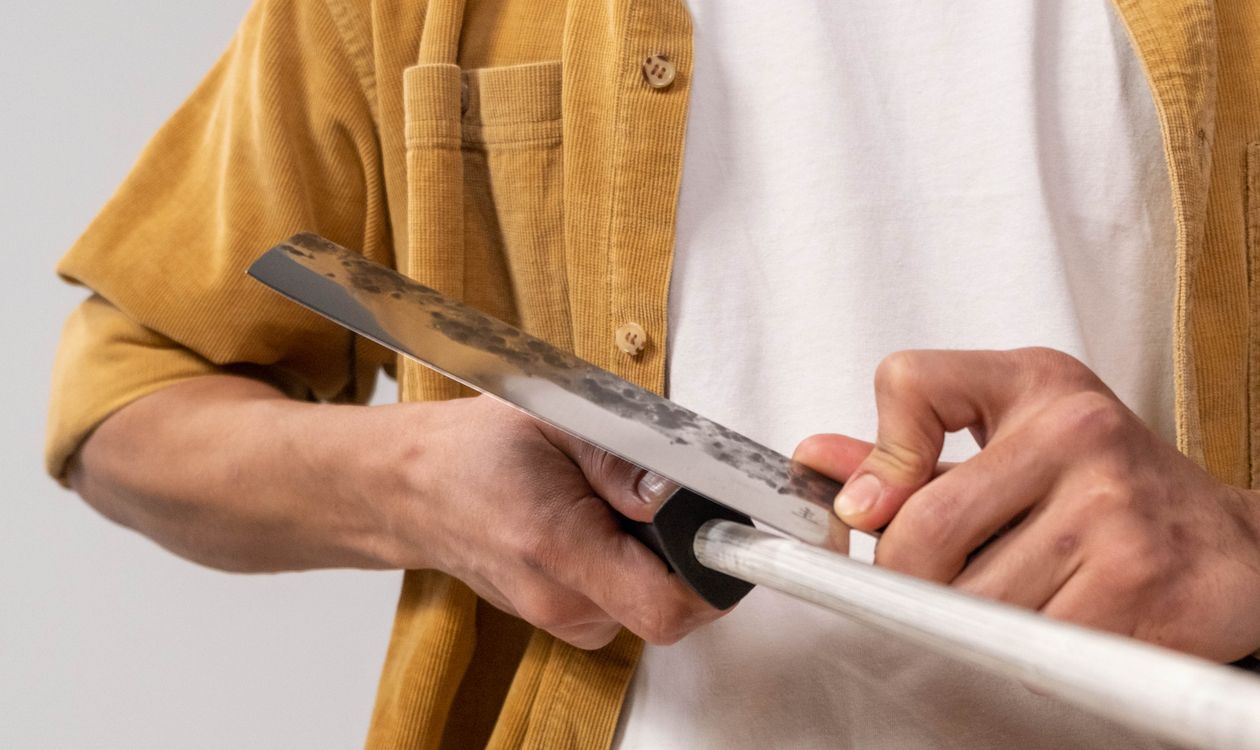
Sharpening a kitchen knife on a honing rod

This post contains affiliate links. If you buy through my links, I may earn a commission at no extra cost to you.

A $200 chef’s knife with a dull edge cuts worse than a $30 knife with a sharp one. That’s the entire economics of knife sharpeners: the cheapest meaningful upgrade to every knife you own is the tool that maintains them. Worth knowing before you buy: if sharpening already leaves your knife sharp for one cut and then dull, the tool may not be the problem. Across the five approaches — an electric sharpener, a guided system, a whetstone, a pull-through and a honing rod — here’s what each actually delivers on German and Japanese edges alike, and which one fits how you cook.

Best Knife Sharpeners — Quick Comparison

Product Best For Price Rating Buy
Chef’sChoice 15XV Trizor Best Overall (Electric) $165.99 4.6★ (14,365) Check Price
Work Sharp Precision Adjust Best Guided System $69.95 4.5★ (11,553) Check Price
Sharp Pebble 1000/6000 Whetstone Best Whetstone $39.99 4.6★ (25,673) Check Price
KitchenIQ 50009 Edge Grip Best Budget $10.07 4.4★ (97,703) Check Price
Utopia 12″ Honing Rod Daily Maintenance $15.99 4.7★ (8,368) Check Price

If you are still choosing the knife itself rather than the sharpener, the knives section collects every guide, review and comparison on the site in one place.

How These Picks Were Chosen

Plainly: this is a research-based guide, not a hands-on test. I have not run these through a cook, and nothing here should be read as a report from my own kitchen.

What the picks rest on: abrasive type and grit progression, whether the angle guide is fixed or adjustable and what angle it holds, whether that angle suits Japanese or German edges, and how much steel each mechanism removes per pass; plus the complaint patterns in verified-purchase reviews, which for sharpeners are unusually informative — the recurring one is a device that sharpens quickly by grinding away far more blade than it needs to.

What I could not establish: the consistency of the edge angle each device actually produces. That is the measurement that would separate these properly, and I found no independent test of it covering these units. The angles quoted here are the manufacturers’ stated guides, not verified output.

The Best Knife Sharpeners of 2026, Reviewed

1. Chef’sChoice 15XV Trizor EdgeSelect — Best Overall

Chef'sChoice 15XV Trizor EdgeSelect electric knife sharpener

The Trizor XV is the pick for anyone who wants sharp knives without learning a technique. Its spring guides hold the angle through two diamond-abrasive stages and a polishing stage, so the technique is a light, steady pull, though owners report scratched blade faces and, on early attempts, duller edges. It converts traditional 20-degree factory edges to Chef’sChoice’s 15-degree Trizor XV edge, which its manual describes as a triple bevel with 14-degree major facets.

Trade-offs: $165.99 is real money, it takes counter space, and the first sharpening removes noticeable metal while it re-bevels. A stone gives more control, for anyone willing to learn it.

Verdict: if you want every knife in the house sharp this afternoon and never want to think about burr angles, this is the simplest answer. 4.6★ across 14,365 owners agrees. More in my Chef’sChoice 15XV review.

Check Price on Amazon ↗

2. Work Sharp Precision Adjust — Best Guided System

Work Sharp Precision Adjust guided knife sharpening system

The Precision Adjust clamps the knife and rides an abrasive on a guided arm at your chosen angle — 15 to 30 degrees, click-adjustable. It’s the middle path: stone-like control and edge quality without stone-like skill demands. Setup per knife takes a couple of minutes, and the results on the Japanese blade in particular beat what the electric produced — you can match the factory angle exactly instead of converting it.

Trade-offs: it’s slower per knife than the Trizor, the clamp fights very tall or very short blades, and it lives in a drawer between sessions, which for some people means it lives there forever.

Verdict: the enthusiast pick. If you own knives with different edge angles and care about keeping each one authentic, this does at $69.95 what systems twice the price do.

Check Price on Amazon ↗

3. Sharp Pebble 1000/6000 Whetstone — Best Whetstone

Sharp Pebble 1000/6000 grit whetstone with bamboo base and angle guide

The traditional answer, and still the best edge available at any price — once you’ve put in the practice. The 1000 grit side rebuilds an edge; the 6000 side polishes it to the kind of sharpness that makes tomatoes surrender. This kit’s angle guide, non-slip bamboo base, and instructions make it a beginner-friendly on-ramp, and 25,673 owners at 4.6★ back that up.

Trade-offs: honesty required — your first five or so sessions will produce edges worse than the KitchenIQ manages in thirty seconds. Budget fifteen minutes per knife and a YouTube evening. Water-soak before use, flatten the stone occasionally.

Verdict: buy it if the skill appeals to you — it’s genuinely satisfying and the ceiling is the highest here. Skip it if you just want sharp knives with zero ceremony.

Check Price on Amazon ↗

4. KitchenIQ 50009 Edge Grip — Best Budget

KitchenIQ 50009 Edge Grip two-stage pull-through knife sharpener

Pull-through sharpeners get sneered at, and the sneering is half-right: carbide pull-throughs are aggressive, remove more steel than necessary, and leave a coarser edge than any other method here. Now the other half: this $10.07 gadget takes a dull knife to genuinely useful sharpness in under a minute with little skill, and its 97,703 ratings — the most of any product in this guide — are overwhelmingly from people it made happy. My 602-product study found this pattern everywhere: cheap workhorses out-satisfy premium gear.

Trade-offs: fixed angle, coarse edge, steel removal. Don’t use it on an expensive Japanese blade — ever. For the $20–$60 knives that do most kitchens’ work, none of that matters.

Verdict: the right answer for beater knives, rentals, and anyone who was never, ever going to use a whetstone.

Check Price on Amazon ↗

5. Utopia Kitchen 12″ Honing Rod — Daily Maintenance

Utopia Kitchen 12 inch honing steel rod

Not a sharpener — and that’s the point. A honing rod realigns the microscopic rolled edge that daily cutting produces, which is why a knife that “went dull” often springs back after eight strokes on steel. Hone weekly and you’ll sharpen a quarter as often, which means every other tool in this guide lasts longer and your knives keep more of their steel. Twelve inches handles any kitchen blade; the hanging hook means it actually stays near the cutting board.

Verdict: the $15.99 accessory every kitchen should own regardless of which sharpener you pick. Highest rating in this guide (4.7★) for the simplest tool in it.

Check Price on Amazon ↗

How to Choose: Electric vs Guided vs Stone vs Pull-Through

Electric (Trizor XV): fastest route to consistently sharp knives, little skill, highest price. Right for most busy kitchens.
Guided system (Work Sharp): stone-quality edges with training wheels; per-knife angle control.

Right for mixed German/Japanese collections.
Whetstone (Sharp Pebble): best possible edge, cheapest per use, real learning curve.

Right if the craft appeals.
Pull-through (KitchenIQ): adequate edges instantly, hardest on blades. Right for inexpensive knives only.
Honing rod (Utopia): not a sharpener — buy one alongside whichever you choose and use it weekly.

Honing vs Sharpening: The 30-Second Version

Sharpening removes steel to create a new edge. Honing bends the existing edge back into line without removing anything. A knife needs honing weekly and sharpening only a few times a year — if you’re sharpening monthly, you’re either skipping the honing rod or slicing on glass boards (please stop — see my cutting board guide for what your edge wants to land on). If you want the full step-by-step whetstone technique rather than just the summary, see my guide to sharpening a knife with a whetstone.

Frequently Asked Questions

How often should I sharpen my kitchen knives?

For a knife used daily: hone weekly, sharpen every 2–4 months. The tomato test tells you when — if the skin dents before it slices with no pressure, it’s time.

Do electric sharpeners ruin knives?

They can mark them. Owners of the Trizor XV report scratched blade faces and, on early attempts, duller edges, though most describe very sharp results once they follow the manual. Any electric removes more steel than a stone, so a knife sharpened electrically for twenty years wears visibly narrower.

Can I sharpen Japanese knives with these?

The Work Sharp (set to 15°) and the whetstone are the right tools. The Trizor XV works — its manual covers 15-degree Asian knives and has a separate method for single-bevel ones — but skip the KitchenIQ entirely: harder Japanese steel chips rather than folds, and carbide pull-throughs cause exactly that.

Are whetstones worth the learning curve?

If you enjoy the process, unambiguously yes — best edges, lowest lifetime cost, works on every blade shape. If you know you won’t practice, buy the electric and never look back. Be honest with yourself; the drawer full of abandoned whetstones is a cliché for a reason.

What angle should I sharpen my knives at?

German/Western knives: 20° per side traditionally, though 15–17° holds fine on modern steel. Japanese knives: 12–15°. When in doubt, match the factory edge — the guided Work Sharp makes that trivial.

Related Reading

  • Best Chef’s Knife 2026: Reviews + Buying Guide
  • Best Cutting Board for Japanese Knives
  • Are Expensive Kitchen Appliances Worth It? I Analyzed 602 Products

Filed Under: Product Reviews

Best Pullman Loaf Pan: 4 Picks Compared

Last Updated October 12, 2026

Flat-topped white sandwich bread sliced on a wooden cutting board

This post contains affiliate links. If you buy through my links, I may earn a commission at no extra cost to you.

A Pullman pan does one thing a regular loaf pan can’t: the sliding lid forces bread into a perfect square with a tight, even crumb — the flat-topped sandwich slices you get from a bakery, or the shokupan you’ve seen all over milk bread recipes. The USA Pan 9×4 Pullman is the one to buy for most bakers: commercial aluminized steel, a corrugated quick-release surface, made in the USA, and $34.22. Below it: a $13 budget option that overperforms, a corrugated CHEFMADE for the most even browning, and the 13-inch USA Pan for full-size sandwich loaves.

Working with enriched or high-hydration doughs by hand gets old quickly — if you are baking often enough to care about pan shape, a stand mixer is the next thing worth owning.

Best Pullman Loaf Pans — Quick Comparison

Product Best For Price Rating Buy
USA Pan Pullman 9×4 with Cover Best Overall $34.22 4.7★ (8,260) Check Price
KITESSENSU Pullman 1 lb with Lid Best Budget $12.99 4.5★ (2,630) Check Price
CHEFMADE Pullman 1 lb with Lid Best Even Browning $24.99 4.7★ (1,215) Check Price
USA Pan Pullman 13×4 with Cover Best Large $41.95 4.7★ (8,260) Check Price

How I Picked

Four pans, not five — the Pullman category is small, and padding a list with interchangeable no-name imports helps nobody. Every pick here was verified live on Amazon on 21 September 2026: current price, rating, and availability. Selection weighed steel gauge and coating quality, lid fit (a sticking lid ruins the whole point), size coverage across 1 lb and 2 lb doughs, and what several thousand owner reviews say happens after a year of regular baking. This is research-based, spec-verified work — the bread science comes from the recipes these pans are built around.

The 4 Best Pullman Loaf Pans in 2026

1. USA Pan Pullman 9×4 with Cover — Best Overall

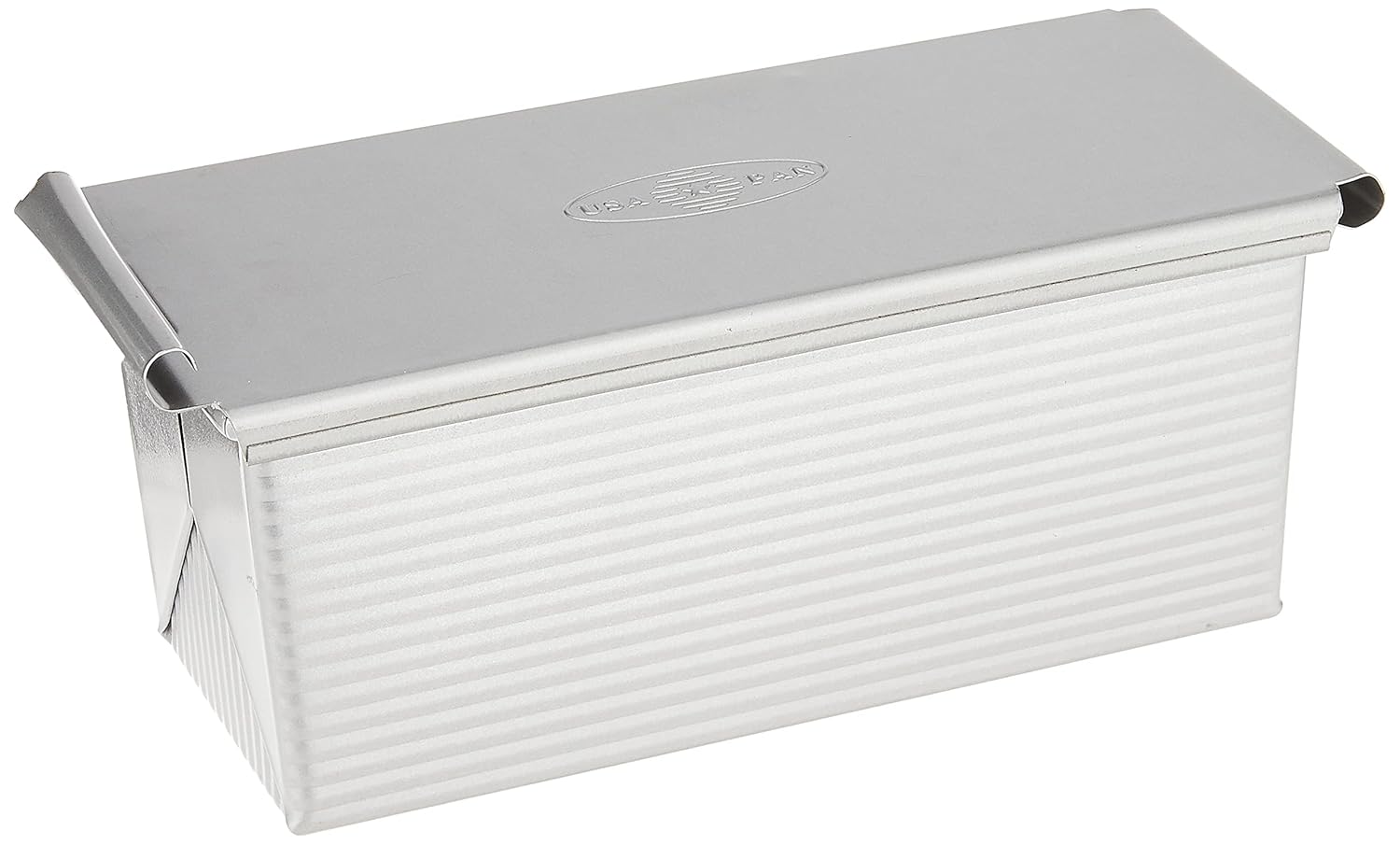
USA Pan 9x4 inch Pullman loaf pan with sliding cover

This is the pan most Pullman recipes are quietly written around. Commercial-gauge aluminized steel heats evenly without hot spots, the corrugated surface releases loaves with a gentle twist, and the lid slides cleanly instead of binding halfway — the small thing that separates a good Pullman pan from a frustrating one. It’s made in the USA by a company that supplies commercial bakeries, and it holds a 4.7-star average across 8,000+ reviews.

The 9x4x4 size takes about 1 lb of dough — the standard for shokupan and pain de mie recipes. Run it lid-off and it works as a deep standard loaf pan, so it earns its shelf space twice.

Downsides: it’s the most expensive small Pullman here, and the nonstick coating means hand-wash only — dishwashers kill it. The corrugation also leaves faint ridges on the loaf sides, which bothers exactly the kind of person who buys a Pullman pan for perfect squares.

Check Price on Amazon

2. KITESSENSU Pullman 1 lb — Best Budget

KITESSENSU gold 1 lb Pullman loaf pan with sliding lid

Thirteen dollars gets you a genuinely usable Pullman pan — carbon steel, corrugated, gold nonstick coating, sliding lid. For anyone unsure whether square sandwich bread will become a habit, this is the low-risk way to find out, and 2,500+ owners at 4.5 stars suggest most people are pleasantly surprised.

Downsides: the steel is a lighter gauge than the USA Pan, so it heats faster and can brown the bottom crust ahead of the crumb — worth checking five minutes early. Coating longevity is the honest question mark at this price; treat it gently and skip metal tools. And the lid tolerances are looser, with occasional sticking reported when dough over-proofs against it.

Check Price on Amazon

3. CHEFMADE Pullman 1 lb — Best Even Browning

CHEFMADE champagne gold corrugated Pullman loaf pan with lid

CHEFMADE’s corrugated champagne-gold pan is the browning specialist: the deep corrugation channels air along every face of the loaf, producing the most even crust color of the group — including the sides and bottom, where cheaper pans go pale or scorch. Build quality punches above the $25 price, with a heavier feel than the KITESSENSU and a lid that slides confidently. It was the one keeper from the previous version of this guide, and its 4.6-star average has held steady as reviews doubled.

Downsides: the interior runs slightly smaller than the USA Pan, so a full 1 lb recipe proofs right to the lid — scale down 5–10% or expect dense corners. Hand-wash only, like every coated pan here. And the pale gold coating shows tea-colored heat staining after a few months, which is cosmetic but visible.

Check Price on Amazon

4. USA Pan Pullman 13×4 with Cover — Best Large

USA Pan 13x4 inch large Pullman loaf pan with sliding cover

Same steel, same coating, same clean-sliding lid as the 9-inch — stretched to 13 inches for households that actually eat sandwich bread all week. This is the size delis use: around 1.5–2 lb of dough, yielding the long, uniform loaf that slices into 20+ even sandwich squares. If your 9×4 loaves vanish in two days, this is the fix.

Downsides: most published Pullman recipes are written for the 9×4, so you’ll be scaling everything up by roughly 1.5x — easy math, but a real friction point for recipe followers. It’s also a long pan that needs a full oven rack and a storage slot to match, and underfilling it produces a squat, sad loaf rather than a smaller version of the right one.

Check Price on Amazon

Pullman Loaf Pan Buying Guide

What the lid actually does

Bread in an open pan rises into a dome; bread against a Pullman lid can’t. The trapped dough compresses into a fine, tight crumb with no large holes — which is why Pullman bread makes the best toast, tea sandwiches, and French toast, and why Japanese shokupan recipes all specify one. Slide the lid off and every pan here bakes a normal domed loaf, so you’re not buying a single-trick tool.

9×4 or 13×4 — match the pan to your recipe

The small 9x4x4 takes about 1 lb of dough and matches nearly every shokupan, pain de mie, and milk bread recipe published. The 13x4x4 takes 1.5–2 lb and suits weekly sandwich-bread bakers. Buy the size your recipes call for, not the bigger one “to be safe” — an underfilled Pullman pan can’t reach the lid, which defeats the whole mechanism. Kneading larger doughs is also where a machine earns its keep; a good food processor handles 1 lb bread doughs in under two minutes.

Aluminized steel vs carbon steel

Aluminized steel (both USA Pans) spreads heat more evenly and resists rust at the cut edges; it’s the commercial-bakery standard. Carbon steel (KITESSENSU, CHEFMADE) heats faster and costs less, at some cost in evenness.

Every pan here is nonstick-coated, which means the same care rule across the board: no dishwasher, no metal tools, and they’ll outlast the coating warranty. The same rules cover most bakeware, and looking after bakeware and baking tools goes through the rest. The same logic covers your stovetop pans — my non-stick pan guide explains what actually kills coatings.

Gluten-free and enriched doughs

Pullman pans work well for gluten-free sandwich bread — the lid gives structurally weak GF doughs a shape they can’t hold on their own. If GF baking is the goal, pair the pan with my best gluten-free bread maker guide for the dough side of the equation. Enriched doughs (milk, butter, sugar) brown faster; check ten minutes early the first time.

Frequently Asked Questions

What is a Pullman loaf pan used for?

Square, flat-topped sandwich bread with a tight, even crumb — the style used for tea sandwiches, shokupan, and pain de mie. The sliding lid stops the dough doming as it bakes.

How much dough goes in a Pullman pan?

About 1 lb for a 9x4x4 pan and 1.5–2 lb for a 13x4x4. The dough should fill the pan two-thirds to three-quarters at the end of proofing so it just reaches the lid in the oven.

Do I need to grease a nonstick Pullman pan?

Lightly, yes — including the underside of the lid. The top corners are where loaves stick, and a thin coat of butter or spray on the lid prevents the one failure that ruins a Pullman loaf at the last step.

Can I bake with the lid off?

Yes. Every pan in this guide works as a standard deep loaf pan with the lid removed — you’ll get a normal domed top instead of the flat square.

Why did my Pullman loaf come out dense?

Usually too much dough or an over-proofed rise pressing against the lid too early. Compressed dough has nowhere to go; scale the recipe to the pan and lid it when the dough sits about an inch below the rim.

Are Pullman pans dishwasher safe?

No — all four picks here are nonstick-coated and hand-wash only. Dishwasher detergent degrades the coating within months. A rinse and a soft sponge is a 30-second job.

Bottom Line

Buy the USA Pan 9×4 and it will match every Pullman recipe you’ll find while outlasting the cheaper pans around it. Try the KITESSENSU first if $13 is the right level of commitment, and step up to the 13-inch USA Pan once homemade sandwich bread becomes the household default. For everything else in the kitchen, my cookware guides keep the same no-nonsense format.

How These Picks Were Chosen

Plainly: this is a research-based guide, not a hands-on test. I have not run these side by side, and nothing here should be read as a report from my own kitchen.

What the picks rest on: internal dimensions and the dough weight each pan is actually sized for, which is the specification that decides whether you get a square-sided loaf or an overflow; material and gauge; whether the lid slides freely when the pan is hot; and coating type. Plus the complaint patterns in verified-purchase reviews, which for Pullman pans concentrate on lids sticking and on coatings failing where the lid rubs.

What I could not establish: how long each coating survives the lid sliding across it, which is the wear point unique to this pan shape. No published test covers it. Gauge and coating type are the indicators used here.

You Might Also Like

  • Best gluten-free bread maker
  • Baking equipment hub: mixers, bread makers and bakeware
  • Best cookware sets
  • Best small chest freezer — freeze sliced loaves for the week
  • Best omelette pan — the other half of a proper breakfast


Filed Under: Product Reviews

Best Stainless Steel Moka Pot: 5 Picks That Actually Hold Up

Last Updated October 12, 2026

Disclosure: I earn a small commission if you buy through links on this page, at no extra cost to you.

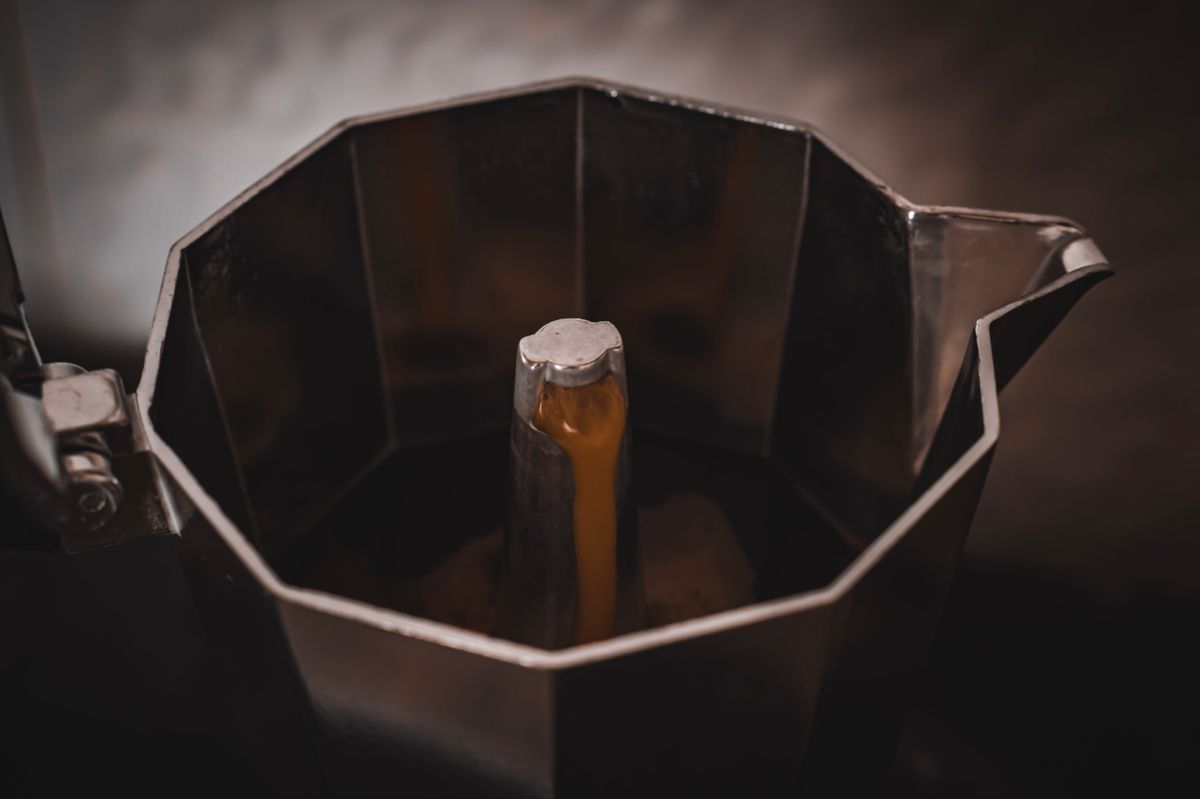
Close-up of a stainless steel moka pot upper chamber with coffee rising from the central column

Moka pots are simple — boiler, filter basket, collector chamber — but most are made from aluminum, which means no induction cooking and ongoing questions about metallic taste. If you want stainless steel specifically, the field narrows fast.

After working through five options across different price points, the Bialetti Venus Induction is my pick. It works on every stovetop including induction, uses 18/10 stainless steel throughout, and the brand has been making moka pots since 1933. At $45 it is not the cheapest option, but it has the largest review base of the five, at 4.4 stars.

Below are the five best stainless steel moka pots I’ve found, from a $29 beginner pick to a 12-cup model for larger households. This guide is part of my complete espresso and coffee guide.

Quick Comparison

Product Best For Price Rating Buy
Bialetti Venus Induction 6-Cup Best Overall $45.00 4.4★ (31,972) Check Price
Zulay Moka Pot 9-Cup Best Budget $28.99 4.4★ (19,007) Check Price
GROSCHE Milano 9-Cup Best Mid-Range $41.24 4.4★ (25,600) Check Price
Coffee Gator 4-Cup Best for Solo Drinkers $32.99 4.4★ (4,372) Check Price
Easyworkz Diego 12-Cup Best for Large Households $51.99 4.4★ (5,228) Check Price

Prices and ratings were read from Amazon.com on 6 October 2026. None of the five was sold by Amazon itself: the Bialetti, GROSCHE and Zulay offers were from third-party stores, and the Coffee Gator and Easyworkz from their own brand stores.

How I Chose These Moka Pots

The first filter: the pot has to actually be stainless steel. Many products in this category use aluminum bodies with stainless-looking exteriors, or stainless chambers sitting on aluminum boilers. I only included models where the main body and boiler chamber are 304 or 18/10 stainless steel.

Beyond material, I looked at four things:

Induction compatibility. Traditional aluminum moka pots won’t work on induction cooktops. Some stainless pots do, some don’t — it depends on whether the base contains iron. I’ve flagged which pots are induction-ready below.

Capacity sizing. A moka “cup” is roughly 1.5–2 oz of concentrated brew — not a 6-oz coffee cup. I’ve translated every size into real-world household guidance throughout this guide.

Seal and pressure valve quality. A worn gasket or missing safety valve is a safety issue, not just a leak risk. Every pot here has a functional pressure release valve.

Review longevity. Products with 1,000+ reviews across several years carry more weight than newer listings with inflated early ratings.

1. Bialetti New Venus Induction — Best Overall

Bialetti New Venus Induction stainless steel moka pot silver 6 cup

Best for: Anyone who needs a moka pot that works on induction, or wants the most trusted stainless brand without second-guessing the specs.

The Venus Induction is Bialetti’s all-stainless answer to their classic aluminum Moka Express. The body is 18/10 stainless steel and the base plate contains iron, so it works properly on induction elements — something the original Express cannot do. The octagonal shape is identical to Bialetti’s classic design, which means the pour is predictable and the pressure valve behavior is well established over millions of units.

At 6 cups (roughly 10 oz), it’s the right size for two people drinking doubles or one person making morning back-to-back rounds. The filter basket removes easily, the pressure valve holds reliably, and the black plastic handle doesn’t transfer heat at the medium-low settings good moka coffee requires. Some reviewers note the handle screw loosens after months of daily use — worth checking quarterly.

It brews slightly hotter and faster than the aluminum Moka Express. Some people prefer this; others find it makes the coffee marginally more bitter if they don’t pull it from heat the moment gurgling starts.

  • Capacity: 6 cups (~10 oz / 300 ml)
  • Material: 18/10 stainless steel body and boiler
  • Induction: Yes
  • Stovetop compatibility: Gas, electric, ceramic, induction
  • Available sizes: 2, 4, 6, 10 cup

Pros:

  • Confirmed induction compatible — uncommon at this price point
  • 18/10 stainless throughout, no aluminum body or boiler
  • Trusted Bialetti manufacturing — 31,972 reviews at 4.4★
  • Consistent pressure across all stovetop types
  • Multiple size options available

Cons:

  • Handle screw loosens over time — requires occasional tightening
  • More expensive than alternatives with comparable specs
  • Lid doesn’t lock; needs care when moving the pot

Verdict: Buy it if you have an induction cooktop or want the most reliable stainless moka pot on the market. Skip it if you’re on a tight budget with gas or electric — the Zulay or GROSCHE will produce comparable coffee for considerably less money.

Check Price on Amazon ↗

2. Zulay Moka Pot — Best Budget

Zulay stainless steel moka pot 9 cup white stovetop espresso maker

Best for: First-time moka pot buyers, or anyone who wants a solid stainless everyday pot without paying the Bialetti premium.

Under $30 with close to 19,000 reviews at 4.4 stars — the Zulay earns its spot on numbers alone. The stainless steel body is solid, the handle stays cool at medium-low heat, and the pressure valve functions properly, which isn’t guaranteed at this price point. The 9-cup size works for households where two or three people drink coffee together; for solo use, Zulay’s 3-cup or 6-cup variants are more practical and waste fewer grounds.

It’s not induction compatible, and the gasket material is adequate but not as durable as Bialetti’s. A small number of buyers report minor leaking in early uses, which typically stops once the gasket fully seats. Instructions are minimal, so complete beginners may want to look up moka pot technique separately before the first brew.

  • Capacity: 9 cups (~14 oz)
  • Material: Stainless steel body
  • Induction: No
  • Stovetop compatibility: Gas, electric, ceramic
  • Colors: White, Black, and others

Pros:

  • Under $30 with over 19,000 reviews at 4.4★ — exceptional for the price
  • Stainless steel body, not aluminum
  • Heat-resistant handle performs well at correct settings
  • Available in multiple colors and sizes
  • Safety valve included and functional

Cons:

  • Not induction compatible
  • Gasket may need replacing sooner than on premium models
  • Minimal instructions — not ideal for moka pot beginners
  • Early-use seal dripping reported on some units

Verdict: The right choice if you want a stainless moka pot under $30 and don’t need induction. Skip it if induction compatibility matters or if you’re usually brewing for one person — sizing down would serve you better.

Check Price on Amazon ↗

3. GROSCHE Milano — Best Mid-Range

GROSCHE Milano stainless steel moka pot 9 cup black stovetop espresso maker

Best for: Households where 2–4 people drink coffee every morning and want a proven pot with a decade of user feedback.

GROSCHE has been manufacturing stovetop coffee makers for years, and the Milano is their most-reviewed model. With over 25,000 reviews at 4.4 stars, it sits alongside Bialetti for overall satisfaction — at a slightly lower price and a larger base capacity.

The 9-cup version is the most popular size, and sensibly so: one brew covers 3–4 people without refilling. The stainless steel body is solid, the handle stays cool, and the filter basket screws on without cross-threading — a common issue with cheaper pots. The black exterior finish does show fingerprints and minor heat discoloration near the base with regular use, and the standard version isn’t induction compatible.

  • Capacity: 9 cups (~15.2 oz)
  • Material: Stainless steel body
  • Induction: No (standard version)
  • Stovetop compatibility: Gas, electric, ceramic
  • Available sizes: Multiple

Pros:

  • 25,000+ reviews at 4.4★ — extensive proven track record
  • 9-cup capacity serves 3–4 people in a single brew
  • Clean basket threading — easy to assemble without cross-threading
  • Competitive pricing against Bialetti at larger capacity
  • Stainless steel build throughout

Cons:

  • Not induction compatible in the standard version
  • Black exterior shows heat marks and fingerprints over time
  • Finish near the base can discolor with high-heat cooking

Verdict: Buy it if you’re serving 2–4 people daily on gas or electric and want a large-capacity pot with a long review track record. Skip it if you need induction or regularly brew just for one or two people — the 9-cup size wastes coffee grounds at low fill levels.

Check Price on Amazon ↗

4. Coffee Gator 4-Cup — Best for Solo Drinkers

Coffee Gator 4 cup stainless steel moka pot with glass top

Best for: One- or two-cup drinkers who want to see exactly when the coffee starts rising — and learn to pull the pot at the right moment.

The Coffee Gator is different from every other pot in this list: the top chamber has a transparent glass lid, so you can watch the coffee rise through the column and into the collector. This is more useful than it sounds. Knowing when to pull the pot from the heat is the single hardest skill in moka pot brewing, and being able to see the flow helps you stop it before the coffee starts burning and going bitter.

The body is stainless steel, the 4-cup size suits one or two people without overbrewing, and the build quality holds up well for $32.99. It comes with two stainless steel espresso cups included. The glass lid requires more careful handling than a standard pot — it won’t survive a drop from counter height — and the pot isn’t induction compatible.

  • Capacity: 4 cups (~6.7 oz / 200 ml)
  • Material: Stainless steel body with glass lid
  • Induction: No
  • Stovetop compatibility: Gas, electric, ceramic
  • Included: 2 stainless steel espresso cups

Pros:

  • Glass top gives real-time visual feedback on the brew — practical for learning timing
  • Compact 4-cup size — right for 1–2 people without wasting grounds
  • Stainless steel body, not aluminum
  • Includes 2 stainless steel espresso cups
  • Good value at $32.99 for the combination of features

Cons:

  • Glass lid cracks if dropped or subjected to sudden temperature changes
  • Not induction compatible
  • Glass chamber requires more careful cleaning than standard all-metal pots
  • Small capacity — needs refilling if more than 2 people are drinking

Verdict: Buy it if you’re new to moka pots and want visual feedback on the brew, or if you drink solo and want a compact format. Skip it if you regularly brew for more than two people or if your stovetop is induction.

Check Price on Amazon ↗

5. Easyworkz Diego 12-Cup — Best for Large Households

Easyworkz Diego 12 cup stainless steel induction moka pot

Best for: Families, shared households, or anyone who regularly makes moka pot coffee for four or more people in one batch.

The Easyworkz Diego handles the capacity need the other four pots don’t: 12 moka cups (roughly 20 oz) in a single brew. It’s also induction compatible, which puts it alongside the Bialetti Venus for cooktop versatility — but at more than twice the volume. Stainless steel throughout, and the safety valve is properly rated for the boiler pressure the larger water volume generates.

At $51.99, it is the most expensive pot in this roundup, with 4.4 stars on 5,228 ratings, a smaller review base than the Bialetti, Zulay or GROSCHE. The size itself is the main consideration: a 12-cup pot takes longer to heat, uses more coffee grounds per brew, and occupies more stove space. If you’re usually making coffee for one or two people, this is the wrong tool for the job.

  • Capacity: 12 cups (~17.5 oz / 520 ml)
  • Material: Stainless steel
  • Induction: Yes
  • Stovetop compatibility: Gas, electric, ceramic, induction
  • Monthly sales velocity: 400+ units/month

Pros:

  • 12-cup capacity — largest in this roundup, serves 4–6 people per brew
  • Induction compatible — one of only two in this list with that capability
  • Stainless steel body throughout
  • Strong current sales velocity (400+ units sold monthly)
  • Good option for entertaining or shared households

Cons:

  • Larger capacity means significantly more coffee grounds used per brew — wasteful for solo or couple use
  • Slightly lower average rating than the other four picks
  • Higher price without a proportionally better build over the Bialetti Venus
  • Larger footprint on the stovetop

Verdict: Buy it if you regularly brew for four or more people and want induction compatibility at high volume. Skip it if you usually brew for one to three people — you’ll overshoot capacity every morning.

Check Price on Amazon ↗

How to Choose the Right Stainless Steel Moka Pot

What “stainless steel” actually means in this category

Traditional moka pots — including the iconic Bialetti Moka Express — are made from aluminum. Stainless steel versions cost more but offer two practical advantages: induction compatibility and the absence of aluminum-reactivity concerns. The taste difference between materials is genuinely debated; most people can’t reliably tell them apart in a blind test. Induction compatibility, however, is a real functional advantage.

Not all pots marketed as “stainless steel” are fully stainless. Some use stainless steel bodies with aluminum filter baskets or boiler chambers. To confirm you’re getting a truly stainless pot, check that both the body and boiler chamber are listed as 304 or 18/10 stainless steel, not just the outer panels.

Induction compatibility

If you have an induction cooktop, you need a moka pot with an iron-containing base plate — not all stainless pots have one. Of the five pots in this guide, only the Bialetti Venus Induction and the Easyworkz Diego are confirmed induction-ready. The Zulay, GROSCHE Milano, and Coffee Gator work on gas, electric, and ceramic only. Aluminum pots can also run on induction with an adapter plate, and my guide to using a moka pot on an induction stove covers how.

On any stovetop, medium-low heat is correct. High heat produces bitter, overextracted moka coffee regardless of pot material or brand.

Sizing guide — moka cups vs real cups

Moka pot sizes are listed in “cups” but these are 1.5–2 oz espresso servings, not standard 6-oz coffee cups. A practical conversion:

  • 4-cup pot → ~6–7 oz total → good for 1–2 people
  • 6-cup pot → ~9–10 oz total → good for 2–3 people
  • 9-cup pot → ~14–15 oz total → good for 3–4 people
  • 12-cup pot → ~18–20 oz total → good for 4–6 people

Don’t buy large hoping to make less coffee — moka pots need a full filter basket to build proper pressure. A half-filled basket produces weak, uneven results.

When to replace the gasket

The rubber gasket inside every moka pot seals the upper and lower chambers. It degrades over time — typically after 2–3 years of daily use — and causes leaking around the seal joint. Replacement gaskets are available on Amazon for under $5 for most major brands. If your pot starts weeping at the joint, replace the gasket before assuming the pot is broken.

Moka pot technique — where most people go wrong

Good moka coffee depends more on technique than on the pot itself. The most common mistakes:

  • Using too high a heat setting (causes burnt, overextracted coffee)
  • Tamping the grounds (creates uneven pressure and channeling — don’t tamp)
  • Letting it brew until the sputtering stops (the coffee has already overextracted by then)
  • Using fine espresso grind (moka pots need a medium-fine grind, not espresso fine)

Pull the pot from the heat as soon as the coffee starts gurgling steadily. For induction cooktops, reduce to the lowest setting once you hear the first gurgle — induction responds faster than gas and can go from slow to rapid extraction in seconds.

For more on espresso brewing, see my stovetop espresso maker guide and my espresso grinder recommendations — the grind quality affects the cup as much as the pot does.

Frequently Asked Questions

What is the best stainless steel moka pot overall?

The Bialetti Venus Induction is the best stainless steel moka pot for most people. It uses 18/10 stainless steel, works on induction cooktops, and comes from a brand that has been making moka pots since 1933. At about $45 for the 6-cup, it has the largest review base of the five picks.

Are stainless steel moka pots better than aluminum?

Stainless steel moka pots offer two practical advantages: induction cooktop compatibility and the absence of aluminum-reactivity concerns. The taste difference between the two materials is genuinely debated — most people can’t tell them apart in a blind comparison. If you have an induction cooktop, stainless is the clear choice. On gas or electric, the difference is largely personal preference.

Can I use a stainless steel moka pot on induction?

Not all stainless steel moka pots work on induction. The base must contain iron to interact with the induction element. Of the five pots in this guide, only the Bialetti Venus Induction and the Easyworkz Diego are confirmed induction compatible. Always check the product listing for “induction compatible” before buying.

What size moka pot should I buy?

Match the size to your household. A 4-cup pot makes roughly 6–7 oz (good for 1–2 people), a 6-cup makes ~10 oz (2–3 people), a 9-cup makes ~15 oz (3–4 people), and a 12-cup makes ~20 oz (4–6 people). Moka pots don’t brew well at partial capacity — the filter basket needs to be full to build correct pressure, so buy the size you’ll actually fill each morning.

How long does a stainless steel moka pot last?

A quality stainless steel moka pot should last 10–15 years with basic care. The body is essentially indestructible; what wears out is the rubber gasket (replace every 2–3 years for around $5) and occasionally the filter basket. Handwashing is strongly recommended regardless of manufacturer claims — dishwashers degrade the gasket material significantly faster.

Is the Bialetti Venus worth paying more than budget alternatives?

Yes, if you have an induction cooktop — the Venus Induction is one of the few stainless moka pots that’s genuinely induction-ready, and the Bialetti engineering is well proven. On gas or electric, the GROSCHE Milano and Zulay produce comparable coffee quality for substantially less. The price difference buys you the Bialetti brand reputation and induction compatibility, not a meaningfully better cup of coffee on non-induction stoves.

No stove where you’re brewing? A portable burner works fine with a moka pot — my best hot plates for boiling water guide covers which types suit small stainless pots (induction models need that magnetic base).

How These Picks Were Chosen

Plainly: this is a research-based guide, not a hands-on test. I have not run these side by side, and nothing here should be read as a report from my own kitchen.

What the picks rest on: whether the body is genuinely stainless rather than aluminium with a steel-look finish, which decides induction compatibility and how the pot handles dishwashing; cup size in the Italian sense – a moka “cup” is about 50ml, not a mug – along with gasket material and how easily gaskets and filter plates can be replaced; plus the complaint patterns in verified-purchase reviews, which cluster on gaskets perishing and handles loosening.

What I could not establish: extraction quality, which in a moka pot depends far more on grind, heat level and how promptly you take it off the hob than on the pot. Comparing brews across these without controlling all three would be measuring the technique. What can be said is which pots are built to last and which have replaceable parts.

The Bottom Line

The Bialetti Venus Induction is the one I’d recommend without qualification — induction compatible, 18/10 stainless throughout, and backed by a manufacturer that has been making this exact type of pot for over 90 years.

If budget is the priority, the Zulay delivers strong everyday performance at $29 with over 19,000 reviews to back it up. For households of four or more, the Easyworkz Diego is the only widely available 12-cup induction-compatible stainless pot in this price range.

If you want to step up from stovetop brewing entirely, my semi-automatic espresso machine guide covers the next tier, and moka pot vs espresso explains what changes. And if you’re serious about the grind — which matters as much as the pot — see my espresso grinder recommendations.

Filed Under: Product Reviews

Best Espresso Machine Under $200: Reviews + Buying Guide

Last Updated October 28, 2026

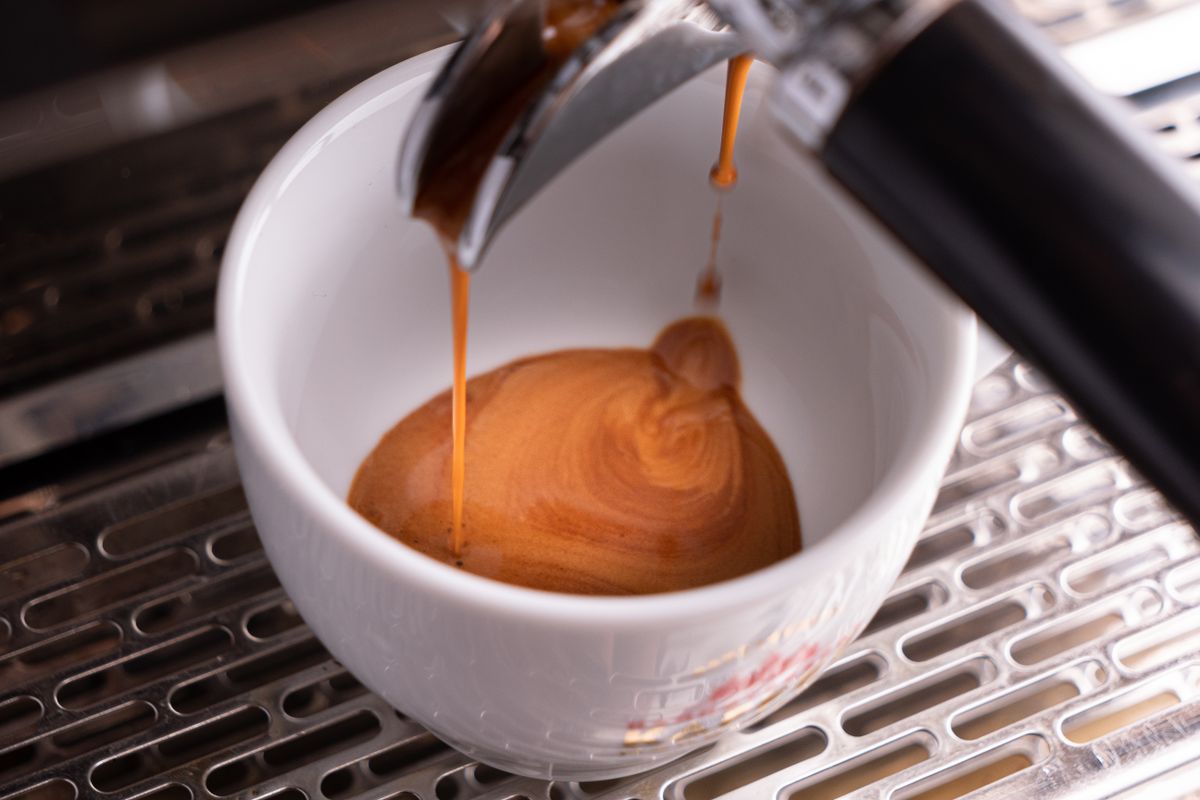
Espresso pouring from a portafilter into a white cup, showing a thick layer of crema

I earn a commission if you buy through the Amazon links below, at no extra cost to you.

Good espresso at home no longer requires a $500 investment. A new wave of well-engineered machines has pushed quality espresso into the sub-$200 bracket — machines that can pull a proper shot with real crema, steam milk for lattes, and hold up to daily use. The question worth asking in this bracket is which machines deliver real crema rather than marketing claims, so the picks below are sorted on pump pressure, basket type and what owners consistently report about shot quality. This guide covers the four best espresso machines under $200 in 2026, from beginner-friendly pod machines to semi-automatic pump espresso makers.

Part of my complete coffee guide — all reviews, comparisons, and buying advice in one place.

Best Espresso Machines Under $200 — Quick Comparison

ProductBest ForPriceRatingBuy
Casabrews 3700Best Overall Under $200$99.994.2★ (3,680)Check Price
De’Longhi StilosaLongest Owner Record$149.954.2★ (13,901)Check Price
Nespresso Essenza MiniBest for Convenience$172.354.6★ (6,074)Check Price
Gevi 20-BarPick With a Pressure Gauge$139.994.3★ (3,767)Check Price

Reviews

1. Casabrews 3700 — Best Overall Under $200

Casabrews 3700 espresso machine

At $99.99 the Casabrews 3700 is the cheapest machine in this guide and $40 less than the Gevi. It has a 20-bar pump, a 51mm portafilter with one-cup and two-cup filters, a 43.9 oz removable water tank and a steam wand, and the listing describes low-pressure pre-infusion. There is no milk pitcher in the box: Amazon lists the machine, the tank, the two filters, the portafilter and a tamper with spoon.

Its owner record is better than the Gevi’s but not clean. 417 of the 1,607 written reviews for this exact model are critical (26%, against the Gevi’s 30%). The complaints that recur are machines that stop heating or steaming after a few months, a plastic or chemical smell that some owners could not flush out, and a portafilter that is stiff to lock in.

The positive reviews mostly praise how easy it is as a first espresso machine and the value at this price. If you are weighing it against its sibling, the CM5418, my Casabrews CM5418 vs 3700 Essential comparison sets the two side by side.

It takes the overall spot because it combines the lowest price here with the lowest critical share of the three pump machines. That is a relative advantage: a quarter of its written reviews are still critical.

Pros: Lowest price in this guide, 43.9 oz water tank, pre-infusion
Cons: Failures after a few months recur in owner reviews; some owners report a plastic smell; no pressure gauge
Best for: Most buyers in this bracket, and anyone buying a first espresso machine on a tight budget

Check Price on Amazon →

2. De’Longhi Stilosa — Longest Owner Record

De’Longhi Stilosa manual espresso machine

The Stilosa is a compact manual pump espresso machine. Amazon’s listing describes a 15-bar pump, a stainless steel boiler, a manual steam wand and a 1-litre water tank, with a portafilter, a tamper and scoop, and two filters for single or double shots. It is not automatic: you tamp the coffee, control the shot and steam the milk yourself. My De’Longhi Stilosa review covers what owners report.

Its owner record is long rather than clean. The listing has 13,901 ratings, the most of any pump machine here, but 1,323 of its 3,625 written reviews are critical (37%, against the Gevi’s 30% and the Casabrews’ 26%). Of the first 30 critical reviews on the listing, 12 describe the machine failing or stopping working, and others mention a plastic feel and drip tray spills.

Pros: Real 15-bar pump espresso, stainless steel boiler, the longest owner record of the pump machines here (13,901 ratings), $149.95
Cons: 37% of written reviews are critical, a higher share than the Gevi or Casabrews; failures and a plastic feel recur in critical reviews; manual operation has a learning curve and the steam wand takes practice
Best for: Anyone who wants real espresso from a compact, widely owned machine and does not mind learning to control the shot.

Check Price on Amazon →

3. Nespresso Essenza Mini — Best for Convenience

Nespresso Essenza Mini espresso machine

The Nespresso Essenza Mini is the smallest and most convenient option in this list. Insert a capsule, press a button, get espresso. There is no grinding, no tamping, no learning curve.

The trade-off is flavour control — you are limited to Nespresso’s capsule range — but the convenience is unmatched for busy mornings. Pair it with a Nespresso Aeroccino milk frother for lattes.

Pros: Tiny footprint, one-touch operation, very fast, consistent results
Cons: Proprietary capsules (ongoing cost); less flavour control than ground coffee
Best for: Convenience-focused users, small kitchens, office environments

Check Price on Amazon →

4. Gevi 20-Bar — Pick With a Pressure Gauge

Gevi 20-Bar espresso machine

The Gevi 20-Bar offers a 20-bar pump (higher pressure than many competitors), a stainless steel body, and a steam wand for $139.99. Owners who get a good unit praise the espresso for the price, but 30% of the written reviews for this listing are critical, mostly about early failures, and the Casabrews above costs $40 less with a lower critical share. What the Gevi adds is a pressure gauge, which the Casabrews 3700 does not have. My Gevi 20-Bar review covers the owner reports.

Pros: Built-in pressure gauge, pre-infusion, stainless steel housing
Cons: Reports of units failing within the first year; plastic tamper
Best for: Buyers who want a pressure gauge to read their shots

Check Price on Amazon →

Espresso Machine Buying Guide

Do I need a pump espresso machine or will a stovetop Moka pot do?

A pump machine produces true espresso — pressurised extraction at 9–15 bar that creates the characteristic crema on top. A Moka pot brews strong, concentrated coffee but at lower pressure, so there is no crema and the flavour profile is different. If espresso taste and crema matter to you, get a pump machine. If you want strong coffee on a very tight budget, a Moka pot is fine.

Do I need a built-in grinder?

A built-in grinder (called a “bean-to-cup” machine) is convenient but pushes most machines well above $200. For the best espresso quality on a budget, buy a separate burr grinder — even a manual hand grinder around $30–$50 will outperform the built-in grinders on budget machines.

What is the difference between 15-bar and 20-bar?

Both are more than sufficient for espresso extraction. The ideal extraction pressure is 9 bar — both 15-bar and 20-bar pumps deliver this via a pressure regulator. The higher bar rating is largely a marketing figure. Focus on build quality and user experience rather than pump bar ratings.

Bottom line: For most people wanting real espresso on a budget, the Casabrews 3700 is the best value, with the lowest price and the lowest critical share of the pump machines here. The Stilosa has the longest owner record, and if convenience is the priority, go Nespresso.

The Stilosa is compared against the more expensive Breville Bambino Plus in my Bambino Plus vs De’Longhi Stilosa head-to-head. Worth reading if you want to understand what an extra $340 actually buys you. And if you’re already leaning toward spending more, my Breville Bambino Plus review covers whether the ~$500 price is justified.

If your budget stretches further, my best espresso machine under $500 guide covers the next tier up — the Breville Bambino Plus and Gaggia Classic Pro are both significant upgrades worth considering if the price difference is workable.

How These Picks Were Chosen

Plainly: this is a research-based guide, not a hands-on test. I have not run these side by side, and nothing here should be read as a report from my own kitchen.

What the picks rest on: whether the portafilter basket is pressurised or not, which at this price is the single most consequential specification and the one least often stated plainly; boiler or thermoblock type and warm-up time; steam wand design and whether it is a panarello; and portafilter diameter, since a 58mm machine can take standard accessories and a proprietary size cannot. Plus the complaint patterns across verified-purchase reviews, which under $200 concentrate on pumps failing inside two years and plastic portafilters flexing.

What I could not establish: how the espresso tastes. Under $200 the cup is decided by the grinder and the technique far more than by the machine, and separating the three would need controlled testing this guide has not done. What can honestly be said is what the hardware does and does not let you control.

Frequently Asked Questions

Can you make good espresso for under $200?

Yes, but with trade-offs. Machines like the De’Longhi Stilosa and Gevi 20-Bar pull a respectable shot — better than pod coffee, not as consistent as a $400+ machine. Expect good espresso most of the time with occasional channelling. Dialling in your grind matters more than the machine at this price.

Do you need a separate grinder for a budget espresso machine?

If you want the best results, yes. Pre-ground coffee loses freshness quickly. A decent burr grinder ($50–80) paired with any of the pump machines here will outperform a $300 all-in-one machine using stale pre-ground. It is the single biggest upgrade you can make at any budget.

Is 15-bar or 20-bar better for espresso?

Neither is inherently better — this is mostly marketing. Real espresso extracts at 9 bar. Both 15-bar and 20-bar machines regulate pressure down to a working level.

What matters is how consistently they hold that pressure through extraction. The Gevi and Casabrews both rate at 20 bar.

How long do budget espresso machines last?

Owner reports for $100–200 machines vary widely, and the Gevi’s include many failures within the first year. The Stilosa has the longest owner record among the pump machines here: 13,901 ratings, against 3,767 for the Gevi and 3,680 for the Casabrews, though failures recur in its critical reviews too. Descale every 2–3 months with hard water, every 4–6 months with soft water. Skipping descaling is the number one cause of early failure.

Which machine is easiest for a complete beginner?

The Nespresso Essenza Mini, if you do not mind pods: there is no grinding, tamping or milk technique to learn. Among the pump machines, start with the Casabrews 3700, the overall pick here, which owners mostly praise as an easy first machine. The Stilosa has the longest owner record, but its manual steam wand takes practice.

Can these machines steam milk for lattes and cappuccinos?

The three pump machines include a steam wand; the Essenza Mini does not, and needs a separate frother such as the Aeroccino. The Stilosa has a manual steam wand, which takes practice to get smooth texture. At this price point, expect flat-white quality rather than latte art competition foam.

If the sub-$200 bracket feels like a compromise, it isn’t: my price-vs-satisfaction study of 158 espresso machines found the priciest machines actually rate lower than the cheapest ones.

A follow-up study on owner dissatisfaction rates backs this up from a different angle: espresso machines had the highest 1-2 star review rate of any category checked (11.75% average) — and it stayed high across every price point, including a $549.95 model at 10%. There’s no price tier that reliably avoids the frustration.

Filed Under: Product Reviews

  • « Go to Previous Page
  • Page 1
  • Interim pages omitted …
  • Page 33
  • Page 34
  • Page 35
  • Page 36
  • Page 37
  • Interim pages omitted …
  • Page 41
  • Go to Next Page »

Recent Articles

  • Coffee Grinder Static: Why It Happens and How to Fix It
  • How to Descale an Electric Kettle
  • Saucepan vs Saucier: Which Pan Do You Need?
  • Espresso Shot Troubleshooting: Fast, Slow, Sour or Bitter
  • How to Clean a Coffee Grinder: What Makers Say

Search


HOME          Contact          Affiliate Disclosure          Terms of Service          Privacy Policy


kitchenwarecompare.com is a participant in the Amazon Services LLC Associates Program, an affiliate advertising program designed to provide a means for sites to earn advertising fees by advertising and linking to Amazon.com, Endless.com, MYHABIT.com, SmallParts.com, or AmazonWireless.com. Amazon, the Amazon logo, AmazonSupply, and the AmazonSupply logo are trademarks of Amazon.com, Inc. or its affiliates. As an Amazon Associate I earn from qualifying purchases.


Copyright © 2026 kitchenwarecompare.com, ALL RIGHTS RESERVED.