• Skip to primary navigation
  • Skip to main content
  • Skip to primary sidebar

Kitchenware Compare

  • Home
  • Product Reviews
    • Air Fryers
    • Coffee
    • Cookware
    • Flat Top Grills
    • Meat Thermometers
    • Food Processors
    • Knives
    • Pizza Ovens
    • Toaster Ovens
    • Juicers
  • Food Blog
  • Helpful Kitchen Tips
  • Data Studies
  • About
  • How I Review
  • Contact
You are here: Home / Archives for Glenn

Can You Use Copper Pans on an Induction Cooktop?

Last Updated October 21, 2026

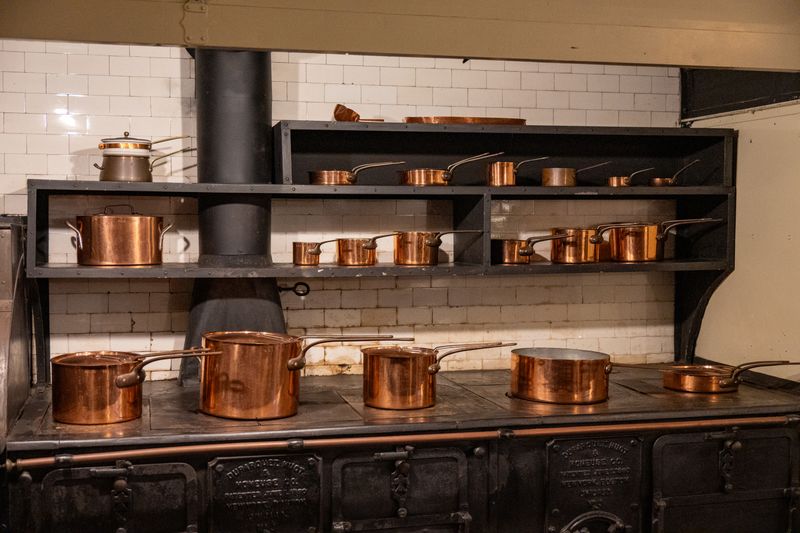
Copper pots and pans on shelves above an old-fashioned kitchen stove
Photo by Beth Fitzpatrick from Pexels

This guide has no affiliate links, but some pages it links to do. If you buy through those, I may earn a commission at no extra cost to you.

Only some copper pans work on an induction cooktop. Pure copper is not magnetic, so a traditional copper pan will not heat on its own. Copper pans built with a magnetic stainless steel layer work directly, and traditional copper works with a magnetic interface disk.

Which one you own decides the answer, and the sections below sort the three cases.

Why a copper pan will not heat on induction

Whirlpool’s help page says aluminum and copper typically do not work on induction unless they have a magnetic base. Mauviel, a French copper cookware maker, gives the mechanism on its induction cookware guide: the cooktop induces current in the base of the pan, but only if the base contains a ferromagnetic metal such as magnetic stainless steel or iron. Copper conducts heat extremely well and is not ferromagnetic, so the field passes through a traditional copper pan without heating it.

That is why a good conductor can still fail on this type of cooktop. The same applies to aluminum, which is what most copper-colored nonstick pans are made of.

It also explains why makers bother. Mauviel calls copper one of the best thermal conductors of any cookware metal, and All-Clad describes its five-layer bonding as a balance between fast heating and heat retention. The clad lines below exist to keep that conduction while adding the one layer induction needs.

The three kinds of copper pan

Kind of pan Examples On induction by itself?
Traditional copper, tin-lined, stainless-lined or unlined Mauviel M’Heritage, M’Tradition, M’Passion No; works with a magnetic interface disk
Clad copper with a magnetic stainless layer Mauviel M’6 S, All-Clad Copper Core, Hestan CopperBond Yes, according to each maker
Copper-colored nonstick, usually aluminum Gotham Steel and Moss & Stone pans Depends on the base; check the listing

The third group is where most disappointment comes from. This site’s best non-stick copper cookware guide describes these pans as aluminum with a copper-colored finish, and found that induction depends on the set: some list it and some do not.

Which copper pans are made for induction

Three makers say outright that a copper line works on induction.

  • Mauviel M’6 S. Mauviel describes six layers: a polished copper exterior, three layers of aluminum, a ferromagnetic stainless steel layer, and an 18/10 stainless interior. The magnetic layer is the part the cooktop heats, and the copper and aluminum spread that heat.
  • All-Clad Copper Core. All-Clad’s collection page says the copper core is surrounded by aluminum and finished with a stainless interior, with a stainless steel exterior that is induction compatible, and that the line works on all stovetops including induction and to 600°F in the oven.
  • Hestan CopperBond. Hestan’s collection page describes a 100% pure copper core in five-layer construction, and lists the CopperBond Induction range among the first induction-hob-suitable copper pan sets.

Mauviel’s guide is the most detailed of the three, because it sorts every line it sells:

Mauviel collection Construction Induction
M’6 S Six-ply induction copper with a magnetic stainless layer Yes
M’COOK, M’Elite and their B versions Five-ply stainless steel Yes
M’URBAN 4 Three-ply stainless steel Yes
M’STEEL Carbon steel Yes
M’Heritage (M’150, M’200, M’250) Bilaminated copper, stainless steel interior With interface disk
M’3 S Three-ply, copper exterior, stainless steel interior With interface disk
M’Tradition Tin-lined copper, to be kept below 460°F (235°C) With interface disk
M’Passion Unlined copper, specialty pieces With interface disk

Only one of Mauviel’s seven induction-ready collections is copper. The other six are stainless steel or carbon steel, so a pan can carry the Mauviel name and still not be a copper pan.

Using a copper pan you already own

If you own traditional copper, Mauviel says you do not need to replace it. Its magnetic interface disk sits between the burner and the pan: the induction field heats the disk, and the disk passes that heat to the copper above it. The disk Mauviel names is the 8.6-inch M’PLUS.

  1. Place the disk flat on the induction zone.
  2. Set the copper pan on top, centered.
  3. Start at moderate power. Mauviel says about 60% of maximum is usually plenty for copper.
  4. Adjust gradually, because the disk adds a heat-transfer step and the pan responds a little more slowly than native induction cookware.

A similar adapter exists for aluminum moka pots. This site’s guide to using a moka pot on an induction stove covers Bialetti’s plate.

Mauviel is also a seller, so its disk guidance is the maker’s own advice rather than an independent test, and it gives no rule for how large a zone the disk needs. Your hob’s manual sets its own minimum size, which Jenn-Air’s help page says to match to the pan’s base.

Native induction copper or a disk on copper you own?

The choice comes down to whether you already own copper. Mauviel’s own advice is that you do not need to replace traditional copper, and that an interface disk is the way to keep using it.

Route How it works What it costs you
Traditional copper plus an interface disk Keep your pans; the disk sits between the zone and the pan A heat-transfer step and a slower response, per Mauviel; a second item to store; start near 60% power
Clad copper made for induction Cook directly; the magnetic stainless layer is what the zone heats A new purchase; All-Clad says to hand-wash its Copper Core line
Induction-ready steel from a copper maker Cook directly on stainless or carbon steel No copper at all; Mauviel’s other six induction-ready collections are of this kind

If the reason for wanting copper is even heat and quick response rather than the look, the third row is worth knowing about. The makers’ own induction pages treat it as a normal part of the range.

How to tell which kind you have

Start with the maker’s wording. A line described as induction-ready or induction-compatible is the clad kind, and a line sold as traditional, tin-lined or unlined copper is not. Mauviel’s guide and All-Clad’s page both state it by name.

The magnet test is the quick check for anything else. Whirlpool says to hold a magnet against the base: if it sticks firmly the pan is induction compatible, and if it slides off it is not. A copper-exterior pan is the awkward case. Mauviel’s M’6 S has copper outside and the magnetic layer deeper in, and Mauviel does not say how a magnet behaves on it, so for that construction the maker’s statement is the better guide than a magnet.

A stainless pan with a copper-clad base is the same test, because the base is what the cooktop reads. Whirlpool’s magnet check settles it, and no maker statement was checked for older copper-bottom lines.

What to check in a listing

  • The maker’s induction statement. Mauviel and All-Clad state induction compatibility on their own pages. A reseller’s tick box is weaker evidence, as the copper nonstick examples above show.
  • Where the magnetic layer sits. All-Clad’s is the stainless exterior. Mauviel’s M’6 S has it inside, under a copper exterior.
  • The lining. Mauviel’s M’Heritage and M’6 S have stainless interiors, M’Tradition is tin-lined and to be kept below 460°F (235°C), and M’Passion is unlined.
  • The oven limit. All-Clad gives 600°F for Copper Core, and the tin lining sets Mauviel’s lower limit for M’Tradition.
  • Whether a disk is needed. A line that says “with interface disk” will not heat alone, so add the disk to the cost.
  • Care instructions. All-Clad recommends hand-washing Copper Core, with warm water and mild soap, and moderate cooking temperatures.

What usually goes wrong

  • Buying copper color rather than copper. A copper-colored finish on aluminum has the cooking behavior of aluminum, and the induction question then depends entirely on the base.
  • Trusting the word “induction” in a listing. On this site’s copper nonstick guide, one reviewer of the Moss & Stone pan said theirs did not work on induction despite the listing, and Consumer Reports found a related Gotham Steel set could not be used on induction.
  • Letting a copper pan boil dry or overheat on the glass. GE’s page on cookware for glass cooktops says copper-bottom pans can leave a residue that looks like scratches, which cleans off if you act quickly, and that an overheated copper pot will leave a residue that permanently stains the cooktop. It is written for radiant glass rather than induction, but an induction cooktop has a glass surface too, so the caution is a reasonable one even though GE does not state it for induction.
  • Running copper too hot. Copper conducts so efficiently that Mauviel puts about 60% of maximum power as plenty, so the top settings are rarely needed.
  • Overheating a tin lining. Mauviel says to keep tin-lined M’Tradition below 460°F (235°C).
  • Expecting the disk to behave like a native pan. It adds a step, so the response is slower, as Mauviel itself notes.

How this guide was put together

The facts come from the makers’ own pages (Mauviel, All-Clad and Hestan), from Whirlpool’s and Jenn-Air’s help pages on induction cookware, from GE’s page on cookware for glass cooktops, and from this site’s own reviews of copper-colored nonstick pans. It does not come from cooking on an induction hob.

Several things could not be established. No source used here measured how a magnet behaves on a copper-exterior pan such as the M’6 S. No independent test comparing an interface disk with a native induction copper pan turned up. Brands other than Mauviel, All-Clad and Hestan, including Ruffoni and Falk Culinair, were not checked for this guide.

Frequently Asked Questions

Can you use copper pans on an induction cooktop?

Only some. Pure copper is not magnetic, so traditional copper pans will not heat alone. Clad copper with a magnetic stainless layer, such as All-Clad Copper Core or Mauviel M’6 S, works directly, and traditional copper works with a magnetic interface disk, according to the makers.

Do you need an interface disk for copper cookware?

Only for traditional copper. Mauviel says its M’Heritage, M’Tradition, M’3 S and M’Passion lines work on induction with its magnetic interface disk, while its M’6 S copper line and its stainless steel lines work without one. Clad lines from All-Clad and Hestan also do not need a disk.

How can you tell if a copper pan works on induction?

Check the maker’s induction statement first, then hold a magnet to the base. Whirlpool says a magnet that sticks firmly means the pan is induction compatible. Copper-exterior pans with the magnetic layer inside are the exception, so rely on the maker’s wording for them.

Does Copper Chef cookware work on induction?

This site’s review of the Copper Chef Titan Pan says its stainless exterior is magnetic, so it works on induction. It is a ceramic-coated pan over stainless steel and aluminum, not a copper pan, so the copper name does not tell you anything about induction.

What power setting should copper use on induction?

Mauviel says about 60% of maximum power is usually plenty for copper, and to adjust gradually, particularly with an interface disk. Hobs label power differently, so treat that as a starting point and raise it only if the pan is slow to heat.

Is clad copper still real copper?

Yes, but the copper is arranged differently. All-Clad’s copper sits inside a core under a stainless exterior, Hestan describes a pure copper core, and Mauviel’s M’6 S keeps a copper exterior. In each, the magnetic stainless layer is what the cooktop heats.

Will a copper pan stain or scratch an induction cooktop?

GE says copper-bottom pans can leave a residue on glass that looks like scratches and cleans off if acted on quickly, and an overheated copper pot can leave a permanent stain. Its page covers radiant glass, so treat it as caution for induction, not a rule.

The short version

Check what kind of copper you have before you buy or cook. Clad lines from Mauviel, All-Clad and Hestan work on induction directly, traditional copper needs a magnetic interface disk, and copper-colored nonstick depends on its base. For the wider picture see this site’s guide to cookware that works on induction, and for pans with a copper finish read the best non-stick copper cookware guide and the Copper Chef Titan Pan review.
Filed Under: Helpful Kitchen Tips

Moka Pot vs Espresso: Pressure, Strength, Cost and Upkeep

Last Updated November 8, 2026

This guide has no affiliate links, but some pages it links to do. If you buy through those, I may earn a commission at no extra cost to you.

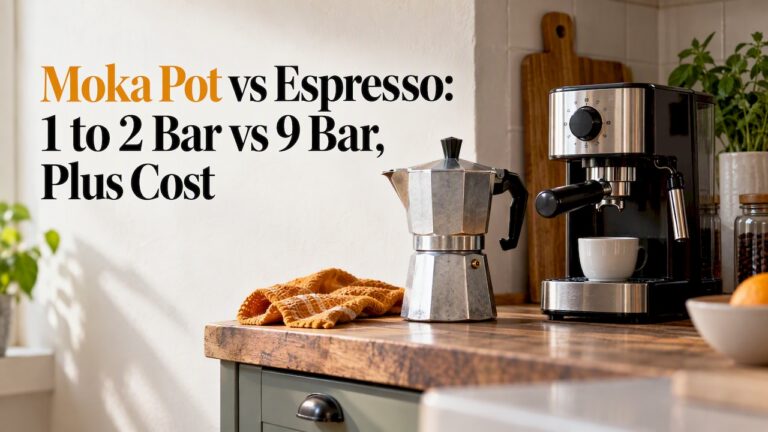
Moka pot and espresso machine on a counter

If you want crema and milk drinks, an espresso machine is the better buy; if you want a strong, inexpensive stovetop brew that comes close to espresso without the equipment cost, a moka pot is a good choice. The decision comes down to pressure (bars), strength (total dissolved solids, or TDS) and how much you want to spend. The figures here come from the Specialty Coffee Association’s definition of espresso and Wikipedia’s moka pot article.


TL;DR:

  • A moka pot brews at about 1 to 2 bar and 3 to 4% TDS, while espresso reaches 9 to 10 atmospheres and about 9 to 10% TDS.
  • A moka pot is a small one-time cost; an espresso machine costs far more and usually needs a separate grinder, and this site’s espresso guides run from under $200 to under $1,000.
  • Espresso machines need time to warm up, plus routine cleaning and descaling on a schedule set by your water hardness and the maker’s manual.
  • Use a medium fine grind in a moka pot, keep water below the safety valve, and remove it when gurgling begins to limit bitterness.
  • For espresso, most baristas in a 2017 Barista Guild survey dosed 18 to 20 grams and averaged about a 1:2 ratio, such as 20 grams in and 40 out, and about half averaged 25 to 30 seconds.

Quick side-by-side comparison of pressure, taste, and cost

Here is how the two methods stack up on the metrics that actually change what ends up in your cup.

Metric Moka pot Espresso machine
Pressure about 1 to 2 bar 9 to 10 atmospheres
Typical brew time 4-6 minutes on the stove 20-30 seconds
Recommended grind Medium-fine Fine, espresso-specific
Typical TDS / strength about 3 to 4% 9 to 10%
Crema presence Minimal to none Consistent, defining feature
Cost range A one-time cost for the pot itself Much higher, plus a separate grinder

A few things follow directly from that table. If milk drinks like lattes or cappuccinos are a daily habit, you need the crema and microfoam-ready shot only an espresso machine delivers. If you mainly drink your coffee black and want something strong without a big upfront cost, the moka pot gets you most of the intensity for a fraction of the price. Counter space and daily time also diverge sharply: a moka pot lives in a drawer between uses, while a machine usually stays plugged in and warmed up.

How extraction and pressure differ: why moka pot isn’t espresso

The gap starts with pressure. The Specialty Coffee Association’s heritage definition describes espresso as a 25 to 35 ml beverage made from 7 to 9 grams of coffee, with water forced through at 9 to 10 atmospheres and a brew time of 20 to 30 seconds. Wikipedia’s moka pot article gives a typical moka pot pressure of 1 to 2 bar, generated by steam pressure in the lower chamber rather than a pump, and says standards for espresso specify 9 bar.

The blog Coffee Ad Astra describes two ways coffee extracts: erosion, which dominates in espresso and Turkish brews because of their very fine grind, and diffusion, which dominates in filter brews and is much slower. That post does not discuss moka pots. A medium-fine grind and a longer brew point toward more diffusion than espresso, but that is an inference, not something the source states.

Two outcomes follow:

  • Espresso’s short, forceful extraction concentrates flavor and oils into a small volume, producing a thicker, more intense shot.
  • Moka pot’s lower pressure and longer contact time produce a larger, less concentrated cup that still tastes stronger than drip coffee.

Flavor and texture: TDS, crema, and what each method leaves in the cup

Total dissolved solids give a number for strength. Wikipedia’s moka pot article puts moka coffee at about 3 to 4% dissolved solids, from a coffee-to-water ratio of roughly 1:10 by mass, against 9 to 10% for espresso and about 2% for drip coffee. That places a moka pot between drip and espresso in both concentration and mouthfeel.

Crema is the other defining difference. The SCA’s definition describes espresso as having a thick, dark golden crema. A moka pot can show a thin layer of foam, but at 1 to 2 bar it does not produce the same thick crema, which is why Wikipedia says moka coffee is not considered espresso.

Grind size follows from the method. Espresso uses a fine grind. Bialetti’s moka pot manual calls for coffee ground for moka, never fine, and says never to press it into the funnel.

Practical tradeoffs: price, footprint, maintenance, and daily workflow

Budget is often the deciding factor, and the gap is large. A moka pot needs a stovetop and coffee ground for moka (see moka pot grind size). An espresso machine is a much bigger purchase and usually needs a separate grinder; this site’s espresso guides cover machines from under $200 to under $1,000.

Daily workflow differs just as much:

  • A moka pot needs a stovetop, roughly 5 minutes of attention, and almost no warm-up time.
  • An espresso machine usually needs several minutes to reach temperature before the first shot, plus time to purge and dial in grind settings.
  • Moka pots are nearly maintenance-free beyond occasional gasket replacement, while machines need regular descaling, portafilter cleaning, and group-head maintenance.

Durability favors the moka pot in simplicity: there are no pumps, boilers, or electronics to fail. Espresso machines reward the investment with more consistent results over time, provided they get routine upkeep.

How to choose: a short decision checklist

Before buying either one, answer these questions honestly:

  1. Do you need true crema and microfoam for milk drinks, or are you happy with a strong black coffee?
  2. How often do you drink milk-based coffee, daily or only occasionally?
  3. What’s your realistic budget, including a grinder if you go the espresso route?
  4. How much counter space can you dedicate to a machine that stays plugged in?
  5. Are you willing to learn dialing-in skills like grind adjustment and tamping pressure?

Three quick matches based on those answers: if lattes and cappuccinos are part of your routine, an espresso machine is worth the cost and the learning curve. If you drink coffee black and want something strong, fast, and cheap, a moka pot covers that need without complication. If you’re building toward serious home espresso and don’t mind a learning phase, start with an entry-level espresso machine paired with a dedicated grinder rather than stretching for a high-end unit first.

Dialing-in tips for better results from either method

For a moka pot, use a medium-fine grind, slightly coarser than espresso, and fill the water chamber to just below the safety valve. Pull the pot off the heat as soon as you hear a hissing, gurgling sound, since that signals the water is nearly spent and further heating adds bitterness.

For espresso, dose and output matter more than most people expect. A 2017 Barista Guild of America survey of 275 baristas, reported by the SCA, found that most dosed 18 to 20 grams, that the average ratio was 1:2 (for example 20 grams in and 40 out), and that about half averaged 25 to 30 seconds. That is a snapshot of what working baristas do, not an SCA standard; the SCA definition itself is 7 to 9 grams for a 25 to 35 ml single.

Pro Tip: If you’re steaming milk, an espresso base holds up better under foam than a moka pot base, which can taste thin and get lost once milk is added.

Cleaning and maintenance differences between moka pot and espresso machine

A moka pot’s upkeep is short. Bialetti’s manual says to wash it with warm water, without detergent or abrasive pads, dry every part completely, keep the holes in the filter plate clear with a soft brush, and replace the gasket at least once a year. For descaling it gives two teaspoons of citric acid or vinegar in the boiler, run through once without coffee.

Espresso machines demand more: rinsing the portafilter and basket after shots, wiping the steam wand after frothing, and descaling on a schedule that depends on your water hardness and the maker’s manual. The guide to how often to descale an espresso machine covers the interval.

The practical upshot is that a moka pot asks for a few minutes of rinsing and occasional gasket swaps, while an espresso machine asks for a standing maintenance schedule. That difference belongs in the budget conversation alongside the purchase price, since neglected maintenance on a machine shows up fast as inconsistent shots or scale-related breakdowns.

A straight answer for anyone still deciding

For milk drinks and crema, an espresso machine is worth the investment. For a strong, honest cup without the cost, a moka pot does the job well. Either way, a solid grinder matters more than most people expect before buying.

— Glenn

Where to compare moka pots and espresso machines before you buy

Choosing between these two methods gets easier once you see actual models side by side instead of guessing from spec sheets. This site’s guides cover both categories.

For a stovetop pick, the best stovetop espresso maker roundup compares five aluminum moka pots, the best stainless steel moka pot guide covers stainless ones, and using a moka pot on an induction stove covers induction hobs. If you are leaning toward a machine, the best espresso machine under $1,000 guide compares entry and mid-level options.

Where These Numbers Come From

The figures come from the SCA’s definition of espresso, Wikipedia’s moka pot article, Bialetti’s moka pot manual and a barista survey reported by the SCA. They are not from hands-on testing. What could not be established is a single fixed value for pressure or TDS, because both vary with recipe, grind and machine, so the ranges here are typical values, and none of the sources used here measured crema on a moka pot.

FAQ

Is a moka pot stronger than espresso?

No, espresso is more concentrated: about 9 to 10% TDS against about 3 to 4% for a moka pot, per Wikipedia’s moka pot article. A moka pot still makes a stronger cup than drip coffee, which Wikipedia puts at about 2%, just not as concentrated as true espresso.

Do Italians prefer moka pot or espresso?

No survey is cited here. A life-cycle study in the Italian Journal of Food Science says the moka pot is the predominant method for preparing coffee at home in Italy, typically using ground coffee.

What are the drawbacks to weigh before choosing a moka pot?

A moka pot can’t produce true crema or match espresso’s concentration, since it brews at only 1 to 2 bar compared to espresso’s 9 to 10 atmospheres. It also requires stovetop attention and timing to avoid over-extraction once the water runs low.

How much moka pot coffee equals one shot of espresso?

There is no official conversion. By Wikipedia’s figures a moka pot’s 3 to 4% TDS is about a third of espresso’s 9 to 10%, so a moka cup is weaker per milliliter, but drinking more of it does not reproduce a shot, because pressure, crema and mouthfeel differ as well.

Sources

  • The dynamics of coffee extraction — Coffee Ad Astra
  • Defining ever-changing espresso – Specialty Coffee Association, 25 Magazine
  • Moka pot – Wikipedia
  • Moka Induction instruction manual – Bialetti
  • Streamlined life cycle assessment of packaging waste in coffee preparation and consumption – Italian Journal of Food Science

Recommended

  • Best portable espresso maker
  • Best Stovetop Espresso Maker: 5 Moka Pots Compared
  • Best Espresso Machine Under $1,000: 5 Picks Compared
  • Best Stainless Steel Moka Pot: 5 Picks That Actually Hold Up
  • Espresso Machine Not Building Pressure? Fix It in Order

Filed Under: Helpful Kitchen Tips

Cast Iron vs Stainless Steel: Which Pan for Which Job?

Last Updated November 8, 2026

This guide has no affiliate links, but some pages it links to do. If you buy through those, I may earn a commission at no extra cost to you.

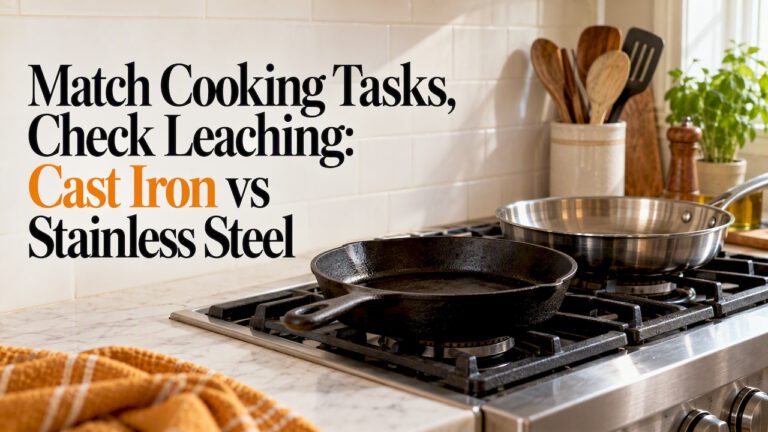
Cast iron and stainless steel pans on a stove

For long sears and oven-to-table braises, reach for cast iron. For quick temperature control and acidic pan sauces, reach for stainless steel. The right choice depends on what matters more in your kitchen: steady, retained heat and a nonstick-like finish once seasoned, or fast responsiveness and a nonreactive surface that handles tomatoes and wine without a second thought. Below, I break down the material science, technique fit, safety data, and care routines behind that answer.


TL;DR:

  • Cast iron heats slowly but holds heat, which suits long sears and braises; stainless steel cools faster when food hits it, so cook in smaller batches.
  • Choose clad stainless with an aluminum core, as in the three-ply and five-ply skillets Food & Wine lists; single-layer stainless conducts heat poorly, and cast iron is heavy.
  • In an Oregon State study, nickel and chromium leached from stainless steel into simmering tomato sauce, most from new cookware and with longer cooking; cooks with known sensitivities can use enameled cast iron.
  • Bare cast iron needs seasoning and dry storage, while enameled versions avoid seasoning but can chip; hand wash stainless to preserve its finish.

How Material Properties Shape Cooking Performance

Cast iron and stainless steel behave so differently in a kitchen because they are built on opposite principles. Cast iron is dense, single-material, and slow to heat up, but once hot, it holds that heat with remarkable stubbornness. That’s why it excels at heat retention and works across every cooktop type, including induction, making it a strong pick for braising and long, steady cooking.

Stainless steel on its own is a poor heat conductor, which is why nearly every quality stainless pan is actually a sandwich. Manufacturers bond a core of aluminum or copper between layers of stainless steel, a construction method called cladding. Most high-quality stainless skillets use this three-ply or five-ply construction, which lets the conductive core spread heat quickly while the stainless exterior stays durable and nonreactive. A cheap, single-layer stainless pan skips this core and heats unevenly, with hot spots directly over the burner.

Weight and durability track differently, too. ABC News says cast iron is heavy, especially when filled with food, and needs ongoing maintenance. It lists durable, hard and non-corrosive as the main pros of stainless steel.

A few practical distinctions worth knowing before you shop:

  • Bare cast iron needs seasoning (a polymerized oil layer) to develop nonstick properties and resist rust.
  • Enameled cast iron skips seasoning entirely and resists acidic reactions, though the enamel coating can chip with rough handling.
  • Induction cooktops require a magnetic base, which both bare cast iron and most clad stainless pans provide, unlike aluminum or copper-only cookware.
  • Oven use favors cast iron for high-heat roasting, though fully metal stainless pans (no plastic handles) also go oven-safe to high temperatures.

If you’re shopping specifically for an induction setup, it helps to check compatibility before buying either material; a guide to induction-friendly cookware walks through what to look for, and cast iron on an induction cooktop covers the handling rules for cast iron.

For what the ply count, core metal and 18/8 or 18/10 grade on a stainless pan actually mean, stainless steel cladding explained goes through construction and metal release.

Which Pan Wins for Each Cooking Technique

Matching the pan to the technique solves most of the “which one should I buy” debate, because each material has a clear comfort zone.

  1. Searing: Cast iron’s heat retention means the pan temperature doesn’t crash the moment food hits it, which suits a deep crust on a steak or chicken thighs. It heats slowly, so give it time to come up to temperature before adding food. Stainless steel can sear well too, but it cools faster on contact, so preheat it hot and work in smaller batches.
  2. Frying and sautéing: Stainless steel’s responsiveness makes it easier to fine-tune heat mid-cook, which matters when you’re reducing a sauce or adjusting for a delicate protein. The classic complaint about food sticking to stainless usually comes down to a cold pan or disturbing the food too early. Let the pan preheat, add oil, and wait until the oil shimmers before adding ingredients; food naturally releases once a crust forms.
  3. Braising and baking: Cast iron’s ability to go from stovetop to oven and hold low, even heat for hours makes it the default choice for braises, cornbread, and baked dishes that need a head start on the stove.
  4. Boiling and quick-temperature work: Stainless steel adjusts faster to changes in burner heat, which is useful for boiling pasta, simmering stock, or building a pan sauce with wine and acid, tasks where a nonreactive surface also protects the flavor of the dish.

Pro Tip: Give either pan time to come up to temperature before food goes in. For stainless, most makers say to preheat it empty and then add oil, but Demeyere’s manual puts the fat in first and Cuisinart’s booklet says never to leave a pan empty over a hot burner, so follow your own pan’s booklet. Why food sticks to stainless steel sets out what each maker says.

What the Research Says About Metal Leaching and Food Safety

Bare cast iron has its own acid caveat. ABC News says it is not suitable for cooking acidic foods at first, and that it needs several uses to build up seasoning before long cooking of acidic dishes. Enameled cast iron skips that step.

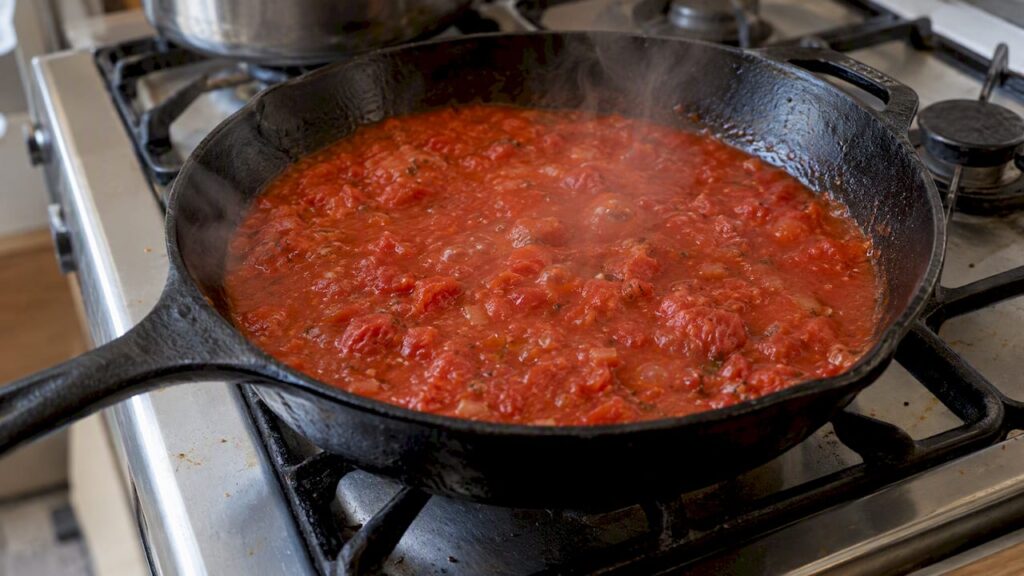
Tomato sauce simmering in a bare cast-iron skillet

Stainless steel raises a different question: nickel and chromium. A 2013 Oregon State University study by Kamerud, Hobbie and Anderson simmered four commercial tomato sauces in three types of stainless steel and a stainless steel saucepan, for 2 to 20 hours. After 6 hours, nickel in the sauce had risen up to 26-fold and chromium up to 7-fold, depending on the steel grade, and new stainless steel leached the most. Leaching fell with repeated cooking and stabilized after the sixth cycle, but the tenth cycle still added about 88 micrograms of nickel and 86 of chromium per 126-gram serving.

The test used simulated long simmers of tomato sauce, so it shows what can happen in an all-day acidic cook, not what a pan does in an ordinary sauté. The authors’ conclusion is that stainless steel cookware can be an overlooked source of nickel and chromium, depending on steel grade, cooking time and how much the pan has been used.

If you are cautious or have a known sensitivity, a few habits follow from those findings:

  • Keep very long tomato simmers for enameled cast iron when you can, since cooking time was one of the two drivers of leaching in the study.
  • Be most careful with brand-new stainless steel, which leached the most; leaching fell over the first six cooking cycles.
  • Choose enameled cast iron for frequent acidic, long-cook dishes if you have a known nickel or chromium sensitivity.

Anyone with a diagnosed metal sensitivity should treat these as general kitchen habits, not medical guidance, and talk to a healthcare provider about specific dietary restrictions. For a broader look at how cast iron stacks up against another popular nonreactive surface, a comparison of cast iron and ceramic cookware covers similar ground from a different angle.

Keeping Either Pan Working Well for Years

Care routines diverge sharply between the two materials, and knowing the basics upfront saves a lot of trial and error.

  1. Season bare cast iron regularly. A thin coat of oil, wiped nearly dry, then baked on at high heat, builds the polymerized layer that makes the surface nonstick. Re-season whenever food starts sticking or the surface looks dull and gray rather than dark and semi-glossy. If food keeps sticking after seasoning, cast iron sticky after seasoning covers the usual causes.
  2. Treat enameled cast iron as lower maintenance. It skips the seasoning step. ABC News says the enamel can chip and scratch, and that a little oil on the exposed areas protects them from rusting; Adulting With Food adds that enameled pans are sensitive to thermal shock.
  3. Hand-wash stainless steel to keep its finish. Food & Wine says some skillets are advertised as dishwasher-safe but it always recommends hand-washing, and it names Bar Keepers Friend as its favorite cleaner for staining. ABC News calls stainless steel dishwasher-safe, but makers differ: All-Clad’s D3 product pages say “Handwash Only”, so check your own pan’s care instructions (what each maker says about the dishwasher). See also white spots on a stainless steel pan and how to clean a burnt stainless steel pan.
  4. Store both materials dry. Cast iron rusts if it is left wet or stacked damp; a light wipe of oil before storage helps prevent flash rust.

Pro Tip: If a cast iron pan already has surface rust, a scrub with steel wool and a fresh seasoning cycle usually brings it back; don’t throw it out. The guide to fixing rusty cast iron has the steps.

How to Choose Based on Grade, Construction, and Cooking Habits

ABC News notes that enameled cast iron tends to be more expensive than bare cast iron, a price paid for not needing seasoning.

Stainless steel grades are written as two numbers such as 18/10. Food & Wine explains that stainless steel adds chromium and nickel to iron and carbon to make the metal more corrosion-resistant, and ABC News says quality pots are usually 18/10: 18 per cent chromium for rust resistance and 10 per cent nickel for acid resistance. A tri-ply pan has three bonded layers (steel, conductive core, steel) and a five-ply pan has five; every skillet on Food & Wine’s tested list is one or the other, with an aluminum core.

For scale, here are the numbers behind that comparison. They come from Food & Wine’s list of seven tested stainless skillets and from this site’s Lodge 12-inch cast iron skillet review, which read them from the maker’s listing. Sizes differ, so treat the weights as indicative rather than like-for-like.

Detail Seven stainless skillets (Food & Wine) Lodge 12-inch cast iron
Construction Four five-ply and three three-ply, all stainless steel with aluminum One piece of pre-seasoned cast iron
Weight 2.25 to 3.5 pounds About 7.9 pounds
Oven limit listed 500°F to 800°F 500°F
Dishwasher All seven marked dishwasher-safe; Food & Wine recommends hand-washing Not dishwasher safe

A quick way to match material to habit:

  • Frequent bakers and braisers tend to get more daily use out of cast iron’s retention and oven versatility.
  • High-tempo cooks who sauté, deglaze, and adjust heat often usually prefer stainless steel’s responsiveness.
  • Cooks managing a metal sensitivity often lean toward enameled cast iron for acidic, long-simmer dishes.
  • Budget-focused kitchens can start with a basic bare cast iron skillet before investing in multi-ply stainless.

For model-level comparisons once you’ve settled on a material, cookware reviews and buying guides break down specific pans by price, construction, and owner feedback.

Where This Comparison Comes From

This comparison draws on four sources: ABC News’s guide to cookware surfaces, Food & Wine’s tested list of stainless steel skillets, an Oregon State University study of nickel and chromium leaching, and a cast iron care guide from Adulting With Food. It is not a lab test of any pan and is not based on hands-on use. What could not be established is how much nickel or chromium a modern clad pan releases in everyday cooking, because the study used long tomato-sauce simmers, and the sources used here give no comparable measurement for cast iron.

For a closer look at how pages on this site are built, how I review kitchen equipment explains the process. Readers who want more on durability can check the most durable cookware types page.

A Simple Rule of Thumb

A simple way to split the job is to let the dish decide. A pot roast or a pan of cornbread suits cast iron, since it holds low, even heat in the oven for hours. A weeknight pan sauce with wine or a quick sauté suits stainless, since it responds as soon as the burner changes. Neither material is better in general; the choice is about how long the dish needs heat and how reactive the ingredients are.

— Glenn

Compare Specific Models Before You Buy

Once you know which material fits your cooking habits, compare actual pans rather than guessing from specs. This site’s cookware hub collects its cookware guides and reviews.

A few starting points:

  • Browse the full cookware category for current model comparisons across both materials.
  • Check the cast iron skillet guide for sizing and care specifics before buying your first piece.
  • Review the most durable cookware types if longevity is the deciding factor.

FAQ

Which is healthier, stainless steel or cast iron?

Neither is clearly healthier across the board. In the Oregon State study, stainless steel leached nickel and chromium into long-simmered tomato sauce, mostly from new cookware, and ABC News says new bare cast iron is not suited to acidic foods at first. This guide cites no study that ranks one pan as healthier.

Do chefs prefer stainless steel or cast iron?

No chef survey is cited here, so there is no verified preference to report. What the sources support is a split by task: cast iron retains heat well for searing and oven-to-table cooking, while stainless steel responds faster to changes in burner heat.

Why did people stop using cast iron as often?

This guide found no sourced account of that trend, so it makes no claim about it. The sources do show the trade-off behind the question: ABC News lists ongoing maintenance, initial seasoning and weight as cast iron’s main drawbacks.

Is cast iron better than stainless steel?

Neither material is better in every case: cast iron wins for heat retention, searing, and long oven-to-table cooking, while stainless steel wins for responsiveness, acid resistance, and lower maintenance. The right pick depends on which techniques you cook most often and how much upkeep you’re willing to do.

Sources

  • Stainless steel, cast iron, or non-stick? Choosing the best cookware surface – ABC News
  • The 5 Best Stainless Steel Skillets, Tested & Reviewed – Food & Wine
  • Stainless steel leaches nickel and chromium into foods during cooking – Kamerud, Hobbie and Anderson, Oregon State University, Journal of Agricultural and Food Chemistry, 2013
  • Cast iron care for beginners – Adulting With Food

Recommended

  • Carbon Steel vs Cast Iron: Which Should You Choose?
  • Cast Iron vs Ceramic Cookware: Which Is Healthier?
  • Bare vs Enameled Cast Iron Dutch Oven: Which Should You Buy?
  • Can You Use Metal Utensils on Stainless Steel Pans?

Filed Under: Helpful Kitchen Tips

Single-Serve vs Drip Coffee Makers: Taste, Cost and Waste

Last Updated October 19, 2026

This guide has no affiliate links, but some pages it links to do. If you buy through those, I may earn a commission at no extra cost to you.

Single-serve and drip coffee makers side by side

Pick single-serve if you want speed, single-cup convenience, and variety with almost no prep; pick drip if you want to brew for more than one person, keep cost per cup lower, and control strength and extraction. Single-serve trades flexibility for convenience, since pods lock in dose and brew time, while drip asks for a little more effort but rewards it with a cup you can tune to taste.


TL;DR:

  • SCA research found dissolved solids and extraction affect sourness and strength more than temperature from 87 to 93°C; drip lets you adjust both.
  • For one cup every other day, a cheaper single serve machine may cost less in total because it avoids unused bulk coffee, despite higher pod prices.
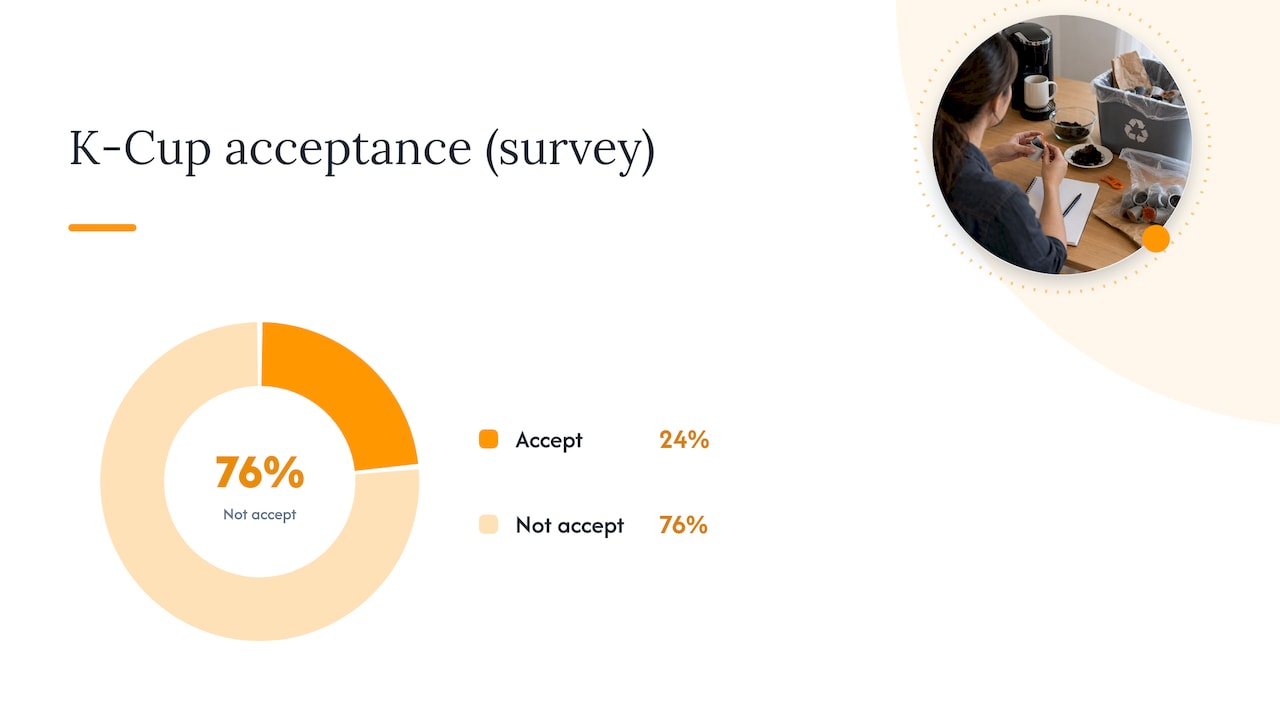
  • Only 4 of 17 surveyed collectors and processors said they would accept K-Cups, and only if cleaned and separated, so verify local rules before relying on pod recycling or composting.
  • Families brewing three or more cups should check drip carafe capacity and cycle time; one or two cups usually suit a single serve machine.

Pros and Cons of Single-Serve and Drip Coffee Makers

Both systems solve the same problem (coffee, on demand) in opposite ways. One leans on convenience, the other on control, and the right choice usually comes down to how much time, counter space, and fuss a household can tolerate on a weekday morning.

Single-serve machines work well for:

  • Brewing one cup in under a minute with no measuring or grinding.
  • Offering variety, since a drawer of pods can hold five different roasts or flavors.
  • Keeping cleanup simple: no filter basket, no grounds to scoop out.
  • Fitting small kitchens or dorm counters where a bulky drip machine feels wasteful.
  • Suiting commuters and single-person households who rarely need more than one cup at a time.

Single-serve machines have these drawbacks:

  • Creating more packaging waste per cup, since every brew uses a sealed pod.
  • Locking in dose and extraction, so flavor adjustment is limited to pod choice.
  • Carrying a higher per-cup cost than bulk-ground coffee.

Drip machines work well for:

  • Brewing a full carafe, which suits families, offices, or anyone hosting guests.
  • Keeping ingredient cost low, since bulk coffee beats individually packaged pods on price per cup.
  • Giving control over grind size, dose, and water ratio, so the cup can be tuned toward a preferred strength.
  • Using reusable filters or baskets, which cuts single-use waste.
  • Fitting coffee enthusiasts who want to experiment with ratios and roasts.

Drip machines have these drawbacks:

  • Taking a few minutes longer per batch, since even fast drip machines need a brew cycle.
  • Requiring more cleanup, since a carafe and filter basket both need regular washing.
  • Needing occasional descaling to keep flow rate and flavor consistent.

How Brewing Science Explains the Taste Difference

The flavor gap between single-serve and drip isn’t mostly about temperature. According to the Specialty Coffee Association’s brew temperature research, changing total dissolved solids (TDS) and percent extraction (PE) produced major shifts in perceived sourness and strength, while brewing within the 87 to 93 degree Celsius range made little difference once TDS and PE were held steady. Consumers in that study didn’t reliably prefer one brew temperature over another when those two variables stayed constant.

The same SCA article found that the intensity of sour taste was highest in coffees with low percent extraction (around 16%) and high TDS (around 1.5%), and that consumers formed two groups: some preferred TDS around 1%, others stronger coffee above 1.25%. The study brewed a single medium-roast coffee and did not compare machine types. With two groups like that, a single fixed recipe cannot suit everyone.

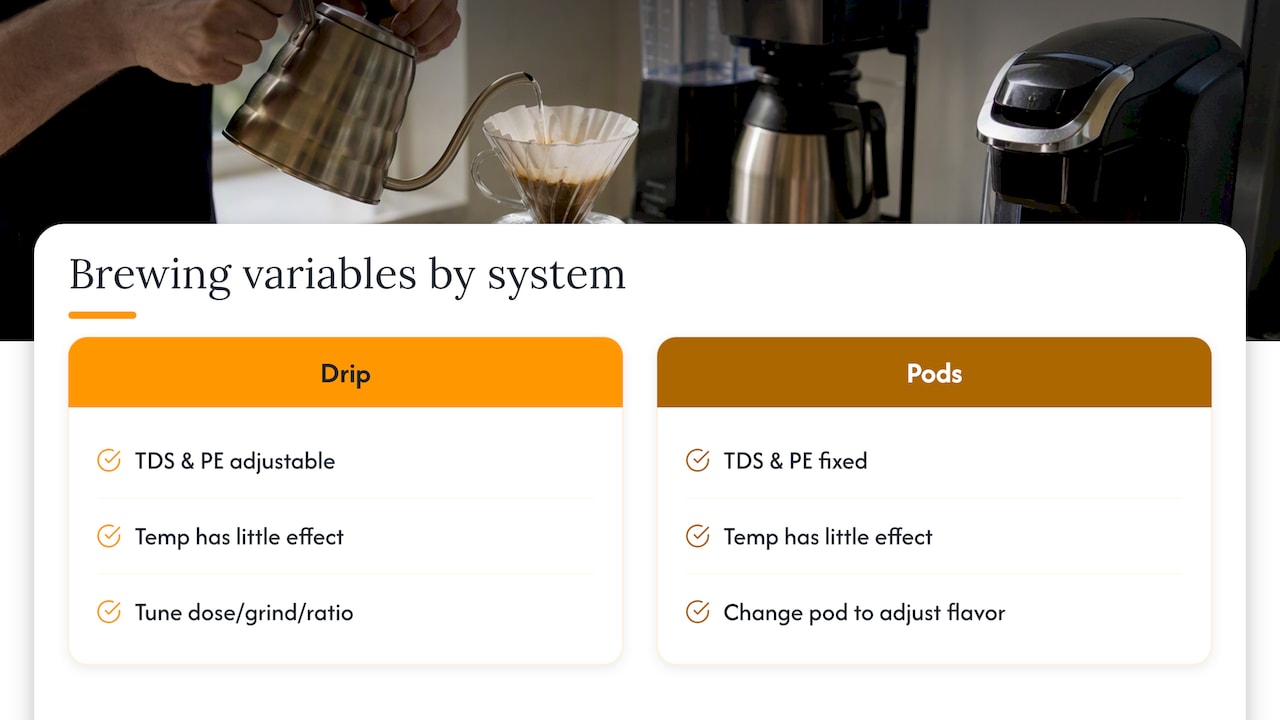
Drip machines give you the knobs that move TDS and PE: dose, grind size, water-to-coffee ratio, and brew duty cycle. A pod fixes most of those variables at the factory, so adjusting flavor usually means switching pods rather than tuning a recipe. Neither system is incapable of a good cup. Drip simply gives more room to dial in a specific sensory target, which matters most to people who already know they like their coffee stronger, softer, or more acidic than the default.

How Brewing Science Explains the Taste Difference — overview diagram

Time, Maintenance, and the Real Cost Per Cup

Per-cup cost varies more than most buyers expect. Premeasured pods carry a packaging and convenience premium, while bulk-ground coffee brewed through a drip machine typically costs less per cup, though the exact gap depends on the roast and brand chosen.

  • Single-serve machines heat water on demand rather than keeping a carafe hot.
  • Many drip machines keep the carafe hot, and the life-cycle study’s background section says up to three-fourths of such a machine’s electricity can go on standby when it lacks auto power-down.
  • Pods are discarded after one use unless a reusable pod basket is part of the setup.
  • Drip filters are reusable (mesh) or cheap and compostable (paper), and the carafe just needs regular washing.
  • Descaling frequency is similar for both systems and depends more on local water hardness than machine type.

For a household that brews a few cups a day, drip tends to win on cost and matches well with a reusable filter. For someone who brews one cup every other day, the lower upfront cost of a single-serve machine and the lack of wasted bulk coffee can offset the higher per-cup price.

The Environmental Trade-offs Nobody Puts on the Box

A life-cycle assessment in the Italian Journal of Food Science compared eight coffee formats and the machines that brew them, per cup. Ground coffee from a multilayer bag, brewed in a moka pot or espresso machine, scored about 613 points per cup on the EU product environmental footprint, against about 2,777 for polypropylene capsules and 2,895 for pads. The carbon footprint was about 8.2 g of CO2e per cup for the bag and 41 g for the polypropylene capsule. The study did not test drip machines, so it measures the cost of pods, not the cost of drip.

Its background section adds drip’s weak point: many electric drip machines have no auto power-down, and up to three-fourths of their electricity can go on keeping the carafe hot.

An expert report by SCS Engineers, prepared for the consumer group Truth in Advertising, surveyed collectors and processors in the 10 most populous states and received 17 responses. Four of the 17 said they would accept K-Cups, and only if the pods were cleaned and separated into plastic, foil and grounds, a step almost no one takes at the sink. The report names the pods’ small size, contamination from leftover grounds, limited market value and sorting-equipment barriers as the reasons.

Four of seventeen facilities accept prepared K-Cups

If waste is a real concern, a reusable pod basket filled with your own grounds sidesteps the packaging problem entirely. Certified compostable pods only help where a local industrial composting program actually accepts them, so it’s worth checking municipal guidance before assuming a “compostable” label solves anything. Drip brewed with bulk beans and a reusable filter remains the lower-waste default for most households.

A Quick Checklist for Choosing Between the Two

Match the machine to how coffee actually fits into daily life rather than how it looks on a countertop.

  1. Count how many cups a typical morning actually requires: one or two favors single-serve, three or more favors drip.
  2. Decide how much you care about tuning strength and acidity versus grabbing a cup and getting on with the day.
  3. Set a budget for both the machine and the ongoing cost of pods versus bulk coffee.
  4. Check counter space: single-serve units are usually more compact than a full drip carafe setup.
  5. Weigh how much packaging waste matters to your routine and whether local recycling or composting is realistic.

Scenario: A commuter household of one, short on time, usually wants a single-serve machine; check the reservoir size so you’re not refilling daily. A family of four brewing every morning usually does better with drip; check the carafe capacity and brew time together. An entertainer who hosts guests on weekends benefits from drip’s batch size; check whether the warming plate holds temperature well over an hour. Someone who wants precise control without a big machine might look at manual brew methods instead, which a guide to home coffee brewing covers in practical detail.

Pro Tip: For drip, check the brew cycle time printed in the spec sheet, since faster isn’t always better: a cycle that moves water through the grounds too quickly often under-extracts and tastes thin.

Where This Comparison Comes From

This comparison is built from three sources, all linked below: the Specialty Coffee Association’s brew-temperature study, an expert report on K-Cup recyclability, and a life-cycle assessment of coffee packaging. It is not based on hands-on use or owner reviews, and it does not rank specific machines. What could not be established is how a given pod machine compares with a given drip machine on taste, since the SCA study varied brew settings rather than machine types and the life-cycle study did not include drip machines. For picks across both categories, the coffee equipment hub is the place to start.

— Glenn

Ready to Pick a Machine? Here’s the Next Step

Comparing specs side by side is the fastest way to land on a machine that fits a routine. This site has no pod-machine reviews yet; its coffee guides and reviews cover espresso machines, moka pots and French presses.

If you are leaning toward an espresso machine instead, espresso machine vs coffee maker compares the two routines, Keurig not working has the steps from Keurig’s own guides if you already own a pod brewer that has stopped, and the best espresso machine under $200 guide covers the entry price tier.

If the choice is between brewing by hand and letting a machine do it, pour-over vs drip weighs flavor control against batch convenience.

FAQ

Why do Americans prefer drip coffee?

Drip brewing has a long history as the default home method in the US, and it remains popular because it brews multiple cups at once and lets a household control strength and cost. Convenience habits and existing equipment also play a role, since switching systems means buying new hardware.

What makes better coffee, Keurig or drip?

Neither wins outright on taste. The SCA study found that total dissolved solids and percent extraction drive perceived sourness and strength more than brew temperature. It did not compare machine types, but drip gives more room to adjust those variables toward a preferred cup.

What are the disadvantages of drip coffee?

Drip machines take longer per brew cycle than single-serve units and require more cleanup, since the carafe and filter basket need regular washing. Many also sit on a warming plate that draws a small amount of standby power between brews.

What is the 15-15-15 coffee rule?

No 15-15-15 rule is defined by the Specialty Coffee Association or in the sources used for this guide, so treat the phrase as informal shorthand and check what the person using it means. The SCA’s published brewing research deals with TDS, percent extraction and temperature rather than a numbered rule.

Sources

  • How hot is hot enough? Brew temperature, sensory profile, and consumer acceptance of brewed coffee — Specialty Coffee Association
  • K-Cup recyclability claims: expert report by SCS Engineers for Truth in Advertising
  • Streamlined life cycle assessment of packaging waste in coffee preparation and consumption

Recommended

  • Best Semi-Automatic Espresso Machine: 5 Picks Compared
  • Coffee Equipment Reviews & Guides
  • Gaggia Classic Pro vs De’Longhi Stilosa: Which to Buy?
  • Best Stovetop Espresso Maker: 5 Moka Pots Compared

Filed Under: Helpful Kitchen Tips

Can You Use a Moka Pot on an Induction Stove?

Last Updated October 8, 2026

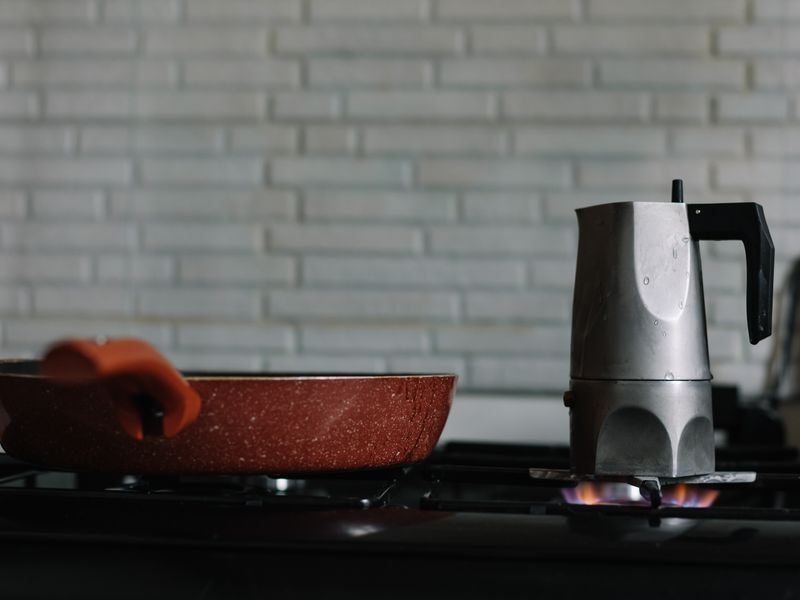
Moka pot on a flat black stovetop beside a red frying pan
Photo by Meruyert Gonullu from Pexels

This guide links to one Amazon product, and I may earn a commission from it at no extra cost to you.

Yes, a moka pot works on an induction stove if its base is magnetic. Aluminum pots, including the Bialetti Moka Express, are not, so they need a stainless adapter plate under them. Stainless pots made for induction, like the Bialetti Venus, work on their own.

A magnet held to the base is the quick test. The rest of this guide covers the plate, the size limits and the brewing steps.

Why most moka pots do not work on an induction stove

An induction zone only switches on for cookware that suits it. Whirlpool’s help page says most induction-compatible cookware is made from ferrous materials, which contain iron, and that aluminum and copper typically do not work unless they have a magnetic base.

That rules out the classic moka pot. Bialetti’s support page says only its stainless steel moka pots work directly on induction, and that its classic aluminum pots are not induction ready.

Stainless steel on the label is not a guarantee either. My stainless steel moka pot guide found that only two of its five picks were listed as induction compatible, because the base has to contain iron. The thing to trust is the maker’s own induction statement, or a magnet.

Which moka pots work on an induction stove

Pot Works by itself? What the maker says
Aluminum pots such as the Bialetti Moka Express No Not induction ready; the Moka Express page points to Bialetti’s induction plate
Bialetti Venus, 18/10 stainless steel Yes Gas, electric and induction without an adapter; sold in 4, 6 and 10 cups
Bialetti Induction Moka, steel outside and aluminum inside Yes Gas, electric and induction with no separate adapter; sold in 4 and 6 cups
Other stainless pots Only if the base is magnetic Look for an induction statement in the listing, then run the magnet test

The magnet test is the same one appliance makers give for pans. Whirlpool says to hold a magnet against the bottom of the cookware: if it sticks firmly, the cookware is induction compatible, and if it slides off or does not adhere at all, it is not suitable. Test the underside of the boiler, because that is the part that sits on the hob.

Using an aluminum moka pot with Bialetti’s induction plate

Bialetti’s plate manual describes the plate as an adapter designed to let aluminum coffee makers work on induction hobs. It sits on the zone, the pot sits on the plate, and the plate is the part the hob heats. Bialetti’s US product page gives the diameter as 5.1 inches and says it suits its moka pots from 1 to 9 cups, plus small saucepans and butter warmers.

Check the size limit before you buy. Bialetti sells the Moka Express in 12-cup and 18-cup sizes, and its plate pages do not mention those. The Amazon listing says the plate suits Bialetti pots up to 12 cups, which disagrees with Bialetti’s own wording, so for a 12-cup pot ask Bialetti before relying on either.

The manual’s warnings are plain:

  • Do not run the plate with nothing on it.
  • Do not leave it unattended while it is on.
  • Never use the highest setting; stay on medium.
  • Use a zone close in size to the plate, and centre the plate on it.
  • Treat the plate’s base as hot, because Bialetti says it can reach a high temperature, and let it cool on a suitable surface.

It also says the plate is not for the oven or microwave, and that colour changes are normal and do not affect how it works. It can go in a dishwasher, though Bialetti recommends washing it by hand.

Bialetti stainless steel induction plate adapter for moka pots

The Bialetti plate has 4.5 stars from about 19,500 ratings on Amazon. Amazon’s generated summary of the reviews is mixed: it praises compatibility and heat distribution, but flags durability, including damage to cooktops, a plate that gets very hot with nothing on it, and slow heating.

Drawbacks:

  • It adds a hot layer between the pot and the hob, and the review summary mentions slow heating and cooktop damage.
  • Bialetti rates it only up to 9 cups.
  • Its base stays hot after the pot is lifted off.

Check Price on Amazon

Buying a moka pot made for induction instead

Bialetti makes two pots that need no adapter. The Venus is 18/10 stainless steel and comes in 4, 6 and 10 cups. The Induction Moka has a two-layer boiler, with steel on the outside for induction and aluminum inside, and an aluminum upper chamber, in 4 and 6 cups.

If you already own a Moka Express, the plate saves buying a second pot. If you are buying new, a pot made for induction is one item with nothing extra to heat, lift off or store. The picks I compared are in my best stainless steel moka pot guide, and the aluminum pots that work with a plate are in the best stovetop espresso maker guide.

A cast-iron skillet under the pot is a popular workaround online. Bialetti documents only its own plate, and Bosch’s support page lists cast iron among the rough-based cookware to avoid on a glass hob because it scratches the glass. No manufacturer instruction for any improvised adapter turned up, so this guide does not recommend one. Other brands sell plates as well, but only Bialetti’s manual was read for this guide, so the steps below are Bialetti’s.

Moka pot sizes in ounces, and where the plate’s limit falls

Bialetti describes a moka “cup” as an espresso-sized serving of about 2 ounces, but its listed capacities work out to between about 1.3 and 2 ounces per cup, so the number on the box is a size code rather than a measure. It does not compare across lines: a Venus 6-cup holds 7.9 ounces, while a Moka Express 6-cup holds 9.1. Bialetti’s product pages give these capacities.

Bialetti line Sizes and capacity On induction
Moka Express (aluminum) 1 cup 2 oz, 3 cup 4.4 oz, 6 cup 9.1 oz, 9 cup 14.2 oz, 12 cup 22 oz, 18 cup 27.3 oz Needs the plate, which is rated to the 9-cup size
Venus (stainless) 4 cup 5.7 oz, 6 cup 7.9 oz, 10 cup 15.5 oz Works without an adapter
Induction Moka (steel and aluminum) 4 cup 6.8 oz, 6 cup 9.1 oz Works without an adapter

So the plate’s limit sits at 14.2 ounces of coffee in a Moka Express. Households that brew more than that in one go are the ones for whom a pot made for induction, such as the 10-cup Venus at 15.5 ounces, removes the question.

Check the pot against your hob, not just the magnet

A pot that passes the magnet test can still fail on size. Whirlpool says the base of the pan should match the size of the cooking area, and that a pan that is too small is not sensed, so the zone will not switch on. Jenn-Air’s help page says the same thing differently: use the cooking zone that best matches the pot’s base, and a pan it cannot recognise will not start the zone.

Neither page gives a number, and Jenn-Air sends you to the manual for your model. Bialetti’s Induction Moka manual makes the same point as its fix for a pot that will not activate on an induction hob: compare the diameter of the boiler with the technical features of the hob. Measure the base of your boiler, find the smallest zone on your hob, and read its minimum before you buy anything.

If the hob is the problem, a small portable burner is another route. My best hot plate guide covers which types suit a small pot.

How to brew with a moka pot on an induction hob

The brewing steps follow Bialetti’s Induction Moka manual and the plate steps follow its plate manual. Both say medium heat, and the Induction Moka manual adds cold water and no boost function.

  1. Before each use, check that the valve, funnel, gasket and filter plate are intact and in place.
  2. Fill the boiler with cold water up to the lower edge of the safety valve.
  3. Fill the funnel with coffee ground for moka, without pressing it down, and wipe any powder off the rim.
  4. Screw the top on firmly without forcing it.
  5. If you are using the plate, centre it on the zone first and put the assembled pot on it, so the plate is never on a live zone with nothing on it.
  6. Switch the zone on at medium heat. The manuals give no number, and hobs differ, so use the middle of your dial and never the highest setting or the boost function.
  7. Stay with it. When the upper chamber is full, take the pot off the heat and pour; with the plate, switch the zone off and lift the pot from the plate.
  8. Let the plate cool on a suitable surface, and lift the pot and the plate rather than sliding them.

Hot water is common advice online for induction. Bialetti’s instruction for its induction pot is cold water to the valve, so that is what is given here.

Will a moka pot or plate scratch an induction hob?

Bialetti’s manuals do not mention scratches, so this comes from appliance makers. GE’s page on scratches on glass cooktops names three causes: coarse particles such as salt or ground pepper trapped under a pan, sliding cookware across the surface, and rough-bottomed cookware such as cast iron. Bosch’s page adds that scratches cannot be repaired once they have happened.

GE also says small scratches typically become less visible after cleaning, and that some marks that look like scratches come off completely. For a moka pot that means lifting the pot and the plate instead of dragging them, wiping their undersides and the hob before you set them down, and checking the underside of an old pot for rough spots.

What usually goes wrong on induction

Most failures come from heat, size or the setup order, and Bialetti’s manuals name them.

  • The zone will not switch on. The base is too small for the zone, or off-centre. Use a smaller zone, centre the pot or plate, and check your hob’s minimum.
  • The safety valve vents. The Induction Moka manual lists coffee that is not ground for moka, coffee pressed into the funnel, too much water and, on induction, too much power or the boost function. Pull it off the heat and check those first.
  • The boiler is dry. The Induction Moka manual says never to use the pot without water in the boiler, and to fill it with water only. Check the level before every brew.
  • The plate gets very hot. Bialetti says never to run it with nothing on it, so switch the zone off as soon as the coffee has risen and the pot is lifted off.
  • The boiler changes colour. The pot stayed on the heat too long. Bialetti says this does not affect use.
  • A big pot on the plate. Bialetti rates the plate to 9 cups, so a 12-cup or 18-cup Moka Express is outside the stated range.

How this guide was put together

This guide is built from documents, not from brewing on an induction hob. The sources are Bialetti’s US product and support pages, its manuals for the induction plate and the Induction Moka, the help pages from Whirlpool and Jenn-Air on induction cookware, and the scratch guidance from GE and Bosch. The Amazon plate listing was read for size, rating and review summary.

Several things could not be established. Your hob’s minimum pan size is in its own manual and is not covered here.

Bialetti’s pages and the Amazon listing disagree on whether the plate takes a 12-cup pot. I found no independent test comparing coffee made with the plate against coffee from an induction pot, so this guide makes no claim about taste. Third-party plates were not checked.

Frequently Asked Questions

Can you use a moka pot on an induction stove?

Yes, if the base is magnetic. Bialetti’s stainless Venus and Induction Moka work directly. Aluminum pots such as the Moka Express do not, but they work on induction with Bialetti’s stainless plate under them. Test any other pot with a magnet on the base.

Do you need an induction plate for a Bialetti Moka Express?

Yes. Bialetti’s support page says its classic aluminum pots are not induction ready, and its Moka Express page offers the induction plate adapter for induction use. The plate is rated for Bialetti moka pots from 1 to 9 cups, so check your pot’s size first.

How do I know if my moka pot is induction compatible?

Hold a magnet against the underside of the boiler. Whirlpool says that if it sticks firmly the cookware is induction compatible, and if it slides off it is not. Also look for an induction statement from the maker, because stainless alone does not guarantee it.

Why won’t my induction hob heat my moka pot?

The usual cause is size or position. Whirlpool and Jenn-Air both say a pan too small for the zone will not be sensed. Centre the pot on the smallest suitable zone and check your hob manual’s minimum pan size. Aluminum pots will not heat without a plate.

What heat setting should a moka pot use on induction?

Medium. Bialetti’s plate manual says never to use the highest setting, and its Induction Moka manual adds never to use the boost function. Neither gives a wattage or dial number, and hobs differ, so use the middle of your range and stay with the pot.

Can a moka pot or the induction plate go in the dishwasher?

The plate can, though Bialetti recommends washing it by hand. The Induction Moka manual says the pot cannot go in a dishwasher and should be washed in warm water without detergent or abrasive pads. Dry every part completely before putting it away.

The short version

A moka pot works on induction when its base is magnetic: a Bialetti Venus or Induction Moka directly, an aluminum pot with the Bialetti plate, and anything else only after a magnet test and a check against your hob’s minimum size. Use cold water, medium heat and no boost. To choose a new pot, start with the best stainless steel moka pot guide, and for the bigger picture see the coffee hub and my guide to cookware that works on induction.

Filed Under: Helpful Kitchen Tips

  • « Go to Previous Page
  • Page 1
  • Interim pages omitted …
  • Page 13
  • Page 14
  • Page 15
  • Page 16
  • Page 17
  • Interim pages omitted …
  • Page 70
  • Go to Next Page »

Recent Articles

  • Burr vs Blade Grinder: Which One Should You Buy?
  • Stainless Steel Pan Sticking? Causes and the Water Test
  • Carbon Steel Pan Rusting: What Makers Say to Do
  • Moka Pot Grind Size: What to Set and How to Dial It In
  • Hard Anodized vs Stainless Steel Cookware: Which to Buy

Search


HOME          Contact          Affiliate Disclosure          Terms of Service          Privacy Policy


kitchenwarecompare.com is a participant in the Amazon Services LLC Associates Program, an affiliate advertising program designed to provide a means for sites to earn advertising fees by advertising and linking to Amazon.com, Endless.com, MYHABIT.com, SmallParts.com, or AmazonWireless.com. Amazon, the Amazon logo, AmazonSupply, and the AmazonSupply logo are trademarks of Amazon.com, Inc. or its affiliates. As an Amazon Associate I earn from qualifying purchases.


Copyright © 2026 kitchenwarecompare.com, ALL RIGHTS RESERVED.